Several years ago I was speaking with a special advisor to President Bush Jr. He was, also, an academic and in the summer he had returned to his university to teach some of international relations courses. This was during the time when the US had a force stationed in Iraq, and his students regularly had more up to date information on what was happening on the ground than he did, notwithstanding having a broad security clearance and access to top US intelligence. How was this possible?
His students were on Twitter.
Another story: when I was doing my PhD there was an instance where it was clear that the Iranian government had managed to access information that should have been encrypted while in transit between using Google products from Iran. After figuring this out I shared information on Twitter and the infosec community subsequently went to work to rectify the situation.
There are lots of similar stories of how social media has been good for individuals in their personal and professional lives. But, equally (or more so ), there are stories where social media services have fed serious and life threatening problems. The Myanmar genocide. Undermining young women’s sense of self-confidence and leading to thoughts of self-harm. Enabling a former President to accelerate an irregular political and policy environment, often with harmful effects to members of government, residents of the United States, and the world more broadly.
The Future of Social Media
But the social media services that enable the positive and negative network effects of the past are significantly different, today, than just 5 years ago. What does this mean for the future of social media services?
First, we need to assess the extents to which the services remain well situated for their purposes. For the sharing of popular news, as an example, some companies to moving away from doing so partially or entirely in response to economics or emerging law or regulations. What does it mean when a core driver of some hardcore users — journalists, academics, some in government — no longer see the same utility in engaging online? What does this mean for the affordances of new services?
Second, to what extent are the emerging services really able to address the harms and problems of the old services? How can these services be made ‘safe to use’ and promote equity and avoid generating harms to some individuals and communities? I think there is a valid open question around whether you can ever create a real-time communications platform that enables mass broadcast, and which does not amplify historical harms and dangerous social effects.
Third, to what extent have these services outlived some of their utility? While individuals used to share information broadly on social media networks they can now retreat to large chat groups or online chat services (i.e., the next generation of AOL chat is here!). These more private experience still enable the formation of community without the exposure to some of the harmful or disquieting content or messages that existed on the more public social media sites.1
There has, also, been an explosion of new-Twitter competitors (along with those competing with other networks, including Instagram and popular/corporate chat services). While this has the benefit of reducing some of the aggregated harms that can arise, just in the sense that individuals are spread out between services and cannot mass against one another as they could previously, it also means that content which is published may lack the same kind of reach as in the past. Whereas once you may have had thousands of Twitter or Instagram or Facebook followers who you could alert to pressing issues of social injustice, now this same population is scattered across a bevy of different services and platforms. The dispersion effect makes it hard to have the same kind of thought leader status as may have been possible, even in the relatively recent past.
One of the solutions to these problems, writ large, is to facilitate a ‘Post Once (on your own) Site, Syndicate Everywhere’ (POSSE) situation, where you can post on one service and then syndicate it to all the other services. Promoters of this maintain that you can then have a single ‘identity’ or location, put all your content there, and then share it around the world.
Obviously this approach has some initial appeal. And for many individuals or groups they may prefer this approach. But a POSSE ‘solution’ to the disintermediation of social media fails to take into account the value of having discrete online identities.
As just one example, I have a website for professional materials, use a service to share and circulate my photographs, blog less formally here, circulate interesting news articles using an RSS feed, share short thoughts about professional topics on LinkedIn, and then have a sequence of chat applications for yet other conversations. Bringing all these together into a single space would be problematic by merit of diluting the deliberateness that each space is imbued with. Put differently, I don’t want the materials that might get me a job linked to my street photography or ruminations, on the basis that it could impede my ability to find the right kind(s) of gainful employment.
As I contemplate the state of social media and identity, today, I guess I’m left with the ongoing recognition that classic media organizations played a key role in identifying what was more or less important to pay attention to, especially when the information sources I cultivated over the past decade have quickly and suddenly changed. The social media that was so useful in aggregating information even intelligence services lacked, as well as that was used to respond to information security issues, is now long past.
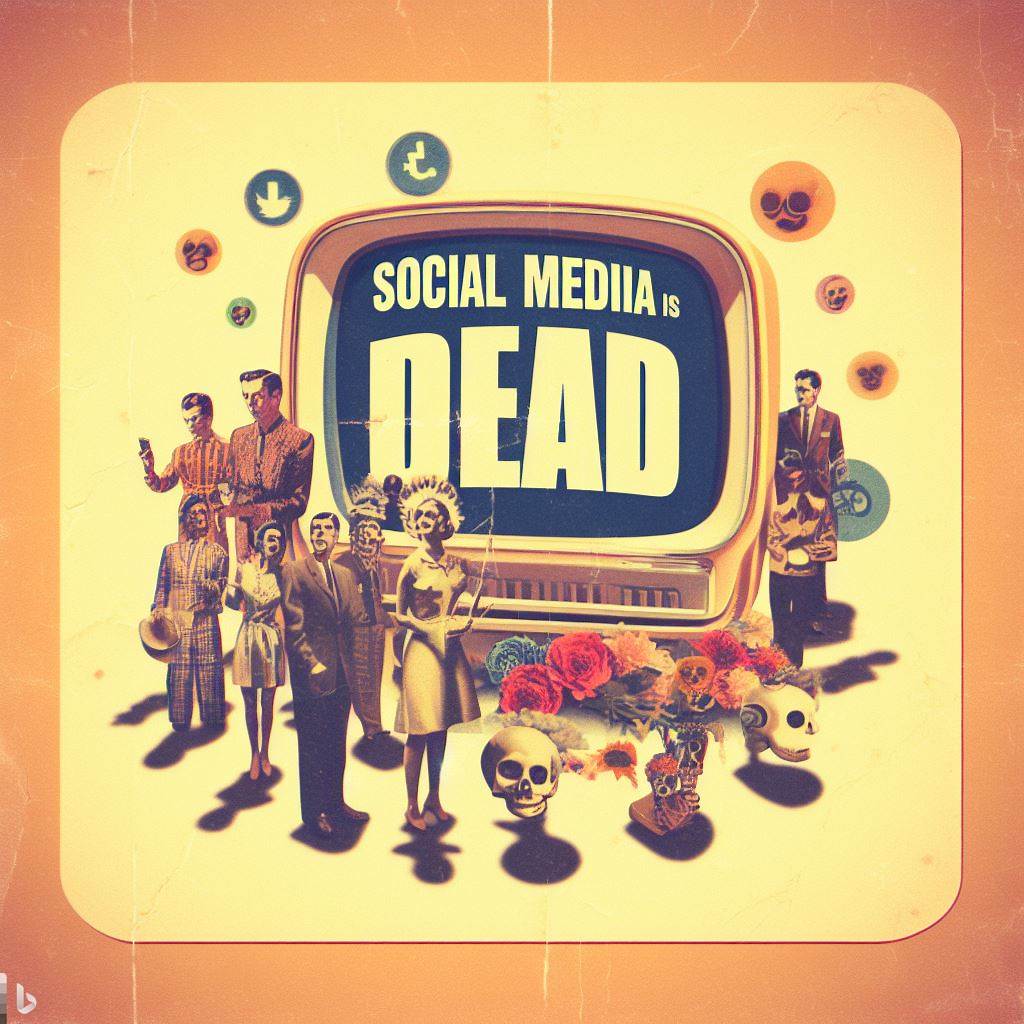
Social media as it was is dead. Long live socialized media.
- With the caveat that some groups retreat to these more private spaces to share harmful or disturbing content without worry their actions are likely to be detected and stopped. ↩︎
 Excited Pixels