Categories
Aside Links

Two Ridiculous Headphones and a Pile of Schiit

Marco has a good piece that analyses the relative value of über-high-end headphones over just-high-end sets. He reaches the unsurprising conclusion that just-high-end is enough for most people. And, in what might surprise some people, that the most technically precise sets aren’t necessarily what you want to spend your money on.

Based on my own purchases of headphones and earphones over the past 5-7 years I definitely tend to agree with him: technically neutral can be super dull to listen to though, at the same time, overly unbalanced sound profiles just destroy the songs and sounds that people pipe into their ears.

Categories
Aside

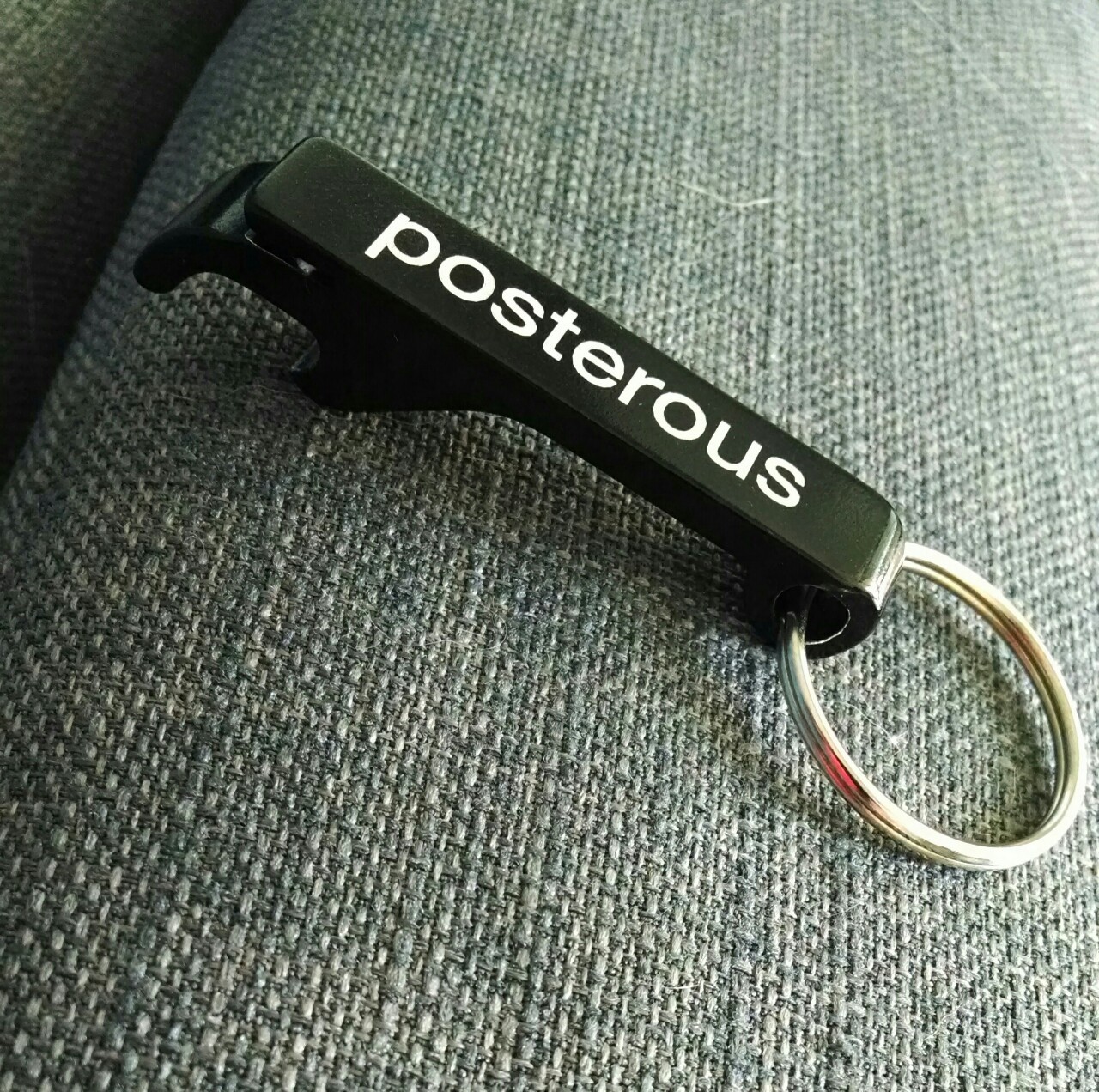
Posterous’ ‘Best’ Thing

The single most memorable thing about Posterous for me – and about as mediocre in opening beer as as their platform was for blogging!

Categories
Quotations

2014.7.12

At a more domestic level, UK communications providers are worried that they could be exposed to legal action because of the unlawful mass surveillance that they were party to – even though on the whole they wanted no part of it.

Well, more precisely, many comms providers wanted no part of it unless the government picked up all the costs (older readers familiar with US law may recall the CALEA legislation that forced communications companies to make their technology wiretap friendly – with much the same response from companies).

There is a view that if the liability for unlawful surveillance rested entirely with the government, there would be no appetite for this legislation. Britain long ago elevated its institutional vandalism of EU legal rights from a science to an art, and then to a sport.

Simon Davies, “ Britain takes the Uganda Road to legalise and extend state surveillance”
Categories
Quotations

2014.7.11

The importance of access to information is clearer when the right to freedom of expression is considered more narrowly. Suppose that our concern is with expression on a specific subject: for example, about government’s effectiveness in executing a policy. In some cases, government agencies may be informational monopolists: that is, they may have exclusive control over critical information required for intelligence discussion of the policy. If no right of access is recognized, the right to free expression is hollowed out. Citizens will have the right to say what they think, but what they think will not count for much, precisely because it is known to be grossly uninformed. A more sensible approach would be to treat government monopolists just as we treat private media monopolists, by curbing their monopoly power so that we may promote free expression.

Alasdair Roberts, “Structural Pluralism and the Right to Know”
Categories
Quotations

2014.7.10

Arguments about the right to information should be resolved by reference to its role in protecting the fundamental interests of citizens, and not by reference to the history or structural characteristics of the institution holding the contested information.

Alasdair Roberts, “Structural Pluralism and the Right to Know”
Categories
Links

Crypto certificates impersonating Google and Yahoo pose threat to Windows users

Crypto certificates impersonating Google and Yahoo pose threat to Windows users:

Yet another reason why (a) the certificate authority system is broken; (b) Microsoft is stuck trying to fix problems that it (partially) brings upon itself; © Chrome is arguably the most secure – if not privacy protective – of the major Web browsers.

Categories
Aside

The NSA’s Utah data centre

The NSA’s Utah data centre, as taken by the EFF.

Categories
Quotations

2014.7.9

Transparency certainly destroys secrecy: but it may not limit the deception and deliberate misinformation that undermine relations of trust. If we want to restore trust we need to reduce deception and lies rather than secrecy. Some sorts of secrecy indeed support deception, others do not. Transparency and openness may not be the unconditional goods that they are fashionably supposed to be. By the same token, secrecy and lack of transparency may not be the enemies of trust.

Onora O’Neill, “Trust and Transparency”, the BBC Reith Lectures.
Categories
Links

Voices from the frontlines of censorship: Andrei Soldatov:

Basically, the Russian approach is all about instigating self-censorship. To do this, you need to draft the legislation as broad as possible, to have the restrictions constantly expanded – like the recent law which requires bloggers with more than 3.000 followers to be registered – and companies, internet service providers, NGOs and media will rush to you to be consulted and told what’s allowed. You should also show that you don’t hesitate to block entire services like YouTube – and companies will come to you suggesting technical solutions, as happened with DPI (deep packet inspection). It helps the government to shift the task of developing a technical solution to business, as well as costs.

You also need to encourage pro-government activists to attack the most vocal critics, to launch websites with list of so-called national traitors, and then to have Vladimir Putin himself to use this very term in a speech.

All that sends a very strong message. And as a result, journalists will be fired for critical reporting from Ukraine by media owners, not by the government; the largest internet companies will seek private meetings with Putin, and users of social networks will become more cautious in their comments.

Categories
Links

Privacy and surveillance: Eight things every Canadian should know

Last night CJFE hosted a panel discussion, “Should Surveillance Scare You?” at the NOW Lounge in Toronto.

The event, moderated by Toronto Star National Security Reporter Michelle Shephard, featured Christopher Parsons, a post-doctoral fellow at the Munk School’s Citizen Lab, in conversation with Wesley Wark, a visiting professor at the University of Ottawa’s Graduate School of Public and International Affairs. The panelists lent their voices and views to the emerging debate over issues of surveillance, intelligence, and national security in a Canadian context.

Below are eight key takeaways from the conversation, which addressed everything from why Canadians should care about surveillance to what you can do to protect yourself online.