Categories
Photography Writing

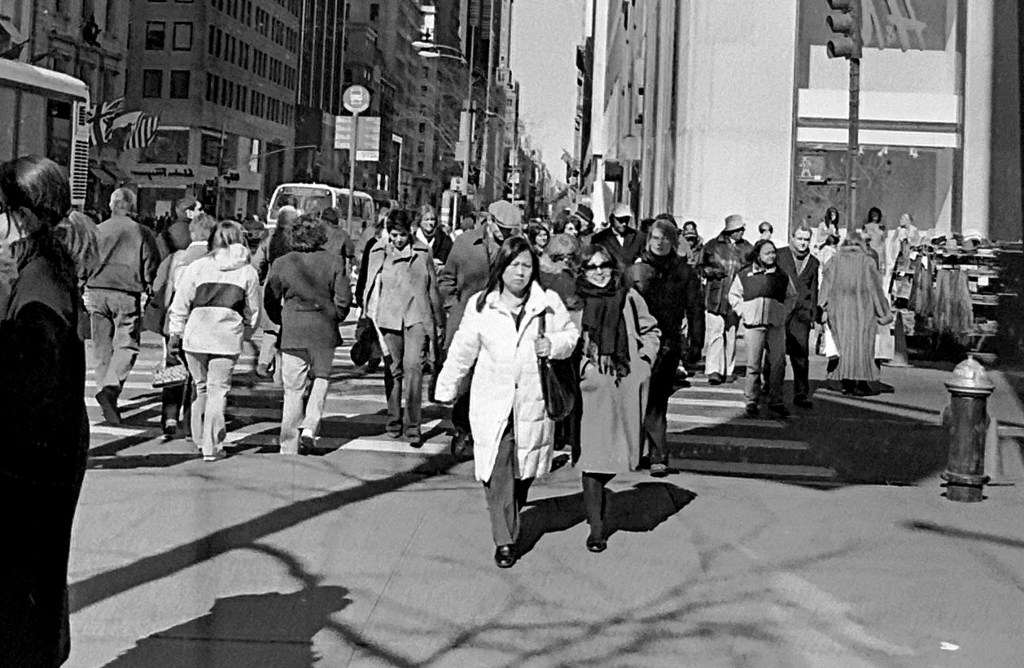
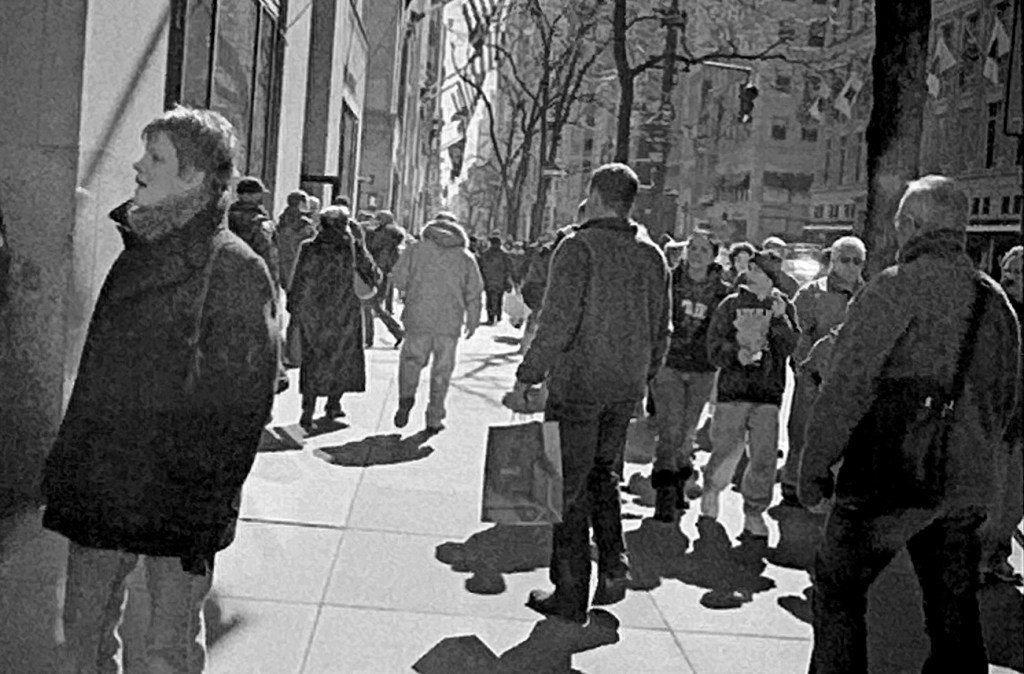
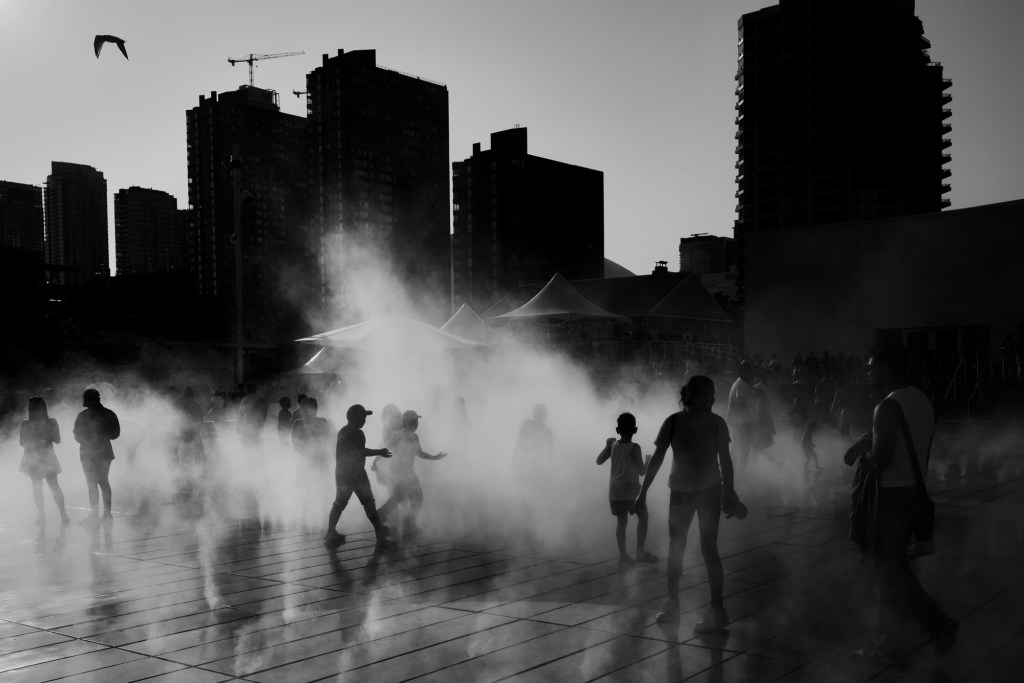
10 Tips for Starting to Photograph on the Street

2014

The democratization of photography means that there are a lot of people who are interested in making images on the streets. However, many are scared of the possible confrontations they may have after taking other people’s images without first getting their permission. There are innumerable videos and essays that offer a lot of tips, but many of the common “tips” just wouldn’t work for me when I was starting out.

By way of background, I’ve been making images in Toronto since 2014 and have used a range of cameras, focal lengths, and so forth. I started out being very hesitant to take people’s images whereas, today, I am pretty comfortable and they are in the majority of the images that I take each week. You can see my most recent images on my Glass profile.

So here are 10 tips that can help you get used to making images on the street based on my own trepidations when I started out.

1. Just Walk Around With Your Camera

When I first purchased my Olympus EM10-II I was really nervous to actually use it in downtown Toronto. What if someone got mad that I was taking their photo?
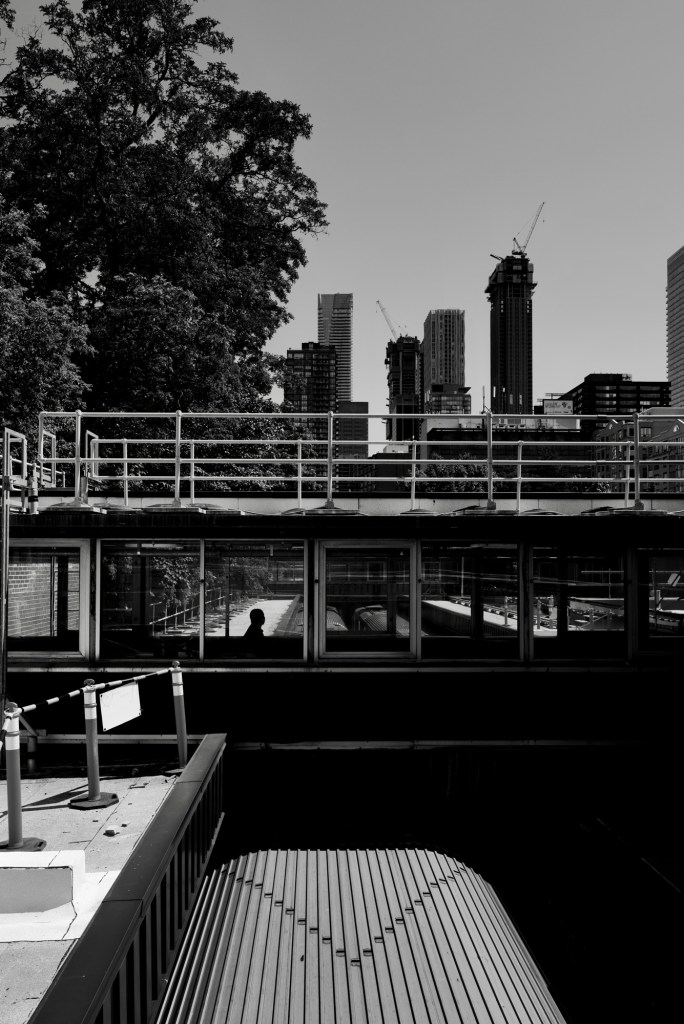
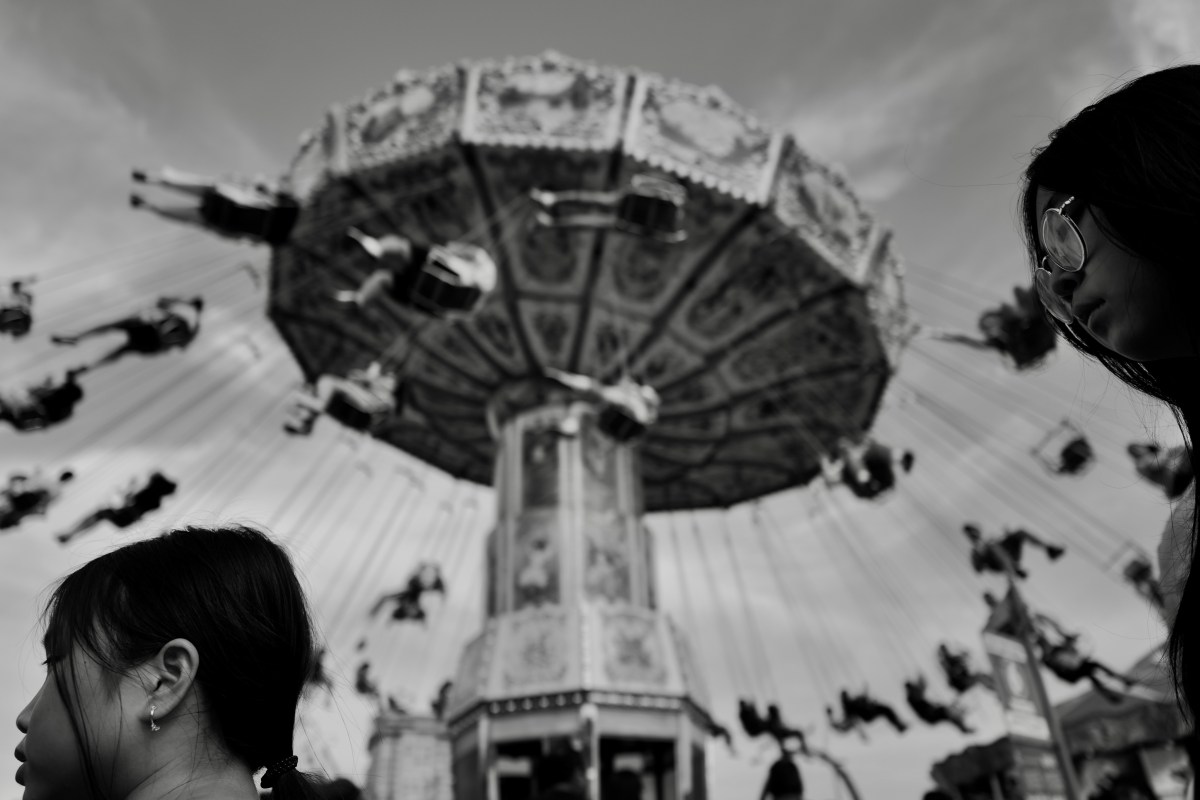
2015

So my solution at the outset was just to always be carrying my camera to and from work. I had about a 2-3 km walk each way through urban areas and ensured that I had my camera in my hand the whole time.

For me, just always holding the camera in public normalized how it felt to me. It also helped me better appreciate the weight and how it moved in my hand.

2. Don’t Focus on Being “Stealthy”

So many street photography tips focus on being “stealthy”. That can mean using a long lens so that people don’t know you’re taking their photo, to shooting exclusively from waist height, never raising your camera to your eye, and so forth. But when you’re shooting in a stealthy way and someone approaches you, then you’re put in a position of potentially lying to them if you say you weren’t making images.

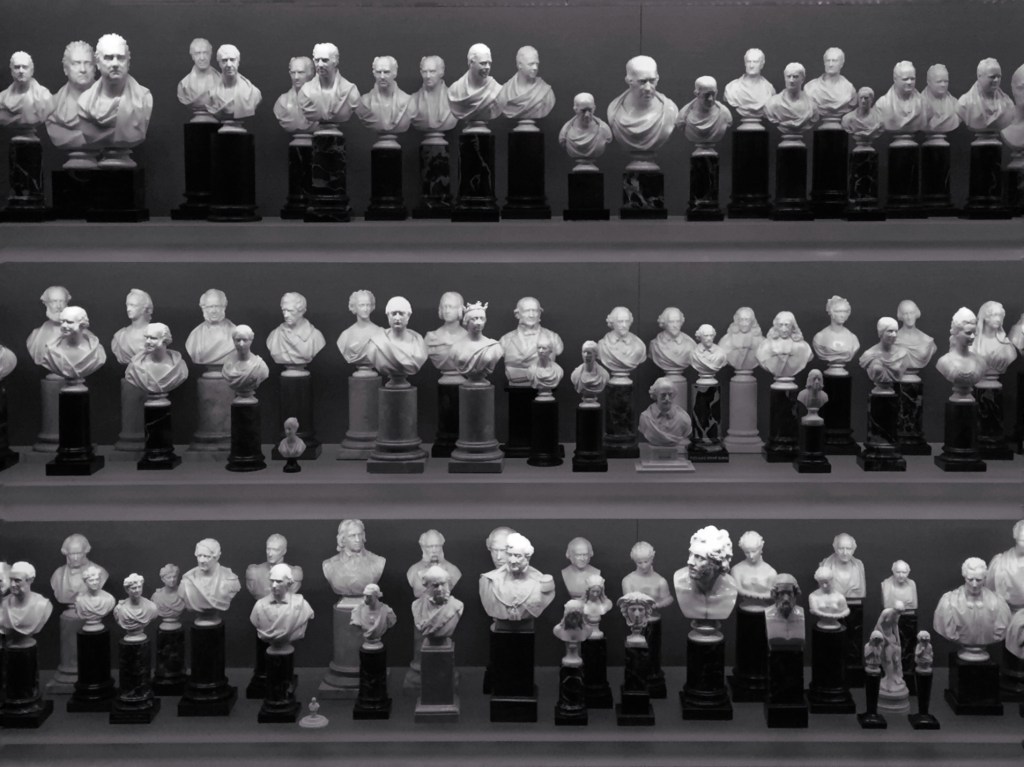
2016

By being “stealthy” — especially if you’re nervous about confrontation — and getting caught the potential confrontation may be a lot more emotionally charged. By way of contrast, if you’re not sneaking about and you’re being confronted then the emotions are going to be lower at the outset than if you were caught sneaking a shot of someone.

3. Don’t Focus on the People

If you’re anything like me when I started making images in my downtown core, taking images of people was something I aspired to but wasn’t comfortable with. But I lived in a big urban city and there was always lots to see and make images of…and so I made images of graffiti, of buildings, or of art exhibitions, and so forth. And in all cases the images that I captured were in public with other people around.
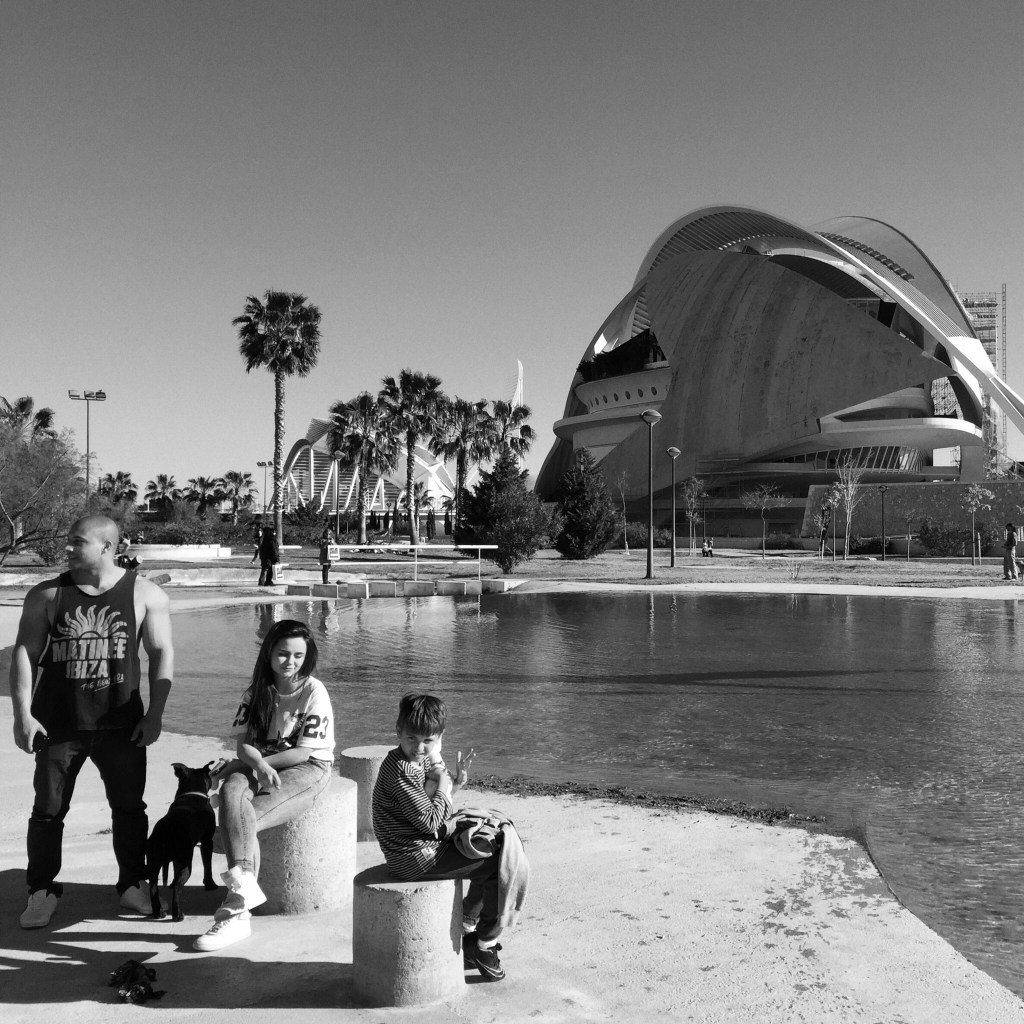
2017

Again, the focus (no pun intended) was just to get comfortable using my camera in public. I liked capturing ambient images of the city and its life, but really this was me practicing and just getting used to holding and using my camera in public, with the ultimate ambition of including people in my images.

Bonus Sub-Tip: As part of not focusing on people you can also consider looking for scenes and then waiting for people to just wander through the scene. I often will do this, myself: I’ll find a location, raise my camera to my eye, hold it for a minute or two, and only then start making images. Anyone who comes through the scene knows that I was there first — I wasn’t chasing them to make their image — and if someone asks what I’m doing, I can talk about the scene and what drew me to it. This helps to orient any conversations around specific individuals in your photographs being incidental to the image being taken, as opposed to the individuals being the primary focus of the image itself.

4. Practice With a 50mm or Wider Lens

It’s pretty routine advice to get a prime lens and learn with it, especially when taking images of metropolitan areas. To my mind there are a few good reasons for this approach to learning.

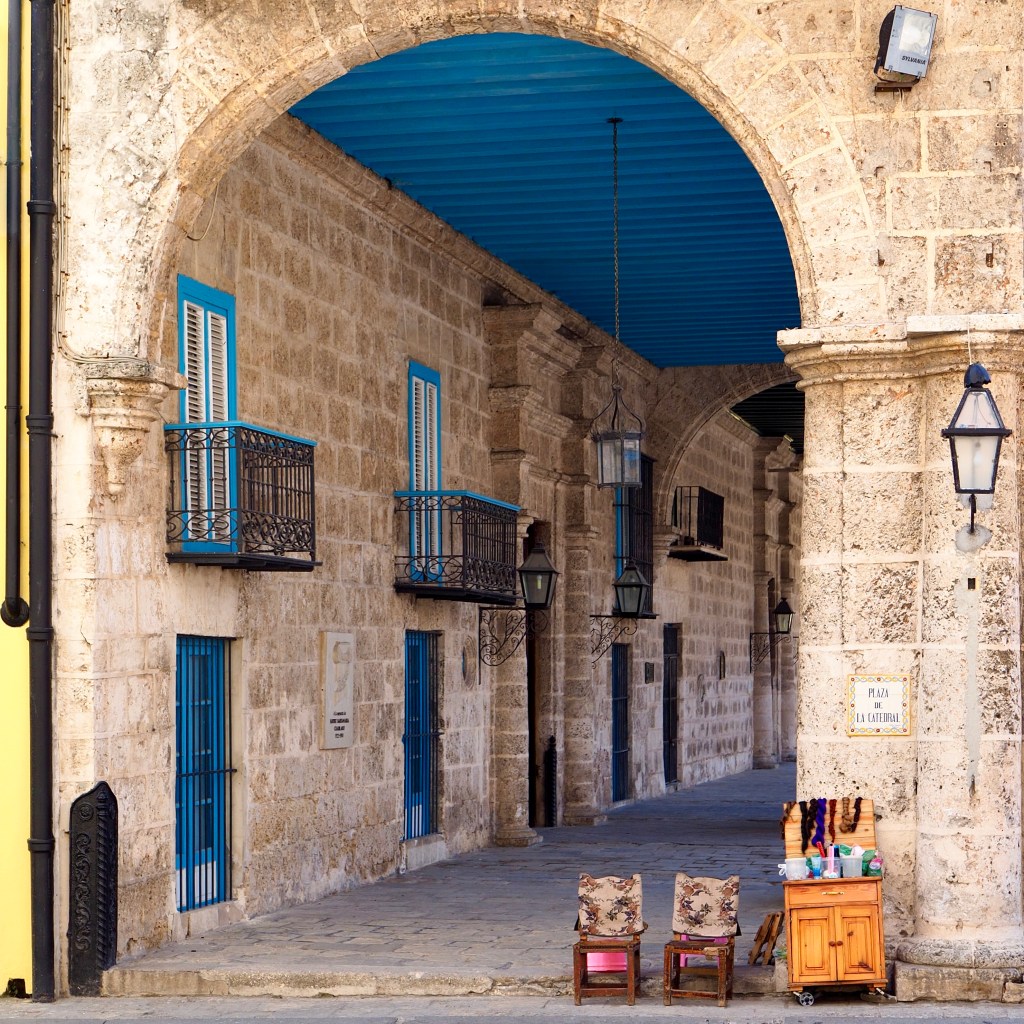
2018

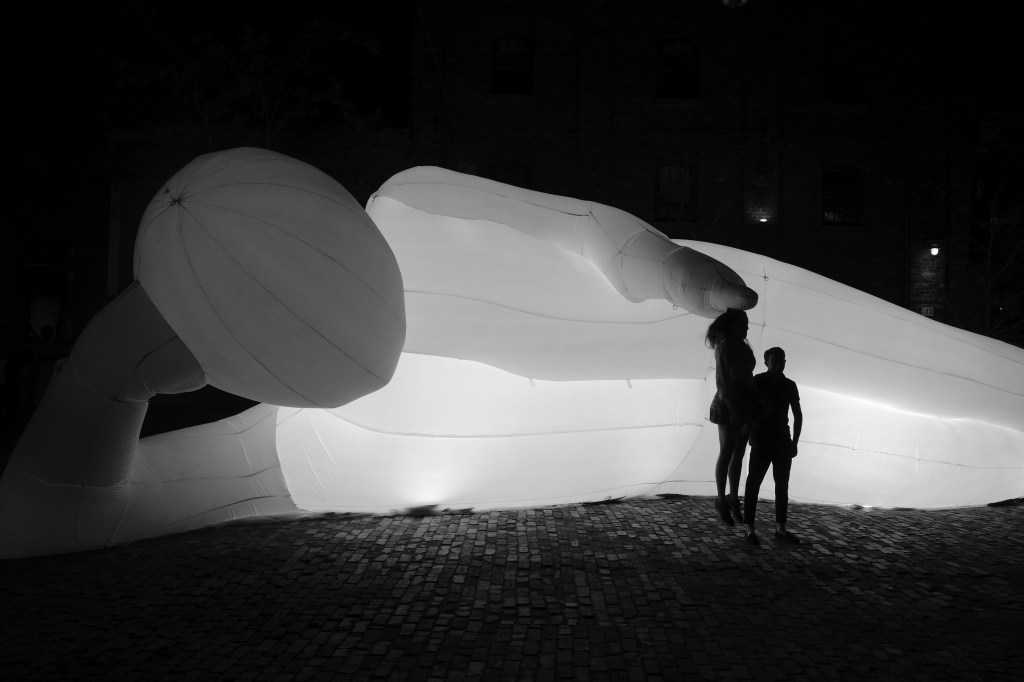
First, just in terms of training, a prime prevents you from certain kinds of indecisiveness. When you’re operating a zoom lens you have to wonder which of the focal lengths are “best” and you don’t necessarily learn to “see” in any particular focal lengths. If you only have a 50mm focal length, by way of comparison, then you quickly learn to “see” in that length. And you can still zoom — it just requires using your feet!

Second, a prime lens helps you determine what kinds of images you are, or are not, looking to make. If you’re using a 50mm lens then very wide street images that you can capture with a 28mm are just not going to be made. And that’s fine — you learn to look for images that align with that particular focal length. By imposing a series of restrictions on how you can make an image you can expand your creativity by just focusing on what that focal length can produce.
2019

Third, using a single prime lens will mean that you’re carrying less weight and you won’t end up carrying a whole pile of kit with you. Which brings us to the next tip…

5. Don’t Trudge Around with More Than 1-2 Lenses

If you’re going to wander around the streets then you will benefit from not carrying too many lenses. I’d recommend only stepping out the door with your one prime lens. Not only does having a few lenses lead to creative ambiguity — is lens 1 or 2 or 3 “right” for this scene? — but it means you have to carry more stuff on your person.
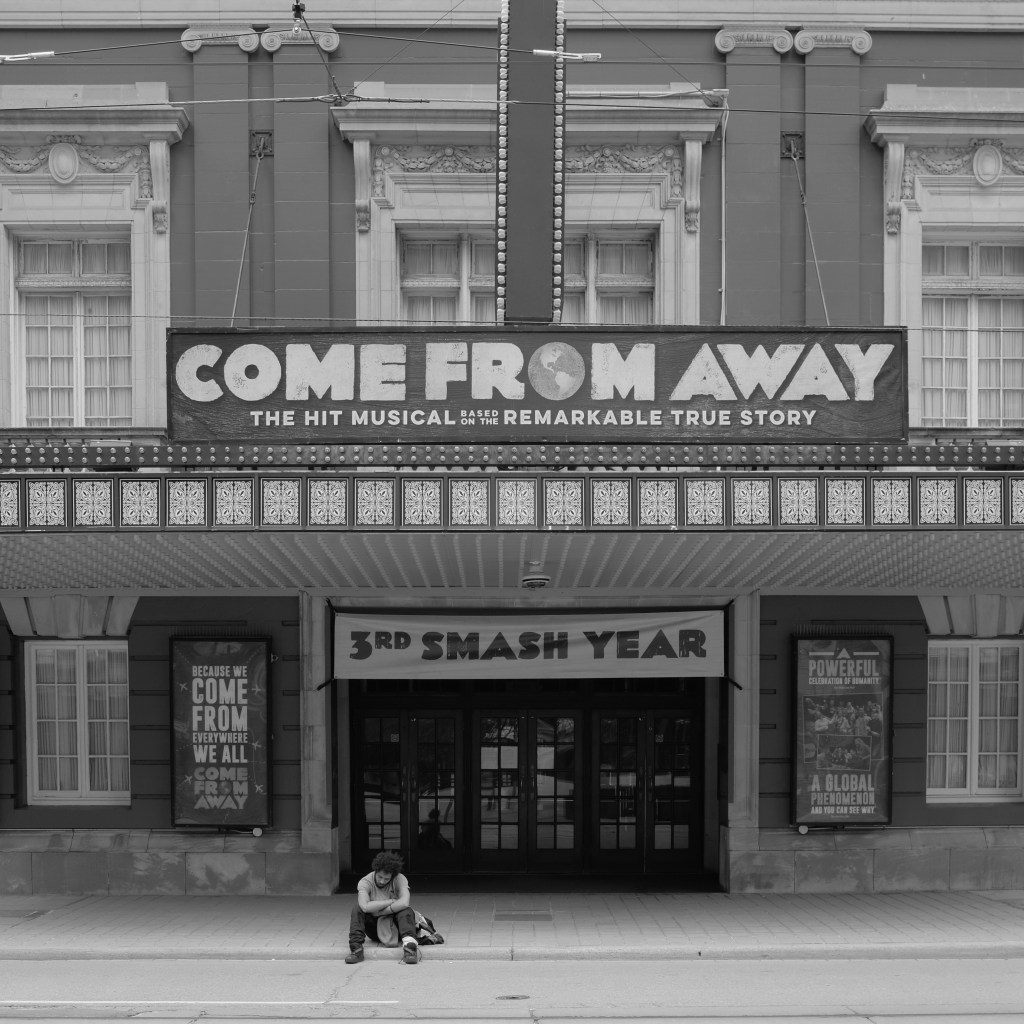
Down But Not Out, 2020

Less weight and fewer focal lengths options means that you may be out making images longer and with more creative discipline. And by really leaning into 1 or 2 fixed focal lengths you’ll learn a lot about whether you like those focal lengths and, as importantly, how you can use them when making images.1

6. Go to Events Where Taking Photographs is Normalized

If there’s a parade, or public art show, or whatever then try to get there and practice taking images of people in those venues. Because it’s a big public event people will tend to be pretty OK with their images being taken. And it will also expose you, a budding photographer, to the challenge of sometimes grabbing a shot in changing light, moving crowds, and so forth.
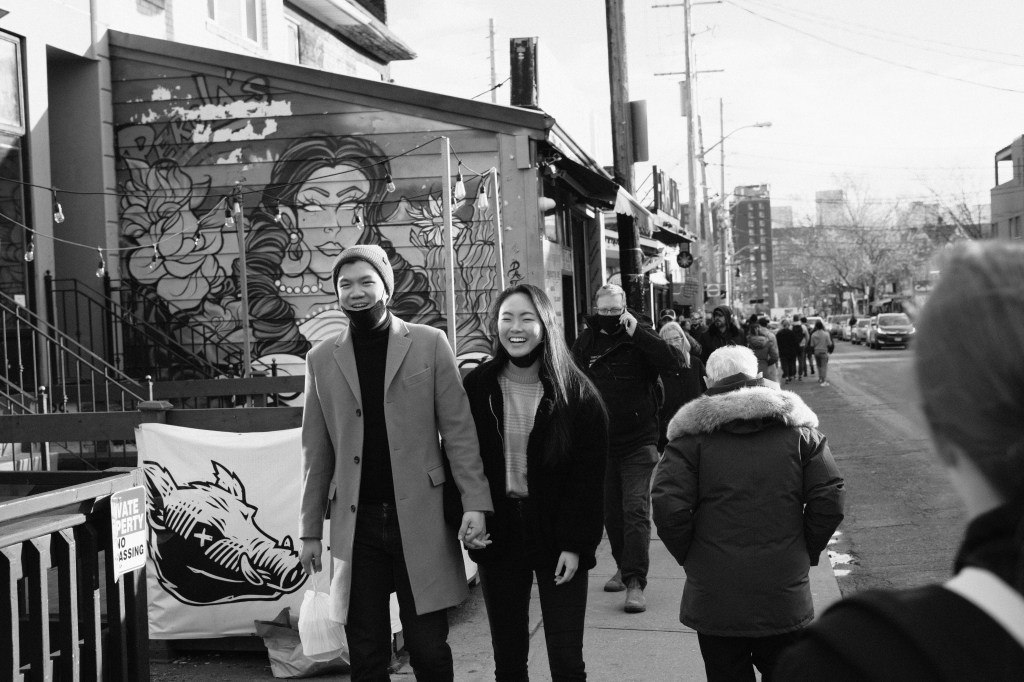
Joy In Dark Times, 2021

If you’re feeling particularly daring then you might consider walking alongside a parade or protest, and make images of those who are viewing the event. It’s the “one step up” from making images of the participants of parades and events but still pretty comfortable. Most people in crowds are going to be OK with their images being captured and you’ll have walked past anyone who happened to be annoyed at your photographing them before they emerge from the crowds.

7. Go Out a Lot

I try to get onto the streets for a couple hours every weekend. I have a busy full-time job and photography is my hobby, so I don’t worry about not being able to devote a hour or more every day into making images. I’d love to be able to do so but it’s just not my reality.

Fix, Found, 2022

This having been said I am always out each weekend. Every year I make thousand of frames and often keep returning to the same spots year over year over year in the hopes of some scenes finally producing an image that I like. And by going out you both get a sense for how light falls in your environments, how people move in them, as well as how the urban environment changes through the year. The more you can predict about the environment and its inhabitants the more likely it is that you’ll collect images that speak to you.

8. Review Your Work

Figure out a review tempo for your work and then keep to it. There are at least two parts to this.

First, you need to review the images that you’re making on the streets. I tend to do quick reviews when I come back but other folks do so days or weeks later. Whatever your tempo is it’ll be important to look to see what you’re capturing. It’s the only way to really understand how your creative vision is being interpreted using the camera and lens that you’re carrying.
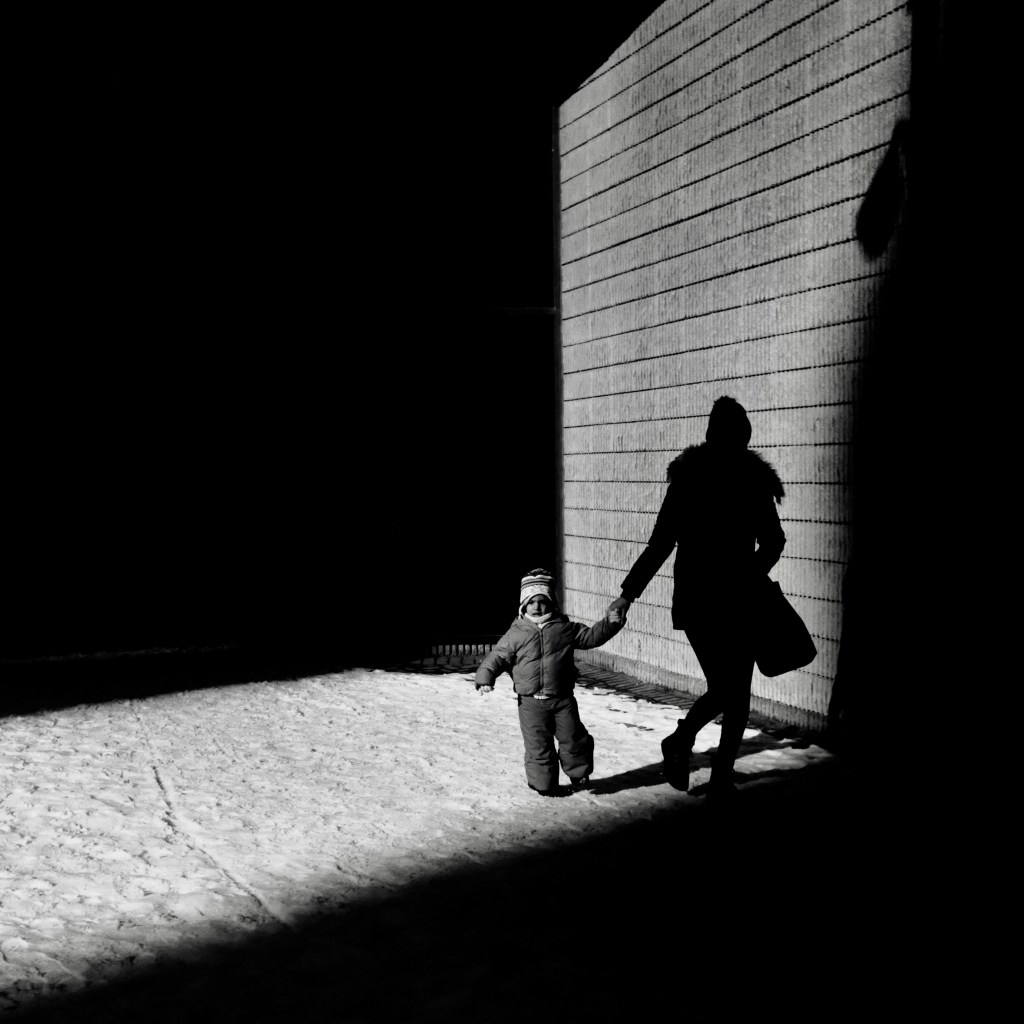
Toronto, 2023

Second, I’d encourage you to do either monthly, quarterly, bi-annual, or annual assessments of the images that you’re taking. Go through and pick out your top 10-20 images and really think about why they’re your favourites. And, also, how would you want them to be improved? What more might you have done?

As you go through more of these reviews also do comparisons to past favourite images — it’s by undertaking this kind of self-assessment or critique that you’ll be able to see whether you are growing or stretching as a photographer, as well as detect themes or commonalities in what you are being attracted towards.

9. Post Some of Your Work Online

Lots of photographers use some kind of online service to post their images. What you use doesn’t really matter. But having a published set of images means that if someone does ask you what you’re doing on the streets, you can quickly direct them to your online work so they can see you’re doing something artistic and genuine.
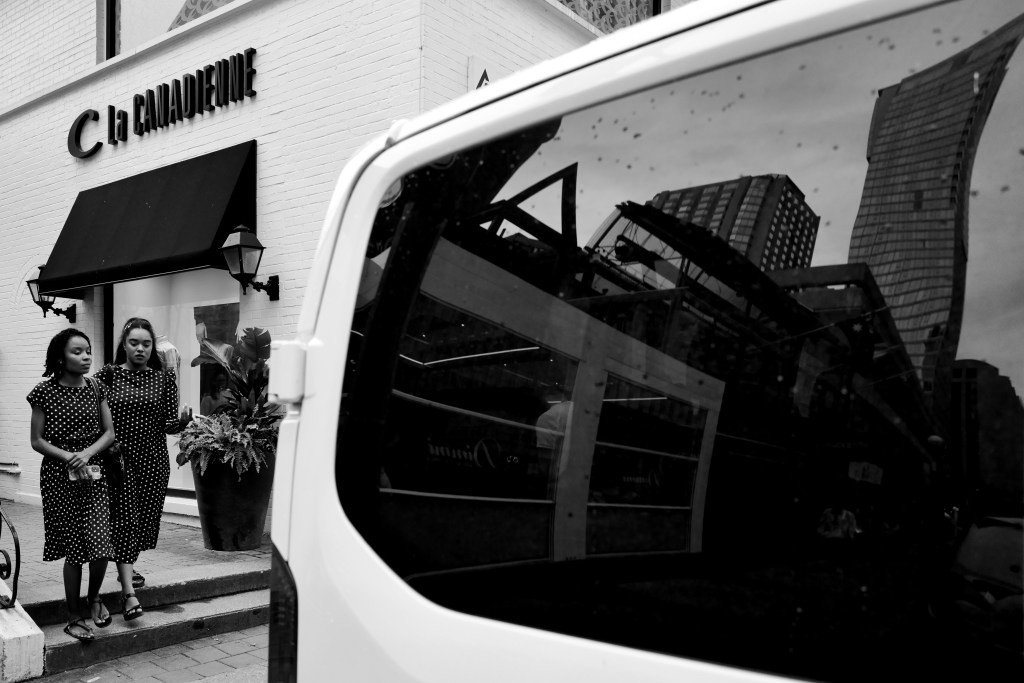
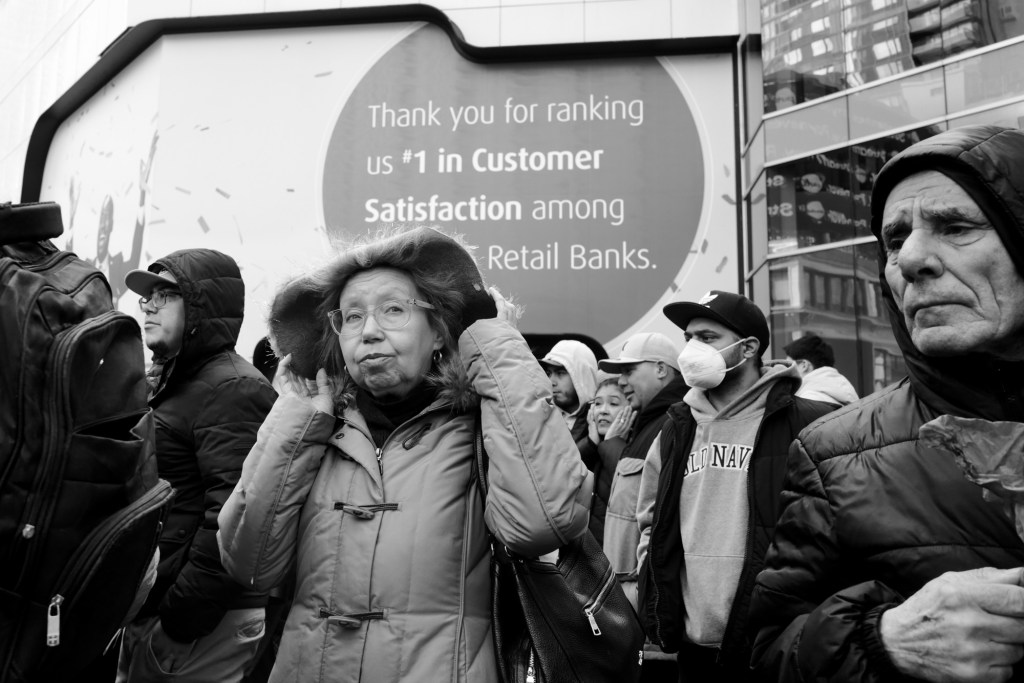
Cumberland & Bellair, Toronto, 2024

If someone does ask about you about what you’re doing just be honest: you’re starting out as a photographer and like capturing urban environments. Maybe the person in question looked interesting. And you can show them a selection of your work which will reveal you are treating photography at least somewhat seriously as opposed to just taking creepy shots of people on the street.2

10. Have Fun and Ignore Equipment

Street photography is a fun hobby whether you’re out with a smartphone camera, using a film camera or DSLR, or playing with a mirrorless camera. Don’t worry about having “the right” camera or one that is sufficiently new. Any camera that has been made in the past 10 years is going to be more than enough when you’re in the streets for the first time. Don’t focus on the equipment and, instead, just enjoy the fun that comes from focusing intently on the built environment, light, and the people who pass through the streets.
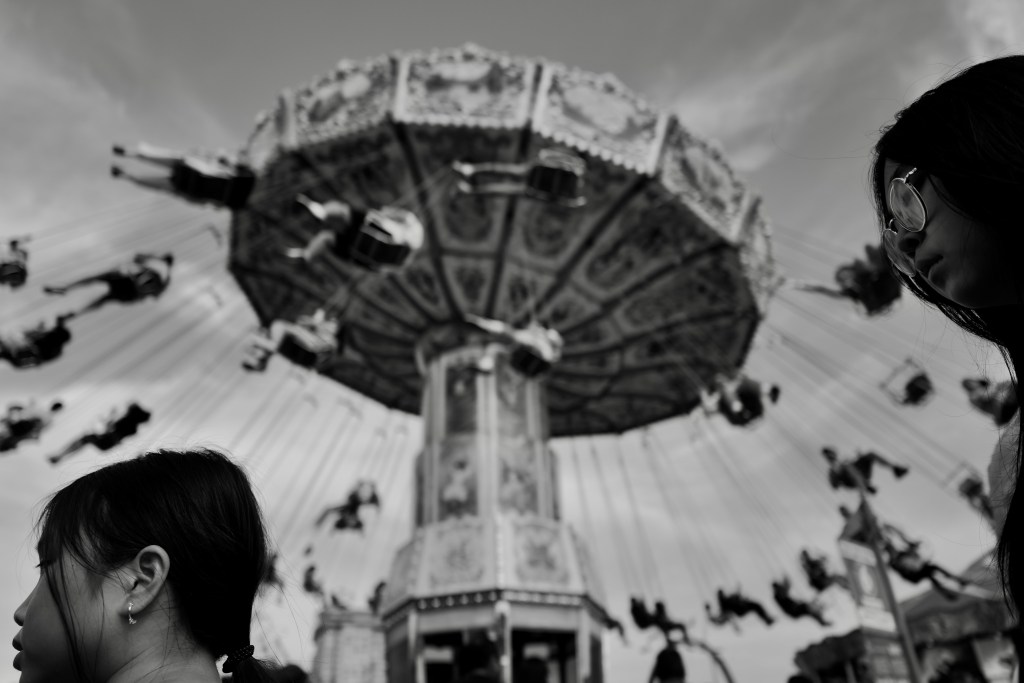
Princess & Nunavut (CNE), Toronto, 2024

Those are my own 10 tips — what tips would you give a younger version of yourself, today, based on your experiences to date?


  1. If you just want to use the kit lens that came with your camera — likely a zoom lens — then just set it to a single fixed focal lens and restrict in in place with some electrical tape. ↩︎
  2. Of course, if you are just taking creepy shots of people — such as some street photographers who use massive zoom lenses to exclusively take long distance photographs of attractive people — then this will just “out” you and what you’re up to. Don’t be one of those people! ↩︎
Categories
Photography

Accidentally Discovered Street Photos

I recently purchased Conversations with Contemporary Photographers, following my recent reading of On Street Photography and the Poetic Image. As a bit of a surprise, I discovered that my recently purchased book included a strip of exposed Kodak 100TX film. I don’t think I’ve actually seen or held a strip of physical film before and I certainly haven’t ever tried to digitize it before today.

Given that this was a bit of a lark I ended up using Filmbox to create quick digital scans. This is a an iOS application where you hold the film a few inches away from a white screen and, then, use the application to capture any given frame.

I can’t claim that the process is perfect nor that the results are spectacular. But they do have the effect of letting me see more clearly what the different frames on this thing strip of film more clearly look like.

None of these photos were made by me. I have no idea where they were made. But I suspect the film is from within the past 20 years or so, based on the clothing when when the book was published. All of them are reproduced, below, with the only ‘edit’ being to fully convert them to black and white.

Categories
Photography

Adding Geolocation Information Into Apple Photos

Ted Rogers & Charles, Toronto, 2024

One of the best things about the iPhone is that each photo that you take automatically can be geolocated. I really appreciate this because I can quickly ‘zoom into’ different parts of the world and see the images I took in that place.

However, I take very few iPhone photos these days. For the past several years almost all of my images were made on either a Fuji X100F, Leica Q2, or a Ricoh GR or GRIIIx. None of these cameras have GPS modules. The result is that they do not natively add geolocation, or GPS, information into images metadata.

Fuji and Leica do have apps that you can use to add GPS information to photos taken with their respective cameras. However, actually setting them up takes a number of steps. Moreover, it requires you to have — and open — applications associated with the camera I’m using at any given time.

Instead of using manufacturer-specific applications I have purchased lifetime licences for Geotags Photos Pro 2 and Geotag Photos Tagger.1 In Canada, the Geotags Photos Pro 2 was just $15 and Geotags Photo Tagger is $12. While not free, the I use the applications each week and I’m well below $1/use at this point, and all of my photos for over the past year are accurately tagged.

Using the applications, and adding the metadata, is very easy. Once you ensure that you’ve set the timezones up correctly between your camera and the application….you’re finished. All you need to do is activate Geotags Photos Pro 2 ahead of going out for a photowalk (I tend to have it collect the GPS information every 5 minutes) and, after the photowalk, I put all my images into Apple Photos and then open Geotags Photos Tagger to apply the GPS information to all the images I’ve taken.

That’s it: once you’ve done this you’re done.

As a street photographer I’m most interested in posting photos with names that include the cross-streets of where an image was taken. So having GPS information is helpful for this purpose. But when I’ve been out for hikes it also does a good job locating different photographs that I’ve made — so long as my phone can get geolocation information I can then add the data to my mirror less camera images.

In conclusion: If you’re looking for a pretty easy, and affordable, way of adding GPS data to your images I can’t recommend these two applications enough!


  1. These applications are available for both iOS and Android. ↩︎
Categories
Photography Writing

Sharing Photographs, and Photography, with Others and Growing as a Photographer

Great Lakes Waterfront Trail, Toronto, 2024

Like many other photographers I regularly share my images through a social media platform. I also sometimes post them on this website. And that’s fine and good. And because it’s so normalized it feels very safe; while I might get positive comments from other users it’s the not the same as sharing my work where it might be assessed or publicly reviewed by people who are far more experienced by me, and where those considerations might she shared with a very large set of viewers.

Over the past year I’ve tried to push myself out of my comfort zone. I’ve been more active in thinking about street photography and sharing it with a part of the photographic community — the Photowalk Show — and then sometimes having those thoughts shared with Neale James’ other listeners. I submitted a few photos to a competition for the first time. I described for the first time the motivations and philosophy that underlie my street photography to a (friendly) group of strangers while also sharing an associated sequence of my photographs. I’ve had one of my photos highlighted in a roundup by Glass. And so on.

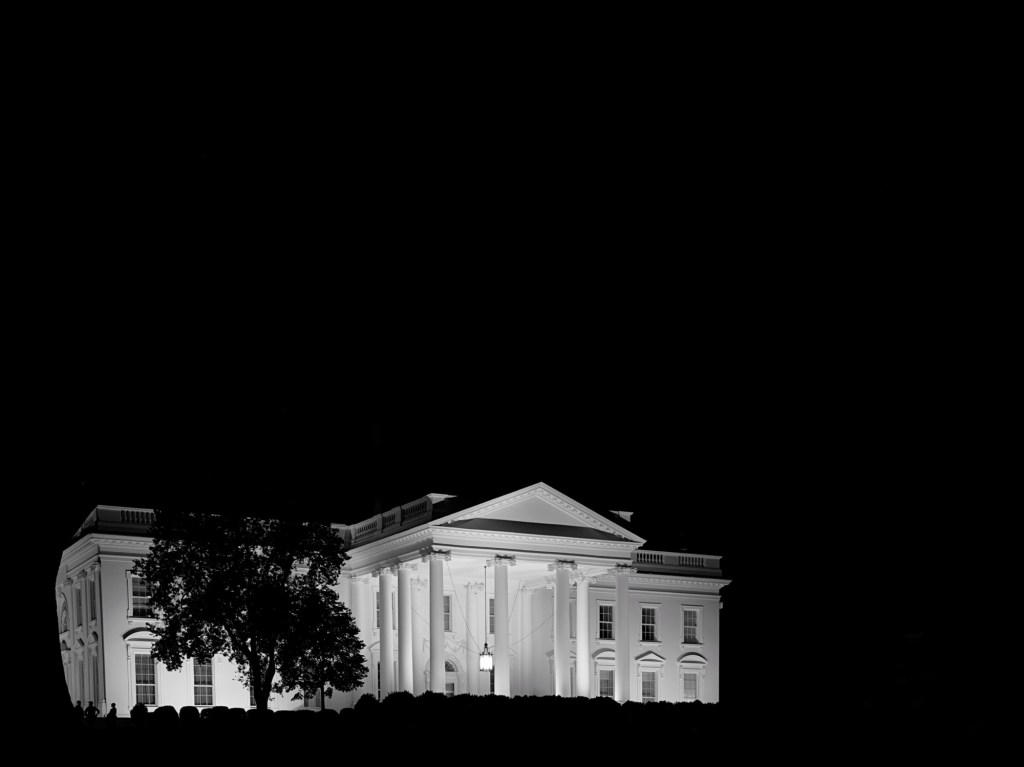
The White House, Washington, DC, 2023

But the scariest thing has been associated with my postcards project. To be clear, actually printing those postcards wasn’t scary at all! But actually sending them to people — with the prospect they would look at a cohesive bit of my work and then offer commentary to potentially hundreds or thousands of people — has been intimidating because it constitutes an exposure of my amateur photography to an otherwise unknown set of publics.

Crescent & Cluny, Toronto, 2024

I’m not afraid of publicity or engaging with publics. I’ve been very involved in public life for the past 15 years, and am as comfortable speaking with leaders of government or other senior leaders as I am appearing on television and speaking to tens or hundreds of thousands of people. But the sharing of my photographic hobby is different because it isn’t a domain where I’m a well-credentialed expert: I’m very much a learning amateur when it comes to photography. While I take my hobby very seriously I don’t have the skills or experience that parallel those of a more seasoned or professional photographer.

Yonge & Dundas, Toronto, 2024

I recognize that sharing my work, be it with Neale James and his Photowalk Podcast, or with Ted Forbes and his Art of Photography YouTube channel, has been a real step for me. It represents my ever deepening appreciation for the art form and my starting to explore ways of more broadly sharing my work, as well as developing increasing confidence in what I’m making. I’ve got an long way to go in deepening my expertise in making the kinds of photos I want to make but I feel more confident in what I’m doing, today, than I did even a year ago.

Categories
Photography

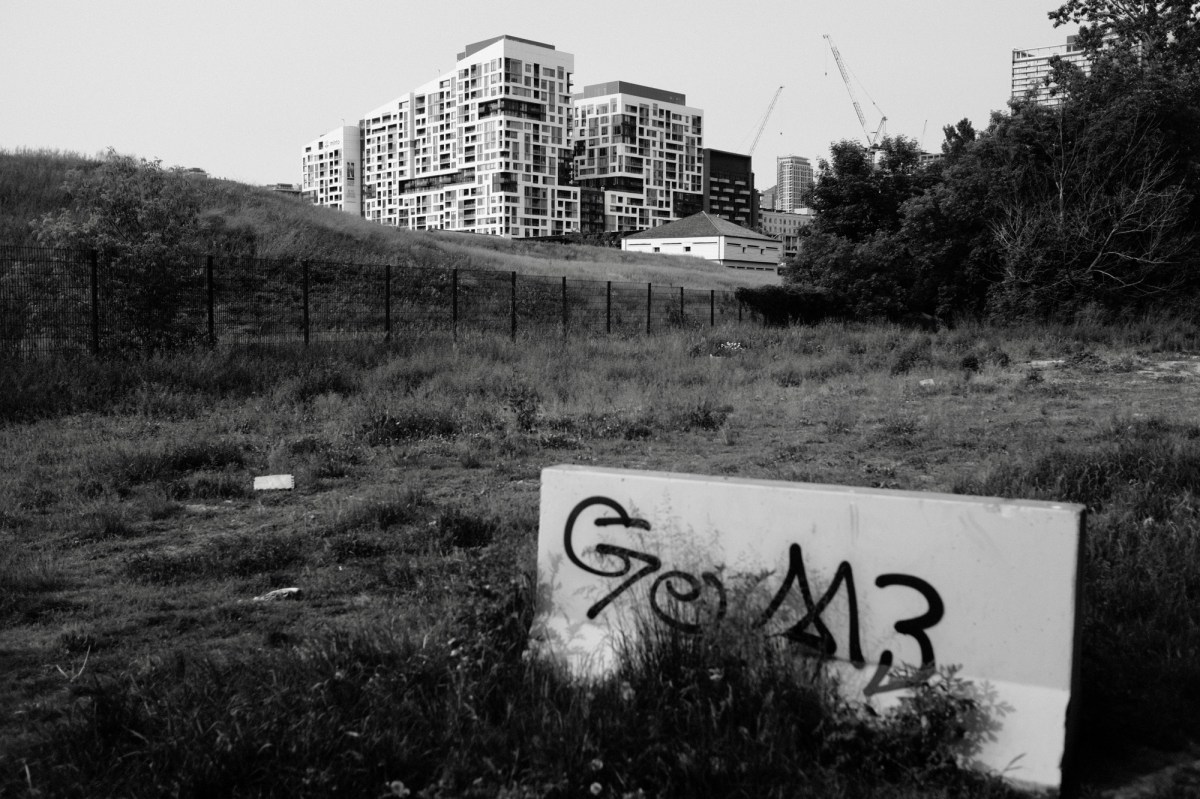
Bastion & Fort York, Toronto, 2023

Bastion & Fort York, Toronto, 2023

This is one of my 12 preferred landscape/cityscape images from 2023, which I created (but didn’t print) alongside my 2023 Postcard project.

The photograph has a few things happening to my eyes: there’s the wildness in the foreground and a bit of roughness with the graffiti, that then passes into the rustic fortress that defended Toronto over a century ago, and then the new/under construction parts of Toronto. While it formally lacks any humans in the scene it radiates humanity in each gradation of the image, while also communicating a kind of evolution of Toronto’s emergence over time.

Categories
Photography Writing

Structured Thoughts on Social Media

College & Manning, Toronto, 2024

Neale James, host of the Photowalk, put out a call last month where he asked listeners to the podcast to offer some thoughts about social media. The episode that arose from listeners’ considerations is live and I’ve provided my (slightly edited) full response to Neale below.

By way of background, I’ve spent a lot of time thinking about social media professionally in a number of ways, used it professionally to affect political change, and have also used it personally now for over 20 years at this point.

How do you use it?

One of my many positive early memories of social media is how, over 10 years ago, I and a series of cybersecurity researchers used Twitter to coordinate an incident response that led us to realise that the government of Iran was intercepting Google traffic being delivered to residents of Iran. That led to the resolution of the issue and stopped that government from conducting surveillance of its residents using the technique in question. So a good thing! Overall, up until about a year ago I used Twitter constantly for professional purposes.

However, the implosion of Twitter under Elon Musk, combined with moving into a privacy regulator’s office, has meant that I’ve stepped back from the same professional presence. I’ve trained the LinkedIn algorithm so it surfaces valuable professional content in my current role, but I don’t really use other social media professionally at this point.

Personally, the only truly valuable social media service that I use, and participate on, is Glass. It’s a small and paid photo sharing site. The community is positive and active, and it features interesting photography from around the world. I’ve also been blogging, now, since the 2002, and continue to keep that up as another outlet.1

Do you engage more, or less, with social media than you once did?

Less than in the past. Some of this is time. Some of it is, as mentioned, due to changes in the networks (e.g., Twitter) or the scattering of the communities (see again: Twitter) and the changing of my job.

I continue to use Glass, however, with a high degree of frequency and visit once or twice a day to see new images and I post one image per day.

What is your favourite platform and why?

For photographic purposes, Glass. It’s not as interactive as some other services which is fine, really, because I can go in and see things/comments, and then leave. There isn’t an algorithm that’s trying to keep me interested in perpetuity. It’s a healthier way for me to interact with other people online.

Explain your feelings about the currency of likes…

They’re…not good? I mean, they give quite the dopamine hit! But it also interferes with why you might create work, or explore producing new kinds of work. We know that certain kinds of images will get more likes due to smaller screens and shorter attention spans as we skim images; removing likes — or at least deprioritizing them in the user interface — can have the effect of encouraging people to explore different kinds of practice and without a sense that the new isn’t less liked.

What has it done for photography?

It’s easy to say that likes have done bad things to photography. But I really don’t know that that’s fair or even necessarily correct.

There are a lot more people making photographs than ever before. And part of the process tends to be learning how other people tried to make images: how many of us spent time to figure out how to make silhouettes? And with the ‘like’ metric you can get a rough guesstimate of whether you’re getting better and better at this kind of classic image. The same is true for lots of other ‘standard’ kinds of images. I think that’s great! People are better photographers on average, today, than ever before. We should celebrate that more often than we tend to.

Where I think that likes can be harmful is that they can stunt photographic growth or exploration. Also, due to how algorithms work, ‘low like’ content might be hidden and thus prevent the artist from receiving feedback on positive areas to improve towards. And, of course, there can be mental health issues when individuals ‘bully’ one another by providing or depriving individuals of likes. All of those aren’t great outcomes.

What would the perfect platform look like?

Utopia and dystopia: both places that don’t exist in reality, and neither of which is a place that you likely ever want to end up in.

All of which is to say, I think there are different characteristics of social media sites and you can dial those characteristics up or down and you create different kinds of sites and experiences. A few ‘dials’:

  • How ‘chatty’ or conversational is the environment? Does ‘community’ involve direct messages?
  • How compressed are the images? Is it build for phone screens, tablet screens, monitors, or…?
  • How effectively are you introduced to/able to discover new photographers?
  • What is the information density — how much is on the screen at once?
  • What is/isn’t made public? And how? Do you list numbers of followers, likes, etc?
  • How much are you appealing to the masses vs dedicated photography enthusiasts?
  • Monetized by users paying money, or monetizing the users?
  • Is it a ‘hot’ medium (e.g., sound and video) or a bit ‘colder’ of a medium (e.g., photographs and text)?
  • How personalized is the experience (i.e., lots of algorithmic engagement vs just find it on your own)?
  • Is there an assertive and active safety team that blocks certain content from appearing on the site?

When you adjust just some of those dials you affect the nature of the site, the number of users that you need to be revenue neutral, and affect how people will interact with one another. What I think is better will be worse for others, and vice versa.

I actually think that there should, ideally, be a diversity of experiences. And that it’s fine if different little groups form across the Internet that enjoy their parts of the Internet differently. There’s no reason why a half-dozen different photographic social media sites cannot exist, as an example, nor is it really a problem if you aren’t engaging with all of them. Find a site that has the ‘dials’ adjusted to your tastes and you’ll have hopefully found an environment — and user base — that you can enjoy and thrive with.

Tell me about the good bits, the bad bits, and all the bits in between…

I’m sure that I could go on in more depth but won’t drag on. Suffice to say that I think — hell, I know based on my professional experiences — that social media can be powerful and important and enable lots of good things in the world. But, at the same time, it can foster anti-social behaviours, be used to fuel genocide, and just be a depressive hellscape.

This isn’t to say that technology is neutral, however: all technologies as they are designed have particular affordances. Those affordances are linked to how those dials are turned. And there are certainly some ways of turning the dials that are not particularly good for humans, even if we enjoy those sites like sugary food, and other ways that are better, which are more like a banana or apple or something that has a modicum of healthiness.

We shouldn’t demand that everything is digitally healthy — we should be able to enjoy cheeseburgers and poutine now and again!! — but the totality of our dining establishments shouldn’t be fast food and deep fried food. Because we know that it’s really not good for us.


  1. Though all those earlier blogs have long since been scrubbed from the Internet and archived in a place no-one can find in storage. Which is a relief as no-one needs to be reminded of what I was like online in the early 2000s! ↩︎
Categories
Photography Writing

WWDC 2024 What Do I (Still….) Want To See?

A couple years ago I posted what I wanted for WWDC 2022. I figured that I’d go through the past list and cross off the items that have arrived over the past two major updates to iOS.

And then I’m going to sketch out how I’d like to see Apple actually adopt more AI/ML into their operating systems.

Photos

This was a low point in iOS and remains so. I really want Apple to improve the Photos application given how regularly I use it.

  • The ability to search photos by different cameras and/or focal lengths
  • The ability to select a point on a photo to set the white point for exposure balancing when editing photos
  • Better/faster sync across devices
  • Enable ability to edit geolocation
  • Enable tags in photos

All of these are basically just aiming to have the iOS Photos app getting brought up to the same standards as Photos on MacOS.

Camera

There is so much potential that’s in the Camera application. I look at this from the perspective of a photographer, while recognizing that Apple has done a lot to really improve the state of things for videographers.

  • Set burst mode to activate by holding the shutter button; this was how things used to be and I want the option to go back to the way things were!
  • Advanced metering modes, such as the ability to set center, multi-zone, spot, and expose for highlights!
  • Set and forget auto-focus points in the frame; not focus lock, but focus zones
  • Zone focusing
  • Working (virtual) spirit level!

Maps

I actually like Maps. I use it a lot. But I definitely want things to be much more collaborative and less focused on Yelp data. I really do like the privacy aspects associated with Maps over some competing applications.1

  • Ability to collaborate on a guide
  • Option to select who’s restaurant data is running underneath the app (I never will install Yelp which is the current app linked in Maps)

Music

Music is fine on the whole. Still want to have something like multiple libraries, though.

  • Ability to collaborate on a playlist
  • Have multiple libraries: I want one ‘primary’ or ‘all albums’ and others with selected albums. I do not want to just make playlists

Reminders

While it’s getting better there’s still some things to do, though apparently the second item may be coming this WWDC which would be pretty great.

  • Speed up sync across shared reminders; this matters for things like shared grocery shopping!
  • Integrate reminders’ date/time in calendar, as well as with whom reminders are shared

Messages

These are both covered off!

  • Emoji reactions
  • Integration with Giphy!

News

I’ll be honest: I’ve given up on the RSS feed idea and just rely on Reeder. But I use News a lot and so it’d be nice to more fully block publications from coming up.

  • When I block a publication actually block it instead of giving me the option to see stories from publications I’ve blocked
  • It’d be great to see News updated so I can add my own RSS feeds

Fitness

The number one issue with Fitness is that I can’t log rest days. I’ve actually started to use Streaks to be more forgiving and stopped worrying so much about maintaining my streaks in Fitness. But it’s absurd that Apple hasn’t integrated this feature that’s widely requested by its user base.

  • Need ability to have off days; when sick or travelling or something it can be impossible to maintain streaks which is incredibly frustrating if you regularly live a semi-active life

Health

This still isn’t great. There is no good year over year data that you can compare against. I don’t understand why the UI isn’t better and I hope that it gets better soon.

  • Show long-term data (e.g. year vs year vs year) in a user friendly way; currently this requires third-party apps and should be default and native

And one more thing…

There is a lot of time and attention being paid to how Apple will show off artificial intelligence functionality in forthcoming operating systems. I tend to agree with Joe Rosensteel about what Apple shouldn’t do: no spying AI systems and instead a focus on useful AI-enabled functionalities.

For Photos I want to propose a pretty useful option for people that would leverage some existing iPhone capabilities. Imagine if you could take a photo (or use the measurement application built into Apple’s mobile OSes) to determine how large a photo would fit in a frame along with the aspect ratio and, then, prompted you to select photos for the frame. That selection could either automatically select just photos of the right aspect range or could show what an AI-determined best aspect ratio crop would look like.

If something like this were bundled up in a kickass UI I can see this being phenomenally helpful and solving a real world annoyance for anyone who wants to print photos.

We create far too many digital photos and print far too few. Physical photos are part of building longterm and vibrant memories: Apple should lean into enabling its customers to make these kinds of mementos.


  1. Rather than requesting a route from A to B, Apple Maps sends off multiple requests with multiple identifiers that masks where you’re trying to go. The app also converts your precise location to a less-exact one after 24 hours, and Apple itself doesn’t store any information about where you’ve been or what you’ve been searching for. Plus none of the information that reaches an external server is associated with your Apple ID. Source: https://www.tomsguide.com/news/google-maps-vs-apple-maps ↩︎
Categories
Photography

John & Dufferin, Guelph, 2023

I went away on vacation last year to Guelph. It’s an hour or so away from Toronto and also happens to be where I spent a lot of time growing up and where I did some of my university degrees. We tend to visit once or twice a year just to get away from the ‘big’ city and enjoy some of the restaurants, distilleries, breweries, and other features of Guelph. It also provides an opportunity to see friends and family.

I made this image while we went on a long walk out to Guelph Lake; it’s an entirely man-made lake, and there are nice trails that track along rivers that you can take from downtown to get to the lake.

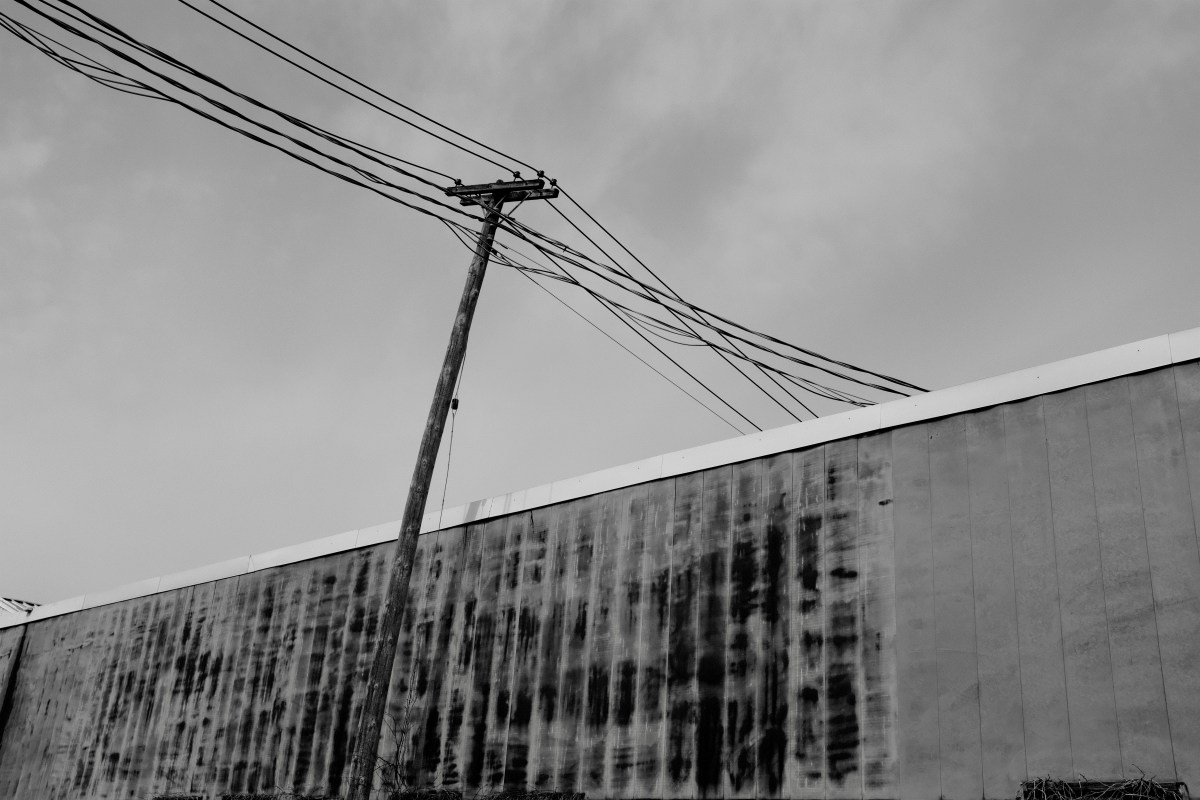
There isn’t anything particularly magical about this image: it doesn’t necessarily speak to a deep history of the city, or anything so substantive. But I liked the texture of the wall that the utility pole was pressed against, and the chaotic way that the utility wires were somewhat tangled together. And it’s for that reason that this was my favourite landscape-type photograph I made in April 2023.

Categories
Photography

Featured Photograph: ‘Urban’ in Glass’ Monthly Category Showcase

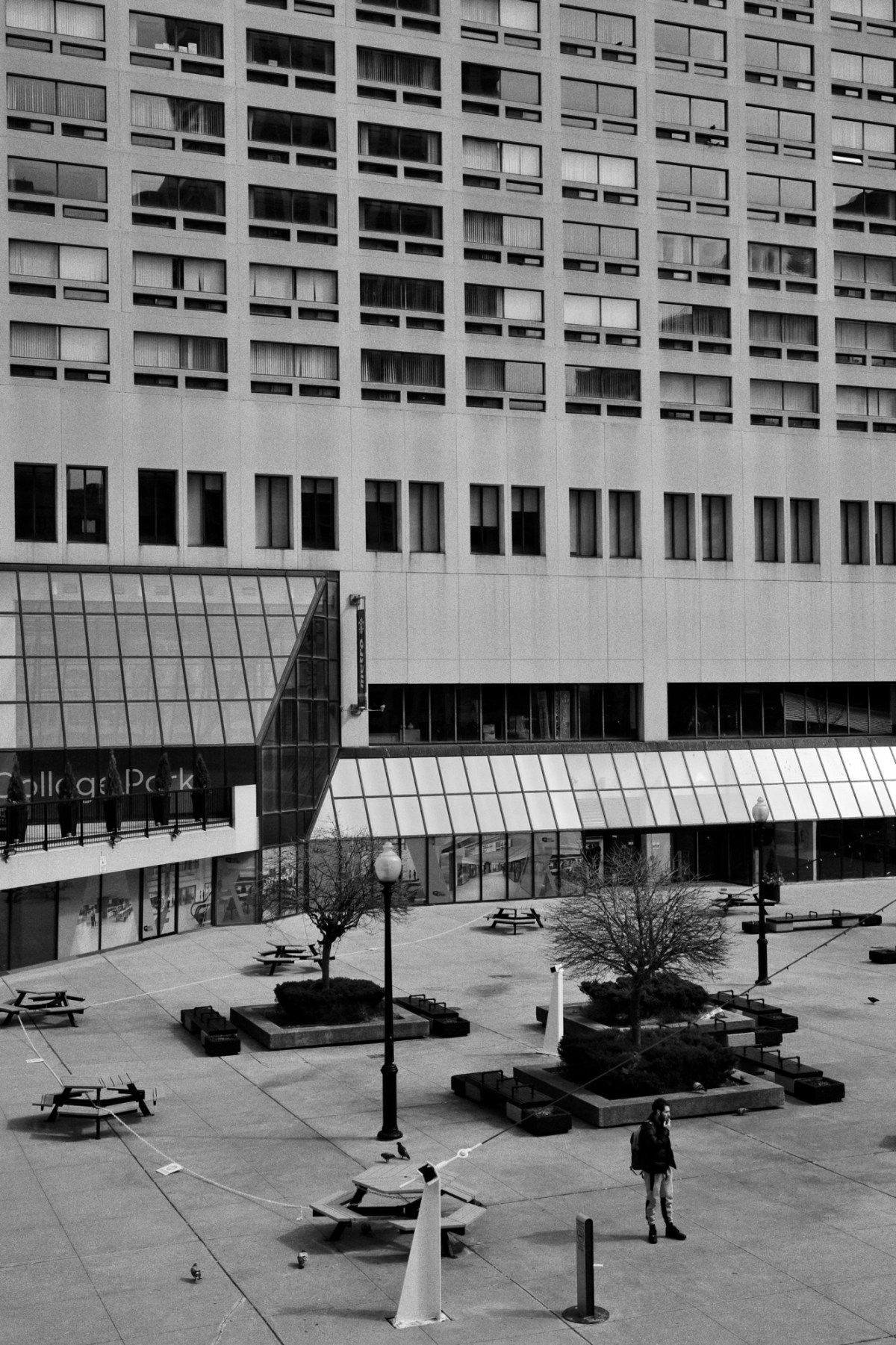
Each month Glass has a different featured photographic category. In March, a photograph I took of College Park was amongst the many excellent images that photographers published to the platform throughout the month in the ‘Urban’ category.

A feature of my street photography is to showcase lone humans in busy metropolitan areas. For context, College Park is surrounded by condos and rental apartments, and is located by a major subway stop; I suspect it’s amongst the denser parts of the city. Nevertheless I was able to catch this lone figure and the ever-present pigeons when I was running to a grocery store to get a few things.

I don’t know that I, personally, consider this to be the best image I made in March. But it definitely is very reflective of the types of images I’ve been making and so is representative of a particular body of work that I continue to develop.

For those interested, this was made using a Ricoh GR iiix. I use a custom monochrome jpeg simulation, applied minor edits in Apple Photos, and cropped the image slightly so it is 20 megapixels as displayed.

Categories
Photography Writing

Tecumseth & Niagara, Toronto, 2023

Tecumseth & Niagara, Toronto, 2023

Toronto is a city of destruction and construction: destruction of the previous era’s architecture (and often industrial buildings) and the construction of housing or glass office towers in their stead. This image by Tecumseth & Niagara shows the destruction of an abattoir that was removed to make room for condos, and the buildings in the background are new rentals in Toronto’s Liberty Village. When I landed in Toronto, in Liberty Village over a decade ago, the land those rentals are on were home to a few artist spaces where the big Toronto samba schools practiced and massive parade puppets were made. Nothing has replaced those artist spaces, to the detriment of artists across the city.

Weirdly I have very intimate memories of the abattoir. Toronto hosts an annual sunset-to-sunrise art festival, Nuit Blanche, and a couple interesting art exhibits were hosted at the abattoir over the years, and I have photos of them that I regularly return to re-experience. After the buildings were designated for destruction a number of community vegetable gardens were maintained on the outside lots. It was always a striking place to come and make images, and was a reminder of the Toronto-that-once-was and was yet-to-become.

For many street photographers, we take images and it is decades later that ‘difference’ is registered because many cities take a long time for major changes to become visible. It’s part of why the habits of the population —what people are wearing, holding, or driving — resonate so strongly with viewers; people and culture change while the built environment persists.

Toronto, by way of contrast, is in a moment of hyper-growth and so an attentive and active street photographer can document things today that may literally be different tomorrow. It turns the street photographer, almost by default, into an urban documentarian. And, also, is one of the many reasons why I think that Toronto offers a subset of street photographers a real opportunity to do novel and rapidly impactful work, as compared to those working in cities that aren’t undergoing the same tempo of destruction and re-construction.