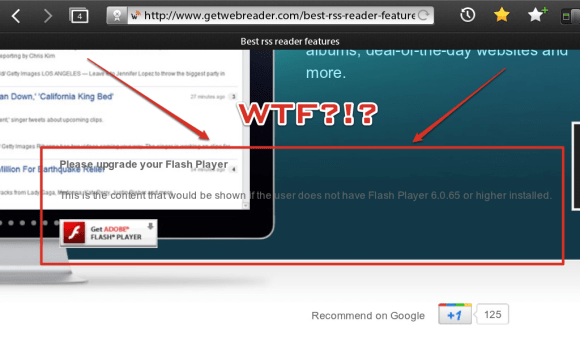
Flash is supposed to be a reason why consumers should buy a PlayBook, eh?
Flash is supposed to be a reason why consumers should buy a PlayBook, eh?
This is an incredibly mixed article on RIM, but one section in particular stood out to me as either bad reporting, incompetent journalism, or Apple fanboyism.
Success also bred hubris about RIM’s position in the market. By late 2009, it was clear that the iPhone and Android had redefined the smartphone, and that RIM needed to adapt. The company had to target consumers more aggressively, not just business customers. It also had to drastically improve the BlackBerry’s user interface and web-browsing capabilities, not to mention attract developers to write more applications for the BlackBerry platform. Smartphones became less about communication—RIM’s biggest strength—and more about consuming media.
What’s more, the company itself was becoming increasingly complex. RIM produces multiple handsets, each with different screen sizes and internal hardware. RIM will even customize the same device to suit the needs of different carriers. Apple, in contrast, produces just one iPhone model per year. The product complexity at RIM takes a firm hand to manage, and that becomes more difficult when the entire organization is undergoing a seismic shift.
I agree: adaptation was signalled (though not necessarily entirely evident) in 2009. I agree: the company had to update it’s UI and OS to match that of their competitors.
Factually incorrect: Apple produces a single version of their iPhone (they have CDMA and GSM versions, as well as multiple ‘lines’ of their product by year, as well as some version that have or don’t have cameras according to businesses’ needs).
It strikes me that, while RIM certainly has challenges, focusing on the number of devices is of variable importance. If a company has a routine or standardized production and policy cycle that accommodates different radio technologies, then the radio technologies themselves are of minimal importance for overall production of new and updated devices. What the author actually means to say is that there was an emphasis on radios rather that UI innovation. This is arguably accurate – I have a Bold 9900 at the moment, and the UI is dated – but the hardware is incredible.
RIM is, and has been, a hardware company for quite some time. Other than Nokia there is no company that even comes close to competing (and I say this as an ex-iPhone owner, and the current owner of a Samsung Windows Phone device). The real test is watching to see if RIM becomes a Nokia, or transcends the problems that beset Nokia.
At best, BB 10 will enable transcendence. At worst, it will herald RIM turning into the world’s (arguably) best mobile hardware vendor in the world.
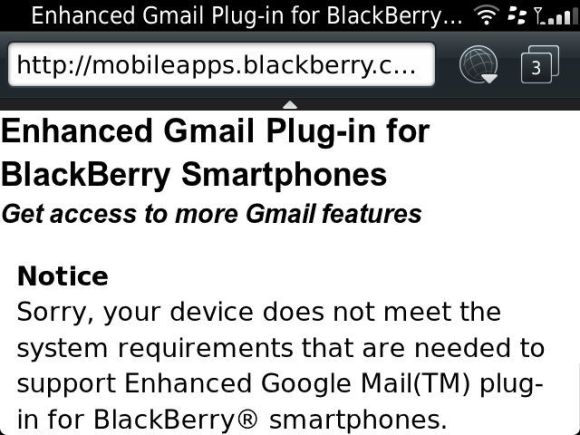
This is the problem with having too many models, with too many disparate features and capabilities, on the market at the same time. The fact that the flagship of RIM’s smartphone empire – the Bold 9900 – can’t utilize ‘old’ apps is a sin. It should be there other way around, with old devices being unable to use applications!
Earlier today Joint-CEO’s Jim Balsillie and Mike Lazaridis stepped down from their positions after 20 years in charge of Research In Motion (RIM), the producers of BlackBerry phones.
I’m a harsh critic of RIM, their phones are appalling in almost every regard comparative to their…
I disagree with the author’s 1, 2, 3, and 4 (of 5) points on the following basis:
I agree that more developers need to be brought on board (point 5). Not sure what can be done, specifically, other than create a welcome development environment, really work on outreach, and provide a good set of default API hooks that are robust and varied enough to create compelling applications. Ideally, RIM would do what they could to integrate core functionality into their devices in such a manner that they could extend that functionality with a minimum of effort. Apps are important, but a flexible and organic OS (that doesn’t get bloated) is as, if not more, important than apps themselves.
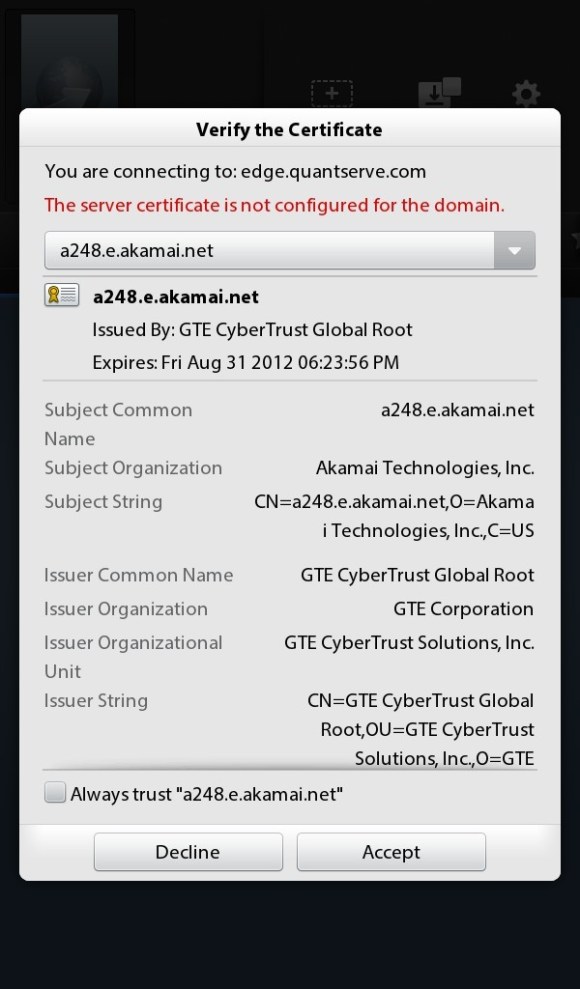
This is (another) security freak-out from the PlayBook. Is it really the case that Quantcast isn’t properly registering their certificates? What does it mean for the end-user to deny verifying the certificate?
The information contained in this screenshot lacks actual actionable information for most end-users, and they’re instead given a choice between X and Y without having any clear understanding of what either X (Decline) or Y (Accept) entrails.
Jon Evans, over at TechCrunch:
More than two-thirds of iOS users had upgraded to iOS 5 a mere three months after its release. Anyone out there think that Ice Cream Sandwich will crack the 20% mark on Google’s platform pie chart by March? How about 10%? Anyone? Anyone? Bueller?
OS fragmentation is the single greatest problem Android faces, and it’s only going to get worse. Android’s massive success over the last year mean that there are now tens if not hundreds of millions of users whose handset manufacturers and carriers may or may not allow them to upgrade their OS someday; and the larger that number grows, the more loath app developers will become to turn their back on them. That unwillingness to use new features means Android apps will fall further and further behind their iOS equivalents, unless Google manages – via carrot stick, or both – to coerce Android carriers and manufacturers to prioritize OS upgrades.
Android fragmentation is a pain for developers and, perhaps even more worryingly, a danger for users who may not receive timely security updates. To be sure, Apple rules-the-roost when it comes to having better updated device, insofar as users tend to get their updates when they become available. Whether those updates contain needed security upgrades is another matter, of course, but Apple at least has the opportunity to improve security across their ecosystem.
Unfortunately, where Apple sees their customers as the people using the devices, Google (and RIM) both have mixed understandings of who are their customers. Google is trapped between handset manufacturers and carriers whereas RIM is largely paired with the carriers alone. Neither of these companies has a timely, direct, relationship with their end-users (save for RIM and their PlayBook, which has routine updates that bypass their mobile devices’ carrier-restrictions) and this ultimately ends up hurting those who own either companies’ mobile devices.

Over the past years, one of the things I’ve spent an inordinate amount of time researching and writing about has been security certificates and data transport security. This is just to say: I spend time in security and know more than a lot of non-technical people.
I have no clue what the fuck this message in the Kobo application for the BlackBerry PlayBook is doing here.
To be specific: I opened the app in a wifi-dead area that was dead in the middle of no where. There was no cell service. I checked with packet sniffing applications on my computer, there were no adhoc or other wireless networks. This kind of a warning indicates that some third-party was trying to intercept encrypted messaging traffic that was destined to Kobo’s servers but gives no indication of how or why this certificate problem was raised. In effect, it’s a warning “shit’s gone back, son!” without say “because X just happened!”
Security – on all devices – should be transparent to the user. The warning above (which I’ve seen in other PlayBook apps) is useless to the end-user because it gives no guidance as to what just happened, how to address it, or even how to learn more about the issue. While I commend RIM for making certificate errors so front and centre, presenting highly technical security information to the end-user is garbage unless you also inform them what the hell just happened.
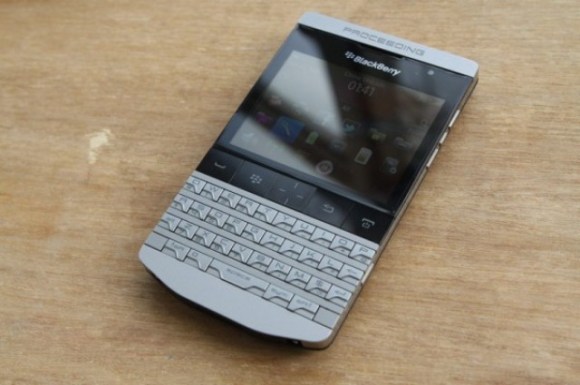
This Porsche-version of the BlackBerry costs around $2000. It’s a rebranded/designed version of a BlackBerry 9900 and I really can’t understand the functional attraction of this ‘high end’ version of the $700 device. While it’s a striking visual presentation of the Blackberry, I just can’t get past the fact that the keys are layered in a manner that (by all accounts) offers a subpar typing experience compared to a ‘regular’ 9900. While the design is striking, industrial design also must aim for maximal functionality. In this respect that the Porsche-RIM combination seems to have failed in a visually striking manner.
On the whole, I really like my PlayBook. That said, there are certain UI decisions that make absolutely no sense and are in desperate need of being cleaned up. One example: the URL bar in the default browser.


BlackBerry messenger is “significantly less encrypted compared to the BlackBerry email that corporations are using,” Leif-Olof Wallin, an analyst at Gartner Inc., based in Sweden, recently told Bloomberg News. “Any kind of cryptographer should be able to crack it without the involvement of (parent company, Waterloo, Ont.-based Research in Motion).”
BBM for consumers is sufficiently encrypted and it isn’t a simple matter for ‘amateur cryptologists’ to easily break it. No: the deficiency with the communications encryption
is that RIM uses, and possesses, a common global key to provide transit security to BBM messages. In the case of users that are linked to a BlackBerry Enterprise Server (BES) the BES administrator is responsible for establishing the encryption/decryption keys. As a result, RIM is incapable of breaking the BES infrastructure. It should be noted that, with consumer BBM traffic, the supposed attacker is a transit middle-man and not the government. RIM protects end-users from this – which doesn’t happen with a SMS message – and makes no bones about being there to protect consumers from legitimate (in the sense of legally justified, rather than normatively acceptable) government interceptions.


 Excited Pixels