
As part of my ongoing efforts to get more comfortable sharing my photographs with a wider audience I started to participate in photographic competitions last year. While I didn’t receive any awards the very act of submitting my work was the personal award that I took away.
This year, for the first time, I’m submitted to a contest with a small fee. I appreciate that many photographers take issue with the “pay to compete” models but this is normal, and I enjoy a level of disposable income that means I can afford to submit to a few contests a year. This post includes the images that I submitted to the Eyeshot 2024 competition, the descriptions I included with the images, and an artist’s statement.
Submitted Images
All of my images are part of a broader documentary project that traces how built environments that I inhabit develop and transform through the seasons, and across the years that I have been photographing my surroundings. As befits this objective, all of my images are titled by their rough location (based on major street intersections), geographic region or city, and the year made.

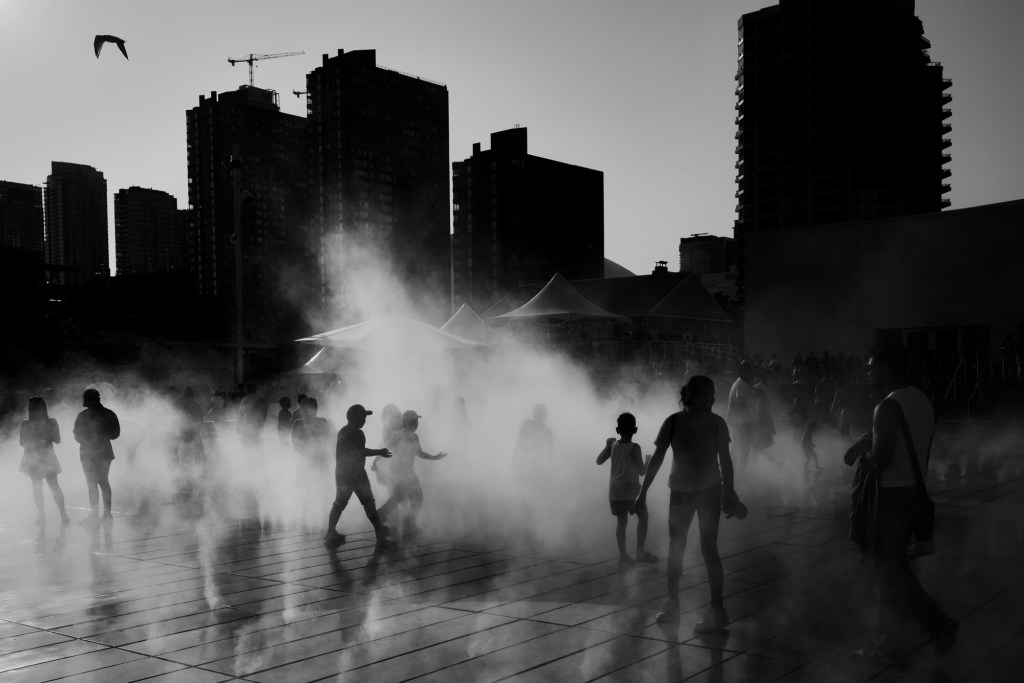
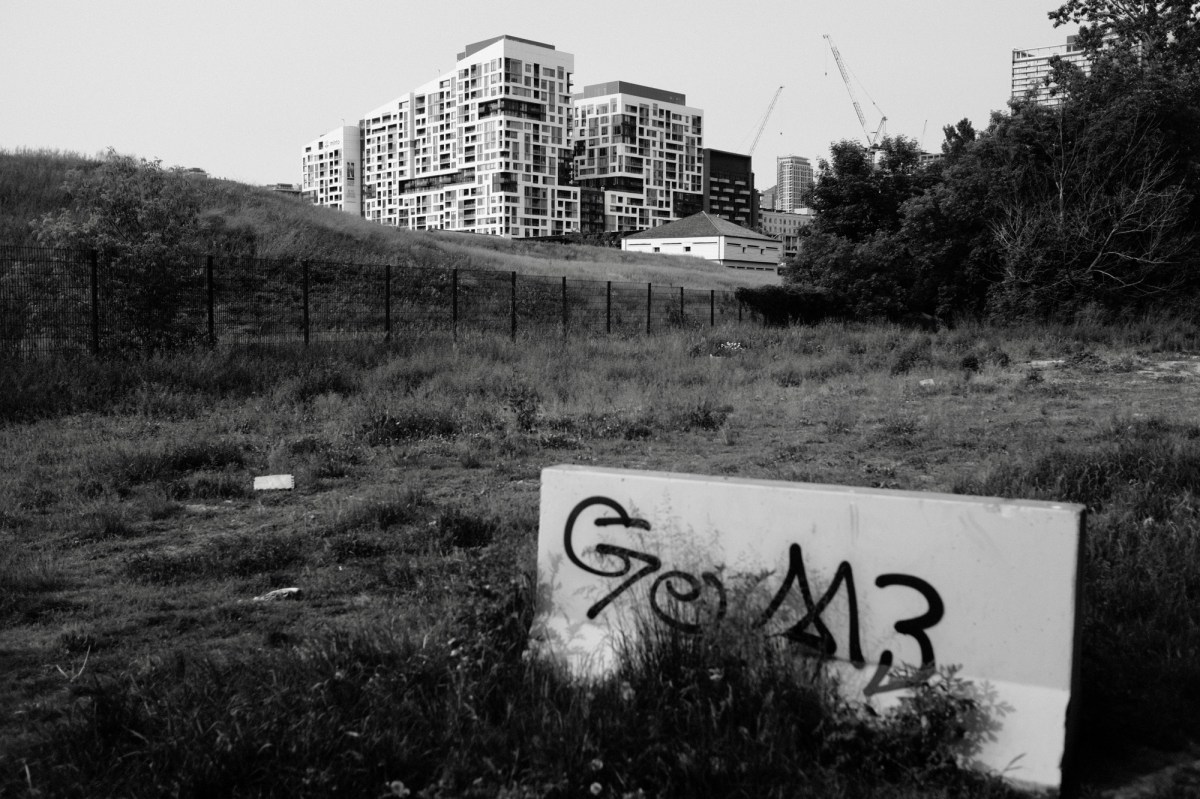
Toronto is home to a vast waterfront trail which was renovated in 2024 to include a large splash and mist park. On a swelteringly hot day I passed by after it had recently been re-opened and was delighted to see the silhouettes of people — mostly children — playing in the mist, while the looming under-construction condo towers of downtown Toronto provided a sense of youthfulness and activity to the cityscape itself. This photograph captures the youthful energy of Toronto as manifest in its residents and built infrastructures while simultaneously possessing a kind of timelessness as a result of capturing the moment in black and white.

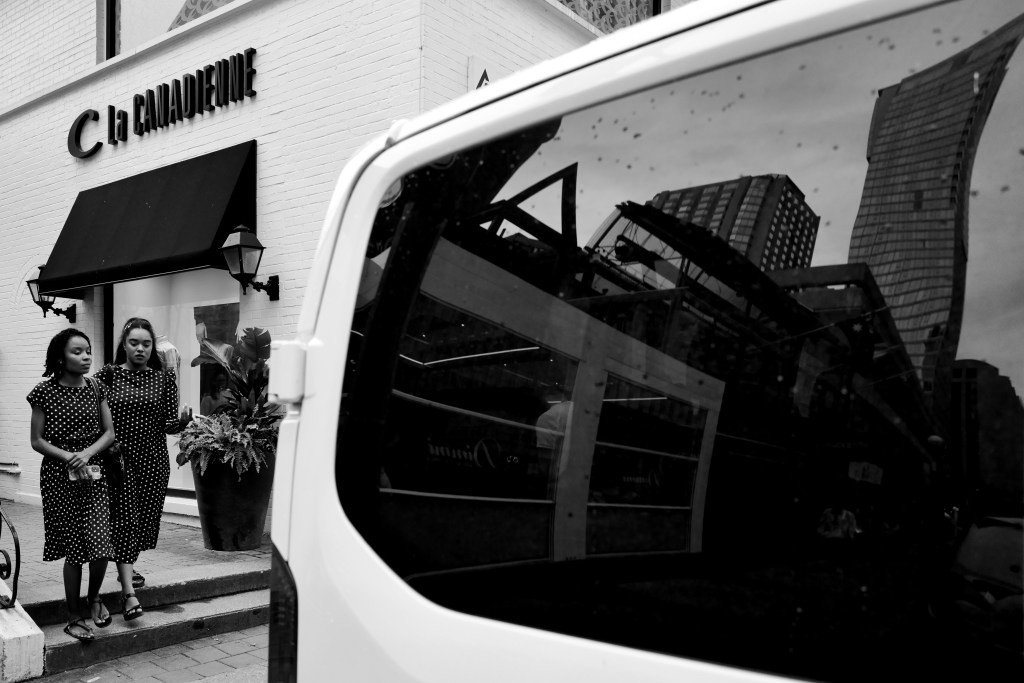
One of Toronto’s most posh shopping areas is Yorkville, where the affluent come out to spend and be seen. I like how this monochromatic photograph results in the two women looking like they could have come from 40 or 60 years ago, while the reflection in the window reveals some of the built infrastructure surrounding them. It speaks to a timelessness that is specifically located to being within a large urban environment.

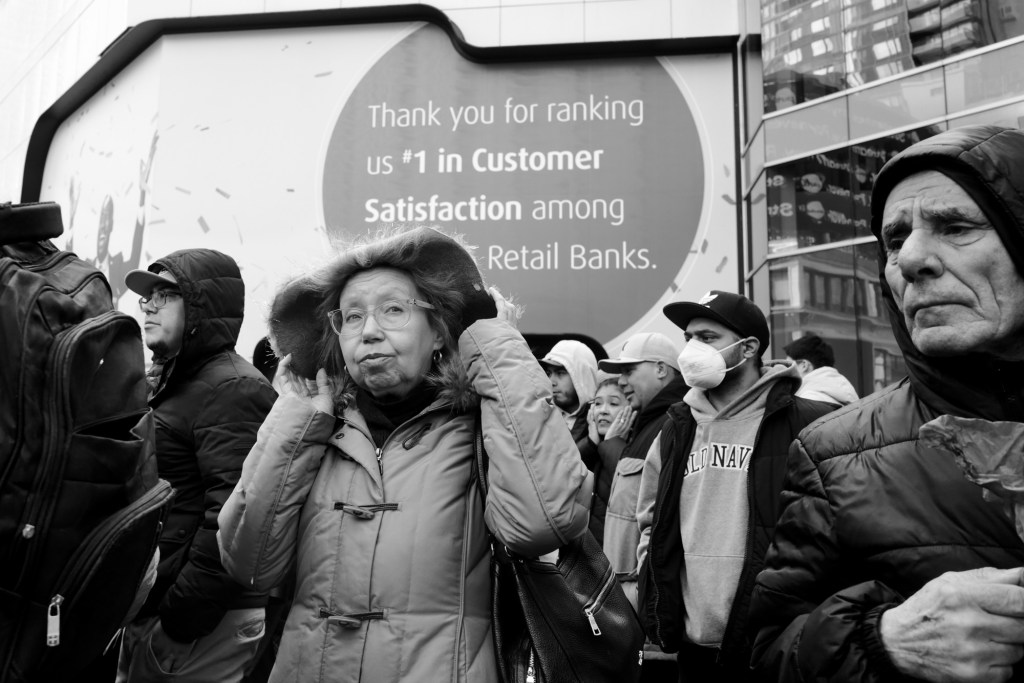
The Saint Patrick’s Day parade is a major event in Toronto. I’ve been photographing it for years and always march in it to make images of the crowds. I like how the woman in this photograph is almost posing in her winter jacket — it gives her a sense of elegance and self-importance — while, above her, the sign suggests that she is happy we’ve ranked her #1. But in addition to her, the man who is looking on in the right-hand side of the frame adds a degree of electricity to the image with his dourness contrasting with the woman’s own more-positive energy.

When was this photograph taken? 2024 or 1964? The use of black and white has the effect of confusing the viewer as to when the photograph was made. This is accentuated by the sign in the photograph being from another generation. Adding power to the image are the two figures who are wandering through the early January snow, with the young woman looking down and over to the city’s garbage, and the little boy looking up past the trash to the graffiti on the wall. This speaks to the hopes and ambitions of youth and the practicality of maturity, while they are both literally passing by the abandoned garbage of the day.

This photograph is only made possible because of the advertising-heavy urban landscapes in which we live. Taken in downtown Toronto, this photograph juxtaposes a question about one’s life with an idealised (and unrealistic) advertised imagination of excitement, along with a man contemplating his possible future. Him exiting the frame leaves us to wonder whether he will do something to change his life or if, instead, he will continue to live the same life that he always has. We are already left with some sense of his trajectory, however: his walking out to the left of the frame imposes on us a question of whether his movements will take him back to something he once enjoyed in life, or if his retreat through that side of the frame instead symbolises a staidness. Regardless, he will not be moving forward into the future — into the right of the frame — to see some change to his life.

Yonge and Dundas Square is Toronto’s imagined equivalent to
Times Square. In this photograph we see it at peak energy: the two women hiding under a transparent umbrella are huddling together with somewhat shocked looks on their faces, while behind them a woman is running from something out of scene and a giant in white strolls behind them. Photographs like this capture the dynamism of our urban landscapes while, simultaneously, not explaining what is specifically occurring. Instead the viewer is merely left with an ever-growing cascade of questions: Why are the women drinking out of a pineapple in the rain? Why are they shocked? Who is chasing the woman in the background? Why is there a tall white giant wandering around? What is going on with the squatting man in the advertisement? These questions draw the viewer in and invite them to create their own stories of what was before, and followed, the 1/320s that this frame holds together.
Artist’s Statement
I’m an amateur Toronto-based documentary and street photographer, and have been making images for over a decade. I make monochromatic photographs that focus on little moments that happen on the streets and which document the ebb and flow of the city over the course of years and decades. My work often deliberately plays with the temporality of photographs and calls into question when images were made, and invites the viewer to ask what specifically happened immediately prior to and following the pressing of the shutter button.








 Excited Pixels