Categories
Photography Writing

Reflections on a Photographic Life and Practice

On the Photowalk Podcast, listeners regularly comment that they have lost their inspiration, no longer want to make photographs, or feel that they have somehow fallen out of love with the experience of pressing the shutter. In response, I wrote to Neale James, who hosts the podcast, to suggest that it can be helpful to think more broadly about what constitutes a photographic life. Making photographs is obviously part of that life, but it is not necessarily the whole of it. A broader conception makes room for the many other activities through which we engage with, think about, and participate in photography.

Part of that message was read on the Photowalk’s episode 546. I’ve reproduced it, below, with light amendments to fit it into this blog post.


In my previous day job, I was a writer. These days, I am more often a director of writers. Something that has stayed with me since doing my doctorate is the realization that physically sitting at a keyboard, or putting pen to paper, or whatever, probably represents only 10 or 15 per cent of writing.

Writing also encompasses the research, thinking, conversations, interviews, editing, re-editing, and re-re-editing that make the words possible. The act of placing them on the page is essential, of course, but it is only one component of a much larger practice.

I think there is value in approaching photography in a similar way. We often define photography almost exclusively as being out in the world making images, while treating editing, looking at photobooks, watching or listening to conversations about photography, visiting galleries, studying other photographers, organizing our catalogues, and reflecting on our own work as separate or secondary activities.

I understand why we make that distinction, but I think it impoverishes our understanding of what photography actually is.

Making photographs is obviously essential, just as writing words is essential to being a writer. But it cannot be the only meaningful part of the practice. When someone feels that they are falling out of love with photography, or that they have not been “doing photography” because they have not recently been out making images, they may still be engaging with many of the other activities that constitute a photographic life.

That does not mean everyone must visit galleries, collect photobooks, or enjoy editing. Different people will naturally find meaning and pleasure in different parts of the process. But I think we too often judge ourselves according to the one thing we are not doing—the visible act of pressing the shutter—while discounting everything else that informs how we see, think, select, sequence, and communicate.

That overly narrow definition can also diminish the contributions of people whose photographic practice is centred more heavily on editing, printing, curating, teaching, writing, or promoting the work of others. It makes those activities appear secondary when I do not think they are. Such a narrow interpretation strikes me as, frankly exclusionary and unfair. More broadly, I think it bruises the way we talk about photography as a whole.

Categories
Links Writing

Why Great Leaders Never Stop Learning

A recently published podcast by Harvard Business Review focused on the importance for leaders to never stop learning. The interview with David Novak — formerly of Yum! Foods — had a range of insights but the ones that stuck with me included:

  • If your job has become rote — it may be busy but you know how to solve for all the challenges that arise — then it’s likely time to find a new challenge
  • If you’re looking for a way of inspiring yourself to improve your organization or team, ask yourself “what would be the first priorities of someone who assumed my role after I left?” And then work to address those priorities!
  • Find people in surrounding fields that are different from your own and learn from them. If another organization is doing great things learn from them and how the underlying intentions or principles guiding their success can be adapted into your own organization.

Highly recommend this episode if you’re looking for a bit of inspiration in how you can develop yourself and your professional organization.

Categories
Links

Podcast Recommendation: A Snapshot of the Contemporary Ransomware Ecosystem

For those looking to catch up on the current ransomware ecosystem, this podcast discussion with Greg Linares, Principal Threat Intelligence Analyst at Huntress, is worth a listen.

Linares shares insights into the modern ransomware landscape, including how crews increasingly operate like businesses and why groups such as Akira, Medusa, RansomHub, and Qilin continue to cause significant damage.

The discussion also touches on overlap between ransomware actors and nation-state activity, what “time to ransom” means operationally for defenders, and why techniques such as ClickFix and credential theft continue to succeed at scale.

It further examines the surge in abusing remote monitoring and management (RMM) tools, how “living-off-the-land” techniques allow operations to unfold without traditional malware, and the practical defenses smaller organizations can realistically prioritize.

You can listen online, Apple Podcasts, or other podcast directories and applications.

Categories
Links Photography

Best Photography-Related Stuff of 2024

It’s the time of year for people’s best-of roundups. Like last year I wanted to recognize stuff that meant a lot to my photography through 2024. And, this year, I’ve also added a short list of hopes for stuff in 2025!


Photography Stuff I Used

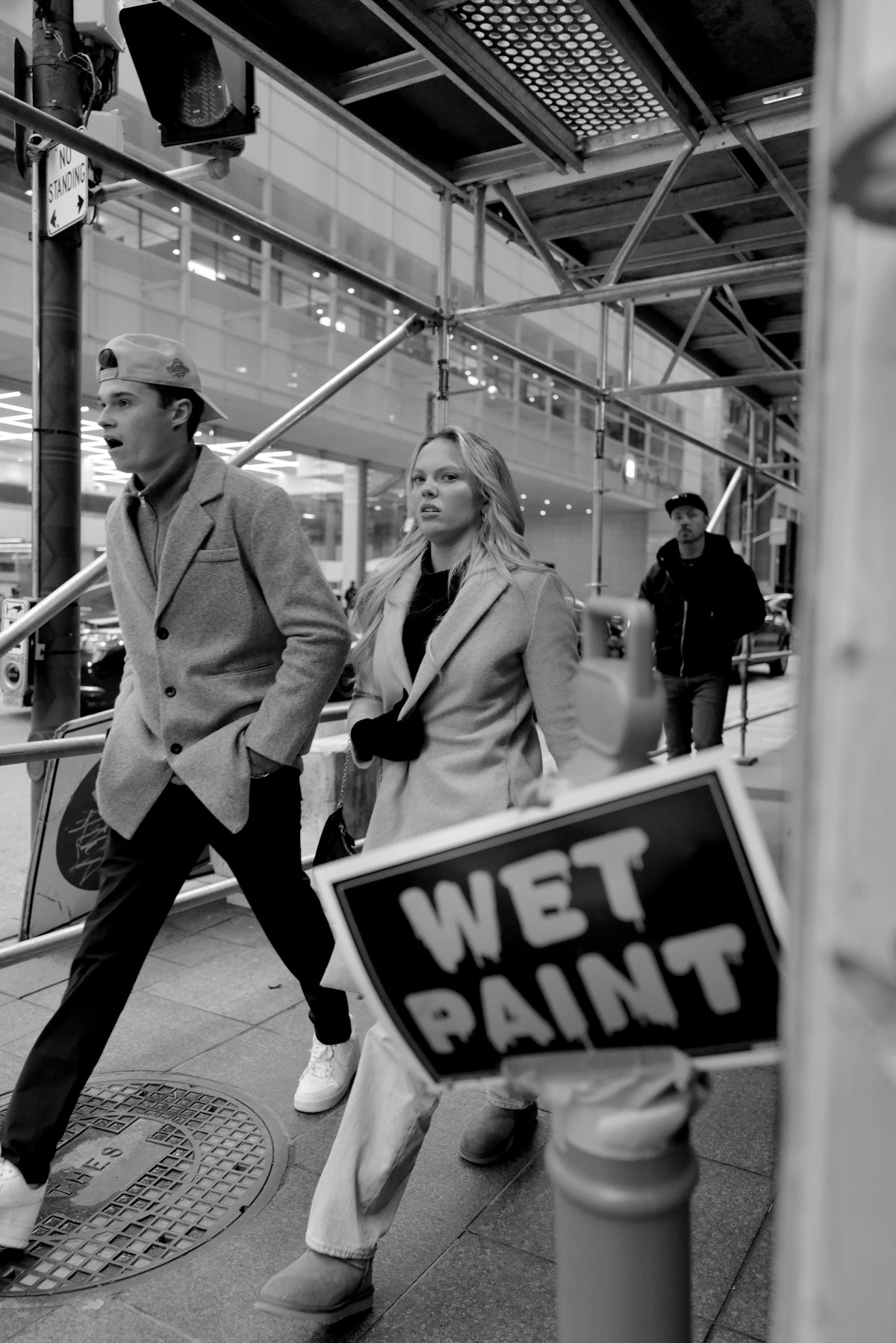
Yonge & Dundas, Toronto, 2024

Best Technology of 2024

The big change this year? I pretty well completely pivoted to my Leica Q2 and with only rare exceptions did I use the Ricoh GR IIIx or my iPhone 14 Pro. When I bought the Q2 it was, in part, to be able to capture images at night where there was little light. I’ve made images under these conditions that I’m happy with and I’ve come to learn how to better use the 28mm focal range. At this point I’ve created well over ten thousand frames over the year.1

I upgraded to the 11” iPad Pro (2024) and definitely appreciate how light the device is, and how vibrant the screen is. I continue to use an iPad Mini for most of my actual reading but write a lot of blog posts on the iPad Pro and do all my photo editing on it.

When I take my photowalks I’m always listening to a podcast or music on my AirPod Pros. However I’ve long had an issue with finding tips that best fit my ears; the ones in the box always slip out. I recently learned about, and bought, the SpinFit CP1025 (S/SS) and they’ve been game changing. I get a perfect fit and the AirPods stay in my ears. Highly recommend them!

Best Services I Paid For

I continue to post images to Glass each day. I’m still disappointed with their AI search, and especially disappointed that landscape viewing on the iPad has now been broken for about a year.2 Still, it’s a terrific community and a good place to post images regularly.

Apple One is key to my data management strategy. I’m still under the 2TB that is provided as part of the subscription though, with my current data use, I suspect that in 3-5 years I’ll need to expand that 2TB storage limit.

Lastly, while I’ve watched less photography YouTube I continue to appreciate YouTube Premium. It’s still about the most regularly used subscription service that I use on a regular basis.

Best Apps

Have I changed the apps that I rely on regularly since 2023?

Nope.

And so my best apps of 2024 include:

  • Glass: I use to share my images on a daily basis.
  • Geotags Photos Pro and Geotags Photo Tagger: I use to add geotags to my images.
  • Reeder Classic: To follow various photography blogs.
  • Apple Podcasts app: I use this to listen to photography podcasts while on my weekly photowalks.
  • Apple News: To read photography magazines and websites that otherwise would be paywalled.
  • Apple Photos: Used to edit and store all my images. I don’t love the iOS version of the application but it is what it is.

Stuff I Made

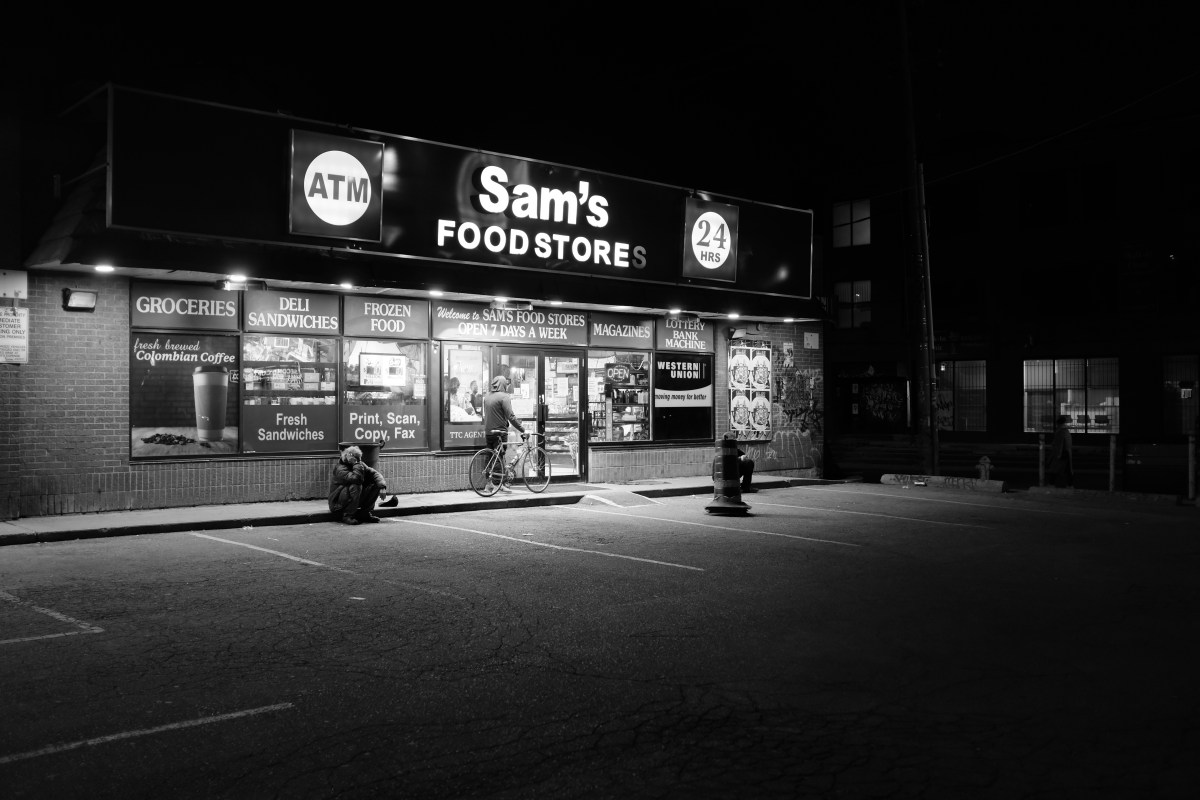
College & Clinton, Toronto, 2024

Writing

  • Sharing Photographs, and Photography, with Others and Growing as a Photographer: Despite being pretty used to being in the public eye as a result of my day job it’s different to expose myself when sharing the images that I make. Those images, if read carefully, reveal some elements of myself that I showcase less often, and this is made even revelatory when producing and sharing physical items to people I respect or submitting digital images to competitions. Just talking about that experience was liberating and reaffirmed that I am, slowly, growing as a photographer.
  • Accidentally Discovered Street Photos: Imagine my surprise when, after opening my used copy of Conversations: With Contemporary Photographers a strip of exposed Kodak 100TX film fell out! I used a free app to enlarge some of the images and while my efforts weren’t spectacular it did result in seeing — and sharing — some images from an earlier time.
  • 10 Tips for Starting to Photograph on the Street: I regularly read and view content that is meant to help new photographers get comfortable on the streets. Much of that content is good but is directed towards a certain kind of concern, and way of behaving, on the streets (e.g., Zone focus! Shoot from the hip! Be invisible!). I think that my 10 tips are for people like me who are interested in making street photos but are shy about even being seeing with a camera. Really, this is a blog written for myself which, if I’d read it 10 years ago, would have given me a clearer sense of what I could do to develop my confidence and skills.
  • Nuit Blanche, 2024: I’ve been attending Nuit Blanche in Toronto, an annual art festival that runs for a single day from sundown to sunup, for many years. I always make photographs during it but, at the same time, have been challenged by using a smaller APS-C sensor camera. I was both pleased in the art that I experienced this year as well as the ability of the Leica Q2 to capture images more like how I wanted them due to its lens and sensor size.

Stuff I Read

Oxford & Augusta, Toronto, 2024

Best Photography Books and Magazines

  • Metropolis: I’ve followed Alan’s work for years and appreciate how stark his imagery is and his absolute attention to form. His images carefully consider what is absolutely needed to communicate his vision and no more.
  • Conversations: With Contemporary Photographers: This was probably the most important book about photography that I read this year. I’m, personally, interested in thinking more deeply about the ontology of photography and what it is and is not. The photographers interviewed in the book provided a range of interpretations of what photography is, and means, for each of them, and I benefitted tremendously from their thoughts on the medium as one which controls time and, also, the role of time in their own creative activities.
  • Framelines: The team behind Framelines improve the magazine with every issue. From enhancements to the printing, imagery, interviews and just shipping, this is an instant purchase each time they come out with new issues. I particularly appreciate how they celebrate new and emerging photographers from around the world and platform those who, otherwise, I’d be entirely unaware of.
  • André Kertész: Sixty Years of Photography: This book is a gift to photographers and the image-viewing public more broadly. Published back in 1978 it catalogues Kertéz’s photographic history. It is when we look at images like this that it is apparent how much you can do with black and white images that are focused on the forms across a frame, and also how having decades of images enable a playfulness between pages so that works from different decades can speak to one another and create a perception of continuity across time and space. If you are committed to street images, black and white images, or just seeing how history unfolded over sixty years, then this book is a must see.
  • The Pleasure of Seeing: Conversations with Joel Meyerowitz on sixty years in the life of photography: Joel is, of course, a (still living) legend and has a number of different monographs under his name. This book is a little different because it explores his thought process across the different phases or eras of his photography. Now, if you’ve actively listened to his talks, interviews, podcasts, and so forth over the past decades many of the messages he communicates will be familiar. But to have them all in one place, along with his images that underscore his creative vision, is a real gift to photographers.

Stuff I Watched

Great Lakes Waterfront Trail, Toronto, 2024

Best Movies

  • Lee: This was an engrossing and highly cinematic movie. I liked how it conveyed the experiences that female photographers and journalists experienced during the time period and, also, communicated the toughness of Lee Miller and the harmful effects of being a war photographer more generally.
  • Harry Benson: Shoot First: I thought this was a terrific documentary of Benson who has made a living capturing images of celebrities. The images are profound but, also, you walk away with a sense that he lacks much empathy for his subjects. The inclusion of those who love his work, and those who hate it, helps to communicate what a controversial figure Benson has been throughout his life and career.

Best YouTube Channels

  • Paulie B: Almost certainly one of the most important American street photography channels, Paulie B has done a masterful job interviewing a range of photographers across the United States to understand what drives and inspires them. His episodes showcase photographers who may not be widely known, unpacks the creative processes of those he interviews, and also lets other street photographers really see how others work the streets. We’ve all heard about how the greats of the 1960s and 1970s worked; Paulie B is showing us how our American contemporaries move, think, and behave.
  • James Popsys: James is a quiet and almost introspective photographer, which are not necessarily the traits that lend themselves well to YouTube. However, his thoughtful meditations on how and why he makes images, combined with the sheer beauty of his work, results in each video containing a gem that is worth treasuring.
  • Photographic Eye: Some channels on YouTube focus on gear or technical methods of getting certain kinds of images. The Photographic Eye is not that. Instead, Alex Kilbee explains the intellectual processes of photography and speaks as a kind mentor or peer who is, also, working through his photography. I particularly like how he shares some of his own images so that viewers can appreciate the variety and intentionality behind image making.
  • The Art of Photography: Ted Forbes has been running his channel for over sixteen years at this point and made videos on just about everything that you’d ever want to know about. I find his historical episodes that break down, and showcase, the great photographers as essential to my own photographic education. And his episodes that showcase viewers’ own projects have led me to finding a range of photographers and purchasing work from them.3

Stuff I Subscribed To

Richmond & Spadina, Toronto, 2024

Best Podcasts

  • The Photowalk: I’ve been a supporter of the Photowalk for several years and it’s a regular joy and pleasure to hear Neale and his guests talk about the broader experiences of making images. The discussions rarely touch on gear and, instead, are centred around the ‘why’ of image making. Whenever I’m out on a weekly photo walk, I’m listening to Neale and recommend that you do the same.
  • Frames Photography Podcast: Frames features photographers from across the different photographic genres. Many of the discussions are insightful for understanding what is behind different photographers’ creative processes, what motivates their projects, and how they work to express themselves to the broader world.
  • Street Photography Magazine: Featuring street photographers from around the world, this podcast exposes how and why different people got into the genre, what they aim to present through their work, and the rationales underlying how they make their images. Many of the photographers who are interviewed talk about their recent, or ongoing, projects which serves to underscore the different ways in which projects are conceptualized and brought into the world.
  • The Candid Frame: Conversations on Photography: Operating since 2006, The Candid Frame features photographers from all walks of life discussing the how and why of their image making. This is particularly useful, for me, in learning about photographers working in genres entirely different from street photography and learning how their thought processes can apply to my own photographic life.
  • Street Life Podcast: This is one of the most recent additions to my list of podcasts and I’ve been enjoying every episode this year. It typically features photographers working in and around Australia and, aside from Houman Katoozi, I’m largely unfamiliar with folks working on that continent. The podcast often has a sense of friends talking amongst themselves about street photography and you’re just overhearing them as they joke with one another, talk about the Australian street photography community, and the challenges they’re facing in their own photographic activities.

Best Blogs/RSS Feeds

  • GR Official: As an owner of a few Ricoh GRs I’m always curious about how others handle and experience the camera. This blog features a range of authors, with a diversity of photographic backgrounds and personal experiences, which means that each blog is a bit of a surprise: is this going to be a more reflective piece, a showcase of just a few images, thoughts on a piece of equipment, or…?
  • Little Big Traveling Camera: I am always envious of how focused this photoblog is, how thoughtful the author is, and how well put together the images are. LBTC is, to my eye, the definition of what an excellent personal photoblog can be.
  • Mobiography: I don’t take a large number of mobile phone photographs but I appreciate learning how such images can be made. If nothing else, it showcases just how can be done with phones of today (as well as those of a decade or more ago) in the hands of competent photographers.
  • The Phoblographer: A regular publication that both showcases contemporary work while also engaging in some opinion and discussion about trends or issues in the photographic world.
  • Ming Thein: I owe a lot of what I (think I) understand about photography to Ming’s blog. He shuttered it several years ago but has kept it alive / in archival mode. I hope that it never goes away given how helpful and insightful his writing is for new and more experienced photographers alike.
  • Skinny Latte’s Creative Brain: I loved the photoessays that were published that exhibited gorgeous photography along with explanations and narratives to surround the images themselves. Sadly the photoblog has been left behind but the images and stories remain worth revisiting periodically.

Hopes for the future

Front & Bay, Toronto, 2024
  • Apple Photos: I just want it to reach parity with its Mac counterpart. We know that Apple has purchased Pixelmator and I’m hopeful that some of that DNA makes its way over to Photos.
  • iPhone Camera app: I’ll be honest, the new iPhones’ ability to better control and develop custom JPG settings along with the adoption of JPG XL are very exciting and make me look forward to whenever I upgrade from my iPhone 14 Pro. However, I really wish that Apple would bring additional exposure metering to the iPhone and, in particular, highlight metering for my black and white images. While there are ways to get around this on the iPhone it’d be nice if it was something they could do by default.
  • WordPress: I’ve been using WordPress for over 18 years at this point and it just seems to get more and more bloated. There are basic things that just don’t seem to be well developed, such as media management or the presentation of images, while a huge amount of effort has been put into turning WordPress into an enterprise CMS. I get that the company’s business is derived from its enterprise work but it’d be nice if basic features were also included in the priority product lists.
  • Leica Q2 Thumb Grip: In a late end-of-year purchase, I’ve ordered the ‘official’ Q2 thumb grip to further improve on the ergonomics of the Q2. Here’s hoping that I end up happy with it!

  1. Though, admittedly, I’ve kept far fewer after doing my regular culling. ↩︎
  2. Yes, I’ve contacted support. No, I never heard anything back. ↩︎
  3. In the interests of disclosure I was featured in one of the mailbag episodes for my Postcards project. ↩︎
Categories
Aside

Foundational Models, Semiconductors, and a Regulatory Opportunity

Lots of think about in this interview with Arm’s CEO.

Of note: the discussion that current larger AI models that are in-use today will really have noticeable effects / changes in user behaviour on edge or end point devices in a 2-3 years once semiconductors have more properly caught up.

Significantly, this may mean policy makers still have some time to establish appropriate regulatory frameworks and guardrails ahead of what maybe more substantive and pervasive changes to daily computing.

Categories
Photography Writing

Best Photography-Related Stuff of 2023

There are lots of ‘best of’ lists that are going around. Instead of outlining the best things that I’ve purchased or used over the year I wanted to add a thematic: what was the best ‘photography stuff’ that I used, read, watched, or subscribed to over the course of 2023?

Photography Stuff I Used

Best Technology of 2023

90-95% of the photographs that I made over the year were with the Fuji X100F. It’s a spectacular camera system; I really like how small, light, and versatile it is. I created a set of recipes early summer and really think that I dialled in how to use them and, also, how to apply my very minimal editing process to the images. I’m at the point with this camera that I can use it without looking at a single dial, and I know the location of every setting in the camera that I regularly use.

I do most of my writing on my well-used iPad Pro 11” (2018). It’s a great device that is enough for 99% of my needs.1 However, I have to admit that I’ve long missed owning an iPad Mini because they’re so small and light and portable. I do pretty well all of my reading on the iPad Mini these days. My partner purchased me one this year and I’ve fallen in love with it again. I’m using it everyday for an hour or more, and ultimately I now pull out the iPad Pro 11” just when I need to do longer-form writing.

Finally, though I haven’t had it all that long, I really do enjoy the Leica Q2. I’m still getting used to the 28mm focal length but deeply appreciate how I can now shoot in bad weather and low light.2 The in-camera stabilization is also letting me experiment with novel slow shutter speeds. I remain excited, however, for what it’ll be like to use the camera when I haven’t been in persistent cloud cover!

Best Services I Paid For

I have kept using Glass each and every day. Does it (still) have problems with its AI search? Yes. Does it have the best photographic community I’ve come across? Also yes. You should subscribe if you really love photography and want to contribute to a positive circle of practice. And if you’re watching a lot of photography-related materials on YouTube I cannot recommend a Premium subscription highly enough!

I also am deeply invested in Apple’s services and pay for Apple One. This gives me access to some things that I care about, including a large amount of cloud storage, News, customized email, Apple Music, and Apple TV. I find the current costs to be more than a little offensive–Apple’s decision to raise costs without increasing the benefits of the service was particularly shitty–but I’m deeply invested in Apple’s ecosystem–especially for storing my photographs!–and so will continue to pay Apple’s service tax.

Best Apps

I use lots of apps but the best ones I rely on for photography include:

  • Podcasts App to listen to the different podcasts to which I’ve subscribed.
  • Reeder for staying on top of the different blogs/websites I’m interested in reading.
  • Glass to look at, comment on, and reflect on photographers’ images.
  • Geotags Photos Pro and Geotags Photo Tagger. I’ve set the former app to record my geolocation every 5 minutes when I’m out making images and the latter to then apply geotags to the photographs I keep from an outing.3

Stuff I Read

Best Photography Books

Most of the non-fiction books that I read throughout the year were focused around photography. The two best books which continue to stand out are:

  • Bystander: A History of Street Photography. This book does an amazing job explaining how (and why) street photography has developed over the past 150 years. I cannot express what a terrific resource this is for someone who wants to understand what street photography can be and has been.
  • Daido Moriyama: A Retrospective. This book is important for all photographers who are interested in monochromatic images because it really explains why, and how, Moriyama made his classic images. It reveals why he made his gritty black and white images and, also, why some of the equivalent ‘recipes’ the mimic this kind of image-making may run counter to his whole philosophy of image making.

Stuff I Watched

Best Movies

The best photography-related movies that I watched were all classics. They included Bill Cunningham: New York; Gary Winogrand: All Things Are Photographable; The Jazz Loft According to W. Eugene Smith; and Ordinary Miracles: The Photo League’s New York. Combined with written history and photo books they helped to (further) reinforce my understanding of how and why street photographers have made images.

Best YouTube Channels

I watch a lot of photography YouTube. The channels I learn the most from include those run by James Popsys, Tatiana Hopper, EYExplore, Alan Schaller, Pauline B, aows, Aperture, and Framelines. My preference is for channels that either provide POV or discuss the rationales for why and how different images are being (or have been) made.4

Stuff I Subscribed To

Best Podcasts

I tend to listen to photography podcasts on the weekend when I go out for my weekly photowalks. The two that I listen to each and every week are The Photowalk and The Extra Mile. It’s gotten to the point that it almost feels like Neale James (the host of the podcasts) is walking along with me while I’m rambling around taking photos.

Aside from those, I’ll often listen to A Small Voice or The Candid Frame. These are interviews with photographers and I regularly learn something new or novel from each of the interviews.

Best Blogs/RSS Feeds

For the past year I’ve trimmed and managed the number of my RSS feeds. I keep loving the work by Craig Mod, Little Big Traveling Camera,5 and Adrianna Tan’. They all do just amazing photoessays and I learn a tremendous amount from each of them in their posts.

Biggest Disappointments

I somehow managed to break the hood that I’d had attached to my Fuji X100F in the fall and decided to get what seemed like a cool square hood to replace it. It was a really, really bad idea: the hood was a pain to screw on so that it wasn’t misaligned and, once it was aligned, was on so tight that it was very hard to remove. I would avoid this particular hood like the plague.

I also bought a Ricoh GR IIIx and while it’s a fantastic camera I just haven’t used it that much. I didn’t take as many images with it as I’d hoped when I was walking to or from work, and really ended up just using it when I needed to go out and take photos in the rain (I kept it safely hidden under my umbrella). Also, the camera periodically just fails to start up and requires me to pull the battery to reset it. Is it a bad camera? Nope, not at all, and I did manage to capture some images I was happy with enough to submit to Ricoh’s photography contest. But it’s not a camera that I’ve really fallen in love with.

Finally, while I use my AirPods Pro all the time I really don’t like them because I cannot get them to stay in my ears unless I purchase third-party foam tips. And I need to keep purchasing new sets of tips because they wear out after a couple of months. Are they good headphones once they stay in my ears? Yes. But the only way to accomplish that is becoming increasingly costly and that’s frustrating.

Conclusion

Anyhow, that’s my list of the ‘best photography-related stuff’ I’ve used in the course of 2023. What was your top stuff of the year?


  1. I really do want to get a new iPad 11” and will do so once they update the screen. I edit pretty well all of my photos on the iPad Pro and an updated screen (and battery…) would be lovely. ↩︎
  2. There is a caveat that I’ve found: the electronic shutter is absolute garbage for shooting at dusk/in the dark with LED lights. And I think the single-use exposure dial on the Fuji X100F is preferable to the configurable dial on the Q2. ↩︎
  3. You can set the app to record your location more regularly but I’ve found this to be a good balance between getting geolocation information and preserving my phone’s battery life. ↩︎
  4. If you watch a lot of YouTube then I recommend that you pay for a YouTube Premium subscription. You’ll cut out the frustrating advertising that otherwise intrudes into the videos. ↩︎
  5. I think that this is perhaps the single best photography blog that I’ve found. I aspire to this level of excellence and regularity of updates! ↩︎
Categories
Aside Links

2022.8.10

I’ve been making some small changes to Excited Pixels. I’ve updated my list of good podcasts I listen to (it now includes several of my preferred photography podcasts) and I’ve also created a portfolio page that currently showcases some of my recent preferred  monochrome street photography. For my daily photography check out my Glass profile.

Categories
Aside Links

2022.1.6

After letting it languish for far too long (a year or two, I think!) I’ve updated my Podcasts page to include the podcasts that I either listen to regularly, or that have come to a conclusion but that I enjoyed.

Categories
Links Photography Roundup Writing

The Roundup for April 1-30, 2020 Edition

(Unhoused by Christopher Parsons)

Welcome to this edition of The Roundup! Enjoy the collection of interesting, informative, and entertaining links. Brew a fresh cup of coffee or grab yourself a drink, find a comfortable place, and relax.


Inspiring Quotation

When you give something, you’re in much greater control. But when you receive something, you’re so vulnerable.

I think the greatest gift you can ever give is an honest receiving of what a person has to offer.
– Fred Rogers

Great Photography Shots

Some of the photos for the 2020 All About Photos Awards are just terrific.

“Jump of the wildebeest” © Nicole Cambre. 5th Place, All About Photo Awards.

“Beyond the wall” © Francesco Pace Rizzi. Particular Merit Mention, All About Photo Awards

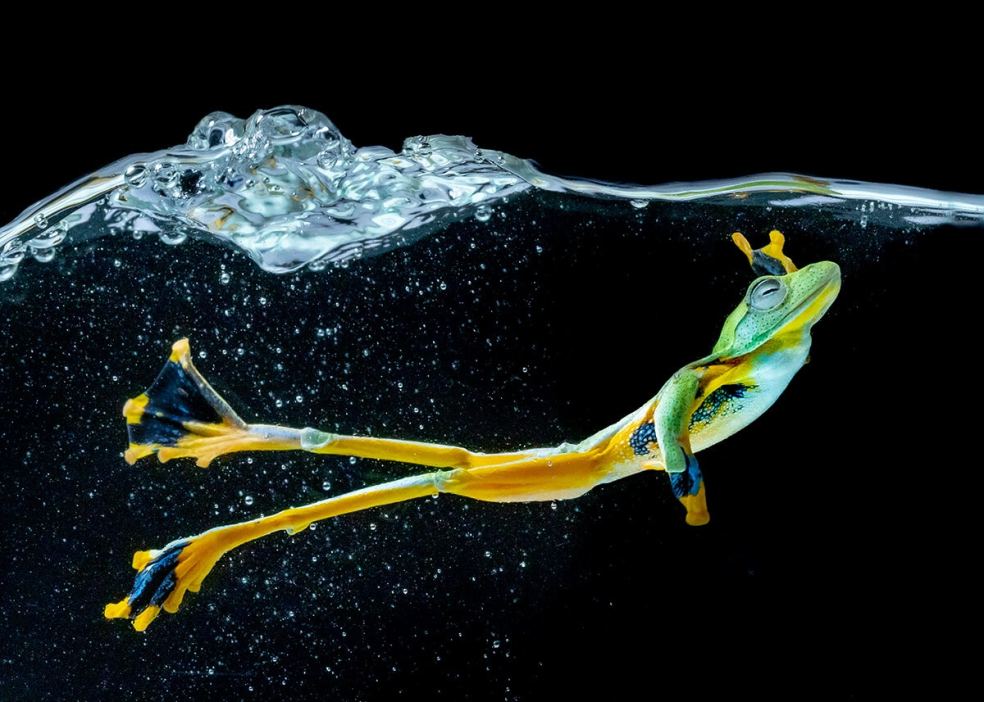
“The Wallace’s Flying Frog” © Chin Leong Teo. Particular Merit Mention, All About Photo Awards

“Step by Step” © Mustafa AbdulHadi. Particular Merit Mention, All About Photo Awards

Untitled © Yoni Blau. Particular Merit Mention, All About Photo Awards

Woman Mursi © Svetlin Yosifov. Particular Merit Mention, All About Photo Awards

Music I’m Digging

My April best-of playlist features some classic alternative and a lot of not-so-new rap and R&B. I guess this is the first full playlist I’ve created purely when in self-isolation?

Neat Podcast Episodes

  • Lawfare-Jim Baker in FISA Errors // Baker previously was responsible for, in part, reviewing the FISA applications put before the FISC. Recently, the DOJ IG found that 29 of 29 applications they reviewed had errors, including a seeming failure to document or prove the facts set out in the applications. Baker assessed the legal implications as well as the normative implications of the deficits, and the need to develop stronger managerial control over all future applications.
  • CBC Ideas—The Shakespeare Conspiracy // Using Shakespeare as a kind of distancing tool—he’s long dead and so unlikely to enliven contemporary political passions—Paul Budra explores how different scholars and public intellectuals have asserted who Shakespeare ’really was’ and the rationales behind such assertions. In an era where the West is increasingly concerned about the rise of conspiracies this espisode provides a range of productive tools to assess and critique new and emerging conspiracies.
  • NPR throughline—Buzzkill // Mosquitos are, without a doubt, responsible for more human deaths than anything else on earth. This superb short podcast goes through how mosquitos have been essential to empire, warfare, and changes to humans’ genetic makeup.

Good Reads

  • The Weirdly Enduring Appeal of Weird Al Yankovic // Anderson has done a spectacular job showcasing the beautiful humanity of Weird Al. In tracing his origin story, and explaining the care and time Al puts into his work, and the love he has for his fans, you really appreciate just how lovely a man he is. If anyone is a Tom Hanks for the geeks, it may end up being Weird Al.
  • There Is a Racial Divide in Speech-Recognition Systems, Researchers Say // It’s as though having engineers of particular ethnicities, building products that work for them, while also lacking employees of other ethnicities, has implications for developing technology. And the same is true of when developers do not include people with diverse socio-legal or socio-economic backgrounds.
  • The chemistry of cold-brew coffee is so hot right now // God bless the coffee-obsessed scientists who’ve taken a deep dive into the way that coffee beans respond to different extraction methods, as well as provide their own cold brew recipes. I can’t wait to see what research percolates out of this lab going forward!
  • What’s the Deal With False Burrs? // Having only recently managed to properly clean my home grinder, I was curious to learn a bit more about the differences in burr grinders. While I’m satisfied with my current grinder I can predict—based in owning a ‘faux’ burr grinder—that a Baratza Encore or Virtuoso is in my near future.
  • LIDAR: Peek Into The Future With iPad Pro // The recent release of the newest iPad Pro iteration has been met with a lot of yawns by reviewers. That makes a lot of sense, given the combination of the ongoing crisis and relatively minimal changes over the 2018 iPad Pro. The only really major new thing is a LIDAR system that is now part of the camera bump, but no mainstream reviewers have really assessed its capabilities. Fortunately the folks from Halide—a smartphone camera company—have dug into what LIDAR brings (and doesn’t bring) to the floor. Their review is helpful and, also, raises the question of whether professionals who do modelling should be consulted on the utility of these kinds of features, just as photographers—not gadget reviewers—should be asked deep and probing questions about the cameras that are integrated into smart devices these days.
  • The Mister Rogers No One Saw // Fred Rogers has had a number of films made about him and his life, but this essay by Jeanne Marie Laskas is different because it is so deeply personal about the relationships Fred had with those around him, and with the author. He inhabited a world that was just a little bit different than our own; his creativity was drawn from this place. But it was also a creativity linked with a deep ethic of work, where he focused on ensuring that his art was as perfect as possible. And left unstated in the article is one of the real testaments to his work: he would re- edit episodes, years after they had first been produced, when he found there were elements he was unhappy with or that no longer adequately represented what he had learned was a more right way of thinking about things. Also left unwritten in this piece was Fred’s belief that children we resilient and could be taught about the world; his shows dealt with issues like the Vietnam war and nuclear war in ways that were approachable to children who deserved to be involved in understanding their world, and always knowing they weren’t alone in it, and that it was perfectly ok to have feelings about it.
  • New York and Boston Pigeons Don’t Mix // The sheer size of pigeon populations–they extent across vast swathes of urbanized (and road connected) land–is pretty amazing. But, equally interesting, is how rural environments seem to, effectively, segregate populations from one another. It’s just another example of how genetically diverse groups can exist all around us, without our ever realizing the distinctiveness.

Cool Things

  • I Miss the Office // If you want office sounds for your work at home, then this site has you covered. (Also, if this is what you’re missing you’re kinda weird!)
  • How to Make Whipped Coffee // I am very curious to try and make this at some point in the future!
  • The Slow Fade of City Life // When the last two images are accurate, you know it’s a lot easier to get through the lack of the city.
  • Campari and Orange Juice // I have to say, this is my new favourite brunch drink. It tastes almost like grapefruit juice, though the real secret—not in this recipe—is to aerate the Campari and OJ in a blender before mixing in a cocktail shaker. The aeration really opens up the Campari and gives the whole drink a level of creaminess it otherwise wouldn’t have.
Categories
Links Photography Roundup Writing

The Roundup for September 1-30, 2019 Edition

(Blurred Vision by Christopher Parsons)

Welcome to this edition of The Roundup! Enjoy the collection of links! Brew a fresh cup of coffee or grab yourself a drink, find a comfortable place, and relax.


I’ve been thinking more and more about the process of making street photos. When I first started seriously trying to make photos, about four years ago, I pushed myself some to take candid shots of people. These efforts culminated with a transit worker challenging me because I’d taken a candid of him without permission. Now, it was lawful to take his photo—I was shooting from a public space—but the confrontation itself left a lasting impact on me. And, so, I didn’t really shoot photos of people for years because I didn’t want to have that kind of negative experience again.

But for the past few months I’ve gotten increasingly comfortable taking photos that include people. So, what’s changed? First, I’m not really taking photos of people, per se, but instead of scenes that happen to include people. I’m not looking for any particular person and, instead, looking to just fill a scene with humans or interesting subjects. I’m also not being sneaky like some street photographers advocate: I’m making it clear, by raising the viewfinder to my eye, that I’m taking a photo. But I linger at a scene with the camera raised, and don’t move when people are wandering through my frame. They don’t necessarily know if I’ve taken a shot. I just sit with my discomfort of waiting.

I don’t know that I have a lot of great photos, yet, as I’m taking shots of people. There are some that I like but I definitely don’t have a ‘style’ at the moment, per se. But I’m pushing myself way outside of my comfort zone when I’m taking photos that, just two years ago, I felt psychologically barred from taking. By getting out of my comfort zone I know I’m expanding the range of the subjects, and environments, and stories I’m able to capture. It’s hard but, I have to believe, will be valuable over time as I teach myself how to be comfortable working in very different styles and types of making photographs.


I might be shifting how I publish these roundups in the near future; I keep finding that it takes me a long time to get all of the pieces together due to workflow changes over the past six or seven months, and that means these come out once a month or so (at best). And I think I like the idea of stuff coming out more commonly. Stay posted…


Inspiring Quotation

You can’t be what you can’t see.”

― Marian Wright Edelman

Great Photography Shots

I’ve been shooting a lot with my new iPhone 11 Pro the past little while, and so wanted to showcase some really nice shots taken on mobile phones that effectively use negative space.

(‘Morning sun‘ by @x1234)

(‘This Place‘ by @joseeh)

(‘Sometimes God holds you back temporarily until the road is clear to continue‘ by @nnkrenz)

(‘A lifeguard is like a lighthouse, guiding ships to safety‘ by @rawsdeb)

(‘G O L F L I F E‘ by @iphotokunst)

(‘Untitled‘ by @ipiotrxs)

Music I’m Digging

  • My favourite songs of September 2019 are public. Songs bias towards R&B, rap, and alternative (as normal), though with a fair number of songs about the ends of relationships and managing the aftermath.

Neat Podcast Episodes

  • The Documentary – World War Two: The economic battle // This was a really interesting review of the second world war, wherein the core argument is that part of the reason for the UK’s success is that it had fully embraced a market economy and so could focus on certain productivity activities (e.g., factories for building planes and war material) and outsource others (e.g., production of food). This economic position was significantly mirrored by Japan, and contrasted against the economic frameworks of China and Germany. Definitely an argument that I’d never heard, or thought about, before.
  • Commons – Dynasties 2: The Irvings // This season of Commons is surprisingly good. I’d largely abandoned the show a few years ago because I didn’t find the content worth spending my time on, but this season is very different. In this episode, we get taken into the land of New Brunswick and how the Irving family functionally controls it and has deliberately (and in bad faith) signed deals that benefit the company’s bottom line to the detriment of residents of the province. If you want to learn more about one of Canada’s most secretive and wealthy families I can’t recommend this piece highly enough.
  • Lawfare – WTF, Ukraine! // There is a lot going on in the news about Ukraine and the Americans at the moment. This episode of Lawfare breaks down all the major players, the history, and what is really going on in the most recent Trump-related scandal. If you want to figure out just what is going on in under 60 minute, then this is the podcast for you.
  • 99% Invisible – The Help-Yourself City // I really appreciated the discussion of “informal urbanism” that is the focus of this episode. In effect, this mode of urbanism takes place when individual or groups of urban residents transform elements of their city without the permission of the government. It includes everything from neighbourhood signage, park benches and chairs, bus shelters, graffiti, and more. While there are some problematic outcomes to these behaviours—significantly linked to liability when these informal elements of the urban landscape cause harm to someone—it was pretty great to just have a concept to capture these essential elements of living and vibrant cities.

Good Reads

  • Utopia, Abandoned // The rise and fall of Ivrea, a corporate town in Italy that was based around concepts of social justice, modernism, and social welfare, speaks volumes to all attempts to artificially manufacture spaces: while they can be made, the ethos behind them will, eventually, pass away and be replaced with dramatically new social, political, and economic circumstances. And, yet, the buildings and infrastructures will remain. The question that I’m left with, I guess, is how things will age; to what extent should our buildings stand fast against change and defy efforts to rehabilitate them—making us live history by conforming modern life to the architectures of the past—or design them to be mutable and inherently rebellious to their designer, builder, and inhabitants. Should we seek to reify ourselves through our buildings, giving us a sense of stability, or instead acknowledge and embrace the inherent uncertainties of the future?
  • What’s the secret of Filipino food in Manila? // I would never have attributed sourness to Filipino foods. Now I’m trying to go through all that I’ve previously eaten and reflecting on memories of tastes to determine if I just absolutely missed a huge part of the cuisine, or if what I’ve eaten just used different techniques and methods.
  • The Gothic Pedigree of Vampire // Justin Achilli, the former lead designer of Vampire, had an interesting comment on why Vampire possessed a different game structure than Dungeons and Dragons or other games. He wrote: “The overarching story container was not a “campaign,” with its military-conquest connotations, but a chronicle, a record, a retelling of events that happened. And in so doing, it relied very heavily on unreliable narrators, so you were never sure you were getting a clinical accounting of events as much as you were getting a definitely biased perspective of events, unless you were there, and even if you were, you’re not unbiased yourself.” I’d never really thought of how useful it was to just think of how sessions between game systems are designed differently, and Justin’s writing definitely has me reflecting on how I think I try to bridge between the two philosophies when running D&D games insofar as I try to build a series of scenes that make a story, as opposed to focusing on the militaristic languages associated with a campaign.
  • When the Soviet Union Paid Pepsi in Warships // Pepsi sought to expand its distribution during the Cold War and, after some impressive diplomatic hijinks, managed to get an exclusive deal with the USSR. The catch was that the ruble was worthless outside of the Republic and, moreover, they couldn’t be taken out of the country. And so Pepsi worked out a barter system, first for Russian vodka and, later, for old Russian warships (to be sold as scrap), with a future deal meant to give Pepsi a number of functional cargo vessels. Pepsi, at one point, had a fleet of ships that was larger than those of many nations. Sometimes fact is stranger than fiction!
  • The 5 Years That Changed Dating // I appreciated how Fetters examined, in depth, the drawbacks and benefits associated with online dating. Core, to my mind, is how apps have adjusted the spaces where people used to socialize to find potential romantic partners: whereas, once, you went out in the interests of finding someone interesting, now the goal is to just spend time with friends (with no real expectation of finding someone interesting). The article also discusses how the more extensive profiles encouraged on some apps, such as OKCupid, affect the likelihood of a long-term match, as opposed to apps that encourage very short profiles, such as Tinder.
  • The Future of Political Philosophy // Katrina Forrester does a terrific job of working through the importance of Rawls in contemporary Anglo political philosophy. She argues that due to how the theory was presented, along with its failure to address disruptions to liberalism in the 1960s, has led it to showcase a theory that may be significantly unable to respond to the contemporary challenges facing the nation-state and Western politics. In effect, both the requirement that novel modes of critique settle within pre-defined intellectual boundaries, combined with a sunny optimism of how liberalism ought to be, have led to the potential crisis in Rawlsian-inspired liberalism itself.

Cool Things