Categories
Links

Towards Transparency in Canadian Telecommunications – The Citizen Lab

A project that’s been in the works, now, for 1.5 years is finally really starting! Exciting times!

Source: Towards Transparency in Canadian Telecommunications – The Citizen Lab

Categories
Aside

Whitetail Deer

howtoskinatiger:

A Whitetail Deer (Odocoileus virginianus) chows down on a rabbit carcass.

Although primarily herbivorous deer will also meat, particularly in times of hardship such as winter when the natural food is harder to come by.

This puts the herds of deer that roam the University of Victoria in a new light.

Categories
Links

The strange connection between the NSA and an Ontario tech firm

I’m not in corporate PR, but when it turns out your company (i.e. BlackBerry) holds the patent on a known-NSA-backdoored encryption standard I’m not sure shutting up and avoiding the press is the best of ideas. Especially if your product (*cough* BlackBerry *cough*) is predicated on strong security against all attackers.

Source: The strange connection between the NSA and an Ontario tech firm

Categories
Aside

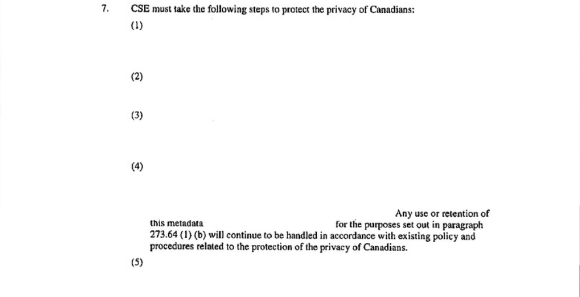
CSE Redactions

Clearly, Canadians can totally have confidence in CSEC’s steps to protect privacy. As in, there are 5 separate steps to protect Canadians, plus (possibly) other ‘incidental’ steps that are dealt with elsewhere. (Source: 2011 ATIP from CSEC)

Categories
Aside Humour

Spy Agency Spies “Incidentally”

mebuell:

Meme: Spy agency admits it spies on citizens “incidentally”

And don’t worry about those incidents because they’re all dealt with in ‘privacy protective’ ways. (And just trust CSEC on the latter, even though CSEC redacts its privacy protective practices for when incidentally collecting Canadians’ information.)

Categories
Links Quotations

Supreme Court Hearings – Matthew David Spencer v. Her Majesty the Queen

Case # 34644 Matthew David Spencer v. Her Majesty the Queen (December 9, 2013) At issue is Whether section 8 of the Charter of Rights and Freedoms was violated. The appellant downloaded child pornography from the internet using a peer-to-peer file-sharing software program. The appellant stored child pornography in a shared folder and did not override the default settings that made the folder accessible to others. Since the files were accessible to other users they could therefore be downloaded. A police officer searched the shared folder and discovered the pornographic files. The officer couldn’t identify the owner of the folder but was able to determine that the IP address being used was assigned by Shaw Communications. The police wrote to Shaw and requested information identifying the assignee at the relevant time. Shaw Communications identified the user as the appellant’s sister. The police obtained a warrant and searched her residence, where they seized the appellant’s computer. The appellant was charged with possession of child pornography and making child pornography available.

An interesting case, especially when read against the scholarship that examines the Charter and PIPEDA implications of disclosing subscriber data absent a court order.

Categories
Aside Quotations

2014.1.3

jakke said: This seems like he’s hoping referees will be sufficiently unfamiliar with the subject matter, no?

It’s a published piece; it landed in International Data Protection Law. And the people he acknowledges in the published piece are some of the experts who were – at the time, pre-Snowden – calling Swire’s article out for BS. I was at an event where his paper was critiqued as largely devoid of real, empirical, details which if included would have undermined many of the premises of the paper. But the paper was published (largely unchanged) regardless.

But peer-review…still not broken, am I right?

Categories
Aside Quotations

2014.1.3

To players of WoW (such as my sons), WOW is a fun game. They often wear headsets to talk with teammates while playing, and keep a chat window scrolling as well. To law enforcement, WoW (or any other similar game) can seem instead to be a global terrorist communications network. Players can talk and send chat messages, internationally, outside of the traditional telephone network and outside of the scope of CALEA. The architecture is based on what works for the game, and not what facilitates lawful access.

Peter Swire, “From real-time intercepts to stored records: why encryption drives the government to seek access to the cloud

Of course, this statement is largely bunk given that the large companies (like Blizzard, the producers of World of Warcraft) tend to have lawful access guides. And Blizzard’s, in particular, is incredibly detailed (and humorous) and been around since at least 2009. It’s statements like the one quoted, above, that make Swire’s entire paper dubious: given the empirical deficiency of his paper (especially in light of Snowden) he should be required to either write an update to the paper and identity everything that was false in it, or just recant the old paper in its majority.

Categories
Aside Humour

Laptop Stickers

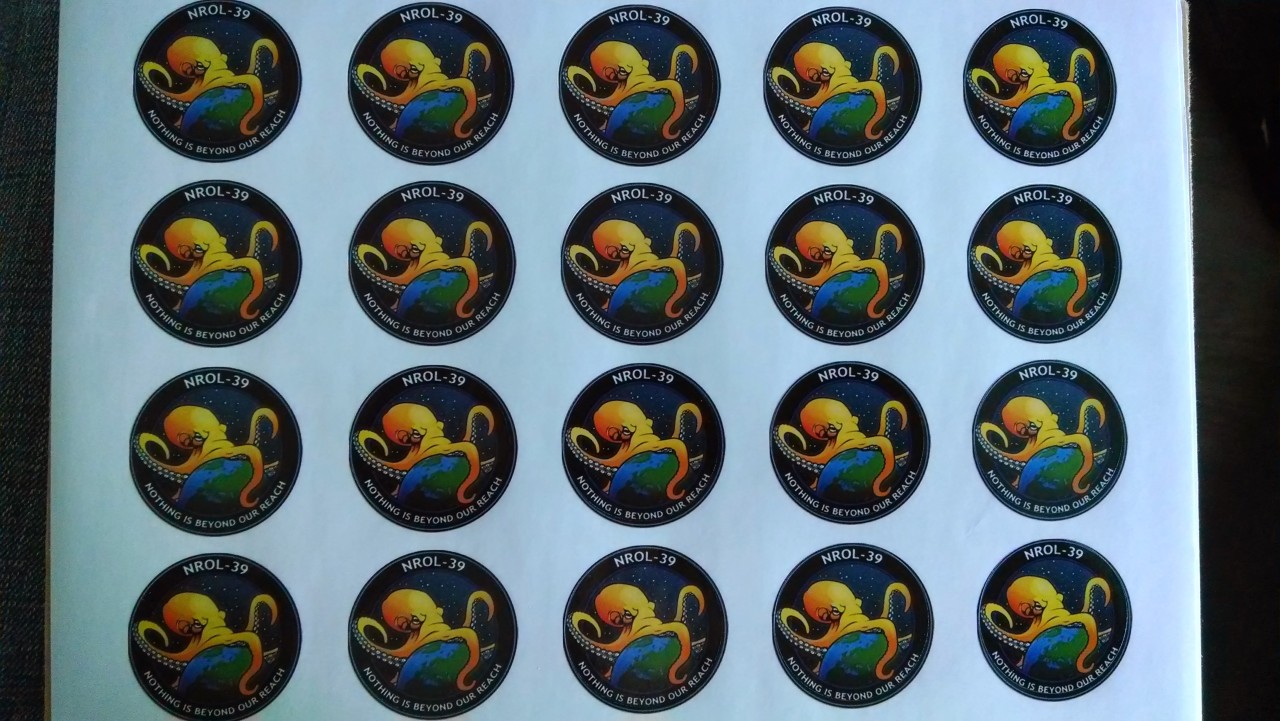
The new laptop stickers have arrived. (Explanation of logo)

Categories
Quotations

2014.1.2

While policies may vary, the sensitive nature of the data produced does not. Traffic data analysis generates more sensitive profiles of an individual’s actions and intentions, arguably more so than communica- tions content. In a communication with another individual, we say what we choose to share; in a transaction with another device, for example, search engines and cell stations, we are disclosing our actions, movements, and intentions. Technology- neutral policies continue to regard this transactional data as POTS traffic data, and accordingly apply inadequate protections.

This is not faithful to the spirit of updating laws for new technology. We need to acknowledge that changing technological environments transform the policy itself. New policies need to reflect the totality of the new environment.

Alberto Escudero-Pascual and Ian Hosein, “Questioning Lawful Access to Traffic Data”