Categories
Links Writing

The neoliberal assault on academia

jakke:

Today in articles that criticize “meaningless buzzwords” but then also use “neoliberal” in the title.

Seriously – if you have a graduate education, you are not the oppressed and marginalized party here. There’s no reason that professors should be getting tenure in the first place; why should this one small class of wealthy well-educated people get the right to keep their jobs indefinitely regardless of performance while their students rack up six figures of debt?

If there’s an assault on academia, it comes from the fact that post-secondary education is wholly unaffordable to students from low-income backgrounds. Being expected to provide a service in exchange for money is not assault. Any confusion on this matter is a good indication of why people are skeptical about giving you more money.

Just re: tenure. There are very, very, very good reasons to provide it. I know of a host of graduate students who are prohibited from communicating their research findings for fear of the potentially very serious blowback associated with their (entirely valid, grounded) research results. Others simply avoid research tracks on the basis that ‘no good can come of it.’

These individuals are working on issues of significance (e.g. how government engages in anti-democratic surveillance and interdiction of communications) that simply cannot be engaged with by most members of the public. Such members tend to lack the time, expertise, or safety to publicly engage in the research. Tenure is meant to afford faculty the ability to engage in such ‘risky’ work while also granting the space to do what might be seen as useless basic research. It also is intended, ultimately, to offer a shield that graduate students can retreat behind if needed. The absence of tenure weakens the already precarious conception of ‘academic freedom’.

Academe is, without a doubt, an increasingly bureaucratic domain. Faculty are often as guilty as government in this transition; it wasn’t always like it is today (which, I might add, also isn’t a reason to lust for the old days: grad students in the 90s complained about pretty similar issues as the students of today). The increased shift towards publish or perish, and in the UK the ‘tiering’ of publications, has been incredibly problematic for the quality of much literature: some publications are ‘slanted’ to accommodate the tiering model, as opposed to the actual way that the research may flow. Such attitudes and efforts to ‘game’ the system are linked to a systematic problem around academe. I don’t know that there’s a ‘fix’, but it also isn’t something that’s terribly healthy today.

Categories
Links

The neoliberal assault on academia

Source: The neoliberal assault on academia

Categories
Links

What Facebook Continues To Tell Us About Violence Against Women

This is a particularly good, if depressing, discussion of Facebook’s treatment of violence towards women, masquerading under the guise of a Millian-attitude towards protecting speech.

Categories
Aside

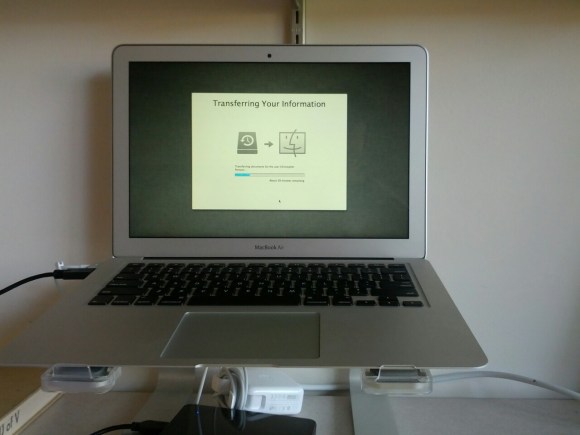
Time Machine Rocks

Time Machine is one of OS X’s most killer features!

Categories
Aside Humour

Why Do You Hate US?

randomactsofchaos:

Clay Bennett/Chattanooga Times Free Press (04/25/2013)

A particularly good – if depressing – political cartoon.

Categories
Links Writing

Will the BC Services Card Be Used for Online Voting?

Last year Rob Shaw wrote a piece for the Times Colonist about online voting in British Columbia. (This is a Bad Idea by the way, for reasons that are expounded elsewhere.) At the very end of his article, we read:

B.C.’s flirtation with online voting coincides with changes to its information and privacy laws last year that paved the way for high-tech identity cards.

The government has said people will one day be able to use the cards to verify their identity and access Internet-based government services, including, potentially, online voting.

No government document released under FOIA laws that I’ve read has stated voting as a driver of the card. However, this isn’t an indictment of Shaw’s reporting but of the government’s unwillingness to fully disclose documents pertaining to the Services Card.

To be clear: there is no good reason to believe that the Services Card will be particularly helpful in combating the core problems related to online voting. It won’t actually verify that the same person associated with the Card is casting the ballot. It won’t ensure that the person is voting in a non-coerced manner. It won’t guarantee that malware hasn’t affected the computer to ‘vote’ for whomever the malware writer wants voted for.

The Services Card is (seemingly) a solution looking for a problem. Voting is not one problem to which the Card is the solution.

Categories
Aside Links

Twitter Now Has a Two-Step Solution

So, I use two factor authentication for a variety of services. It’s great for security.

It’s also a royal pain in the ass to be (re)inputting secondary authentication information all the time. That basic ‘pain point’ is sufficient to dissuade most people from setting it up. I support Twitter adopting this, and for some people it’ll be awesome. For most people it’ll just be a pain in the ass.

Categories
Aside Links

A Few Thoughts on Cryptographic Engineering: Zerocoin: making Bitcoin anonymous

Matt Green has a really excellent post on why Bitcoin isn’t as anonymous as people think, and how to ‘fix’ that problem. If this is something that you’re interested in then his (very) detailed writeup (and link to his paper!) is worth the time and effort.

Categories
Aside

This Has Been A Crappy 24 Hours

This has been an abysmally crappy 24 hours. It starts with my laptop dying last night and me, consequently, spending until the early hours of the morning trying to get it working. No joy: the logic board is dead.

Because of trying to fix stuff, I didn’t really sleep. And, because no computer no work was done through the day.

To start remedying things, I ordered a new laptop from Apple. It’s not coming until next week. So, I’m less able than normal to work/participate in anything until things arrive. Oh, and I’ve got to get last minute stuff done on 3 separate projects, and diss chapters. All due by end of month.

Still, the day got worse! After I’d sorted the computer stuff (yay! unexpected significant expenditure of money!) I dug out an old PC we have for emergencies. Like this. Much of my stuff is sitting in the cloud, so I figured I could get something done.

Wrong! My ISP managed to sever all connections with Google for most of the afternoon. It’s evening, and still no access to Google services. You know, like Google Docs, where I store ‘in progress’ writings in case there’s ever a problem with my computer AND I can’t immediately recover from backups.

It’s be really awesome to just rewind and delete the past 24 hours or so, you know?

Categories
Quotations

2013.4.20

We’re living in hard times, we’re not living in jolly boom dotcom times. And that’s why guys like Evgeny Morozov, who comes from the miserable country of Belarus, gets all jittery, and even fiercely aggressive, when he hears you talking about “technological solutionism.”

“There’s an app to make that all better.” Okay, a billion apps have been sold. Where’s the betterness?

Things do not always progress, and the successes of progress become thorny problems for the next generation. They don’t stay permanently “better.” Our value judgments about what are better are temporary. They are time-bound. When you overuse the word “better,” it’s like a head-fake, it’s a mantra.

You don’t have a better-o-meter. You can’t measure the length and breadth and duration of the “betterness.” “Better” is a metaphysical value judgement. It’s not a scientific quality like mass or velocity.

You can’t test it experimentally. We don’t know what’s “better.” We don’t even know what’s “worse.” Which is good. Every cloud has a silver lining.

Google doesn’t want to be “evil,” but they don’t have an evilometer. They don’t have an evil avoidance algorithm.

Bruce Sterling, Closing Remarks at SXSW2013