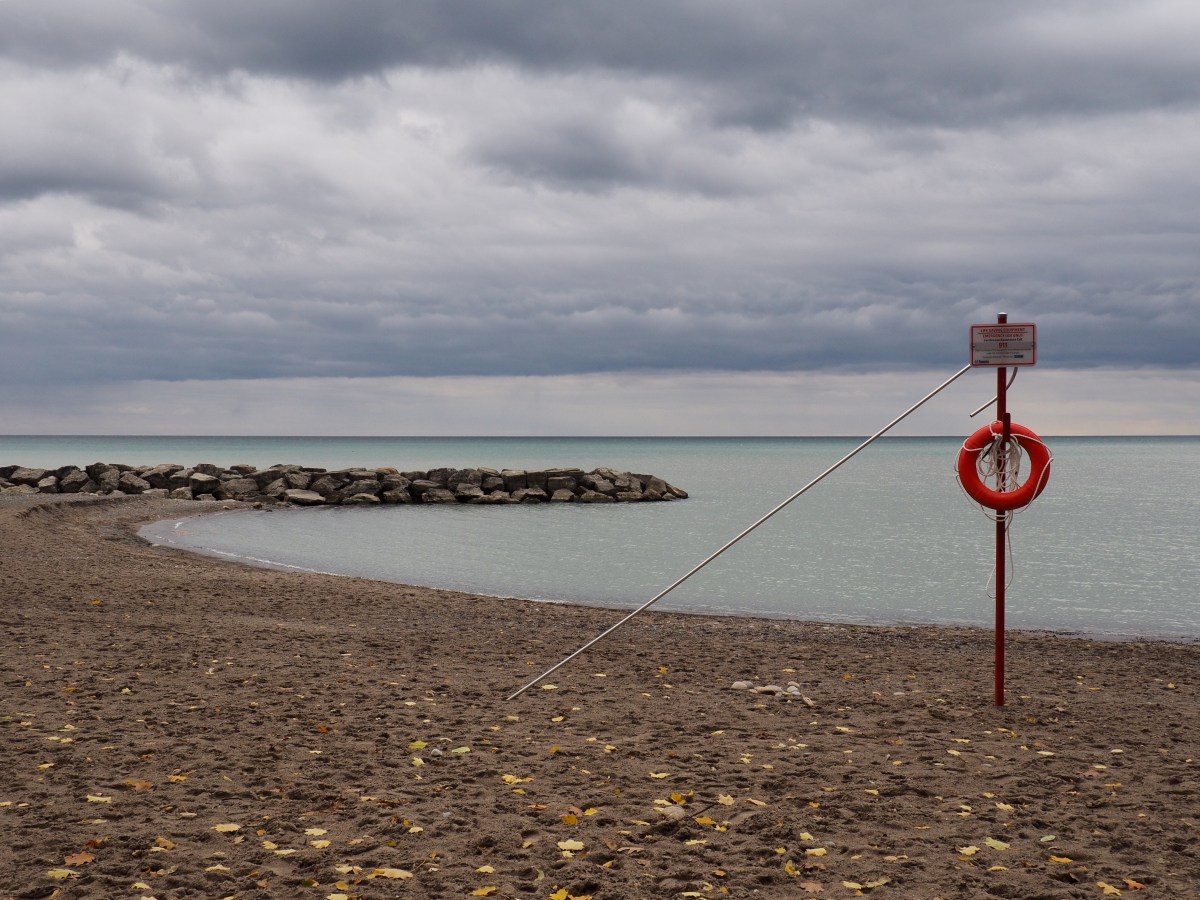
When I moved into my current condo I was excited about the location and soured by the lack of light and the closing of a local business I was excited to live near. And that lack of light really ground on me: since I moved in I’ve thought about what it would be like to move in the next year or so into a place with far more natural light. Where I choose to live was where I lived but not where I identified as being home.
In the past week, however, I’ve made a personal decision to try and make my rental feel more like a home. So instead of putting off purchasing some particular decorations — additional frames, new prints of my photos, small decorative pieces, etc — I’ve committed to picking up pieces that I’ve known I’ve wanted and started putting them where they fit in my space. It’s been helping me to love where I live and not feel like I’m just living in a semi-personalized Airbnb.
Toronto is an incredibly expensive rental market and I’m fortunate to be in the unit that I am, at the price it’s renting out at, and in exactly the location of the city that I love. I’m beside many of the leading theatres, the main symphony hall, all the large sporting stadiums, the water, and some of the best shops in the country. And the process of decorating is shaping and positively affecting my relationship with where I live: that there are bright prints helps to liven up what are otherwise dark walls. My use of candles during the night remind me of how amazing it is that light doesn’t intrude into the space, insofar as I can create a more intimate space than should neon lights or street lamps leak light through my windows. And the relative quietude of my space is also a bit surprising for the part of the city I’m in: being away from the main streets, it’s rare to hear much noise at all from the city.
I don’t think that I’m ever going to be in a situation where the lack of light is a defining good thing in my life, but I do think that it’s one of those facets of life which I can make due with, and especially as I balance that one negative element against all of the positive facets of the rental I’m inhabiting. One of the key things that I want and need to do is be at peace when I’m at home and I think that my most recent mental shift is going to be key to achieving that sense of peace and relaxation.
I was prompted into personal reflection this week by a relatively simple set of questions.
- Who has had the greatest impact on your life?
- In what place are you most comfortable or safe, with ‘place’ being defined as either a physical location (e.g. bed, cottage, lake) or a kind of situation (e.g. wrapped in someone’s arms, a dog or cat on your lap, etc)?
- What thing could you not live without?
I won’t delve into my own answers but the process of reflection, itself, has been personally revealing insafar as the questions prompted some answers which I don’t think I would have intuitively expected.
Inspiring Quotation of the Week
“Either we all live in a decent world, or nobody does.”
- George Orwell
Great Photography Shots
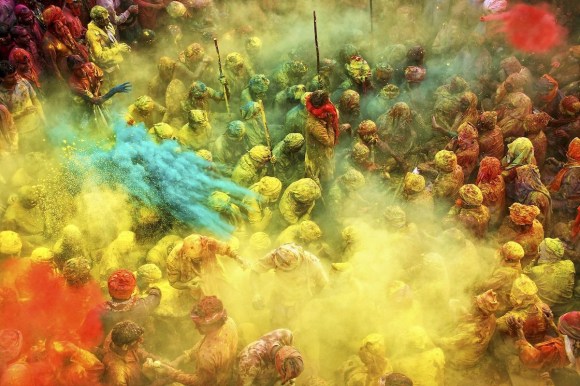
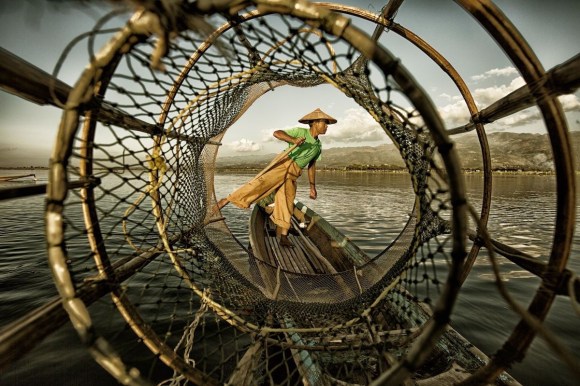
The winners of the 2018 Siena International Photo Awards are just breathtaking in both composition and, in many of the shots, the feelings and emotions they express.



Music I’m Digging
- Mikel & Gamechops – Zelda & Chill // There’ve been a few mornings when I’ve felt somewhat melancholy, during which I’ve found this album to be good company. It’s sufficiently chill that it prompts reflection and a sense of quietude is occasionally punctuated by smiles when you can hear the familiar Zelda music themes come through in a given track.
- Daniel Hope – A Baroque Journey // I had the distinct privilege to hear Daniel Hope (and accompaniment) play this week. It was a truly exceptional experience. While the album doesn’t do the live performance justice — the album is extremely well done but is far less playful than a live performance — it’s excellent. What I find perhaps most striking is the role of the harpsichord and the lute, which are instruments for which I’d never really had a great deal of appreciation.
- The Prodigy – No Tourists // This has been a terrific album to dig into; I’ve listened to it at least a half-dozen times since it’s come out and enjoy it as much (if not more) with each playing. The tracks are tight and are pretty well ‘classic’ Prodigy; some, like, ‘Need Some1’ are probably going to end up as classic as ‘Firestarter’ insofar as it just expresses who and what the band is at a fundamental level.
Neat Podcast Episodes
- Song Exploder – Halloween (Theme) // It was interesting to hear the Carpenters talks about how, and why, they created the original Halloween theme song the way they did. In effect, a limited budget, time, and capability drove them to create the original Halloween theme song in a manner that was better because of it’s imperfections. And, when they recreated a version of the song for the latest Halloween movie they, once again, sought to capture those imperfections to convey an eerie atmosphere to the song. I definitely think they were successful in their endeavour!
- Putting Racism on the Table: Implicit Bias/White Privilege/Structural Racism // This series of podcasts from 2016 was sponsored by the Washington Regional Association of Grantmakers (WAG) and broadly sought to have open, and transparent, discussions about key problems with the social and power structures of white Western states. In addition to unpacking the various topics covered in each of the episodes (and denoted in their titles), the speakers in each identified strategic interventions that can take place and why acting at the structural level is so important. To begin, as humans we are capable of consciously engaging with a small fraction of our world; our subconscious deals with the majority of the information coming into our brains and prompts our subsequent reactions without deliberate thought. In effect, we’re predisposed to respond to the world based on learned behaviours and stereotypes. Consequently, we need to modify the environments from which those behaviours are developed and stereotypes learned. Some of that, in a hiring environment, means deliberately mitigating the subconscious biases that might intrude into the process: we should perhaps remove names, or have different parties review education and experience, and must absolutely have checklists to ensure that each and every candidate has a fair opportunity in comparison to other candidates. In the discussion of white privilege one of the new ideas I heard was to deliberately engage with the idea of white identity. This approach was meant to prompt a reconsideration of how ‘whiteness’ is developed, perceived, and realized: it’s not sufficient to address ‘whiteness’ solely through the lens of reacting to the harms associated with it (and caused to others) but, instead, demands a proactive engagement with a sense of what it means to inhabit white skin. Such an engagement might focus on inclusively, on shared community and learning, and on facilitating equity versus equality. But, critically, it’s about reconceiving the conception of ‘whiteness’ itself in order to re-order the subconscious and, subsequently, enable more equitable relations in the social, political, and economic spheres of life.
- Word Bomb – ‘Partner’: The best name for your better half // The hosts of this TVO podcast reflect on the terms which are used to refer to romantic partners and discuss how there are significant differences of opinions concerning whether ‘partner’ reflects a romantic relationships (versus a business relationship) and, also, whether straight couples adopting the term ‘partner’ entails stealing a term away from the gay community. I’d never considered ‘partner’ as a straight/gay term but, instead, one that just indicated a level of intimacy and seriousness while simultaneously lacking the religious or secular commitments of marriage.1 Towards the end of the podcast I was taken aback that the idea of people like myself using ‘partner’ was appropriating it; while the podcast hosts ended up coming to a conclusion that it’s likely acceptable for all relationship-types to use the term I was left less certain than they were and am left questioning the appropriateness (ahem) of using the term.
- Hurry Slowly – Adam Grant: Don’t Underestimate the Power of Appreciation // Grant’s assessment of the effects of demonstrating appreciation to others — and receiving recognition of how we have affected other people’s lives — clarifies the specific and positive results of affirming how other persons impact our lives. Perhaps most interestingly, Grant find that delaying the communication of appreciation — such that we inform someone months or years later — has the effect of enhancing the positive experience of receiving such feedback. Moreover, he finds that by preparing a large number of such messages in a short period of time, as opposed to doing a little bit each day, has a correspondingly more powerful impact on the person who is expressing their appreciation to other persons.
Good Reads for the Week
- What’s All This About Journaling? // The author’s evaluation and assessment of journaling is not necessarily novel: keeping a journal can be helpful for thinking through what matters, a way of dumping debris from the brain so you can focus on other things, or encourage the writer to prompt changes in their lives if the same difficult topics keep arising. What is missing from the assessment, to my eye, is that the power of keeping a journal is also tightly linked to reviewing the past and determining whether, and if so what, has changed in one’s life. From my own practice I’ve found that writing alone isn’t sufficient: reflection, after the fact, of what was written is as (if not more) important as the practice of writing itself.
- How Not to Return to the Spotlight // Emily K. Smith’s analysis of Ansari returning to the spotlight is helpful in understanding what could have been done by Ansari, and the significance of him not undertaking the labour to genuinely reflect and engage with what he is accused of having done. One of the things that I noted in Smith’s analysis was that for Ansari, and many others, the ground shifted quickly underneath them and what might have previously been regarded as ‘bad behaviour’ transformed radically into ‘absolutely unacceptable and socially condemnable behaviour’. The act of nagging someone into consent hasn’t ever been acceptable but it’s now especially unacceptable and can come with mass condemnation from hundreds of thousands if not millions of people. Unfortunately, instead of trying to come to grips with those changes and continuing to work towards being an ally towards women Ansari has, for now, chosen to retreat from the very group whom he had previously seemed to have supported.
- How An Entire Nation Became Russia’s Test Lab for Cyberwar // There have been so many times where people have said that a power grid has been hacked that it’s hard to take seriously. The boy has cried “wolf” too many times. However, Greenberg’s article on how the Ukrainian grid has been repeatedly attacked and the degrees of detail contained make clear that operators have successfully and deliberately interfered with power distribution in the Ukraine. What’s more, the operators could have engaged in more disruptive activities had they so chosen. In aggregate, the article both reveals the ability of the operators — and their supporters — to engage in significant kinetic activities in some situations and, perhaps more worrying, a lack of strong and clear normative redlines to establish that such behaviours as absolutely out of bounds. Such redlines are essential in international relations to clarify the boundaries of acceptable behaviour and the terms of contravening such boundaries; their absence emboldens adversaries while enabling Western operators more freedom of action to the potential detriment of other nations’ citizens’ and residents’ basic rights. The latter cannot be seen as a rationale for avoiding norms meant to inhibit the former.
- How Writers Map Their Imaginary Worlds // While I don’t have experience writing any genuine works of fiction, I’ve always found that maps are essential both for collaborative storytelling as well as for helping me imagine what a roleplaying game world functionally is in an important sense: without a map, I have a hard time thinking about the relationships between different groups, natures of economies, sacred places, and so forth. At the same time, I often find that the mapping process itself takes far longer than the act of writing, with the former existing in the challenging world of art, whereas the latter fits within what is, for me, a comparatively accessible and ‘easy’ creative domain.
- Japan’s Unusual Way to View the World // Wabi-sabi is a philosophy underlying some creative Japanese works, and embraces the imperfections of the world and celebrates the beauty latent within the world that we exist within. It’s the very lack of perfection — the lack of symmetry in pottery, as an example — that inspires a moment of reflection and contemplation, that centres the persons engaging with the pottery with the fact that human hands touching natural materials created the items in question. As someone who was recently gifted with pottery which was crafted per this philosophy, the article gave me that much more to think about whenever I drink from the bowls that now live in my home, and has led me to appreciate the depths of the gift.
- Big In Japan // This article about Japanese Kit Kats is spectacular. The writing, in and of itself, is a kind of linguistic art form, with sentences like, “All I knew was that the wafer was huge, golden, marked with square cups and totally weightless. That if it hadn’t been still warm from the oven, I wouldn’t have known it was there. That if this was the soul of a Kit Kat, then holding the soul of a Kit Kat was like holding nothing at all” and “…it was, in fact, completely impossible to remove a taste from its origin without changing it in the process.” The little details — such as the chocolate being different around the world but wafers the same everywhere, or the nature of how stores feel when tourists are buying product was inspiring. This is food journalist at its absolute best insofar as it leaves you with both a cultural appreciation of the foodstuff as well as a mouth that is watering after reading about the culinary experience.
- Writing well ≠ dumbing down // I appreciated how this article considered how writing for the general public is often harder than writing for specialist audiences, significantly because “…you usually have to know your stuff better to write well for a general audience. If you’re writing for your scholarly peers, there are certain critical buzzwords, voguish phrases, and terms of art that you can use to gesture in the direction of a concept, trusting that people who have used those terms themselves will pick up on what you’re saying. But you don’t even have to have a very clear understanding of the concepts in order to deploy the terms — you just have to have a sense of the kind of sentence in which they belong. By contrast, when you’re writing for a general audience who does not know the language of your guild, you have to understand those concepts well enough to translate them into a more accessible idiom.” I could not agree more though, by way of juxtaposition, I sometimes find that when I’ve spent a great deal of time working on certain projects with public groups and/or professionals that it has deeply challenging to translate what is relatively obvious and coherent facts and ideas into the often tortured venue of academic analysis and writing. Perhaps the greatest sin of much academic writing is analysis and critique for no evident purpose or relationship to the object of study, to the point that a practitioner looks at academic writing and (at best) amusedly tries to figure out how their subject area has become entirely obscure and opaque to them.
- ‘God Is Going to Have to Forgive Me’: Young Evangelicals Speak Out // As the American mid-terms come closer and closer, it’s intriguing to read what persons aged 18-38, and who identify as Evangelicals, are saying about their faith and politics. It’s clear why Trump resonates in some forums and equally clear why he acts as a repugnant force in others. What is most striking as I read these is that for many the idea of voting for a party supportive of safe and lawful abortions is a red line. It’s the most common area where there remains a deep desire by evangelicals to impose the tenets of their faith on an ostensibly secular state, but if other faiths asserted the same kinds of demand I suspect evangelicals (young and old) would be up in arms to prevent the spread of ‘non-Christian’ values.
- New data shows China has “taken the gloves off” in hacking attacks on US // What’s perhaps most interesting in this article is that the present deterrence systems adopted by the USA and its allies are not mitigating or restraining attacks. While it’s possible that the inditements being issued by the USA’s government will have some effect, I think that this element of lawfare depends on the USA being seen as a high rule of law country. Should its judicial system fall into disrepute — such as by overly politicizing the judiciary — then other countries with low rule of law (e.g. Russia or China) might be able to issue similar kinds of inditements towards the USA’s operators, and those charges be as respected as the American charges. In effect: the one tool that might be a quasi-effective manner of inhibiting at least some operations may be threatened by the growing politicization of the American judiciary, risking the removal of one of a few (potentially) useful modes of responding to adversarial attacks on USA companies and government infrastructure.
Cool Things
- All Over The Map // National Geographic has a maps blog!
- Paper Airplane Designs // Super impressed by the different kinds of paper airplanes that can be created and their respective flight profiles.
Footnotes
- On a personal note, I’d used this term for many years in British Columbia and it was only when I returned to Toronto that it was apparent to me that the term was associated with gay couples. ↩