Categories
Links Photography

Best Photography-Related Stuff of 2024

It’s the time of year for people’s best-of roundups. Like last year I wanted to recognize stuff that meant a lot to my photography through 2024. And, this year, I’ve also added a short list of hopes for stuff in 2025!


Photography Stuff I Used

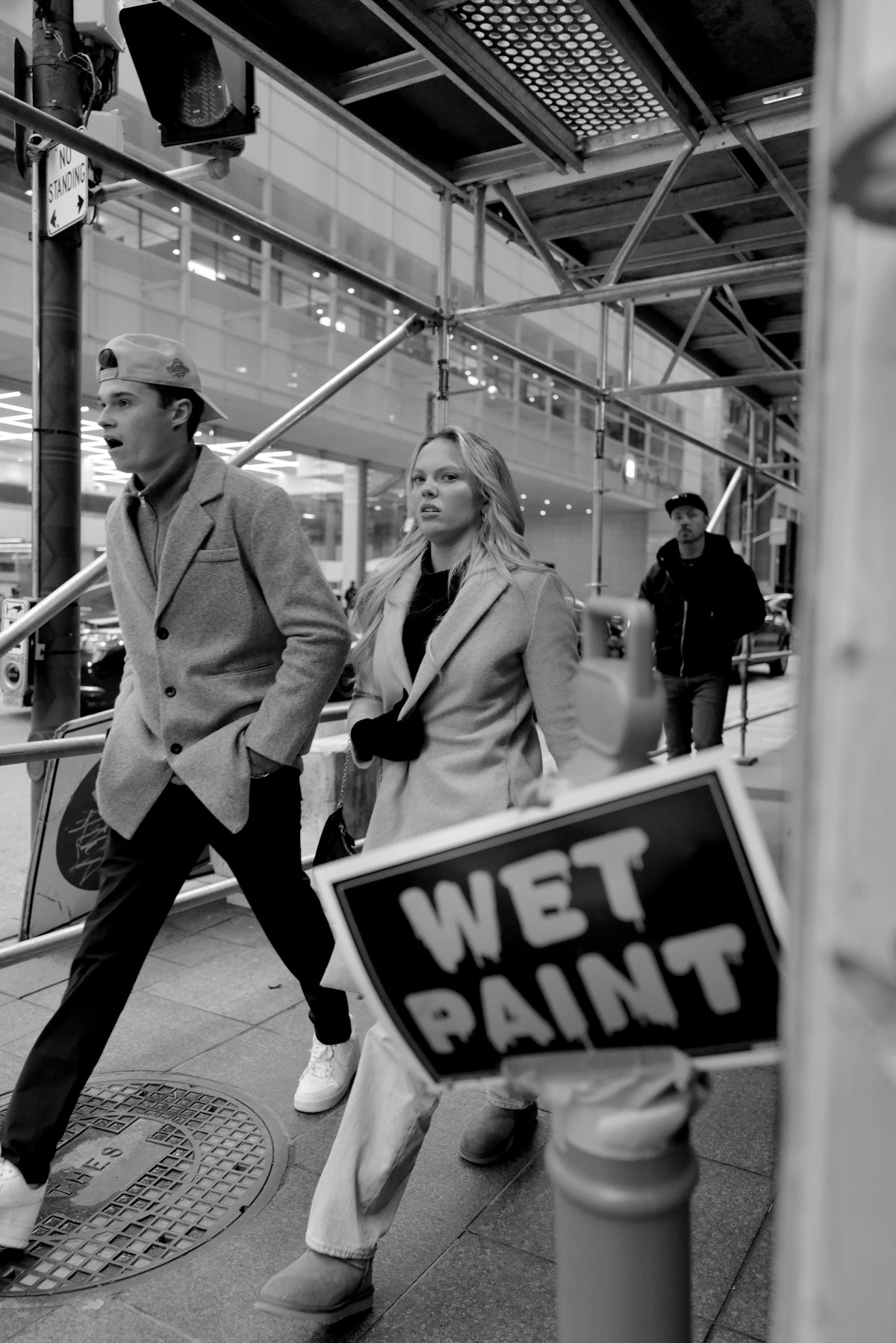
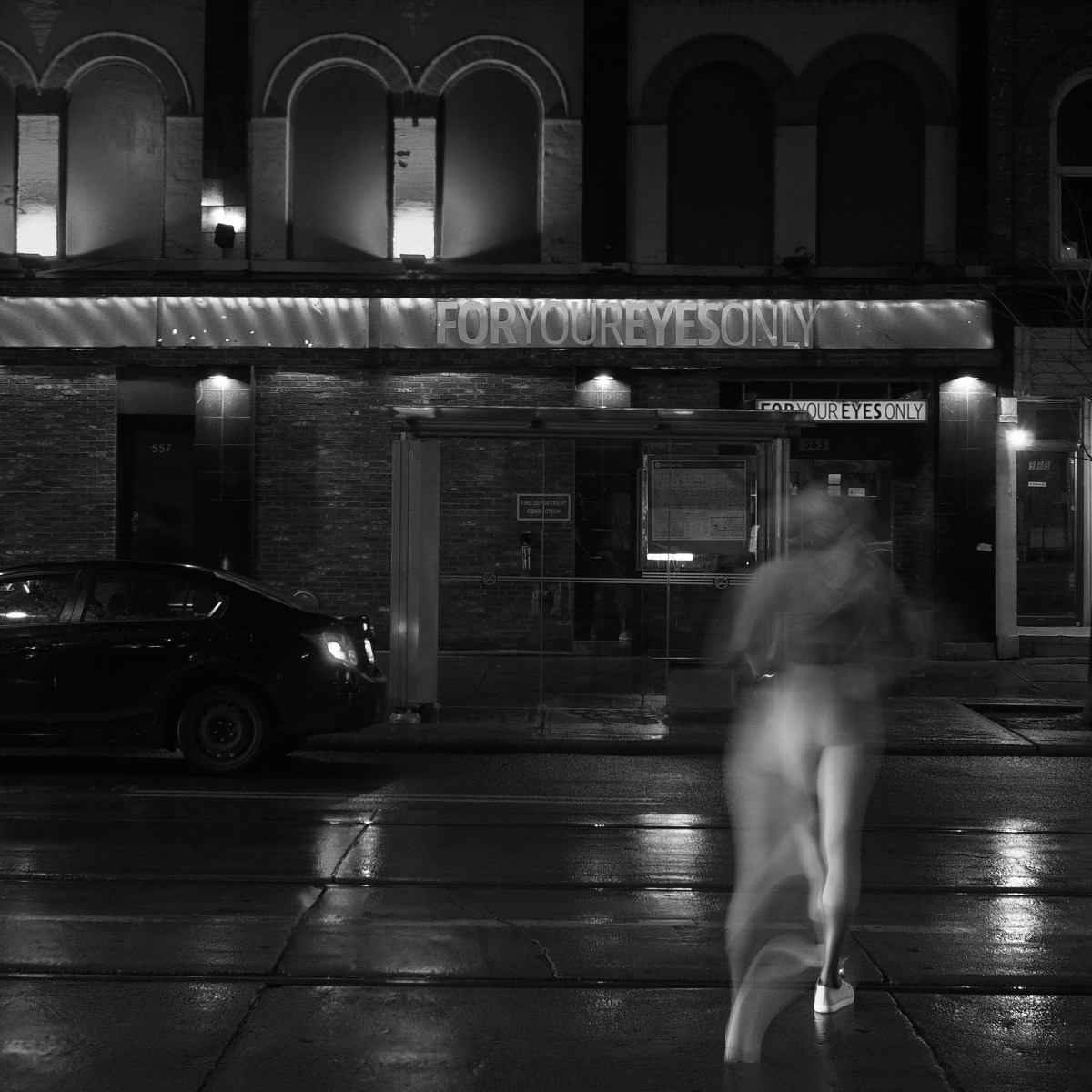
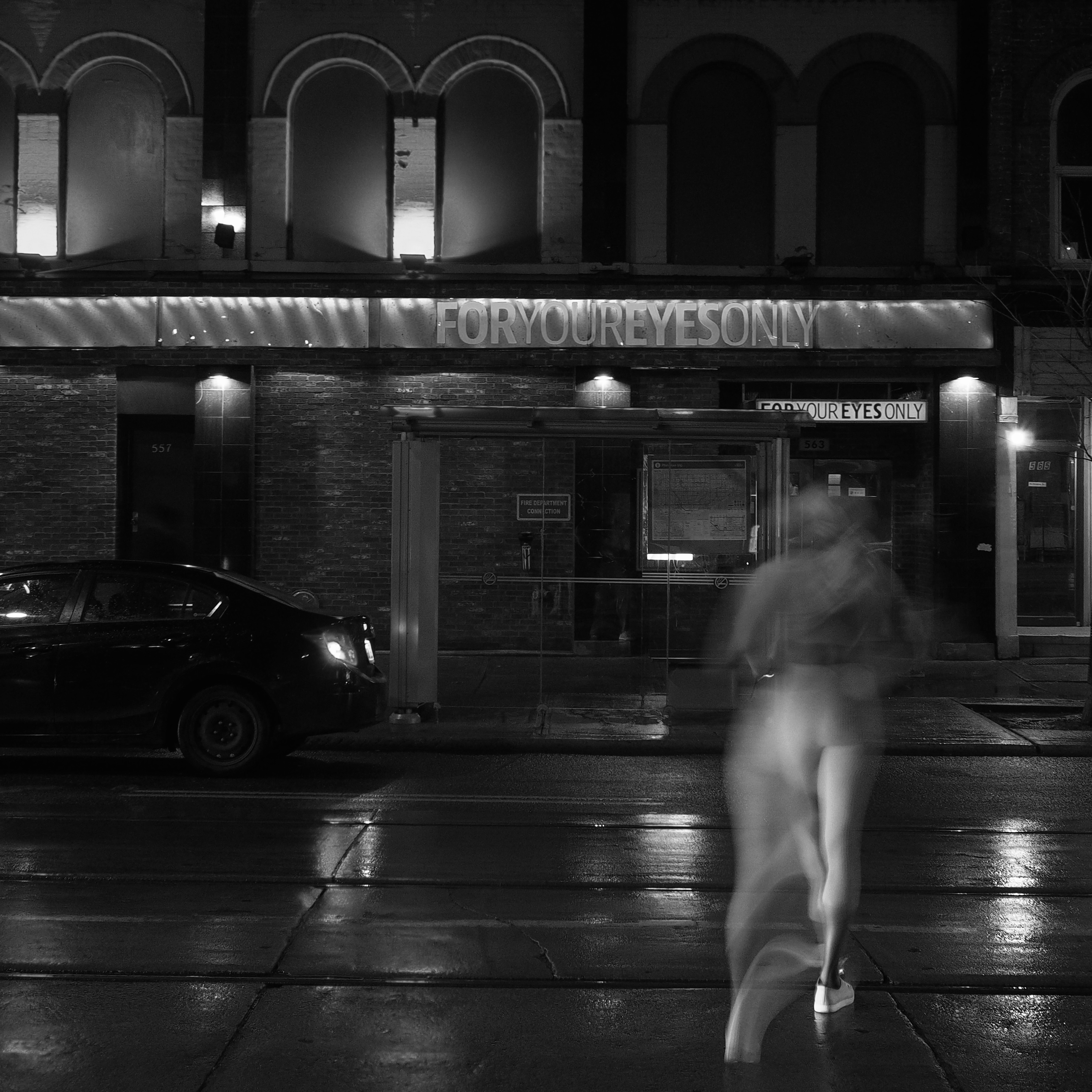
Yonge & Dundas, Toronto, 2024

Best Technology of 2024

The big change this year? I pretty well completely pivoted to my Leica Q2 and with only rare exceptions did I use the Ricoh GR IIIx or my iPhone 14 Pro. When I bought the Q2 it was, in part, to be able to capture images at night where there was little light. I’ve made images under these conditions that I’m happy with and I’ve come to learn how to better use the 28mm focal range. At this point I’ve created well over ten thousand frames over the year.1

I upgraded to the 11” iPad Pro (2024) and definitely appreciate how light the device is, and how vibrant the screen is. I continue to use an iPad Mini for most of my actual reading but write a lot of blog posts on the iPad Pro and do all my photo editing on it.

When I take my photowalks I’m always listening to a podcast or music on my AirPod Pros. However I’ve long had an issue with finding tips that best fit my ears; the ones in the box always slip out. I recently learned about, and bought, the SpinFit CP1025 (S/SS) and they’ve been game changing. I get a perfect fit and the AirPods stay in my ears. Highly recommend them!

Best Services I Paid For

I continue to post images to Glass each day. I’m still disappointed with their AI search, and especially disappointed that landscape viewing on the iPad has now been broken for about a year.2 Still, it’s a terrific community and a good place to post images regularly.

Apple One is key to my data management strategy. I’m still under the 2TB that is provided as part of the subscription though, with my current data use, I suspect that in 3-5 years I’ll need to expand that 2TB storage limit.

Lastly, while I’ve watched less photography YouTube I continue to appreciate YouTube Premium. It’s still about the most regularly used subscription service that I use on a regular basis.

Best Apps

Have I changed the apps that I rely on regularly since 2023?

Nope.

And so my best apps of 2024 include:

  • Glass: I use to share my images on a daily basis.
  • Geotags Photos Pro and Geotags Photo Tagger: I use to add geotags to my images.
  • Reeder Classic: To follow various photography blogs.
  • Apple Podcasts app: I use this to listen to photography podcasts while on my weekly photowalks.
  • Apple News: To read photography magazines and websites that otherwise would be paywalled.
  • Apple Photos: Used to edit and store all my images. I don’t love the iOS version of the application but it is what it is.

Stuff I Made

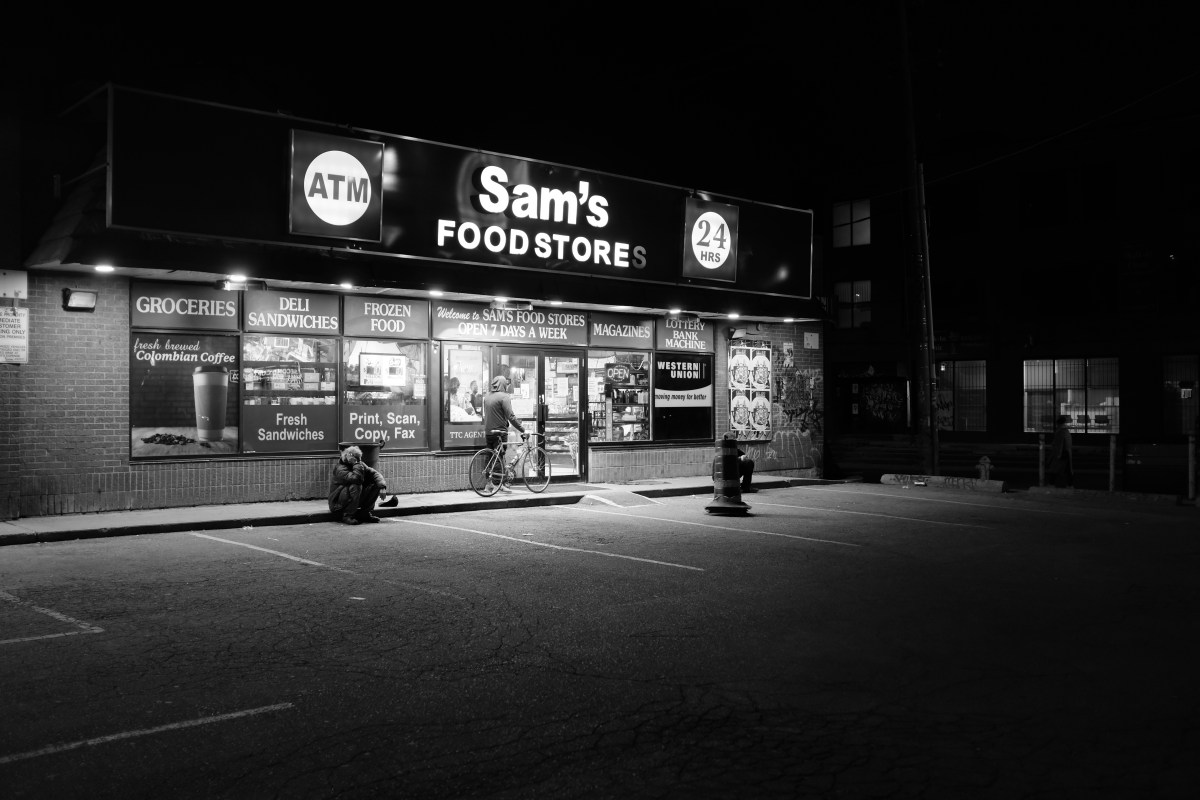
College & Clinton, Toronto, 2024

Writing

  • Sharing Photographs, and Photography, with Others and Growing as a Photographer: Despite being pretty used to being in the public eye as a result of my day job it’s different to expose myself when sharing the images that I make. Those images, if read carefully, reveal some elements of myself that I showcase less often, and this is made even revelatory when producing and sharing physical items to people I respect or submitting digital images to competitions. Just talking about that experience was liberating and reaffirmed that I am, slowly, growing as a photographer.
  • Accidentally Discovered Street Photos: Imagine my surprise when, after opening my used copy of Conversations: With Contemporary Photographers a strip of exposed Kodak 100TX film fell out! I used a free app to enlarge some of the images and while my efforts weren’t spectacular it did result in seeing — and sharing — some images from an earlier time.
  • 10 Tips for Starting to Photograph on the Street: I regularly read and view content that is meant to help new photographers get comfortable on the streets. Much of that content is good but is directed towards a certain kind of concern, and way of behaving, on the streets (e.g., Zone focus! Shoot from the hip! Be invisible!). I think that my 10 tips are for people like me who are interested in making street photos but are shy about even being seeing with a camera. Really, this is a blog written for myself which, if I’d read it 10 years ago, would have given me a clearer sense of what I could do to develop my confidence and skills.
  • Nuit Blanche, 2024: I’ve been attending Nuit Blanche in Toronto, an annual art festival that runs for a single day from sundown to sunup, for many years. I always make photographs during it but, at the same time, have been challenged by using a smaller APS-C sensor camera. I was both pleased in the art that I experienced this year as well as the ability of the Leica Q2 to capture images more like how I wanted them due to its lens and sensor size.

Stuff I Read

Oxford & Augusta, Toronto, 2024

Best Photography Books and Magazines

  • Metropolis: I’ve followed Alan’s work for years and appreciate how stark his imagery is and his absolute attention to form. His images carefully consider what is absolutely needed to communicate his vision and no more.
  • Conversations: With Contemporary Photographers: This was probably the most important book about photography that I read this year. I’m, personally, interested in thinking more deeply about the ontology of photography and what it is and is not. The photographers interviewed in the book provided a range of interpretations of what photography is, and means, for each of them, and I benefitted tremendously from their thoughts on the medium as one which controls time and, also, the role of time in their own creative activities.
  • Framelines: The team behind Framelines improve the magazine with every issue. From enhancements to the printing, imagery, interviews and just shipping, this is an instant purchase each time they come out with new issues. I particularly appreciate how they celebrate new and emerging photographers from around the world and platform those who, otherwise, I’d be entirely unaware of.
  • André Kertész: Sixty Years of Photography: This book is a gift to photographers and the image-viewing public more broadly. Published back in 1978 it catalogues Kertéz’s photographic history. It is when we look at images like this that it is apparent how much you can do with black and white images that are focused on the forms across a frame, and also how having decades of images enable a playfulness between pages so that works from different decades can speak to one another and create a perception of continuity across time and space. If you are committed to street images, black and white images, or just seeing how history unfolded over sixty years, then this book is a must see.
  • The Pleasure of Seeing: Conversations with Joel Meyerowitz on sixty years in the life of photography: Joel is, of course, a (still living) legend and has a number of different monographs under his name. This book is a little different because it explores his thought process across the different phases or eras of his photography. Now, if you’ve actively listened to his talks, interviews, podcasts, and so forth over the past decades many of the messages he communicates will be familiar. But to have them all in one place, along with his images that underscore his creative vision, is a real gift to photographers.

Stuff I Watched

Great Lakes Waterfront Trail, Toronto, 2024

Best Movies

  • Lee: This was an engrossing and highly cinematic movie. I liked how it conveyed the experiences that female photographers and journalists experienced during the time period and, also, communicated the toughness of Lee Miller and the harmful effects of being a war photographer more generally.
  • Harry Benson: Shoot First: I thought this was a terrific documentary of Benson who has made a living capturing images of celebrities. The images are profound but, also, you walk away with a sense that he lacks much empathy for his subjects. The inclusion of those who love his work, and those who hate it, helps to communicate what a controversial figure Benson has been throughout his life and career.

Best YouTube Channels

  • Paulie B: Almost certainly one of the most important American street photography channels, Paulie B has done a masterful job interviewing a range of photographers across the United States to understand what drives and inspires them. His episodes showcase photographers who may not be widely known, unpacks the creative processes of those he interviews, and also lets other street photographers really see how others work the streets. We’ve all heard about how the greats of the 1960s and 1970s worked; Paulie B is showing us how our American contemporaries move, think, and behave.
  • James Popsys: James is a quiet and almost introspective photographer, which are not necessarily the traits that lend themselves well to YouTube. However, his thoughtful meditations on how and why he makes images, combined with the sheer beauty of his work, results in each video containing a gem that is worth treasuring.
  • Photographic Eye: Some channels on YouTube focus on gear or technical methods of getting certain kinds of images. The Photographic Eye is not that. Instead, Alex Kilbee explains the intellectual processes of photography and speaks as a kind mentor or peer who is, also, working through his photography. I particularly like how he shares some of his own images so that viewers can appreciate the variety and intentionality behind image making.
  • The Art of Photography: Ted Forbes has been running his channel for over sixteen years at this point and made videos on just about everything that you’d ever want to know about. I find his historical episodes that break down, and showcase, the great photographers as essential to my own photographic education. And his episodes that showcase viewers’ own projects have led me to finding a range of photographers and purchasing work from them.3

Stuff I Subscribed To

Richmond & Spadina, Toronto, 2024

Best Podcasts

  • The Photowalk: I’ve been a supporter of the Photowalk for several years and it’s a regular joy and pleasure to hear Neale and his guests talk about the broader experiences of making images. The discussions rarely touch on gear and, instead, are centred around the ‘why’ of image making. Whenever I’m out on a weekly photo walk, I’m listening to Neale and recommend that you do the same.
  • Frames Photography Podcast: Frames features photographers from across the different photographic genres. Many of the discussions are insightful for understanding what is behind different photographers’ creative processes, what motivates their projects, and how they work to express themselves to the broader world.
  • Street Photography Magazine: Featuring street photographers from around the world, this podcast exposes how and why different people got into the genre, what they aim to present through their work, and the rationales underlying how they make their images. Many of the photographers who are interviewed talk about their recent, or ongoing, projects which serves to underscore the different ways in which projects are conceptualized and brought into the world.
  • The Candid Frame: Conversations on Photography: Operating since 2006, The Candid Frame features photographers from all walks of life discussing the how and why of their image making. This is particularly useful, for me, in learning about photographers working in genres entirely different from street photography and learning how their thought processes can apply to my own photographic life.
  • Street Life Podcast: This is one of the most recent additions to my list of podcasts and I’ve been enjoying every episode this year. It typically features photographers working in and around Australia and, aside from Houman Katoozi, I’m largely unfamiliar with folks working on that continent. The podcast often has a sense of friends talking amongst themselves about street photography and you’re just overhearing them as they joke with one another, talk about the Australian street photography community, and the challenges they’re facing in their own photographic activities.

Best Blogs/RSS Feeds

  • GR Official: As an owner of a few Ricoh GRs I’m always curious about how others handle and experience the camera. This blog features a range of authors, with a diversity of photographic backgrounds and personal experiences, which means that each blog is a bit of a surprise: is this going to be a more reflective piece, a showcase of just a few images, thoughts on a piece of equipment, or…?
  • Little Big Traveling Camera: I am always envious of how focused this photoblog is, how thoughtful the author is, and how well put together the images are. LBTC is, to my eye, the definition of what an excellent personal photoblog can be.
  • Mobiography: I don’t take a large number of mobile phone photographs but I appreciate learning how such images can be made. If nothing else, it showcases just how can be done with phones of today (as well as those of a decade or more ago) in the hands of competent photographers.
  • The Phoblographer: A regular publication that both showcases contemporary work while also engaging in some opinion and discussion about trends or issues in the photographic world.
  • Ming Thein: I owe a lot of what I (think I) understand about photography to Ming’s blog. He shuttered it several years ago but has kept it alive / in archival mode. I hope that it never goes away given how helpful and insightful his writing is for new and more experienced photographers alike.
  • Skinny Latte’s Creative Brain: I loved the photoessays that were published that exhibited gorgeous photography along with explanations and narratives to surround the images themselves. Sadly the photoblog has been left behind but the images and stories remain worth revisiting periodically.

Hopes for the future

Front & Bay, Toronto, 2024
  • Apple Photos: I just want it to reach parity with its Mac counterpart. We know that Apple has purchased Pixelmator and I’m hopeful that some of that DNA makes its way over to Photos.
  • iPhone Camera app: I’ll be honest, the new iPhones’ ability to better control and develop custom JPG settings along with the adoption of JPG XL are very exciting and make me look forward to whenever I upgrade from my iPhone 14 Pro. However, I really wish that Apple would bring additional exposure metering to the iPhone and, in particular, highlight metering for my black and white images. While there are ways to get around this on the iPhone it’d be nice if it was something they could do by default.
  • WordPress: I’ve been using WordPress for over 18 years at this point and it just seems to get more and more bloated. There are basic things that just don’t seem to be well developed, such as media management or the presentation of images, while a huge amount of effort has been put into turning WordPress into an enterprise CMS. I get that the company’s business is derived from its enterprise work but it’d be nice if basic features were also included in the priority product lists.
  • Leica Q2 Thumb Grip: In a late end-of-year purchase, I’ve ordered the ‘official’ Q2 thumb grip to further improve on the ergonomics of the Q2. Here’s hoping that I end up happy with it!

  1. Though, admittedly, I’ve kept far fewer after doing my regular culling. ↩︎
  2. Yes, I’ve contacted support. No, I never heard anything back. ↩︎
  3. In the interests of disclosure I was featured in one of the mailbag episodes for my Postcards project. ↩︎
Categories
Aside

Foundational Models, Semiconductors, and a Regulatory Opportunity

Lots of think about in this interview with Arm’s CEO.

Of note: the discussion that current larger AI models that are in-use today will really have noticeable effects / changes in user behaviour on edge or end point devices in a 2-3 years once semiconductors have more properly caught up.

Significantly, this may mean policy makers still have some time to establish appropriate regulatory frameworks and guardrails ahead of what maybe more substantive and pervasive changes to daily computing.

Categories
Photography Writing

Best Photography-Related Stuff of 2023

There are lots of ‘best of’ lists that are going around. Instead of outlining the best things that I’ve purchased or used over the year I wanted to add a thematic: what was the best ‘photography stuff’ that I used, read, watched, or subscribed to over the course of 2023?

Photography Stuff I Used

Best Technology of 2023

90-95% of the photographs that I made over the year were with the Fuji X100F. It’s a spectacular camera system; I really like how small, light, and versatile it is. I created a set of recipes early summer and really think that I dialled in how to use them and, also, how to apply my very minimal editing process to the images. I’m at the point with this camera that I can use it without looking at a single dial, and I know the location of every setting in the camera that I regularly use.

I do most of my writing on my well-used iPad Pro 11” (2018). It’s a great device that is enough for 99% of my needs.1 However, I have to admit that I’ve long missed owning an iPad Mini because they’re so small and light and portable. I do pretty well all of my reading on the iPad Mini these days. My partner purchased me one this year and I’ve fallen in love with it again. I’m using it everyday for an hour or more, and ultimately I now pull out the iPad Pro 11” just when I need to do longer-form writing.

Finally, though I haven’t had it all that long, I really do enjoy the Leica Q2. I’m still getting used to the 28mm focal length but deeply appreciate how I can now shoot in bad weather and low light.2 The in-camera stabilization is also letting me experiment with novel slow shutter speeds. I remain excited, however, for what it’ll be like to use the camera when I haven’t been in persistent cloud cover!

Best Services I Paid For

I have kept using Glass each and every day. Does it (still) have problems with its AI search? Yes. Does it have the best photographic community I’ve come across? Also yes. You should subscribe if you really love photography and want to contribute to a positive circle of practice. And if you’re watching a lot of photography-related materials on YouTube I cannot recommend a Premium subscription highly enough!

I also am deeply invested in Apple’s services and pay for Apple One. This gives me access to some things that I care about, including a large amount of cloud storage, News, customized email, Apple Music, and Apple TV. I find the current costs to be more than a little offensive–Apple’s decision to raise costs without increasing the benefits of the service was particularly shitty–but I’m deeply invested in Apple’s ecosystem–especially for storing my photographs!–and so will continue to pay Apple’s service tax.

Best Apps

I use lots of apps but the best ones I rely on for photography include:

  • Podcasts App to listen to the different podcasts to which I’ve subscribed.
  • Reeder for staying on top of the different blogs/websites I’m interested in reading.
  • Glass to look at, comment on, and reflect on photographers’ images.
  • Geotags Photos Pro and Geotags Photo Tagger. I’ve set the former app to record my geolocation every 5 minutes when I’m out making images and the latter to then apply geotags to the photographs I keep from an outing.3

Stuff I Read

Best Photography Books

Most of the non-fiction books that I read throughout the year were focused around photography. The two best books which continue to stand out are:

  • Bystander: A History of Street Photography. This book does an amazing job explaining how (and why) street photography has developed over the past 150 years. I cannot express what a terrific resource this is for someone who wants to understand what street photography can be and has been.
  • Daido Moriyama: A Retrospective. This book is important for all photographers who are interested in monochromatic images because it really explains why, and how, Moriyama made his classic images. It reveals why he made his gritty black and white images and, also, why some of the equivalent ‘recipes’ the mimic this kind of image-making may run counter to his whole philosophy of image making.

Stuff I Watched

Best Movies

The best photography-related movies that I watched were all classics. They included Bill Cunningham: New York; Gary Winogrand: All Things Are Photographable; The Jazz Loft According to W. Eugene Smith; and Ordinary Miracles: The Photo League’s New York. Combined with written history and photo books they helped to (further) reinforce my understanding of how and why street photographers have made images.

Best YouTube Channels

I watch a lot of photography YouTube. The channels I learn the most from include those run by James Popsys, Tatiana Hopper, EYExplore, Alan Schaller, Pauline B, aows, Aperture, and Framelines. My preference is for channels that either provide POV or discuss the rationales for why and how different images are being (or have been) made.4

Stuff I Subscribed To

Best Podcasts

I tend to listen to photography podcasts on the weekend when I go out for my weekly photowalks. The two that I listen to each and every week are The Photowalk and The Extra Mile. It’s gotten to the point that it almost feels like Neale James (the host of the podcasts) is walking along with me while I’m rambling around taking photos.

Aside from those, I’ll often listen to A Small Voice or The Candid Frame. These are interviews with photographers and I regularly learn something new or novel from each of the interviews.

Best Blogs/RSS Feeds

For the past year I’ve trimmed and managed the number of my RSS feeds. I keep loving the work by Craig Mod, Little Big Traveling Camera,5 and Adrianna Tan’. They all do just amazing photoessays and I learn a tremendous amount from each of them in their posts.

Biggest Disappointments

I somehow managed to break the hood that I’d had attached to my Fuji X100F in the fall and decided to get what seemed like a cool square hood to replace it. It was a really, really bad idea: the hood was a pain to screw on so that it wasn’t misaligned and, once it was aligned, was on so tight that it was very hard to remove. I would avoid this particular hood like the plague.

I also bought a Ricoh GR IIIx and while it’s a fantastic camera I just haven’t used it that much. I didn’t take as many images with it as I’d hoped when I was walking to or from work, and really ended up just using it when I needed to go out and take photos in the rain (I kept it safely hidden under my umbrella). Also, the camera periodically just fails to start up and requires me to pull the battery to reset it. Is it a bad camera? Nope, not at all, and I did manage to capture some images I was happy with enough to submit to Ricoh’s photography contest. But it’s not a camera that I’ve really fallen in love with.

Finally, while I use my AirPods Pro all the time I really don’t like them because I cannot get them to stay in my ears unless I purchase third-party foam tips. And I need to keep purchasing new sets of tips because they wear out after a couple of months. Are they good headphones once they stay in my ears? Yes. But the only way to accomplish that is becoming increasingly costly and that’s frustrating.

Conclusion

Anyhow, that’s my list of the ‘best photography-related stuff’ I’ve used in the course of 2023. What was your top stuff of the year?


  1. I really do want to get a new iPad 11” and will do so once they update the screen. I edit pretty well all of my photos on the iPad Pro and an updated screen (and battery…) would be lovely. ↩︎
  2. There is a caveat that I’ve found: the electronic shutter is absolute garbage for shooting at dusk/in the dark with LED lights. And I think the single-use exposure dial on the Fuji X100F is preferable to the configurable dial on the Q2. ↩︎
  3. You can set the app to record your location more regularly but I’ve found this to be a good balance between getting geolocation information and preserving my phone’s battery life. ↩︎
  4. If you watch a lot of YouTube then I recommend that you pay for a YouTube Premium subscription. You’ll cut out the frustrating advertising that otherwise intrudes into the videos. ↩︎
  5. I think that this is perhaps the single best photography blog that I’ve found. I aspire to this level of excellence and regularity of updates! ↩︎
Categories
Aside Links

2022.8.10

I’ve been making some small changes to Excited Pixels. I’ve updated my list of good podcasts I listen to (it now includes several of my preferred photography podcasts) and I’ve also created a portfolio page that currently showcases some of my recent preferred  monochrome street photography. For my daily photography check out my Glass profile.

Categories
Aside Links

2022.1.6

After letting it languish for far too long (a year or two, I think!) I’ve updated my Podcasts page to include the podcasts that I either listen to regularly, or that have come to a conclusion but that I enjoyed.

Categories
Links Photography Roundup Writing

The Roundup for April 1-30, 2020 Edition

(Unhoused by Christopher Parsons)

Welcome to this edition of The Roundup! Enjoy the collection of interesting, informative, and entertaining links. Brew a fresh cup of coffee or grab yourself a drink, find a comfortable place, and relax.


Inspiring Quotation

When you give something, you’re in much greater control. But when you receive something, you’re so vulnerable.

I think the greatest gift you can ever give is an honest receiving of what a person has to offer.
– Fred Rogers

Great Photography Shots

Some of the photos for the 2020 All About Photos Awards are just terrific.

“Jump of the wildebeest” © Nicole Cambre. 5th Place, All About Photo Awards.

“Beyond the wall” © Francesco Pace Rizzi. Particular Merit Mention, All About Photo Awards

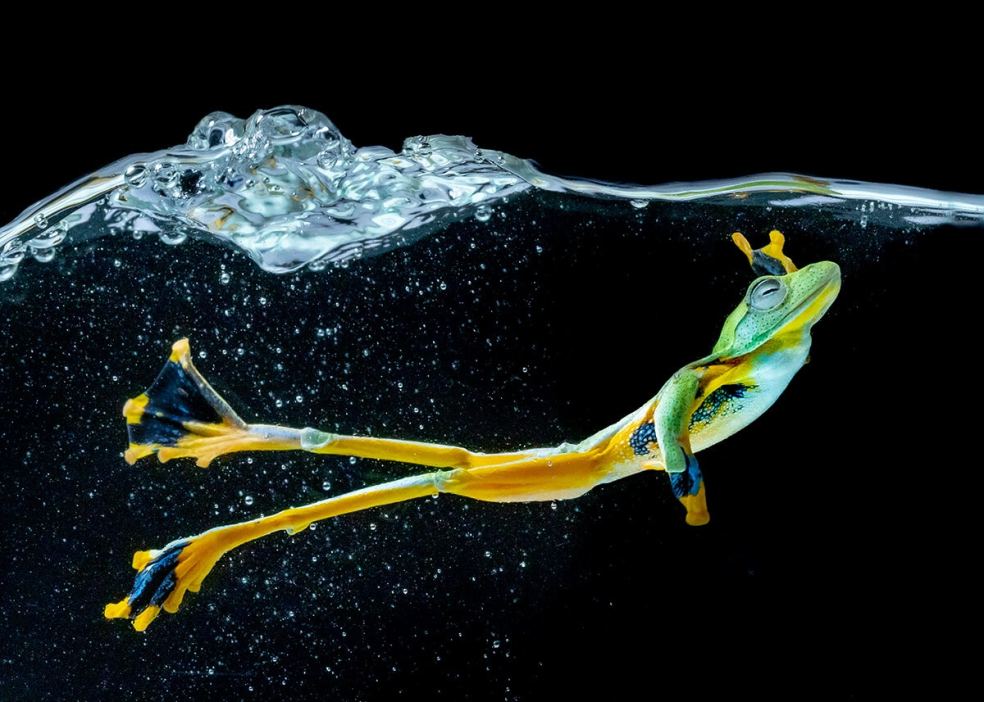
“The Wallace’s Flying Frog” © Chin Leong Teo. Particular Merit Mention, All About Photo Awards

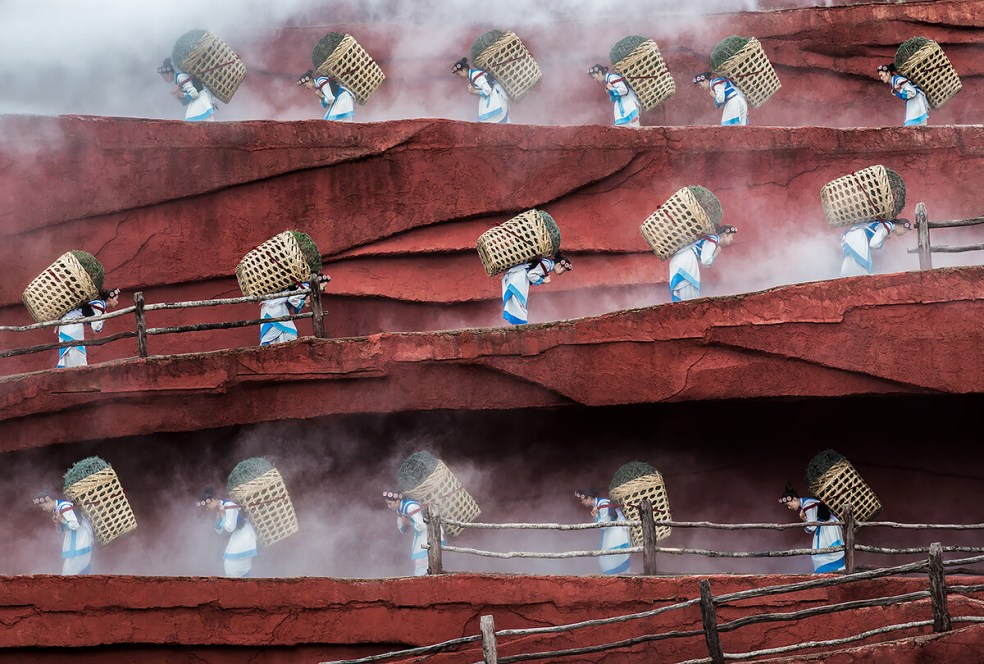
“Step by Step” © Mustafa AbdulHadi. Particular Merit Mention, All About Photo Awards

Untitled © Yoni Blau. Particular Merit Mention, All About Photo Awards

Woman Mursi © Svetlin Yosifov. Particular Merit Mention, All About Photo Awards

Music I’m Digging

My April best-of playlist features some classic alternative and a lot of not-so-new rap and R&B. I guess this is the first full playlist I’ve created purely when in self-isolation?

Neat Podcast Episodes

  • Lawfare-Jim Baker in FISA Errors // Baker previously was responsible for, in part, reviewing the FISA applications put before the FISC. Recently, the DOJ IG found that 29 of 29 applications they reviewed had errors, including a seeming failure to document or prove the facts set out in the applications. Baker assessed the legal implications as well as the normative implications of the deficits, and the need to develop stronger managerial control over all future applications.
  • CBC Ideas—The Shakespeare Conspiracy // Using Shakespeare as a kind of distancing tool—he’s long dead and so unlikely to enliven contemporary political passions—Paul Budra explores how different scholars and public intellectuals have asserted who Shakespeare ’really was’ and the rationales behind such assertions. In an era where the West is increasingly concerned about the rise of conspiracies this espisode provides a range of productive tools to assess and critique new and emerging conspiracies.
  • NPR throughline—Buzzkill // Mosquitos are, without a doubt, responsible for more human deaths than anything else on earth. This superb short podcast goes through how mosquitos have been essential to empire, warfare, and changes to humans’ genetic makeup.

Good Reads

  • The Weirdly Enduring Appeal of Weird Al Yankovic // Anderson has done a spectacular job showcasing the beautiful humanity of Weird Al. In tracing his origin story, and explaining the care and time Al puts into his work, and the love he has for his fans, you really appreciate just how lovely a man he is. If anyone is a Tom Hanks for the geeks, it may end up being Weird Al.
  • There Is a Racial Divide in Speech-Recognition Systems, Researchers Say // It’s as though having engineers of particular ethnicities, building products that work for them, while also lacking employees of other ethnicities, has implications for developing technology. And the same is true of when developers do not include people with diverse socio-legal or socio-economic backgrounds.
  • The chemistry of cold-brew coffee is so hot right now // God bless the coffee-obsessed scientists who’ve taken a deep dive into the way that coffee beans respond to different extraction methods, as well as provide their own cold brew recipes. I can’t wait to see what research percolates out of this lab going forward!
  • What’s the Deal With False Burrs? // Having only recently managed to properly clean my home grinder, I was curious to learn a bit more about the differences in burr grinders. While I’m satisfied with my current grinder I can predict—based in owning a ‘faux’ burr grinder—that a Baratza Encore or Virtuoso is in my near future.
  • LIDAR: Peek Into The Future With iPad Pro // The recent release of the newest iPad Pro iteration has been met with a lot of yawns by reviewers. That makes a lot of sense, given the combination of the ongoing crisis and relatively minimal changes over the 2018 iPad Pro. The only really major new thing is a LIDAR system that is now part of the camera bump, but no mainstream reviewers have really assessed its capabilities. Fortunately the folks from Halide—a smartphone camera company—have dug into what LIDAR brings (and doesn’t bring) to the floor. Their review is helpful and, also, raises the question of whether professionals who do modelling should be consulted on the utility of these kinds of features, just as photographers—not gadget reviewers—should be asked deep and probing questions about the cameras that are integrated into smart devices these days.
  • The Mister Rogers No One Saw // Fred Rogers has had a number of films made about him and his life, but this essay by Jeanne Marie Laskas is different because it is so deeply personal about the relationships Fred had with those around him, and with the author. He inhabited a world that was just a little bit different than our own; his creativity was drawn from this place. But it was also a creativity linked with a deep ethic of work, where he focused on ensuring that his art was as perfect as possible. And left unstated in the article is one of the real testaments to his work: he would re- edit episodes, years after they had first been produced, when he found there were elements he was unhappy with or that no longer adequately represented what he had learned was a more right way of thinking about things. Also left unwritten in this piece was Fred’s belief that children we resilient and could be taught about the world; his shows dealt with issues like the Vietnam war and nuclear war in ways that were approachable to children who deserved to be involved in understanding their world, and always knowing they weren’t alone in it, and that it was perfectly ok to have feelings about it.
  • New York and Boston Pigeons Don’t Mix // The sheer size of pigeon populations–they extent across vast swathes of urbanized (and road connected) land–is pretty amazing. But, equally interesting, is how rural environments seem to, effectively, segregate populations from one another. It’s just another example of how genetically diverse groups can exist all around us, without our ever realizing the distinctiveness.

Cool Things

  • I Miss the Office // If you want office sounds for your work at home, then this site has you covered. (Also, if this is what you’re missing you’re kinda weird!)
  • How to Make Whipped Coffee // I am very curious to try and make this at some point in the future!
  • The Slow Fade of City Life // When the last two images are accurate, you know it’s a lot easier to get through the lack of the city.
  • Campari and Orange Juice // I have to say, this is my new favourite brunch drink. It tastes almost like grapefruit juice, though the real secret—not in this recipe—is to aerate the Campari and OJ in a blender before mixing in a cocktail shaker. The aeration really opens up the Campari and gives the whole drink a level of creaminess it otherwise wouldn’t have.
Categories
Links Photography Roundup Writing

The Roundup for September 1-30, 2019 Edition

(Blurred Vision by Christopher Parsons)

Welcome to this edition of The Roundup! Enjoy the collection of links! Brew a fresh cup of coffee or grab yourself a drink, find a comfortable place, and relax.


I’ve been thinking more and more about the process of making street photos. When I first started seriously trying to make photos, about four years ago, I pushed myself some to take candid shots of people. These efforts culminated with a transit worker challenging me because I’d taken a candid of him without permission. Now, it was lawful to take his photo—I was shooting from a public space—but the confrontation itself left a lasting impact on me. And, so, I didn’t really shoot photos of people for years because I didn’t want to have that kind of negative experience again.

But for the past few months I’ve gotten increasingly comfortable taking photos that include people. So, what’s changed? First, I’m not really taking photos of people, per se, but instead of scenes that happen to include people. I’m not looking for any particular person and, instead, looking to just fill a scene with humans or interesting subjects. I’m also not being sneaky like some street photographers advocate: I’m making it clear, by raising the viewfinder to my eye, that I’m taking a photo. But I linger at a scene with the camera raised, and don’t move when people are wandering through my frame. They don’t necessarily know if I’ve taken a shot. I just sit with my discomfort of waiting.

I don’t know that I have a lot of great photos, yet, as I’m taking shots of people. There are some that I like but I definitely don’t have a ‘style’ at the moment, per se. But I’m pushing myself way outside of my comfort zone when I’m taking photos that, just two years ago, I felt psychologically barred from taking. By getting out of my comfort zone I know I’m expanding the range of the subjects, and environments, and stories I’m able to capture. It’s hard but, I have to believe, will be valuable over time as I teach myself how to be comfortable working in very different styles and types of making photographs.


I might be shifting how I publish these roundups in the near future; I keep finding that it takes me a long time to get all of the pieces together due to workflow changes over the past six or seven months, and that means these come out once a month or so (at best). And I think I like the idea of stuff coming out more commonly. Stay posted…


Inspiring Quotation

You can’t be what you can’t see.”

― Marian Wright Edelman

Great Photography Shots

I’ve been shooting a lot with my new iPhone 11 Pro the past little while, and so wanted to showcase some really nice shots taken on mobile phones that effectively use negative space.

(Morning sun‘ by @x1234)

(This Place‘ by @joseeh)

(Sometimes God holds you back temporarily until the road is clear to continue‘ by @nnkrenz)

(A lifeguard is like a lighthouse, guiding ships to safety‘ by @rawsdeb)

(G O L F L I F E‘ by @iphotokunst)

(Untitled‘ by @ipiotrxs)

Music I’m Digging

  • My favourite songs of September 2019 are public. Songs bias towards R&B, rap, and alternative (as normal), though with a fair number of songs about the ends of relationships and managing the aftermath.

Neat Podcast Episodes

  • The Documentary – World War Two: The economic battle // This was a really interesting review of the second world war, wherein the core argument is that part of the reason for the UK’s success is that it had fully embraced a market economy and so could focus on certain productivity activities (e.g., factories for building planes and war material) and outsource others (e.g., production of food). This economic position was significantly mirrored by Japan, and contrasted against the economic frameworks of China and Germany. Definitely an argument that I’d never heard, or thought about, before.
  • Commons – Dynasties 2: The Irvings // This season of Commons is surprisingly good. I’d largely abandoned the show a few years ago because I didn’t find the content worth spending my time on, but this season is very different. In this episode, we get taken into the land of New Brunswick and how the Irving family functionally controls it and has deliberately (and in bad faith) signed deals that benefit the company’s bottom line to the detriment of residents of the province. If you want to learn more about one of Canada’s most secretive and wealthy families I can’t recommend this piece highly enough.
  • Lawfare – WTF, Ukraine! // There is a lot going on in the news about Ukraine and the Americans at the moment. This episode of Lawfare breaks down all the major players, the history, and what is really going on in the most recent Trump-related scandal. If you want to figure out just what is going on in under 60 minute, then this is the podcast for you.
  • 99% Invisible – The Help-Yourself City // I really appreciated the discussion of “informal urbanism” that is the focus of this episode. In effect, this mode of urbanism takes place when individual or groups of urban residents transform elements of their city without the permission of the government. It includes everything from neighbourhood signage, park benches and chairs, bus shelters, graffiti, and more. While there are some problematic outcomes to these behaviours—significantly linked to liability when these informal elements of the urban landscape cause harm to someone—it was pretty great to just have a concept to capture these essential elements of living and vibrant cities.

Good Reads

  • Utopia, Abandoned // The rise and fall of Ivrea, a corporate town in Italy that was based around concepts of social justice, modernism, and social welfare, speaks volumes to all attempts to artificially manufacture spaces: while they can be made, the ethos behind them will, eventually, pass away and be replaced with dramatically new social, political, and economic circumstances. And, yet, the buildings and infrastructures will remain. The question that I’m left with, I guess, is how things will age; to what extent should our buildings stand fast against change and defy efforts to rehabilitate them—making us live history by conforming modern life to the architectures of the past—or design them to be mutable and inherently rebellious to their designer, builder, and inhabitants. Should we seek to reify ourselves through our buildings, giving us a sense of stability, or instead acknowledge and embrace the inherent uncertainties of the future?
  • What’s the secret of Filipino food in Manila? // I would never have attributed sourness to Filipino foods. Now I’m trying to go through all that I’ve previously eaten and reflecting on memories of tastes to determine if I just absolutely missed a huge part of the cuisine, or if what I’ve eaten just used different techniques and methods.
  • The Gothic Pedigree of Vampire // Justin Achilli, the former lead designer of Vampire, had an interesting comment on why Vampire possessed a different game structure than Dungeons and Dragons or other games. He wrote: “The overarching story container was not a “campaign,” with its military-conquest connotations, but a chronicle, a record, a retelling of events that happened. And in so doing, it relied very heavily on unreliable narrators, so you were never sure you were getting a clinical accounting of events as much as you were getting a definitely biased perspective of events, unless you were there, and even if you were, you’re not unbiased yourself.” I’d never really thought of how useful it was to just think of how sessions between game systems are designed differently, and Justin’s writing definitely has me reflecting on how I think I try to bridge between the two philosophies when running D&D games insofar as I try to build a series of scenes that make a story, as opposed to focusing on the militaristic languages associated with a campaign.
  • When the Soviet Union Paid Pepsi in Warships // Pepsi sought to expand its distribution during the Cold War and, after some impressive diplomatic hijinks, managed to get an exclusive deal with the USSR. The catch was that the ruble was worthless outside of the Republic and, moreover, they couldn’t be taken out of the country. And so Pepsi worked out a barter system, first for Russian vodka and, later, for old Russian warships (to be sold as scrap), with a future deal meant to give Pepsi a number of functional cargo vessels. Pepsi, at one point, had a fleet of ships that was larger than those of many nations. Sometimes fact is stranger than fiction!
  • The 5 Years That Changed Dating // I appreciated how Fetters examined, in depth, the drawbacks and benefits associated with online dating. Core, to my mind, is how apps have adjusted the spaces where people used to socialize to find potential romantic partners: whereas, once, you went out in the interests of finding someone interesting, now the goal is to just spend time with friends (with no real expectation of finding someone interesting). The article also discusses how the more extensive profiles encouraged on some apps, such as OKCupid, affect the likelihood of a long-term match, as opposed to apps that encourage very short profiles, such as Tinder.
  • The Future of Political Philosophy // Katrina Forrester does a terrific job of working through the importance of Rawls in contemporary Anglo political philosophy. She argues that due to how the theory was presented, along with its failure to address disruptions to liberalism in the 1960s, has led it to showcase a theory that may be significantly unable to respond to the contemporary challenges facing the nation-state and Western politics. In effect, both the requirement that novel modes of critique settle within pre-defined intellectual boundaries, combined with a sunny optimism of how liberalism ought to be, have led to the potential crisis in Rawlsian-inspired liberalism itself.

Cool Things

Categories
Links Photography Roundup

The Roundup for July 14-31, 2019 Edition

(Confused Exposure by Christopher Parsons)

Welcome to this edition of The Roundup! Enjoy the collection of interesting, informative, and entertaining links. Brew a fresh cup of coffee or grab yourself a drink, find a comfortable place, and relax.


I’m in the process of determining what new camera I want to buy, principally to replace my aging Sony rx100ii. That camera was bought in used condition, and has been to four continents and taken approximately 20K shots. It’s been dropped, frozen, and overheated. And even gotten a little damp from salt air! It owes me little and still produces solid (black and white) images: it seems that in my abuse I did something to the sensor, which means colour images sometimes just turn out absolutely wacky.

So what do I want versus what do I need? I know from my stats that I prefer shooting between 50mm-100mm equivalent. I know that I want a fast lens for the night.1 I don’t take action shots so I don’t need the newer Sony cameras’ tracking magic. I don’t want anything bigger than the Sony—it’s size is a killer feature because I can always carry it around—but definitely want a pop up viewfinder and a 90 degree tilt screen. I don’t want another interchangeable system: my Olympus kit has me covered on that front.

What do I want? I’d love to have easy access to an exposure dial. An internal ND filter would be super great. Some in-body image stabilization would also be stellar, and if I could squeeze in the ability to charge from a USB battery pack while keeping prices under $1,000 that would be perfect. Oh, and something better than Sony’s pretty terrible menu interface!

What don’t I need? Any more than 20MP, actual waterproofing2, a big body or permanent viewfinder, an APS-C sensor, audio-in features, dual SD card slots, or crazy fast tracking.

This currently means I’m very interested in some of the older Sony rx100 cameras—namely the iii and iv—and maybe the new Canon G5Xii. I know my actually photographic outputs are, in order, Instagram, my TV, photos on my wall (no larger than 24×36”), and then photo books. I know a 1” sensor is more than enough for all of those uses. Now I just need to see how the Canon’s reviews shake out, the cost of them, and then evaluate the differential between Canon’s and Sony’s cameras!


Inspiring Quotation

Taking pictures is savouring life intensely, every hundredth of a second.

  • Marc Riboud

Great Photography Shots

I have a set of abstract photos that I’ve taken over the years and, to date, while I appreciate them they aren’t ones that I’ve decided to print or routinely display. Still, several of the below abstracts (taken on smartphones) are inspiring just to look at and think about the process of developing the respective compositions.

(‘Last ices of the winter‘ by @paulenovemb)

(‘Untitled‘ by @lisalam628)

(‘Villa Savoye by Le Corbusier‘ by @bazillus)

(‘Untitled‘ by @reneetakespics)

Music I’m Digging

  • Goldlink – Diaspora // Goldlink’s album is a terrific summer album: lots of pop notes with a taste of Caribbean beats and good mix between somewhat gravelly male and ethereal female voices. It’s been a lot of fun to listen to while writing or reading, working out, or just doing chores around home.
  • Machine Gun Kelly – Hotel Diablo // I’m still trying to really get a handle on what I think of this album, but I’ve definitely listened to it a lot over the past week or two. I think I’m appreciating it principally for its nostalgic value: it has a lots of beats and sounds from late-90s/early-00s nu-metal and rap. So I don’t think that it’s ‘quality’ per se, but definitely speaks to my younger self.

Neat Podcast Episodes

  • Lawfare – Jack Goldsmith Talks to Former Secretary of Defense Ash Carter // To begin: I’m never a huge fan of a Secretary of Defense who is a strong advocate for war, and Ash Carter is definitely that class of Secretary. However, he provides a superb view of the entirety of the Defense Department and what goes into running it, as well as the baseline challenges of both engaging in offensive cyber operations as well as the role(s) of legal counsel in developing military operations. If you want an insiders view of the different layers of the Pentagon, and how the institution has developed over the past few decades, then this is a great episode to listen to.
  • Frontburner – What did Canadian peacekeepers accomplish in Mali? // Richard Poplak has a non-nonsense, direct, discussion with Michelle Shephard of just how little value Canada derived from its half-billion dollar peacekeeping commitment to Mali. At least part of that failure is linked to how Canada’s foreign policy had to be entirely recalculated to deal with Donald Trump when he was elected President but certainly everything cannot be laid at Trump’s feet.
  • The Secret History of the Future – Meat and Potatoes // I have to admit, I never really thought about how important potatoes were to the Europeans in establishing a reliable source of caloric intake, nor how you could connect the potato with contemporary efforts to find new foods to both feed the contemporary world and save the environment at the same time. If you want to think a bit more about the source of your food, today, and what it might mean for your food, tomorrow, then this is a solid episode to sink your…ears?…into.
  • The Secret History of the Future – Infinite Scroll // Proving once more that everything new is really just the old reborn, Slate examines how Renaissance scholars were entirely overwhelmed by information and had pretty well the exact same issues with information, then, as contemporary societies do with the growth of the Internet and rapid spread of information. It’s interesting to hear how scholars and the public fought against things like indices, tables of contents, and reviews of books; similarly, today, we hear people push back against any and all efforts to summarize, synthesize, or distil books, articles, and (even) podcasts. The commonality between the arguments of yore and today are largely identical, which speaks to how important it is to take history into account when evaluating the travails of the contemporary era.
  • Lawfare – Jonna Mendez on ‘The Moscow Rules // Ever been curious about the different tricks that were used by CIA case officers in Moscow during the height of the Cold War? Then this is the episode for you! Mendez, a former CIA officer, recounts the various techniques, technologies, and troubles that the agency developed and overcame in the process of engaging in espionage against the most equally matched adversary in the world on their home turf. Though mentioned somewhat sparingly, there are lessons to be gained from the stories she recounts from her time in the Cold War, including the very real value (at the time, for the USA) of obtaining military technology secrets well in advance of the technologies entering production: with these secrets in hand, as an example, the USA successfully built in countermeasures to Soviet radar systems. Today, you can imagine how the Chinese government’s theft of American and other allies’ military secrets may similarly position that government to develop countermeasures much, much faster than otherwise expected.

Good Reads

  • ‘Orientalism,’ Then and Now // Shatz’ review of Said’s Orientalism and application of its key insights to the geopolitical changes in how the Other is conceived of — as now a threat, not because it is external and to be created through our knowledge of it, but because it is within us and is changing ‘Us’ — presents a stark view on the era of racism, fascism, and ignorance today. Whereas the orientalism that Said focused on was, principally, that linked to elite power-knowledge constructions that served the West’s practices of colonization, today’s is born of a deliberate lack of expertise and knowledge. Whereas the past cast the Other as external and a threat, today the Other is within and consequently domestic politics is the focus of elites’ aggressions. While Shatz is hesitant to assert that the end is nigh, his hopefulness towards the end of the essay is perhaps not as hopeful as he imagines: there are, indeed, efforts to defray, mitigate, and prevent the contemporary situations of hardened and violent orientalism. But despite the power and influence of art it remains unclear to me how effective these cultural acts of resistance genuinely are against a structural practice of aggression, harm, and ignorance.
  • Congress Will Ignore Trump’s Foreign Affairs Budget Request. Others Will Not. // Both chambers of the US legislature are opposed to the significant cuts that the Trump administration has sought in its budget appropriations. However, the signals sent by the administration have meant, internal to the State department, that staff resistant to democracy promotion have enjoyed enhanced status and positions in pushing back against attempts to preach American values abroad and who are, instead, advancing the transactionalist style of politics favoured by the current administration. Simultaneously, autocratic leaders abroad have taken the administration’s stance as a signal that their activities are not going to be denounced, or strongly opposed, and sometimes even supported, by the American government. While all of these signals may change following the next presidential election (though perhaps not!), the denigration of the State department is not something that can be remedied by electing a new president: it will take decades to rebuild trust, restrengthen ties, and hire and train new staff. The long term effects of the Trump administration will be felt throughout the world for a very, very long time regardless of whether he is currently in the White House.
  • Doug Ford’s Legal Aid Guarantee // This quotation from Spratt’s assessment of the Ontario government’s cuts to legal aid speak volumes: “Unrepresented accused are also more likely to be steamrolled in our courts. You see, our justice system is adversarial and only functions if the adversaries – the prosecution and the defense – are equally matched. An impoverished, marginalized, or unsophisticated self-represented litigant stands no chance against the well-funded state. With odds stacked against them, many unrepresented accused are coerced into pleading guilty, even when they are not. Because of Ford, there will be more wrongful convictions.” Worse, given that legal aid is being cut to assist in bail hearing, more accused will simply plea out so that they can go home and work the jobs they have to try and survive; losing the job they have could have catastrophic consequences, as could being unable to get home to care for their young family members. Ford’s cuts won’t save money in the short term and will almost certainly lead to increased court time and costs, and remuneration to those improperly convicted, going decades into the future.
  • The Future of the City Doesn’t Have to be Childless// I fundamentally agree with the premise of the article written by Love and Vey. Cities are very much being designed without families—or, at least, middle and lower class—families in mind. I agree that parks and other amenities are needed, as are spaces to facilitate youth development and lower income housing. But that isn’t enough: housing has become an investment space, where hundreds or thousands of properties are traded in an instant by holding companies, and where developers are building for investors rather than residents. We need to correct the market by pushing market forces out of housing development: rental buildings need to be prioritized for development, and developers of high rise condos obligated to pay significant fees to foster inclusive social properties around their buildings. Doing anything less just picks around the edges of the catastrophes propagated by the market in urban environments.
  • The Future of Photography // I keep thinking about what kinds of cameras I want, and why, and whether I really need them given the technical characteristics of contemporary cameras. I think that this post significantly, though not quite entirely, captures my current thinking when it’s author writes: “Today all modern cameras give you an image quality that is good enough even for the most demanding applications, in fact most of us will never use their full potential. What we usually do is to make a photo book now and then but most of the time the pictures will be displayed on the internet or on our TVs. So the ever increasing resolution makes no sense anymore. If your camera has 24MP you trow away 66% of the pixels in case you display them on a 4K TV in case you use them for the internet it is 90% or more. If you change to a 61MP camera you just trow (sic) away more pixels. … I think the real key is to offer a satisfying shooting experience so that you just want to take out your camera to take some pictures. A nicely handling camera with a good shutter sound and solid lenses with a real aperture ring is all it takes. That’s why I think Fuji has grown so popular.” The only thing I’d add is this: I really, really like flip out screens and the ability to see what I’m shooting in the bright sun through a view finder.
  • Why we fight for crypto // Robert Graham has a good and high-level assessment of why calls by the US government to undermine the security provided by contemporary cryptography are wrongheaded. Worth the read to recall why all the current Attorney General’s calls, if adopted, would endanger individuals and society, and constitute irresponsible policy proposals that are not supported by an evidentiary record of requiring such modifications to cryptography.
  • How to Prevent and Treat Tick Bites and Lyme Disease // Part of a broader, and frankly disturbing, special series on ticks and the dangers they pose, Heid’s short article gives you all the information you need to limit the likelihood of getting bitten by a tick, and what to do should you discover one on you, and how to respond should lyme disease symptoms appear.
  1. Recognizing that a ‘fast’ compact lens isn’t really all that fast when looking at full frame or even APS-C equivalencies.
  2. I’m in love with the idea of shooting in the rain, but not so much the actual getting wet part, so I don’t think I need full waterproofing and most camera can take a bit of light rain here or there in my experience.
Categories
Links Photography Roundup Writing

The Roundup for February 16-March 4, 2019 Edition

Families by Christopher Parsons

Welcome to this edition of The Roundup! Enjoy the collection of interesting, informative, and entertaining links. Brew a fresh cup of coffee or grab yourself a drink, find a comfortable place, and relax.


Inspiring Quotation

“Do what you feel in your heart to be right —for you’ll be criticized anyway.”

  • Eleanor Roosevelt

Great Photography Shots

Winnie Au’s photographs of dogs in sculptural comes of shame are just amazing and hilarious.

Music I’m Digging

  • Daniil Trifonov – NPR Tiny Desk Concert // Trifonov’s performance is just spectacular, and his Chopin is amongst the best I’ve ever experienced. The nuance of his playing cannot be overstated; his technical mastery lets him truly express the emotions behind each of the with which pieces he engages.
  • Kehlani – While We Wait // I’ve been listening to this a lot over the past few weeks; Kehlani’s R&B and soul vibes make for both pleasant background listening as well as concentrated, full attention, listening. Her track with 6LACK, in particular, strikes me as a solid contribution to her emerging body of work.
  • Run the Jewels’Run the Jewels, Run the Jewels 2, and Run the Jewels 3 // I’ve had these albums on near-constant replay over the course of the past two and a half weeks. I really appreciate the aesthetic of the beats that El-P lays down and his general MC skills, especially as combined with Killer Mike’s lyrics. It feels like they’ve taken the best of New York circa the mid-90s or early 2000s and Atlanta circa the mid-2000s to today. Almost every track has a special bit of resonance and, on the whole, the cohesiveness of all their albums to date is really exceptional.

Neat Podcast Episodes

  • TVO – The World’s Shrinking Problem // This is a counter-intuitive assessment of the state of the world’s population. Whereas popular thought holds that the world is running out of space, Darrel Bricker and John Ibbitson’s new book Empty Planet: The Shock of Global Population Decline suggests that average birth rates are significantly declining to under 2.1 children per women in numbers well populated areas of the world (e.g. China, India, etc). The result: immigration is critical to maintain populations, and especially youthful populations, if a consumer-based economy is going to continue.
  • TVO – The Asian world Order is Coming // With Asian populations increasingly coming into their own, as they become more truly self-governing states as opposed to driven substantively by colonialists their decisions on who to trade with, how to approach basic rights, and baseline conceptions of equality will increasingly follow from self-determined positions as opposed to those imposed by others. There are more people living in Asian democracies than in any other part of the world and trade between Asian countries is increasingly interregional. As such, a genuine reorientation of the world blocs may be taking place and to the effect of seeing Asian nations coming (back) into their own after approximately 500 years of colonial influence and rule.
  • Lawfare – Marie Harf and Bill Harlow on CIA Public Relations // In this long form interview with former members of the CIA’s public relations team, Daniel Priess unpacks what the role of the team is, how they interact with other members of the Agency, and the reasons for which the relations team tries to correct the record. What I found most interesting was that the press team was not designed to create positive spin for the CIA but, instead, to make news that comes out less negative. Close observers of the CIA might dispute this position — there is a history of the CIA, especially over the past decade or so, attempting to influence American public opinion vis-a-vis who gets access to people in the CIA to develop movies and TV shows — but nonetheless this was an interesting podcast that while presenting information about the public relations team was also, without a doubt, an effort to influence minds about how the CIA itself operates.
  • The Axe Files – Claire McCaskill // McCaskill was a Democratic Senator who lost her seat in the last election. This interview with her is helpful and productive in thinking through how the Senate works, changes in USA politics over the past twelve years, and the things that primarily drive Mitch McConnell, the current Senate majority leader.
  • The Documentary – Japan’s Elderly Crime Wave // The issues of loneliness, shame, and insufficient welfare state mechanisms along with a generally healthy society are all leading to a heightened number of elderly persons in Japanese prisons. This episode of The Documentary dives into the problem and speaks directly to those who are incarcerated to better understand why they’re imprisoned, whether they see a life for themselves that is permanently outside of prison, and how a Japanese culture of shame is leading to elder members of families being permanently exiled from their closest social connections.

Good Reads

  • Love and Limerence // A long assessment of what’s it’s like to experience infatuation towards another, this review of limerence — “an involuntary interpersonal state that involves an acute longing for emotional reciprocation, obsessive-compulsive thoughts, feelings, and behaviors, and emotional dependence on another person” — functions as a diagnostic utility as well as a way of mapping likely outcomes when there is a variance between expressions or perceptions of limerence. The review of the term, and Studs Terkel’s associated book, are underscored by hundreds of pages of first hand accounts of feeling enthralled by another person, with the components of limerence breaking down to, first, a sign of hope that the person might reciprocate and, second, uncertainty. However, the perceptions that a limerent person has towards their limerence object is as much a projection of their own illusions as anything else; that which is perceived is unlikely to be representative of the actual other person.
  • Shopping in Pyongyang, and Other Adventures in North Korean Capitalism // The development of the North Korean economy, and specifically the acceptance and integration of open markets throughout the country, bely the perception of the country as a fully controlled socialist system. Of particular note is the rise of bosses who collect rents from persons selling in markets. This emerging upper-merchant class is unlikely to seek political power and work to open North Korea’s borders and gain access to foreign markets. Instead, these merchants principally seek to maintain the existing political system because it protects them from external competition; instead, this group of merchants are likely to instead seek to obtain and leverage political power to keep the state’s attentions fixed elsewhere. In effect, these are scions of political conservatism as opposed to leaders for liberal political reform.
  • Don’t buy a 5G smartphone—at least, not for a while // Ars Technica’s Ron Amadeo has a terrific, and concise, summarization of what 5G technologies entail in 2018/19 and why the hype over the technology likely won’t meet reality in the near future. Specifically, the characteristics of the radio frequency utilized in 5G communications combined with the increased size of chips used (and associated radios) mean that not only will early-generation 5G-compatible phones be significantly more expensive, they will likely also have worsened battery lives. It’s based on details like this that I genuinely believe we won’t see real 5G penetration for at least 5 years, barring a significant revolution in how and why the newly utilized spectrum is taken advantage of by innovative technologies and systems.
  • How Run the Jewels Became Hip-Hop’s Most Intense Truth-Tellers // While Weiner’s article came out several years ago, it continues to provide a solid background to where Run the Jewels emerged from, the variances in attitudes and politics of El-P and Killer Mike, and what happened (and why) when they teamed up. Further, it’s noteworthy that their music is as much ‘consciousness rap’ as it is about asserting their status in the hip hop community and delving into their sometimes difficult pasts.
  • Modern Love – How Bibliophiles Flirt // There is so much to appreciate in this story about presentation of self, and becoming who one desires to be (or sees oneself as), as well as the blossoming of love that culminates with a return to fun game which was played a year earlier.
  • A basic question about TCP // This is about the best explanation of TCP/IP that I’ve ever come across. Graham has littered the typically technical explanations with a large volume of examples so that even the most technically unsophisticated reader should walk away with a pretty good grasp of the protocol, its difficulties, and the problems associated with ‘smart’ networks.
  • Strep A bacteria kill half a million a year. Why don’t we have a vaccine? / I’d had no idea just how dangerous Strep A could be or that repeated cases of it can lead to serious health issues. impressively, there has been an uptick in efforts to develop a vaccine against most types of Strep, with tests appearing promising. Hopefully a vaccine can be developed…and we can then convince or coerce people to get vaccinated.

Cool Things

  • UCCA Dune // Without a doubt, this is perhaps the single most beautiful contemporary art gallery — from an architectural perspective — that I’ve seen in a very long time. The interior shots of it are organic and sensuous and communicate an openness to the world whilst simultaneously behaving as a protective shell for inner contemplation.
  • Animating Anakin Skywalker in Star Wars™ Battlefront™ / The way in which the designers attribute psychological properties to Skywalker based on how he used his lightsaber prior to his turn to the dark side is pretty incredible, and speaks to the thoughtfulness that goes into many games associated with the Star Wars universe.
Categories
Links Roundup

The Roundup for January 21-31, 2018 Edition

(Smile! by Christopher Parsons)

Welcome to this edition of The Roundup! Enjoy the collection of interesting, informative, and entertaining links. Brew a fresh cup of coffee or grab yourself a drink, find a comfortable place, and relax.


Inspiring Quotation

“To create one’s world … takes courage.”

— Georgia O’Keeffe

Great Photography Shots

I really appreciated the very different natures of the three shots, below, which were compiled by Mobiography as part of the 15 Superb Smartphone Photos of Urban Life challenge.

(‘Waiting for their pasta‘ by @zoyazen)

(‘PANCHIKAWATTE‘ by @the.r.a.b.b.i.t)

(‘Sunsets and silhouettes‘ by @tanvi2016)

Music I’m Digging

I’ve been listening to a bunch of different playlists over the past few weeks, with my favourites being:

  • Apple Music – The New Atlanta // There are some amazing artists coming out of Atlanta, with 21 Savage, 6LACK, and Takeoff probably being amongst my favourites at the moment.
  • Apple Music – The New New York // Part of the reason I wanted to listen to this list was because Atlanta is being seen as where a lot of the freshest talent is coming from; I wanted to be able to compare between the two cities and the new artists emerging out of them. If I’m honest, I’m preferring the New York playlist with artists like Thutmose, Princess Nokia, 6ix9ine, HoodCelebrityy, amongst others.
  • Jasmine Jones – 🍽 // I’ve been listening to a lot of Jasmine Jones’ playlists, with her playlist for dinner parties being a really nice background playlist with interesting and cool tracks that I haven’t ever found on an equivalent playlist. Really though, all of Jones’ playlists are worth checking out!
  • Songs I Liked in January 2019 // I didn’t actually favourite a huge number of new songs this month, which was actually a bit shocking when I ran my script. Still, I really do like the few tracks that did get a like!

Neat Podcast Episodes

  • Backstory – Nixon Beyond Watergate: A History of the Presidency Before the Scandal // I really didn’t know much about Nixon other than the scandal and so, as an example, had no idea that it was under his presidency that a lot of the United States’ environmental regulation began in force. Nor was I really aware of just how effective a political communicator he had been prior to the scandal itself. If you’re interested in filling in some historical blank spots then this is a good listen.
  • 99% Invisible – Gathering the Magic // I played Magic: The Gathering periodically during high school and university but always got out because I saw that it would demand a regular monetary investment to have the ‘best’ cards. That said, it was a lot of fun when I played. This episode goes through all of the challenges in putting together a game that is card-based and yet has a significant storyline behind it. Moreover, it talks about the politics of adding progressive cards, such as characters with non-CIS sexualities. That said, I think that the discussion of the game that fails to account for the financial rationale for putting out new decks on a regular basis papers over the fact that this is a game built to print money, and has for a long time. A more holistic accounting would have touched on the relationship between that business model and the progressive nature of that game itself (at least as presented by the persons interviewed in the episode).

Good Reads

  • The Route of a Text Message // I’ve never come across a simultaneously so-comprehensive and so-amusing explanation of a contemporary technology. Scott’s breakdown of every single element of typing a SMS message is remarkable; if only there were more such breakdowns, perhaps more social scientists would realize the importance of how policies and laws can affect protocols and code for good or ill.
  • Amazon Knows What You Buy. And It’s Building a Big Ad Business From It. // I had no idea how sophisticated Amazon’s advertising systems were, and that they were leveraging information given to the company, like type of car you own, purchases you make, size and composition of your family, and so on, to help third-parties target ads. This is yet another case of a company exploiting data in non-transparent ways that are, frankly, just creepy.
  • The Secret to Getting Top-Secret Secrets // Fagone’s article is somewhat mis-titled; it’s really a story about Jason Leopold, a journalist who’s been using the USA’s FOIA process to extract secret documents from the government to subsequently report on them. And the story of Leopold’s journalist and personal history is really, really interesting: he’s managed to turn his addictive personality from that which was destructive (e.g. drugs, alcohol) to positive (e.g. requesting documents from the government). Fagone effectively showcases the depths of Leopold’s character and, in the process, also raises baseline questions of why more journalists aren’t using Leopold’s method more rigorously given its successes.
  • Your Company’s Promotion Process is Broken // Mannan’s piece is a must-read for anyone who needs their regular reminder that gender and cultural backgrounds are factors managers absolutely must take into consideration when they’re evaluating employee performance. I found her honesty in presenting her own experiences, as well as how a manager productively engaged with her to improve how she wrote her own self-assessments, was refreshing and provided a good number of practical things to watch for when actually evaluating employees’ self-assessments.
  • The Secrets of Lyndon Johnson’s Archives // When I visited President Johnson’s ranch last year I’d never really known much about him. And, to be fair, I still know little about him. However, Caro’s article on his experiences in going through the president’s archives is deeply revealing of the limitations of other authors’ biographies of the president and the sheer amount of work Caro does in excavating the truth of his subjects. It’s a stunning article in just the process of Caro’s work, to say nothing of the actual insight he has in conducting interviews and gaining the trust of interview subjects.
  • The Sloth’s Busy Inner Life and Where Sloths Find These Branches, Their Family Trees Expand // These pair of articles from the NY Times’ science section are really, really interesting insofar as they explain why sloths in South and Central America risk the dangerous trip down from their trees to defecate (reason: to foster moths, which ultimately live and die in the sloth’s fur to facilitate the growth of moss that the sloth eats from its fur) and how trees in cacao plantations are helpful to facilitate survival of sloth populations. It’s incredible to realize how intricate these animals’ ecosystem has become and, also, worrying to realize how delicate these ecosystems really are.
  • 8 Tips For Incredible Urban Photography On iPhone // This is a terrific guide for thinking about how to see an urban environment and, also, how to compose and edit the shots that you take with your iPhone or any other camera that you happen to have with you. There’s lots of good guides like this, but it was the comprehensive nature of this piece that made me really like it.
  • I Tried to Block Amazon From My Life. It Was Impossible. // Using a customized VPN, Hill attempted to block any access to Amazon products and realized that while avoiding Amazon retail is challenging, but possible, it is almost impossible to avoid using the company’s Internet infrastructure. In the process, she disclosed in a clear and transparent way just how broad Amazon’s power has become, and that the company arguably operates as a quasi-monopoly in today’s digital economy.

Cool Things