Categories
Links Writing

US Internet Imperialism Strikes (Again!)

Wired has run a decent piece surrounding unilateral American seizures of domain names by acting on critical infrastructure governed by US law. A key bit from the article to get you interested:

Bodog.com was registered with a Canadian registrar, a VeriSign subcontractor, but the United States shuttered the site without any intervention from Canadian authorities or companies.

Instead, the feds went straight to VeriSign. It’s a powerful company deeply enmeshed in the backbone operations of the internet, including managing the .com infrastructure and operating root name servers. VeriSign has a cozy relationship with the federal government, and has long had a contract from the U.S. government to help manage the internet’s “root file” that is key to having a unified internet name system.

These domain seizures are a big deal. Despite what some have written, even a .ca address (such as the address country code top level domain linked to this website) could be subjected to a take down that leverages the root file. In effect, US copyright law combined with American control of critical Internet infrastructure is being used to radically extend America’s capability to mediate the speech rights of foreign citizens.

The capacity for the US to unilaterally impact the constitution of the Web is not a small matter: such actions threaten the sovereign right to establish policy and law that governs the lives of citizens living in countries like Canada, Russia, Australia, and Europe generally. Something must be done, and soon, before the Web – and the Internet with it – truly begins to fracture.
Categories
Quotations

2012.3.19

In the context of big data, overconfidence can lead people with good intentions to base big policy decisions on faulty logic. We live in an era of soft paternalism, with policy makers eager to bake into policy new default settings for society. Mostly these are good ideas, but now and then we make big mistakes.

Big Data and the Stalker Economy – Forbes (via tkudo)
Categories
Links Writing

Data Protection Officers Needed in the EU

Peter Fleischer, Google Global Privacy Counsel, notes that most companies with over 250 employees will likely need a Data Protection Officer as a result of updates to European law . He rightly notes that such updates should increase basic data protection awareness in companies, though I have concerns about the effectiveness of securing privacy through data protection.

To be sure, breaches will hopefully be assuaged (though almost certainly not stopped) but data will be protected to the letter of the law as opposed to being secured to the level of citizens’ normative expectations of privacy. As a result, the legalization of data protection and privacy will continue to let companies engage in practices that citizens find upsetting without those practices actually being outlawed or banned.

Categories
Aside Links

Cogeco’s Meters are Still Broken

From DSLReports we find that:

The leap year appears to be the latest thing to confuse Cogeco’s metering software, with users reporting that a bug resulted in them being informed they’d already used their monthly allotment before March even really got started. Notes one of several users:

“I got my 100% warning on March 1st. I use my router as well to watch my usage. My router for Feb shows 170GB, Cogecos 254. I am going to get hit with a $75 charge and I am pissed. Measurement Canada needs to get involved here, this is getting absurd.”

Measurement Canada seems absolutely unwilling to get involved in issues related to mobile or landline data speeds and volume accuracy. We really need to get at least an OfCom level of involvement: the punting between Industry Canada, Measurement Canada, and the CRTC continues to have very real implications for citizens and consumers, and these problems have to be addressed.


Categories
Links Writing

How Notice-and-Takedown Hurts Real People

Under DMCA rules a copyright holder can request that content hosts, such as Flickr, take down content that is believed to infringe on the holders’ copyright. Hosts will typically take down content and subsequently notify whomever posted it. The poster can then respond (after the content is already down) to argue that they were within their rights to post the content either because (a) it was the poster’s own content; (b) it was posted under fair use provisions.

Some copyright holders assert that notice-and-takedown is an acceptable approach (others insist that even this is too onerous, and that the hosts themselves should be responsible for policing their users) on the basis that if there is an error then a poster can try and remedy the take down order. Unfortunately, this assumes that whatever is taken down can be, or is, replaced in full after the order is issued. As a recent Techdirt article reveals, this isn’t always the case:

As the system “works” today, it’s open to misuse. And despite claims from proponents of the DMCA process, there’s more at stake than simply the single item in question. With one false DMCA notice, the entire history of a popular photo was erased, taking with it the story of how this “alphabet” came to be. The “notice-and-takedown” process is very obviously broken, resulting in the sort of situation Gorman has described.

When you consider the amount of damage that a single mistaken DMCA notice can do, it’s amazing that this process is still considered to be “fair” by its users. This is yet another strong argument for a notice-and-notice process in which companies and individuals would have a chance to file a counterclaim before the content is deleted, rather than having to assert their claim post-takedown and be left to clean up the resulting mess.

As someone who writes professionally I am genuinely sympathetic to copyright holders: I get that there are prospective revenue losses from infringement and acknowledge that digital copying imposes challenges for historical business models and processes. This said, if a copyright holder demonstrably fails in its due diligence when issuing a notice-and-takedown then it should be held liable, just as it is attempting to hold liable a potentially infringing user. There must be some kind of equity in the notice-and-takedown system or, better, a move to a notice-and-notice system (such as in Canada) to limit the harms that arise from poorly targeted take down efforts.

Categories
Aside Humour

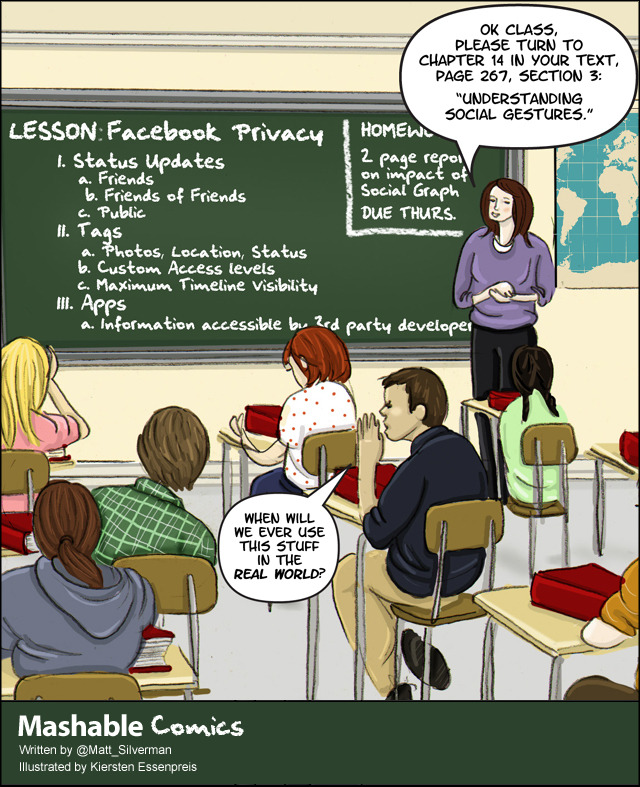
Understanding Social Gestures

Lesson: Facebook Privacy

Categories
Aside Humour

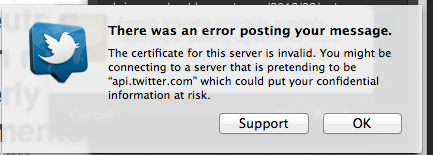
Unencrypted Wifi Hotspots 😬

Just one of the reasons not to use open, unencrypted, wifi hotspots

Categories
Quotations

2012.3.17

Though Silicon Valley’s newest billionaires may anoint themselves the saints of American capitalism, they’re beginning to resemble something else entirely: robber barons. Behind the hoodies and flip-flops lurk businesspeople as rapacious as the black-suited and top-hatted industrialists of the late 19th century. Like their predecessors in railroads, steel, banking, and oil a century ago, Silicon Valley’s new entrepreneurs are harnessing technology to make the world more efficient. But along the way, that process is bringing great economic and labor dislocation, as well as an unequal share of the spoils.

Rob Cox at Reuter. Go read his whole essay, “Silicon Valley’s underserved moral exceptionalism
Categories
Aside Humour

WW1 Surveillance Pigeon

thrognobonk:

German WW1 surveillance pigeon.

Some of the earliest ‘arial drones’ that were deployed in combat zones.

Categories
Aside Humour

Your Friendly Neighbourhood Wiretap Man

If C-30 passes, Canadians too will get to enjoy their own free lifetime supply of surveillance.