The start of a week and a half off begins with the delivery of my new iPad Pro (2024). The screen is just phenomenal and I can’t believe how much faster and lighter it is compared to my 2018 iPad Pro.
Waiting this many generations means I can really tell how much nicer this one is to use!
Aside from reaching a surprisingly large proportion of men, the ads got direct responses from dozens of Instagram users, including phone calls from two accused sex offenders, offers to pay the child for sexual acts and professions of love.
The results suggest that the platform’s algorithms play an important role in directing men to photos of children. And they echo concerns about the prevalence of men who use Instagram to follow and contact minors, including those who have been arrested for using social media to solicit children for sex.
…
… though The Times chose topics that the company estimated were dominated by women, the ads were shown, on average, to men about 80 percent of the time, according to a Times analysis of Instagram’s audience data. In one group of tests, photos showing the child went to men 95 percent of the time, on average, while photos of the items alone went to men 64 percent of the time.
These findings are deeply disturbing to say the absolute least.
Really looking forward to the new iPad I’ve ordered. Went with the 1TB/16GB RAM iPad Pro, with a new pencil and folio case. Delivery date is Wednesday! (I expect I’ll end up buying a keyboards, too, in a few weeks.)
My primary use case is editing photos and doing light writing. And my 2018 iPad Pro is starting to show its age on some tasks, like editing large photo files. I’m looking forward to this big step up.
I have to wonder: what will the next iPad I buy, in 5-6 years, be like or include in excess of the current ones?
I went away on vacation last year to Guelph. It’s an hour or so away from Toronto and also happens to be where I spent a lot of time growing up and where I did some of my university degrees. We tend to visit once or twice a year just to get away from the ‘big’ city and enjoy some of the restaurants, distilleries, breweries, and other features of Guelph. It also provides an opportunity to see friends and family.
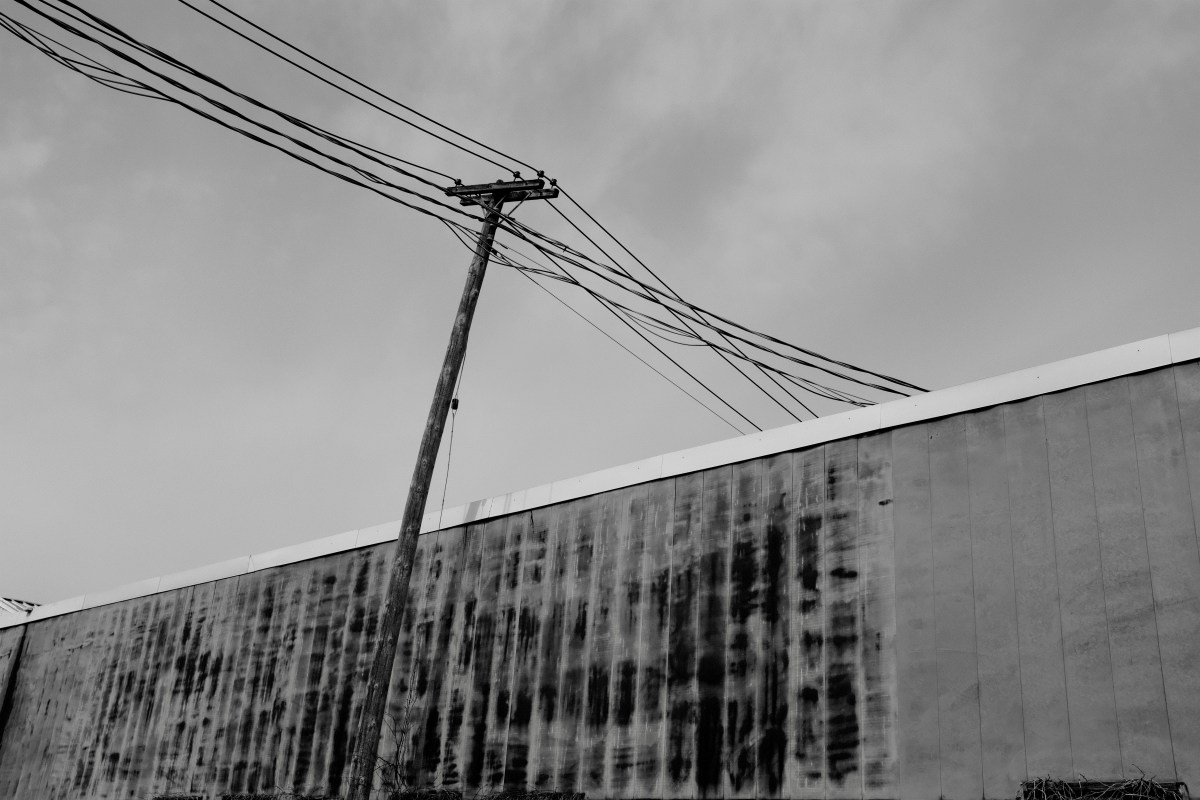
I made this image while we went on a long walk out to Guelph Lake; it’s an entirely man-made lake, and there are nice trails that track along rivers that you can take from downtown to get to the lake.
There isn’t anything particularly magical about this image: it doesn’t necessarily speak to a deep history of the city, or anything so substantive. But I liked the texture of the wall that the utility pole was pressed against, and the chaotic way that the utility wires were somewhat tangled together. And it’s for that reason that this was my favourite landscape-type photograph I made in April 2023.
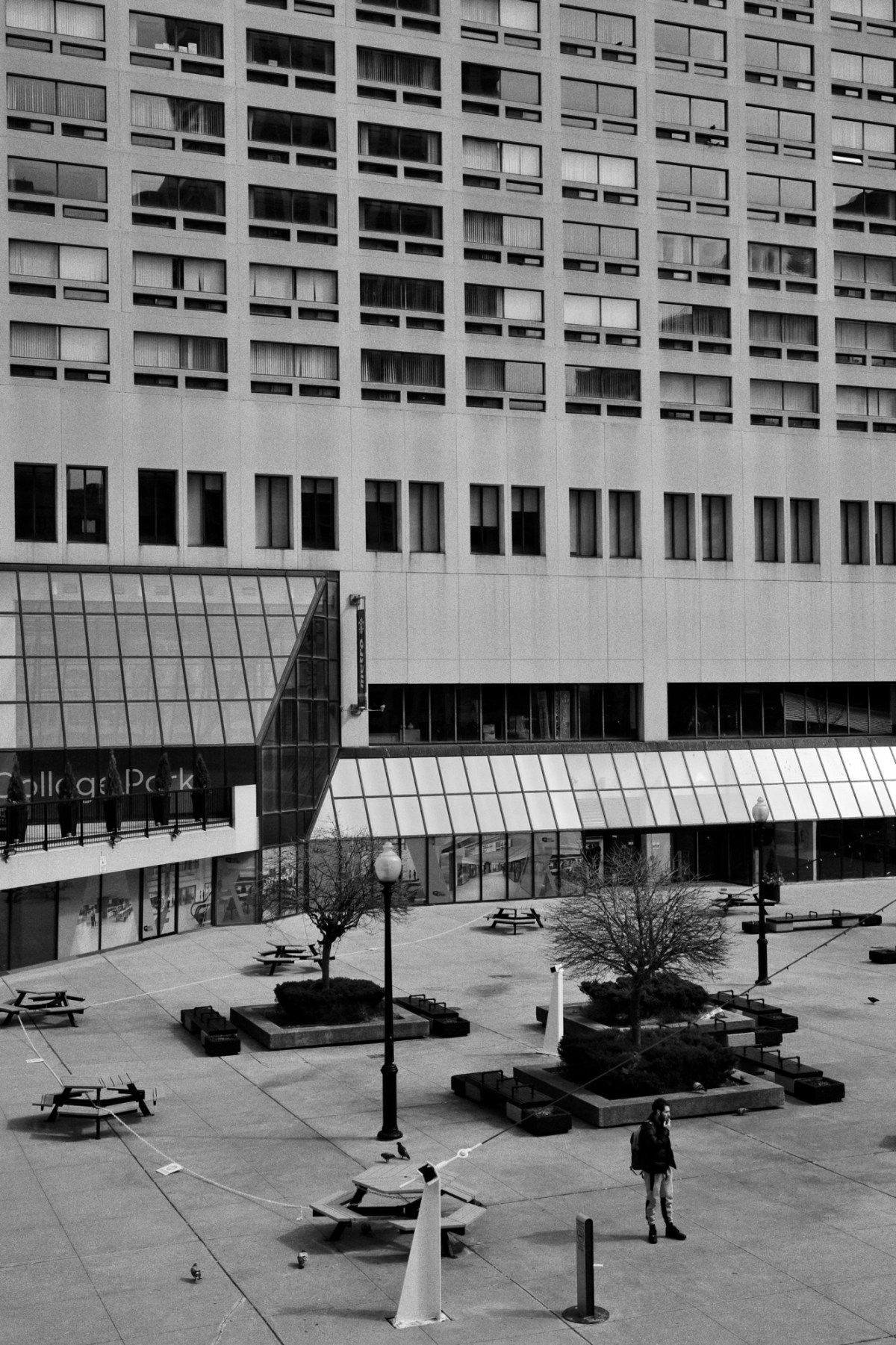
Each month Glass has a different featured photographic category. In March, a photograph I took of College Park was amongst the many excellent images that photographers published to the platform throughout the month in the ‘Urban’ category.
A feature of my street photography is to showcase lone humans in busy metropolitan areas. For context, College Park is surrounded by condos and rental apartments, and is located by a major subway stop; I suspect it’s amongst the denser parts of the city. Nevertheless I was able to catch this lone figure and the ever-present pigeons when I was running to a grocery store to get a few things.
I don’t know that I, personally, consider this to be the best image I made in March. But it definitely is very reflective of the types of images I’ve been making and so is representative of a particular body of work that I continue to develop.
For those interested, this was made using a Ricoh GR iiix. I use a custom monochrome jpeg simulation, applied minor edits in Apple Photos, and cropped the image slightly so it is 20 megapixels as displayed.
A good article by The Markup assessed the accuracy of New York City’s municipal chatbot. The chatbot is intended to provide New Yorkers with information about starting or operating a business in the city. The journalists found the chatbot regularly provided false or incorrect information which could result in legal repercussions for businesses and significantly discriminate against city residents. Problematic outputs included incorrect housing-related information, whether businesses must accept cash for services rendered, whether employers can take cuts of employees’ tips, and more.
While New York does include a warning to those using the chatbot, it remains unclear (and perhaps doubtful) that residents who use it will know when to dispute outputs. Moreover, the statements of how the tool can be helpful and sources it is trained on may cause individuals to trust the chatbot.
In aggregate, this speaks to how important it is to effectively communicate with users, in excess of policies simply mandating some kind of disclosure of the risks associated with these tools, as well as demonstrates the importance of government institutions more carefully assessing (and appreciating) the risks of these systems prior to deploying them.
Toronto is a city of destruction and construction: destruction of the previous era’s architecture (and often industrial buildings) and the construction of housing or glass office towers in their stead. This image by Tecumseth & Niagara shows the destruction of an abattoir that was removed to make room for condos, and the buildings in the background are new rentals in Toronto’s Liberty Village. When I landed in Toronto, in Liberty Village over a decade ago, the land those rentals are on were home to a few artist spaces where the big Toronto samba schools practiced and massive parade puppets were made. Nothing has replaced those artist spaces, to the detriment of artists across the city.
Weirdly I have very intimate memories of the abattoir. Toronto hosts an annual sunset-to-sunrise art festival, Nuit Blanche, and a couple interesting art exhibits were hosted at the abattoir over the years, and I have photos of them that I regularly return to re-experience. After the buildings were designated for destruction a number of community vegetable gardens were maintained on the outside lots. It was always a striking place to come and make images, and was a reminder of the Toronto-that-once-was and was yet-to-become.
For many street photographers, we take images and it is decades later that ‘difference’ is registered because many cities take a long time for major changes to become visible. It’s part of why the habits of the population —what people are wearing, holding, or driving — resonate so strongly with viewers; people and culture change while the built environment persists.
Toronto, by way of contrast, is in a moment of hyper-growth and so an attentive and active street photographer can document things today that may literally be different tomorrow. It turns the street photographer, almost by default, into an urban documentarian. And, also, is one of the many reasons why I think that Toronto offers a subset of street photographers a real opportunity to do novel and rapidly impactful work, as compared to those working in cities that aren’t undergoing the same tempo of destruction and re-construction.
It is exceptionally rewarding to see years of research and advocacy while I was at my former employer lead to significant reforms to legislation The effect, thus far, has been to protect residents of Canada from cyber-related threats while, also, imposing checks on otherwise unfettered government power and simultaneously protecting all residents of Canada’s privacy.
One of the projects I’m involved in at work relates very closely to a bulk of academic policy books I read while doing my PhD. That’s not particularly surprising, I guess. One of those books, in particular, would be invaluable to my team as they navigate a neat (and well researched) policy space.
So I did what most people do: go to Amazon, search for the book, and then send it to my employer to purchase the title for the internal library.
Lo and behold, however, when I found said book on Amazon there was a single review of it. Interesting! Who would comment on this niche academic text and what did they say?
Well… apparently I would comment on this niche book and leave a review, and did so way back in 2008. I’ll be honest: the review does hold up. Though the fact that I was reviewing my supervisor’s book, publicly, and offering (fair!) critiques admittedly makes me grin a bit. And, also, probably speaks lots about why I tend to fit in well at workplaces where speaking truth to power is just the daily 9-5.
A friend identified a series of photos I’ve made over the past year that they wanted to have as prints. The matte prints all came in yesterday, and I was really pleased at how well Annex Photo made them.
Bathurst Station, Toronto, 2023
I hade three prints made, one from my Ricoh GRiiix (uncropped, 10×15), one from my Fuji X100F (cropped to 17MP, 10×15), and one from the telephoto on my iPhone 14Pro (9MP, 8.5×11). When I’ve shown the prints to others they can’t tell which camera made which image, nor do they see any notable quality difference between the prints.
Spadina & Grange, Toronto, 2023
Now all that’s left is to package and mail the prints to their owner!