Categories
Writing

Did Apple Design in the Wrong Direction?

It’s a big deal whenever Apple refreshes the design of their products. It isn’t just that the media goes nuts, but that other parties (read: the media) tend to swoon about Apple’s decision and the company’s competitors get ready to ape Apple’s new paradigms.

Unfortunately, the switch to the newly designed Airport Express seems like a terrific step in the wrong direction from a design perspective, while simultaneously being in the right direction from a product alignment perspective. Let me explain.

While some sites have stated that the older Express routers were ‘wall warts’, anyone who’s travelled with one of these routers can speak to their functionality. They were easy to pack, easier to set up, and incredibly reliable. The ‘warts’ were also useful when setting up wifi printing or Airplay functionality at home. In both of these latter cases, it was easy to move the router to where you wanted either the printer or speakers and didn’t necessitate cluttering up the space with unneeded cables.

The new form factor is better visually linked to Apple’s existing routers and Apple TV products. On these grounds, Apple is (arguably) bringing a superior branded identity to the Airport Express line, ensuring that anyone who sees the router will immediately think ‘Apple’. This has significant marketing and branding resonance but, unfortunately, it comes at the expense of device efficiency.

Good design is tightly linked with beauty, usability, and efficiency. In the case of the newest iteration of the Airport Express, Apple has prioritized the corporate image over product efficiency; the Express is a less efficient product on grounds that it assumes more physical space that has previously been needed. The incapacity to link these priorities is suggestive that the newest Apple router is a failed product from a design position, regardless of the popularity or sales of the new iteration.

Categories
Videos

On Pay Equity

I’m certain that, in some countries, efforts to achieve pay equity in this manner would result in Parliament legislating the ‘striker’ to work. Such legislation would be ‘necessary’ on grounds that efforts to achieve pay equity threatened the national economy and, thus, had to be moved to binding mediation without the employer being forced to deal with the existing market situation.

Categories
Aside

Free Speech Zone

The contemporary “free speech” zone

Categories
Videos

Lawful access legislation and its associated powers

Lawful access legislation and its associated powers are not new. In the wrong hands, however, these powers ‘legitimize’ the gross abuse of citizens. I highly recommend you watch this investigative news piece on Sweden’s Teliasonera and how lawful access is used by dictators reliant on Teliasonera’s equipment.

If you can’t watch it all then at least watch the interview with the company’s representative, starting at around minute 52. It’s a chilling interview that exposes how ‘good’ Western companies enables human rights abuses around the world in the name of profit and ‘enabling’ communication.

Categories
Aside

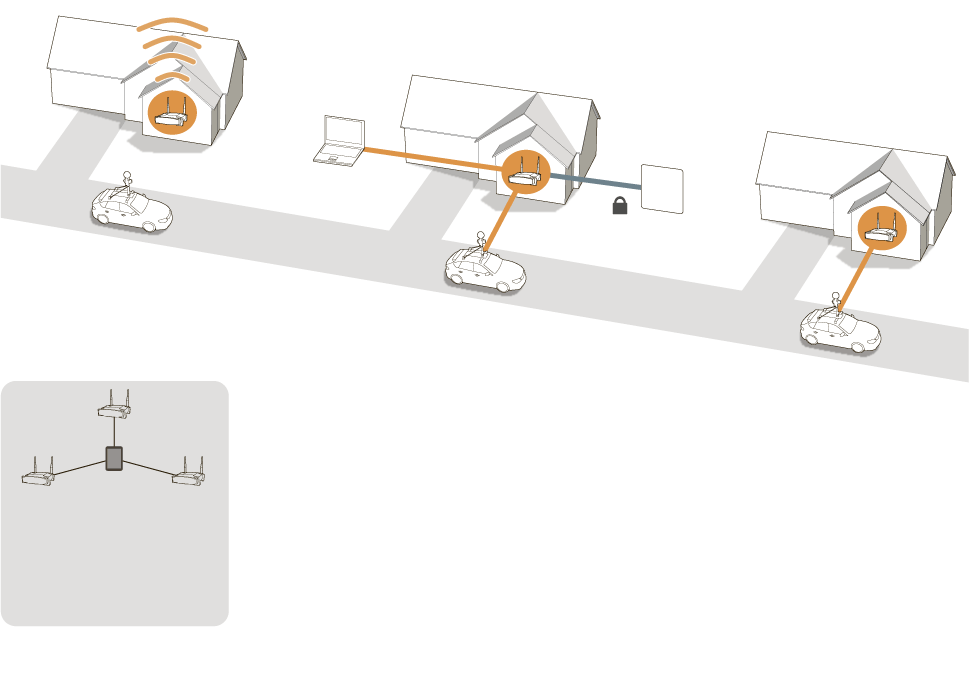
How Google collected data from wi-fi networks with Streetview vehicles

This is a terrific graphic that breaks down how Google collected data from wi-fi networks with Streetview vehicles

Categories
Links Writing

VPNs becoming more common amongst youth

The risks that onerous copyright laws pose for law enforcement are rarely considered, despite such laws (potentially) threatening national security operations. In Sweden, following efforts to dissuade file sharing, the population is increasingly moving to encrypted VPN connections to continue their sharing. From an article over at Torrentfreak,

according to new research from the Cybernorms research group at Sweden’s Lund University, an increasing proportion of the country’s population are taking measures to negate the effects of spying on their online activities.

The study reveals that 700,000 Swedes now make themselves anonymous online with paid VPN services such as The Pirate Bay’s iPredator.

What does this have to do with law enforcement? As the Swedish population moves to encrypted communications it limits authorities’ insights into the data traffic moving through Swedish networks. Consequently, the copyright lobby is (unintentionally) increasing the challenges of applying digital ‘wiretaps’ on Swedish citizens. While not something that the copyright lobbies are necessarily concerned with, these developments can be problematic for national security agencies.

I’m not advocating that communications should necessarily be easier for such agencies to investigate – far from it – but do I think that before aligning legislative efforts with copyright groups it is critical for legislators to think of the broader implications associated with ‘strong’ copyright laws. While such laws might dissuade some file sharing, are the benefits derived from limiting file sharing sufficient to justify disadvantaging national security and intelligence operation?

Categories
Links Writing

The Importance of ZTE Security Deficits

A great of speculation exists around mobile companies of all stripes: are they secure? Do they secretly insert backdoors for government? What kinds of assurances do customers and citizens have around the devices?

Recently these concerns exploded (again) following a Reuters article that notes serious problems in ZTE mobile phones. There are a series of reasons that security agencies can, and do, raise concerns about foreign built equipment (some related more to economics than good security practice). While it’s possible that ZTE’s vulnerabilities were part of a Chinese national-security initiative, it’s entirely likely (and more probable) that ZTE’s backdoor access into their mobiles is a genuine, gigantic, mistake. Let’s not forget that even ‘our’ companies are known for gross security incompetence.

In the ZTE case it doesn’t matter if the backdoor was deliberate or not. It doesn’t matter if the company patches the devices, either, because a large number of customers will never apply updates to their phones. This means that, for all intents and purposes, these devices will have well publicized security holes for the duration of their existence. It’s that kind of ongoing vulnerability – one that persists regardless of vendor ‘patches’ – that is increasingly dangerous in the mobile world, and a threat that is arguably more significant (at the moment) than whether we can trust company X or Y.

Categories
Videos

An inspiring commencement speech from Neil Gaiman on creativity and art in the 21st century

Categories
Quotations

2012.5.15

… the relatively high profile of the WSIS has helped to redefine the internet policy agenda and create a greater awareness and understanding at many levels of the substantial breadth and magnitude of potential ICT4D impacts and of the key global issues of internet governance affecting attempts to spread as widely as possible the benefits tied to the internet’s use. The gain in understanding was highlighted by one experienced senior intentional official who commented that at the first Geneva event many people were not even sure what “the internet” meant and why it should be significant to them–let alone what a concept like “internet governance” signifies.

W. H. Dutton and M. Peltu. (2010). “The new politics of the internet: Multi-stakeholder policy-making and the internet technocracy,” in A. Chadwick and P. N. Howard (Eds.). The Routledge Handbook of Internet Politics. New York: Routledge.
Categories
Aside Humour

I’ll Be Watching You

I’ll be watching you – from jaidurevertropfort