Categories
Links Photography

Best Photography-Related Stuff of 2024

It’s the time of year for people’s best-of roundups. Like last year I wanted to recognize stuff that meant a lot to my photography through 2024. And, this year, I’ve also added a short list of hopes for stuff in 2025!


Photography Stuff I Used

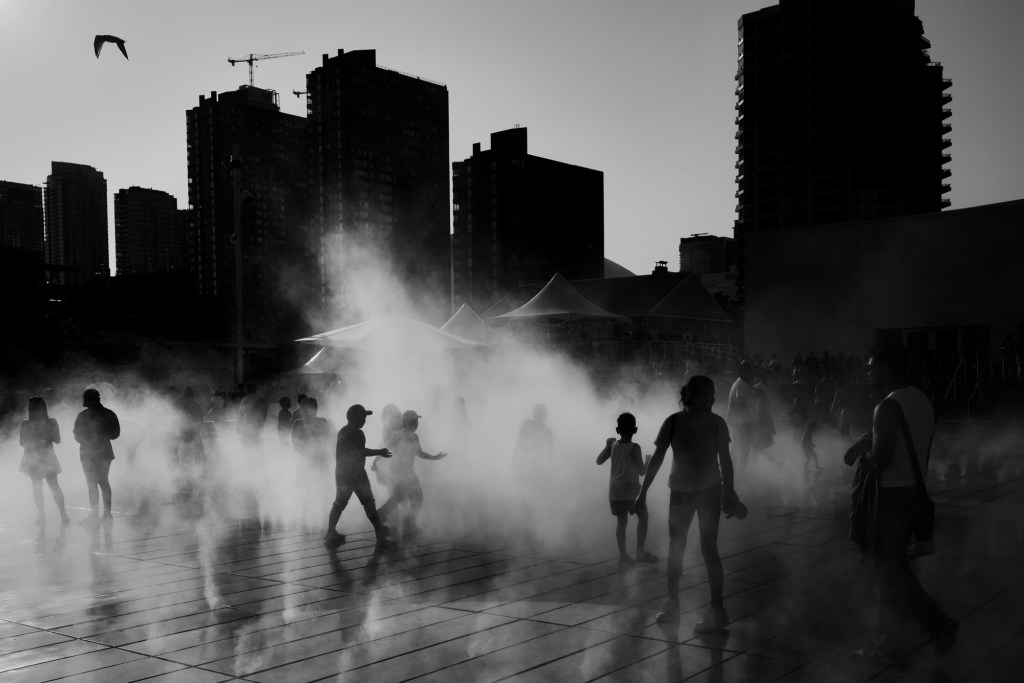
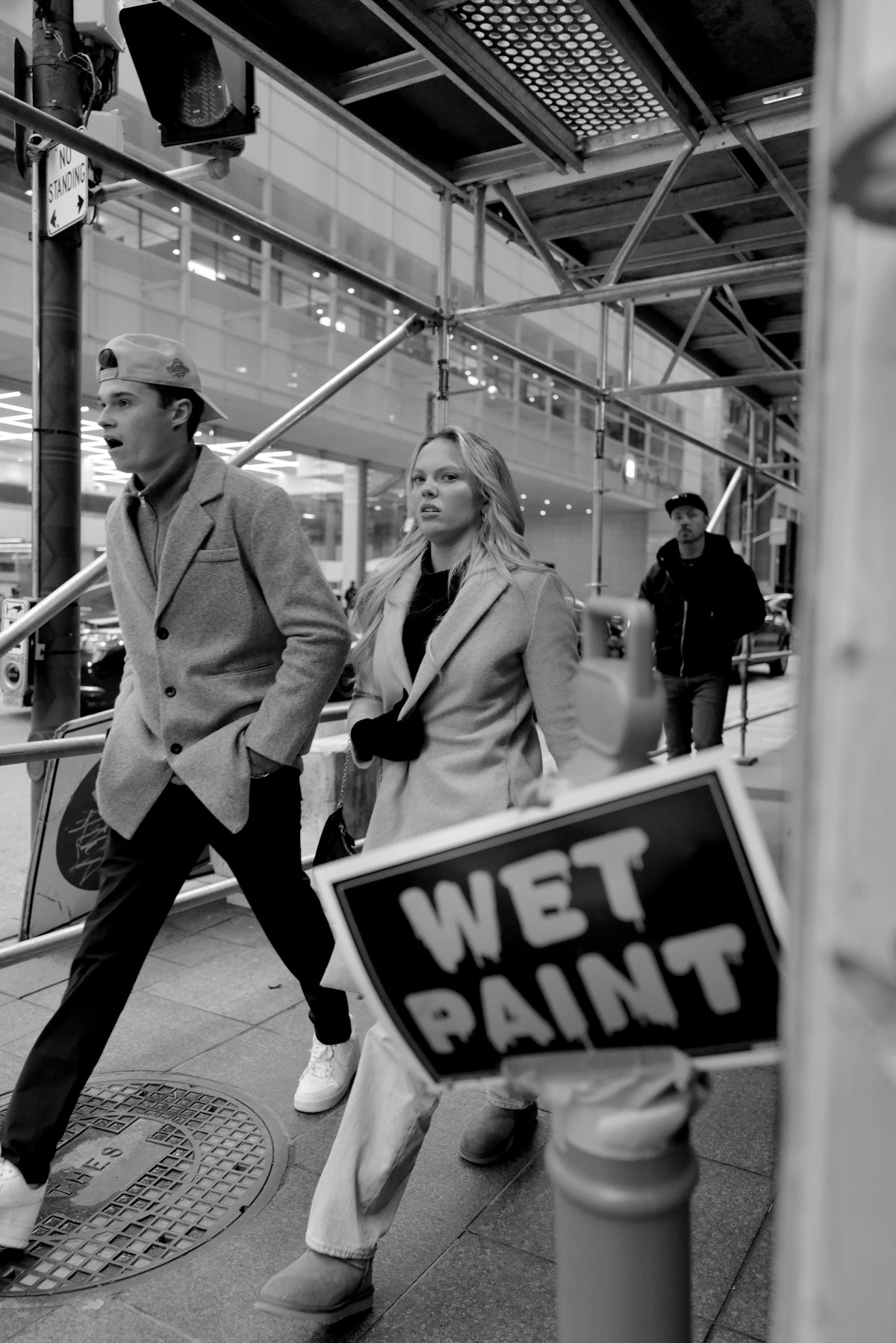
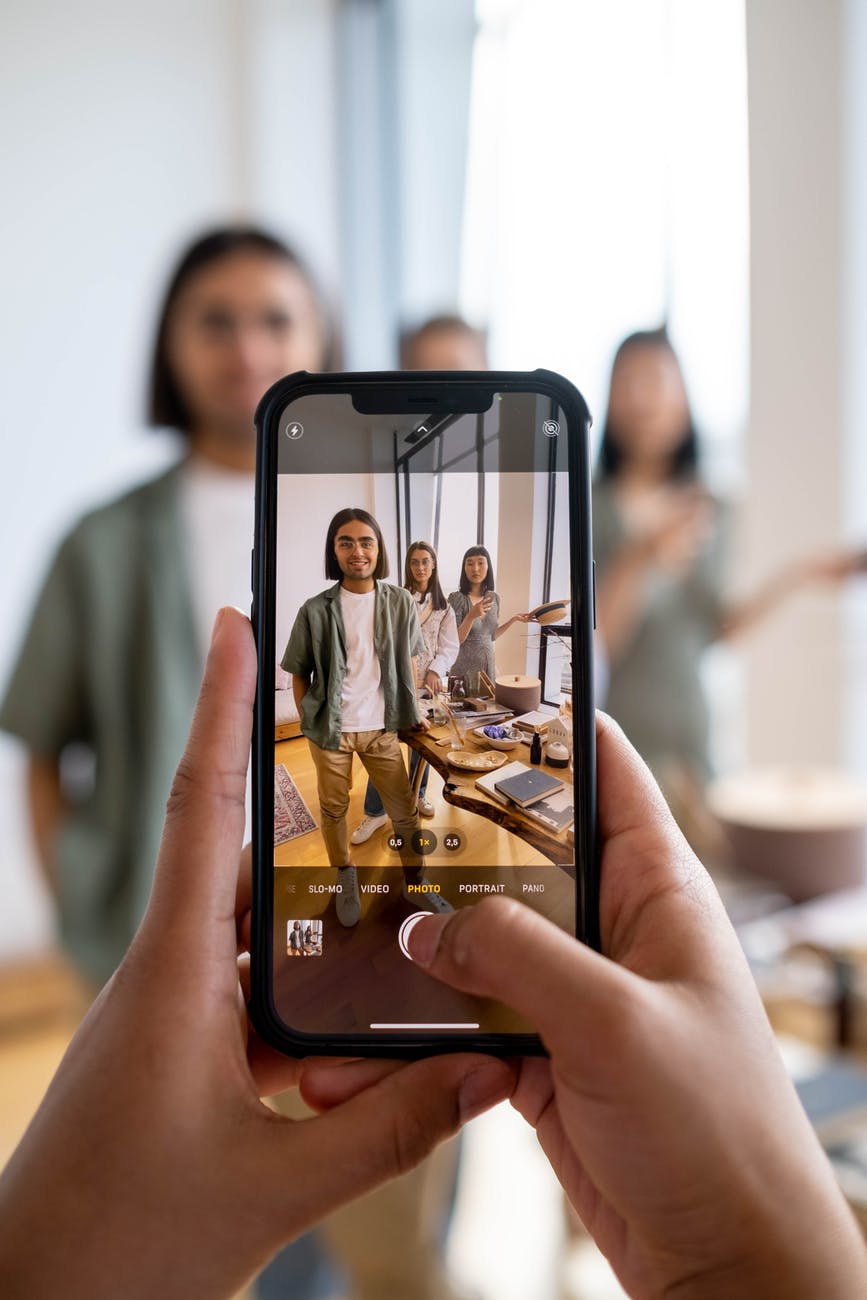
Yonge & Dundas, Toronto, 2024

Best Technology of 2024

The big change this year? I pretty well completely pivoted to my Leica Q2 and with only rare exceptions did I use the Ricoh GR IIIx or my iPhone 14 Pro. When I bought the Q2 it was, in part, to be able to capture images at night where there was little light. I’ve made images under these conditions that I’m happy with and I’ve come to learn how to better use the 28mm focal range. At this point I’ve created well over ten thousand frames over the year.1

I upgraded to the 11” iPad Pro (2024) and definitely appreciate how light the device is, and how vibrant the screen is. I continue to use an iPad Mini for most of my actual reading but write a lot of blog posts on the iPad Pro and do all my photo editing on it.

When I take my photowalks I’m always listening to a podcast or music on my AirPod Pros. However I’ve long had an issue with finding tips that best fit my ears; the ones in the box always slip out. I recently learned about, and bought, the SpinFit CP1025 (S/SS) and they’ve been game changing. I get a perfect fit and the AirPods stay in my ears. Highly recommend them!

Best Services I Paid For

I continue to post images to Glass each day. I’m still disappointed with their AI search, and especially disappointed that landscape viewing on the iPad has now been broken for about a year.2 Still, it’s a terrific community and a good place to post images regularly.

Apple One is key to my data management strategy. I’m still under the 2TB that is provided as part of the subscription though, with my current data use, I suspect that in 3-5 years I’ll need to expand that 2TB storage limit.

Lastly, while I’ve watched less photography YouTube I continue to appreciate YouTube Premium. It’s still about the most regularly used subscription service that I use on a regular basis.

Best Apps

Have I changed the apps that I rely on regularly since 2023?

Nope.

And so my best apps of 2024 include:

  • Glass: I use to share my images on a daily basis.
  • Geotags Photos Pro and Geotags Photo Tagger: I use to add geotags to my images.
  • Reeder Classic: To follow various photography blogs.
  • Apple Podcasts app: I use this to listen to photography podcasts while on my weekly photowalks.
  • Apple News: To read photography magazines and websites that otherwise would be paywalled.
  • Apple Photos: Used to edit and store all my images. I don’t love the iOS version of the application but it is what it is.

Stuff I Made

College & Clinton, Toronto, 2024

Writing

  • Sharing Photographs, and Photography, with Others and Growing as a Photographer: Despite being pretty used to being in the public eye as a result of my day job it’s different to expose myself when sharing the images that I make. Those images, if read carefully, reveal some elements of myself that I showcase less often, and this is made even revelatory when producing and sharing physical items to people I respect or submitting digital images to competitions. Just talking about that experience was liberating and reaffirmed that I am, slowly, growing as a photographer.
  • Accidentally Discovered Street Photos: Imagine my surprise when, after opening my used copy of Conversations: With Contemporary Photographers a strip of exposed Kodak 100TX film fell out! I used a free app to enlarge some of the images and while my efforts weren’t spectacular it did result in seeing — and sharing — some images from an earlier time.
  • 10 Tips for Starting to Photograph on the Street: I regularly read and view content that is meant to help new photographers get comfortable on the streets. Much of that content is good but is directed towards a certain kind of concern, and way of behaving, on the streets (e.g., Zone focus! Shoot from the hip! Be invisible!). I think that my 10 tips are for people like me who are interested in making street photos but are shy about even being seeing with a camera. Really, this is a blog written for myself which, if I’d read it 10 years ago, would have given me a clearer sense of what I could do to develop my confidence and skills.
  • Nuit Blanche, 2024: I’ve been attending Nuit Blanche in Toronto, an annual art festival that runs for a single day from sundown to sunup, for many years. I always make photographs during it but, at the same time, have been challenged by using a smaller APS-C sensor camera. I was both pleased in the art that I experienced this year as well as the ability of the Leica Q2 to capture images more like how I wanted them due to its lens and sensor size.

Stuff I Read

Oxford & Augusta, Toronto, 2024

Best Photography Books and Magazines

  • Metropolis: I’ve followed Alan’s work for years and appreciate how stark his imagery is and his absolute attention to form. His images carefully consider what is absolutely needed to communicate his vision and no more.
  • Conversations: With Contemporary Photographers: This was probably the most important book about photography that I read this year. I’m, personally, interested in thinking more deeply about the ontology of photography and what it is and is not. The photographers interviewed in the book provided a range of interpretations of what photography is, and means, for each of them, and I benefitted tremendously from their thoughts on the medium as one which controls time and, also, the role of time in their own creative activities.
  • Framelines: The team behind Framelines improve the magazine with every issue. From enhancements to the printing, imagery, interviews and just shipping, this is an instant purchase each time they come out with new issues. I particularly appreciate how they celebrate new and emerging photographers from around the world and platform those who, otherwise, I’d be entirely unaware of.
  • André Kertész: Sixty Years of Photography: This book is a gift to photographers and the image-viewing public more broadly. Published back in 1978 it catalogues Kertéz’s photographic history. It is when we look at images like this that it is apparent how much you can do with black and white images that are focused on the forms across a frame, and also how having decades of images enable a playfulness between pages so that works from different decades can speak to one another and create a perception of continuity across time and space. If you are committed to street images, black and white images, or just seeing how history unfolded over sixty years, then this book is a must see.
  • The Pleasure of Seeing: Conversations with Joel Meyerowitz on sixty years in the life of photography: Joel is, of course, a (still living) legend and has a number of different monographs under his name. This book is a little different because it explores his thought process across the different phases or eras of his photography. Now, if you’ve actively listened to his talks, interviews, podcasts, and so forth over the past decades many of the messages he communicates will be familiar. But to have them all in one place, along with his images that underscore his creative vision, is a real gift to photographers.

Stuff I Watched

Great Lakes Waterfront Trail, Toronto, 2024

Best Movies

  • Lee: This was an engrossing and highly cinematic movie. I liked how it conveyed the experiences that female photographers and journalists experienced during the time period and, also, communicated the toughness of Lee Miller and the harmful effects of being a war photographer more generally.
  • Harry Benson: Shoot First: I thought this was a terrific documentary of Benson who has made a living capturing images of celebrities. The images are profound but, also, you walk away with a sense that he lacks much empathy for his subjects. The inclusion of those who love his work, and those who hate it, helps to communicate what a controversial figure Benson has been throughout his life and career.

Best YouTube Channels

  • Paulie B: Almost certainly one of the most important American street photography channels, Paulie B has done a masterful job interviewing a range of photographers across the United States to understand what drives and inspires them. His episodes showcase photographers who may not be widely known, unpacks the creative processes of those he interviews, and also lets other street photographers really see how others work the streets. We’ve all heard about how the greats of the 1960s and 1970s worked; Paulie B is showing us how our American contemporaries move, think, and behave.
  • James Popsys: James is a quiet and almost introspective photographer, which are not necessarily the traits that lend themselves well to YouTube. However, his thoughtful meditations on how and why he makes images, combined with the sheer beauty of his work, results in each video containing a gem that is worth treasuring.
  • Photographic Eye: Some channels on YouTube focus on gear or technical methods of getting certain kinds of images. The Photographic Eye is not that. Instead, Alex Kilbee explains the intellectual processes of photography and speaks as a kind mentor or peer who is, also, working through his photography. I particularly like how he shares some of his own images so that viewers can appreciate the variety and intentionality behind image making.
  • The Art of Photography: Ted Forbes has been running his channel for over sixteen years at this point and made videos on just about everything that you’d ever want to know about. I find his historical episodes that break down, and showcase, the great photographers as essential to my own photographic education. And his episodes that showcase viewers’ own projects have led me to finding a range of photographers and purchasing work from them.3

Stuff I Subscribed To

Richmond & Spadina, Toronto, 2024

Best Podcasts

  • The Photowalk: I’ve been a supporter of the Photowalk for several years and it’s a regular joy and pleasure to hear Neale and his guests talk about the broader experiences of making images. The discussions rarely touch on gear and, instead, are centred around the ‘why’ of image making. Whenever I’m out on a weekly photo walk, I’m listening to Neale and recommend that you do the same.
  • Frames Photography Podcast: Frames features photographers from across the different photographic genres. Many of the discussions are insightful for understanding what is behind different photographers’ creative processes, what motivates their projects, and how they work to express themselves to the broader world.
  • Street Photography Magazine: Featuring street photographers from around the world, this podcast exposes how and why different people got into the genre, what they aim to present through their work, and the rationales underlying how they make their images. Many of the photographers who are interviewed talk about their recent, or ongoing, projects which serves to underscore the different ways in which projects are conceptualized and brought into the world.
  • The Candid Frame: Conversations on Photography: Operating since 2006, The Candid Frame features photographers from all walks of life discussing the how and why of their image making. This is particularly useful, for me, in learning about photographers working in genres entirely different from street photography and learning how their thought processes can apply to my own photographic life.
  • Street Life Podcast: This is one of the most recent additions to my list of podcasts and I’ve been enjoying every episode this year. It typically features photographers working in and around Australia and, aside from Houman Katoozi, I’m largely unfamiliar with folks working on that continent. The podcast often has a sense of friends talking amongst themselves about street photography and you’re just overhearing them as they joke with one another, talk about the Australian street photography community, and the challenges they’re facing in their own photographic activities.

Best Blogs/RSS Feeds

  • GR Official: As an owner of a few Ricoh GRs I’m always curious about how others handle and experience the camera. This blog features a range of authors, with a diversity of photographic backgrounds and personal experiences, which means that each blog is a bit of a surprise: is this going to be a more reflective piece, a showcase of just a few images, thoughts on a piece of equipment, or…?
  • Little Big Traveling Camera: I am always envious of how focused this photoblog is, how thoughtful the author is, and how well put together the images are. LBTC is, to my eye, the definition of what an excellent personal photoblog can be.
  • Mobiography: I don’t take a large number of mobile phone photographs but I appreciate learning how such images can be made. If nothing else, it showcases just how can be done with phones of today (as well as those of a decade or more ago) in the hands of competent photographers.
  • The Phoblographer: A regular publication that both showcases contemporary work while also engaging in some opinion and discussion about trends or issues in the photographic world.
  • Ming Thein: I owe a lot of what I (think I) understand about photography to Ming’s blog. He shuttered it several years ago but has kept it alive / in archival mode. I hope that it never goes away given how helpful and insightful his writing is for new and more experienced photographers alike.
  • Skinny Latte’s Creative Brain: I loved the photoessays that were published that exhibited gorgeous photography along with explanations and narratives to surround the images themselves. Sadly the photoblog has been left behind but the images and stories remain worth revisiting periodically.

Hopes for the future

Front & Bay, Toronto, 2024
  • Apple Photos: I just want it to reach parity with its Mac counterpart. We know that Apple has purchased Pixelmator and I’m hopeful that some of that DNA makes its way over to Photos.
  • iPhone Camera app: I’ll be honest, the new iPhones’ ability to better control and develop custom JPG settings along with the adoption of JPG XL are very exciting and make me look forward to whenever I upgrade from my iPhone 14 Pro. However, I really wish that Apple would bring additional exposure metering to the iPhone and, in particular, highlight metering for my black and white images. While there are ways to get around this on the iPhone it’d be nice if it was something they could do by default.
  • WordPress: I’ve been using WordPress for over 18 years at this point and it just seems to get more and more bloated. There are basic things that just don’t seem to be well developed, such as media management or the presentation of images, while a huge amount of effort has been put into turning WordPress into an enterprise CMS. I get that the company’s business is derived from its enterprise work but it’d be nice if basic features were also included in the priority product lists.
  • Leica Q2 Thumb Grip: In a late end-of-year purchase, I’ve ordered the ‘official’ Q2 thumb grip to further improve on the ergonomics of the Q2. Here’s hoping that I end up happy with it!

  1. Though, admittedly, I’ve kept far fewer after doing my regular culling. ↩︎
  2. Yes, I’ve contacted support. No, I never heard anything back. ↩︎
  3. In the interests of disclosure I was featured in one of the mailbag episodes for my Postcards project. ↩︎
Categories
Aside

2024.9.17

In an unexpected but pleasant twist, tonight, I chatted with a friend about what I saw in the images I’d posted to Glass throughout the year. He has an artistic background and was often able to see — and speak to — things that I’d not considered previously. It’s also clear that I’m getting better at explaining and outlining what’s in my images, the common thematics and how they’re developing over time, and able to provide critique to past work.

So a pleasant twist and progress!

Categories
Photography Writing

Sharing Photographs, and Photography, with Others and Growing as a Photographer

Great Lakes Waterfront Trail, Toronto, 2024

Like many other photographers I regularly share my images through a social media platform. I also sometimes post them on this website. And that’s fine and good. And because it’s so normalized it feels very safe; while I might get positive comments from other users it’s the not the same as sharing my work where it might be assessed or publicly reviewed by people who are far more experienced by me, and where those considerations might she shared with a very large set of viewers.

Over the past year I’ve tried to push myself out of my comfort zone. I’ve been more active in thinking about street photography and sharing it with a part of the photographic community — the Photowalk Show — and then sometimes having those thoughts shared with Neale James’ other listeners. I submitted a few photos to a competition for the first time. I described for the first time the motivations and philosophy that underlie my street photography to a (friendly) group of strangers while also sharing an associated sequence of my photographs. I’ve had one of my photos highlighted in a roundup by Glass. And so on.

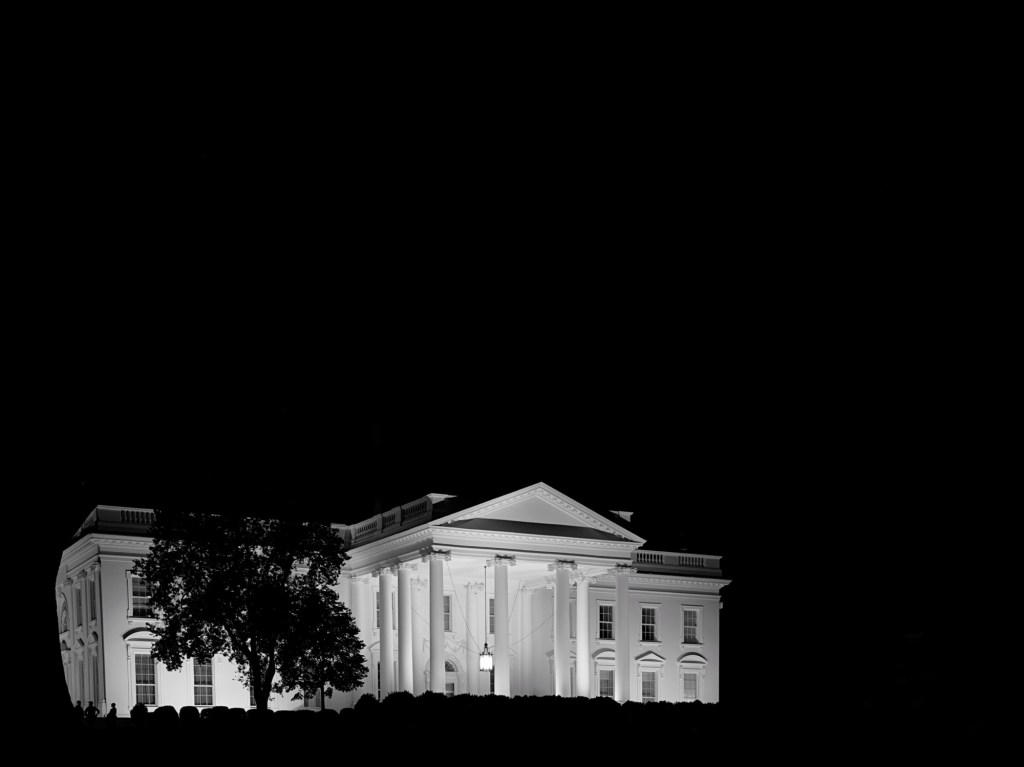
The White House, Washington, DC, 2023

But the scariest thing has been associated with my postcards project. To be clear, actually printing those postcards wasn’t scary at all! But actually sending them to people — with the prospect they would look at a cohesive bit of my work and then offer commentary to potentially hundreds or thousands of people — has been intimidating because it constitutes an exposure of my amateur photography to an otherwise unknown set of publics.

Crescent & Cluny, Toronto, 2024

I’m not afraid of publicity or engaging with publics. I’ve been very involved in public life for the past 15 years, and am as comfortable speaking with leaders of government or other senior leaders as I am appearing on television and speaking to tens or hundreds of thousands of people. But the sharing of my photographic hobby is different because it isn’t a domain where I’m a well-credentialed expert: I’m very much a learning amateur when it comes to photography. While I take my hobby very seriously I don’t have the skills or experience that parallel those of a more seasoned or professional photographer.

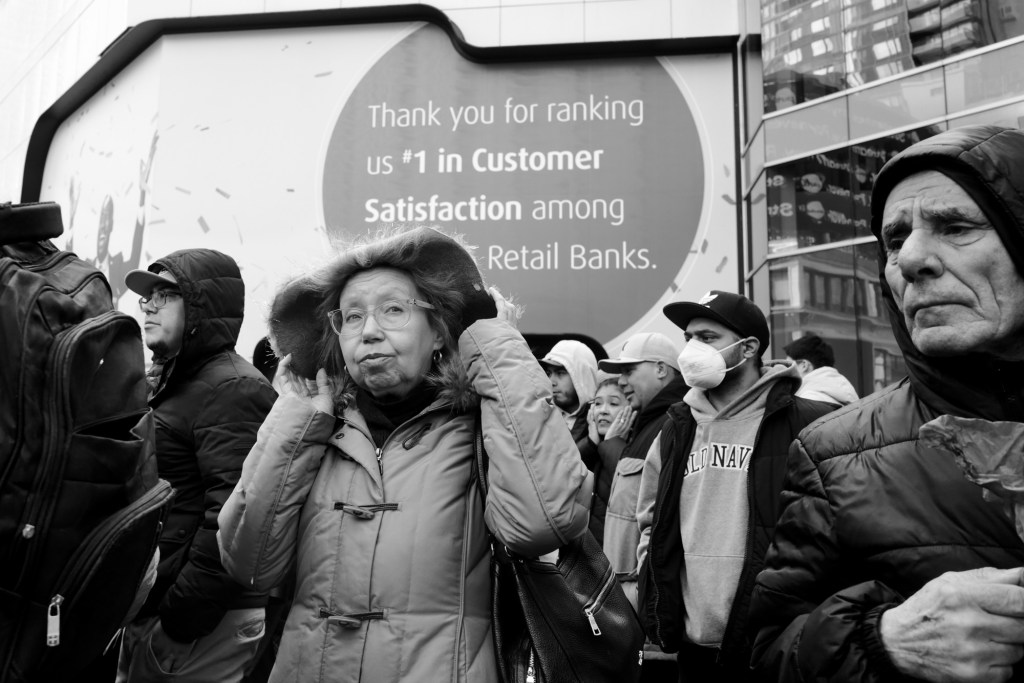
Yonge & Dundas, Toronto, 2024

I recognize that sharing my work, be it with Neale James and his Photowalk Podcast, or with Ted Forbes and his Art of Photography YouTube channel, has been a real step for me. It represents my ever deepening appreciation for the art form and my starting to explore ways of more broadly sharing my work, as well as developing increasing confidence in what I’m making. I’ve got an long way to go in deepening my expertise in making the kinds of photos I want to make but I feel more confident in what I’m doing, today, than I did even a year ago.

Categories
Photography Writing

Best Photography-Related Stuff of 2023

There are lots of ‘best of’ lists that are going around. Instead of outlining the best things that I’ve purchased or used over the year I wanted to add a thematic: what was the best ‘photography stuff’ that I used, read, watched, or subscribed to over the course of 2023?

Photography Stuff I Used

Best Technology of 2023

90-95% of the photographs that I made over the year were with the Fuji X100F. It’s a spectacular camera system; I really like how small, light, and versatile it is. I created a set of recipes early summer and really think that I dialled in how to use them and, also, how to apply my very minimal editing process to the images. I’m at the point with this camera that I can use it without looking at a single dial, and I know the location of every setting in the camera that I regularly use.

I do most of my writing on my well-used iPad Pro 11” (2018). It’s a great device that is enough for 99% of my needs.1 However, I have to admit that I’ve long missed owning an iPad Mini because they’re so small and light and portable. I do pretty well all of my reading on the iPad Mini these days. My partner purchased me one this year and I’ve fallen in love with it again. I’m using it everyday for an hour or more, and ultimately I now pull out the iPad Pro 11” just when I need to do longer-form writing.

Finally, though I haven’t had it all that long, I really do enjoy the Leica Q2. I’m still getting used to the 28mm focal length but deeply appreciate how I can now shoot in bad weather and low light.2 The in-camera stabilization is also letting me experiment with novel slow shutter speeds. I remain excited, however, for what it’ll be like to use the camera when I haven’t been in persistent cloud cover!

Best Services I Paid For

I have kept using Glass each and every day. Does it (still) have problems with its AI search? Yes. Does it have the best photographic community I’ve come across? Also yes. You should subscribe if you really love photography and want to contribute to a positive circle of practice. And if you’re watching a lot of photography-related materials on YouTube I cannot recommend a Premium subscription highly enough!

I also am deeply invested in Apple’s services and pay for Apple One. This gives me access to some things that I care about, including a large amount of cloud storage, News, customized email, Apple Music, and Apple TV. I find the current costs to be more than a little offensive–Apple’s decision to raise costs without increasing the benefits of the service was particularly shitty–but I’m deeply invested in Apple’s ecosystem–especially for storing my photographs!–and so will continue to pay Apple’s service tax.

Best Apps

I use lots of apps but the best ones I rely on for photography include:

  • Podcasts App to listen to the different podcasts to which I’ve subscribed.
  • Reeder for staying on top of the different blogs/websites I’m interested in reading.
  • Glass to look at, comment on, and reflect on photographers’ images.
  • Geotags Photos Pro and Geotags Photo Tagger. I’ve set the former app to record my geolocation every 5 minutes when I’m out making images and the latter to then apply geotags to the photographs I keep from an outing.3

Stuff I Read

Best Photography Books

Most of the non-fiction books that I read throughout the year were focused around photography. The two best books which continue to stand out are:

  • Bystander: A History of Street Photography. This book does an amazing job explaining how (and why) street photography has developed over the past 150 years. I cannot express what a terrific resource this is for someone who wants to understand what street photography can be and has been.
  • Daido Moriyama: A Retrospective. This book is important for all photographers who are interested in monochromatic images because it really explains why, and how, Moriyama made his classic images. It reveals why he made his gritty black and white images and, also, why some of the equivalent ‘recipes’ the mimic this kind of image-making may run counter to his whole philosophy of image making.

Stuff I Watched

Best Movies

The best photography-related movies that I watched were all classics. They included Bill Cunningham: New York; Gary Winogrand: All Things Are Photographable; The Jazz Loft According to W. Eugene Smith; and Ordinary Miracles: The Photo League’s New York. Combined with written history and photo books they helped to (further) reinforce my understanding of how and why street photographers have made images.

Best YouTube Channels

I watch a lot of photography YouTube. The channels I learn the most from include those run by James Popsys, Tatiana Hopper, EYExplore, Alan Schaller, Pauline B, aows, Aperture, and Framelines. My preference is for channels that either provide POV or discuss the rationales for why and how different images are being (or have been) made.4

Stuff I Subscribed To

Best Podcasts

I tend to listen to photography podcasts on the weekend when I go out for my weekly photowalks. The two that I listen to each and every week are The Photowalk and The Extra Mile. It’s gotten to the point that it almost feels like Neale James (the host of the podcasts) is walking along with me while I’m rambling around taking photos.

Aside from those, I’ll often listen to A Small Voice or The Candid Frame. These are interviews with photographers and I regularly learn something new or novel from each of the interviews.

Best Blogs/RSS Feeds

For the past year I’ve trimmed and managed the number of my RSS feeds. I keep loving the work by Craig Mod, Little Big Traveling Camera,5 and Adrianna Tan’. They all do just amazing photoessays and I learn a tremendous amount from each of them in their posts.

Biggest Disappointments

I somehow managed to break the hood that I’d had attached to my Fuji X100F in the fall and decided to get what seemed like a cool square hood to replace it. It was a really, really bad idea: the hood was a pain to screw on so that it wasn’t misaligned and, once it was aligned, was on so tight that it was very hard to remove. I would avoid this particular hood like the plague.

I also bought a Ricoh GR IIIx and while it’s a fantastic camera I just haven’t used it that much. I didn’t take as many images with it as I’d hoped when I was walking to or from work, and really ended up just using it when I needed to go out and take photos in the rain (I kept it safely hidden under my umbrella). Also, the camera periodically just fails to start up and requires me to pull the battery to reset it. Is it a bad camera? Nope, not at all, and I did manage to capture some images I was happy with enough to submit to Ricoh’s photography contest. But it’s not a camera that I’ve really fallen in love with.

Finally, while I use my AirPods Pro all the time I really don’t like them because I cannot get them to stay in my ears unless I purchase third-party foam tips. And I need to keep purchasing new sets of tips because they wear out after a couple of months. Are they good headphones once they stay in my ears? Yes. But the only way to accomplish that is becoming increasingly costly and that’s frustrating.

Conclusion

Anyhow, that’s my list of the ‘best photography-related stuff’ I’ve used in the course of 2023. What was your top stuff of the year?


  1. I really do want to get a new iPad 11” and will do so once they update the screen. I edit pretty well all of my photos on the iPad Pro and an updated screen (and battery…) would be lovely. ↩︎
  2. There is a caveat that I’ve found: the electronic shutter is absolute garbage for shooting at dusk/in the dark with LED lights. And I think the single-use exposure dial on the Fuji X100F is preferable to the configurable dial on the Q2. ↩︎
  3. You can set the app to record your location more regularly but I’ve found this to be a good balance between getting geolocation information and preserving my phone’s battery life. ↩︎
  4. If you watch a lot of YouTube then I recommend that you pay for a YouTube Premium subscription. You’ll cut out the frustrating advertising that otherwise intrudes into the videos. ↩︎
  5. I think that this is perhaps the single best photography blog that I’ve found. I aspire to this level of excellence and regularity of updates! ↩︎
Categories
Photography Reviews

The Problem with Glass’ AI Explore Feature

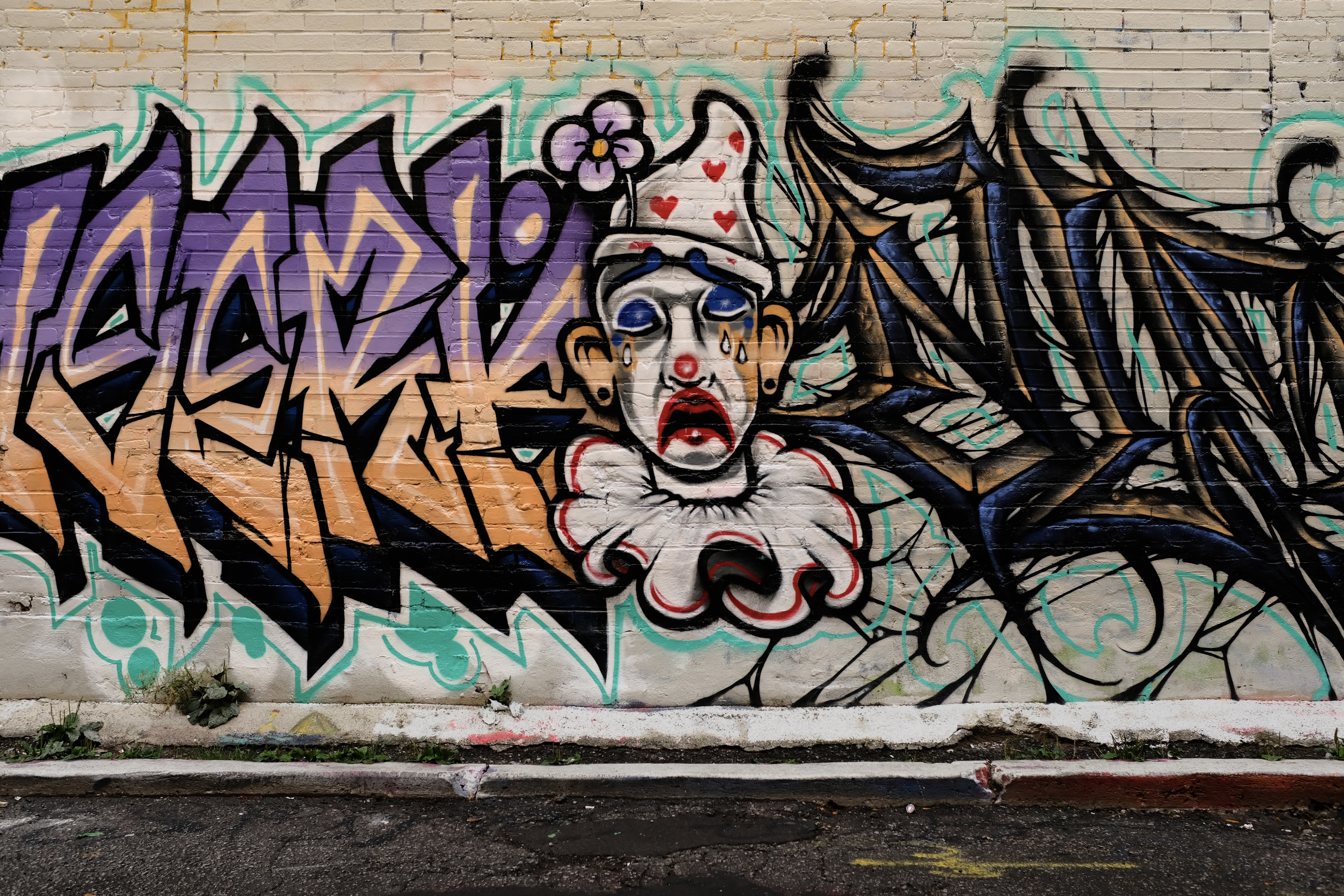
Graffiti Alley, Toronto, 2023

I’m a street photographer and have taken tens of thousands of images over the past decade. For the past couple years I’ve moved my photo sharing over to Glass, a member-paid social network that beautifully represents photographers’ images and provides a robust community to share and discuss the images that are posted.

I’m a big fan of Glass and have paid for it repeatedly. I currently expect to continue doing so. But while I’ve been happy with all their new features and updates previously, the newly announced computer vision-enabled search is a failure at launch and should be pulled from public release.

To be clear: I think that this failure can (and should) be rectified and this post documents some of the present issues with Glass’ AI-enabled search so their development team can subsequently work to further improve search and discoverability on the platform. The post is not intended to tarnish or otherwise belittle Glass’s developers or their hard work to build a safe and friendly photo sharing platform and community.

Trust and Safety and AI technologies

It’s helpful to start with a baseline recognition that computer vision technologies tend to be, at their core, anti-human. A recent study of academic papers and patents revealed how computer vision research fundamentally strips individuals of their humanity by way of referring to them as objects. This means that any technology which adopts computer vision needs to do so in a thoughtful and careful way if it is to avoid objectifying humans in harmful ways.

But beyond that, there are key trust and safety issues that are linked to AI models which are relied upon to make sense of otherwise messy data. In the case of photographs, a model can be used to subsequently enable queries against the photos, such as by classifying men or women in images, or classifying different kinds of scenes or places, or so as to surface people who hold different kinds of jobs. At issue, however, is that many of the popular AI models have deep or latent biases — queries for ‘doctors’ surface men, ‘nurses’ women, ‘kitchens’ associated with images including women, ‘worker’ surfacing men — or they fundamentally fail to correctly categorize what is in the image, with the result of surfacing images that are not correlated with the search query. This latter situation becomes problematic when the errors are not self-evident to the viewer, such as when searching for one location (e.g., ‘Toronto’) reveals images of different places (e.g., Chicago, Singapore, or Melbourne) but that a viewer may not be able to detect as erroneous.

Bias is a well known issue amongst anyone developing or implementing AI systems. There are numerous ways to try to technically address bias as well as policy levers that ought to be relied upon when building out an AI system. As just one example, when training a model it is best practice to include a dataset card, which explains the biases or other characteristics of the dataset in question. These dataset cards can also explain to future users or administrators how the AI system was developed so future administrators can better understand the history behind past development efforts. To some extent, you can think of dataset cards as a policy appendix to a machine language model, or as the ‘methods’ and ‘data’ section of a scientific paper.

Glass, Computer Vision, and Ethics

One of Glass’ key challenges since its inception has been around onboarding and enabling users to find other, relevant, photographers or images. While the company has improved things significantly over the past year there was still a lot of manual work to find relevant work, and to find photographers who are active on the platform. It was frustrating for everyone and especially to new users, or when people who posted photos didn’t categorize their images with the effect of basically making them undiscoverable.

One way to ‘solve’ this has been to apply a computer vision model that is designed to identify common aspects of photos — functionally label them with descriptions — and then let Glass users search against these aspects or labels. The intent is positive and, if done well, could overcome a major issue in searching imagery both because the developers can build out a common tagging system and because most people won’t take the time to provide detailed tags for their images were the option provided to them.

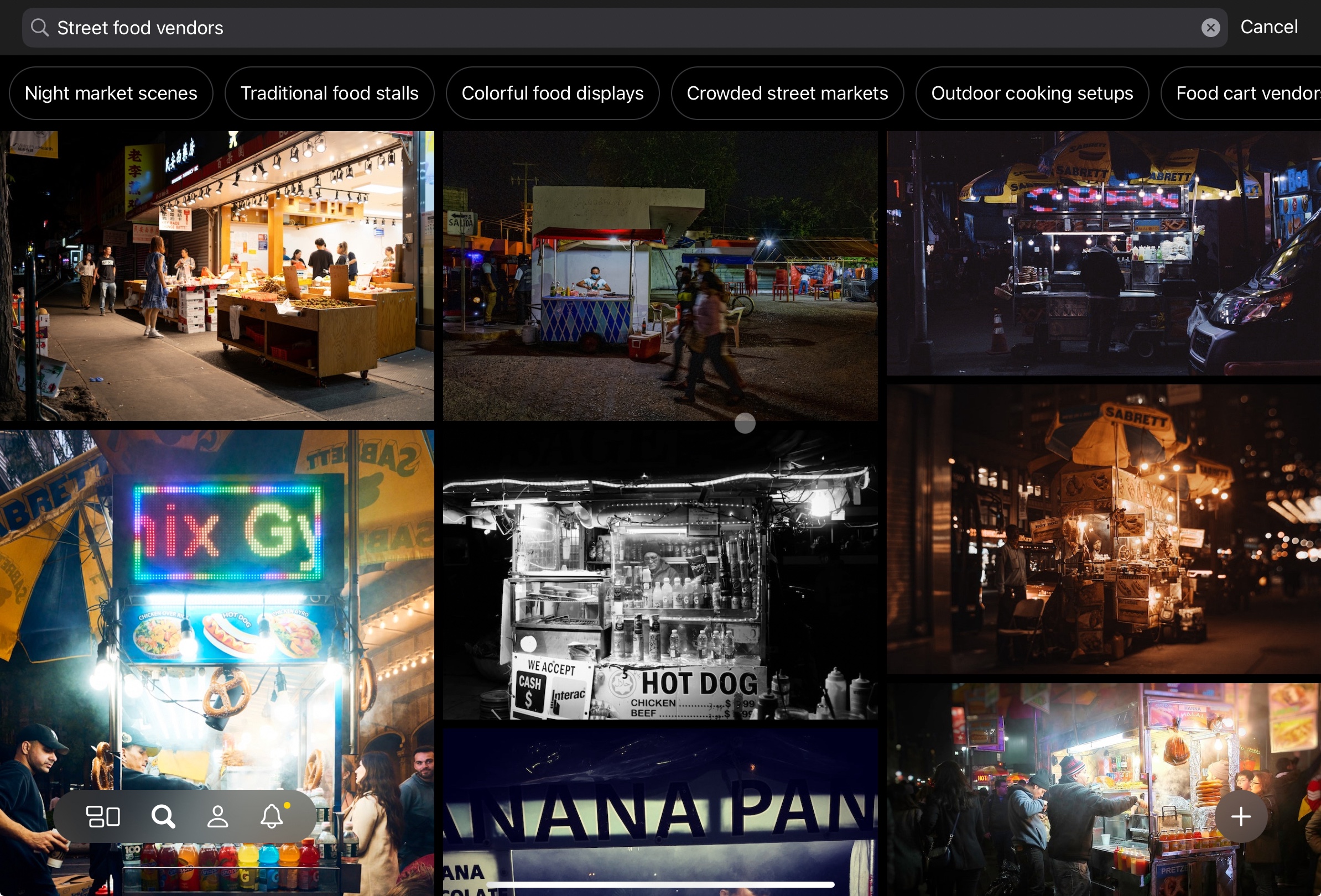
Sometimes the system seems to work pretty well. Searching for ‘street food vendors’ pulls up pretty accurate results.

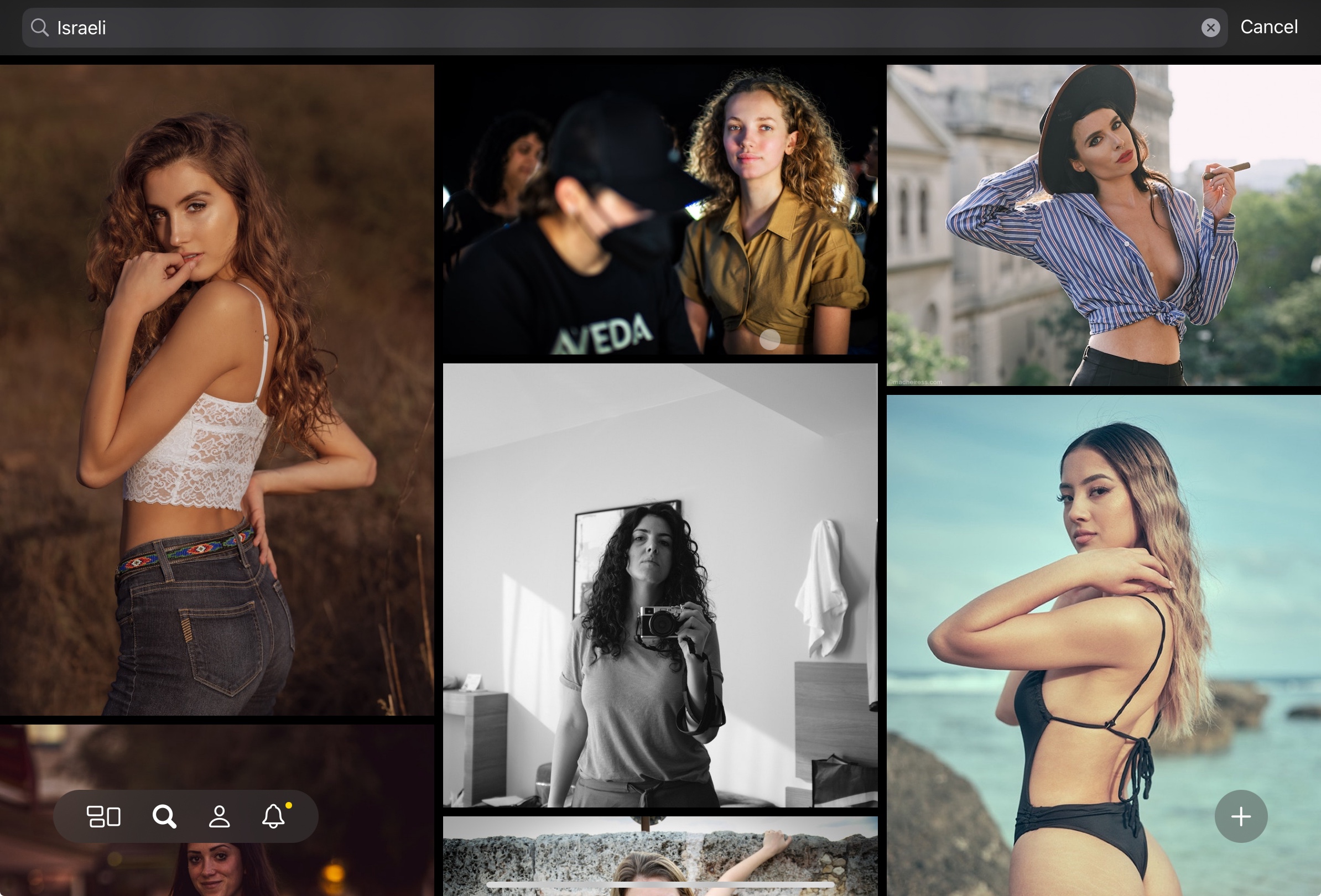
However, when I search for ‘Israeli’ I’m served with images of women. When I open them up there is no information suggesting that the women are, in fact, Israeli, and in some cases images are shot outside of Israel. Perhaps the photographers are Israeli? Or there is location-based metadata that geolocates the images to Israel? Regardless, it seems suspicious that this term almost exclusively surfaces women.

Searching ‘Arab’ also brings up images of women, including some who are in headscarves. It is not clear that each of the women are Arabic. Moreover, it is only after 8 images of women are presented is a man in a beard shown. This subject, however, does not have any public metadata that indicates he is, or identifies as being, Arabic.

Similar gender-biased results happen when you search for ‘Brazillian’, ‘Russian’, ‘Mexican’, or ‘African’. When you search for ‘European’, ‘Canadian’, ‘American’, ‘Japanese’, however, you surface landscapes and streetscapes in addition to women.

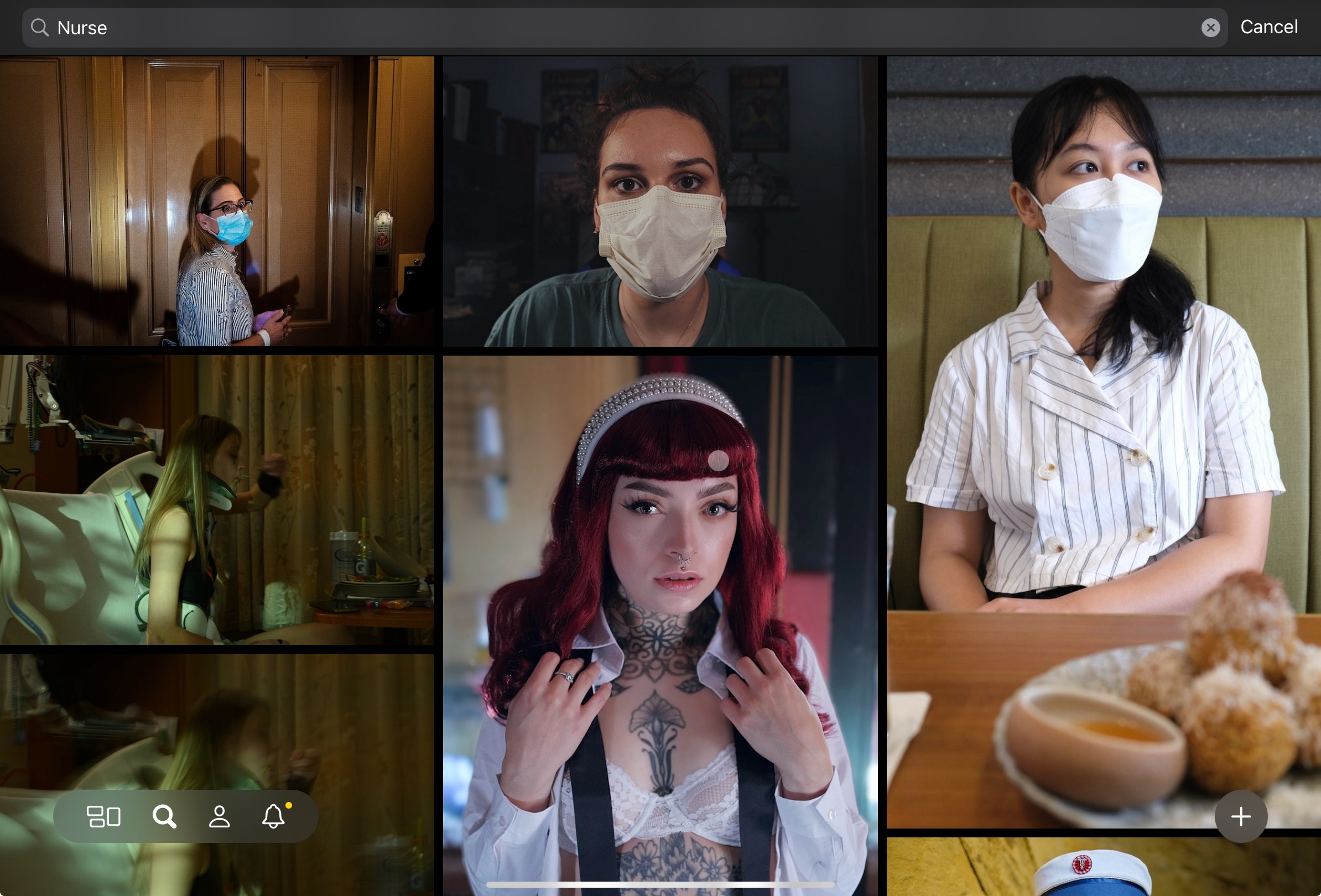
Other searches produce false results. This likely occurs because the AI model has been trained that certain items in scenes are correlated to concepts. As an example, when you search for ‘nurse’ the results are often erroneous (e.g., this photo by L E Z) or link a woman in a face mask to being a nurse. There are, of course, also just sexualized images of women.

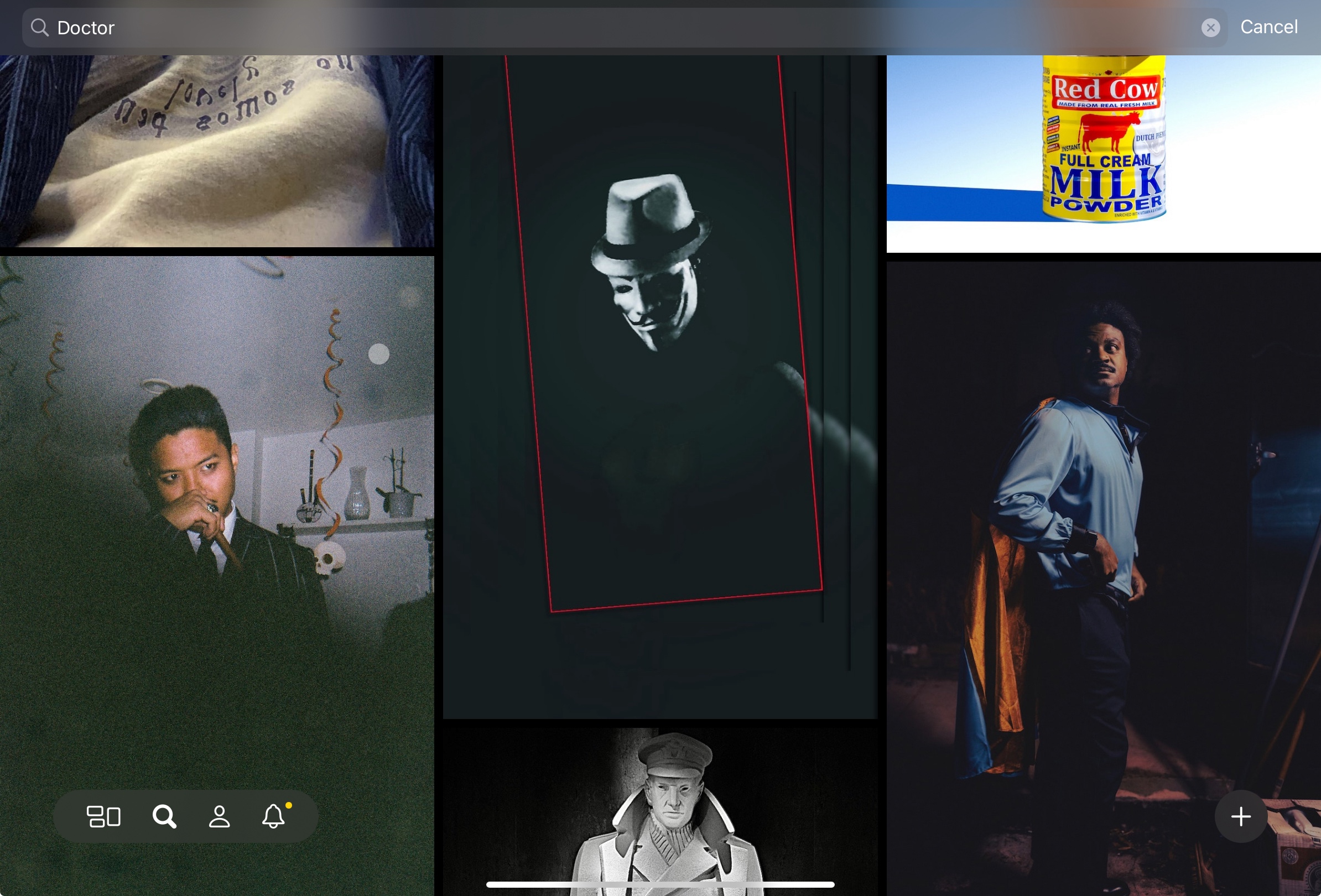
When searching for ‘doctor’ we can see that the model likely has some correlation between a mask and being a doctor but, aside from that, the images tend to return male subjects as images. Unlike ‘nurse’ there are no sexualized images of men or women that immediately are surfaced.

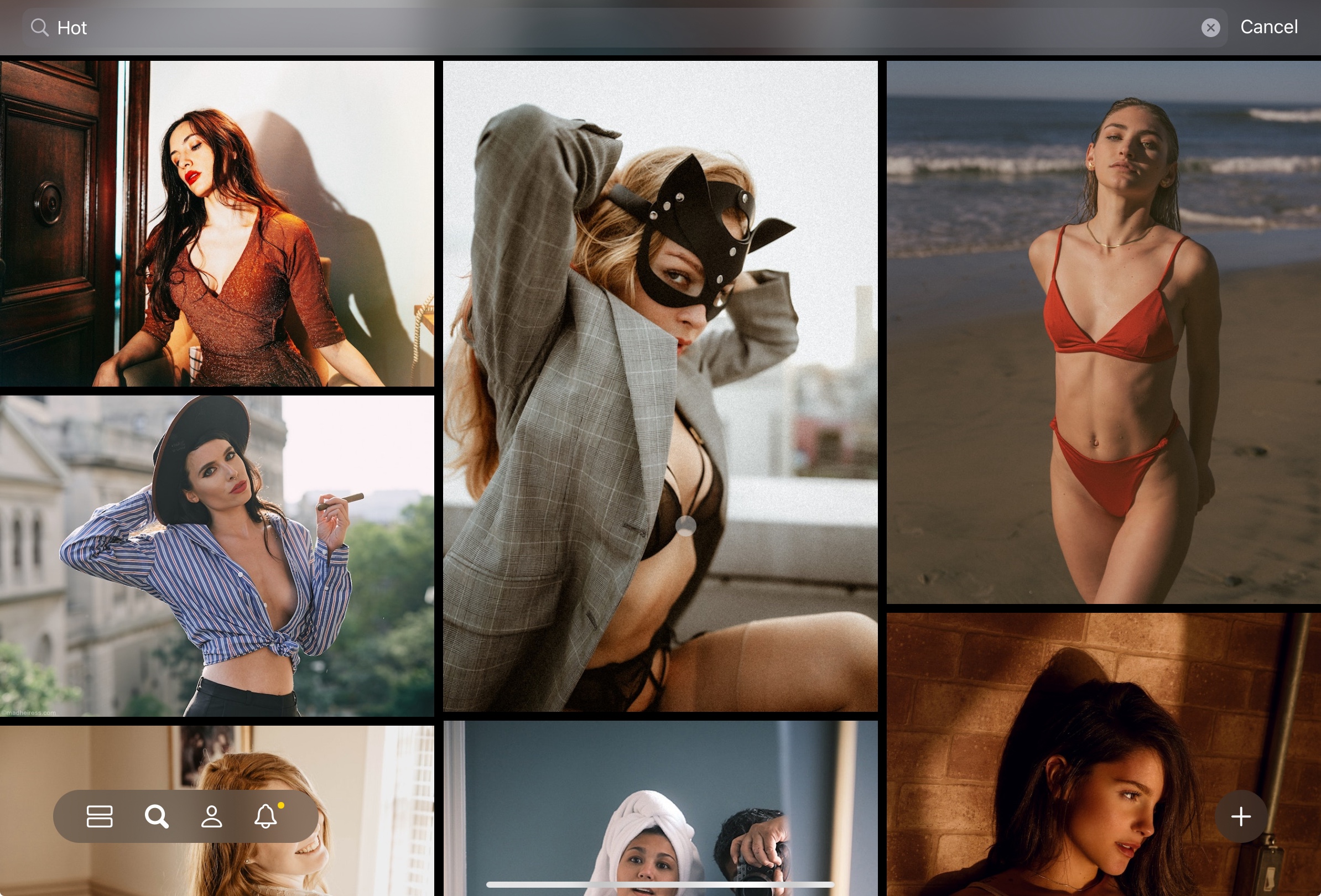
Also, if you do a search for ‘hot’ you are served — again — with images of sexualized women. While the images tend to be ‘warm’ colours they do not include streetscapes or landscapes.

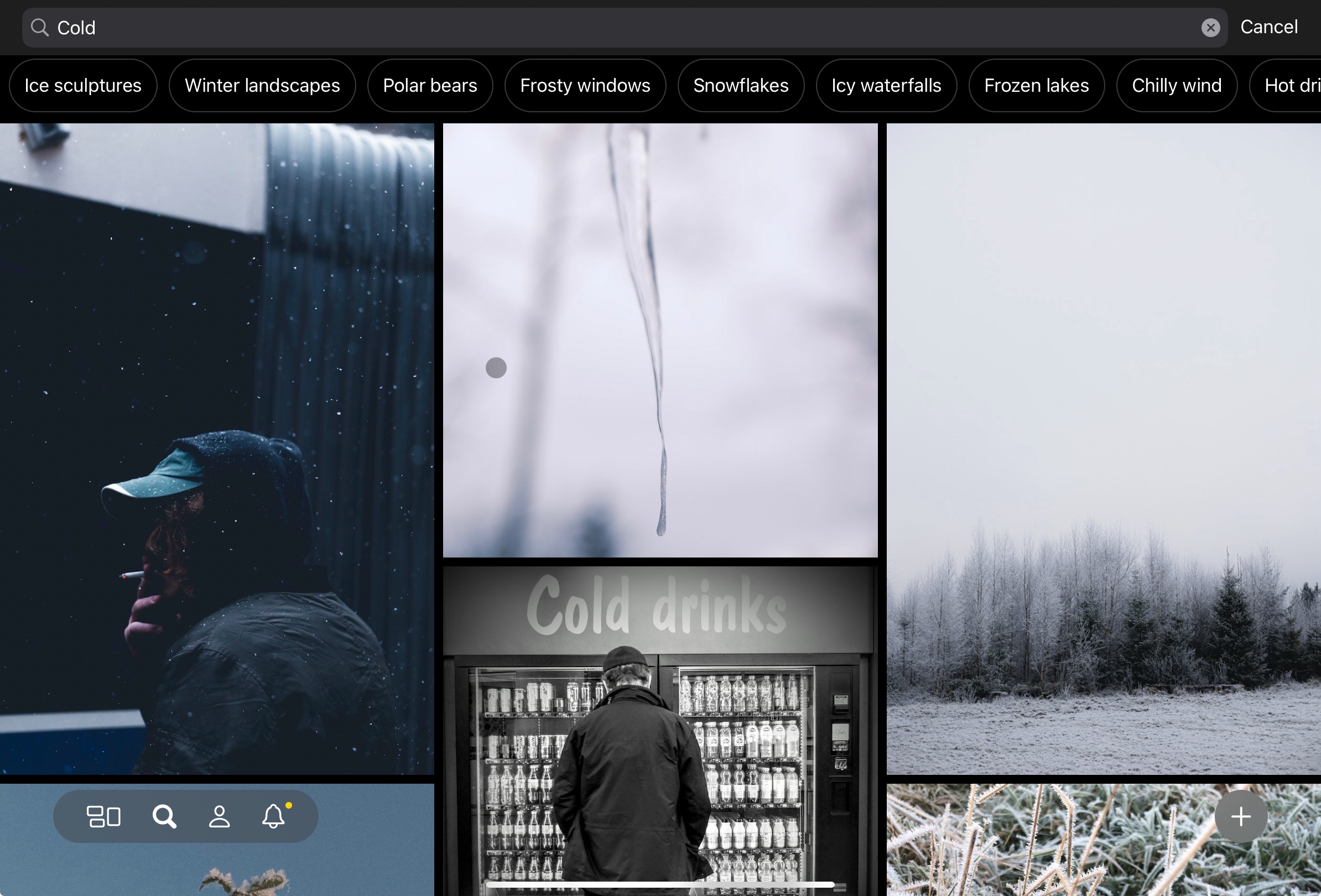
Doing a search for ‘cold’, however, and you get cold colours (i.e., blues) along with images of winter scenes. Sexualized female images are not presented.

Consider also some of the search queries which are authorized and how they return results:

  • ‘slut’ which purely surfaces women
  • ‘tasty’ which surfaces food images along with images of women
  • ‘lover’ which surfaces images of men and women, or women alone. It is rare that men are shown on their own
  • ‘juicy’ which tends to return images of fruit or of sexualized women
  • ‘ugly’ which predominantly surfaces images of men
  • ‘asian’ which predominantly returns images of sexualized Asian women
  • ‘criminal’ which often appears linked to darker skin or wearing a mask
  • ‘jew’ which (unlike Israeli) exclusively surfaces men for the first several pages of returned images
  • ‘black’ primarily surfaces women in leather or rubber clothing
  • ‘white’ principally surfaces white women or women in white clothing

Note that I refrained from any particularly offensive queries on the basis that I wanted to avoid taking any actions that could step over an ethical or legal line. I also did not attempt to issue any search queries using a language other than English. All queries were run on October 15, 2023 using my personal account with the platform.

Steps Forward

There are certainly images of women who have been published on Glass and this blogpost should not be taken as suggesting that these images should be removed. However, even running somewhat basic queries reveal that (at a minimum) there is an apparent gender bias in how some tags are associated with men or women. I have only undertaken the most surface level of queries and have not automated searches or loaded known ‘problem words’ to query against Glass. I also didn’t have to.

Glass’ development team should commit to pulling its computer vision/AI-based search back into a beta or to pull the system entirely. Either way, what the developers have pushed into production is far from ready for prime time if the company—and the platform and its developers—are to be seen as promoting an inclusive and equitable platform that avoids reaffirming historical biases that are regularly engrained in poorly managed computer vision technologies.

Glass’ developers have previously shown that they deeply care about getting product developments right and about fostering a safe and equitable platform. It’s one of the reasons that they are building a strong and healthy community on the platform. As it stands today, however, their AI-powered search function violates these admirable company values.

I hope that the team corrects this error and brings the platform, and its functions, back into comportment with the company’s values rather than continue to have a clearly deficient product feature deployed for all users. Maintaining the search features, as it exists today, would undermine the team’s efforts to otherwise foster the best photographic community available on the Internet, today.

Glass’ developers have shown attentiveness to the community in developing new features and fixing bugs, and I hope that they read this post as one from a dedicated and committed user who just wants the platform to be better. I like Glass and the developers’ values, and hope these values are used to undergird future explore and search functions as opposed to the gender-biased values that are currently embedded in Glass’ AI-empowered search functions.

Categories
Photo Essay Photography Writing

Which Photo (Or Three…) Best Represents 2022?

‘Til Pandemic Does Us Part | Excluded Audience | Amour by Christopher Parsons

Neale James, host of the Photowalk, challenged the ‘Extra Milers’ to look through our pictures and find one (or three…) which really spoke to our 2022. It could be a best photograph, or one that captures some memory or another, or really anything…the question was deliberately left pretty open to interpretation.

It served as a good experience for me. I went back through the past 11 months of images and, in the process, was reminded of numerous photos and experiences I’d forgotten about.

The first image (“‘til Pandemic Does Us Part”) speaks to how seriously some were still taking the pandemic much earlier in the year.

‘Til Pandemic Does Us Part by Christopher Parsons

The second (“Excluded Audience”) is very similar to an image I made in early 2020 which defined that stage of the pandemic in Toronto for me. “Excluded Audience” is meant to call back to that image and showcase that while things were going back to normal as the year progressed, that normal isn’t necessarily positive for everyone in the city. I’ve also included that reference image (“Down But Not Out”) below, after the set, just to indicate what I was trying to call back to.

Excluded Audience by Christopher Parsons

The final image of the year in this set (“Amour”) is meant to document how things are, today, with those in love able to see and hold one another amongst crowds once more. As a set, I think they have a symmetry in story and composition across them.

Amour by Christopher Parsons

And, finally, the reference image really just captures what Toronto was like in the early days of the pandemic when the entire downtown core had just shut down in its entirety.

Down But Not Out by Christopher Parsons

In terms of process for selecting photos, most years I start by reviewing images that I posted to social media that year, which in 2022 has been Glass. From the 300-365 images I work down to 30 images or so that best tell the story of the year. However, using this process I miss some photos that I really like but haven’t uploaded and, at the same time, include some images in the sort that I’ve somewhat fallen out of favour with since posting them.

All of which is to say: I think that going through and taking the time to review/re-examine all the images we’ve taken over a year is a splendid exercise, and especially because there’s a bit of time between when an image was captured and now. For me, at least, this helped to surface work that resonates more today than I think that it did when I first made it.

How do you go through and review your photos annually? What’s your best photo or photo set of the year, and what’s the story behind them?

Categories
Photography Reviews Writing

Glass 365 Days Later

(Wintertime Rush by Christopher Parsons)

I’ve been actively using Glass for about a full year now. Glass is a photo sharing site where users must pay either a monthly or yearly fee; it costs to post but viewing is free.

I publish a photo almost every day and I regularly go through the community to view other folks’ photos and comment on them. In this short review I want to identify what’s great about the service, what’s so-so, and where there’s still room to grow. All the images in this blog post were previously posted to Glass.

Let me cut to the chase: I like the service and have resubscribed for another full year.

The Good

The iOS mobile client was great at launch and it remains terrific. It’s fast and easy to use, and beats all the other social platforms’ apps that I’ve used because it is so simple and functional. You can’t edit your images in the Glass app and I’m entirely fine with that.

(Fix, Found by Christopher Parsons)

The community is delightful from my perspective. The comments I get are all thoughtful and the requirement to pay-to-post means that there aren’t (yet) any trolls that I’ve come across. Does this mean the community is smaller? Definitely. But is it a more committed and friendly community? You bet. Give me quality over quantity any day of the week.

All subscribers have the option to have a public facing profile, which anyone can view, or ones that are restricted to just other subscribers. I find the public profiles to be pretty attractive and good at arranging photos, especially when accessing a profile on a wide-screen device (e.g. a laptop, desktop, tablet, or phone in landscape).

The platform launched as iPhone only, to start, though has been expanding since then. The iPad client is a joy to use and the developers have an Android client on their roadmap. A Windows application is available and you can use the service on the web too.

(Birthday Pose by Christopher Parsons)

Other things that I really appreciate: Glass has a terrifically responsive development team. There are about 50 community requests that have been implemented since launch; while some are just for bugs, most are for updates to the platform. Glass is also the opposite of the traditional roach-motel social media platform. You can download your photos from the site at any time; you’re paying for the service, not for surveillance. That’s great!

The So-So

So is Glass perfect then? No. It has only a small handful of developers as compared to competitors like Instagram or Vero which means that some overdue features are still in development.

(‘Til Pandemic Does Us Part by Christopher Parsons)

A core critique is there is no Android application. That’s fair! However, iOS users are more likely to spend money on apps so it made economic sense to prioritize that user base.1 Fortunately an Android application is on its way and a Windows version was recently released.

A more serious issue for existing users is an inability to ‘tag’ photos. While photos can be assigned to categories in the application (and more categories have been added over time) that means it’s hard to have the customization of bigger sites like Flickr. The result is that discovery is more challenging and it’s harder to build up a set of metadata that could be used in the future for presenting photos. Glass, currently, is meant to provide a linear feed of photos—that’s part of its charm!—but more sophisticated methods of even displaying images on users’ portfolios in the future may require the company to adopt a tagging system. Why does it matter that there is or isn’t one, today? Because for heavier users2 re-viewing and tagging all photos will be a royal pain in the butt, if that ever is something that is integrated into the platform.

(Tall and Proud by Christopher Parsons)

If you’re looking to use Glass as a formal portfolio, well, there are almost certainly better services and platforms you should rely upon. Which is to say: the platform does not let you create albums or pin certain photos to the top of your profile. I entirely get that the developers are aiming for a simple service at launch, but would also appreciate the ability to better categorize some of my photos. In particular, I would like to create things such as:

  • Best of a given year
  • Having albums that break up street versus landscape versus cityscape images
  • Being able to create albums for specific events, such as particular vacations or documentary events
  • Photos that I generally think are amongst my ‘best’ overall

This being said, albums and portfolios are in the planning stages. I look forward to seeing what is ultimately released.

(Public Praise by Christopher Parsons)

As much as I like the community as it stands today, I would really like the developers to add some small or basic things. Like threaded comments. They’re coming, at some point, after discovery features are integrated (e.g., search by location, by camera, etc.). Still, as it stands today, the lack of even 2-levels of threaded comments means that active conversations are annoying to follow.

Finally, Glass is really what you make of it. If you’re a photographer who wants to just add photos and never engage with the community then I’d imagine it’s not as good as a platform such as Instagram or Vero. Both of the latter apps have larger user bases and you’re more likely to get the equivalent of a like; I don’t know how large Glass’ user-base is but it’s not huge despite being much larger than at launch. However, if you’re active in the community then I think that you can get more positive, or helpful, feedback than on other platforms. At least for me, as a very enthusiastic amateur photographer, the engagement I get on Glass is remarkably more meaningful than on any other platform on which I’ve shared my photographs.

The Bad

Honestly, the worst part about Glass is still discoverability.3 You can see a semi-random set of photographers using the service which isn’t bad…except that some of them may not have posted anything to the platform for months or even a year. I have no idea why this is the case.

(Stephanie by Christopher Parsons)

The only other way to discover other photographers is to regularly dig through the different photography categories, and ‘appreciate’4 photos you see and follow the photographers who appeal to your tastes. This isn’t terrible, but it’s the ‘best’ way of discovering photos and really isn’t great. While the company ‘highlightsphotographers on the Glass website and through its Twitter feed, the equivalent curation still doesn’t exist in the application itself. That’s non-ideal.

The developers have promised that additional discovery functions will be rolling out. They intend enable search by camera type or location, but thus far nothing’s been released. They’ve been good at slowly and deliberately releasing features, and new features have always been thoughtful when implemented, so I’m hopeful that when discoverability is updated it’ll be pretty good. Until then, however, it’s frankly pretty bad.

(Lonely Traveller by Christopher Parsons)

If I were to find a second thing that’s missing, to date, it would be that there’s no way of embedding Glass images in other CMSes. The platform does support RSS, which I appreciate, but I want the platform to offer full-on embeds so I can easily cross post images to other web spaces (like this blog!). Embeds could, also, have some language/links that ultimately let viewers sign up for the service as a way of growing the subscriber base.

The third thing that I wish Glass would enable a way of assessing if a photo has already been uploaded. At this point I’ve uploaded over 300 photos and I want to ensure that I don’t accidentally upload a duplicate. This is definitely a problem associated with those who use the service more heavily, but will become a more prominent issue as users ‘live’ on the platform for more and more years.

Conclusion

So, at the end of a year, what do I think of Glass?

First, I think that it truly is a photography community for photographers. It isn’t trying to be a broader social network that lets you share what music you’re listening to, or TV shows and movies you’re watching, or books you’ve finished, or temporary stories or images. There is totally a space for a network like that but it’s not Glass and I’m fine with it being a simpler and more direct kind of platform.

(Night Light by Christopher Parsons)

Second, it is a platform with active developers and a friendly community. Both of those things are pretty great. And the developers have a clear and opinionated sense of taste: they’re creating a beautiful application and associated service. There’s real value in the aesthetic for me.

Third, it’s not quite the place to showcase your work, today, if you are trying to semi-professionally market your photography. There are no albums or other ways of highlighting or collecting your images. Glass is much closer to the original version of Instagram in just presenting a feed of historical images instead of a contemporary service like Flickr or even Instagram. And…that’s actually a pretty great thing! That said, the roadmap includes commitments to enabling better highlighting/collecting of images. This will be increasingly important as more people upload more photographs to the service.

(Supervisory Assistance by Christopher Parsons)

Fourth, it’s still relatively cheap as compared to other paid offerings. It is less than half the cost of a Flickr Pro account, as just one example. And there are no ads for subscribers or for individuals who are browsing public profiles and associated portfolios.

(Distressed by Christopher Parsons)

So, in conclusion, I’d strongly suggest trying out Glass if you’re a committed and enthusiastic amateur. It’s not the same as Instagram or Instagram clones. That’s both part of the point and part of the magic of the platform that the Glass team is creating and incubating.


  1. Yes, you might be willing to pay money, dear reader, but you’re statistically deviant. In a good way! ↩︎
  2. Such as myself… ↩︎
  3. The developers are, also, very well aware of this issue. ↩︎
  4. Glass does not have ‘likes’ per se, but lets users click an ‘appreciation’ button. Appreciations are only ever sent to the photographer and are not accumulated numerically to be presented to either the public or the photographer who uploaded the photograph. ↩︎
Categories
Photography

‘Glass Time’ Shortcut

man people woman iphone
Photo by Ron Lach on Pexels.com

Like most photographers I edit my images with the brightness on my screen set to its maximum. Outside of specialized activities, however, I and others don’t tend to set the brightness this high so as to conserve battery power.

The result is that when we, as photographers, as well as members of the viewing public tend to look images on photography platforms we often aren’t seeing them as their creator(s) envisioned. The images are, quite starkly, darker on our screens than on those of the photographers who made them.1

For the past few months whenever I’ve opened Glass or looked at photos on other platforms I’m made an effort to ensure that I’ve maximized the brightness on my devices as I’ve opened the app. This said, I still forget sometimes and only realize halfway through a viewing session. So I went about ensuring this ‘mistake’ didn’t happen any more by creating a Shortcut called ‘Glass Time’!

The Shortcut is pretty simple: when I run it, it maximizes the brightness of my iOS device and opens the Glass app. If you download the Shortcut it’s pretty easy to modify it to instead open a different application (e.g., Instagram, 500px, Flickr, etc). It’s definitely improved my experiences using the app and helped me to better appreciate the images that are shared by individuals on the platform.

Download ‘Glass Time’ Shortcut


  1. Of course there are also issues associated with different devices having variable maximum brightness and colour profiles. These kinds of differences are largely intractable in the current technical milieu. ↩︎
Categories
Photography Reviews Writing

Glass and Community

OLYMPUS DIGITAL CAMERA
(New Heights by Christopher Parsons)

The founders of the photography application, Glass, were recently on Protocol’s Source Code. Part of what they emphasized, time and time again, was the importance of developing a positive community where photographers interacted with one another.

Glass continues to be the place where I’m most comfortable sharing my images. I really don’t care about how many people ‘appreciate’ a photo and I’m never going to be a photographic influencer. But I do like being in a community where I’m surrounded by helpful photographers, and where I’m regularly inspired by the work of other photographers.

Indeed, just today one of the photographers I most respect posted an image that I found really spectacular and we had a brief back and forth about what I saw/emotions it evoked, and his reaction to my experience of it. I routinely have these kinds of positive and meaningful back-and-forths on Glass. That’s not to say that similar experiences don’t, and can’t, occur on other companies’ platforms! But, from my own point of view, Glass is definitely creating the experiences that the developers are aiming for.

I also think that the developers of Glass are serious in their commitment to taking ideas from their community. I’d proposed via their ticketing system that they find a way of showcasing the excellent blog content that they’re producing, and that’s now on their roadmap for the application.

It’s also apparent that the developers, themselves, are involved in the application and watching what people are posting to showcase great work. They’ve routinely had excellent and interesting interviews with photographers on the platform, as well as highlighted photos that they found interesting each month in the categories that they have focused on (in interests of disclosure, one of my photos was included in their Cityscapes collection).

These are, admittedly, the kinds of features and activities that you’d hope developers to roll out and emphasize as they build a photography application and grow its associated community. Even the developers of Instagram, when it was still a sub-10 person shop were pretty involved in their community! I can only hope that Glass never turns into their Meta ‘competitor’!

Categories
Photography Writing

Improving My Photography In 2021

CB1A5DDF-8273-47CD-81CF-42C2FC0BA6F5
(Climbing Gear by Christopher Parsons)

I’ve spent a lot of personal time behind my cameras throughout 2021 and have taken a bunch of shots that I really like. At the same time, I’ve invested a lot of personal time learning more about the history of photography and how to accomplish things with my cameras. Below, in no particular order, is a list of the ways I worked to improve my photography in 2021.

Fuji Recipes

I started looking at different ‘recipes’ that I could use for my Fuji x100f, starting with those at Fuji X Weekly and some YouTube channels. I’ve since started playing around with my own black and white recipes to get a better sense of what works for making my own images. The goal in all of this is to create jpgs that are ‘done’ in body and require an absolute minimum amount of adjustment. It’s very much a work in progress, but I’ve gotten to the point that most of my photos only receive minor crops, as opposed to extensive edits in Darkroom.

Comfort in Street Photography

The first real memory I have of ‘doing’ street photography was being confronted by a bus driver after I took his photo. I was scared off of taking pictures of other people for years as a result.

Over the past year, however, I’ve gotten more comfortable by watching a lot of POV-style YouTube videos of how other street photographers go about making their images. I don’t have anyone else to go an shoot with, and learn from, so these videos have been essential to my learning process. In particular, I’ve learned a lot from watching and listening to Faizal Westcott, the folks over at Framelines, Joe Allan, Mattias Burling, and Samuel Lintaro Hopf.

Moreover, just seeing the photos that other photographers are making and how they move in the street has helped to validate that what I’m doing, when I go out, definitely fits within the broader genre of street photography.

Histories of Photography

In the latter three months of 2021 I spent an enormous amount of time watching videos from the Art of Photography, Tatiana Hopper, and a bit from Sean Tucker. The result is that I’m developing a better sense of what you can do with a camera as well as why certain images are iconic or meaningful.

Pocket Camera Investment

I really love my Fuji X100F and always have my iPhone 12 Pro in my pocket. Both are terrific cameras. However, I wanted something that was smaller than the Fuji and more tactile than the iPhone, and which I could always have in a jacket pocket.

To that end, in late 2021 I purchase a very lightly used Ricoh GR. While I haven’t used it enough to offer a full review of it I have taken a lot of photos with it that I really, really like. More than anything else I’m taking more photos since buying it because I always have a good, very tactile, camera with me wherever I go.

Getting Off Instagram

I’m not a particularly big fan of Instagram these days given Facebook’s unwillingness or inability to moderate its platform, as well as Instagram’s constant addition of advertisements and short video clips. So since October 2021 I’ve been posting my photos almost exclusively to Glass and (admittedly to a lesser extent) to this website.

Not only is the interface for posting to Glass a lot better than the one for Instagram (and Flickr, as well), the comments I get on my photos on Glass are better than anywhere else I’ve ever posted my images. Admittedly Glass still has some growing pains but I’m excited to see how it develops in the coming year.