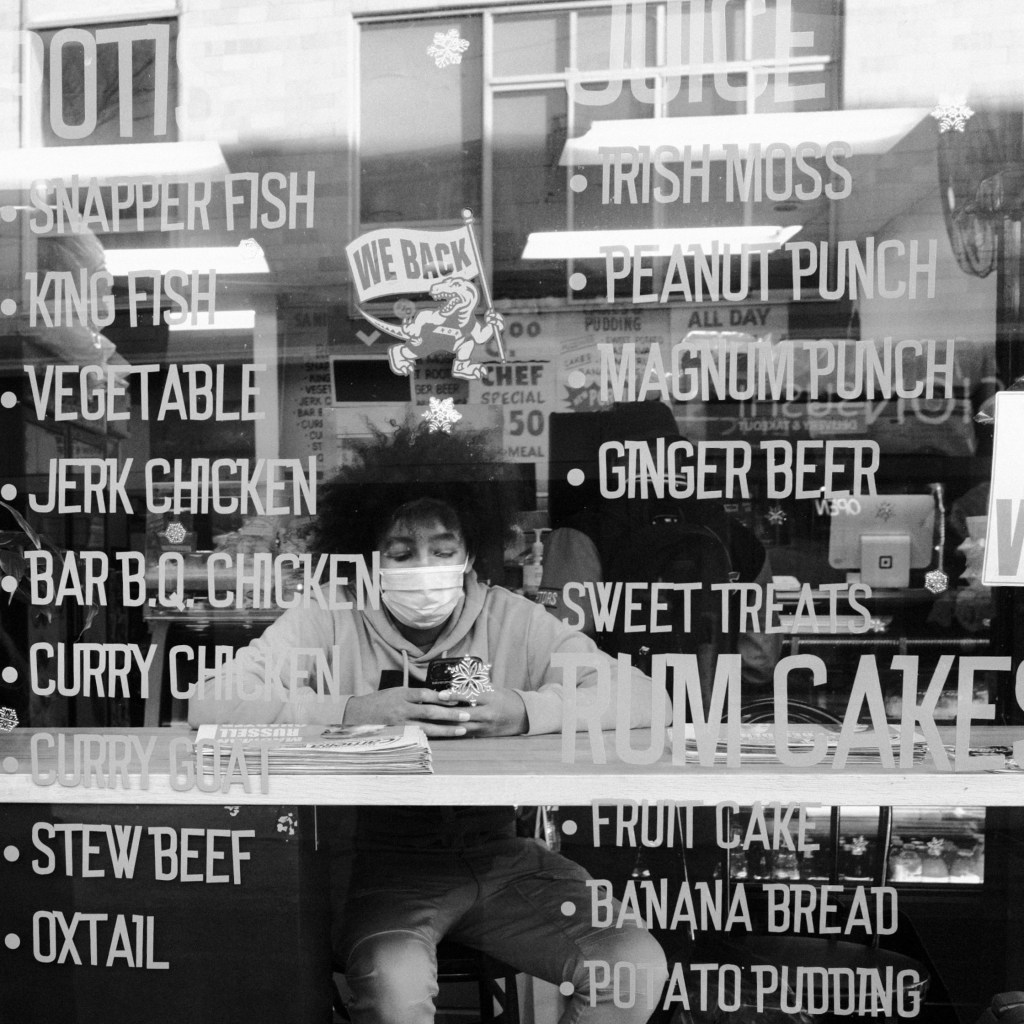
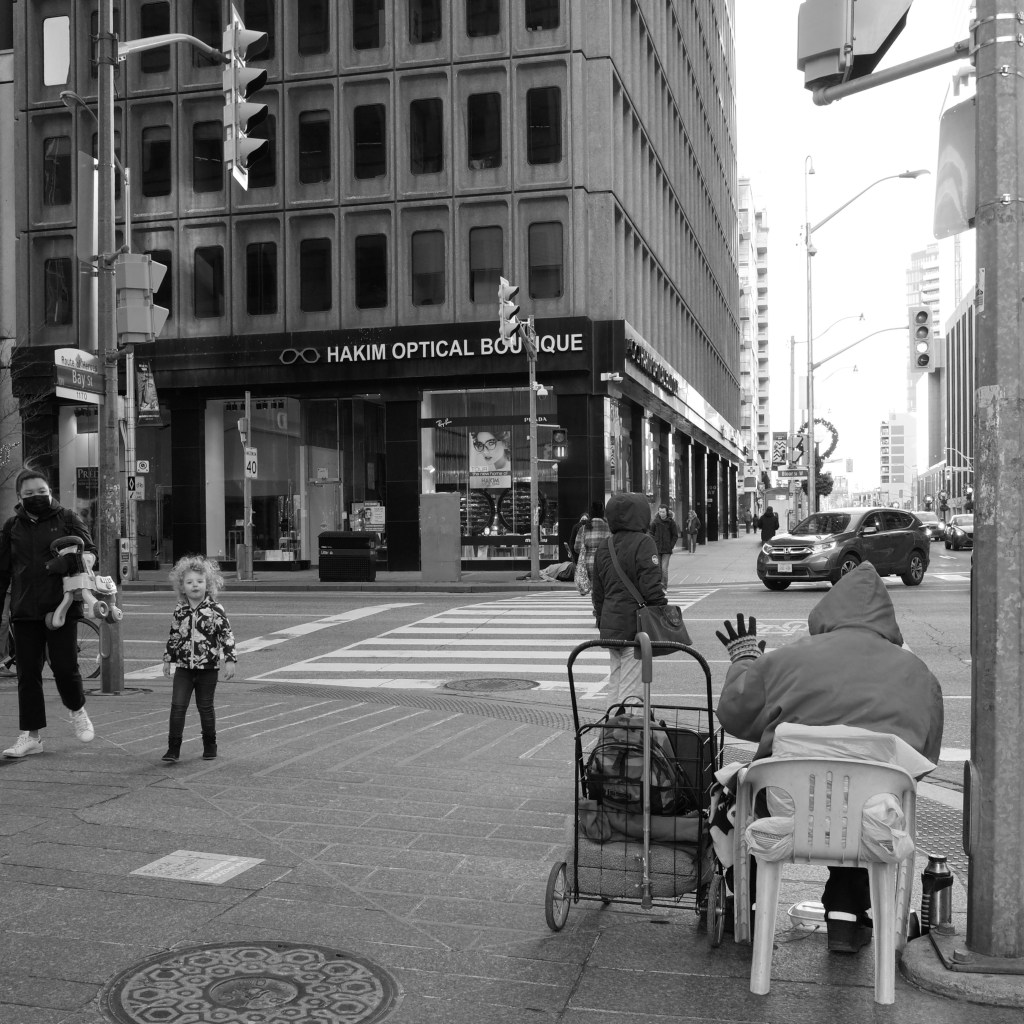
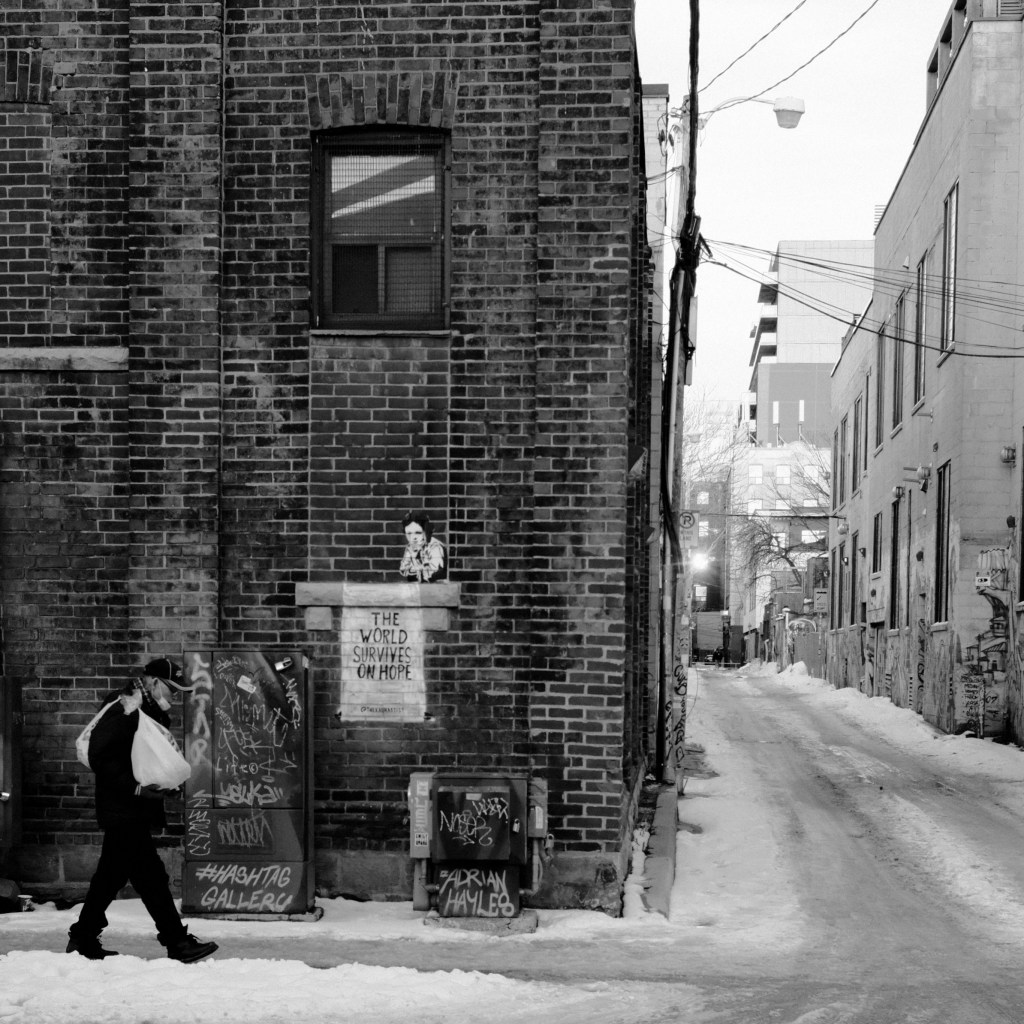
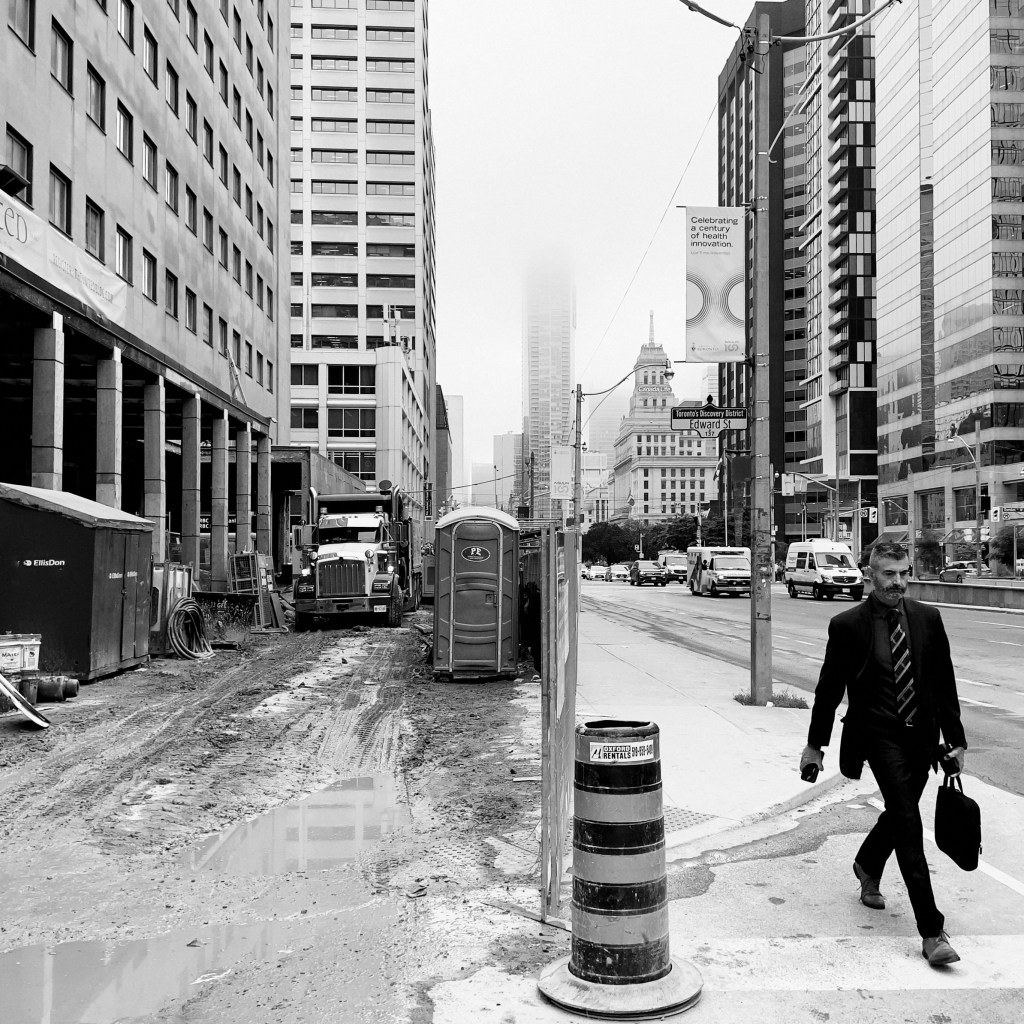
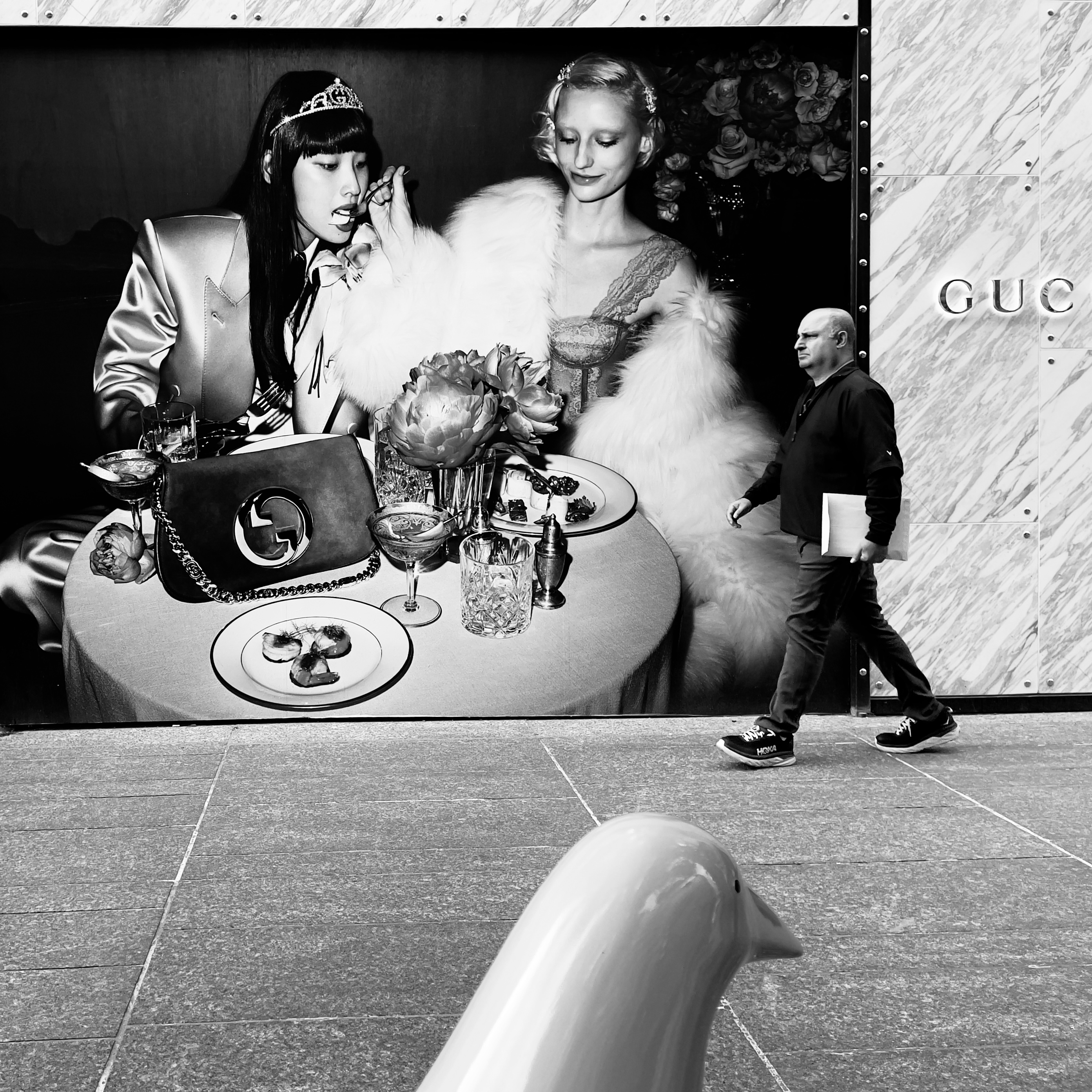
I routinely try and take a bit of a longer photowalk at the start of each year. It’s an opportunity to stretch my legs some and a great way to start of the year while, also, getting a chance to document the city while it’s still recovering from New Years celebrations.
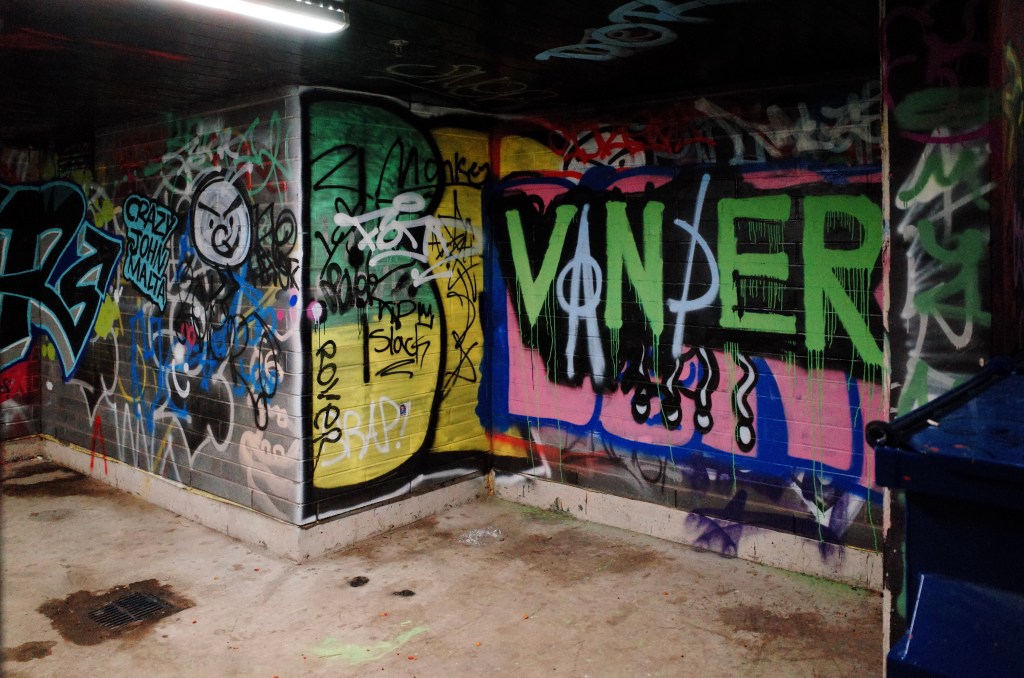
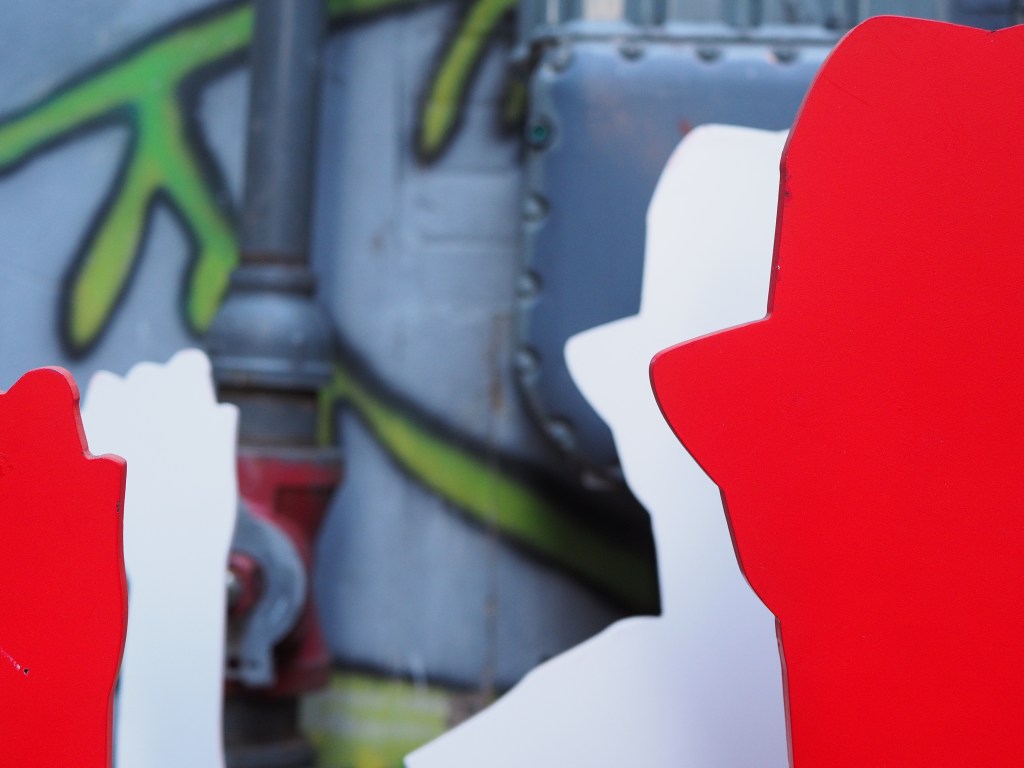
This year was no different, save that I ended up leaving for my walk later than intended and was drawn to a number of Toronto’s alleys throughout the evening.
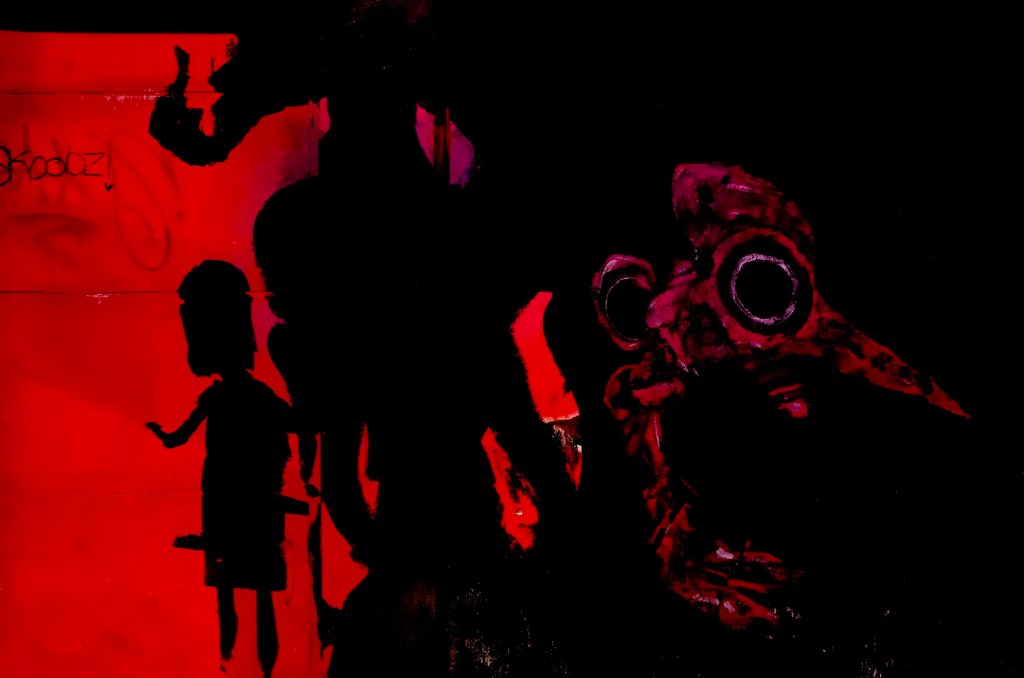
While I did the majority of my shooting through the late afternoon and evening in monochrome, I couldn’t help by see how the positive film simulation in my Ricoh GRs would showcase the vibrant colours of graffiti under artificial lighting situations.
It was only once I’d brought the images home and looked at them that it became apparent that the majority of the photos were made from the same angle. I had no idea I was doing this at the time but, in hindsight, I definitely wish that I’d made images from wider variety of angles.
When I was wandering through some of the alleys I wished that there had been more people about to include in some of the images. Even a wisp of a figure would, I think, have added a bit of a haunting character to many of the photographs.
In their absence, however, I largely (though not completely) tried to channel Tatianna Hopper. She sometimes engages in a kind of street photography that simultaneously showcases the existence and absence of humans. Graffiti and human trash, or waste, expresses this concept to my mind.
In a number of alleys there were quasi-monstrous or demonic imagery. I see more and more of it around the city and have met the artists of some of it. The effort they’re putting in is amazing with really interesting effects; when shooting with humans in the frame and in monochrome, I find the graffiti adds an interesting graphic element and juxtaposition. Even on its own, however, the juxtaposition between colour and monochrome graffiti causes its own novel contrast.
Almost the entirety of 2022, and the tail end of 2021, saw me shoot 99% of my images in monochrome. I’m happy with the progress I’ve made on the street and can see the very real improvements in composition and ability to ‘see’ in monochrome. However I’m inspired by Alex Webb and Gustavo Minas’ ‘Maximum Shadow Minimal Light’. Both use shadow in colour photography and I’d like to develop similar skills . Maybe that means I’ll experiment some through the year in trying to translate what I’ve learned about light and shadows in monochrome images into colour photos!
I spent a few frustrating evenings shooting on aperture priority with the original Ricoh GR. It held my shutter speed at 1/40s and varied the ISO so that it was always at 1/40s.
I’ve finally sat down to figure out what the heck was going on as I’d never previously experienced this issue. For some reason each time I tried to set the ISO to Auto-High (with a 5000 ISO maximum and shutter minimum at 1/160s) it kept defaulting to Auto, instead.
The Problem
My Ricoh GR was stuck at 1/40s when shooting aperture priority (i.e., ‘Av’) with the ISO varying to ensure it could hit that shutter speed. My work-around solution was to take manual control of the ISO. When I manually raised the ISO I could get a much faster shutter speed.
The Solution
I had previously disabled ‘Continuous Mode’ when I had been experimenting with an external flash. In doing so I had, unknowingly, simultaneously disabled the camera’s ability to use ‘Auto-High.’1 Auto-High is used to set a maximum ISO and minimum shutter speed.2
To enable Auto-High on the Ricoh GR:
Open the menu
Enter the Shooting Menu (Camera symbol)
Scroll down to ‘Continuous Mode’
Press the right button on the control dial
Scroll to ‘Continuous Mode’
Press ‘OK’
You may, also, need to set the maximum ISO and minimum shutter speed for Auto-High. To set these values:
Open the menu
Enter the Setup Menu (Screwdriver and Wrench symbol)
Scroll down to ‘ISO Auto-High Settings’
Press the right button on the control dial
Set the Maximum ISO and Change Shutter Speed to preferred values
Press ‘OK’
At the conclusion of this you should hopefully have (re)enabled Auto-High ISO.
Note: My solution to this problem differs from some on the Internet. A post in the DP Review forums, as an example, suggests that you must disable ‘dynamic range compensation’ to solve the problem. This is not the case in my experience as I have dynamic range compensation set to ‘Medium’ on my Ricoh GR.
This is not clearly explained in the Ricoh GR manual when when doing a search for ‘Auto-Hi’. ↩︎
If shooting conditions are such that the camera cannot expose properly at a given aperture and maximum ISO setting, it may reduce the shutter speed below the minimum shutter speed set under Auto-High to get a correct exposure. ↩︎
The answer, in almost all cases, is a resounding “yes.” David Fraser, a privacy and technology lawyer from Halifax, does an exceptional job in running curious (Canadian) street photographers through what the law allows and the rare exceptions when making street photos could have legal consequences.
‘Til Pandemic Does Us Part | Excluded Audience | Amour by Christopher Parsons
Neale James, host of the Photowalk, challenged the ‘Extra Milers’ to look through our pictures and find one (or three…) which really spoke to our 2022. It could be a best photograph, or one that captures some memory or another, or really anything…the question was deliberately left pretty open to interpretation.
It served as a good experience for me. I went back through the past 11 months of images and, in the process, was reminded of numerous photos and experiences I’d forgotten about.
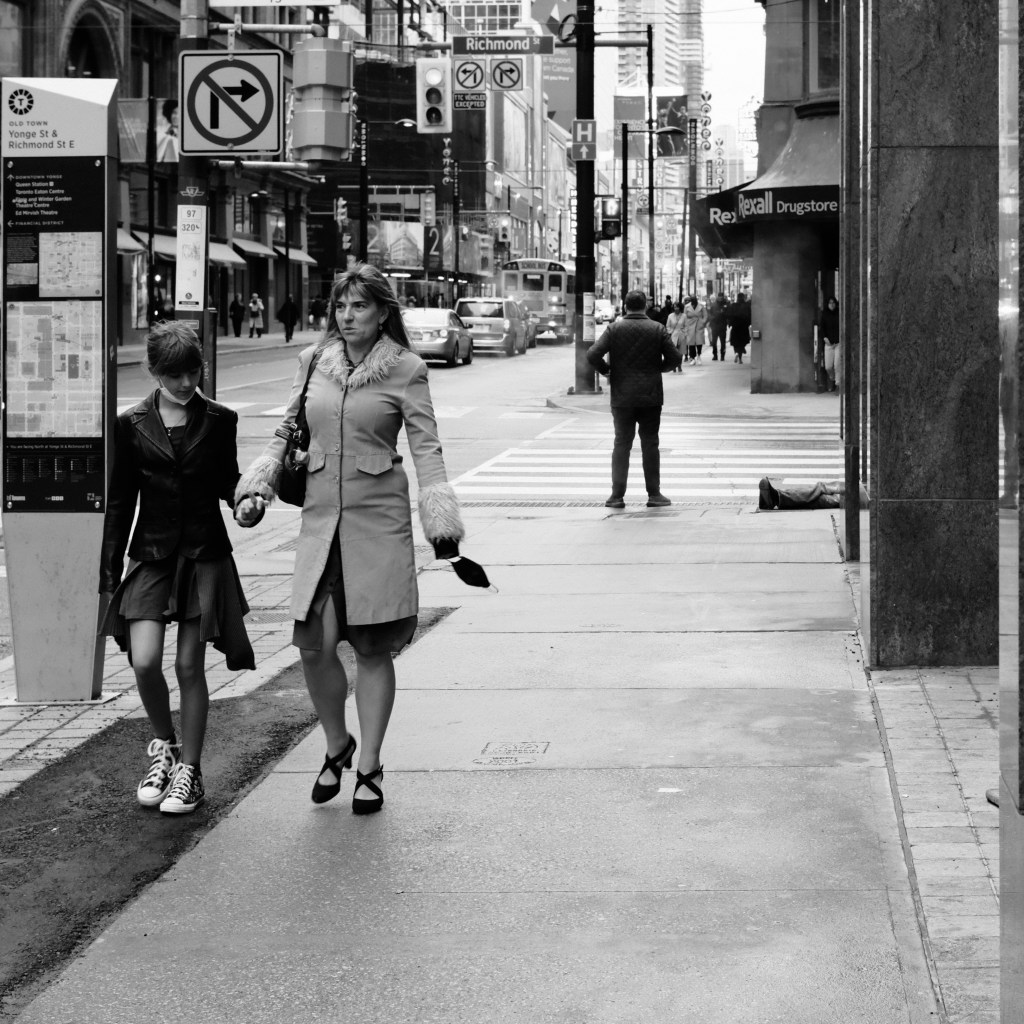
The first image (“‘til Pandemic Does Us Part”) speaks to how seriously some were still taking the pandemic much earlier in the year.
‘Til Pandemic Does Us Part by Christopher Parsons
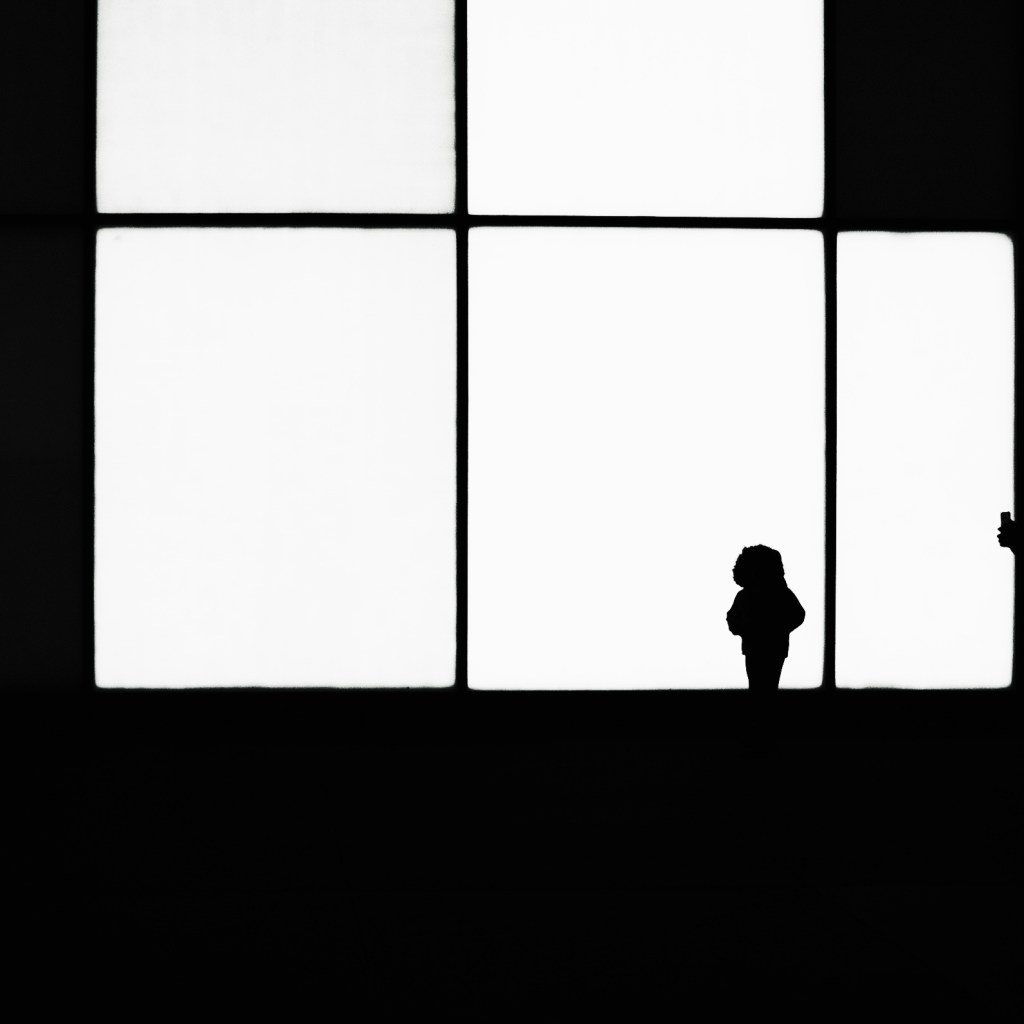
The second (“Excluded Audience”) is very similar to an image I made in early 2020 which defined that stage of the pandemic in Toronto for me. “Excluded Audience” is meant to call back to that image and showcase that while things were going back to normal as the year progressed, that normal isn’t necessarily positive for everyone in the city. I’ve also included that reference image (“Down But Not Out”) below, after the set, just to indicate what I was trying to call back to.
Excluded Audience by Christopher Parsons
The final image of the year in this set (“Amour”) is meant to document how things are, today, with those in love able to see and hold one another amongst crowds once more. As a set, I think they have a symmetry in story and composition across them.
Amour by Christopher Parsons
And, finally, the reference image really just captures what Toronto was like in the early days of the pandemic when the entire downtown core had just shut down in its entirety.
Down But Not Out by Christopher Parsons
In terms of process for selecting photos, most years I start by reviewing images that I posted to social media that year, which in 2022 has been Glass. From the 300-365 images I work down to 30 images or so that best tell the story of the year. However, using this process I miss some photos that I really like but haven’t uploaded and, at the same time, include some images in the sort that I’ve somewhat fallen out of favour with since posting them.
All of which is to say: I think that going through and taking the time to review/re-examine all the images we’ve taken over a year is a splendid exercise, and especially because there’s a bit of time between when an image was captured and now. For me, at least, this helped to surface work that resonates more today than I think that it did when I first made it.
How do you go through and review your photos annually? What’s your best photo or photo set of the year, and what’s the story behind them?
I’ve been actively using Glass for about a full year now. Glass is a photo sharing site where users must pay either a monthly or yearly fee; it costs to post but viewing is free.
I publish a photo almost every day and I regularly go through the community to view other folks’ photos and comment on them. In this short review I want to identify what’s great about the service, what’s so-so, and where there’s still room to grow. All the images in this blog post were previously posted to Glass.
Let me cut to the chase: I like the service and have resubscribed for another full year.
The Good
The iOS mobile client was great at launch and it remains terrific. It’s fast and easy to use, and beats all the other social platforms’ apps that I’ve used because it is so simple and functional. You can’t edit your images in the Glass app and I’m entirely fine with that.
(Fix, Found by Christopher Parsons)
The community is delightful from my perspective. The comments I get are all thoughtful and the requirement to pay-to-post means that there aren’t (yet) any trolls that I’ve come across. Does this mean the community is smaller? Definitely. But is it a more committed and friendly community? You bet. Give me quality over quantity any day of the week.
All subscribers have the option to have a public facing profile, which anyone can view, or ones that are restricted to just other subscribers. I find the public profiles to be pretty attractive and good at arranging photos, especially when accessing a profile on a wide-screen device (e.g. a laptop, desktop, tablet, or phone in landscape).
The platform launched as iPhone only, to start, though has been expanding since then. The iPad client is a joy to use and the developers have an Android client on their roadmap. A Windows application is available and you can use the service on the web too.
(Birthday Pose by Christopher Parsons)
Other things that I really appreciate: Glass has a terrifically responsive development team. There are about 50 community requests that have been implemented since launch; while some are just for bugs, most are for updates to the platform. Glass is also the opposite of the traditional roach-motel social media platform. You can download your photos from the site at any time; you’re paying for the service, not for surveillance. That’s great!
The So-So
So is Glass perfect then? No. It has only a small handful of developers as compared to competitors like Instagram or Vero which means that some overdue features are still in development.
(‘Til Pandemic Does Us Part by Christopher Parsons)
A core critique is there is no Android application. That’s fair! However, iOS users are more likely to spend money on apps so it made economic sense to prioritize that user base.1 Fortunately an Android application is on its way and a Windows version was recently released.
A more serious issue for existing users is an inability to ‘tag’ photos. While photos can be assigned to categories in the application (and more categories have been added over time) that means it’s hard to have the customization of bigger sites like Flickr. The result is that discovery is more challenging and it’s harder to build up a set of metadata that could be used in the future for presenting photos. Glass, currently, is meant to provide a linear feed of photos—that’s part of its charm!—but more sophisticated methods of even displaying images on users’ portfolios in the future may require the company to adopt a tagging system. Why does it matter that there is or isn’t one, today? Because for heavier users2 re-viewing and tagging all photos will be a royal pain in the butt, if that ever is something that is integrated into the platform.
(Tall and Proud by Christopher Parsons)
If you’re looking to use Glass as a formal portfolio, well, there are almost certainly better services and platforms you should rely upon. Which is to say: the platform does not let you create albums or pin certain photos to the top of your profile. I entirely get that the developers are aiming for a simple service at launch, but would also appreciate the ability to better categorize some of my photos. In particular, I would like to create things such as:
Best of a given year
Having albums that break up street versus landscape versus cityscape images
Being able to create albums for specific events, such as particular vacations or documentary events
Photos that I generally think are amongst my ‘best’ overall
This being said, albums and portfolios are in the planning stages. I look forward to seeing what is ultimately released.
(Public Praise by Christopher Parsons)
As much as I like the community as it stands today, I would really like the developers to add some small or basic things. Like threaded comments. They’re coming, at some point, after discovery features are integrated (e.g., search by location, by camera, etc.). Still, as it stands today, the lack of even 2-levels of threaded comments means that active conversations are annoying to follow.
Finally, Glass is really what you make of it. If you’re a photographer who wants to just add photos and never engage with the community then I’d imagine it’s not as good as a platform such as Instagram or Vero. Both of the latter apps have larger user bases and you’re more likely to get the equivalent of a like; I don’t know how large Glass’ user-base is but it’s not huge despite being much larger than at launch. However, if you’re active in the community then I think that you can get more positive, or helpful, feedback than on other platforms. At least for me, as a very enthusiastic amateur photographer, the engagement I get on Glass is remarkably more meaningful than on any other platform on which I’ve shared my photographs.
The Bad
Honestly, the worst part about Glass is still discoverability.3 You can see a semi-random set of photographers using the service which isn’t bad…except that some of them may not have posted anything to the platform for months or even a year. I have no idea why this is the case.
(Stephanie by Christopher Parsons)
The only other way to discover other photographers is to regularly dig through the different photography categories, and ‘appreciate’4 photos you see and follow the photographers who appeal to your tastes. This isn’t terrible, but it’s the ‘best’ way of discovering photos and really isn’t great. While the company ‘highlights’ photographers on the Glass website and through its Twitter feed, the equivalent curation still doesn’t exist in the application itself. That’s non-ideal.
The developers have promised that additional discovery functions will be rolling out. They intend enable search by camera type or location, but thus far nothing’s been released. They’ve been good at slowly and deliberately releasing features, and new features have always been thoughtful when implemented, so I’m hopeful that when discoverability is updated it’ll be pretty good. Until then, however, it’s frankly pretty bad.
(Lonely Traveller by Christopher Parsons)
If I were to find a second thing that’s missing, to date, it would be that there’s no way of embedding Glass images in other CMSes. The platform does support RSS, which I appreciate, but I want the platform to offer full-on embeds so I can easily cross post images to other web spaces (like this blog!). Embeds could, also, have some language/links that ultimately let viewers sign up for the service as a way of growing the subscriber base.
The third thing that I wish Glass would enable a way of assessing if a photo has already been uploaded. At this point I’ve uploaded over 300 photos and I want to ensure that I don’t accidentally upload a duplicate. This is definitely a problem associated with those who use the service more heavily, but will become a more prominent issue as users ‘live’ on the platform for more and more years.
Conclusion
So, at the end of a year, what do I think of Glass?
First, I think that it truly is a photography community for photographers. It isn’t trying to be a broader social network that lets you share what music you’re listening to, or TV shows and movies you’re watching, or books you’ve finished, or temporary stories or images. There is totally a space for a network like that but it’s not Glass and I’m fine with it being a simpler and more direct kind of platform.
(Night Light by Christopher Parsons)
Second, it is a platform with active developers and a friendly community. Both of those things are pretty great. And the developers have a clear and opinionated sense of taste: they’re creating a beautiful application and associated service. There’s real value in the aesthetic for me.
Third, it’s not quite the place to showcase your work, today, if you are trying to semi-professionally market your photography. There are no albums or other ways of highlighting or collecting your images. Glass is much closer to the original version of Instagram in just presenting a feed of historical images instead of a contemporary service like Flickr or even Instagram. And…that’s actually a pretty great thing! That said, the roadmap includes commitments to enabling better highlighting/collecting of images. This will be increasingly important as more people upload more photographs to the service.
(Supervisory Assistance by Christopher Parsons)
Fourth, it’s still relatively cheap as compared to other paid offerings. It is less than half the cost of a Flickr Pro account, as just one example. And there are no ads for subscribers or for individuals who are browsing public profiles and associated portfolios.
(Distressed by Christopher Parsons)
So, in conclusion, I’d strongly suggest trying out Glass if you’re a committed and enthusiastic amateur. It’s not the same as Instagram or Instagram clones. That’s both part of the point and part of the magic of the platform that the Glass team is creating and incubating.
Yes, you might be willing to pay money, dear reader, but you’re statistically deviant. In a good way! ↩︎
The developers are, also, very well aware of this issue. ↩︎
Glass does not have ‘likes’ per se, but lets users click an ‘appreciation’ button. Appreciations are only ever sent to the photographer and are not accumulated numerically to be presented to either the public or the photographer who uploaded the photograph. ↩︎
A couple thoughts after shooting with the iPhone 14 Pro for a day, as an amateur photographer coming from an iPhone 12 Pro and who also uses a Ricoh GR and Fuji X100F.
The 48 megapixel 24mm (equiv.) lens is nearly useless for street photography, when capturing images at 48 megapixels. It takes 1+ seconds to capture an image at this resolution. That’s not great for trying to catch a subject or scene at just the right moment. (To me, this says very, very bad things about what Apple Silicon can actually do.) Set the captured resolution to 12 megapixels in ProRAW if you’re shooting fast-moving or fast-changing subjects/scenes.
The 78mm (equiv.) telephoto is pretty great. It really opens a new way of seeing the world for me. I also think it’s great for starting street photographers who aren’t comfortable being as close as 28mm or 35mm might require.
The new form factor means the MagSafe-compatible battery I use doesn’t fit. Which was a pretty big surprise and leads into item 4…
Capturing 48 megapixel images, at full resolution, while using your phone in bright daylight (and thus raising the screen to full brightness), absolutely destroys battery life. Which means you’re likely to need a battery pack to charge your phone during extended photoshoots. Make sure you choose one that’s the right size!
I like the ability to use the photographic styles. But it really sucks that you can’t see what effect they’d have on monochrome/black and white images. I shoot 95-99% in monochrome; this is likely less of an issue for other folks.
The camera app desperately needs an update and reorganization. It is kludgy and a pain in the ass to use if you need to change settings quickly on the street. Do. Not. Like. It’s embarrassing Apple continues to ship such a poor application.
I haven’t taken the phone out to shoot extensively at night, though some staged shots at home at night showcase how much better night mode is compared to that in the iPhone 12 Pro.
Anyway, early thoughts. More complete ones will follow in the coming week or so.
I’ve been making some small changes to Excited Pixels. I’ve updated my list of good podcasts I listen to (it now includes several of my preferred photography podcasts) and I’ve also created a portfolio page that currently showcases some of my recent preferred monochrome street photography. For my daily photography check out my Glass profile.
After spending far too much time agonizing over what to get printed I finally put in an order for 21 prints. Most are black and white from the past 2-3 years, and will be used to create 1-2 gallery walls and refresh another wall.
Untitled by Christopher Parsons
I’m looking forward to getting them through I’m working with a new printer so have some minor degrees of anxiety over what I’ll end up with. I’ve generally had good luck with local printers but the past few personal photo books I’ve had printed (albeit from international companies) have been disappointing when I’ve gotten them in my hands.
The next step will be to purchase a raft of frames for all the prints. And then, finally, actually add them all to my walls!
For the past several years I’ve created a ‘best of’ album that summarizes the year’s best photos that I made. I use the yearly album to assess how my photography has changed and what, if any, changes are common across those images. The process of making these albums and then printing them forces me to look at my images, how they work against one another, and better understand what I learned over the course of taking photos for a year.
I have lots of favourite photographs but what I’ve learned the most, at least over the past few years, is to ignore a lot of the information and ‘tips’ that are often shared about street photography. Note that the reason to avoid ignore them is not because they are wrong per se, or that photographers shouldn’t adopt them, but because they don’t work for how I prefer to engage in street photography.
I Don’t Do ‘Stealth’ Photography
Probably the key tip that I generally set to the side is that you should be stealthy, sneaky, or otherwise hidden from the subjects in the photos that I capture. It’s pretty common for me to see a scene and wait with my camera to my eye until the right subjects enter the scene and are positioned where I want them in my frame. Sometimes that means that people will avoid me and the scene and other times they’ll clearly indicate that they don’t want to have their photo taken. In these cases the subject is communicating their preferences quite clearly and I won’t take their photograph. It’s just an ethical line I don’t want to cross.
(Winter Troop by Christopher Parsons)
In yet other instances, my subjects will be looking right at me as they pass through the scene. They’re often somewhat curious. And in many situations they stop and ask me what I’m taking photos of, and then a short conversation follows. In an odd handful of situations they’ve asked me to send along an image I captured of them or a link to my photos; to date, I’ve had pretty few ‘bad’ encounters while shooting on the streets.
I Don’t Imitate Others
I’ve spent a lot of time learning about classic photographers over the past couple years. I’ve been particularly drawn to black and white street photography, in part because I think it often has a timeless character and because it forces me to more carefully think about positioning a subject so they stand out.
(Working Man by Christopher Parsons)
This being said, I don’t think that I’m directly imitating anyone else. I shoot with a set of focal ranges and periodically mix up the device I’m capturing images on; last year, a bulk of my favourite photos came from an intensive two week photography vacation where I forced myself to walk extensively and just use an iPhone 12 Pro. Photos that I’m taking, this year, have largely been with a Fuji X100F and some custom jpg recipes that generally produce results that I appreciate.
Don’t get me wrong: in seeing some of the photos of the greats (and less greats and less well-knows) I draw inspiration from the kinds of images they make, but I don’t think I’ve ever gone out to try and make images like theirs. This differs from when I started taking shots in my city, and when I wanted to make images that looked similar to the ‘popular’ shots I was seeing. I still appreciate those images but they’re not what I want to make these days.
I Create For Myself
While I don’t think that I’m alone in this, the images that I make are principally for myself. I share some of those images but, really, I just want to get out and walk through my environment. I find the process of slowing down to look for instances of interest and beauty help ground me.
Because I tend to walk within the same 10-15km radius of my home, I have a pretty good sense of how neighbourhoods are changing. I can see my city changing on a week to week basis, and feel more in tune with what’s really happening based on my observations. My photography makes me very present in my surroundings.
(Dark Sides by Christopher Parsons)
I also tend to use my walks to both cover new ground and, also, go into back alleys, behind sheds, and generally in the corners of the city that are less apparent unless you’re looking for them. Much of the time there’s nothing particularly interesting to photograph in those spaces. But, sometimes, something novel or unique emerges.
Change Is Normal
For the past year or so, a large volume (95% or more) of my images have been black and white. That hasn’t always been the case! But I decided I wanted to lean into this mode of capturing images to develop a particular set of skills and get used to seeing—and visualizing—scenes and subjects monochromatically.
But my focus on black and white images, as well as images that predominantly include human subjects, is relatively new: if I look at my images from just a few years ago there was a lot of colour and stark, or empty, cityscapes. I don’t dislike those images and, in fact, several remain amongst my favourite images I’ve made to date. But I also don’t want to be constrained by one way of looking at the world. The world is too multifaceted, and there’s too many ways of imagining it, to be stuck permanently in one way of capturing it.
(Alley Figures by Christopher Parsons)
This said, over time, I’d like to imagine I might develop a way of seeing the world and capturing images that provides a common visual language across my images. Though if that never happens I’m ok with that, so long as the very practice of photography continues to provide the dividends of better understanding my surroundings and feeling in tune with wherever I’m living at the time.
Apple’s Word Wide Developer Conference starts tomorrow and we can all expect a bunch of updates to Apple’s operating systems and, if we’re lucky, some new hardware. In no particular order, here are some things I want updated in iOS applications and, ideally, that developers could hook into as well.
Photos
The ability to search photos by different cameras and/or focal lengths
The ability to select a point on a photo to set the white point for exposure balancing when editing photos
Better/faster sync across devices
Enable ability to edit geolocation
Enable tags in photos
Camera
Working (virtual) spirit level!
Set burst mode to activate by holding the shutter button; this was how things used to be and I want the option to go back to the way things were!
Advanced metering modes, such as the ability to set center, multi-zone, spot, and expose for highlights!
Set and forget auto-focus points in the frame; not focus lock, but focus zones
Zone focusing
Maps
Ability to collaborate on a guide
Option to select who’s restaurant data is running underneath the app (I never will install Yelp which is the current app linked in Maps)
Music
Ability to collaborate on a playlist
Have multiple libraries: I want one ‘primary’ or ‘all albums’ and others with selected albums. I do not want to just make playlists
Reminders
Speed up sync across shared reminders; this matters for things like shared grocery shopping! 1
Integrate reminders’ date/time in calendar, as well as with whom reminders are shared
Messages
Emoji reactions
Integration with Giphy!
News
When I block a publication actually block it instead of giving me the option to see stories from publications I’ve blocked
It’d be great to see News updated so I can add my own RSS feeds
Fitness
Need ability to have off days; when sick or travelling or something it can be impossible to maintain streaks which is incredibly frustrating if you regularly live a semi-active life
Health
Show long-term data (e.g. year vs year vs year) in a user friendly way; currently this requires third-party apps and should be default and native
Of course, I’d also love to see Apple announce a new MacBook Air. I need a new laptop but don’t want to get one that’s about to be deprecated and just don’t need the power of the MacBook Pro line. Here’s hoping Apple makes this announcement next week!
In general I want iCloud to sync things a hella lot faster! ↩︎