Categories
Photography

Eyeshot 2024 Street and Documentary Photography Competition

As part of my ongoing efforts to get more comfortable sharing my photographs with a wider audience I started to participate in photographic competitions last year. While I didn’t receive any awards the very act of submitting my work was the personal award that I took away.

This year, for the first time, I’m submitted to a contest with a small fee. I appreciate that many photographers take issue with the “pay to compete” models but this is normal, and I enjoy a level of disposable income that means I can afford to submit to a few contests a year. This post includes the images that I submitted to the Eyeshot 2024 competition, the descriptions I included with the images, and an artist’s statement.

Submitted Images

All of my images are part of a broader documentary project that traces how built environments that I inhabit develop and transform through the seasons, and across the years that I have been photographing my surroundings. As befits this objective, all of my images are titled by their rough location (based on major street intersections), geographic region or city, and the year made.

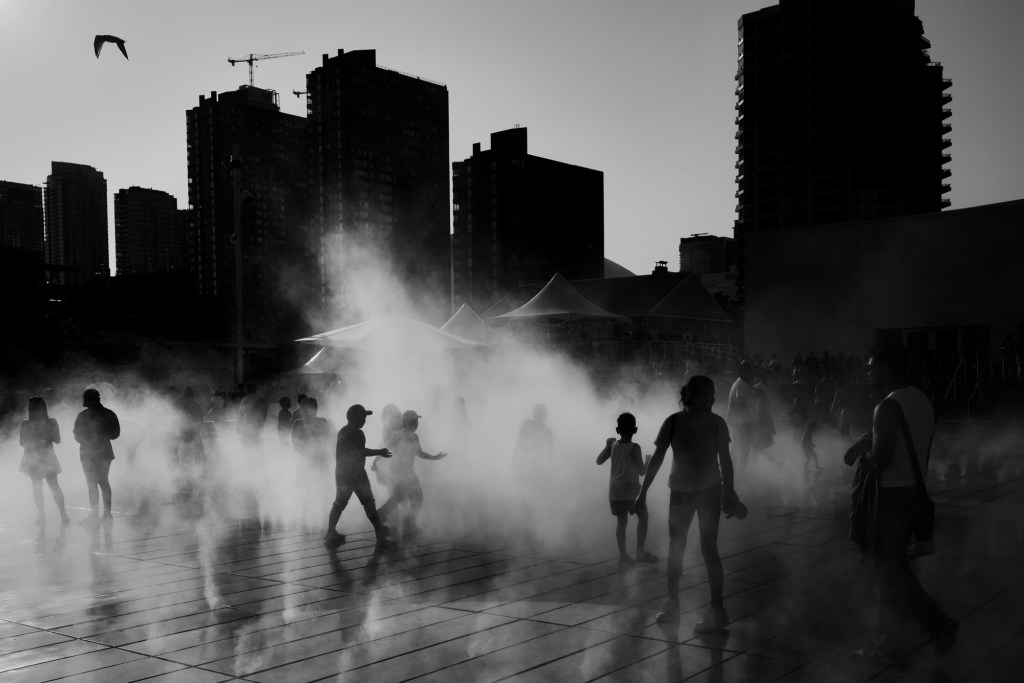
Great Lakes Waterfront Trail, Toronto, 2024

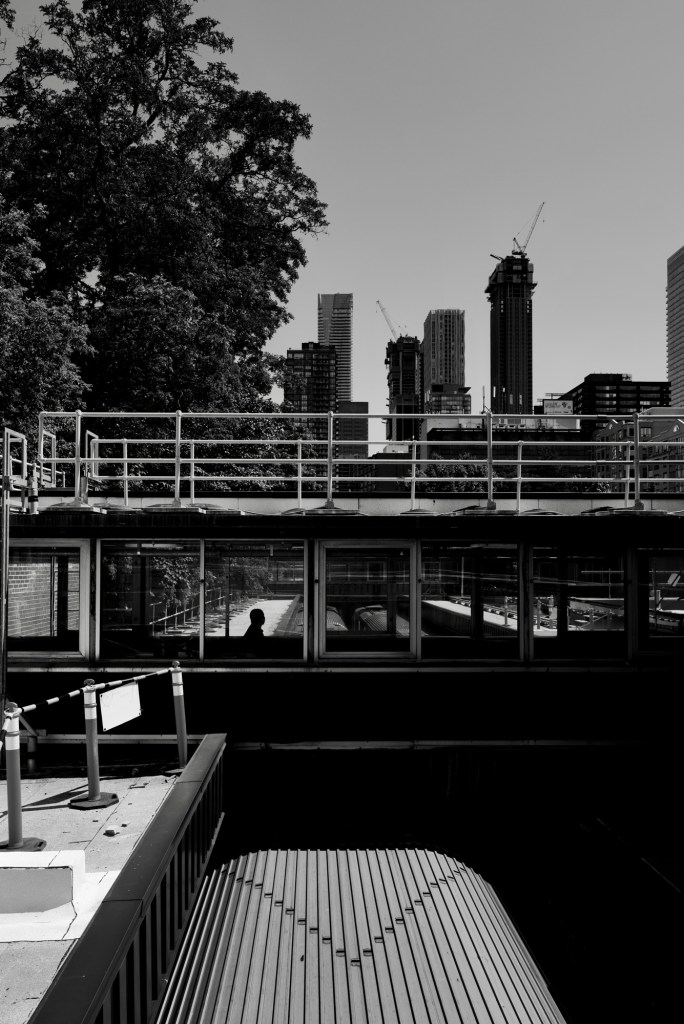
Toronto is home to a vast waterfront trail which was renovated in 2024 to include a large splash and mist park. On a swelteringly hot day I passed by after it had recently been re-opened and was delighted to see the silhouettes of people — mostly children — playing in the mist, while the looming under-construction condo towers of downtown Toronto provided a sense of youthfulness and activity to the cityscape itself. This photograph captures the youthful energy of Toronto as manifest in its residents and built infrastructures while simultaneously possessing a kind of timelessness as a result of capturing the moment in black and white.

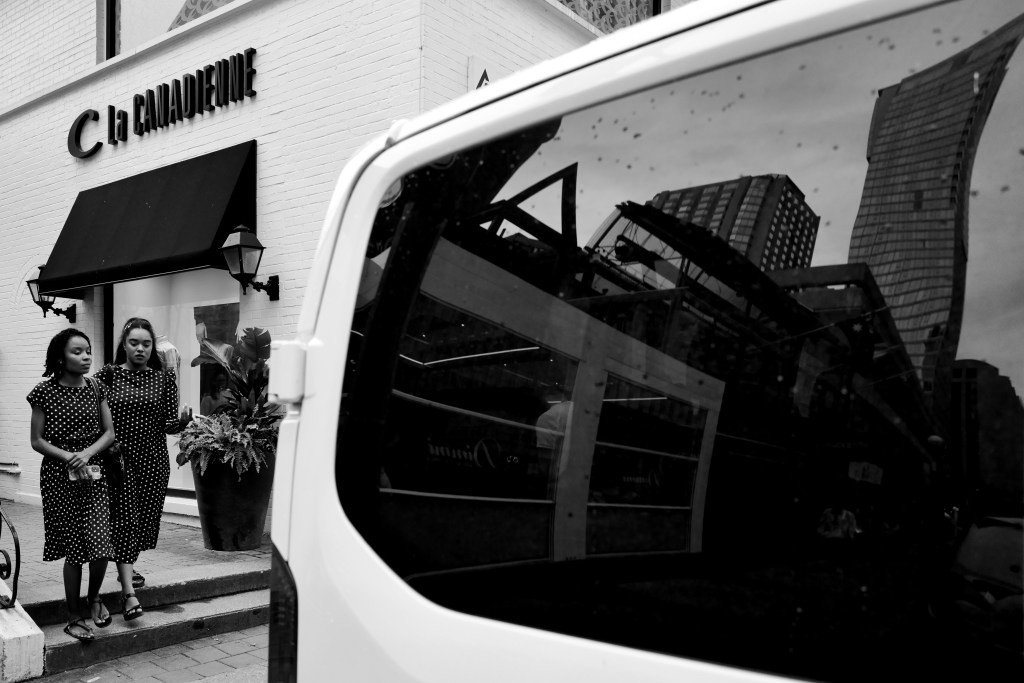
Cumberland & Bellair, Toronto, 2024

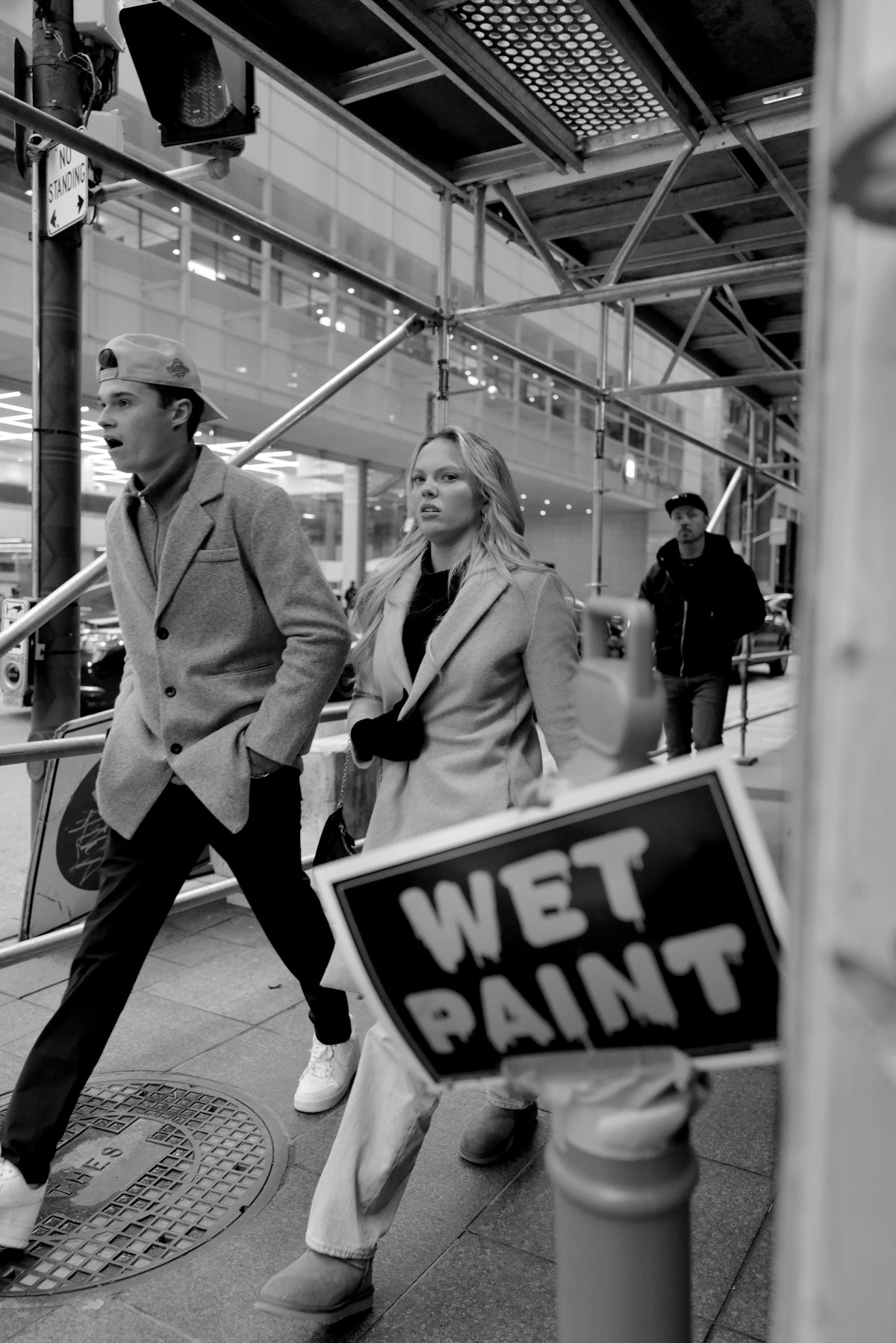
One of Toronto’s most posh shopping areas is Yorkville, where the affluent come out to spend and be seen. I like how this monochromatic photograph results in the two women looking like they could have come from 40 or 60 years ago, while the reflection in the window reveals some of the built infrastructure surrounding them. It speaks to a timelessness that is specifically located to being within a large urban environment.

Yonge & Dundas, Toronto, 2024

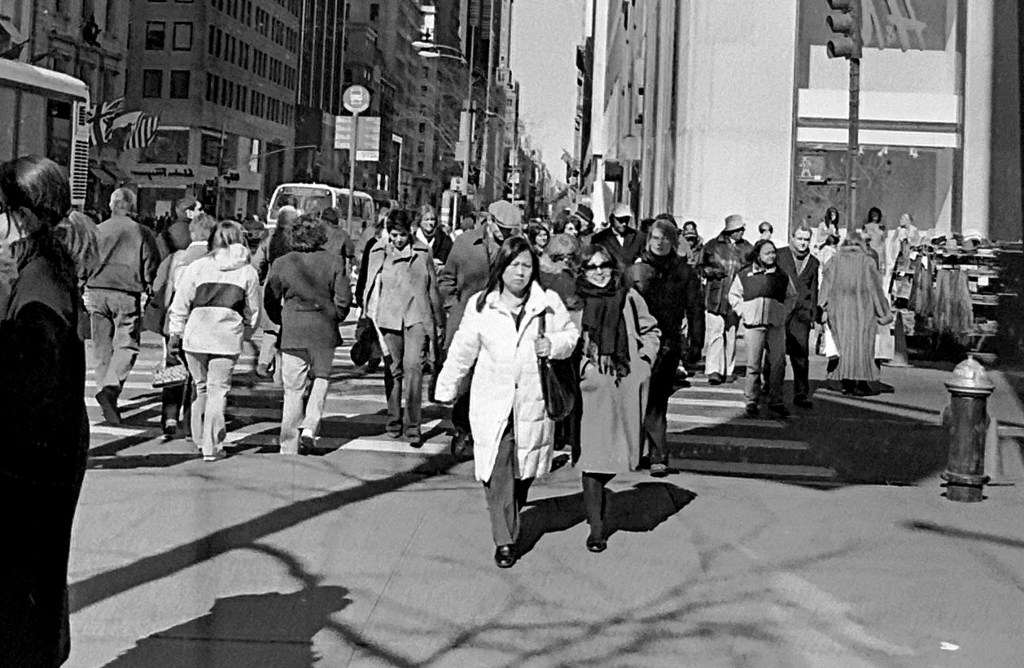
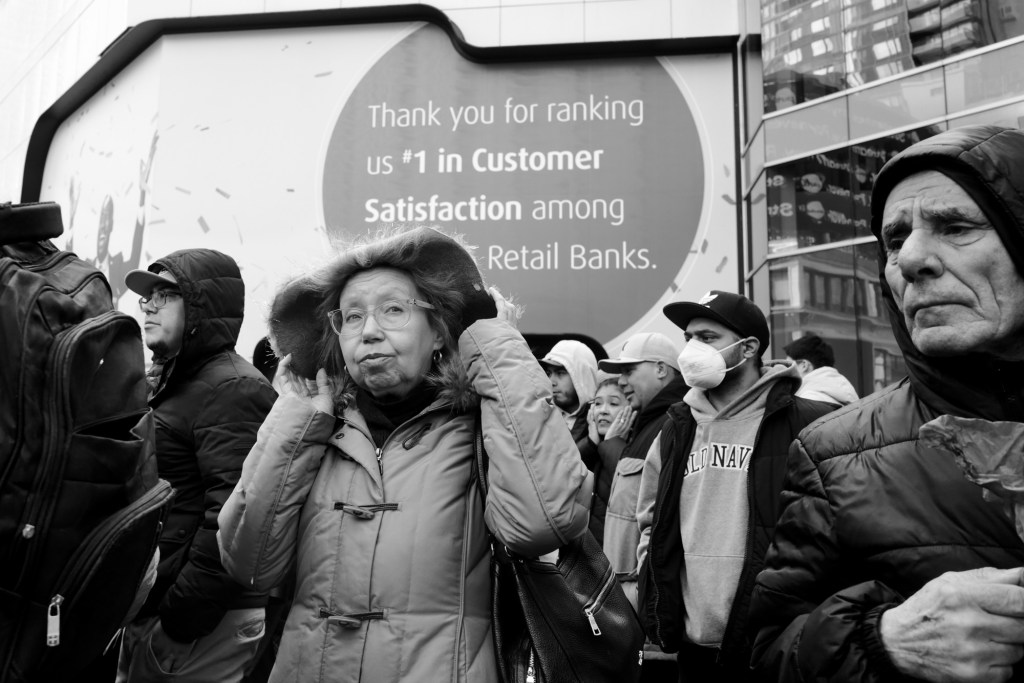
The Saint Patrick’s Day parade is a major event in Toronto. I’ve been photographing it for years and always march in it to make images of the crowds. I like how the woman in this photograph is almost posing in her winter jacket — it gives her a sense of elegance and self-importance — while, above her, the sign suggests that she is happy we’ve ranked her #1. But in addition to her, the man who is looking on in the right-hand side of the frame adds a degree of electricity to the image with his dourness contrasting with the woman’s own more-positive energy.

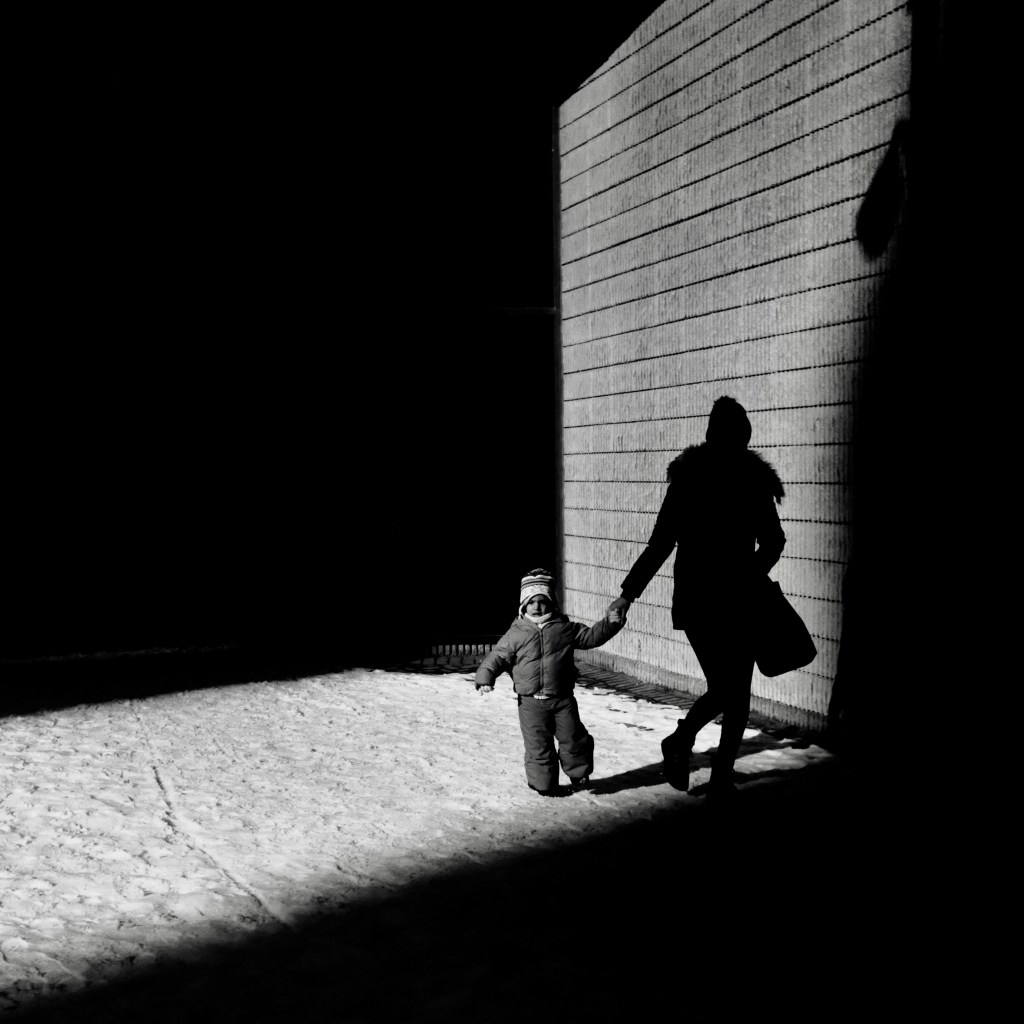
Gerrard & Galt, Toronto, 2024

When was this photograph taken? 2024 or 1964? The use of black and white has the effect of confusing the viewer as to when the photograph was made. This is accentuated by the sign in the photograph being from another generation. Adding power to the image are the two figures who are wandering through the early January snow, with the young woman looking down and over to the city’s garbage, and the little boy looking up past the trash to the graffiti on the wall. This speaks to the hopes and ambitions of youth and the practicality of maturity, while they are both literally passing by the abandoned garbage of the day.

Queen & Peter, Toronto, 2023

This photograph is only made possible because of the advertising-heavy urban landscapes in which we live. Taken in downtown Toronto, this photograph juxtaposes a question about one’s life with an idealised (and unrealistic) advertised imagination of excitement, along with a man contemplating his possible future. Him exiting the frame leaves us to wonder whether he will do something to change his life or if, instead, he will continue to live the same life that he always has. We are already left with some sense of his trajectory, however: his walking out to the left of the frame imposes on us a question of whether his movements will take him back to something he once enjoyed in life, or if his retreat through that side of the frame instead symbolises a staidness. Regardless, he will not be moving forward into the future — into the right of the frame — to see some change to his life.

Nathan Phillips Square, Toronto, 2023

Yonge and Dundas Square is Toronto’s imagined equivalent to
Times Square. In this photograph we see it at peak energy: the two women hiding under a transparent umbrella are huddling together with somewhat shocked looks on their faces, while behind them a woman is running from something out of scene and a giant in white strolls behind them. Photographs like this capture the dynamism of our urban landscapes while, simultaneously, not explaining what is specifically occurring. Instead the viewer is merely left with an ever-growing cascade of questions: Why are the women drinking out of a pineapple in the rain? Why are they shocked? Who is chasing the woman in the background? Why is there a tall white giant wandering around? What is going on with the squatting man in the advertisement? These questions draw the viewer in and invite them to create their own stories of what was before, and followed, the 1/320s that this frame holds together.

Artist’s Statement

I’m an amateur Toronto-based documentary and street photographer, and have been making images for over a decade. I make monochromatic photographs that focus on little moments that happen on the streets and which document the ebb and flow of the city over the course of years and decades. My work often deliberately plays with the temporality of photographs and calls into question when images were made, and invites the viewer to ask what specifically happened immediately prior to and following the pressing of the shutter button.
Categories
Photography Writing

10 Tips for Starting to Photograph on the Street

2014

The democratization of photography means that there are a lot of people who are interested in making images on the streets. However, many are scared of the possible confrontations they may have after taking other people’s images without first getting their permission. There are innumerable videos and essays that offer a lot of tips, but many of the common “tips” just wouldn’t work for me when I was starting out.

By way of background, I’ve been making images in Toronto since 2014 and have used a range of cameras, focal lengths, and so forth. I started out being very hesitant to take people’s images whereas, today, I am pretty comfortable and they are in the majority of the images that I take each week. You can see my most recent images on my Glass profile.

So here are 10 tips that can help you get used to making images on the street based on my own trepidations when I started out.

1. Just Walk Around With Your Camera

When I first purchased my Olympus EM10-II I was really nervous to actually use it in downtown Toronto. What if someone got mad that I was taking their photo?

2015

So my solution at the outset was just to always be carrying my camera to and from work. I had about a 2-3 km walk each way through urban areas and ensured that I had my camera in my hand the whole time.

For me, just always holding the camera in public normalized how it felt to me. It also helped me better appreciate the weight and how it moved in my hand.

2. Don’t Focus on Being “Stealthy”

So many street photography tips focus on being “stealthy”. That can mean using a long lens so that people don’t know you’re taking their photo, to shooting exclusively from waist height, never raising your camera to your eye, and so forth. But when you’re shooting in a stealthy way and someone approaches you, then you’re put in a position of potentially lying to them if you say you weren’t making images.

2016

By being “stealthy” — especially if you’re nervous about confrontation — and getting caught the potential confrontation may be a lot more emotionally charged. By way of contrast, if you’re not sneaking about and you’re being confronted then the emotions are going to be lower at the outset than if you were caught sneaking a shot of someone.

3. Don’t Focus on the People

If you’re anything like me when I started making images in my downtown core, taking images of people was something I aspired to but wasn’t comfortable with. But I lived in a big urban city and there was always lots to see and make images of…and so I made images of graffiti, of buildings, or of art exhibitions, and so forth. And in all cases the images that I captured were in public with other people around.

2017

Again, the focus (no pun intended) was just to get comfortable using my camera in public. I liked capturing ambient images of the city and its life, but really this was me practicing and just getting used to holding and using my camera in public, with the ultimate ambition of including people in my images.

Bonus Sub-Tip: As part of not focusing on people you can also consider looking for scenes and then waiting for people to just wander through the scene. I often will do this, myself: I’ll find a location, raise my camera to my eye, hold it for a minute or two, and only then start making images. Anyone who comes through the scene knows that I was there first — I wasn’t chasing them to make their image — and if someone asks what I’m doing, I can talk about the scene and what drew me to it. This helps to orient any conversations around specific individuals in your photographs being incidental to the image being taken, as opposed to the individuals being the primary focus of the image itself.

4. Practice With a 50mm or Wider Lens

It’s pretty routine advice to get a prime lens and learn with it, especially when taking images of metropolitan areas. To my mind there are a few good reasons for this approach to learning.

2018

First, just in terms of training, a prime prevents you from certain kinds of indecisiveness. When you’re operating a zoom lens you have to wonder which of the focal lengths are “best” and you don’t necessarily learn to “see” in any particular focal lengths. If you only have a 50mm focal length, by way of comparison, then you quickly learn to “see” in that length. And you can still zoom — it just requires using your feet!

Second, a prime lens helps you determine what kinds of images you are, or are not, looking to make. If you’re using a 50mm lens then very wide street images that you can capture with a 28mm are just not going to be made. And that’s fine — you learn to look for images that align with that particular focal length. By imposing a series of restrictions on how you can make an image you can expand your creativity by just focusing on what that focal length can produce.

2019

Third, using a single prime lens will mean that you’re carrying less weight and you won’t end up carrying a whole pile of kit with you. Which brings us to the next tip…

5. Don’t Trudge Around with More Than 1-2 Lenses

If you’re going to wander around the streets then you will benefit from not carrying too many lenses. I’d recommend only stepping out the door with your one prime lens. Not only does having a few lenses lead to creative ambiguity — is lens 1 or 2 or 3 “right” for this scene? — but it means you have to carry more stuff on your person.

Down But Not Out, 2020

Less weight and fewer focal lengths options means that you may be out making images longer and with more creative discipline. And by really leaning into 1 or 2 fixed focal lengths you’ll learn a lot about whether you like those focal lengths and, as importantly, how you can use them when making images.1

6. Go to Events Where Taking Photographs is Normalized

If there’s a parade, or public art show, or whatever then try to get there and practice taking images of people in those venues. Because it’s a big public event people will tend to be pretty OK with their images being taken. And it will also expose you, a budding photographer, to the challenge of sometimes grabbing a shot in changing light, moving crowds, and so forth.

Joy In Dark Times, 2021

If you’re feeling particularly daring then you might consider walking alongside a parade or protest, and make images of those who are viewing the event. It’s the “one step up” from making images of the participants of parades and events but still pretty comfortable. Most people in crowds are going to be OK with their images being captured and you’ll have walked past anyone who happened to be annoyed at your photographing them before they emerge from the crowds.

7. Go Out a Lot

I try to get onto the streets for a couple hours every weekend. I have a busy full-time job and photography is my hobby, so I don’t worry about not being able to devote a hour or more every day into making images. I’d love to be able to do so but it’s just not my reality.

Fix, Found, 2022

This having been said I am always out each weekend. Every year I make thousand of frames and often keep returning to the same spots year over year over year in the hopes of some scenes finally producing an image that I like. And by going out you both get a sense for how light falls in your environments, how people move in them, as well as how the urban environment changes through the year. The more you can predict about the environment and its inhabitants the more likely it is that you’ll collect images that speak to you.

8. Review Your Work

Figure out a review tempo for your work and then keep to it. There are at least two parts to this.

First, you need to review the images that you’re making on the streets. I tend to do quick reviews when I come back but other folks do so days or weeks later. Whatever your tempo is it’ll be important to look to see what you’re capturing. It’s the only way to really understand how your creative vision is being interpreted using the camera and lens that you’re carrying.

Toronto, 2023

Second, I’d encourage you to do either monthly, quarterly, bi-annual, or annual assessments of the images that you’re taking. Go through and pick out your top 10-20 images and really think about why they’re your favourites. And, also, how would you want them to be improved? What more might you have done?

As you go through more of these reviews also do comparisons to past favourite images — it’s by undertaking this kind of self-assessment or critique that you’ll be able to see whether you are growing or stretching as a photographer, as well as detect themes or commonalities in what you are being attracted towards.

9. Post Some of Your Work Online

Lots of photographers use some kind of online service to post their images. What you use doesn’t really matter. But having a published set of images means that if someone does ask you what you’re doing on the streets, you can quickly direct them to your online work so they can see you’re doing something artistic and genuine.

Cumberland & Bellair, Toronto, 2024

If someone does ask about you about what you’re doing just be honest: you’re starting out as a photographer and like capturing urban environments. Maybe the person in question looked interesting. And you can show them a selection of your work which will reveal you are treating photography at least somewhat seriously as opposed to just taking creepy shots of people on the street.2

10. Have Fun and Ignore Equipment

Street photography is a fun hobby whether you’re out with a smartphone camera, using a film camera or DSLR, or playing with a mirrorless camera. Don’t worry about having “the right” camera or one that is sufficiently new. Any camera that has been made in the past 10 years is going to be more than enough when you’re in the streets for the first time. Don’t focus on the equipment and, instead, just enjoy the fun that comes from focusing intently on the built environment, light, and the people who pass through the streets.

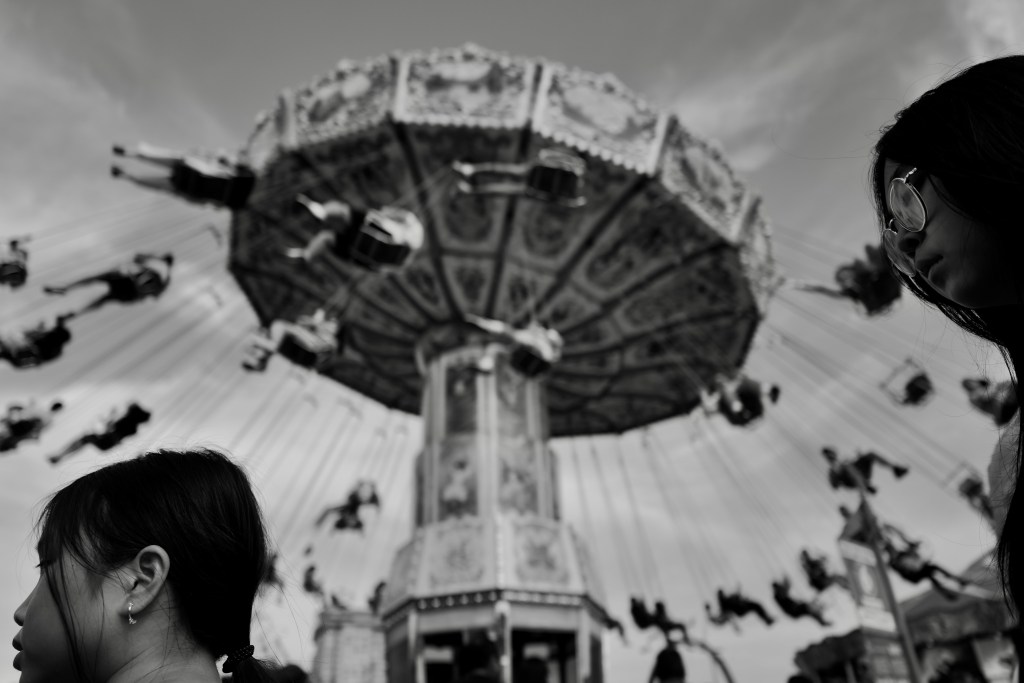
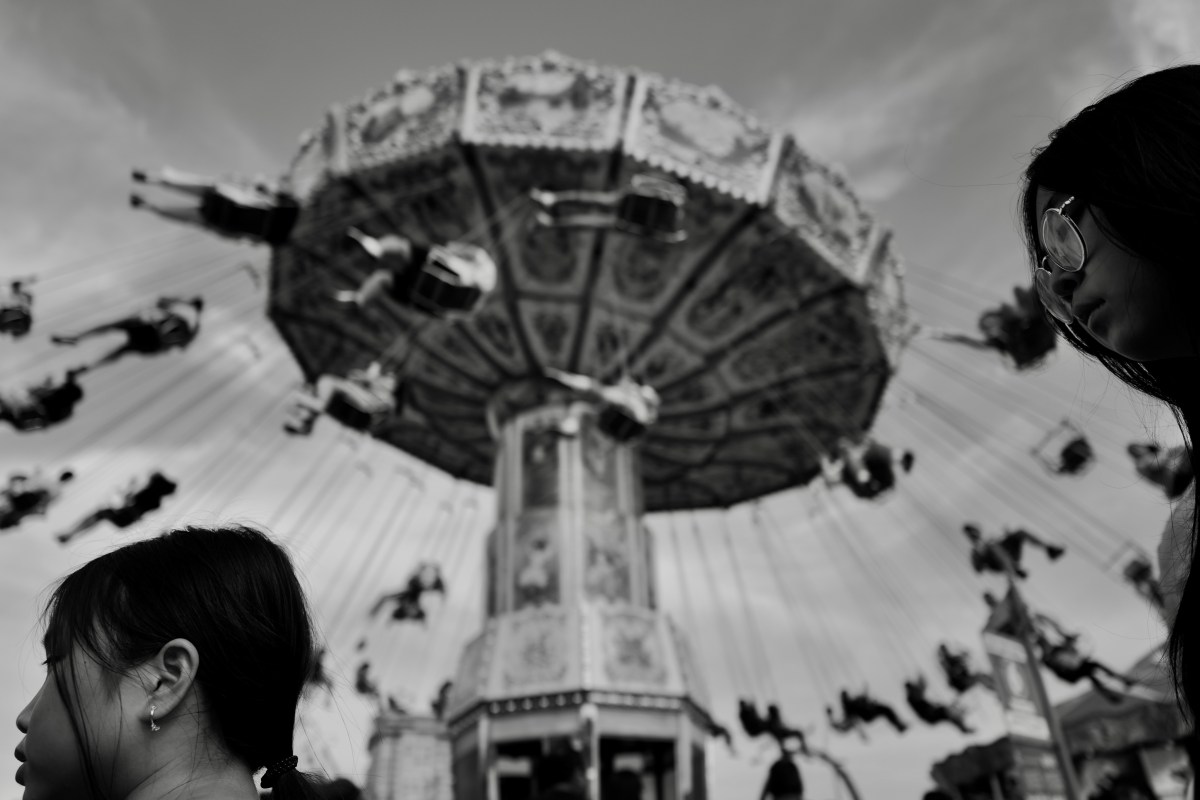
Princess & Nunavut (CNE), Toronto, 2024

Those are my own 10 tips — what tips would you give a younger version of yourself, today, based on your experiences to date?


  1. If you just want to use the kit lens that came with your camera — likely a zoom lens — then just set it to a single fixed focal lens and restrict in in place with some electrical tape. ↩︎
  2. Of course, if you are just taking creepy shots of people — such as some street photographers who use massive zoom lenses to exclusively take long distance photographs of attractive people — then this will just “out” you and what you’re up to. Don’t be one of those people! ↩︎
Categories
Photography

Accidentally Discovered Street Photos

I recently purchased Conversations with Contemporary Photographers, following my recent reading of On Street Photography and the Poetic Image. As a bit of a surprise, I discovered that my recently purchased book included a strip of exposed Kodak 100TX film. I don’t think I’ve actually seen or held a strip of physical film before and I certainly haven’t ever tried to digitize it before today.

Given that this was a bit of a lark I ended up using Filmbox to create quick digital scans. This is a an iOS application where you hold the film a few inches away from a white screen and, then, use the application to capture any given frame.

I can’t claim that the process is perfect nor that the results are spectacular. But they do have the effect of letting me see more clearly what the different frames on this thing strip of film more clearly look like.

None of these photos were made by me. I have no idea where they were made. But I suspect the film is from within the past 20 years or so, based on the clothing when when the book was published. All of them are reproduced, below, with the only ‘edit’ being to fully convert them to black and white.

Categories
Photography Writing

Sharing Photographs, and Photography, with Others and Growing as a Photographer

Great Lakes Waterfront Trail, Toronto, 2024

Like many other photographers I regularly share my images through a social media platform. I also sometimes post them on this website. And that’s fine and good. And because it’s so normalized it feels very safe; while I might get positive comments from other users it’s the not the same as sharing my work where it might be assessed or publicly reviewed by people who are far more experienced by me, and where those considerations might she shared with a very large set of viewers.

Over the past year I’ve tried to push myself out of my comfort zone. I’ve been more active in thinking about street photography and sharing it with a part of the photographic community — the Photowalk Show — and then sometimes having those thoughts shared with Neale James’ other listeners. I submitted a few photos to a competition for the first time. I described for the first time the motivations and philosophy that underlie my street photography to a (friendly) group of strangers while also sharing an associated sequence of my photographs. I’ve had one of my photos highlighted in a roundup by Glass. And so on.

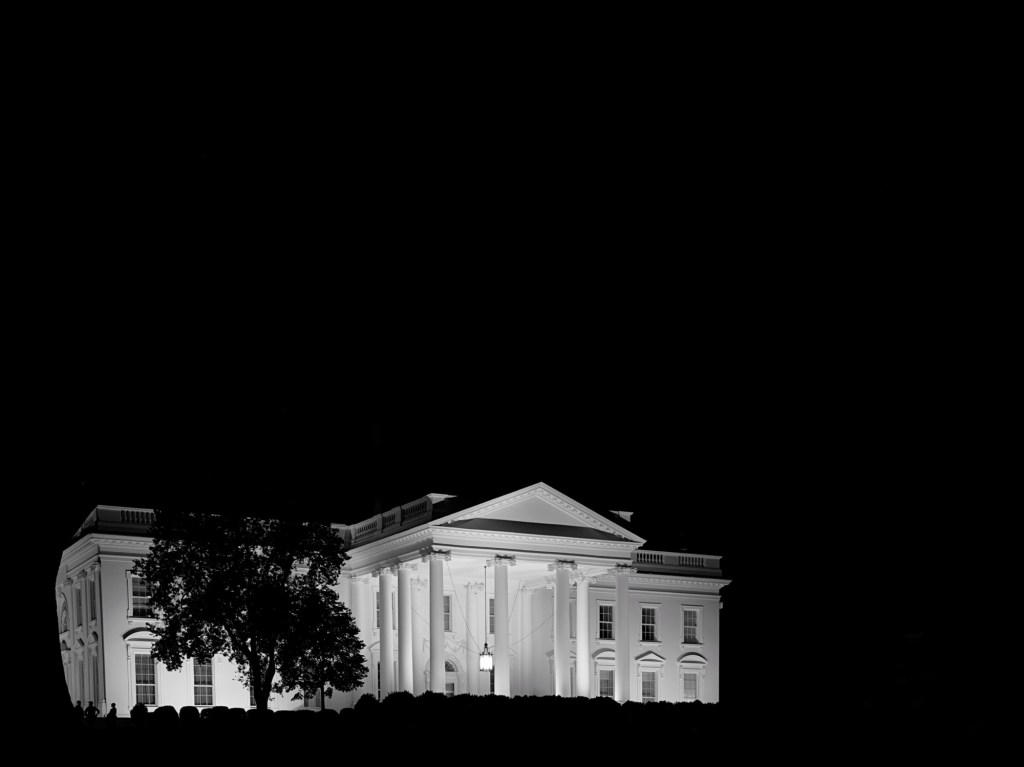
The White House, Washington, DC, 2023

But the scariest thing has been associated with my postcards project. To be clear, actually printing those postcards wasn’t scary at all! But actually sending them to people — with the prospect they would look at a cohesive bit of my work and then offer commentary to potentially hundreds or thousands of people — has been intimidating because it constitutes an exposure of my amateur photography to an otherwise unknown set of publics.

Crescent & Cluny, Toronto, 2024

I’m not afraid of publicity or engaging with publics. I’ve been very involved in public life for the past 15 years, and am as comfortable speaking with leaders of government or other senior leaders as I am appearing on television and speaking to tens or hundreds of thousands of people. But the sharing of my photographic hobby is different because it isn’t a domain where I’m a well-credentialed expert: I’m very much a learning amateur when it comes to photography. While I take my hobby very seriously I don’t have the skills or experience that parallel those of a more seasoned or professional photographer.

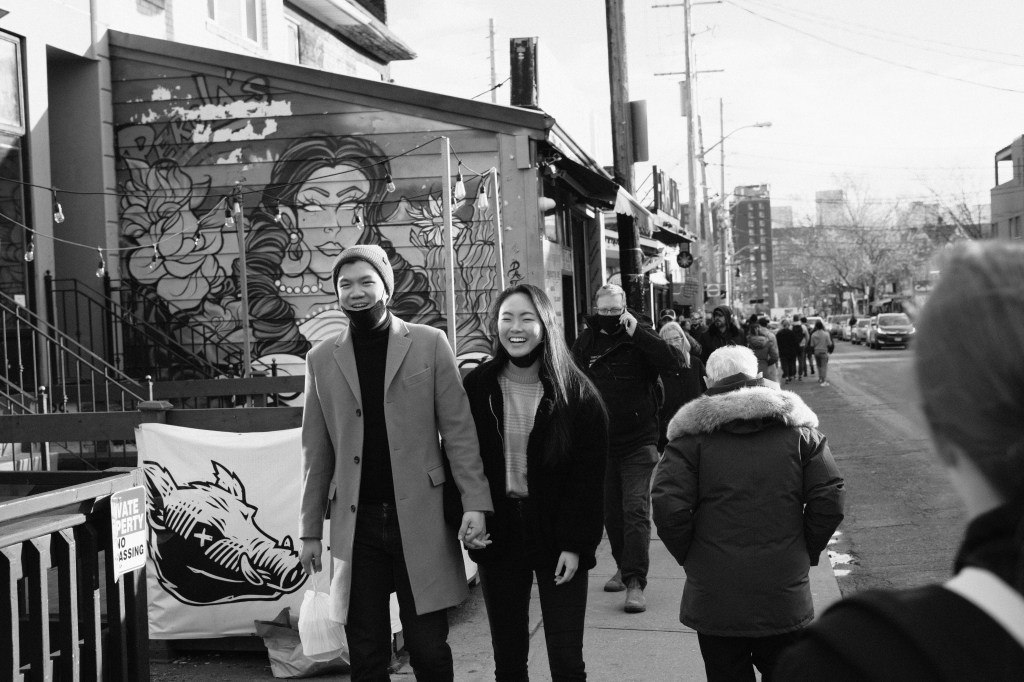
Yonge & Dundas, Toronto, 2024

I recognize that sharing my work, be it with Neale James and his Photowalk Podcast, or with Ted Forbes and his Art of Photography YouTube channel, has been a real step for me. It represents my ever deepening appreciation for the art form and my starting to explore ways of more broadly sharing my work, as well as developing increasing confidence in what I’m making. I’ve got an long way to go in deepening my expertise in making the kinds of photos I want to make but I feel more confident in what I’m doing, today, than I did even a year ago.

Categories
Photography

Featured Photograph: ‘Urban’ in Glass’ Monthly Category Showcase

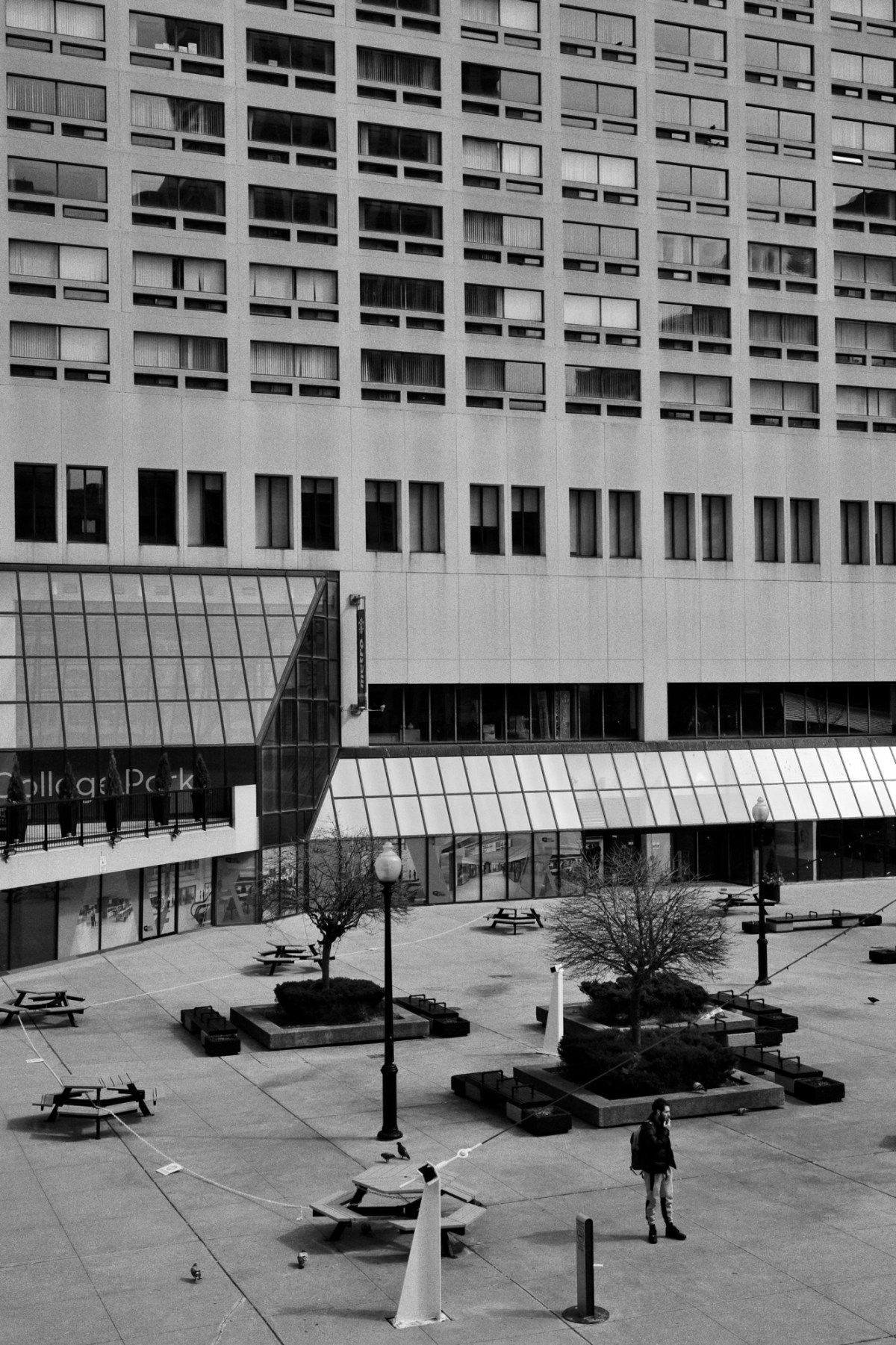
Each month Glass has a different featured photographic category. In March, a photograph I took of College Park was amongst the many excellent images that photographers published to the platform throughout the month in the ‘Urban’ category.

A feature of my street photography is to showcase lone humans in busy metropolitan areas. For context, College Park is surrounded by condos and rental apartments, and is located by a major subway stop; I suspect it’s amongst the denser parts of the city. Nevertheless I was able to catch this lone figure and the ever-present pigeons when I was running to a grocery store to get a few things.

I don’t know that I, personally, consider this to be the best image I made in March. But it definitely is very reflective of the types of images I’ve been making and so is representative of a particular body of work that I continue to develop.

For those interested, this was made using a Ricoh GR iiix. I use a custom monochrome jpeg simulation, applied minor edits in Apple Photos, and cropped the image slightly so it is 20 megapixels as displayed.

Categories
Photography Writing

Tecumseth & Niagara, Toronto, 2023

Tecumseth & Niagara, Toronto, 2023

Toronto is a city of destruction and construction: destruction of the previous era’s architecture (and often industrial buildings) and the construction of housing or glass office towers in their stead. This image by Tecumseth & Niagara shows the destruction of an abattoir that was removed to make room for condos, and the buildings in the background are new rentals in Toronto’s Liberty Village. When I landed in Toronto, in Liberty Village over a decade ago, the land those rentals are on were home to a few artist spaces where the big Toronto samba schools practiced and massive parade puppets were made. Nothing has replaced those artist spaces, to the detriment of artists across the city.

Weirdly I have very intimate memories of the abattoir. Toronto hosts an annual sunset-to-sunrise art festival, Nuit Blanche, and a couple interesting art exhibits were hosted at the abattoir over the years, and I have photos of them that I regularly return to re-experience. After the buildings were designated for destruction a number of community vegetable gardens were maintained on the outside lots. It was always a striking place to come and make images, and was a reminder of the Toronto-that-once-was and was yet-to-become.

For many street photographers, we take images and it is decades later that ‘difference’ is registered because many cities take a long time for major changes to become visible. It’s part of why the habits of the population —what people are wearing, holding, or driving — resonate so strongly with viewers; people and culture change while the built environment persists.

Toronto, by way of contrast, is in a moment of hyper-growth and so an attentive and active street photographer can document things today that may literally be different tomorrow. It turns the street photographer, almost by default, into an urban documentarian. And, also, is one of the many reasons why I think that Toronto offers a subset of street photographers a real opportunity to do novel and rapidly impactful work, as compared to those working in cities that aren’t undergoing the same tempo of destruction and re-construction.

Categories
Photography

Print Day!

Bay & Queen, Toronto, 2023

A friend identified a series of photos I’ve made over the past year that they wanted to have as prints. The matte prints all came in yesterday, and I was really pleased at how well Annex Photo made them.

Bathurst Station, Toronto, 2023

I hade three prints made, one from my Ricoh GRiiix (uncropped, 10×15), one from my Fuji X100F (cropped to 17MP, 10×15), and one from the telephoto on my iPhone 14Pro (9MP, 8.5×11). When I’ve shown the prints to others they can’t tell which camera made which image, nor do they see any notable quality difference between the prints.

Spadina & Grange, Toronto, 2023

Now all that’s left is to package and mail the prints to their owner!

Categories
Photography

Postcards Project: January 2023

In the late fall of 2022 I decided that I’d turn one of my street photographs into a postcard for each month of 2023. I just received my proofs for 2023 this week and I’m happy with them; the full order will be made in the next week or two.

I also, however, will be posting the preceding year’s images to Excited Pixels. So, this January I’m posting the January 2023 photograph, in February I’ll post the February photograph from February 2023, and so on.

In addition to the street photograph that was made into a postcard I’ll also be publishing my favourite landscape/streetscape from that month. Despite making a reasonable number of landscapes/streetscapes, this will be the first time that I regularly publish some of them.

January 2023: Streetscape

University of Toronto , Toronto, 2023

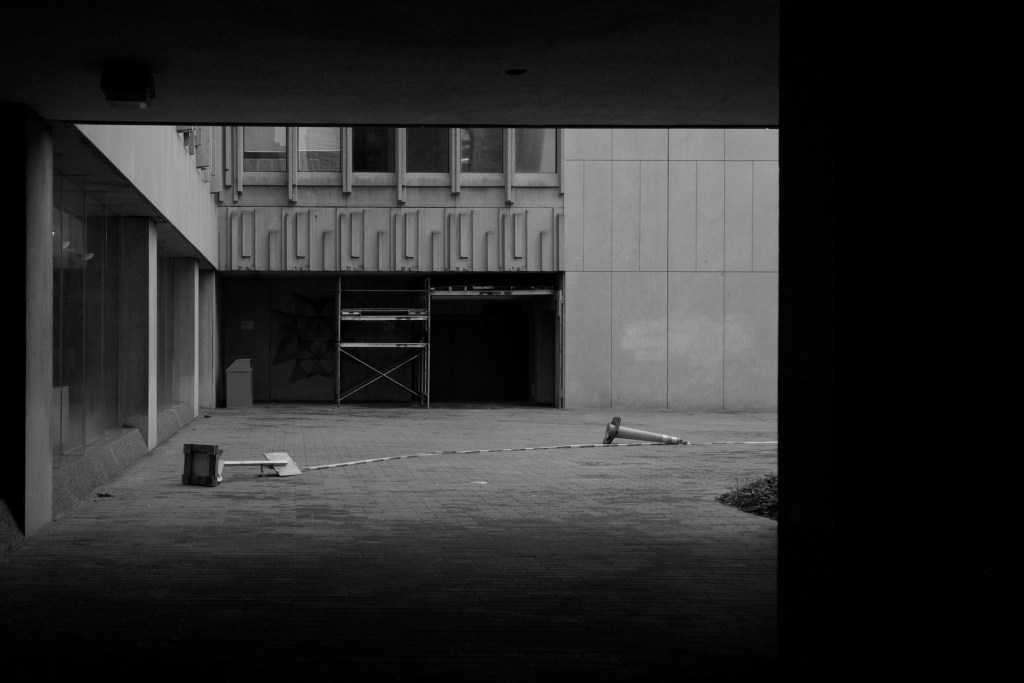
I made this image of an under-construction part of the University of Toronto in my last few weeks employed with the institution. It is, in many ways, a deeply personal photo that reflected my passage to a new space. The tape and barriers being knocked over was figurative, in the sense that what once was a warning to keep me away was now a path to follow out of frame, and into new experiences and adventures after working with the same employer for almost a decade.

January 2023: Street Photograph

Richmond & Bay, Toronto, 2023

This photo was made January 1, 2023 and it remains one of my favourites. The emotion in the subjects’ face draws me in and the steam and garbage lends this part of the city (home to the country’s largest banks, stock exchange, and other financial and legal institutions) a kind of grittiness that belies its proximity to wealth and power. The photograph, also, speaks of how you can build a story in a frame that might look one way, but which doubles in meaning and context once grounded in the space and time wherein it was made.

I kept coming back to Bay and Richmond throughout the year and was regularly rewarded with rich images. The fluidity of the location, with updates to the built infrastructure in the form of temporary construction scaffolding, and the steam emerging from vents in this party of the city, just made it fun to keep coming back to.

Categories
Aside Photography

2024.1.20

Throughout 2023 I sorted the photographs I made with the intention of choosing one, from each month, to use in a limited run of postcards. All are street photos from around Toronto. I just ordered some proofs and I can’t wait to see them in the next few weeks ahead of doing a full print run!

Categories
Photography Writing

Best Photography-Related Stuff of 2023

There are lots of ‘best of’ lists that are going around. Instead of outlining the best things that I’ve purchased or used over the year I wanted to add a thematic: what was the best ‘photography stuff’ that I used, read, watched, or subscribed to over the course of 2023?

Photography Stuff I Used

Best Technology of 2023

90-95% of the photographs that I made over the year were with the Fuji X100F. It’s a spectacular camera system; I really like how small, light, and versatile it is. I created a set of recipes early summer and really think that I dialled in how to use them and, also, how to apply my very minimal editing process to the images. I’m at the point with this camera that I can use it without looking at a single dial, and I know the location of every setting in the camera that I regularly use.

I do most of my writing on my well-used iPad Pro 11” (2018). It’s a great device that is enough for 99% of my needs.1 However, I have to admit that I’ve long missed owning an iPad Mini because they’re so small and light and portable. I do pretty well all of my reading on the iPad Mini these days. My partner purchased me one this year and I’ve fallen in love with it again. I’m using it everyday for an hour or more, and ultimately I now pull out the iPad Pro 11” just when I need to do longer-form writing.

Finally, though I haven’t had it all that long, I really do enjoy the Leica Q2. I’m still getting used to the 28mm focal length but deeply appreciate how I can now shoot in bad weather and low light.2 The in-camera stabilization is also letting me experiment with novel slow shutter speeds. I remain excited, however, for what it’ll be like to use the camera when I haven’t been in persistent cloud cover!

Best Services I Paid For

I have kept using Glass each and every day. Does it (still) have problems with its AI search? Yes. Does it have the best photographic community I’ve come across? Also yes. You should subscribe if you really love photography and want to contribute to a positive circle of practice. And if you’re watching a lot of photography-related materials on YouTube I cannot recommend a Premium subscription highly enough!

I also am deeply invested in Apple’s services and pay for Apple One. This gives me access to some things that I care about, including a large amount of cloud storage, News, customized email, Apple Music, and Apple TV. I find the current costs to be more than a little offensive–Apple’s decision to raise costs without increasing the benefits of the service was particularly shitty–but I’m deeply invested in Apple’s ecosystem–especially for storing my photographs!–and so will continue to pay Apple’s service tax.

Best Apps

I use lots of apps but the best ones I rely on for photography include:

  • Podcasts App to listen to the different podcasts to which I’ve subscribed.
  • Reeder for staying on top of the different blogs/websites I’m interested in reading.
  • Glass to look at, comment on, and reflect on photographers’ images.
  • Geotags Photos Pro and Geotags Photo Tagger. I’ve set the former app to record my geolocation every 5 minutes when I’m out making images and the latter to then apply geotags to the photographs I keep from an outing.3

Stuff I Read

Best Photography Books

Most of the non-fiction books that I read throughout the year were focused around photography. The two best books which continue to stand out are:

  • Bystander: A History of Street Photography. This book does an amazing job explaining how (and why) street photography has developed over the past 150 years. I cannot express what a terrific resource this is for someone who wants to understand what street photography can be and has been.
  • Daido Moriyama: A Retrospective. This book is important for all photographers who are interested in monochromatic images because it really explains why, and how, Moriyama made his classic images. It reveals why he made his gritty black and white images and, also, why some of the equivalent ‘recipes’ the mimic this kind of image-making may run counter to his whole philosophy of image making.

Stuff I Watched

Best Movies

The best photography-related movies that I watched were all classics. They included Bill Cunningham: New York; Gary Winogrand: All Things Are Photographable; The Jazz Loft According to W. Eugene Smith; and Ordinary Miracles: The Photo League’s New York. Combined with written history and photo books they helped to (further) reinforce my understanding of how and why street photographers have made images.

Best YouTube Channels

I watch a lot of photography YouTube. The channels I learn the most from include those run by James Popsys, Tatiana Hopper, EYExplore, Alan Schaller, Pauline B, aows, Aperture, and Framelines. My preference is for channels that either provide POV or discuss the rationales for why and how different images are being (or have been) made.4

Stuff I Subscribed To

Best Podcasts

I tend to listen to photography podcasts on the weekend when I go out for my weekly photowalks. The two that I listen to each and every week are The Photowalk and The Extra Mile. It’s gotten to the point that it almost feels like Neale James (the host of the podcasts) is walking along with me while I’m rambling around taking photos.

Aside from those, I’ll often listen to A Small Voice or The Candid Frame. These are interviews with photographers and I regularly learn something new or novel from each of the interviews.

Best Blogs/RSS Feeds

For the past year I’ve trimmed and managed the number of my RSS feeds. I keep loving the work by Craig Mod, Little Big Traveling Camera,5 and Adrianna Tan’. They all do just amazing photoessays and I learn a tremendous amount from each of them in their posts.

Biggest Disappointments

I somehow managed to break the hood that I’d had attached to my Fuji X100F in the fall and decided to get what seemed like a cool square hood to replace it. It was a really, really bad idea: the hood was a pain to screw on so that it wasn’t misaligned and, once it was aligned, was on so tight that it was very hard to remove. I would avoid this particular hood like the plague.

I also bought a Ricoh GR IIIx and while it’s a fantastic camera I just haven’t used it that much. I didn’t take as many images with it as I’d hoped when I was walking to or from work, and really ended up just using it when I needed to go out and take photos in the rain (I kept it safely hidden under my umbrella). Also, the camera periodically just fails to start up and requires me to pull the battery to reset it. Is it a bad camera? Nope, not at all, and I did manage to capture some images I was happy with enough to submit to Ricoh’s photography contest. But it’s not a camera that I’ve really fallen in love with.

Finally, while I use my AirPods Pro all the time I really don’t like them because I cannot get them to stay in my ears unless I purchase third-party foam tips. And I need to keep purchasing new sets of tips because they wear out after a couple of months. Are they good headphones once they stay in my ears? Yes. But the only way to accomplish that is becoming increasingly costly and that’s frustrating.

Conclusion

Anyhow, that’s my list of the ‘best photography-related stuff’ I’ve used in the course of 2023. What was your top stuff of the year?


  1. I really do want to get a new iPad 11” and will do so once they update the screen. I edit pretty well all of my photos on the iPad Pro and an updated screen (and battery…) would be lovely. ↩︎
  2. There is a caveat that I’ve found: the electronic shutter is absolute garbage for shooting at dusk/in the dark with LED lights. And I think the single-use exposure dial on the Fuji X100F is preferable to the configurable dial on the Q2. ↩︎
  3. You can set the app to record your location more regularly but I’ve found this to be a good balance between getting geolocation information and preserving my phone’s battery life. ↩︎
  4. If you watch a lot of YouTube then I recommend that you pay for a YouTube Premium subscription. You’ll cut out the frustrating advertising that otherwise intrudes into the videos. ↩︎
  5. I think that this is perhaps the single best photography blog that I’ve found. I aspire to this level of excellence and regularity of updates! ↩︎