Categories
Links

Telecoms move in right direction on privacy: Editorial

Telecoms move in right direction on privacy: 

It’s important to note that, while warrants will be required for police, they won’t necessarily be required for any agencies that already enjoy statutory authority to request information from telecommunications companies. So security agencies will continue to access data, often without warrant, despite what the Star has written.
Categories
Links

Police and bylaw enforcement may be tracking your licence plate for parking data

Police and bylaw enforcement may be tracking your licence plate for parking data:

Calgary resident Linda McKay-Panos doesn’t venture downtown often, but a city database knows where and when she parked her car during 10 visits over the past four years.

Each day, parking enforcement officers drive the city’s streets in cars equipped with cameras designed to scan licence plates and identify parking scofflaws. Even if no violation has been committed, the city still holds on to data showing the time and location the vehicle was spotted, as well as a photo of the vehicle.

As use of licence-plate scanning technology grows in Canada among bylaw enforcement agencies and police departments there is no consistency as to how long such data is retained or who it’s shared with.

The technology is becoming a “mass surveillance” tool and demands better oversight, said Christopher Parsons, a post-doctoral fellow at the University of Toronto’s Citizen Lab specializing in technology and privacy issues.

“It doesn’t matter that there are positive intentions behind this. It’s a surveillance system,” he said.

Even if police have a reason to sift through the stored data, the fact that the data consists of plate information belonging to people who are innocent of wrongdoing is troublesome, Parsons said.

“I don’t think people go around their daily lives with the expectation that my movements are going to be monitored because at some point in the future I may be of interest to the police.”

The whole article is important, and worth the read, and discloses the massive variance in how vehicular surveillance is happening across Canada.

Categories
Aside Links

Emergency surveillance bill clears Commons

Emergency surveillance bill clears Commons:

This ‘emergency’ follows the European Court of of Justice finding that mass data retention laws in Europe are illegal. In response, the UK government is passing a localized data retention and surveillance bill.

Significantly, the government has stated that:

The government has insisted the ruling throws into doubt existing regulations, meaning communications companies could begin deleting vital data. Ministers claim the bill only reinforces the status quo and does not create new powers.

At issue is that the existing status quo has been deemed illegal. And yet, in response, Parliament has decided to pass more – still illegal – legislation. And so civil liberties groups will bring this into court, spend years fighting, only to have the legislation overturned. And after which, government will likely pass similar, still illegal, legislation. And the wheel of politics will turn on and on and on…

Categories
Quotations

2014.7.12

At a more domestic level, UK communications providers are worried that they could be exposed to legal action because of the unlawful mass surveillance that they were party to – even though on the whole they wanted no part of it.

Well, more precisely, many comms providers wanted no part of it unless the government picked up all the costs (older readers familiar with US law may recall the CALEA legislation that forced communications companies to make their technology wiretap friendly – with much the same response from companies).

There is a view that if the liability for unlawful surveillance rested entirely with the government, there would be no appetite for this legislation. Britain long ago elevated its institutional vandalism of EU legal rights from a science to an art, and then to a sport.

Simon Davies, “ Britain takes the Uganda Road to legalise and extend state surveillance”
Categories
Aside

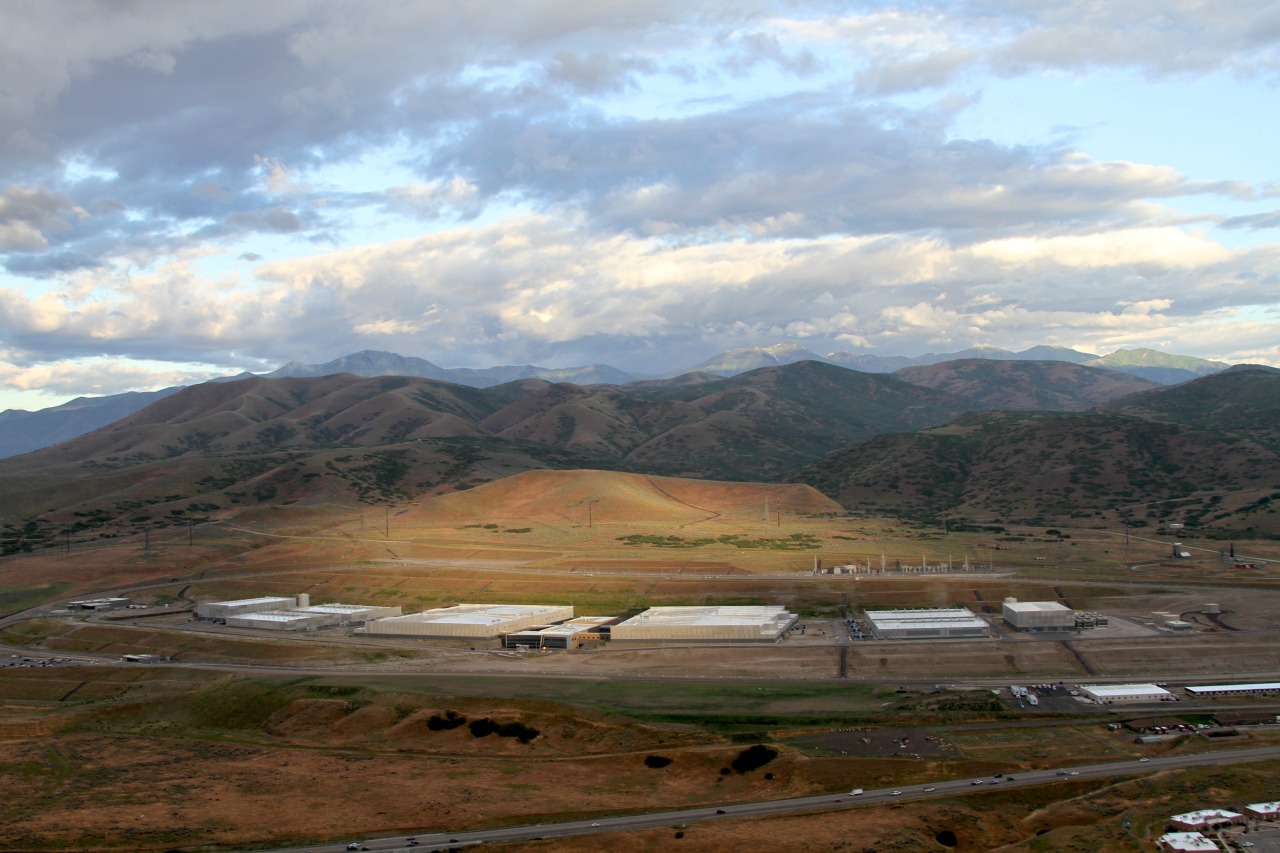
The NSA’s Utah data centre

The NSA’s Utah data centre, as taken by the EFF.

Categories
Links

Privacy and surveillance: Eight things every Canadian should know

Last night CJFE hosted a panel discussion, “Should Surveillance Scare You?” at the NOW Lounge in Toronto.

The event, moderated by Toronto Star National Security Reporter Michelle Shephard, featured Christopher Parsons, a post-doctoral fellow at the Munk School’s Citizen Lab, in conversation with Wesley Wark, a visiting professor at the University of Ottawa’s Graduate School of Public and International Affairs. The panelists lent their voices and views to the emerging debate over issues of surveillance, intelligence, and national security in a Canadian context.

Below are eight key takeaways from the conversation, which addressed everything from why Canadians should care about surveillance to what you can do to protect yourself online.

Categories
Links

Ars tests Internet surveillance—by spying on an NPR reporter

Ars tests Internet surveillance—by spying on an NPR reporter:

This is an absolutely terrific piece of technical journalism. If you ever wanted to know the significance of the data that ‘leaks’ from your phone, laptop, and other computing devices then this is an absolute must-read piece.

Categories
Links

34 International Experts Weigh in on Mass Surveillance on Snowden Anniversary

34 International Experts Weigh in on Mass Surveillance on Snowden Anniversary:

Today, a group of over 400 organizations and experts, along with 350,000 individuals, continue to rally in support of the 13 International Principles on the Application of Human Rights to Communications Surveillance (the Necessary and Proportionate Principles) a year to the day after Edward Snowden first revealed how governments are monitoring individuals on a massive scale. The international experts who supported the Necessary and Proportionate Principles has issued a press release containing quotes from professions weighing in on the need to end the mass surveillance.

Christopher Parsons, Postdoctoral Fellow, Citizen Lab, Munk School of Global Affairs, University of Toronto (Canada):“The past year has revealed that dragnet state surveillance has enveloped the world despite our nations’ privacy and data protection laws, laws that have demonstrably been diminished, undermined, and evaded by privacy-hostile governments over the course of the past decade. It is critical that we take the initiative and work to better endow our privacy commissioners and data protection regulators with the powers they need to investigate and terminate programs that inappropriately or unlawfully invade and undermine our individual and collective rights to privacy.”


Categories
Videos

They Knew Our Secrets. One Year Later, We Know Theirs.

Categories
Links

Critics decry new Privacy Commissioner’s appointment

Critics decry new Privacy Commissioner’s appointment:

For the letter the civil liberties groups, academics, and concerned citizens signed onto, see this .pdf