
Categories
Lines

Policy wonk. Torontonian. Photographer. Not necessarily in that order.

One of the most important things that we can do is surround our lives with things, events, and people which bring joy to our lives. I think that it really matters that when you get up that you’re immersed in whatever it is that excites you: it makes hard days easier, and easy days that must more enjoyable.
Part of the reason that I’m interested in photography is to capture, and bring home, such moments of joy. That doesn’t mean that all photos have to be about babies and weddings but, instead, that whatever is captured resonates with my soul in a way that moves me. It also means that I’m delighted to support other artists who generate art that brings a sense of joy to my life. That doesn’t mean spending thousands of dollars on pieces1 but, instead, being slow and careful and meticulous in amassing a collection of pieces that I fall in love with each time I see them.
But I was bad last year: I didn’t print enough of my own photos and while I was buying art I didn’t immediately have ways to display it that brought the works to life.
So over the past few weeks I’ve invested in new frames to bring those pieces to life. I’m super excited to see what they’re like up on my walls and, in the process of getting everything ready, I’m also that much more interested in acquiring some additional frames — both small and large — so that I can print and view more of the photos that I’ve taken over the past few years.2
I really love the experience of waking up and having everything on the walls bring a smile to my face (or a tear to my eye, in the case of some family photos): there is a sense of life that occurs when our domiciles are filled with our memories. I’m looking forward to putting more of them on my walls.
“What you do makes a difference and you have to decide what kind of difference you want to make.”
- Jane Goodall
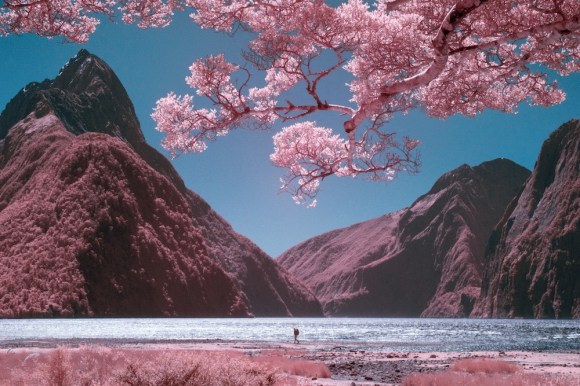
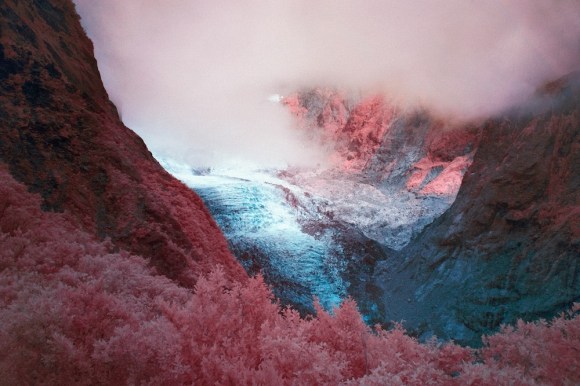
I’m just blown away by some of the shots taken by Paul Hoi in New Zealand, where he used an infrared camera to transform the green landscapes into a gorgeous, if alien, pink-toned wonderland.

As I return from an event I was invited to I have to reflect on, and admit, how profoundly…weird…it is that stuff I write about and the activities in which I’m engaged increasingly influence the course of justice in my county. How weird it is that the leader of my country is briefed on the work that I and my colleagues write about. How it feels epically strange that things which seem to have no impact on public debate whatsoever reverberate behind closed doors. It’s just really, really weird to know that people who are intrinsically involved with law, security, and justice — to say nothing of policy and politics — closely watch what I do, with the intent of using it when making decisions that may affect the lives of people across Canada, and around the world.
When I was doing my PhD I laughed out loud at my colleagues who spoke of how the work of political scientists can lead to exceptional impacts in the worlds. As a philosopher I thought such conversations were borne of a group of people who took themselves too seriously in their (ongoing) moments of hubris. But I get it now: that which we say, when we’re deliberately involved with public debate with an eye to inform (if not influence) policy can have unexpected and exciting and unintended impacts on the lives of millions of people. And in living this reality I have remarkably more sympathy for those who’s work isn’t just read and taken up, but misread and subsequently misappropriated to justify governmental activities that the political scientists in question might not have anticipated or endorsed.
It’s airline travel day! Which means purging data from my devices, ensuring I’m unable to get into accounts at the border, etc. Plus setting up communications times to let my employer know I’ve arrived, any issues that cropped up in transit, and whether a new phone or other device needs to be purchased in case my devices are removed from my sight/taken for analysis. Airline travel days are so much fun.
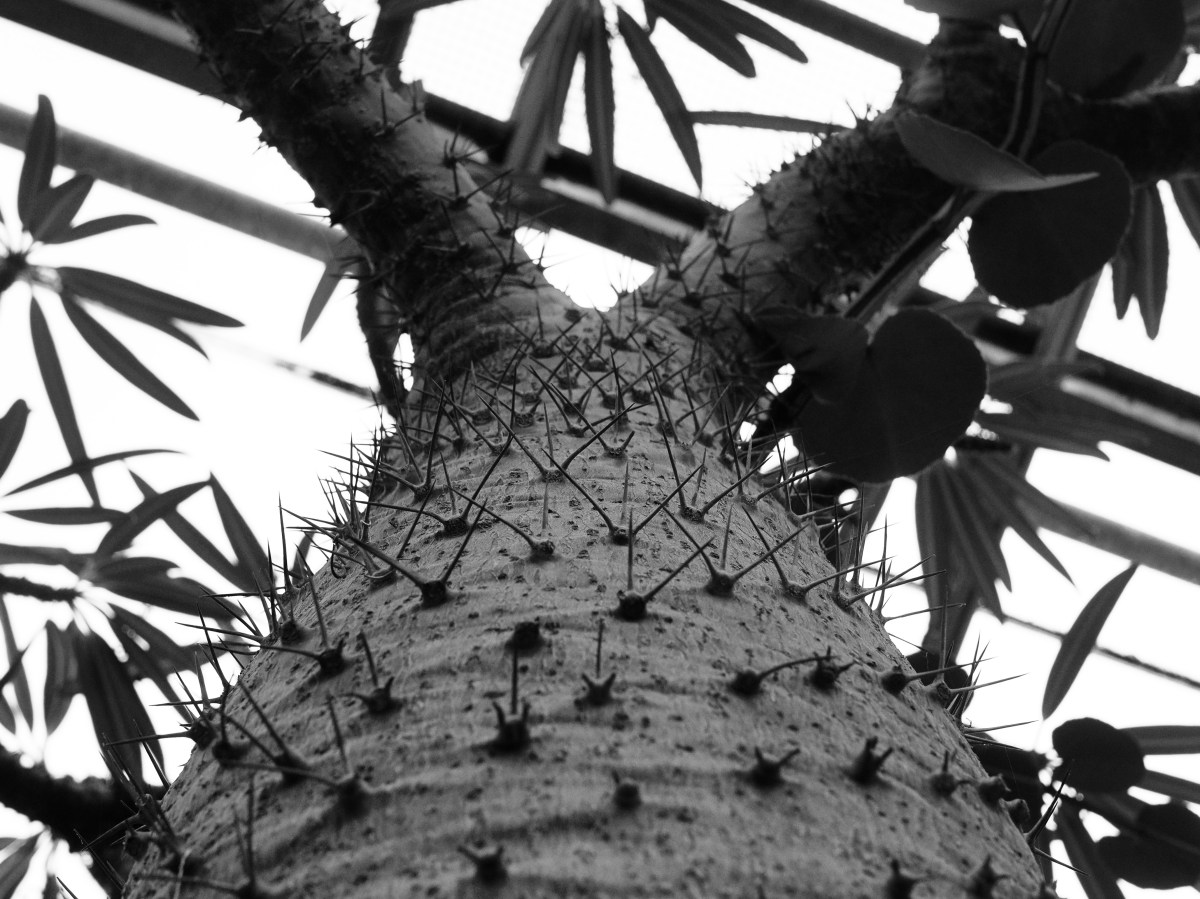
There are a lot of different ways that you can challenge yourself to a photowalk. Use specific lenses or focal lengths or creative formats. Walk a predetermined distance and take a hundred photos from that site. Shoot black and white, mobile only, or focus on a concept, colour, or number.
I think I have a challenge that’s a bit different.
Recently I planned a photowalk to wander along a river in Toronto and, along the way, shoot some sculptures I’ve wanted to look at for the last several months. I got ready to head out, threw my camera over my shoulder, and walked out of my building and into a light drizzle of rain.
The low chances of rain had turned into the reality of rain, and it was only starting to come down harder. Without weather sealed gear there was no way I was going to be walking a few kilometres in the rain and shoot.
I quickly rerouted to an enclosed botanical garden that I live nearby. And pulled out my 12-42mm 3.5-5.6 II R kit lens and started at one end of the gardens and walked all the way to the other end.
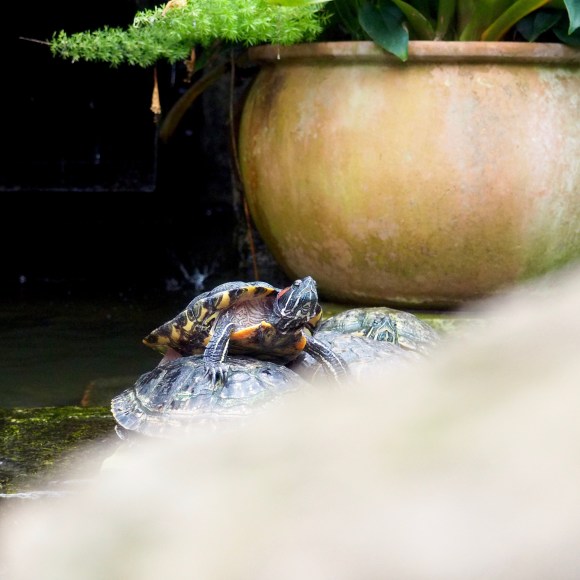
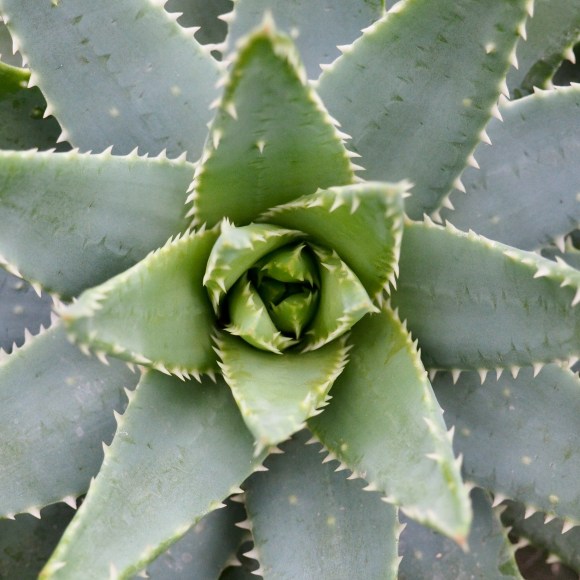

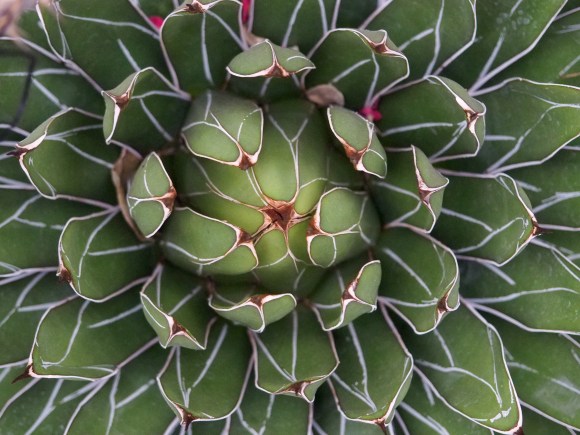

I then swapped out my lens for the Panasonic 25mm 1.7 I had with me, and proceeded to walk all the way through the gardens once more. The shots I got tended to be different from the zoom lens, and forced me to think about what was differently possible to shoot with the prime lens compared to the short zoom.
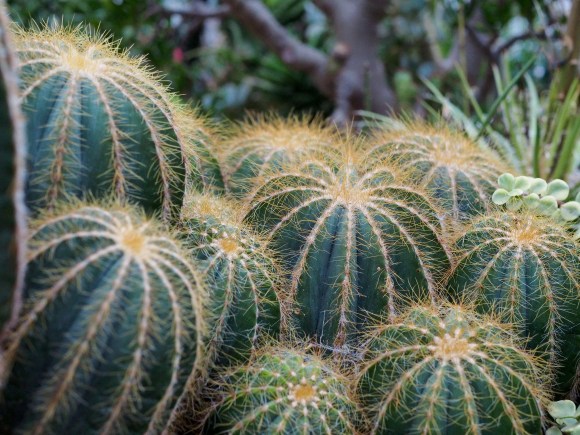
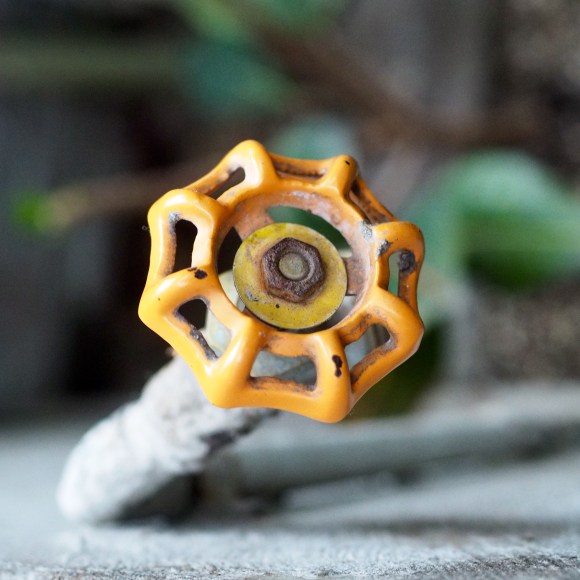
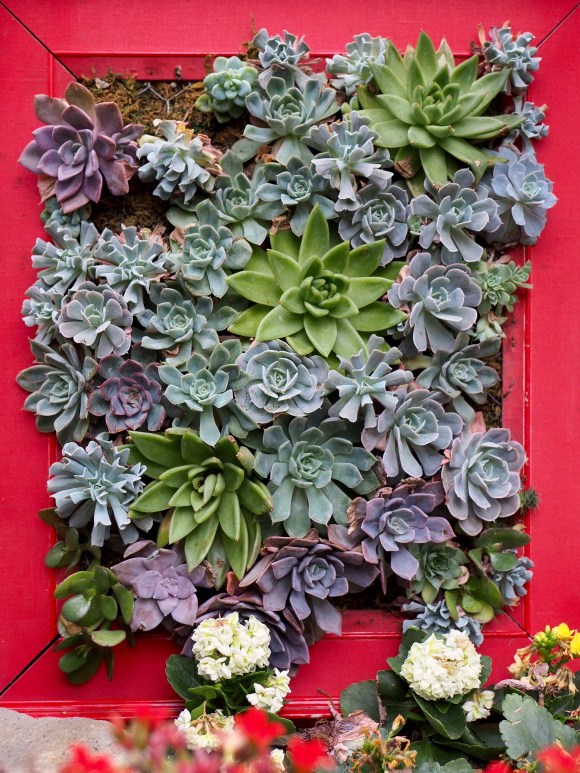


Once I’d walked the length of the gardens once more I passed through it one last time, this time with my Olympus 40-150mm 4.0-5.6 R. This is definitely not the lens I’d normally use for this kind of shooting environment. And that meant that I was forced to really try with the lens and make it perform in a space in which I’m not comfortable using it.
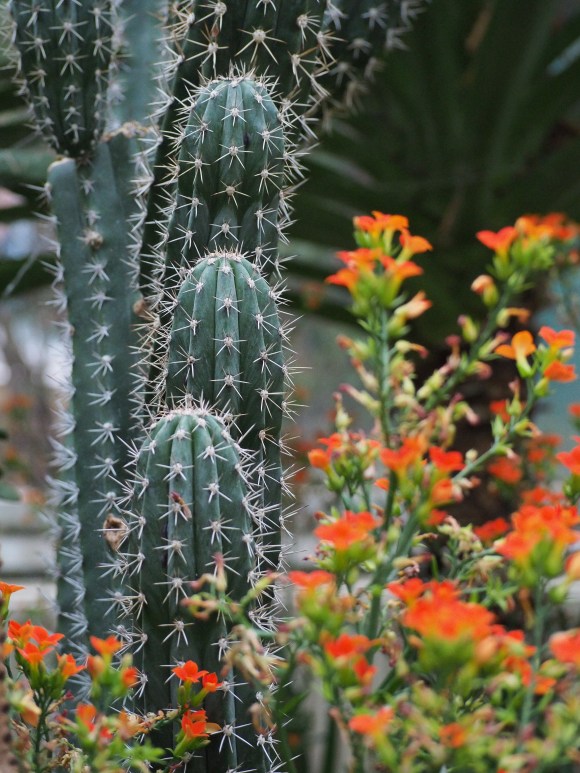

What did I take away from this? That by walking the same space with different lenses possessing different characteristics I saw the space and photographic opportunities differently. It also was a useful exercise in just visualizing the possible: what shots was I willing and able to experiment with based on the lens at hand? What kind of shot — architecture or natural environment – captured my imagination with the different lenses?
The shots shown above are those that I was most happy with. There were, obviously, far more that got deleted (especially from the 40-150mm!). It was a fun opportunity, and a challenge I suspect I’ll revisit in the future.
A bunch of frames are now inbound and will be delivered mid-week. I’m looking forward to putting the art I’ve collected in the past few months up on the walls!

We generate a vast amount of digital exhaust which imperceptibly lingers around us. The metadata and content that’s left behind us is typically regarded as harmless until it’s used or abused, or until it’s misappropriated by someone.
Part of this exhaust follows from our regular shifting between services as our tastes, interests, attitudes, ambitions, and desires change. Social media platforms are adopted and abandoned. Fitness tracking systems that were exciting one year are dull the next and then forgotten, with the tracker consigned to a trash bin or electronics drawer and data residing in perpetuity with whatever service was collecting it. The data we’ve contributed to all those services lingers: it can come back to haunt us in ways we don’t understand or appreciate when signing up for the service, and it can be challenging to undo the associated harms when they befall us.
As part of my ongoing effort to clean up some of the exhaust I’ve left behind, I deleted an old Fitbit account a few weeks ago. It was a bit annoying — you need to contact support, click yes to some emails, and then support will delete the information — but after ten minutes or so the account and its data was consigned to the dustbin of the Internet. Similarly, I blew away over 32,000 tweets this week. I left the last six months data behind or so, but it means that there’s a long trace of exhaust that’s gone.1 And I’ll be undertaking similar operations for the rest of the year, or at least so I’ve planned.
In the case of the Fitbit data, it now rests securely in Apple Health, giving me a broader understanding of changes to my fitness activities than I previously enjoyed. I downloaded a copy of my tweets before wiping them away. And for personal blogs, I’m either consolidating them here or into a semi-local digital journal so I don’t lose what I’ve previously written. But if I’m serious it’s unlikely that I’m going to re-read (that many) of my old blogs. And I’m not looking at daily variations between today’s fitness regime and that of 2008. The data could do a lot more in other persons’ hands to harm me than in my own hands to benefit me, especially as I’ve moved away from where those blogs were active and the fitness communities where members engaged with one another.
The only thing that bothers me is that, in removing things from the Internet, I’m breaking the links that were inbound to those respective pieces of content. But…did anyone really link back to old tweets and, if they did, do I have a responsibility for their linking to what I tend to perceive as off-hand comments? Do I have to maintain and support now long-abandoned accounts on the presumption that someone might someday want to follow a link?
For a long time I would have said ‘yes’ to either of those statements. But I just don’t think that that’s a healthy attitude: humanity forgets. And then we rebuild the old it is in slightly different formats and in the (perceived) image of the past. I can’t imagine those old tweets, blogs, or fitness tracking data being so important that anyone will want to rebuild or remake what they once were and, if that is the case, then they’re welcome to follow in humanity’s ancient footsteps of imaging the past and superimposing their own aspirations, dreams, desires, and fears upon it.
Writing for friends and yourself can clear your thoughts, help you plan and invite the discovery of new ideas. Writing with the intention to put your thoughts out there leads to real writing. Writing gets real when it is read. Before that, it is a dream in letters. Writing to get read makes you careful, responsible, and considerate. It forces you to think as simply, clearly and understandably as possible. It forces you to think about how what you say may look and feel from the outside. Writing to be read may not be desirable for everybody. But if you feel that you have something to say, write to be read. Don’t search for something to write because you want to be famous or rich. If you want fame jump from a cliff into a butter bucket on YouTube. If you want to be rich, get into finance.
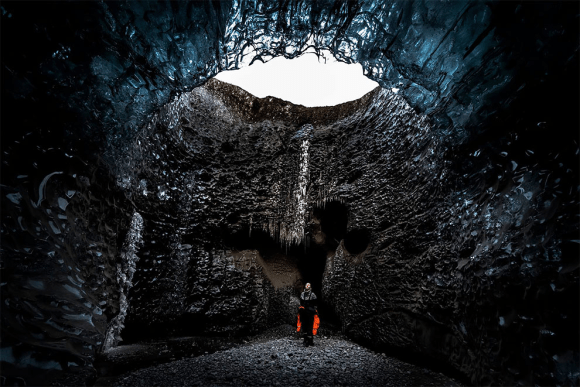
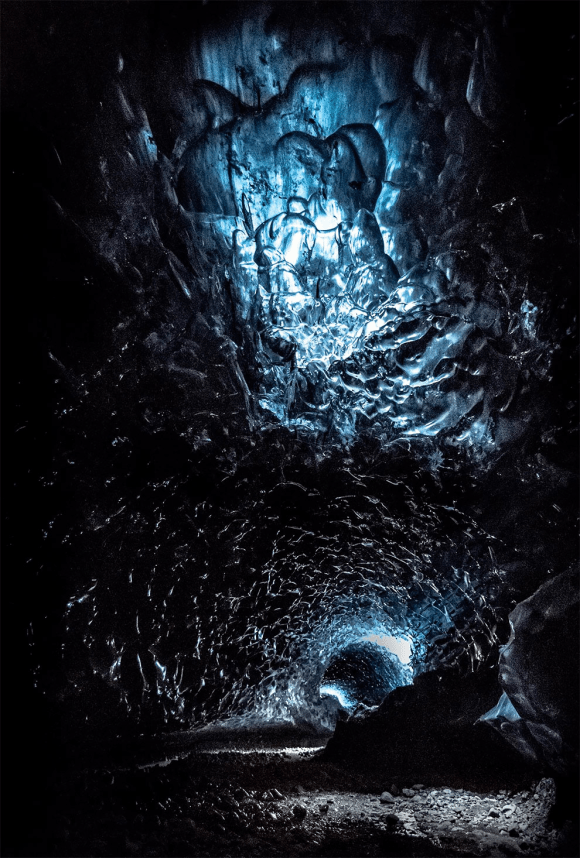
I love these shots of Ice Caves in Iceland.

In closing, I’d like to stress that the best tools at our disposal for mastering composition are not bought from camera stores — they are within us. To better express something about our subject matter and ourselves in our photographs, we should take steps to engage more in the process. Before we start we need to take time to establish a relationship with our subject matter; to engage our hearts and emotions. Secondly, we need to engage our imaginations; to let them run wild to form our vision for an image.
Then, perhaps, we bring our cameras and our eyes into the process. That is to say, having formulated a vision we now use our eyes objectively to see what is actually in the scene. Then, we try to engineer the scene, which may involve simply waiting fo something to move, or adjusting our camera, lens, or shooting position, that the scene best reflects our vision. We do this largely by bringing our bodies into play; using our legs to explore the scene and the options different viewpoints offer.
Richard Garvey-Williams, Mastering Composition: The Definitive Guide For Photographers
I keep reading all kinds of amazing and exciting things about Bear, and after a conversation with Jeff Perry on Micro.blog, which started following his post ‘Using Bear as an Apple Notes Replacement’, I was convinced that it might be interesting to try switching to Bear…and then read the documentation for importing documents.
I have a lot of notes stored in Apple Notes. Thousands of them. Many of them have attachments. And Bear can’t automatically import them; instead, I’d have to manually export, import, and re-attach documents. While I’d like to try the application — support for real Markdown sounds exciting! — I just can’t afford to burn a week or more just moving files from one repo to another. I already spend that time moving from Evernote to Apple Notes!
I accidentally marked about a hundred items in my RSS reader as ‘read’ that I’d been (theoretically) saving to read. The pile’s built up for a few weeks in that feed category. It feels like a huge load off to know that they’re just…gone….and so I only have all the other categories to work through.
Have a WordPress.com account? Log in now.

