Categories
Aside

2024.3.18

It is exceptionally rewarding to see years of research and advocacy while I was at my former employer lead to significant reforms to legislation The effect, thus far, has been to protect residents of Canada from cyber-related threats while, also, imposing checks on otherwise unfettered government power and simultaneously protecting all residents of Canada’s privacy.

Categories
Aside Humour

The Durability of Certain Online Comments

One of the projects I’m involved in at work relates very closely to a bulk of academic policy books I read while doing my PhD. That’s not particularly surprising, I guess. One of those books, in particular, would be invaluable to my team as they navigate a neat (and well researched) policy space.

So I did what most people do: go to Amazon, search for the book, and then send it to my employer to purchase the title for the internal library.

Lo and behold, however, when I found said book on Amazon there was a single review of it. Interesting! Who would comment on this niche academic text and what did they say?

Well… apparently I would comment on this niche book and leave a review, and did so way back in 2008. I’ll be honest: the review does hold up. Though the fact that I was reviewing my supervisor’s book, publicly, and offering (fair!) critiques admittedly makes me grin a bit. And, also, probably speaks lots about why I tend to fit in well at workplaces where speaking truth to power is just the daily 9-5.

Categories
Photography

Print Day!

Bay & Queen, Toronto, 2023

A friend identified a series of photos I’ve made over the past year that they wanted to have as prints. The matte prints all came in yesterday, and I was really pleased at how well Annex Photo made them.

Bathurst Station, Toronto, 2023

I hade three prints made, one from my Ricoh GRiiix (uncropped, 10×15), one from my Fuji X100F (cropped to 17MP, 10×15), and one from the telephoto on my iPhone 14Pro (9MP, 8.5×11). When I’ve shown the prints to others they can’t tell which camera made which image, nor do they see any notable quality difference between the prints.

Spadina & Grange, Toronto, 2023

Now all that’s left is to package and mail the prints to their owner!

Categories
Photography

Bathurst & College, Toronto, 2023

Bathurst & College, Toronto, 2023

This is one of the cityscapes I took last year. It resonates with a number of themes that are often present in my photography: icons of Toronto, construction in the city, and the sense of impermanence and isolation associated with the Toronto streetscape.

The absence of humans along one of Toronto’s many core cross streets also spoke to me. It provided me with a sense of humanity-absent, which is narratively aligned with many of the images that I made throughout the depths of the pandemic.

Categories
Photography Quotations

Moments of Thinking and Photography

Thinking should be done beforehand and afterwards—never while actually taking a photograph. Success depends on the extension of one’s culture, on one’s set of values, one’s clarity of mind and vivacity.

Henri Cartier-Bresson
Categories
Links Writing

RCMP Found to Unlawfully Collect Publicly Available Information

The recent report from Office of the Privacy Commissioner of Canada, entitled “Investigation of the RCMP’s collection of open-source information under Project Wide Awake,” is an important read for those interested in the restrictions that apply to federal government agencies’ collection of this information.

The OPC found that the RCMP:

  • had sought to outsource its own legal accountabilities to a third-party vendor that aggregated information,
  • was unable to demonstrate that their vendor was lawfully collecting Canadian residents’ personal information,
  • operated in contravention to prior guarantees or agreements between the OPC and the RCMP,
  • was relying on a deficient privacy impact assessment, and
  • failed to adequately disclose to Canadian residents how information was being collected, with the effect of preventing them from understanding the activities that the RCMP was undertaking.

It is a breathtaking condemnation of the method by which the RCMP collected open source intelligence, and includes assertions that the agency is involved in activities that stand in contravention of PIPEDA and the Privacy Act, as well as its own internal processes and procedures. The findings in this investigation build from past investigations into how Clearview AI collected facial images to build biometric templates, guidance on publicly available information, and joint cross-national guidance concerning data scraping and the protection of privacy.

Categories
Links Writing

Near-Term Threats Posed by Emergent AI Technologies

In January, the UK’s National Cyber Security Centre (NCSC) published its assessment of the near-term impact of AI with regards to cyber threats. The whole assessment is worth reading for its clarity and brevity in identifying different ways that AI technologies will be used by high-capacity state actors, by other state and well resourced criminal and mercenary actors, and by comparatively low-skill actors.

A few items which caught my eye:

  • More sophisticated uses of AI in cyber operations are highly likely to be restricted to threat actors with access to quality training data, significant expertise (in both AI and cyber), and resources. More advanced uses are unlikely to be realised before 2025.
  • AI will almost certainly make cyber operations more impactful because threat actors will be able to analyse exfiltrated data faster and more effectively, and use it to train AI models.
  • AI lowers the barrier for novice cyber criminals, hackers-for-hire and hacktivists to carry out effective access and information gathering operations. This enhanced access will likely contribute to the global ransomware threat over the next two years.
  • Cyber resilience challenges will become more acute as the technology develops. To 2025, GenAI and large language models will make it difficult for everyone, regardless of their level of cyber security understanding, to assess whether an email or password reset request is genuine, or to identify phishing, spoofing or social engineering attempts.

There are more insights, such as the value of training data held by high capacity actors and the likelihood that low skill actors will see significant upskilling over the next 18 months due to the availability of AI technologies.

The potential to assess information more quickly may have particularly notable impacts in the national security space, enable more effective corporate espionage operations, as well as enhance cyber criminal activities. In all cases, the ability to assess and query volumes of information at speed and scale will let threat actors extract value from information more efficiently than today.

The fact that the same technologies may enable lower-skilled actors to undertake wider ransomware operations, where it will be challenging to distinguish legitimate versus illegitimate security-related emails, also speaks to the desperate need for organizations to transition to higher-security solutions, including multiple factor authentication or passkeys.

Categories
Links Writing

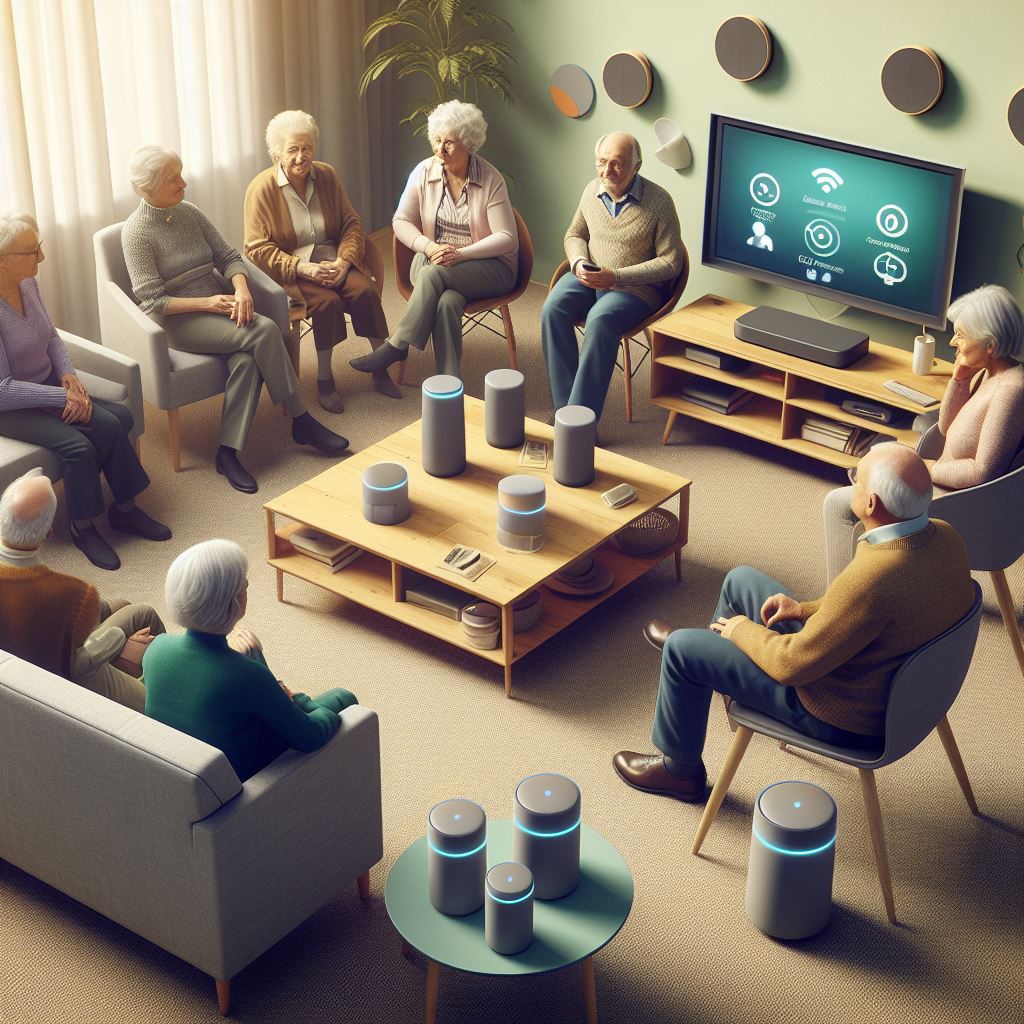
Older Adults’ Perception of Smart Home Technologies

Percy Campbell et al.’s article, “User Perception of Smart Home Surveillance Among Adults Aged 50 Years and Older: Scoping Review,” is a really interesting bit of work into older adults/ perceptions of Smart Home Technologies (SMTs). The authors conducted a review of other studies on this topic to, ultimately, derive a series of aggregated insights that clarify the state of the literature and, also, make clear how policy makers could start to think about the issues older adults associate with SMTs.

Some key themes/issues that arose from the studies included:

  • Privacy: different SMTs were perceived differently. But key was that the privacy concerns were sometimes highly contextual based on region, with one possible effect being that it can be challenging to generalize from one study about specific privacy interests to a global population
  • Collection of Data — Why and How: People were generally unclear what was being collected or for what purpose. A lack of literacy may raise issues of ongoing meaningful consent of collection.
  • Benefits and Risks: Data breaches/hacks, malfunction, affordability, and user trust were all possible challenges/risks. However, participants in studies also generally found that there were considerable benefits with these technologies, and most significantly they perceived that their physical safety was enhanced.
  • Safety Perceptions: All types of SHT’s were seen as useful for safety purposes, especially in accident or emergency. Safety-enhancing features may be preferred in SHT’s for those 50+ years of age.

Given the privacy, safety, etc themes, and how regulatory systems are sometimes being outpaced by advances in technology, they authors propose a data justice framework to regulate or govern SHTs. This entails:

  • Visibility: there are benefits to being ‘seen’ by SHTs but, also, privacy needs to be applied so individuals can selectively remove themselves from being visible to commercial etc parties.
  • Digital engagement/ disengagement: individuals should be supported in making autonomous decisions about how engaged or in-control of systems they are. They should, also, be able to disengage, or only have certain SHTs used to monitor or affect them.
  • Right to challenge: individuals should be able to challenge decisions made about them by SHT. This is particularly important in the face of AI which may have ageist biases built into it.

While I still think that there is the ability of regulatory systems to be involved in this space — if only regulators are both appropriately resourced and empowered! — I take the broader points that regulatory approaches should, also, include ‘data justice’ components. At the same time, I think that most contemporary or recently updated Western privacy and human rights legislation includes these precepts and, also, that there is a real danger in asserting there is a need to build a new (more liberal/individualistic) approach to collective action problems that regulators, generally, are better equipped to address than are individuals.

Categories
Links Writing

Location Data Used to Drive Anti-Abortion Campaigns

It can be remarkably easy to target communications to individuals’ based on their personal location. Location information is often surreptitiously obtained by way of smartphone apps that sell off or otherwise provide this data to data brokers, or through agreements with telecommunications vendors that enable targeting based on mobile devices’ geolocation. 

Senator Wyden’s efforts to investigate this brokerage economy recently revealed how this sensitive geolocation information was used to enable and drive anti-abortion activism in the United States:

Wyden’s letter asks the Federal Trade Commission and the Securities and Exchange Commission to investigate Near Intelligence, a location data provider that gathered and sold the information. The company claims to have information on 1.6 billion people across 44 countries, according to its website.

The company’s data can be used to target ads to people who have been to specific locations — including reproductive health clinic locations, according to Recrue Media co-founder Steven Bogue, who told Wyden’s staff his firm used the company’s data for a national anti-abortion ad blitz between 2019 and 2022.


In a February 2023 filing, the company said it ensures that the data it obtains was collected with the users’ permission, but Near’s former chief privacy officer Jay Angelo told Wyden’s staff that the company collected and sold data about people without consent, according to the letter.

While the company stopped selling location data belonging to Europeans, it continued for Americans because of a lack of federal privacy regulations.

While the company in question, Near Intelligence, declared bankruptcy in December 2023 there is a real potential for the data they collected to be sold to other parties as part of bankruptcy proceedings. There is a clear and present need to legislate how geolocation information is collected, used, as well as disclosed to address this often surreptitious aspect of the data brokerage economy.

Categories
Links Writing

The Near-Term Impact of AI Technologies and Cyber Threats

In January, the UK’s National Cyber Security Centre (NCSC) published its assessment of the near-term impact of AI with regards to cyber threats. The whole assessment is worth reading for its clarity and brevity in identifying different ways that AI technologies will be used by high-capacity state actors, by other state and well resourced criminal and mercenary actors, and by comparatively low-skill actors.

A few items which caught my eye:

  • More sophisticated uses of AI in cyber operations are highly likely to be restricted to threat actors with access to quality training data, significant expertise (in both AI and cyber), and resources. More advanced uses are unlikely to be realised before 2025.
  • AI will almost certainly make cyber operations more impactful because threat actors will be able to analyse exfiltrated data faster and more effectively, and use it to train AI models.
  • AI lowers the barrier for novice cyber criminals, hackers-for-hire and hacktivists to carry out effective access and information gathering operations. This enhanced access will likely contribute to the global ransomware threat over the next two years.
  • Cyber resilience challenges will become more acute as the technology develops. To 2025, GenAI and large language models will make it difficult for everyone, regardless of their level of cyber security understanding, to assess whether an email or password reset request is genuine, or to identify phishing, spoofing or social engineering attempts.

There are more insights, such as the value of training data held by high capacity actors and the likelihood that low skill actors will see significant upskilling over the next 18 months due to the availability of AI technologies.

The potential to assess information more quickly may have particularly notable impacts in the national security space, enable more effective corporate espionage operations, as well as enhance cyber criminal activities. In all cases, the ability to assess and query volumes of information at speed and scale will let threat actors extract value from information more efficiently than today.

The fact that the same technologies may enable lower-skilled actors to undertake wider ransomware operations, where it will be challenging to distinguish legitimate versus illegitimate security-related emails, also speaks to the desperate need for organizations to transition to higher-security solutions, including multiple factor authentication or passkeys.