As I return from an event I was invited to I have to reflect on, and admit, how profoundly…weird…it is that stuff I write about and the activities in which I’m engaged increasingly influence the course of justice in my county. How weird it is that the leader of my country is briefed on the work that I and my colleagues write about. How it feels epically strange that things which seem to have no impact on public debate whatsoever reverberate behind closed doors. It’s just really, really weird to know that people who are intrinsically involved with law, security, and justice — to say nothing of policy and politics — closely watch what I do, with the intent of using it when making decisions that may affect the lives of people across Canada, and around the world.
When I was doing my PhD I laughed out loud at my colleagues who spoke of how the work of political scientists can lead to exceptional impacts in the worlds. As a philosopher I thought such conversations were borne of a group of people who took themselves too seriously in their (ongoing) moments of hubris. But I get it now: that which we say, when we’re deliberately involved with public debate with an eye to inform (if not influence) policy can have unexpected and exciting and unintended impacts on the lives of millions of people. And in living this reality I have remarkably more sympathy for those who’s work isn’t just read and taken up, but misread and subsequently misappropriated to justify governmental activities that the political scientists in question might not have anticipated or endorsed.
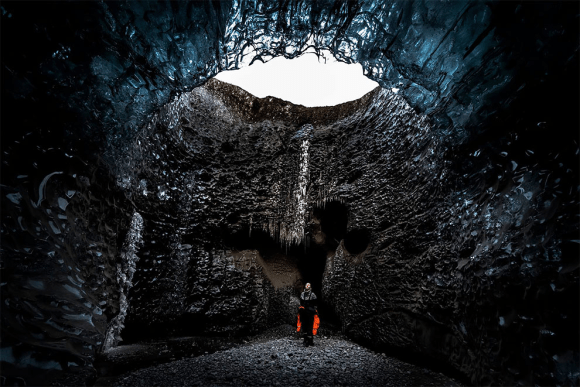
Natural Ladders, 2018, Toronto by Christopher Parsons
There are a lot of different ways that you can challenge yourself to a photowalk. Use specific lenses or focal lengths or creative formats. Walk a predetermined distance and take a hundred photos from that site. Shoot black and white, mobile only, or focus on a concept, colour, or number.
I think I have a challenge that’s a bit different.
Recently I planned a photowalk to wander along a river in Toronto and, along the way, shoot some sculptures I’ve wanted to look at for the last several months. I got ready to head out, threw my camera over my shoulder, and walked out of my building and into a light drizzle of rain.
The low chances of rain had turned into the reality of rain, and it was only starting to come down harder. Without weather sealed gear there was no way I was going to be walking a few kilometres in the rain and shoot.
I quickly rerouted to an enclosed botanical garden that I live nearby. And pulled out my 12-42mm 3.5-5.6 II R kit lens and started at one end of the gardens and walked all the way to the other end.
Piles, 2018, Toronto by Christopher ParsonsSharp Symetry, 2018, Toronto by Christopher ParsonsUnitlted, 2018, Toronto by Christopher ParsonsOpening, 2018, Toronto by Christopher ParsonsRevealed, 2018, Toronto by Christopher Parsons
I then swapped out my lens for the Panasonic 25mm 1.7 I had with me, and proceeded to walk all the way through the gardens once more. The shots I got tended to be different from the zoom lens, and forced me to think about what was differently possible to shoot with the prime lens compared to the short zoom.
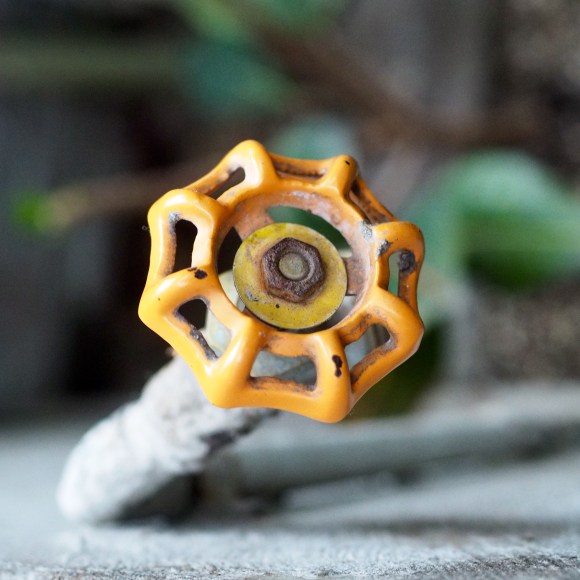
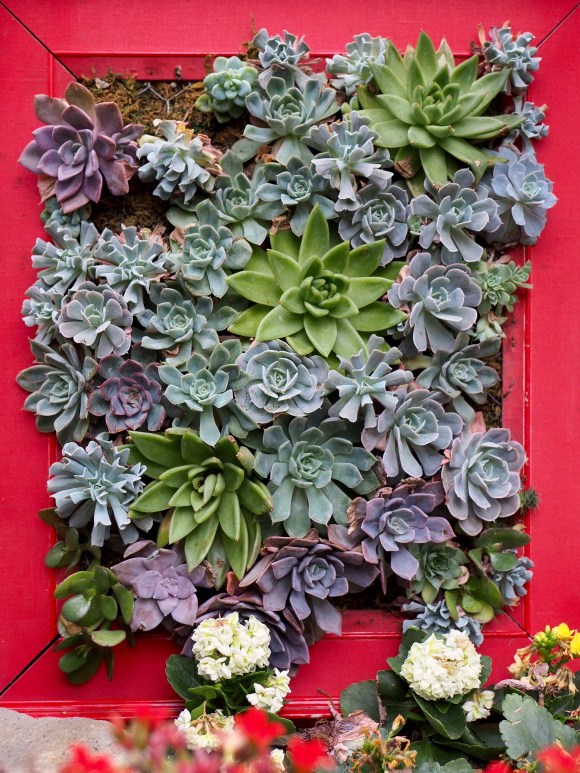
Rough Hills, 2018, Toronto by Christopher ParsonsValve, 2018, Toronto by Christopher ParsonsRed Frame, 2018, Toronto by Christopher ParsonsUntitled, 2018, Toronto by Christopher ParsonsApex, 2018, Toronto by Christopher Parsons
Once I’d walked the length of the gardens once more I passed through it one last time, this time with my Olympus 40-150mm 4.0-5.6 R. This is definitely not the lens I’d normally use for this kind of shooting environment. And that meant that I was forced to really try with the lens and make it perform in a space in which I’m not comfortable using it.
Aligned, 2018, Toronto by Christopher ParsonsPals, 2018, Toronto by Christopher Parsons
What did I take away from this? That by walking the same space with different lenses possessing different characteristics I saw the space and photographic opportunities differently. It also was a useful exercise in just visualizing the possible: what shots was I willing and able to experiment with based on the lens at hand? What kind of shot — architecture or natural environment – captured my imagination with the different lenses?
The shots shown above are those that I was most happy with. There were, obviously, far more that got deleted (especially from the 40-150mm!). It was a fun opportunity, and a challenge I suspect I’ll revisit in the future.
We generate a vast amount of digital exhaust which imperceptibly lingers around us. The metadata and content that’s left behind us is typically regarded as harmless until it’s used or abused, or until it’s misappropriated by someone.
Part of this exhaust follows from our regular shifting between services as our tastes, interests, attitudes, ambitions, and desires change. Social media platforms are adopted and abandoned. Fitness tracking systems that were exciting one year are dull the next and then forgotten, with the tracker consigned to a trash bin or electronics drawer and data residing in perpetuity with whatever service was collecting it. The data we’ve contributed to all those services lingers: it can come back to haunt us in ways we don’t understand or appreciate when signing up for the service, and it can be challenging to undo the associated harms when they befall us.
As part of my ongoing effort to clean up some of the exhaust I’ve left behind, I deleted an old Fitbit account a few weeks ago. It was a bit annoying — you need to contact support, click yes to some emails, and then support will delete the information — but after ten minutes or so the account and its data was consigned to the dustbin of the Internet. Similarly, I blew away over 32,000 tweets this week. I left the last six months data behind or so, but it means that there’s a long trace of exhaust that’s gone.1 And I’ll be undertaking similar operations for the rest of the year, or at least so I’ve planned.
In the case of the Fitbit data, it now rests securely in Apple Health, giving me a broader understanding of changes to my fitness activities than I previously enjoyed. I downloaded a copy of my tweets before wiping them away. And for personal blogs, I’m either consolidating them here or into a semi-local digital journal so I don’t lose what I’ve previously written. But if I’m serious it’s unlikely that I’m going to re-read (that many) of my old blogs. And I’m not looking at daily variations between today’s fitness regime and that of 2008. The data could do a lot more in other persons’ hands to harm me than in my own hands to benefit me, especially as I’ve moved away from where those blogs were active and the fitness communities where members engaged with one another.
The only thing that bothers me is that, in removing things from the Internet, I’m breaking the links that were inbound to those respective pieces of content. But…did anyone really link back to old tweets and, if they did, do I have a responsibility for their linking to what I tend to perceive as off-hand comments? Do I have to maintain and support now long-abandoned accounts on the presumption that someone might someday want to follow a link?
For a long time I would have said ‘yes’ to either of those statements. But I just don’t think that that’s a healthy attitude: humanity forgets. And then we rebuild the old it is in slightly different formats and in the (perceived) image of the past. I can’t imagine those old tweets, blogs, or fitness tracking data being so important that anyone will want to rebuild or remake what they once were and, if that is the case, then they’re welcome to follow in humanity’s ancient footsteps of imaging the past and superimposing their own aspirations, dreams, desires, and fears upon it.
Inspiring Quotations
Writing for friends and yourself can clear your thoughts, help you plan and invite the discovery of new ideas. Writing with the intention to put your thoughts out there leads to real writing. Writing gets real when it is read. Before that, it is a dream in letters. Writing to get read makes you careful, responsible, and considerate. It forces you to think as simply, clearly and understandably as possible. It forces you to think about how what you say may look and feel from the outside. Writing to be read may not be desirable for everybody. But if you feel that you have something to say, write to be read. Don’t search for something to write because you want to be famous or rich. If you want fame jump from a cliff into a butter bucket on YouTube. If you want to be rich, get into finance.
Of course if a company or organization has previously scraped that data, which does happen, then those records will persist beyond my public deletion of the tweets. ↩
I’m really finding this great background music for just getting work done. Great moody music. ↩
In closing, I’d like to stress that the best tools at our disposal for mastering composition are not bought from camera stores — they are within us. To better express something about our subject matter and ourselves in our photographs, we should take steps to engage more in the process. Before we start we need to take time to establish a relationship with our subject matter; to engage our hearts and emotions. Secondly, we need to engage our imaginations; to let them run wild to form our vision for an image.
Then, perhaps, we bring our cameras and our eyes into the process. That is to say, having formulated a vision we now use our eyes objectively to see what is actually in the scene. Then, we try to engineer the scene, which may involve simply waiting fo something to move, or adjusting our camera, lens, or shooting position, that the scene best reflects our vision. We do this largely by bringing our bodies into play; using our legs to explore the scene and the options different viewpoints offer.
Richard Garvey-Williams, Mastering Composition: The Definitive Guide For Photographers
I have a lot of notes stored in Apple Notes. Thousands of them. Many of them have attachments. And Bear can’t automatically import them; instead, I’d have to manually export, import, and re-attach documents. While I’d like to try the application — support for real Markdown sounds exciting! — I just can’t afford to burn a week or more just moving files from one repo to another. I already spend that time moving from Evernote to Apple Notes!
Leah Miller has a good take on Unsplash, a website where photographers donate photos which can subsequently be used without royalty or attribution:
They bill themselves as “Beautiful FREE photos for Everyone”. That means anyone, including businesses can go to their website and download unlimited amounts of photography (and some of it is very good) work without attribution or payment to the individual(s) who created them. Furthermore there is no requirement for Model or Property Releases which guarantees that the photographer and end user are likely to get sued. Don’t believe me? Do a search on that website of any popular brand you can think of…sportswear, etc. You will not see a single RELEASE for those images in sight. Large companies like Apple will sue the pants off you should they get wind of their products/logos etc. being used commercially. That “EXPOSURE” you got in return for the image of a Nike sneaker you posted (and was subsequently downloaded and used commercially) won’t be worth an ounce of mercy when that first lawyer letter hits your mailbox.
When you purchase a “creative” person’s professional’s services, be they from a photographer, programmer, editor, writer, or marketer, you’re paying for more than the finished thing that the professional is providing. You’re paying for the suite of skills and talents and knowledge that surround the finished product, and some of those skills and talents and knowledge are largely invisible to the client. And that’s fine: it’s what’s being paid for. But if you get something for free or at a deeply discounted price it’s important to know that all those hidden extras that you don’t see when you hire a professional can quickly become your problem. Sometime those problems are just a massive pain in the ass when they arise. But at their worst they can be a terrible drag on whatever you have going on in your life and career, and can be poison to either your hobby, your side gig, or your professional career.
I’ve been putting a lot of thought into how to structure my life, not just on a day to day basis, but with the intent of accomplishing something meaningful this year. Some of that relates to personal projects I want to pull off.1 But perhaps the most important thing I want to do this year is develop a really boring habit.
Mike Vardy wrote about his intent improve his personal fitness this year. His description of past attempts to become fit and how that differs from his current behaviours resonated with me. He wrote:
When I was trying to achieve a “body for life” before, I was single and doing it mainly to improve my physique for any potential ladies that I may wind up dating. I wasn’t really doing it for myself.
In contrast, this time he’s doing:
it for myself — and my family. My wife deserves to have a husband who’s in decent shape, and my kids deserve to have a father who can keep up with them. When my youngest turns thirteen, I’ll be fifty. I want to be able to roughhouse with him at that age and not feel it for weeks afterward. I’d also like to give myself the best shot at seeing my kids’ grandkids. Without exercise and proper diet, that just ain’t going to happen
In the past I tried to become more fit by taking it to the extreme. I also felt I had to hide what I was doing to avoid recriminations from family and people I lived with. I exercised when no one was around, or up, and hid the fact I was going on long challenging walks to avoid all kinds of hurtful commentary: getting fit was something that people were bemused about, at best, and openly mocked, at worst. I don’t have that kind of negative energy around me now and, instead, I have the support of people I love.2
I don’t know that my motives are quite the same as Mike: I’m not a father, and don’t intend to become one, nor am I doing this because I think someone else deserves my body in one format or another. No, I’m doing this purely because I would like to be in a situation where I can just say ‘sure, let’s climb that mountain’ and get going. I want to be able to hop on a bike and cycle across one of Canada’s smaller provinces because it would be neat to take that ride. And, more importantly, I want to get in the habit that regular active exercise is just so routine that it’s a normal, established, and boring part of my life.
Tim Cook was asked in the Apple earning call that took place in February about the company had considered whether, and if so how, their battery replacement program might affect replacement rates. The implied comment was the replacements might reduce the likelihood that consumers would upgrade to the new versions of devices, on grounds that some upgrades had historically taken place because people bought new phones as a result of their old ones slowing down or their batteries not providing adequate charge to get through a day. Cook responded that Apple:
did not consider in any way, shape, or form what it would do to upgrade rates. We did it because we thought it was the right thing to do for our customers. I don’t know what effect it will have for our customers. It was not in our thought process of deciding to do what we’ve done.
This is a great answer. Though I do suspect that the battery replacement program will delay some upgrades, I don’t know that such a delay would be inherently bad for the company. Jason Snell wrote that the iPhone 8 — not the X — was a really amazing phone for most people because they tended to be coming from devices that were release two or more years ago. As a result, people that were coming from iPhone 6, 6s, and 5s devices didn’t just get the updates of the iPhone 8 but also all the updates that came to the iPhone 7 and, in some cases, iPhone 6s.
In effect, people who waited three or more years to update ended up being wowed by all of the features in the new iPhone. These are everyday users who really do use words like ‘magic’ and literally utter ‘wow’ when things happen. They laugh with joy when Siri just does something right, or they have calendar items automatically added from their mail. These are the everyday consumers that Apple is making its money from.
These normal users are the ones that are going to be blown away whenever they do an upgrade, and are going to be especially appreciative of all the incremental updates that take place in the extra year they might delay an upgrade. They’re going to talk to their friends and family and co-workers. They might also talk about how the battery situation sucked while, simultaneously, mentioning how no other company offers a similar replacement program. Probably the only equivalent they’ll be able to think of was Samsung’s global recall of devices that were literally exploding in people’s hands.
Quotation of the Week
“By retreating into ourselves, it looks as if we are the enemies of others, but our solitary moments are in reality a homage to the richness of social existence. Unless we’ve had time alone, we can’t be who we would like to be around our fellow humans. We won’t have original opinions. We won’t have lively and authentic perspectives. We’ll be – in the wrong way – a bit like everyone else.”
I’ll update as I’m successful on those projects, instead of indicating what they are then failing to deliver. ↩
It also helps that my father died of a heart attack last year; getting fit isn’t just aimless or directionless, but it’s to reduce the likelihood of a similar event befalling me. ↩
Matt Green has a good writeup of the confusion associated with Apple’s decision to relocate Chinese users’ data to data centres in China. He notes:
Unfortunately, the problem with Apple’s disclosure of its China’s news is, well, really just a version of the same problem that’s existed with Apple’s entire approach to iCloud.
Where Apple provides overwhelming detail about their best security systems (file encryption, iOS, iMessage), they provide distressingly little technical detail about the weaker links like iCloud encryption. We know that Apple can access and even hand over iCloud backups to law enforcement. But what about Apple’s partners? What about keychain data? How is this information protected? Who knows.
This vague approach to security might make it easier for Apple to brush off the security impact of changes like the recent China news (“look, no backdoors!”) But it also confuses the picture, and calls into doubt any future technical security improvements that Apple might be planning to make in the future. For example, this article from 2016 claims that Apple is planning stronger overall encryption for iCloud. Are those plans scrapped? And if not, will those plans fly in the new Chinese version of iCloud? Will there be two technically different versions of iCloud? Who even knows?
And at the end of the day, if Apple can’t trust us enough to explain how their systems work, then maybe we shouldn’t trust them either.
Apple is regarded as providing incredibly secure devices to the public. But as more and more of the data on Apple devices is offloaded to Apple-controlled Cloud services it’s imperative that the company both explain how it is securing data and, moreover, the specific situations under which it can disclose data it is stewarding for its users.
Speaking at Davos, Uber CEO Dara Khosrowshahi pointed out that consumers face a challenge in trying to understand tech’s influence in the age of big data. He called this an “information asymmetry.” In his previous job, as CEO of Expedia, Khosrowshahi said, customers were shown a tropical island while they waited for their purchase page to show up. As a test, engineers replaced the placid image with a stressful one that showed a person missing a train. Purchases shot up. The company subbed in an even more stressful image of a person looking at a non-working credit card, and purchases rose again. One enterprising engineer decided to use image of a cobra snake. Purchases went higher.
What’s good for a business isn’t always good for that businesses’ users. Yet Khosrowshahi stopped testing because he decided the experiment wasn’t in line with the Expedia’s values. “A company starts having so much data and information about the user that if you describe it as a fight, it’s just not a fair fight,” said Khosrowshahi.
…
The tech industry often responds to these concerns with a promise to be more transparent—to better show how its products and services are created and how they impact us. But transparency, explained Rachel Botsman in the same Davos conversation, is not synonymous with trust. A visiting professor at the University of Oxford’s Said School, Botsman authored a book on technology and trust entitled “Who Can You Trust?” “You’ve actually given up on trust if you need for things to be transparent,” she said. “We need to trust the intention of these companies.”
I think that it’s how little design flourishes are used to imperceptibly influence consumers that should be used to justify more intensive ethics and legal education to designers and engineers. Engineers of physical structures belong to formal associations that can evaluate the appropriateness of their members’ creations and conduct. Maybe it’s time for equivalent professional networks to be build for the engineers and developers who are building the current era’s equivalents to bridges, roads, and motor vehicles.
Every time you share a link, or a piece of news, you are actually telling people to look at it. You are asking them to spend their biggest resource — attention (and time) — on what you are sharing.