Categories
Links Photography Roundup Writing

The Roundup for September 3-9, 2018 Edition

(Respects by Christopher Parsons)

Over the years that I’ve been engaging in photography, it’s largely been either a solo activity or undertaken with one or two close friends. I think it’s probably fair to say that, in the time I’m been shooting, I’ve typically been the most enthusiastic photographer when I’ve been out. Most of my learning has been in my own, whether through watching YouTube videos, reading books, being inspired in Instagram, or visiting museums and art galleries.

I recognize just how amateur my shots are and, also, that I’ve barely scratched the surface of what I even can, let alone alone should or need to, learn, if I’m to improve the quality, kinds, and nature of my images. The past few years have been as much about learning basic camera functionalities, a set of tricks that I find enjoyable, some styling, basic editing methods, and muddling through composition. I have a lot of bad images but, increasingly, more and more that I’m satisfied with (and some I’m even happy with!). I can also see progress in what I’m shooting, year over year, so I’m confident that the images I’m producing are at least becoming more pleasurable for me to look at and enjoy, and that’s great given that I shoot for myself first and foremost.

However, this weekend I did something that was a bit scary for me: I joined a Toronto photography group and wandered around part of Toronto with them. There were a total of five of us, and I was by far the youngest and most amateur person there; some had been shooting for thirteen years longer than I’d been alive! But it was a really positive experience, insofar as I could see how people engaged with the environment according to what they found interesting. It was also an opportunity to see how people go about getting consent to take other persons’ photos: the thing that’s always kind of scared me about street photography is taking other people’s images, but how it’s (responsibly) done is a little bit clearer after the walk. The other reason the walk was great? All of the people who I was on the walk with were super nice and friendly and inviting to me, the newcomer.

I also appreciated the opportunity wander with good company and for the express purpose of taking photos: there was a nice sense of camaraderie that I hadn’t experienced in this way before. That other people planned their recreation around photography — going to different locales, near and far, for the purpose of photographing the world while also enjoying where they were visiting — was inspiring because while I’ve read about, and listened to, people who are so committed to photography I’d never actually met such people in the flesh. In some respects it almost feels like I’ve found my ‘tribe’ of folks, and I’m looking forward to the next walk I’ll have with them to explore my photography (and city!) with the group.
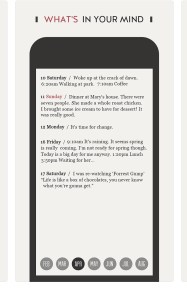

Example of Journalling Style

I’ve been trying another journaling technique over the past week that’s inspired from an application I was referred to. Rather than producing elongated entries (the kind I’ve pretty well always written) I have the date along the left hand side of the paper, and then sentences with a major thing or thought that I had in the day beside it, with each sentence separated by a slash symbol (i.e. ‘/‘). I’ve been finding it pretty useful for speeding up reflections, to the point that it takes about 3-5 minutes, whereas a longer entry has historically taken me 20+ minutes. These shorter journals won’t replace the more occasional longer journals — which tend to be more focused and in-depth on a given subject or issue — but I could see them as becoming a very regular part of my routine.


Inspiring Quotation of the Week

“How well you take criticism depends less on the message and more on your relationship with the messenger. It’s surprisingly easy to hear a hard truth when it comes from someone who believes in your potential and cares about your success.”

  • Adam Grant

Great Photography Shots

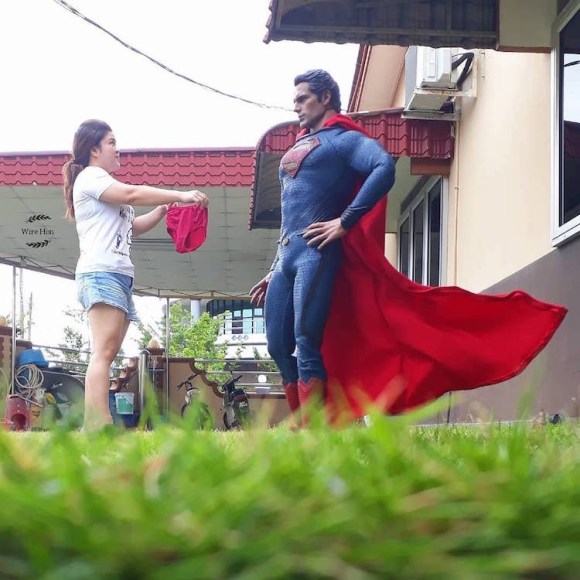
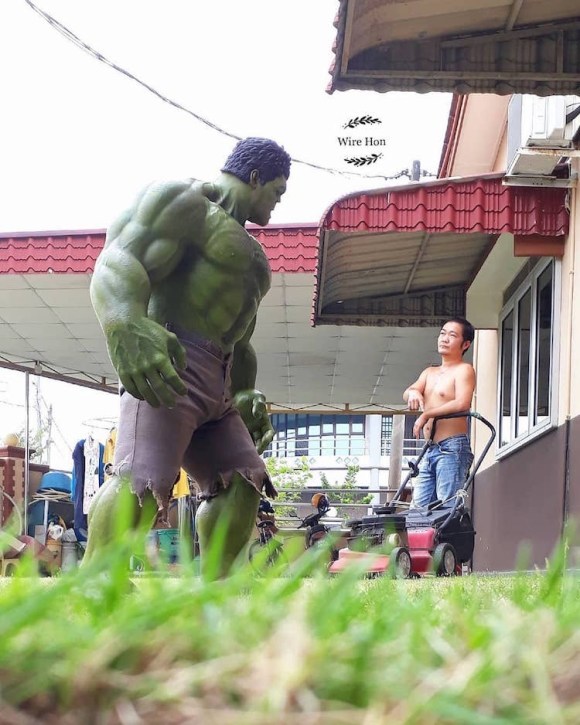
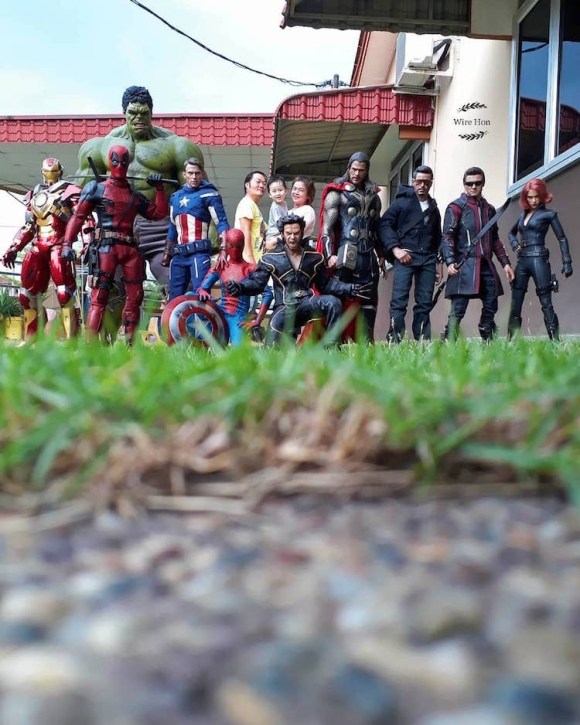
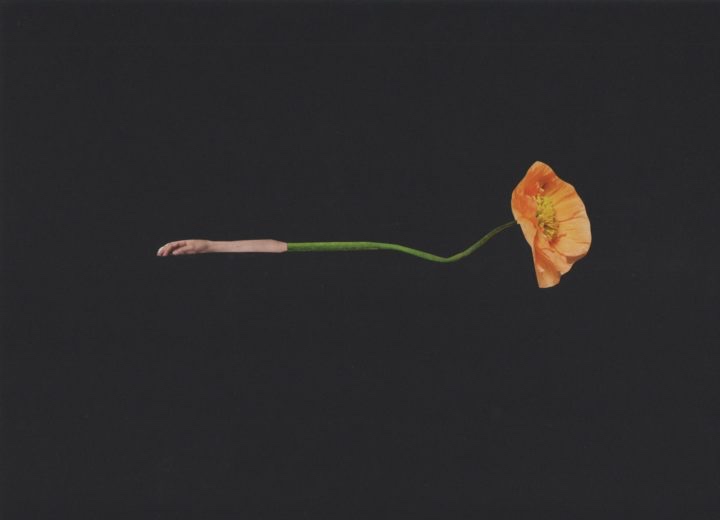
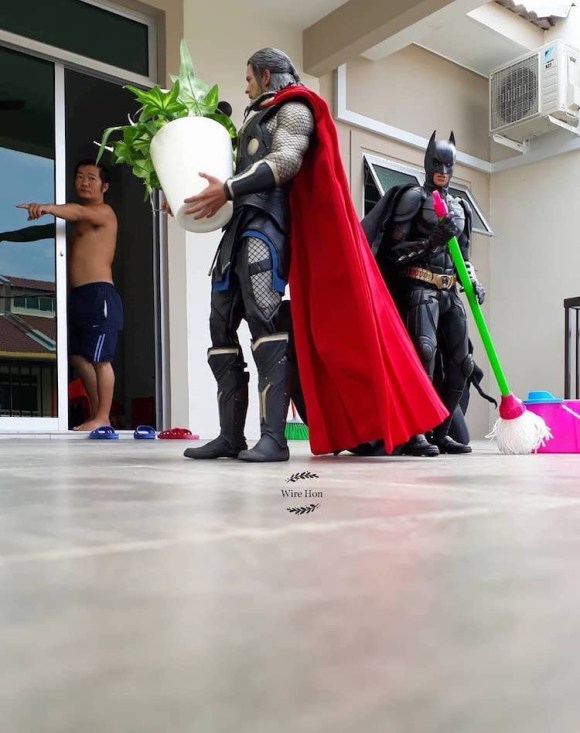
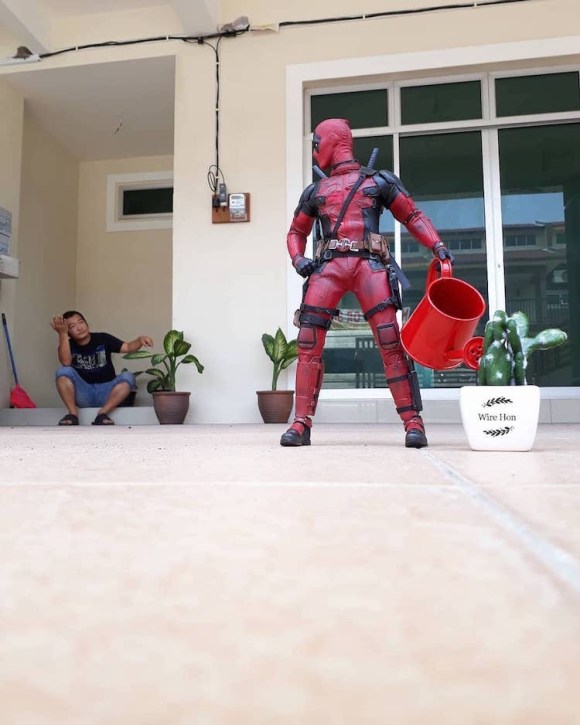
On the one hand, I think that Wire Hon’s shots with superheroes in everyday situations are just funny. But from a technical level I find what he’s doing pretty amazing: using forced perspective, he makes the toys appear as life-sized and involved with him, his family, and each other. Hon’s work is a reminder that you can do a lot of impressive work without photoshop if you just prep your scene effectively.
Music I’m Digging

  • ZHU – Ringos Desert // I’m really enjoying this for generally walking about but, in particular, when I’m heading to the gym.
  • Tash Sultana – Flow State // I really can’t get over how amazing the vocals and instrumentals are throughout his this record. While I enjoyed Sulana’s earlier EP, Notion, this record is far more sophisticated.

Neat Podcast Episodes

  • Dissect (Season One) // I’m only partway through the first season of Dissect but I’m already blown away. The thesis of the show is that it will spend one season doing a deep dive analysis on a particular album. The first season kicks things off with a focus on Kendrick Lamar’s ‘To Pimp a Butterfly’. The depth of analysis that takes place on this show is exceptional: it shows how Kendrick’s lyrics build between albums and the relationships between tracks’ lyrics and his life growing up, as well as the playful multiple interpretations that come up routinely across the album. If you like Song Exploder then you’re probably going to love this show.
  • Clear and Vivid – Cheryl Strayed Shares Her Advice on How to Give Advice // I’m continuously impressed with Alan Alda’s work on developing better communication. His episode with Strayed, of Modern Love fame, emphasizes how having compassion and wanting the best for the person whom you’re giving advice to helps to develop empathetic bonds that facilitate communication. She also notes that in presenting oneself as vulnerable, advice that is provided tends to resonate more with the receptive to because both parties are reducing the barriers between themselves.
  • CBC’s Ideas – It’s Alive (Frankenstein at 200) // Like most people, I was first exposed to Frankenstein through visual mediums and it was only much later in life that I read (and…forgot…) the actual novel. In this long-form piece, Ideas unpacks the significance and meanings within Shelley’s masterpiece. I came away from the episode with a deeper appreciation for the work and recognition of just how critical the book was of the scientific activities being undertaken at the time and, arguably, today as well.
  • CBC’s Ideas – The 2017 CBC Massey Lectures: In Search of a Better World, Lecture 5 // This was a beautiful, if hard, episode to listen to. The lecture is given by Payman Akhavan and explores the state of basic human dignity, the challenges faced by persons living in our time, the importance and value of human rights, and the hopefulness that humanity can strive to overcome its darkest impulses.
  • CBC Ideas – The Politics of the Professoriat: Political diversity on campuses // This was a maddening episode, where Ideas largely interviewed conservatives who assert that campuses are overly political biased, and that there are things that students have identified as threats and harms that conservatives themselves scoff at. I include it because it’s important to listen to — and disambiguate — the kinds of issues that some conservatives raise about the problems of campuses; specifically, that social progress, integration, advancement of basic rights, and support for more multicultural and integrated systems are somehow problematic, as opposed to emphasizing the need for social order predicated on police forces and so forth. It was deeply disappointing that instead of opening some of the conservative thinkers’ positions to debate they were, instead, left to make assertions about the state of the academy without challenge.

Good Reads for the Week

  • Lonely City // Xu’s photoessay of longing and loneliness in Taipei felt like it hit all the right notes: the text was minimal and interspersed through a series of photos that were well-curated for the mood he was seeking to convey.
  • How the Dutch Do Sex Ed // In a comparison of Dutch and American policies towards sexual education, Rough finds that effective and comprehensive sexual education both reduces unwanted pregnancies (and decreases abortion rates), the spread of sexually transmitted diseases, and the rates of sexual violence. Given these benefits, it’s particularly heartbreaking that the current government in Ontario is adopting a regressive policy concerning sexual education in public classrooms, largely in a mirror of American politics linked to sex ed.
  • All of Toronto is getting older, but it’s tougher to age in the suburbs // May Warren’s opinion column focuses on the challenges of the elderly living in the suburbs, with a core problem being that those parts of the city were designed in the ‘50s, ‘60s, and ’70s with the assumption that residents will have cars. In effect, urban planning errors — which include not only not building sidewalks, but also failures to invest in transit and separation of living space from social and commercial space — continue to have serious impacts on the persons who try to live in the city. Despite the awareness of the problems in planning, however, Toronto as a city continues to prioritize cars by investing in road systems at the expense of improves cycling and walking spaces: lessons, seemingly, have yet to be learned about what is needed to keep the city itself safe and functional for all users, not just those who ride around in automobiles.
  • Teaching in the Age of School Shootings // Throughout this piece I felt like I was on the verge of tears, as teachers explained what they had done in the immediate aftermath of school shootings and the trauma that they tried to cope with following the event. It never ceases to amaze me that, despite the relative regularity of school shootings in the United States of America as compared to other countries, authors still are obligated to include language such as “[l]ess than 1 percent of all fatal shootings that involve children age 5 to 18 occur in school, and a significant majority of those do not involve indiscriminate rampages or mass casualties.” Despite the empathy of the piece, that the author had to include this language speaks to the fundamental bizarreness of American gun culture as juxtaposed with gun cultures elsewhere in the Westernized world.
  • Do You See Camera As A Photographer’s Tool Or A Gadget? // Robin Wong’s assessment of talking about photography equipment isn’t novel, per se, insofar as the idea that photos are more important than the gear used in making the photos. But he makes this argument with an honesty and enthusiasm that’s infectious and delightful.
  • Ming Thein’s Artist’s Statement, 2018 edition // While I can’t really imagine myself ever engaging in photography at the level that MT does, I find myself routinely inspired by his images and the thoughtfulness that permeates his work.
  • He Asked Permission to Touch, but Not to Ghost // In this Modern Love essay, Sanders recognizes that how ‘consent culture’ in the #metoo era has entered the bedroom can be stiff and challenging: the regular verbal requests for affirmation seem legalistic, as opposed to trying to read the situation and move ahead. And, more broadly, that the consent culture doesn’t extent to caring culture: it’s a caring of not violating physical boundaries, but doesn’t carry with it a caring of another’s emotional wellbeing when someone ghosts following a romantic encounter. With regards to the regular questions concerning consent, I think that some of that is linked with men just starting to figure out/learn what is or isn’t required or appropriate; it’s a social norm and set of behaviours that will evolve as men, who may not have previously sought clear consent, integrate consent into the ways in which they interact with their romantic partners. But the author’s broader issue — that consent culture isn’t caring culture — is an excellent point…depending on what the relationship is intended for; if it’s designated as a particular kind of physical relationship, expecting it to extend to something else is perhaps unfair for the other party involved. But where the relationship is predicated, first and foremost, on the potential or expectation of mutual care then the failure to act in a caring way is a violation of social norms…though not necessary one that is, or should be, satisfied by consent culture.

Cool Things

  • Gluten Free Restaurant Cards: Eat Safely As a Celiac, Anywhere in the World // I know a bunch of people who have severe gluten sensitivities; these cards would be awesome for when they’re travelling the world.
  • Conserve The Sound // As our old technologies fade to the mists of time, this German website is collecting the sounds of classic electronics (mostly from the analogue and early-digital ages) so that we don’t forget their auditory characteristics.
  • Shed of the year 2018 finalists // Some of these sheds are absolutely amazing. But what’s more amazing is that there even is an 11th annual best sheds competition; stumbling across this kind of randomness reminds me of how the Web was once packed full of wackiness.
  • Warren Buffett’s 5/25 Rule Will Help You Focus On The Things That Matter // I appreciate how quickly this video outlines a method of setting goals (make 25, prioritize 5, exclusively work on those top 5 and only add another goal when one of the five is completed) but was left wondering about what constitutes a goal that can be ‘completed’: for open ended projects, aspirations, or goals, do they just get closed at some point? Or is it, instead, key that all goals have definable conclusions/points of ultimate success?
Categories
Photography

Slender Giant

Slender Giant. Photo made with Olympus EM-10ii and Olympus M.Zuiko Digital 17mm F1.8 in the Mount Pleasant Cemetery on September 8, 2017. Edited in Apple Photos.
Categories
Photography

Waterborne Lighting

Waterborne Lighting by Christopher Parsons. Image made with Olympus EM10ii and a Panasonic 25mm F1.7 in the docklands on September 3, 2018 in Toronto. Edited in Apple Photos.
Categories
Aside

2018.9.6

I think I’m going to actively crosspost all the photos I post on Instagram here, on my personal website, as well. I find more value posting photos on Instagram because that’s where my community is but, at the same time, I’m loath to leave my content existing exclusively on a third-party’s infrastructure. Especially when that infrastructure is owned by Facebook.

Categories
Photography

Stereotype

Stereotype by Christopher Parsons. Image made with Olympus EM10ii and a Panasonic 25mm F1.7 in Leslieville on September 3, 2018 in Toronto. Edited in Apple Photos.
Categories
Quotations

2018.9.5

The ability to socialize with friends in private spaces without state interference is vital to citizens’ growth, the maintenance of society, and a free and healthy democracy. It ensures a zone of safety in which we can share personal information with the people that we choose, and still be free from state intrusion. Recognizing a right to be left alone in private spaces to which we have been invited is an extension of the principle that we are not subject to state interference any time we leave our own homes. The right allows citizens to move about freely without constant supervision or intrusion from the state. Fear of constant intrusion or supervision itself diminishes Canadians’ sense of freedom.

Factum for Tom Le, in Tom Le v The Queen, Court File No. 37971
Categories
Photography

End of Summer

End of Summer by Christopher Parsons. Image made with Olympus EM10ii and a Panasonic 25mm F1.7 at Sugar Beach on September 3, 2018 in Toronto. Edited in Apple Photos.

Categories
Aside Photography

2018.9.3

I’ve been putting off getting a book printed that contains my best photos of 2017. Today I decided to just pull the trigger and get it printed and I’m super excited to have it in my hands in a few weeks!

Categories
Links Photography Roundup Writing

The Roundup for August 20 – September 2, 2018 Edition

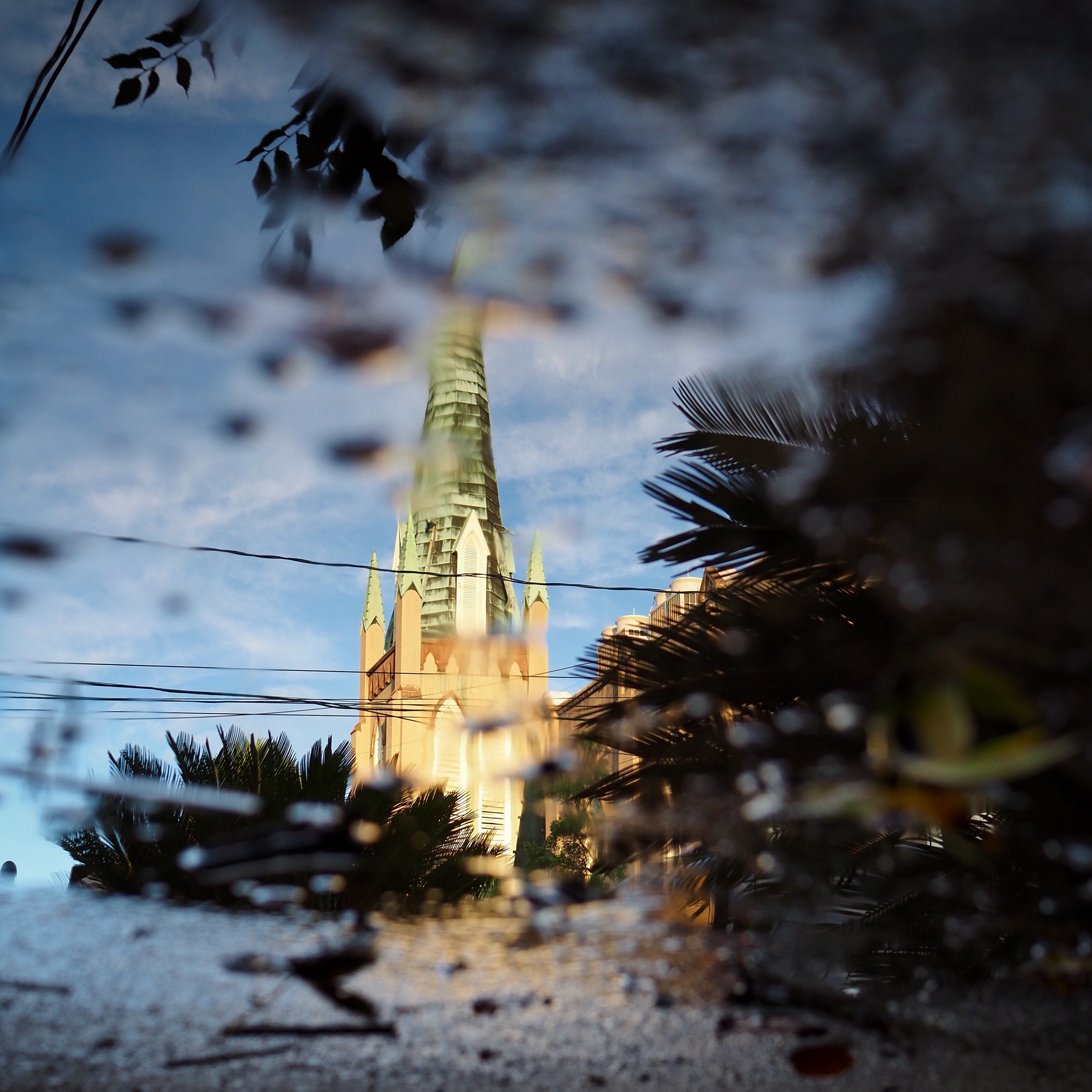
Above the Surface by Christopher Parsons

I think that I really fell in love with photography after purchasing, and shooting with, a used Fuji x100. It was a terrifically flawed little camera: autofocus was terrible, it was generally slow, and battery life was subpar. Furthermore, I didn’t really know what I was doing: I had shot on an iPhone for years and I didn’t really understand how to configure the x100 for semi-automatic shooting (e.g. setting aperture priority, the importance of difference ISO settings, etc.). Frankly, the x100 was probably too much camera for me at the time…but I loved it, nevertheless.

But as I’ve written about previously, I’m not entirely certain that I really enjoy shooting in the 35mm format. Some of that, I suspect, is associated with how I fell (back) in love with photography. I originally bought my Olympus OMD-EM10ii to travel to Cuba, and purchased a Panasonic 25mm 1.7 lens for the trip. While it’s inadvisable to take a new camera and lens with you when you travel, that’s what I did, and I walked out of Cuba with a lot of images that I really, really loved. I shot exclusively on the 25mm (50mm equivalent) and it lead me to understand how the lens worked in ways that I don’t think I’d have ever appreciated had also brought and use a zoom lens. However, I bought the lens because it was what reviewers said was a good ‘first’ lens insofar as it’s pretty versatile for anything and everything: you can do some portraiture (not really my cup of tea), can do landscape (as I did for that week in Cuba), and some architecture shots (also, as I did in Cuba).1 But without learning other focal lengths I was just going on what other people said the 50mm equivalent lens was good for without understanding from practice what I thought of it.

Fast forward to last week, when I travelled into the United States of America for a wedding and some quiet time in Savannah. Before I left I had to answer a hard question: what lenses should I bring with me? I decided to bring the Olympus 17mm 1.8 and the Panasonic 25mm 1.8, with the goal of trying to learn which I might prefer for general walkabout photography, and why I prefer one over the other.

To be honest, for general walking I think that I really enjoy the Olympus 17mm lens. I truly began to appreciate the ability to capture a broad scene, in excess of what the 25mm lens could capture. And I truly, absolutely, with all of my heart love the manual/automatic focus clutch; I tend to shoot exclusively in manual with the 17mm and it just feels right.2 I also started to come to terms with the differences in how the lens present colour; I don’t know that I prefer one or the other and, instead, just appreciate the differences that come from either one of them.3

However: I also learned that I really, really, really dislike how the 17mm presents humans — and in particular my own body — when not carefully used. I saw one picture in particular and was shocked: was that how I appeared? Was my entire sense of my body inaccurate?

I mean, I’m sure that my perception and the world’s perception of my body varies. But the 17mm could be incredibly unflattering if not used with a degree of deliberateness that I’ve never required with the 25mm. (It can also produce some pretty nice portraits, too, based on some shots a friend took of me.) For anyone who’s shot these two focal lengths for any period of time this won’t come as any kind of a shock. And I’ve seen enough online tutorials to know that what I saw was to be expected. However, I’d never actually lived the reality of having shots of myself, from 35mm equivalent and 50mm equivalent lenses, put beside one another. It’s meant that I have a pretty visceral and lived reality with either focal lens which is, in and of itself, a photography experience that I’m delighted to have had. Even if it made me question my body for a little bit until I figured out why some shots appeared one way, and others another!


I do a fair bit of personal reading that is like eating candy — i.e. fiction that caters to my guilty pleasures — and some that is like eating fibre — i.e. non-fiction and fiction alike that impress upon me the lived realities of other cultures, groups, and persons.

I just finished Adam Hochshild’s King Leopold’s Ghost: A Story of Greed, Terror, and Heroism in Colonial Africa and, at various points in the book, I felt like I’d been hit by a baseball bat. The kinds of actions which were taken against persons living in the Congo were, at their best, barbaric. What was most striking was how those historical facts were so carefully hidden away, destroyed, and removed from the minds of Western and African persons alike. I’ve read anti-colonial literature in the past but this was the first book that helped me genuinely appreciate the horrors inflicted by Western nations on persons around the world; the stories from the victims, quoted in their entirety, were particularly painful and sickening to read. I think that it’s also the book that has opened my eyes to some of the challenges around excavating history of colonialism, and how such excavation and hardship is the necessary pre-condition to coming to terms with the past: Western governments and elites buried the past and, before the past can be reconciled, it must first be made present in our daily lives.


Inspiring Quotation of the Week

“People matter. Meaning matters. A good life is not a place at which you arrive, it’s a lens through which you see and create your world.”

— Jonathan Fields

Great Photography Shots

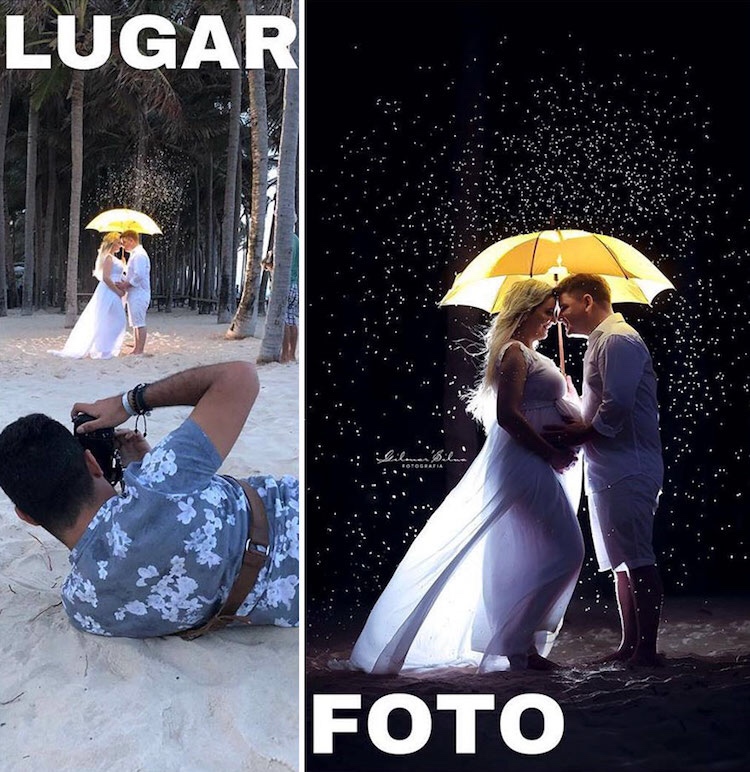
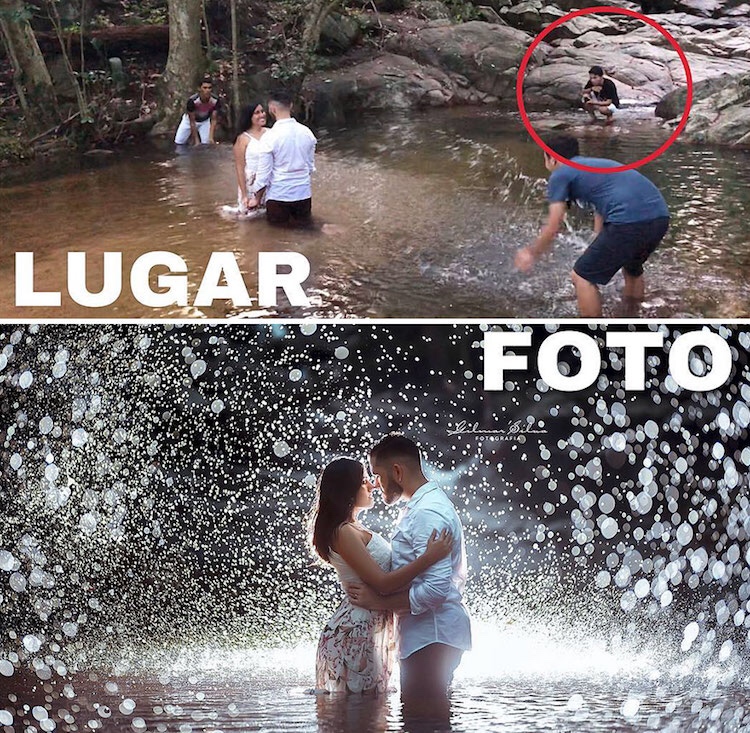
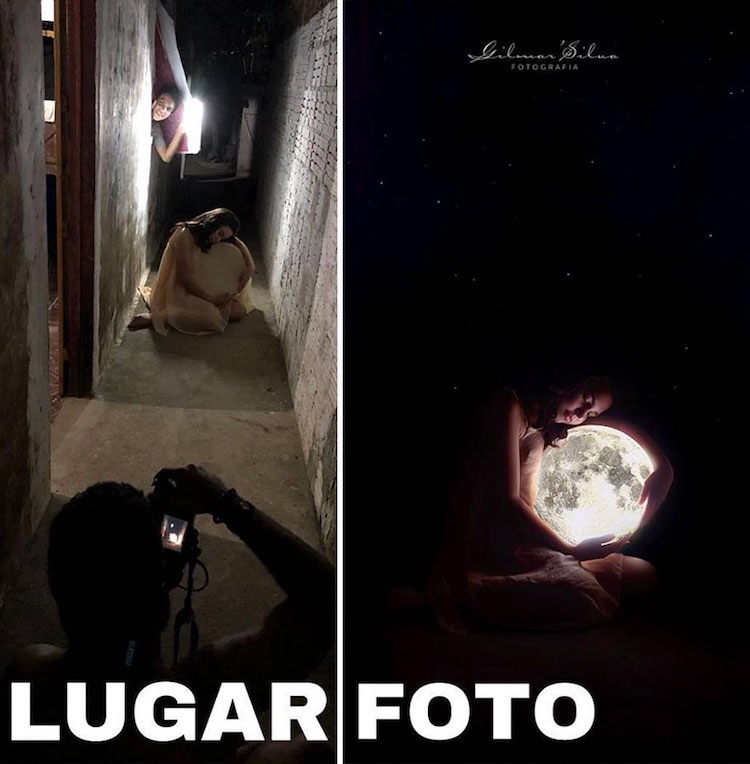
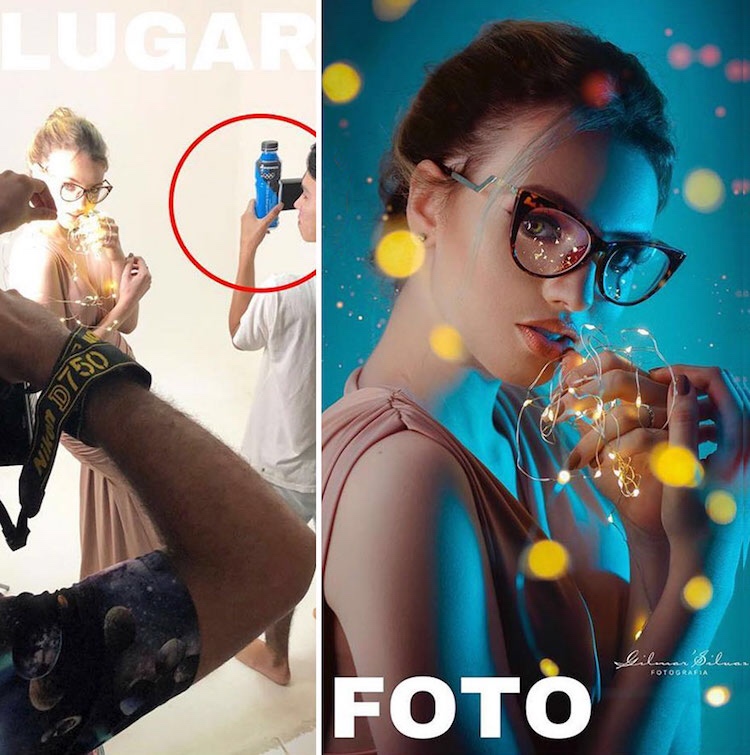
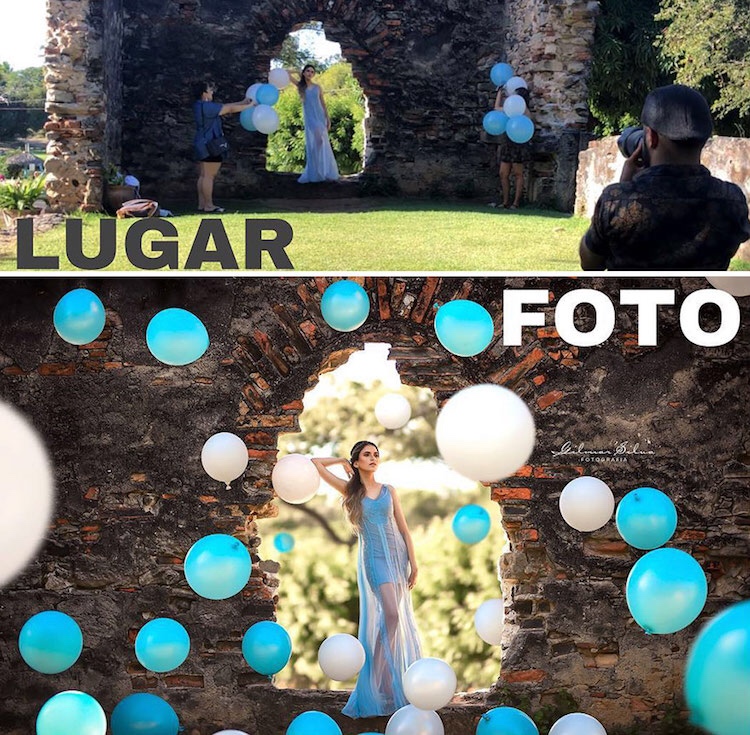
One of the things that I’m trying to get better with is presenting images according to how I imagined them. This is distinct from how things may have looked: I often want to transform the scene in some way to present something that was in excess or slightly aside from the scene itself. It’s for this reason that I really like Gilmar Silva’s shots that juxtapose the ‘before’ and ‘after’ portraits he takes. In taking us behind the scenes of a final shot it’s easier to think through the logistics and editing that may enter into making an image, as opposed to snapping a photo.

Music I’m Digging

  • Gang Starr – Daily Operation // I’ve had this 1992 album on repeat for the past week or so; the tracks are incredibly solid mind melds of DJ Premier and The Guru. What’s striking — and depressing — is that so many of the tracks on racism and segregation in America (and North America more broadly) are as poignant and accurate, today, as they were when written over twenty years ago. Whither progress?
  • Seafret – Tell Me It’s Real // Seafret reminds me of Banners in terms of their sound and topics that they sing about. And, to my ear and taste, that’s a good thing! The album spends time focusing on the themes of love, loss, and despair, all themes that have resonated deeply with me over the past few months.
  • Leonard Cohen – Popular Problems // Cohen is a staple in my daily listening, and has been ever since I visited an exhibit/memorial to him in Montreal last December. His dry, cutting, lyrics combined with his lyrical whimsy were what caught me, and it’s the pain of love and life that keeps me coming back listen after listen.

Neat Podcast Episodes

  • On the Margins – Jason Kottke and Twenty Years of kottke.org // I have to admit that I’m having a hard time with On the Margins. On the one hand, I find the idea of having discussions with authors about the bookmaking process to be pretty neat. On the other, I find that Craig Mod (the interviewer) is too heavy handed in some of his engagements; he has a tendency to push the conversation in unnatural or forced ways. All that having been said, this episode on kottke.org, one of the older websites in existence, is pretty interesting insofar as it digs into the rationales for why the site exists in the first place, projects that have been considered and set aside, and reflections on what comes next.
  • The Daily – When We Almost Stopped Climate Change // Warning: this is a deeply enraging podcast, because it walks through how there were active efforts that almost led to real action to affect climate change in the 1980s…and which was stopped by conservative politicians on the basis of their economic interests. The episode does a good job in walking through efforts to raise awareness and combat climate change while, at the same time, making it very clear how naked capitalist interests are responsible for selling out the next generations.
  • The Daily – The War Inside the Catholic Church // I don’t follow religious politics particularly closely, but am aware that the current Pope is in routine conflict with more conservative elements of the Catholic church. As a non-Catholic I personally believe that Pope Francis is the best thing that could have happened to the Church, at the time it’s in now, and so it’s particularly distressing to learn how American conservative Catholics are actively engaging in warfare meant to diminish the current Pope. (As an aside, Francis’ book, The Name of God is Mercy, is a beautiful book that clearly both sets him as a progressive while simultaneously acting as a curious introduction into what the Church could and should be through his understanding of Catholicism.)
  • The Art of Photography – Your Camera Is Better Than Ansel’s // It’s easy to get caught up in gear that is used to make images but focusing on equipment mistakes the importance of technology versus vision. This episode emphasizes the need to develop our vision first and foremost, with equipment being of tertiary importance.

Good Reads for the Week

  • We’re in a new age of obesity. How did it happen? You’d be surprised // In another analysis of the obesity epidemic, Monbiot asserts that it’s less about people exercising less, less about the quantity of foods people are eating, and more about the manner in which foods are chemically designed. He writes, “we ate more in 1976, but differently. Today, we buy half as much fresh milk per person, but five times more yoghurt, three times more ice cream and – wait for it – 39 times as many dairy desserts. We buy half as many eggs as in 1976, but a third more breakfast cereals and twice the cereal snacks; half the total potatoes, but three times the crisps. While our direct purchases of sugar have sharply declined, the sugar we consume in drinks and confectionery is likely to have rocketed (there are purchase numbers only from 1992, at which point they were rising rapidly. Perhaps, as we consumed just 9kcal a day in the form of drinks in 1976, no one thought the numbers were worth collecting.) In other words, the opportunities to load our food with sugar have boomed.” This kind of assessment is important because it pushes back on the concept that people become obese because of a lack of motivation or other self-drive rationale: weight gain is a community problem, driven by chemists and marketers, and obese individuals are their victims.
  • Facebook Fueled Anti-Refugee Attacks in Germany, New Research Suggests // This study again speaks to the ills of the filter bubble economy: to drive engagement, persons are shown more and more polarizing material which often includes anti-immigration materials. This polarization isn’t ‘just online’: it leads to increases in physical violence towards immigrants, and when Internet outages take place the rates of violence decline in statistically significant ways. At some point the mountain of research has to showcase that services like Facebook are prone to increase misinformation and threaten certain communities in serious and lasting ways.
  • ‘We Cannot Afford This’: Malaysia Pushes Back Against China’s Vision // While the prospect of China assuming greater and greater regional power isn’t necessarily surprising, the pushback against Chinese efforts is curious. The article, generally, provides a good overview of Chinese-Malaysian relations but what got me laughing was how obviously corrupt some of the business dealings have been. As an example, a company who’s past work included building a zoo and bird park was hired to build a series of artificial islands as well as establish a deepwater port capable of hosting an aircraft carrier. I guess building cages for animals made them well suited to build housing for military vessels?
  • Woman: My iPhone was seized at border, then imaged—feds must now delete data // The suit against the government for having seized and imaged the woman’s iPhone is novel. But it was the 90-day period for which devices can be retained that struck me: what is the time delta for updates to be developed to successfully crack iOS devices these days? Is the period of time for which devices are retained functionally the period of time required before attacker’s can successfully overcome Apple’s protections?
  • Prosecutor: Suspect must give up his phone’s passcode in fatal hazing case // Case law in the USA remains disturbingly unsettled concerning whether compelling a person to disclose their decryption password constitutes a Fifth Amendment violation. This Louisiana case adds further confusion as to how to interpret that law; it’s only a matter of time until the Supreme Court is compelled to determine the scope of Fifth Amendment protections as they pertain to securing contemporary electronic devices. God help us all if they find that decryption doesn’t infringe up existing rights, as such a ruling would likely have a cascading global impact, to the detriment of citizens’ rights around the world.
  • How the Trump Administration Is Remaking the Courts // Zengerle has done a masterful job analyzing and assessing how the Trump presidency has been quickly and significantly affecting the political leanings of courts throughout the United States, and how his actions rely on the Senate having changed its own rules concerning judicial appointments. The impacts of these appointment will likely be felt over decades, not days or months, and could ultimately lead to significant changes in the nature of American jurisprudence as old norms are overturned based on novel legal philosophies taking hold in courts across the United States.
  • What about those mandate letters, Premier Ford? // An apt column by John Loric summarizes the significance — and historical precedent — of the Ontario government refusing to publish the letters to the Cabinet. Those letters indicate the objectives Ministers are expected to meet; absent them, and absent a real campaign platform, the public has no real way of understanding what the government is specifically directed to do or whether everything is just being made up on the fly. The Ontario government’s decision is bad for democratic accountability which is, ostensibly, one of the issues voters had identified as an issue in the previous government.
  • Researchers Edited Mice Genes to Stop Them from Dreaming // Though the researcher’s ultimate goal of the research — to better understand the role(s) of REM sleep to human well-being — is a serious goal, the article itself almost reads like a finding one would stumble across in a dystopia hellscape. “Researchers liberate workers from non-productive sleep elements, ensuring the regime’s productivity.” On second thought, I could imagine an ever-so-slightly modified headline of that type in at least a half-dozen western newspapers in as many different countries…

Cool Things

Footnotes

  1. I know: 35mm is often regarded as better for landscape and architecture alike, but I personally enjoy how you can isolate particular characteristics of a scene using the Panasonic 25mm.
  2. Although for the love of all things even marginally holy I wish that Olympus would push a firmware, so that when I set the clutch to manual the camera would activate focus peaking. It drives me nuts that this is only included in the Pro line of lenses.
  3. I’ve found a particular editing aesthetic with the 17mm that I like; it seems to start to approximate Fuji’s Classic Chrome look (the sole reason I wish I owned a Fuji is for that look!). In terms of the 25mm, I like the vibrancy of its images, as compared to the more neutral colours of the 17mm. For both lenses I tend to shoot jpg and in the ‘Natural’ colour filter on the camera.
Categories
Quotations

On the Relationship Between Knowledge and Power

… surely there is no automatic, positive link between knowledge and power, especially if that means power in a social or political sense. At times knowledge brings merely an enlightened impotence or paralysis. One may know exactly what to do but lack the wherewithal to act. Of the many conditions that affect the phenomenon of power, knowledge is but one and by no means the most important.

Langdon Winner, The Whale and the Reactor: A Search for Limits in an Age of High Technology