Categories
Roundup Writing

The Roundup for January 13-19, 2018 Edition

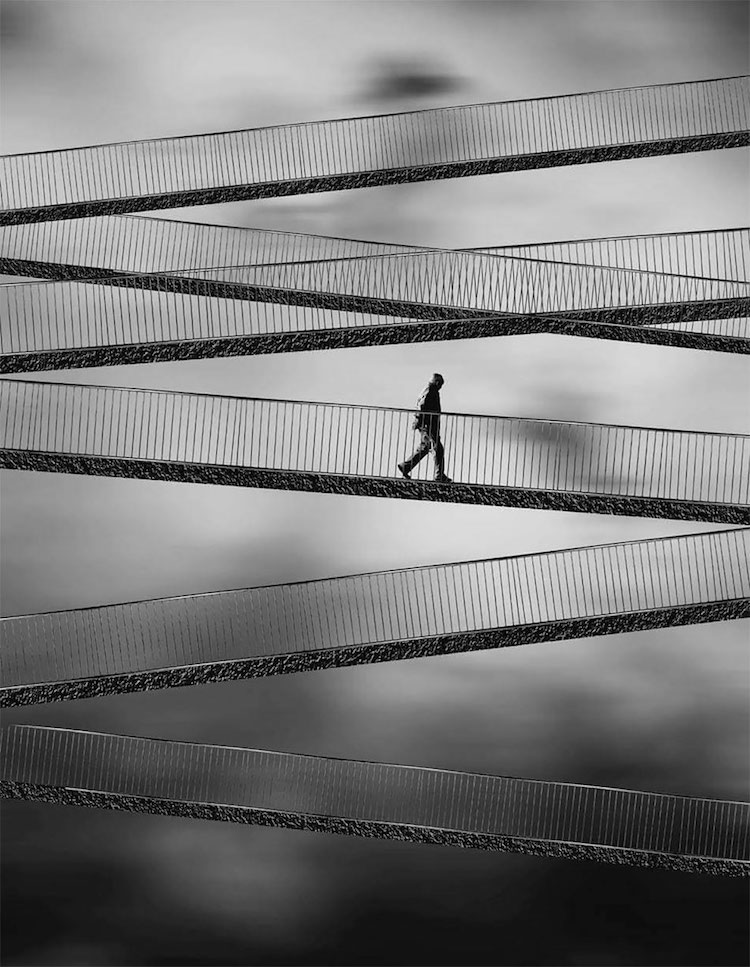
Boundaries
Boundaries by Christopher Parsons

I’ve been trying to clean up aspects of my digital past for the past six or eight months. To date, that’s mostly meant migrating content between a range of different platforms to consolidate it. The ultimate goal is to move all personal stuff to either a private journal or public blog (this one), all business and work-related stuff migrated to my professional website, permanently delete tens of thousands of old emails (and empty old email accounts),1 and re-evaluate the different social media accounts that I possess and close/delete at least some of them.

In the course of this digital cleanup I’ve stumbled across lots of old writings, communications, and thoughts. Most are pretty banal but others remind me of significant moments in my life. Small things, like the first time I signed a lease or received notice that I was accepted into graduate schools. Notifications of family health emergencies. And too many messages from friends to which I didn’t respond.

Why am I cleaning things up? In part, for privacy and security reasons. I’ve tried to keep a relatively ‘clean’ online profile but know that my more youthful self was less mindful of what was put online that I am today. There are regular stories about accounts being penetrated and documents either being directly leaked to the public or, worse, being selectively modified and then subsequently published. The best way of addressing such threats starts by getting rid of materials that might be used in such doxing operations and old accounts that might offer insight into my private life.

I think that the process of going through and deleting items, however, also stems from my distaste for how near-permanent retention affects human relationships. In his book, Delete: The Virtue of Forgetting in the Digital Age, Victor Mayer Schonberger argues that humans have evolved to forget many of our interactions with one another in order to facilitate long-term relationships with one another. He impresses on the reader that it is important to add ‘forgetfulness’ to digital data collection processes and, as I wrote previously,

draws what are arguably correct theoretical conclusions (we need to get a lot better at deleting data to avoid significant normative, political, and social harms) while drawing absolutely devastatingly incorrect technological solutions (key: legislating ‘forgetting’ into all data formats and OSes).

We don’t remember all of the slights in a relationship, or all the harsh words spoken between one another, or even the abnormally positive comments or actions. As a result, we can have interactions with people who might have really upset us in the past because the reasons of that upset fade over time: we say that ‘time heals all wounds’ for a reason. It turns out that it’s because of human evolution!

So by retaining our memories permanently in a digital format there is the perpetual chance that we’re reminded of things that our minds have forgotten on our behalves. Perfect and permanent recollection isn’t the norm, and in our race to digitize and remember everything forever our technical aspirations are stepping beyond the nature of our bodies. Now we exceed our own bodily capabilities in lots of ways — humans are functionally cyborgs — but affecting our psychological interactions with one another strikes me, personally, as having potentially dangerous social implications. As a result, I tend to regard my current process of deleting parts of my past, forever, as a mental health practice as well as a practice linked to privacy or security.


The last few months of 2017 were hard for me. One of the ways that I know this is I took up hobbies that didn’t contribute to my development as a person and were, instead, simply pleasurable ways of wasting away time and trying to relax in the absence of doing anything of import. But it never really felt right: I had nothing to show at the end of the activities and typically wasn’t any happier with myself by the end of the recreation period.

Some of that is scar tissue from past relationships and past work-life imbalances.2 And some of it is linked to historical coping methods in periods of high stress. But this year I want to ensure that I find more productive outputs to relax so as to to find enjoyment in personal creation and to ensure that I can develop and grow as a person instead of just wasting away precious time. That doesn’t mean I’m never going to waste away time but, instead, that I want to be more deliberate and measured when I do decide to indulge in pointless recreation that doesn’t contribute to my personal enrichment.


Inspiring Quotation

“To make real change, you have to be well anchored – not only in the belief that it can be done, but also in some pretty real ways about who you are and what you can do.”

– Twyla Tharp

New Apps and Great App Updates from this Week

Great Photography Shots

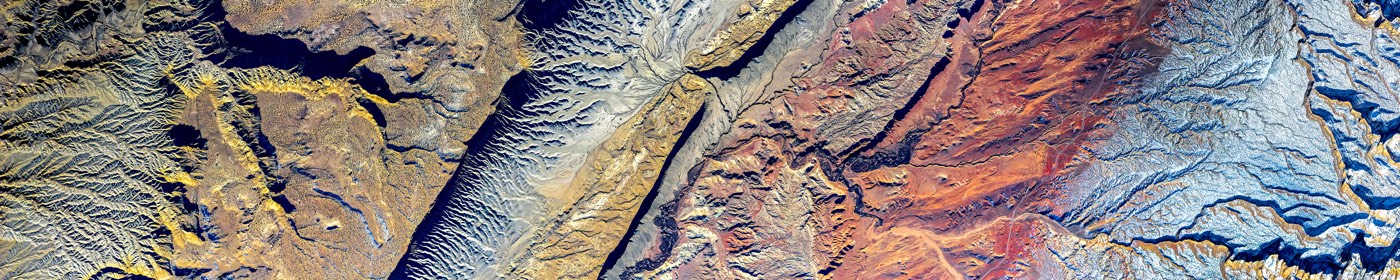
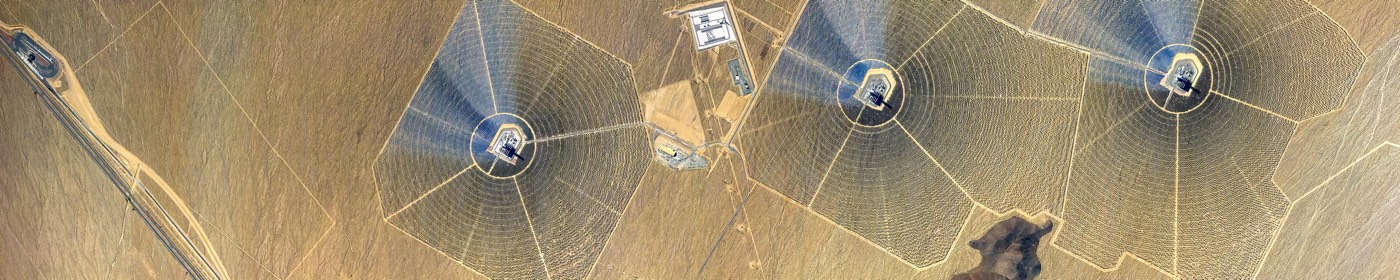
Vincent Laforet strapped an iPhone 7 to the bottom of a Lear jet and then flew in a straight direction while activating the iPhone’s panorama mode. He’s sharing photos over at Instagram. They’re absolutely spectacular and show just what you can do with smartphone cameras.
Music I’m Digging

Neat Podcast Episodes

Good Reads for the Week

Cool Things

Footnotes

  1. I don’t delete the actual email accounts because I’m mindful of a company re-using my old usernames and them potentially transforming into a vector for phishing. Yahoo! did this to their users.
  2. It’s really hard for me to just take time to myself when that time isn’t productive in some sense. I can identify the reasons why but knowledge on its own isn’t sufficient to overcome the feeling of being ‘bad’.
Categories
Aside

2018.1.19

Peer review is a hit and miss proposition. Sometimes whoever reviews the work is clearly unsuitable. Other times the reviewer’s suggestions would have you write a totally new paper. And other times the reviewer shows how the argument you’re making can be helpfully deepened and strengthened. That last kind of review is rarer than it should be but, when you experience it, can help to transform a good paper into a considerably stronger and more meaningful piece of work.

Categories
Photography

Be At Peace

Photo made with a Sony rx100m2 at the Art Gallery of Ontario on January 14, 2018 in Toronto. Edited in Apple Photos.
Categories
Aside

2018.1.17

Blew away over 10K emails that were collecting dust in one of my main accounts. My goal over the next few months is to remove the mass majority of old email that serves no purpose. Doing so will both free up some space (not that I really need it) while also cutting down on the possible deleterious effects of having the account in question getting hacked and contents selectively modified and/or leaked.

Categories
Links

Promoting Instagram Addiction

From The Globe and Mail:

Matt Mayberry, who works at a California startup called Dopamine Labs, says it’s common knowledge in the industry that Instagram exploits this craving by strategically withholding “likes” from certain users. If the photo-sharing app decides you need to use the service more often, it’ll show only a fraction of the likes you’ve received on a given post at first, hoping you’ll be disappointed with your haul and check back again in a minute or two. “They’re tying in to your greatest insecurities,” Mr. Mayberry said.

I didn’t know that how ‘likes’ were doled out were designed to get you to keep coming back into social media applications. If Instagram is toying with its users this way then I’m going to seriously evaluate whether I ever want to use the application again. Activities like those described are just slimy and I don’t feel the need to provide such companies with either my content or my attention.

Categories
Aside

2018.1.16

I’ve swapped between a bunch of different fitness trackers (and companies) over the past several years. I love how Apple Health manages to bring all of them together…except for my historical Fitbit data. But I found (and installed and ran) myFitnessSync for Fitbit – Fitbit to Apple Health and now I finally have all of my data stored in Apple Health. And, also, I can now blow away my old Fitbit account!

Categories
Aside

2018.1.15

With another poll coming out warning how indebted Canadian are, and the personal and national risks of carrying so much debt, I’m glad that I spent so much time (and money!) last year shedding my consumer debts. I’m not looking forward to increases to student loan carrying costs but they’re manageable and won’t risk my quality of life. But I was in a privileged situation: I really don’t know what society is going to have to do to help people who have accumulated far too much debt, though increasing the borrowing costs might at least disincentivized people from accumulating large quantities of new debt.

Categories
Links

Anti-Virus and Windows Vista

From Ben Farthi:

In my role as the head of Microsoft security, I personally spent many years explaining to antivirus vendors why we would no longer allow them to “patch” kernel instructions and data structures in memory, why this was a security risk, and why they needed to use approved APIs going forward, that we would no longer support their legacy apps with deep hooks in the Windows kernel — the same ones that hackers were using to attack consumer systems. Our “friends”, the antivirus vendors, turned around and sued us, claiming we were blocking their livelihood and abusing our monopoly power! With friends like that, who needs enemies? They just wanted their old solutions to keep working even if that meant reducing the security of our mutual customer — the very thing they were supposed to be improving.

Anti-virus programs remain a problem in terms of the attack surface they can open up. This surface, combined with the failure of many products to effectively identify and act on malware signatures, means that consumers tend to put far too much trust in products that often function poorly at best.

Categories
Aside

2018.1.12

I have a deep and abiding dislike of editors of academic journals who enrol me in their content management systems and then issue peer review requests without bothering to first send me a personal inquiry. I appreciate the ‘ease’ of automating the requests but doing so significantly diminishes the likelihood that I’ll ever review for them or suggest another peer to take on the assignment because I don’t like the idea of them being spammed, either. Further, the way these requests are issued raises security concerns: I don’t know the journal, there’s no reply-to-human contact, nor can I verify the legitimacy of the link by just glancing at it. The onus shouldn’t be put on me to sniff around and confirm the sender in order to do free labour for them.

Categories
Roundup Writing

The Roundup for January 6-12, 2018 Edition

The Descent
The Descent by Christopher Parsons

I was listening to ‘Tips from the Top Floor’ this week and, in response to the question of where a listener should consider posting their photos online, Chris Marquardt launched into a good series of questions about why people share news, photos, and other media online. Is it to draw attention to things? Is it to generate likes? Is it to elicit feedback? Or is it for some other reason?

It’s not the first time that I’ve thought about why I, personally, produce and share materials. And there are very different reasons for how and why I write and share in different mediums. Some venues, like Twitter, are where I and my professional colleagues tend to share information with one another while also engaging in (limited) conversations. My professional website, today, is a space where I publish mostly- or totally-complete work to make it accessible to colleagues who are interested in my longer-form materials. My personal website, Excited Pixels, is largely for me: I write, and collect information, because doing so helps me think about the issues and products that I find interesting or noteworthy. I’d be lying if I said I always shared or linked material here that I thought was interesting but my goal is to at least have some material to go back through.

Other places, like Flickr when I used it, was where I stored my photos in the case of a serious data disaster like a hard drive crash or house fire. Earlier social networks were really used to share information with my friends (as opposed to colleagues), though I’ve largely stopped publicly writing about deeply personal or day-to-day content at this point.

There was one major new social network service that I regularly used last year: Instagram. It was very, very helpful in forcing me to take more photos and get a lot more comfortable with my cameras and some basic editing software. I can see a difference in the photos I take a year later but, equally as important, I can get the kinds of photos I want faster because I understand my gear a lot better today. I did enjoy looking at really amazing photos on a regular basis but found that the site both takes a lot of time, in part because the almost daily curation of content was a pain in the bum. Furthermore, the time that I spent there meant I wasn’t spending time elsewhere, such as here, or engaging in any number of other pursuits.

This year my ‘new’ social network to try out is micro.blog. And to be honest I don’t know exactly what I think about it. As a plus, the people who are currently using it produce a lot of signal and not a lot of noise, and the blogging tends to be more personal than is common today. It feels like a community of people who have, and are, coming together. It’s a new network and so there are UI things that are still being developed, and the actual way that it works remains a borderline mystery to me,1 but it’s interesting to watch. And why do I post there? I…don’t entirely know. In part because I’m curious to see how the network develops: it’s sort of like watching Twitter, back when I joined, but where most of the users are more mature and self-aware and mindful of what is being posted.

I’ve always tended to delete almost as much content as I post, not so much because I self-censor2 as because I want to be careful and mindful in what I permanently add to the Internet. One of the benefits of blogging in different venues since the early aughts is that I lived through the blowback that can arise when the stakes were relatively low and consequences minimal. That’s less the case today as a result of the memory of the ‘net combined with the speed at which errors can spin out of control. What once could be forgotten, even online, is now likely semi-permanent at best, and the speed at which an error can go viral, today, is unlike almost any other time in history. Still, the questions raised by Chris apply as much to text-based social media and content production and sharing as they do to photography. It’s helpful to be reminded periodically that the best content is that with which we deliberately engage.


Related to photography, one of my personal goals for this year is to print more of my stuff! The last time I did a lot of printing of my own material was in 2016 and I really want to refresh my frames!

There are a few different ways I’m planning on making my photos a little more physical. First, I’m going to be printing a ‘best of’ album for 2017. I imposed a 50 photo limit to make me cull, cull, and then cull a lot more. In my initial analysis what’s most striking is that while I might not think that the photos are necessarily the best technical shots I took, they all possess similar kinds of tension and drama. So over the next few months I think that I’m going to consider what went into getting the ‘best of’ shots and then seeing if there are interesting or novel ways to better fill my shots with more drama.

Second, I’m going to be printing a bunch of photos on canvass for the first time! At the moment I’m thinking I’ll try printing a bunch of 8×8” black and white photos and, above them, 2-3 much larger colour prints (likely in gold frames) to draw some contrast on the empty wall that I have available to me.

Third, I’m going to probably print a bunch of 4×6 shots for the purpose of sending them to family members. I’d like to include a short message on each of the photos; it gives a nice thing to put up on a fridge or wall3 and also a physical artifact with my thoughts about the recipient or whatever is on my mind at the time. I’d actually intended to print and send these to my dad and stepmother last year, in an effort to start repairing our relationship, but sadly wasn’t able to. But I don’t see why a good idea can’t be recycled and used to maintain the relatively good relationships I have with my surviving family members!


Quotation That Resonated With Me

“Belief, as I use the word here, is the insistence that the truth is what one would ‘lief’ or wish it to be. The believer will open his mind to the truth on condition that it fits in with his preconceived ideas and wishes. Faith, on the other hand, is an unreserved opening of the mind to the truth, whatever it may turn out to be. Faith has no preconceptions; it is a plunge into the unknown. Belief clings, but faith let’s go.”

-Alan Watts

Amazing Videos

https://m.youtube.com/watch

Great Photography Shots

I really appreciated Helena Georgiou’s portfolio, where she captures ordinary people passing by interesting and vibrant parts of the urban landscape.

Person walking across bridge

Black and white umbrella on yellow grid

Woman in blue and White walking along a yellow, blue, and white wall.

Music I’m Digging

Neat Podcast Episodes

Good Reads for the Week


Footnotes

  1. Little things like…I have no idea what I’m paying a monthly fee for, exactly. I think I need to pay to be a member of the network, or to post to the network, or something? But I really have no idea and the support documentation when you sign up is utterly unclear just how things work, or why, which makes sense given its relative youth and the technical sophistication of a lot of its early members. I have faith this will improve as its user numbers grow.
  2. Or, at least I don’t self-censor too often. Except when I need to do so to avoid legal jeopardy.
  3. Some of my family have almost entirely bare walls…so I can imagine these photos migrating onto at least one person’s walls.