Welcome to this edition of The Roundup! Enjoy the collection of interesting, informative, and entertaining links. Brew a fresh cup of coffee or grab yourself a drink, find a comfortable place, and relax.
When I first really realized that I liked photography, it was while I was using the Fuji X100. The experience of shooting with it was really special but, unfortunately, I had to sell it during some unpleasant financial times. In its stead, I picked up (and have extensively used) a Sony RX100M2 and, later, an Olympus EM10ii. I’m a huge fan of both of those cameras, and I’ve been forcing myself to learn manual shooting (in black and white) with the RX100M2 over the past few months.
But…despite the fact that I’m really happy with how my photography has developed over the past year or so, I keep lusting for another Fuji camera. I’d like to imagine that the reason is I want to enjoy the colours of the Fuji line. I’m sure that’s (almost!) true! But, really, I think it’s more that I appreciated the aesthetics of the X100, that I disliked the reason and rationale for having to get rid of something that I loved, and that the idea of constraints in photography appeal to me.
So, what has me burning tens-of-hours per week on looking at cameras? It’s mostly associated with thinking if I want to get a X100S or X100T or X100F, or instead shift over to getting something like the Fuji X-Pro 1 (or even, perhaps, the X-T1) and a 50mm equivalent lens. I really like the idea of spending a lot of time shooting manual at 50mm, as 35mm just hasn’t ever come naturally to me. But the Fuji camera that I fell in love with was the X100…and so a rangefinder-style body is definitely what I really want to have on my shelf…
At the same time, I’m wondering if I should just hold out and either see if the next iteration of the X100 line comes with weather sealing, or if I should instead wait until there’s something interesting from Olympus, or just invest all of the money I’d dump into a Fuji system into some new 50mm equivalent glass for the M4/3 system…
Inspiring Quotation
“Old friends cannot be created out of hand. Nothing can match the treasure of common memories, of trials endured together, of quarrels and reconciliations and generous emotions.”
— Antoine de Saint-Exupéry
Great Photography Shots
This work by Greg Girard (posted at My Modern Met) is just…wow…In his series of shots taken in the 1970s and early 1980s, Tokyo looks like Blade Runner or other truly classic science fiction movie or as described by the sci-fi authors of the time.
OPPO – You Have No Constitutional Right To An Abortion // The two topics of the show — abortion rights in Canada and the Liberal government taking credit for being advocates of homosexual rights — are really well covered. Gerson’s assessment of the laws and politics around abortion in Canada was useful for dispelling a lot of the myths around what can, and can’t, be done to a fetus in Canada, and Ling has a good critical analysis of the federal Liberals’ actual work to support gay rights. OPPO is typically crazy solid in what they assess, and this episode is no exception.
Good Reads
What I Learned Trying To Secure Congressional Campaigns // Without a doubt, this article is one of the most exceptional pieces of practical advice on developing security training that I’ve come across in several years. It’s filled with good, accessible, explanations of what is possible, what works, and what is impossible or doesn’t work, when attempting to provide practical security advice to political parties or campaigns.
Hypersonic Missiles Are Unstoppable. And They’re Starting a New Global Arms Race. // Smith’s long form article in the New York Times Magazine makes clear that the research being into hypersonic weapons, absent serious diplomatic engagement to establish terms on their (non-)use, could potentially amplify the international risks associated with great-power conflicts. Such weapons could render much of America’s existing military infrastructure moot in a war fighting situation, where great powers were actively seeking to disable one another’s core land- and sea-based military infrastructure. To put it in perspective: Russia might strike at the Pentagon with only five minutes warning, or China at Guam in under ten minutes, the or USA at China’s inland missile bases in ten to fifteen minutes.
Cool Things
House DZ // This is a beautiful piece of minimalist architecture.
Welcome to this edition of The Roundup! Enjoy the collection of interesting, informative, and entertaining links. Brew a fresh cup of coffee or grab yourself a drink, find a comfortable place, and relax.
So Apple has announced all the big changes forthcoming in iOS 13. While lots are great and exciting, the update still won’t bring baseline feature parity between MacOS and iOS core applications. The result is that serious users of consumer MacOS applications can’t fully transition to iOS or iPadOS. What’re just two baseline things that are missing, from my self-interested perspective?
1. Smart lists in Apple Music & Apple Photos
I get that smart lists may not be everyone’s deal, but self updating lists are pretty important in how I manage and organize data. To give an example, I use smart lists in Photos to determine what camera I used to take which photo. Does this matter for lots of people? Probably not, now that smartphones have colonized the photography business. But for someone like me who wants to know such metadata, the absence of it is noticeable.
2. Detailed information about photographs in Apple Photos
I don’t know why, it you can’t check aperture, shutter speeds ISO, or other basic camera features in Apple Photos, in iOS 12 or 13. Nor can you create a title for a photograph. Again, as someone who takes tens of thousands of photos a year, and reviews them all to select a rarified thousand or two ‘keepers’ each year and titles many of those kept, I really want to record titles.1 And it drives me nuts that I can’t.
I get that there are a lot of pretty amazing things coming in iOS 13. But can’t these pretty table-stakes things come along? These aren’t ‘Pro’ features: there’re the baseline features that have been available on consumer apps in MacOS for years. You shouldn’t need to own and use a Mac to enjoy these capabilities.
Inspiring Quotation
“Society is not some grand abstraction, my friends. It’s just us. It’s the words we use, which are the thoughts we have, which determine the actions we take.”
– Umair Haque
Great Photography Shots
I really appreciate some of the great shadows that come out in these shots over at Mobiography.
Having figured out the problem of songs not being added to my ‘Songs I Love’ lists, my monthly lists are going to be a lot more expansive than those in the past. My May 2019 list clocks in at around 5 ½ hours, with a mix of hip-hop, rap, pop, and a bit of alternative and rock.
Neat Podcast Episodes
Lawfare – Avril Haines, Eric Rosenbach, and David Sanger on U.S. Offensive Cyber Operations // This is an insightful, and nuanced, consideration of the equities which are taken into account when the United States engages in different classes of cyber operations. While the title of the podcast is focused on offensive cyber activities, the same logics can clearly be applied to defensive activities such as those linked with vulnerabilities equities processes or development of activities intended to mitigate harms emitted from foreign adversaries.
Lawfare – Jim Scuitto on ‘The Shadow War’ // While Scuitto doesn’t necessarily talk about anything excitingly novel in the summary of his book, he does an absolutely terrific job in summarizing the high-level threats to American (and, by extension, Canadian and Western) national security. From submarine threats, to space threats, to cyber, the threat landscape is remarkably different today as compared to twenty years ago. In terms of responses or solutions, key to the American approach is reconsidering and re-engineering the responses to aggressive actions. Clearly American responses have failed to dissuade actors such as Russia and China in certain spheres, such as aggressive military engagement and cyber espionage and propaganda, and so more directed cyber-based activities meant to expose the corruption of foreign leaders might represent the next logical step for the U.S. military establishment.
Good Reads
When the Hard Rains Fall // Welsh has done a terrific job in both outlining the policy and financial and scientific causes that lead to serious, and dangerous, flooding in Toronto while marrying it with superb storytelling. Not only does the article provide a huge amount of information in an impeccably understandable format, but the graphics that accompany the piece in certain sections are almost certain to elicit an emotional reaction. Stories like this demonstrate why it’s important to pay for investigative reporting, while also showcasing how contemporary technologies can improve narratives for clarity and impact.
‘Botanical Sexism’ Could Be Behind Your Seasonal Allergies // In an ironic turn, when trees were routinely planted in urban environments in the 1960s, males of the various species were chosen on the basis that they wouldn’t promote litter by dropping seeds. However, these trees expel significant amounts of pollen which has had the effect of creating ‘pollenpocalypse’ events that both severely aggravate seasonal allergies and leave vast swathes of pollen coating the city.
Female Spies and Their Secrets // As in so many fields, women’s contributions to the intelligence and security services were largely erased from history as men replaced them. However, newly recovered and disclosed histories are showcasing the role(s) that women played throughout the second world war to lead underground resistances and otherwise facilitate Allied intelligence efforts.
Your threat model is wrong // Robert Graham’s abrasive and direct writing is refreshing, especially when he writes about phishing: “Yes, it’s amazing how easily stupid employees are tricked by the most obvious of phishing messages, and you want to point and laugh at them. But frankly, you want the idiot employees doing this. The more obvious phishing attempts are the least harmful and a good test of the rest of your security — which should be based on the assumption that users will frequently fall for phishing.”
After the Retail Apocalypse, Prepare for the Property Tax Meltdown // In the United States, some big box stores are attempting to (and succeeding in) reduce their property tax bills by arguing their stores should be valued at millions of dollars less than their current valuation. The result is that small towns, many of which invested in significant infrastructure projects to lure these stores, are at risk of having to reduce their services or defer additional investments that are less-focused on the company in question. Activities like this, combined with the general massive reduction in corporate taxes following the US government’s taxation changes under President Trump, threaten the very ability of small and large towns and cities to invest in infrastructure for the betterment of their residents.
The Secret to This Brazilian Coffee? Ants Harvest the Beans // In another instance of how weird and amazing the ecosystems of the earth are, ants that have inhabited an organic coffee farm in Brasil are affecting the taste of the beans in the process of removing the fruit around the beans to feed to their young. Apparently, this has effects on the acidity and taste of certain stronefruits, while also showcasing the interdependence of organic beings in the same ecosystem.
How To Make A Relationship Last // The guidance in this piece spoke to me, and reflect how I personally view long- term relationships and choice. Cage nicely summarizes that challenges of continuously choosing to stay in love, and in doing so provides a good set of instructions for others to follow and innovate upon.
How To Be A Leader — For Someone Who Hasn’t Been A Leader Before// This is really, really good and quick advice for someone who holds a leadership role, or is about to assume one. They key bits that stuck out include: put others before yourself, act as a role model instead of a boss, and be transparent about where you have weaknesses and work with your team to make sure they’re covered off. In effect, leadership under this model involves being humble, supportive, and aware of the need to improve the life and lots of your team.
Monocabin // This is a stunningly simple, and thus accessible, kind of home for vacationing (or, dare I say it, living alone in).
House DZ // The lines in this home are just so absolutely stunning. I know, to some, it might look cold but with the right palette it’d liven up quickly and beautifully.
Ok, what I really want is to be able to add a title to a photo in Apple Photos on iOS, and then when I export the photo to, say, Instagram for the title to be automatically updated. But I realize I shouldn’t dream of such ‘exceptional’ capabilities and so will settle for adding titles manually in iOS and Instagram. Like an animal. ↩
I’ve been spending a lot of time seriously reacquainting myself with my Sony rx100m2. This is an older camera at this point, but I’ve made a decision that I exclusively shoot black and white on it, and this is the camera that is (almost) always with me. I’m basically forcing myself to actually shoot black and white, as opposed to adding black and white filters to colour photos. It means some colour shots are probably “lost” but, at the same time, a whole pile of amazing shots (to my eye) are being captured because I’m learning a whole new way of seeing the world.
Below are some of the happier results of this experiment; I can definitely see a future where I print out a pile of these types of photos to put up around my office or home.
The Race! by Christoper ParsonsStand! by Christopher ParsonsHome by Christopher ParsonsThe Spot by Christopher ParsonsTrapped by Christopher ParsonsApparition by Christopher Parsons
Welcome to this edition of The Roundup! Enjoy the collection of interesting, informative, and entertaining links. Brew a fresh cup of coffee or grab yourself a drink, find a comfortable place, and relax.
Inspiring Quotation
“Do what you feel in your heart to be right —for you’ll be criticized anyway.”
Daniil Trifonov – NPR Tiny Desk Concert // Trifonov’s performance is just spectacular, and his Chopin is amongst the best I’ve ever experienced. The nuance of his playing cannot be overstated; his technical mastery lets him truly express the emotions behind each of the with which pieces he engages.
Kehlani – While We Wait // I’ve been listening to this a lot over the past few weeks; Kehlani’s R&B and soul vibes make for both pleasant background listening as well as concentrated, full attention, listening. Her track with 6LACK, in particular, strikes me as a solid contribution to her emerging body of work.
Run the Jewels’Run the Jewels, Run the Jewels 2, and Run the Jewels 3 // I’ve had these albums on near-constant replay over the course of the past two and a half weeks. I really appreciate the aesthetic of the beats that El-P lays down and his general MC skills, especially as combined with Killer Mike’s lyrics. It feels like they’ve taken the best of New York circa the mid-90s or early 2000s and Atlanta circa the mid-2000s to today. Almost every track has a special bit of resonance and, on the whole, the cohesiveness of all their albums to date is really exceptional.
Neat Podcast Episodes
TVO – The World’s Shrinking Problem // This is a counter-intuitive assessment of the state of the world’s population. Whereas popular thought holds that the world is running out of space, Darrel Bricker and John Ibbitson’s new book Empty Planet: The Shock of Global Population Decline suggests that average birth rates are significantly declining to under 2.1 children per women in numbers well populated areas of the world (e.g. China, India, etc). The result: immigration is critical to maintain populations, and especially youthful populations, if a consumer-based economy is going to continue.
TVO – The Asian world Order is Coming // With Asian populations increasingly coming into their own, as they become more truly self-governing states as opposed to driven substantively by colonialists their decisions on who to trade with, how to approach basic rights, and baseline conceptions of equality will increasingly follow from self-determined positions as opposed to those imposed by others. There are more people living in Asian democracies than in any other part of the world and trade between Asian countries is increasingly interregional. As such, a genuine reorientation of the world blocs may be taking place and to the effect of seeing Asian nations coming (back) into their own after approximately 500 years of colonial influence and rule.
Lawfare – Marie Harf and Bill Harlow on CIA Public Relations // In this long form interview with former members of the CIA’s public relations team, Daniel Priess unpacks what the role of the team is, how they interact with other members of the Agency, and the reasons for which the relations team tries to correct the record. What I found most interesting was that the press team was not designed to create positive spin for the CIA but, instead, to make news that comes out less negative. Close observers of the CIA might dispute this position — there is a history of the CIA, especially over the past decade or so, attempting to influence American public opinion vis-a-vis who gets access to people in the CIA to develop movies and TV shows — but nonetheless this was an interesting podcast that while presenting information about the public relations team was also, without a doubt, an effort to influence minds about how the CIA itself operates.
The Axe Files – Claire McCaskill // McCaskill was a Democratic Senator who lost her seat in the last election. This interview with her is helpful and productive in thinking through how the Senate works, changes in USA politics over the past twelve years, and the things that primarily drive Mitch McConnell, the current Senate majority leader.
The Documentary – Japan’s Elderly Crime Wave // The issues of loneliness, shame, and insufficient welfare state mechanisms along with a generally healthy society are all leading to a heightened number of elderly persons in Japanese prisons. This episode of The Documentary dives into the problem and speaks directly to those who are incarcerated to better understand why they’re imprisoned, whether they see a life for themselves that is permanently outside of prison, and how a Japanese culture of shame is leading to elder members of families being permanently exiled from their closest social connections.
Good Reads
Love and Limerence // A long assessment of what’s it’s like to experience infatuation towards another, this review of limerence — “an involuntary interpersonal state that involves an acute longing for emotional reciprocation, obsessive-compulsive thoughts, feelings, and behaviors, and emotional dependence on another person” — functions as a diagnostic utility as well as a way of mapping likely outcomes when there is a variance between expressions or perceptions of limerence. The review of the term, and Studs Terkel’s associated book, are underscored by hundreds of pages of first hand accounts of feeling enthralled by another person, with the components of limerence breaking down to, first, a sign of hope that the person might reciprocate and, second, uncertainty. However, the perceptions that a limerent person has towards their limerence object is as much a projection of their own illusions as anything else; that which is perceived is unlikely to be representative of the actual other person.
Shopping in Pyongyang, and Other Adventures in North Korean Capitalism // The development of the North Korean economy, and specifically the acceptance and integration of open markets throughout the country, bely the perception of the country as a fully controlled socialist system. Of particular note is the rise of bosses who collect rents from persons selling in markets. This emerging upper-merchant class is unlikely to seek political power and work to open North Korea’s borders and gain access to foreign markets. Instead, these merchants principally seek to maintain the existing political system because it protects them from external competition; instead, this group of merchants are likely to instead seek to obtain and leverage political power to keep the state’s attentions fixed elsewhere. In effect, these are scions of political conservatism as opposed to leaders for liberal political reform.
Don’t buy a 5G smartphone—at least, not for a while // Ars Technica’s Ron Amadeo has a terrific, and concise, summarization of what 5G technologies entail in 2018/19 and why the hype over the technology likely won’t meet reality in the near future. Specifically, the characteristics of the radio frequency utilized in 5G communications combined with the increased size of chips used (and associated radios) mean that not only will early-generation 5G-compatible phones be significantly more expensive, they will likely also have worsened battery lives. It’s based on details like this that I genuinely believe we won’t see real 5G penetration for at least 5 years, barring a significant revolution in how and why the newly utilized spectrum is taken advantage of by innovative technologies and systems.
How Run the Jewels Became Hip-Hop’s Most Intense Truth-Tellers // While Weiner’s article came out several years ago, it continues to provide a solid background to where Run the Jewels emerged from, the variances in attitudes and politics of El-P and Killer Mike, and what happened (and why) when they teamed up. Further, it’s noteworthy that their music is as much ‘consciousness rap’ as it is about asserting their status in the hip hop community and delving into their sometimes difficult pasts.
Modern Love – How Bibliophiles Flirt // There is so much to appreciate in this story about presentation of self, and becoming who one desires to be (or sees oneself as), as well as the blossoming of love that culminates with a return to fun game which was played a year earlier.
A basic question about TCP // This is about the best explanation of TCP/IP that I’ve ever come across. Graham has littered the typically technical explanations with a large volume of examples so that even the most technically unsophisticated reader should walk away with a pretty good grasp of the protocol, its difficulties, and the problems associated with ‘smart’ networks.
Strep A bacteria kill half a million a year. Why don’t we have a vaccine? / I’d had no idea just how dangerous Strep A could be or that repeated cases of it can lead to serious health issues. impressively, there has been an uptick in efforts to develop a vaccine against most types of Strep, with tests appearing promising. Hopefully a vaccine can be developed…and we can then convince or coerce people to get vaccinated.
Cool Things
UCCA Dune // Without a doubt, this is perhaps the single most beautiful contemporary art gallery — from an architectural perspective — that I’ve seen in a very long time. The interior shots of it are organic and sensuous and communicate an openness to the world whilst simultaneously behaving as a protective shell for inner contemplation.
Animating Anakin Skywalker in Star Wars™ Battlefront™ / The way in which the designers attribute psychological properties to Skywalker based on how he used his lightsaber prior to his turn to the dark side is pretty incredible, and speaks to the thoughtfulness that goes into many games associated with the Star Wars universe.
Welcome to this edition of The Roundup! Enjoy the collection of interesting, informative, and entertaining links. Brew a fresh cup of coffee or grab yourself a drink, find a comfortable place, and relax.
I live a pretty minimalist lifestyle — I try to be super careful about new purchases and to not own more than I need — but it’s been a few months since I’ve done a purge. So over the past week I’ve gone through almost all of my clothing, cupboards, and drawers, and quickly and easily found four (small) bags of things to either recycle, donate, or sell. I still feel like I need to get rid of some additional things or, if not dispose of them, at least more tightly organize some of my spaces to dispense with any clutter in my closed storage spaces. I find that even organizing the ‘hidden’ spaces in my home — such as closed drawers that only I open — provides me with a sense of relief; it’s not sufficient that things outwardly appear organized and tidy, it’s important that even that which no one sees has the exact same properties. Sorta like how Steve Jobs demanded that his factories were organized by design principles and the insides of the early Apple IIs were meant as works of silicon-art…
Inspiring Quotation
“Either we all live in a decent world, or nobody does.”
― George Orwell
Great Photography Shots
As is increasingly common — in part because I keep spending time looking at just how much you can get out of smartphone cameras, and even those which are years old! — I was struck by these black and white mobiography images. It’s really impressive how well the small sensors on smartphones, even those as old as the iPhone 6 and 6s, work when placed in ideal lighting situations.
Jrd. – Growth // I’ve been listening to this album some through the week and been really enjoying its downtempo beat; it’s been great for quietly reading or cooking. If I have one complaint, it’s that many of the tracks seem too short – just as they start to find their full on-grove, the track is over and it’s on to the next one.
Neat Podcast Episodes
99% Invisible – Atomic Tattoos // I was struck by how during the Cold War, Americans were specifically taught to engage in resiliency preparation in the case of an Atomic attack. This podcast starts by examining why certain people had their blood type tattooed on their rib cage, but then proceeds with a broader assessment of resilience and questions whether Western nations are anywhere near as resilient, today, as they believed they were in the 1950s-1970s.
Hurry Slowly – Creativity vs Efficiency // I appreciated how, in this episode, the host explores how efficiency actually can act as a barrier to creativity. The manifold numbers of hinderances in life and creation can actually fuel the creative process itself and, as such, creatives needs to reflect on whether they really, truly, want to become ‘efficient’ and if so, why and for what specific benefits.
The Rise and Demise of RSS // This is a tremendous summary of the history of the RSS protocol and the reasons behind why it was forked multiple times. I don’t know that I agree with the concluding assessment — that RSS is falling increasingly out of use — insofar as it still powers a lot of the backend of the Internet, unbeknownst to many Internet users. Moreover, as companies such as Feedly grow and attract subscribers I expect that people will use RSS more and more, even if they don’t know their reading is being powered by RSS feeds. Still, it has to be admitted that outside of a relatively tech-literate audience the protocol itself is largely unknown. Less evident, however, is whether knowing about the protocol matters so long as it remains in use.
If we stopped upgrading fossil-fuel-using tech, we’d hit our climate goals // While there isn’t any possibility that the world will generally swap its infrastructure to green technologies in the near future, this study (depressingly) shows how much of a difference would be made should we adopt green infrastructure now versus by 2030. Do it now, and we would likely limit limit global warming to 1.5°C above pre-industrial times; do it by 2030, and most of the simulations put us on the wrong side of 1.5°C but below 2.0°C.
Cool Things
The Homebrewery // This is a pretty cool latex installation that enables a dungeon master to robustly produce documents that looks and feel very similar to official Wizards of the Coast publications.
The Confessions Game // I’m a big fan of these kinds of ‘games’, which are really facilitated conversation starters that bypass trivial talking. This looks like it would encourage some pretty intense discussions amongst friends and partners.
Welcome to this edition of The Roundup! It’s taken a bit longer to put this together given the holidays, but I’m hoping to get back to scheduling these every other week or so. Enjoy the collection of interesting, informative, and entertaining links. Brew a fresh cup of coffee or grab yourself a drink, find a comfortable place, and relax.
Over the past few weeks, I’ve had the opportunity to take my coffee-game to a whole new level: I was generously gifted a Hario Cold Brew Coffee Pot by my family in December, and a Vietnamese Coffee Filter by a friend earlier this month. It’s been a lot of fun trying to determine which brew methods I prefer more or less and, also, meant that my coffee intake has probably doubled in the past month or so! Expect some thoughts and discussions about using either tool sometime in the future!
Inspiring Quotation
Be louder about the successes of others than your own.
Birthday fortune I received
Great Photography Shots
In a bit of a detour from most Roundups, I’m including some of my own preferred shots that I’ve taken over the past few months.
(Ghosts and Galleries by Christopher Parsons)(Electric Blue by Christopher Parsons)(Safe Harbour by Christopher Parsons)(The Deep by Christopher Parsons)(Eat! by Christopher Parsons)(Dive by Christopher Parsons)(School’s In by Christopher Parsons)(Aquatic Textures)
Music I’m Digging
Bird Box (Abridged) (Original Score) // This is Trent Reznor and Atticus Ross at their best. The score is haunting, dystopia, and persistently just a little creepy.
Neisha Neshae – Poppin on the Internet (feat. Rocky Badd) (Single) // The power and energy of Neshae’s voice comes through in this single as clearly as in her EP, Queenin’. She remains as fun to listen to, now, as with her earlier work. I’m hoping that whenever she publishes a full album it manages to retain the strength and consistency of all of her work to date!
Jean-Michel Blais – Eviction Sessions (EP) // Blais’ work remains evocative and minimalist. This EP came after he was literally evicted from his Montreal apartment, and the work he played was an effort to memorialize and commemorate the space where so much of his music had been produced.
Spider-Man: Into the Spider Verse (Soundtrack) // I was absolutely amazed with how good the movie turned out to be, but before I saw it I was captivated by the soundtrack. Sunflower, Familia, Invincible, Memories, and Home were the stars of the album for me, though the entirety of the album held together remarkably well. I was surprised to hear almost all of the songs when I watched the film: these aren’t just songs intended to touch on the mood of the film but, instead, are key audio-emotional components the film itself. That they stand alone as strongly as they do is a remarkable accomplishment to my ear.
Neat Podcast Episodes
The Sporkful – When Celery Was More Special Than Caviar // I learned so much about celery in this episode! There are different kinds! There are different tastes! There is red, as well as striped, as well as ‘blanched’ celery!
The Current – ‘Don’t do it’: Trump’s criticism of central bank could backfire, warns former vice-chair // I found it most useful to hear about the difficulties in linking politics and a central bank and how, even if Trump does want to effect change quickly, that central banks and economies move so ponderously that he’s absolutely unlikely to adjust rates or the economy in a rapid manner should the current chair be replaced or the Fed totally shift its approach to the economy. Of course, neither of those things are likely and, instead, Trump will just posture for the purposes of satisfying his base.
Relationship Advice – What’s Your Fantasy? // The non-stigmatizing approach to thinking through, and engaging with, sexual fantasy in romantic relationships struck me as outlining a useful way of having conversations on the topic. Equally important was how to engage with a partner when they outline a fantasy that would be challenging or uncomfortable to satisfy, and how to find alternate means of expressing it in a manner that is satisfying and comfortable for all partners involved in it.
The Documentary – India’s battle with online porn // I went into this episode assuming, by default, that I would oppose all the proposals to ban or censor access to pornography. And while I mostly retain this position, I admit that I was shocked to learn about how common rape videos are being shared and it left me wondering about what approach makes the most sense to inhibit the spread of such violent videos while preserving basic rights. Especially given that many of the videos are shared between peers over encrypted messaging applications I don’t have an immediate response on how to deal with the sharing but, nonetheless, concur that the transmission of such videos does represent a real social ill that needs to be addressed.
Good Reads
Managing Burnout // As someone who’s suffered burnout a few times I think it’s really positive that a prominent member of the security community is openly discussing this challenge. Richard’s suggestions — that you build a fund for just burnout — is pretty solid, though admittedly works better in a community with above-average wages. What is missing, however, is an assessment of how to fix the culture which leads to burnout; that has to come from management since employees will take their cues from above. And to my mind management has to focus on combating burnout or else risk losing high-value employees with little opportunity to get an equivalently talented and priced replacement employee in the contemporary job market.
The 12 Stages of Burnout, According to Psychologists // Ever wonder if you or a loved one are suffering through severe burnout? This helpful list will showcase the different things that suggest burnout is being experienced with pretty clear indicators that you can use for self-diagnostic purposes.
“They Say We’re White Supremacists”: Inside the Strange World of Conservative College Women // Nancy Jo Sales’ long form piece trying to understand and express why young women support Donald Trump is illuminating, insofar as it showcases how these women hold more complex positions on some issues (e.g. abortion, rape) than might be expected while also conforming to stereotypes in other ways. What is hardest to appreciate is perhaps that they genuinely do regard feminism as ‘over’ and no longer needed, at least as they have lived their experiences as young white women. That they do not have a longer set of life experiences, such as in long term employment, nor experiences of minority populations, combined with Fox and similar news sources filling their political news appetite, makes their positions largely unsurprising. However, what also stands out is the automatic dismissal of their values and thoughts by liberal minded persons on campus: while liberalism must be intolerant of deep intolerance — such as white supremacy — that cannot apply to people who are simply holding divergent political opinions or else liberalism will have internally rebuked it’s own reason for acting as an effective and inclusive political theory.
Pilot project demos credit cards with shifting CVV codes to stop fraud // The idea that the CVV will change to combat online fraud seems like an interesting idea, though the actual security is going to be based on how effectively protected and randomized the seed for the randomization algorithm happens to be. Since attackers will have access to the actual cards — at least if distributed widely to the public in the future — then we’ll have to assume that any failures that are readable on the chip will certainly be found and exploited, so the math and tamper resistance properties are going to have to be exceptionally well implemented. Perhaps the most notable element of the proposed cards arrives at the end of Megan Guess’ article: whereas a regular card costs $2-4, those with a lithium battery to update the CVV will run closer to $15. In other words, whomever is producing the cards will need to be assured that they will, in aggregate, reduce fraud costs enough to merit the heightened production costs. It’ll be very interesting to see if the cards are suitably effective to lead to mass production or whether economics, as opposed to security, result in the cards being just a short-term trial or experiment.
Kengo Kuma’s Architecture of the Future // Kuma-san’s efforts to make architecture disappear, and work in contravention to the fantastic metal and glass structures of modernism and post-modernism, strike me as a kind of attempt to envision wabi-sabi in structures. In effect, his focus on the natural and celebrating the traditional and honouring its (often imperfect) characteristics seem to align with a need to seek peace and simplicity absent overt efforts to establish egoist-driven artefacts devoted to humanity’s triumphs.
This is how Canada’s housing correction begins // Kirby does a good job in collecting data to suggest a serious market correction could be coming as the Bank if Canada increases rates, which has had the effect of squeezing a large portion of homeowners who have grown up — and relied upon — cheap credit to buy homes and other consumer goods. Key is that the assessment doesn’t just indicate a forthcoming housing correction but, also, potentially a serious recession. Moreover, just how widely will this ‘correction’ be felt: will it mostly be younger millennials or include aging boomers who have drawn against their homes to support their children’s education and home purchases?
Great Expectations // Reflecting on what are non-negotiable traits in relationships is something that I do with some regularity, and this Medium post does a good job of summarizing many of the basic expectations that should be realized in any loving relationship. I particularly liked how the author ends by asserting that it’s critical for partners to engage in kindness in communicating, or work to avoid brashness and hostility in communications and instead focus on communicating our feelings in an open, transparent, and loving manner.
The US Military Is Genetically Modifying Microbes to Detect Enemy Ships // That humanity is modifying bacteria to react in the presence of different types fo fuel exhaust and related exhausts from ships, for the purposes of surveillance of maritime environments, is the thing of science fiction. And it’s going to start happening, soon!
GE Powered the American Century—Then It Burned Out // In an exceptional long-form piece, Thomas Gryta and Ted Mann document the slow, though hastening, fall of the General Electric. It’s stunning to read just how hard it has been for the company, and its CEOs, to effectively reposition the company in the face of major economic and political hurdles, and without clear evidence that the company will manage to survive in its conglomerated form over the coming decade.
Apple Expands AirPlay 2 Video Streaming To TV Sets // Benjamin Mayo’s Assessment that Apple licensing AirPlay 2 is a good thing, because while it might cannibalize Apple TV sales it will increase the joy of using an iPhone and the overall value of Apple services, is dead on.
Why Cider Means Something Completely Different in America and Europe // It makes sense, but I hadn’t thought of how important alcoholic cider was for colonial Americans (and the British, more generally) for ensuring that there was a drinkable liquid available that didn’t include harmful contaminants. Nor had I thought of how the temperance and prohibition eras would have transformed the nature of cider production, and led to the destruction of orchards that contained high-tannin apples that were principally grown to make cider. If you’re interested in cider and the broad strokes of its history in the United States of America, this is a good article to read through!
Cool Things
D&D’s Nastier Specials // I like the idea of slightly reskinning spells and adding them as a special ability of some monsters, such as enabling a mentally disturbed abomination the ability to cast a psychic variant of Wall of Fire, which does psychic instead of fire damage.
Rebranding of the ESA // Some of these proposed logos for different missions are absolutely striking. I’m not certain that the band ‘fits’ the ESA, but the proposals are definitely aesthetically pleasing.
When I moved into my current condo I was excited about the location and soured by the lack of light and the closing of a local business I was excited to live near. And that lack of light really ground on me: since I moved in I’ve thought about what it would be like to move in the next year or so into a place with far more natural light. Where I choose to live was where I lived but not where I identified as being home.
In the past week, however, I’ve made a personal decision to try and make my rental feel more like a home. So instead of putting off purchasing some particular decorations — additional frames, new prints of my photos, small decorative pieces, etc — I’ve committed to picking up pieces that I’ve known I’ve wanted and started putting them where they fit in my space. It’s been helping me to love where I live and not feel like I’m just living in a semi-personalized Airbnb.
Toronto is an incredibly expensive rental market and I’m fortunate to be in the unit that I am, at the price it’s renting out at, and in exactly the location of the city that I love. I’m beside many of the leading theatres, the main symphony hall, all the large sporting stadiums, the water, and some of the best shops in the country. And the process of decorating is shaping and positively affecting my relationship with where I live: that there are bright prints helps to liven up what are otherwise dark walls. My use of candles during the night remind me of how amazing it is that light doesn’t intrude into the space, insofar as I can create a more intimate space than should neon lights or street lamps leak light through my windows. And the relative quietude of my space is also a bit surprising for the part of the city I’m in: being away from the main streets, it’s rare to hear much noise at all from the city.
I don’t think that I’m ever going to be in a situation where the lack of light is a defining good thing in my life, but I do think that it’s one of those facets of life which I can make due with, and especially as I balance that one negative element against all of the positive facets of the rental I’m inhabiting. One of the key things that I want and need to do is be at peace when I’m at home and I think that my most recent mental shift is going to be key to achieving that sense of peace and relaxation.
I was prompted into personal reflection this week by a relatively simple set of questions.
Who has had the greatest impact on your life?
In what place are you most comfortable or safe, with ‘place’ being defined as either a physical location (e.g. bed, cottage, lake) or a kind of situation (e.g. wrapped in someone’s arms, a dog or cat on your lap, etc)?
What thing could you not live without?
I won’t delve into my own answers but the process of reflection, itself, has been personally revealing insafar as the questions prompted some answers which I don’t think I would have intuitively expected.
Inspiring Quotation of the Week
“Either we all live in a decent world, or nobody does.”
George Orwell
Great Photography Shots
The winners of the 2018 Siena International Photo Awards are just breathtaking in both composition and, in many of the shots, the feelings and emotions they express.
”Migration” by Khalid Alsabt. Desert of Dahana, Saudi Arabia. 2° Classified, The Beauty of Nature.“Game of Colors” by Anurag Kumar. Nandgaon, Uttar Pradesh, India. 2° Classified, Fragile Ice.“Hanging in the Primary Forest” by Marco Gaiotti. Gunung Leuser National Park, Indonesia. Honorable Mention, Animals in Their Environment.“Fisherman at Inle Lake” by Yinzhi Pan. Inle Lake, Myanmar. 1° Classified, Student.“Runner” by Marcel van Balken. Arnhem, The Netherlands. 1° Classified, General Monochrome.
Music I’m Digging
Mikel & Gamechops – Zelda & Chill // There’ve been a few mornings when I’ve felt somewhat melancholy, during which I’ve found this album to be good company. It’s sufficiently chill that it prompts reflection and a sense of quietude is occasionally punctuated by smiles when you can hear the familiar Zelda music themes come through in a given track.
Daniel Hope – A Baroque Journey // I had the distinct privilege to hear Daniel Hope (and accompaniment) play this week. It was a truly exceptional experience. While the album doesn’t do the live performance justice — the album is extremely well done but is far less playful than a live performance — it’s excellent. What I find perhaps most striking is the role of the harpsichord and the lute, which are instruments for which I’d never really had a great deal of appreciation.
The Prodigy – No Tourists // This has been a terrific album to dig into; I’ve listened to it at least a half-dozen times since it’s come out and enjoy it as much (if not more) with each playing. The tracks are tight and are pretty well ‘classic’ Prodigy; some, like, ‘Need Some1’ are probably going to end up as classic as ‘Firestarter’ insofar as it just expresses who and what the band is at a fundamental level.
Neat Podcast Episodes
Song Exploder – Halloween (Theme) // It was interesting to hear the Carpenters talks about how, and why, they created the original Halloween theme song the way they did. In effect, a limited budget, time, and capability drove them to create the original Halloween theme song in a manner that was better because of it’s imperfections. And, when they recreated a version of the song for the latest Halloween movie they, once again, sought to capture those imperfections to convey an eerie atmosphere to the song. I definitely think they were successful in their endeavour!
Putting Racism on the Table: Implicit Bias/White Privilege/Structural Racism // This series of podcasts from 2016 was sponsored by the Washington Regional Association of Grantmakers (WAG) and broadly sought to have open, and transparent, discussions about key problems with the social and power structures of white Western states. In addition to unpacking the various topics covered in each of the episodes (and denoted in their titles), the speakers in each identified strategic interventions that can take place and why acting at the structural level is so important. To begin, as humans we are capable of consciously engaging with a small fraction of our world; our subconscious deals with the majority of the information coming into our brains and prompts our subsequent reactions without deliberate thought. In effect, we’re predisposed to respond to the world based on learned behaviours and stereotypes. Consequently, we need to modify the environments from which those behaviours are developed and stereotypes learned. Some of that, in a hiring environment, means deliberately mitigating the subconscious biases that might intrude into the process: we should perhaps remove names, or have different parties review education and experience, and must absolutely have checklists to ensure that each and every candidate has a fair opportunity in comparison to other candidates. In the discussion of white privilege one of the new ideas I heard was to deliberately engage with the idea of white identity. This approach was meant to prompt a reconsideration of how ‘whiteness’ is developed, perceived, and realized: it’s not sufficient to address ‘whiteness’ solely through the lens of reacting to the harms associated with it (and caused to others) but, instead, demands a proactive engagement with a sense of what it means to inhabit white skin. Such an engagement might focus on inclusively, on shared community and learning, and on facilitating equity versus equality. But, critically, it’s about reconceiving the conception of ‘whiteness’ itself in order to re-order the subconscious and, subsequently, enable more equitable relations in the social, political, and economic spheres of life.
Word Bomb – ‘Partner’: The best name for your better half // The hosts of this TVO podcast reflect on the terms which are used to refer to romantic partners and discuss how there are significant differences of opinions concerning whether ‘partner’ reflects a romantic relationships (versus a business relationship) and, also, whether straight couples adopting the term ‘partner’ entails stealing a term away from the gay community. I’d never considered ‘partner’ as a straight/gay term but, instead, one that just indicated a level of intimacy and seriousness while simultaneously lacking the religious or secular commitments of marriage.1 Towards the end of the podcast I was taken aback that the idea of people like myself using ‘partner’ was appropriating it; while the podcast hosts ended up coming to a conclusion that it’s likely acceptable for all relationship-types to use the term I was left less certain than they were and am left questioning the appropriateness (ahem) of using the term.
Hurry Slowly – Adam Grant: Don’t Underestimate the Power of Appreciation // Grant’s assessment of the effects of demonstrating appreciation to others — and receiving recognition of how we have affected other people’s lives — clarifies the specific and positive results of affirming how other persons impact our lives. Perhaps most interestingly, Grant find that delaying the communication of appreciation — such that we inform someone months or years later — has the effect of enhancing the positive experience of receiving such feedback. Moreover, he finds that by preparing a large number of such messages in a short period of time, as opposed to doing a little bit each day, has a correspondingly more powerful impact on the person who is expressing their appreciation to other persons.
Good Reads for the Week
What’s All This About Journaling? // The author’s evaluation and assessment of journaling is not necessarily novel: keeping a journal can be helpful for thinking through what matters, a way of dumping debris from the brain so you can focus on other things, or encourage the writer to prompt changes in their lives if the same difficult topics keep arising. What is missing from the assessment, to my eye, is that the power of keeping a journal is also tightly linked to reviewing the past and determining whether, and if so what, has changed in one’s life. From my own practice I’ve found that writing alone isn’t sufficient: reflection, after the fact, of what was written is as (if not more) important as the practice of writing itself.
How Not to Return to the Spotlight // Emily K. Smith’s analysis of Ansari returning to the spotlight is helpful in understanding what could have been done by Ansari, and the significance of him not undertaking the labour to genuinely reflect and engage with what he is accused of having done. One of the things that I noted in Smith’s analysis was that for Ansari, and many others, the ground shifted quickly underneath them and what might have previously been regarded as ‘bad behaviour’ transformed radically into ‘absolutely unacceptable and socially condemnable behaviour’. The act of nagging someone into consent hasn’t ever been acceptable but it’s now especially unacceptable and can come with mass condemnation from hundreds of thousands if not millions of people. Unfortunately, instead of trying to come to grips with those changes and continuing to work towards being an ally towards women Ansari has, for now, chosen to retreat from the very group whom he had previously seemed to have supported.
How An Entire Nation Became Russia’s Test Lab for Cyberwar // There have been so many times where people have said that a power grid has been hacked that it’s hard to take seriously. The boy has cried “wolf” too many times. However, Greenberg’s article on how the Ukrainian grid has been repeatedly attacked and the degrees of detail contained make clear that operators have successfully and deliberately interfered with power distribution in the Ukraine. What’s more, the operators could have engaged in more disruptive activities had they so chosen. In aggregate, the article both reveals the ability of the operators — and their supporters — to engage in significant kinetic activities in some situations and, perhaps more worrying, a lack of strong and clear normative redlines to establish that such behaviours as absolutely out of bounds. Such redlines are essential in international relations to clarify the boundaries of acceptable behaviour and the terms of contravening such boundaries; their absence emboldens adversaries while enabling Western operators more freedom of action to the potential detriment of other nations’ citizens’ and residents’ basic rights. The latter cannot be seen as a rationale for avoiding norms meant to inhibit the former.
How Writers Map Their Imaginary Worlds // While I don’t have experience writing any genuine works of fiction, I’ve always found that maps are essential both for collaborative storytelling as well as for helping me imagine what a roleplaying game world functionally is in an important sense: without a map, I have a hard time thinking about the relationships between different groups, natures of economies, sacred places, and so forth. At the same time, I often find that the mapping process itself takes far longer than the act of writing, with the former existing in the challenging world of art, whereas the latter fits within what is, for me, a comparatively accessible and ‘easy’ creative domain.
Japan’s Unusual Way to View the World // Wabi-sabi is a philosophy underlying some creative Japanese works, and embraces the imperfections of the world and celebrates the beauty latent within the world that we exist within. It’s the very lack of perfection — the lack of symmetry in pottery, as an example — that inspires a moment of reflection and contemplation, that centres the persons engaging with the pottery with the fact that human hands touching natural materials created the items in question. As someone who was recently gifted with pottery which was crafted per this philosophy, the article gave me that much more to think about whenever I drink from the bowls that now live in my home, and has led me to appreciate the depths of the gift.
Big In Japan // This article about Japanese Kit Kats is spectacular. The writing, in and of itself, is a kind of linguistic art form, with sentences like, “All I knew was that the wafer was huge, golden, marked with square cups and totally weightless. That if it hadn’t been still warm from the oven, I wouldn’t have known it was there. That if this was the soul of a Kit Kat, then holding the soul of a Kit Kat was like holding nothing at all” and “…it was, in fact, completely impossible to remove a taste from its origin without changing it in the process.” The little details — such as the chocolate being different around the world but wafers the same everywhere, or the nature of how stores feel when tourists are buying product was inspiring. This is food journalist at its absolute best insofar as it leaves you with both a cultural appreciation of the foodstuff as well as a mouth that is watering after reading about the culinary experience.
Writing well ≠ dumbing down // I appreciated how this article considered how writing for the general public is often harder than writing for specialist audiences, significantly because “…you usually have to know your stuff better to write well for a general audience. If you’re writing for your scholarly peers, there are certain critical buzzwords, voguish phrases, and terms of art that you can use to gesture in the direction of a concept, trusting that people who have used those terms themselves will pick up on what you’re saying. But you don’t even have to have a very clear understanding of the concepts in order to deploy the terms — you just have to have a sense of the kind of sentence in which they belong. By contrast, when you’re writing for a general audience who does not know the language of your guild, you have to understand those concepts well enough to translate them into a more accessible idiom.” I could not agree more though, by way of juxtaposition, I sometimes find that when I’ve spent a great deal of time working on certain projects with public groups and/or professionals that it has deeply challenging to translate what is relatively obvious and coherent facts and ideas into the often tortured venue of academic analysis and writing. Perhaps the greatest sin of much academic writing is analysis and critique for no evident purpose or relationship to the object of study, to the point that a practitioner looks at academic writing and (at best) amusedly tries to figure out how their subject area has become entirely obscure and opaque to them.
‘God Is Going to Have to Forgive Me’: Young Evangelicals Speak Out // As the American mid-terms come closer and closer, it’s intriguing to read what persons aged 18-38, and who identify as Evangelicals, are saying about their faith and politics. It’s clear why Trump resonates in some forums and equally clear why he acts as a repugnant force in others. What is most striking as I read these is that for many the idea of voting for a party supportive of safe and lawful abortions is a red line. It’s the most common area where there remains a deep desire by evangelicals to impose the tenets of their faith on an ostensibly secular state, but if other faiths asserted the same kinds of demand I suspect evangelicals (young and old) would be up in arms to prevent the spread of ‘non-Christian’ values.
New data shows China has “taken the gloves off” in hacking attacks on US // What’s perhaps most interesting in this article is that the present deterrence systems adopted by the USA and its allies are not mitigating or restraining attacks. While it’s possible that the inditements being issued by the USA’s government will have some effect, I think that this element of lawfare depends on the USA being seen as a high rule of law country. Should its judicial system fall into disrepute — such as by overly politicizing the judiciary — then other countries with low rule of law (e.g. Russia or China) might be able to issue similar kinds of inditements towards the USA’s operators, and those charges be as respected as the American charges. In effect: the one tool that might be a quasi-effective manner of inhibiting at least some operations may be threatened by the growing politicization of the American judiciary, risking the removal of one of a few (potentially) useful modes of responding to adversarial attacks on USA companies and government infrastructure.
Paper Airplane Designs // Super impressed by the different kinds of paper airplanes that can be created and their respective flight profiles.
Footnotes
On a personal note, I’d used this term for many years in British Columbia and it was only when I returned to Toronto that it was apparent to me that the term was associated with gay couples. ↩
Content moderation is something that is fraught with challenges; is too much speech being blocked as a result? Too little bad speech that harms others being permitted? Does moderation enable political actors to distort the public sphere? Enable corporations to advance their interests at the expense of competitors and innovators?
These are all important elements of the ‘content moderation’ debate. But it’s not what has me thinking about moderation at the moment. Instead, it was a more localized environment — a conference setting — that left me with a bad taste in my mouth because of how things were not moderated. Specifically, in a situation where there were only men on a panel addressing threats to electoral processes, another older white man asked how society should deal with cases where women accuse politicians of sexual impropriety, abuse, or other misdeeds: how do we deal with such threats to the political process that run the risk of undermining white men’s abilities to run for office?
The panelists muddled through the question/statement and noted how these disruptions could be challenging for electoral processes. None asserted, as panelists, that women do not tend to allege such activities unless they genuinely happened; women know the costs of making even the most absolutely best-founded allegation, insofar as society will demonize the accuser and tend to shield or defend whomever is accused. Moreover, while an accuser may suffer for the rest of their life for raising the allegations — they may be less likely to be employed, as an example — the accused tends to be fine: they can re-enter society after a minimal ‘cooling off’ period and shrug off the allegation or accusation.
So I was annoyed by the panelists and their decision(s) to not engage with the question head on. But I was most upset that the moderator for the panel didn’t just slap down the ‘question’ and move on: the very fact that the question was upheld as legitimate by the moderator showcased the structural problem that continues to face women who merely want to declare that given persons are, or have been, dangerous. Moderation at the global scale carries with it a unique set of challenges — noted in the opening paragraph — whereas in more localized settings those challenges are remarkably less problematic. It was deeply disappointing that in such a localized setting male white privilege was permitted to reign supreme, with no moderation, though it did affirm to me — and made much clearer — that panel moderators and panelists themselves need to be more affirmative in not accepting the premise of the question in the first place.
And, failing a willingness to stand up and push back against questions that raise doubt about women’s experiences, how people react to such questions at least indicate which men are not committed to equity in a meaningful sense and, as such, are not persons who strike me as suitable to collaborate with on current projects. I just don’t think that I could, or would want to, work with someone who carries a latent suspicion of women either consciously or unconsciously.1 That’s a value-set that I cannot appreciate or understand, and think is fundamentally the latent set of values that had led to the passive approval of individuals and political parties which are substantially committed to the supremacy of (white) men over all other persons in the political commons. And that’s a kind of value-set that needs to be stamped out and have a stake driven through its ideological heart.
Inspiring Quotation of the Week
“Power concedes nothing without a demand. It never did and it never will.”
– Fredrick Douglass
Piece of Poetry
Love after love
The time will come
when, with elation,
you will greet yourself arriving
at your own door, in your own mirror,
and each will smile at the other’s welcome,
and say, sit here. Eat.
You will love again the stranger who was your self.
Give wine. Give bread. Give back your heart
to itself, to the stranger who has loved you
all your life, whom you ignored
for another, who knows you by heart.
Take down the love letters from the bookshelf,
the photographs, the desperate notes,
peel your own image from the mirror.
Sit. Feast on your life.
– Derek Walcott
Great Photography Shots
Grey Chow’s astrophotgraphy is absolutely stunning; looking at it, it makes clear that the universe is so much larger than we imagine and surrounds us, though often in ways in which our sense of time prevents us from immediately perceiving.
Music I’m Digging
Tom Misch – Reverie (EP) // Misch has a kind of jazzy album which I’m enjoying listening to when I’m cooking or reading, or just generally want to generate a downtempo mood in my home. It’s not the most magical of sounds but it is pleasant to have playing in my backgrounds.
Logic’s Bobby Tarantino, Bobby Tarantino II, and YSIV // Logic is a rapper who came from Maryland and, for his first few years, thrived principally on mixtapes. The character/play of the Bobby Tarantino series showcases both a kind of nihilism in the lyrics as well as solid rhythms and poetic inflections, and strong homages to the classic eras of west coast wrap. YSIV has a series of tracks that I’m absolutely captured by: Wu Tang Forever is one of the best Wu Tang songs from the past decade or so, 100 Miles and Running speaks to the challenges and triumphs that come with success, and the final track on the album — Last Call — is a really beautiful story of his life and what he went through to become where he is now. I’ve been listening to logic on near-constant replay for a week and I’m still just picking out more depth and appreciation for the work he’s doing.
Abir – Mint (EP) // I’ve been listening to Abir’s 2017 album over a series of playlists for over a year, but it just never struck me that it was part of the same album. That’s not because it lacks cohesion — it does! — and more that I just hadn’t paid sufficient attention to link everything together. The album significantly speaks to being alone, or single, and surviving in the world. Survival, I think, is probably the right word: Tango, Young & Rude, and Finest Hour all speak to the challenges that can arise especially following challenging relationships, or even preceding new ones. The album, on the whole, feels cohesive and as though it could also be merged with a larger series of works to create a narrative arc of relationships through a full album.
Neat Podcast Episodes
Modern Love – I Was Hardly the Perfect Fit // This podcast, about a distant father trying to connect with his son who lived with his ex-wife, resonated with me; though the relationship that I had with my own father was notably different, elements of the story sounded similar to the relationship that I had with my own dad. The ending — where the strength of their present relationship was revealed — was painful: it was exactly the kind of relationship I’d have dreamed to one day built with my own father.
Lawfare – Jim Baker on AI and Counterintelligence // Jim has a good, broad, assessment of the counterintelligence challenges associated with AI technologies. He isn’t a technologist so the assessment of AI is pretty high level/superficial at the technical level, but the analysis of ways that foreign state actors might interfere with or compromise the development of domestic (USA in this case) AI systems, algorithms, and technologies is relatively comprehensive. It’s a useful listen if you want a good and fast intro to some of the challenges in this space.
Good Reads for the Week
Four Hundred And Eighty Two (On Vulnerability // I found this transcription of David Whyte to be beautiful and powerful; the thrust is to unpack what is vulnerability and why it’s not something to run from but to embrace. Fundamentally our relationships, at their core, are best when they involve committing to vulnerability to one another. The pursuit of vulnerable relationships is the pursuit of relationships that matter the most, and resonate the most, throughout the course of our lives.
How to get that great “hoppy” beer taste without the exploding bottles // Jennifer Ouellette has a cool story of how Brewer-scientists figured out how dry hopping beer leads to refermentation and, by extension, increases to pressure in cans and bottles. Specifically, brewers can add hops after the heated fermentation process to impart flavours but without significantly contributing to the bitterness that is often associated with hops when they are heated. The culprit to the refermentation was found and that may mean there are fewer exploding dry hopped beers on shelves and homes as brewers take the results to heart.
Why Public Transportation Works Better Outside the U.S. // While I may disagree with some of the cheery assessment of Toronto’s transit infrastructure, English’s article nicely summarized the core differences between transit systems in the United States and other jurisdictions around the world. Key is that investment never has stopped in other jurisdictions and urban planners have built transit with the idea of people and businesses then coming to encircle the transit hubs, as opposed to trying to build hubs into existing urban infrastructure.
Senate Truce Collapses as G.O.P. Rush to Confirm More Judges Begins Anew // The norms of governance continue to be challenged by the GOP while they seek to transform the quality and types of justice that will likely be meted out in the coming decades. The systematic stacking of the judiciary with Republicans will mean that even should Democrats manage to disrupt and undue the GOP’s gerrymandering and voter suppression efforts, that any legislation they pass will likely undergo undue scrutiny and hostility from an increasingly politicized judicial branch of government.
Eight Stories of Men’s Regret // This set of eight stories demonstrate different levels of sexual aggressiveness or assault or inappropriate behaviour. They’re not the sole worst kinds of stories that exist but, in a way, that’s what makes them most significant: they are public revelations of the misdeeds of men that reflect their failures and, in some cases, the social pressures that led to their misdeeds. Those pressures do not excuse the behaviours, nor do they justify them. They do, however, provide a mirror upon which men can see themselves, through these other men, in questioning their own pasts and considering how to engage with other persons in the future.
Collapse of ancient city’s water system may have led to its demise // The failure of Angkor’s irrigation and water delivery system is a warning that societies are typically ill-suited to deal with massive changes in weather, let alone climate. It can and should be read as a herald of what may come six centuries later as our politicians and publics steadfastly fail to address the real, serious, and imminent threats posed by climate change.
The Goal in Love // I like this essay because it asserts we should be seeking ourselves, first, in our relationships as opposed to trying to find ourselves in the persons we enter into relationships with. Indeed, if I can think of single major lesson I’ve learned in the past few years it is the importance of accepting yourself and not depending on others to enable such acceptance; it’s by being comfortable with ourselves as whole persons that we are able to engage in wholesome relationships with one another.
When to Open a Bottle: Aging Wine Without the Anxiety // While I move too often to even contemplate what it would be like to cellar a wine for a decade or more — let along have the space to do so! — this article from the New York Times is helpful in guiding a novice through the process of properly investing, aging, and testing wines that have been cellared.
The Ultimate What To Bring Guide // I understand the rationales provided for making sure that you always have all the camera lenses you might need when on vacation, with a focus on covering off a fast prime, as well as having a short-, and long-range zoom. But I actually think that most travel is better done with a pair of lenses, maximum. My preference is a 35mm or 50mm equivalent, and a long-range (e.g. 80mm-300mm) zoom if I’m going to be travelling into the wilderness. I personally find that by having a fixed focal distance I’m inspired to be more creative and mindful of what I’m shooting, and spend more time just shooting as compared to thinking about what lens I need and when I need it.
Yes, people can awaken and change. And so in the future it’s always possible that people holding these values might turn into someone I’d feel comfortable working with. But in the here and now I don’t think it would be appropriate to work with, or support, persons who hold (or at least don’t oppose) such views. ↩
Over the past two weeks I’ve taken more pictures with my iPhone than has been the case in months. A lot of that has been due to travel to neat places where, often, it would either be inconvenient to carry my mirrorless camera or where I’d be disallowed to carry that camera with me. I won’t pretend that the 28mm equivalent lens on the iPhone is my favourite but, at the same time, I’ve taken many photos on my iPhone that I genuinely like and appreciate. To some extent, my ability to get certain shots is linked to having used the camera in the iPhone 7 for about two years.
I bring up my (limited) abilities with the iPhone’s camera because of the discussion of how much better the cameras in the iPhone Xs and Xr are in comparison to previous iPhones. In a certain sense the reviews are correct: the computational capabilities of the newest phones can produce even more ‘true to life’ images than earlier iPhones. But, at the same time, I think that reviewers that make this point are failing to account for the practice of learning any given camera system.
My (now quite old) Moto X tended to have prominent lens flare, and the colours were very much not true to life. And yet many of the photos I took with that ‘inferior’ camera remain amongst my favourite photos that I’ve ever taken. I learned how to work with the capabilities, and limits, and uniqueness, of the Moto X camera to take some shots I found aesthetically pleasing. I can’t take the same shots with my current or past iPhones, and certainly not with the newest line of iPhones.
I have no doubt that the new cameras in the newest iPhones have significant positive capabilities. And I’d love to play with a new iPhone and it’s camera! But I feel that just stating that the camera is ‘better’ ignores that it’s only after holding and using a camera and lens for an extended period of time that they’re combined full properties and potentialities really emerge, and that those variations will be preferable to some persons’ photographic interests and less so for others. In short, while I believe and trust that there are technical elements of the newest iPhones that constitute technological advances in what iPhone cameras can do, such technical elements do not necessarily or inherently make for a better camera or imaging system or aesthetic output.
I’ve been mildly obsessed with the opportunity to have donuts in California ever since learning about their history in this region of the United States of America on the Sporkful. I can now say I’ve had a donut from a Cambodian donut shop and it was transformative. I’ve never had such a moist, chewy, and flavourful apple fritter. Each donut I had in San Francisco was genuinely a palate changing experience.
Inspiring Quotation of the Week
“Talk less, smile more, never let them know what you’re against or what you’re for.”
Aaron Burr, from “Hamilton: The Musical”
Great Photography Shots
(‘Untitled‘ by @applewhite67)(‘Memories‘ by Dina Alfasi)(‘Memories‘ by Dina Alfasi)
Music I’m Digging
Ciara – Level Up (Single) // Ciara’s newest single is just terrific; the beats combined with her voice are electrifying and just compel you to start dancing.
Lou Phelps & KAYTRANADA (feat. Jazz Cartier) – Come Inside (Single) // As a huge fan of KAYTRANADA and Jazz Cartier, it was almost guaranteed that this song would resonate with me. The beats are solid, the rhymes are good, and together create a good ‘set the mood’ song.
Kidswaste – Free (Single) // I’d never heard of Kidswaste before, but I’ve been really enjoying the lyrical and acoustic contents of this single. The sense of freedom expressed in the lyrics resonate with me, at the moment, especially as I’m travelling with someone who is working to genuinely express the meaning of freedom is when juxtaposed against the lack thereof in past communist regimes.
Neat Podcast Episodes
Planet Money – Modern Monetary Theory // Why can’t governments just print money? While the obvious answer is ‘inflation stupid!’, modern monetary theory challenges this by suggesting inflation only takes place when government printing or purchasing artificially inflates prices, and that this is a common but not necessary consequence of government involvement in the economy.
Good Reads for the Week
Instagram’s Co-Founders to Step Down From Company // First the WhatsApp founders parted with Facebook, now the Instagram founders. This bodes poorly for the already-not-terrific Instagram experience.
Exclusive: WhatsApp Cofounder Brian Acton Gives The Inside Story On #DeleteFacebook And Why He Left $850 Million Behind // This is the most detailed behind the scenes analysis of how Facebook wanted to change WhatsApp, how monetization drive Facebook to mislead (or lie to) European regulators, and how Acton’s ongoing activities may ultimately compel Facebook to abandon advertising as the means to derive revenues for WhatsApp. I have doubts on that final possibility but nevertheless appreciate the hopefulness that Acton may end up having his way in the end.
Gene drive used to turn all female mosquitos sterile // This is really amazing, and exciting, and terrifying research. That we, as a species, are getting to the point where we might able able to remove species from ecosystems based on genetic manipulation was once the thing of science fiction but, now, is increasingly looking like practices which will be publicly performed in the near future. The far future is almost here. The question will be whether we are so arrogant as to invite it, or instead defer such genetic manipulations and acknowledge our fallibilities.
Safari Content Blocker Evaluations – 9/26/18 Edition // If you’re an iOS user, this is a helpful and frank evaluation of which content blockers are the best for different people. I was surprised that TunnelBear’s product was so effective; it speaks well of their team to produce software that is designed with end-users truly in mind.
Popular Weed Killer May Be Responsible for Global Bee Deaths // The deaths of the world’s pollinators coming as a result of Roundup will, almost surely, be seen as an indicator of our arrogance in thinking we can distribute chemicals without negative consequence for the world writ-large. And given that Monsanto is involved I expect that protestations will follow for years to try and keep the product on the market. All while pollinators become increasingly vulnerable to disease, to the detriment of life on earth.
Google Executive Declines to Say If China Censors Its Citizens // It is breathtaking and revolting that a Google privacy lawyer is unable to positively assert that China engages in censorious behaviour. If the lawyer truly did not know then he has no business being in his position, at Google, at a time when the company is considering re-launching it’s business operations in China. If he does know — as we all know he does — then he should be punished for lying to the Senate Commerce committee.
Scientist Published Papers Based on ‘Rick and Morty’ to Expose Predatory Academic Journals // This is an amazing case of trolling the trolls, with the results being that predatory nonsense journals are revealed for exactly what they are. Perhaps most amusing was the confusion around some of the words used — ‘dinglebop’, ‘schleem’, ‘schwitinization’ — rather than realizing the silliness.
One of the things that I’ve struggled to accomplish over the past several years is to aggressively avoid buying things for the purpose of just satisfying other people. I want the things that inhabit my life to bring me joy, first and foremost, with others’ considerations a distant second or third (or ninth!) priority. For a trip that I’m embarking on there were some purchases that I had to make: some new pants and shirts that I’d put off buying for a few months. So after a suitable amount of research (and discovery of appropriate sales) some new menswear came into my life.
But at the same time, I’ve wanted a new messenger/briefcase/camera bag for some time. The one that I’ve been using remains functional but it’s starting to show it’s age. There are a few places where the canvass is wearing. Ideally whatever I replace it with would be ever-so-slightly larger and maybe even be better suited to carrying a camera and a lens. Oh! And it’d be great to be able to carry a couple small books, or a lunch, plus a mobile computing device. And something that looked a little ‘nicer’ would probably be great to take on this upcoming trip.
With these requirements in mind I’ve been casually looking for a different messenger for about a month or so. I’ve visited numerous shops and held, and lifted, and filled different bags. None have quite hit the mark. Now, maybe it’s the case that there simply isn’t a bag that meets my preferred criteria! And that’d be annoying but fine. But what I kept almost doing is just buying a new messenger/briefcase so that I’d have something that would look a bit different — present me a bit differently — to others, even if I wasn’t happy with the purchase.
Ultimately, I avoided the temptation, despite there being numerous messengers that looked pretty nice. And so while I’m a bit disappointed that I haven’t found what I’m looking for, yet, I’m also pretty happy with myself that I’ve managed to resist spending money just to satisfy others. Ultimately, whatever I come home with needs to satisfy me, first and foremost, with all others a distant second, third, or ninth.
I have an iPad as well as an iPhone 7. The fact that Apple has different gestures between the devices is driving me nuts; I keep gesturing in the wrong place to pull up the control centre on my phone. Also, I’m not so certain that the long press of the space bar to enable the cursor is all that great. I keep getting into situations where I run out of scrolling space or, worse, where the cursor doesn’t activate and instead iOS detects a lot of keyboard presses.
Inspiring Quotation of the Week
The hardware is and has been for a long time, meat-limited. What makes the difference is the operational experience, the haptic-tactile experience, and just how much the damn camera makes you want to go out and take pictures with it.
I’ve been looking at all the neat ways that Apple has improved their computational photography capabilities in the newest versions of the iPhones. While I don’t expect that I’ll be upgrading this round Apple’s specialized imaging circuitry, again, reminds me that mobile photography can lead to pretty amazing images. So for this week I wanted to recognize some pretty great smartphone shots of skies that were featured at Mobiography.
The Prodigy – No Tourists (Need Some1) // The new Prodigy album doesn’t drop until November 2, but their track ‘Need Some1’ is classic: it immediately has me wanting to jump up and dance, like all of the band’s best works. I cannot wait for the rest of the album.
Coins – Daft Science // This is an album of Beastie Boy remixes, using Daft Punk samples. Released in 2014, it remains one of my favourite remix albums, and is right up there with the Grey Album as far as I’m concerned.
Neat Podcast Episodes
The Current – Laws to suppress black vote in U.S. are being drafted with ‘horrific efficiency,’ says author // Anna Maria’s interview with Carol Anderson is both a chilling history lesson of how American states have historically sought to prevent African-Americans from voting while, also, demonstrating how the effects of repealing the Voter Rights Act had significant impacts on the ability for minorities to vote in the 2016 American elections. It’s a great overview of just how much is wrong with the contemporary ‘free and equal’ elections in the United States.
The Current – Minimalism: Upper-class luxury or liberating lifestyle? // While the title suggests that there would be some kind of a knock-out debate in the episode, all the panelists agree that living a minimalist lifestyle is better considered as a mindset that is crafted for each given person/couple/family. Core to this mindset is that we should only purchase or acquire things that we need, will use, and bring us happiness in our lives. Maintaining this mindset doesn’t mean not buying things but, instead, just being very deliberate in the consumer goods that we do actually spend out money on.
Good Reads for the Week
The Untold Story of NotPetya, the Most Devastating Cyberattack in History // Andy Greensburg has provided the most accessible, and comprehensive, account of how devastating the NotPetya attack was. The key thing I took away from the article was this: we now live in a world where accounting software in the Ukraine can unintentionally shut down global businesses and cost billions of dollars. National borders are decreasingly relevant to the consequences of cyber activities and that, save for a small handful of transnational intelligence-based operations to mitigate such activities, the world is largely vulnerable to the next likely equally devastating attack.
Quantum Computing and Cryptography // Bruce raises an interesting set of questions: what if it turns out that number theory, upon which we have developed our public key algorithms, is just a temporary and erroneous area of math that in fact does not hold the promise we thought that it does? What if, instead, all cryptography fundamentally has to return to information theory — such as what underlies the security properties of one-time passwords — given the factoring potentials of quantum cryptography? While we may never attain quantum devices capable of decrypting all public key systems the very potential that an entire line of mathematics may be consigned to the dustbin of history is a provocative thesis.
I Came of Age During the 2008 Financial Crisis. I’m Still Angry About It // This opinion piece in the Sunday Review does a good job of capturing the frustration and anger that the millennial and post-millennial generation has about the aftereffects of the financial collapse: by merit of when we happened to be born and emerge into adulthood, we were condemned to managing higher debt loads than those before us, with little access to capital, and little expectation that we would access capital needed to purchase homes or otherwise follow the ‘normal’ timelines of our parents and grandparents. Worse, because social welfare systems were pillaged before us, we’re in a situation where we are more responsible for those around us while simultaneously having fewer resources to support our aging family members and communities. Regardless of how ‘effective’ the recovery has been, or even how ‘sheltered’ Canada was from the financial collapse, it’s left a permanent scar on many workers’ lives that will continue to breed resentment and distrust in core institutions, likely to the continued detriment of social cohesion.
What Paulson, Bernanke, Geithner and Neil Irwin Don’t Get // This piece by Ed Walker nicely summarized what the New York Times has just totally failed to account for in their coverage of ten years after the financial crisis. In short, the “crimes, fraud, cheating, or corporate wrong-doing” been not been substantively taken up in the Time’s articles and, as a result, the broader rationales for public fury were largely elided. The story that elites tell themselves about the recovery, versus that which is shared at dinner tables and living rooms and bars by those most affected by the crisis, misses the point entirely. Never forget: money and economics is emotional, first, political, second, and rational when lucky.
iOS 12: The MacStories Review // Continuing the tradition, Federico Viticci has done a masterful and comprehensive job accounting for the changes in iOS 12, and summarizes what matters to end users and why. I appreciated his very significant deep dive into Siri shortcuts but remain curious and confused by the addition to the operating system. There are some things I want to automate but still have challenges wrapping my head around how to do so, despite deep dive explorations of the feature by people like Federico.
The Effectiveness of Publicly Shaming Bad Security // Troy’s analysis of why public shaming of companies’ bad practices correlates with discussions I’ve had with senior executives working at social media companies and internet service providers. Quite often there are people who want to fix bad practices but need advocates on the outside to be given the resources to actually make shame happen.
It’s Not Technology That’s Disrupting Our Jobs // There’s a whole body of literature called technological determinism that critically interrogates the extent to which technology itself drives history. Perhaps unsurprisingly, much of what is regarded as such determinism is, in fact, a normative shifting of the economy by key decision makers; technology isn’t doing anything but facilitating or being used to implement a particular groups’ decisions. It’s nice to see an opinion piece in the New York Times recognize that what we often see ascribed to ‘technology’ is, in fact, the product of decisions made by elite decision makers.
Josh Ginter – Toronto Travel Log // I have this dream of making travel logs that are as succinct as what Josh has put together. While I had the bones of such a log for a past trip to Central America it just never came together. Hopefully I can find the time to do something like this the next time I’m travelling somewhere for vacation.
Inside the eight desperate weeks that saved SpaceX from ruin // A lot of the information covered in this story has been told before in Musk’s biography, but never with such specific and personal detail. Musk, himself, is a mixed bag — just like Steve Jobs, with whom he’s often compared — but what he drives smart people around him to accomplish is genuinely spectacular.
Cool Things
Skeleton Cutlery // Oki Sato has done a tremendous job in making a cutlery set as absolutely simple as possible, restricting what is present to clean lines and leaving empty those parts of the cutlery that are less immediately necessary. I admit to thinking that the design of the knife is too stark – I think that the form may be upsetting the function – but the other items in the set look divine.












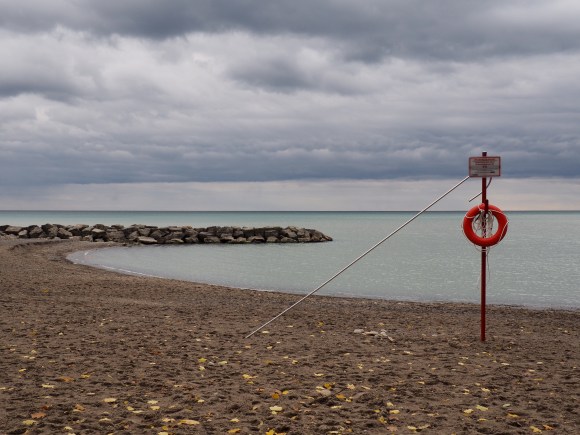

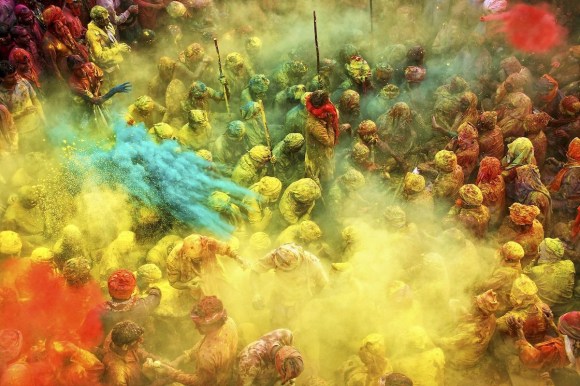











 Excited Pixels