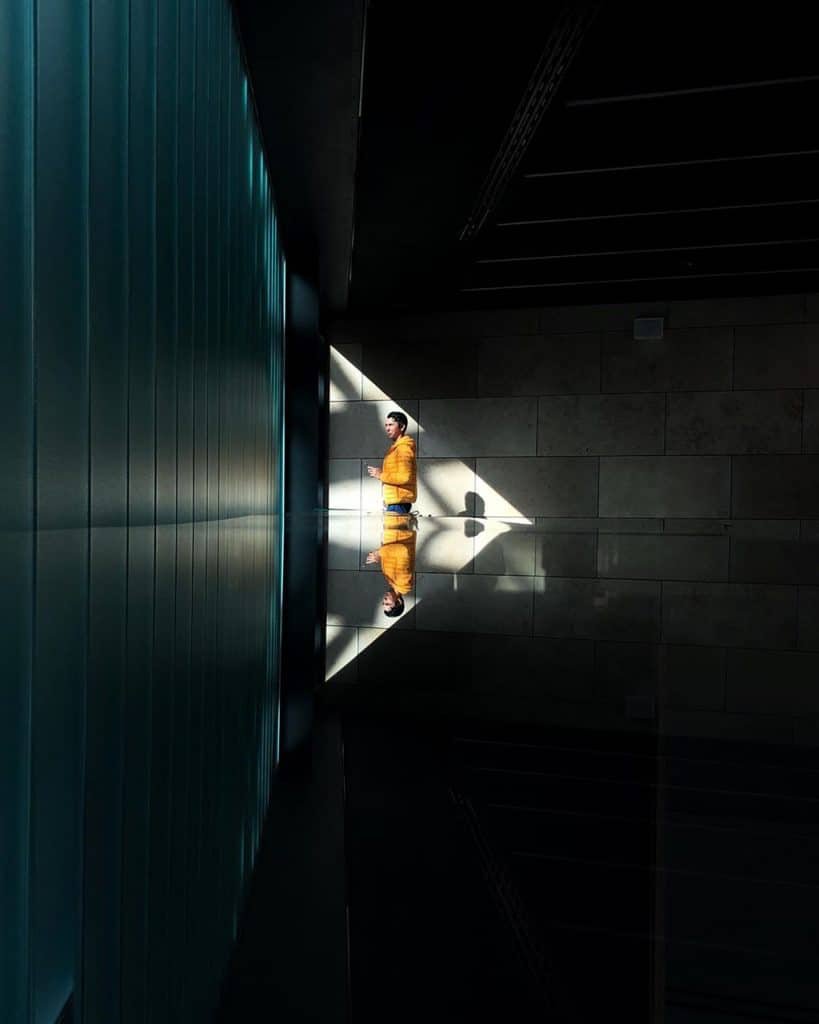
For the past several months a group of us have been playing Gloomhaven: Jaws of the Lion. Jaws of the Lion is meant to be the ‘intro to Gloomhaven’ boxed set, though we’ve experienced a relatively steep learning curve and I’ve spent a lot of time trying to figure out some of the more confusing or unclear rules.
Anyhow! I built a playlist for Jaws of the Lion, just as I did for the Dungeons and Dragons campaigns we’ve played.1 I’ll continue to update it periodically, though not regularly.
If you’re interested in using the playlist for Gloomhaven: Jaws of the Lion we’re using, you can find it at Apple Music.
When AI sees a man, it thinks “official.” a woman? “smile”| “The AI services generally saw things human reviewers could also see in the photos. But they tended to notice different things about women and men, with women much more likely to be characterized by their appearance. Women lawmakers were often tagged with “girl” and “beauty.” The services had a tendency not to see women at all, failing to detect them more often than they failed to see men.” // Studies like this help to reveal the bias baked deep into the algorithms that are meant to be ‘impartial’, with this impartiality truly constituting a mathwashing of existent biases that are pernicious to 50% of society.
The ungentle joy of spider sex | “Spectacular though all this is, extreme sexual size dimorphism is rare even in spiders. “It’s an aberration,” Kuntner says. Even so, as he and Coddington describe in the Annual Review of Entomology , close examination of the evolutionary history of spiders indicates that eSSD has evolved at least 16 times, and in one major group some lineages have repeatedly lost it and regained it. The phenomenon is so intriguing it’s kept evolutionary biologists busy for decades. How and why did something so weird evolve?” // This is a truly wild, and detailed, discussion of the characteristics of spider evolution and intercourse.
Something that kind of disappoints me is that most of the new technology from the ’80s onwards has been about the atomization of society. It’s been about you being able to be more and more separate from everybody else. That’s why I don’t like the headphones thing. I don’t want to be separate in that way.
I can’t say that I agree with this assessment, but understand that technology is wrapped up in a very particular culture of neoliberal capitalism that can be harmful for communities writ large. His subsequent reflections more broadly about social media—that it can create the almost total self-enclosure of micro-communities—is definitely something that raises prominent concerns, though frankly I wish that there was more scholarship that dug into this as an issue as took place about 15 or so years ago. Obviously there is new scholarship but little of it seems methodologically satisfactory with focuses on quantitative rather than qualitative and quantitative approaches.
Quite a few of the films I’ve made music for, I never saw the picture before I finished all the music. And I like that, because I don’t want the music to map totally onto the film. I want the music to suggest — to increase the ambiguity, basically. To expand the film a bit. Not to underline it. Often, and especially with Hollywood soundtracks, the whole point of the soundtrack is to tell you, the dumb sod watching it, “Now you’re supposed to feel sad. Now it’s funny. Laugh! Go on!” And I just don’t want to be in that business of underlining things.
This seems like a pretty stellar way of thinking through what he wants his work to do, and not do. Though in a contemporary era I’m surprised that producers or directors are willing to leave the music so out of their control.
Welcome to this edition of The Roundup! Enjoy the collection of interesting, informative, and entertaining links. Brew a fresh cup of coffee or grab yourself a drink, find a comfortable place, and relax.
This roundup is late, due to contemporary events in the news. So while late, each of the collated items are from the period before COVID-19 truly began shutting down North America; hopefully they’ll help you pass the time that you may be spending in quarantine or self-isolation.
Inspiring Quotation
“Despite how open, peaceful, and loving you attempt to be, people can only meet you, as deeply as they’ve met themselves. This is the heart of clarity.”
— Matt Kahn
Music I’m Digging
My February 2020 ‘best of’ playlist features a lot of La Roux’s tracks, plus an (un)healthy number of tracks from Allie X and Phantogram. I also spent a lot of time going back into my library and listening to older stuff, so you’ll get a nice mix of rock, alternative, and some R&B.
La Roux-Supervision // A new year and a new album! The instrumentals, alone, are pretty great throughout the album with a downbeat 1970s-like sound, combined with Elly’s approachable lyrics. This is definitely not the high-voltage performance that we had in her breakout album that came out a little over a decade ago(!) but showcases that the DNA of her music can stay the same while shifting in its tonal balance.
Neat Podcast Episodes
The Agenda-DIY Pensions: A Good Idea? // As a millenial who harbours a borderline terror of being unable to afford rent when I retire, I was curious about this episode of the Agenda: would it provide useful information about pensions, or significantly entail ‘professionals’ failing to appreciate and understand their confusing products, and assert that the existing systems were significantly the way forward? I got the latter. While the guests did acknowledge the need to develop better cultures of saving and education they fundamentally didn’t engage with the issues that affect me and the people that I know; we have more debt than any other generation due to our educations, pay higher rents than the past generation, and as such are significantly delayed in our ability to contribute to pensions. Combined with a bunch of scaremongering around ETFs and it comes across as more of the same: a bunch of professionals professing the value of the current system which isn’t working, while ignoring the conditions facing people in their late 20s to mid 30s.
The Current-Global Secondhand Economy // I always knew that there was a whole economy around secondhand goods, but didn’t really appreciate how extensive it is, nor how central Canadians purchases are to fuelling the summer-side of the economy, in particular.
The Economist-Thomas Piketty // *This was a great, and very combative, interview between the Economist and Piketty. He argued his basic thesis—that capital accumulation is the root of inequality and risks serious social harms—while fending off his interlocutors who asserted his positions lacked sufficient persuasive capabilities. Highly recommended.
Good Reads
Berlin Freezes Rents for 5 Years in a Bid to Slow Gentrification // The idea advanced by some stakeholders–that increasing rents will somehow only rise to the level that is equitable–is absurd, if not entirely asinine. Housing needs to be affordable in order to have vibrant, liveable cities; homes cannot be regarded as investments, but as places to live.
The Money Behind Trump’s Money // While Enrich’s article is, largely, a recitation of past articles detailing the fraught relationship between Deutsche Bank and Trump it’s a very cohesive recitation. Whereas past news articles have slowly added to the trickle of information that is known about the current President’s financial history, this article comprehensively stitches together everything that is known. Throughout, the bank is shown to have had a disregard for law, ethics, and propriety: this continues, to date, and led the International Monetary Fund to brand Deutsche Bank “the most important net contributor to systemic risks” in the global banking system as of a few years ago.
Interview with Mohamad Fakih, CEO of Paramount Fine Foods // Fakih is a star in Toronto: an immigrant businessperson who has grown a massive business while extensively giving back to the community. What is most revealing in this interview is how he engages with, and treats, his staff: they are the stars, and he actively works to get to know them and enable them. It’s a ‘traditional’ style of management that is underappreciated in an era where Silicon Valley-style managerial approaches tend to dominate the headlines, and refreshing to hear this older approach being championed and leading to positive results.
Wacom drawing tablets track the name of every application that you open // A solid bit of sleuthing by Heaton revealed that Wacom’s mouse drivers come bundled with Google Analytics, and that they are monitoring each and every application that is being opened. The most nefarious thing ever? Nope. But sketchy nonetheless? Hells yes.
Apple, Just Bundle News+ Already // I keep reading from the Apple Commentariat that Apple News is a failing service that is, depending on the commentator, too expensive, too poorly designed, too much, or (weirdly) too good a deal. A lot of the issues seem to boil down to this: it’s not super intuitive to find what you want and, even if you do, there is so much content offered that you develop stress hives because you’re never done. Plus, Apple offers so many services, now, that bundling them would be a better option for consumer. It’s only the last one that resonates with me, but only if bundles were to be made in an additive way—where the more you bundle the more you save—as opposed to having to pay for stuff I don’t want (I’m looking at you, Apple Arcade). I feel like, in Canada, the use case is that there are so many paywalls that it’s a pain to know what’s happening in this country at the time something breaks and the Apple News subscription means I can catch up on what matters. I’ll never read everything and that’s fine: I, like most people, made my peace with that a long time ago.
Bumble Bees Are Going Extinct in Time of Climate Chaos – “We Have Now Entered the World’s Sixth Mass Extinction Event” // The world is dying around us, and we are the cause of those deaths but are seemingly unable to affect sufficiently meaningful changes to save the world and, by extension, ourselves. And even if we manage to take actions that keep just enough of the world alive, and ensure that a mass of humans survive the next extinction, what will the survivors be able to say to the next generation to justify the dramatically less vibrant world we pass on to them?
Why Wealthsimple and robo-advisers aren’t scaring Bay Street anymore // *As a new robo-investor, this piece in the Globe and Mail caused me to reflect a bit about the underlying premises of the article. It begins with a bold—probably foolish—assertion that robo-investment companies would have trillions under investment in record time and that, absent achieving that lofty promise, it was challenging for the companies to turn a profit. Moreover, the target group—millennials—have $30,000 or less invested, on average. And thus the companies are at risk of collapse. Those facts may be true but, at the same time, I suspect that for most millennials who are at the crux of finishing paying off student loans and now struggling to decide whether, and if so how, to save for a home, or to start investing in retirement. In other words, everything is delayed by 10-15 years; as such, I expect these advisors to truly going to start paying off as an increasing number of millennials are in situations to invest in their long term futures, and I bet that’s still just a few years off. *
How My Worst Date Ever Became My Best // I loved how this Modern Love story unfolded, and the wry humour that comes through towards the end of the piece.
I’m Single and I’m Fine With It // There is so much in this personal essay that resonated with me, including being happy that a relationship has ended, and how that has taught me that it is appropriate and ok to end others that don’t live up to what I desire. And it speaks to things I still don’t really understand—‘casual’ relationships—and what they can mean as well. As someone who routinely wonders if the best relationship I could have had is behind me, columns like this help me revisit whether this is the case and, if so, whether that’s really as bad as imagined.
The Curious Case of the U.S. Government’s Influence on 20th-Century Design // This deep dive assessment of how the Office of Strategic Studies—the precursor to the CIA—developed contemporary techniques of information delivery and presentation is impressive, and showcases how much of contemporary design is based in conflict studies.
Cool Things
Mars Iwai / Mars Iwai Tradition // I really appreciated this review of the Mars Distillery products; it’s transparent in its evaluation and is honest in its assessment that some Japanese whiskey is just sorta ‘meh’. As someone who’s hosted a Japanese tasting I have to admit that an awful lot of what’s available in Canada is expensive without being particularly exciting, and this just reaffirms my experiences and doubts over the current state of sub-$100 Japanese whiskey.
Work/Play III Hardcover Notebook // I want, want, want, want these notebooks. I see them in my near future, given that I’m almost through my current sets.
Welcome to this edition of The Roundup! Enjoy the collection of interesting, informative, and entertaining links. Brew a fresh cup of coffee or grab yourself a drink, find a comfortable place, and relax.
For the past many years, each month has come with a set of recurring expenses: reducing the debts of various kinds that were incurred as a result of pursuing my education (and current career). These debts have been a millstone hanging from my neck and, at different times, were the first and last things I thought of each and every morning. They’ve cost me dearly both in terms of finances, in terms of lost opportunities, and in terms of personal loses and sacrifices. They have also formed a core element of my ‘financial identity’ for many years and, with their payment, I’m left struggling to determine what that identity should ‘be’ going into the future. Is my future to (probably without effect) save for a down payment on a property (this is functionally impossible in the city in which I live) or save for retirement (in the hopes that’s even possible) or something else entirely? I don’t know what that identity becomes but I am curious, trepidatious, and somewhat excited to see what the future may hold.
Inspiring Quotation
“Being a strong man includes being kind. There’s nothing weak about being honorable and treating others with respect.”
Barack Obama
Great Photography Shots
I found Tom Hegen’s shots to be really eerie this month. He has a series of photos that capture Holland’s LED greenhouses, which I find to be incredibly dystopic. Our future as a species: growing our foods indoors because we have so damaged the natural environment that this is all that’s left for us.
Music I’m Digging
Gang Starr-One of the Best Yet // Created using bits and pieces of music that survived from Premier’s death (and acquired following considerable legal contestations), the songs are not all equal. But this by-and-large sounds like a definitive Gang Starr album and it’ll be last we likely ever received.
Beck-Hyperspace // Beck’s most recent album is, like most, a partial re-invention of what he is and sounds like. In many respects it’s almost like there’s an element of the Chemical Brothers throughout the tracks, in tandem with Beck’s typical lyrical talents. Well worth the listen.
Leonard Cohen-Thanks for the Dance // If you like Cohen’s albums as he aged—namely, as he shifted more to spoken word accompanied with instrumentals—then you’re in for a (last) treat from one of Montreal’s best. The tracks are lyrically held together by Cohen’s sexual interests in the last days of his life, and the emphasis on what he wanted and which was forever slightly beyond him.
DJ Shadow-Our Pathetic Age // This is really a two-‘disc’ album, with the first predominantly instrumentals and the second more typical DJ Shadow fare. I’m not the biggest fan of the former, whereas the latter is absolutely amazing. The range of classic hip hop talent on the tracks, combined with Shadow’s beats, are absolutely to die for.
Neat Podcast Episodes
TVO—Why Conservatives and Liberals Think Differently // Research showcases that there are differences between the tendencies in how persons of different political persuasions think, and not at the level of who they support politically but in how they interpret risk, friendship preferences and more. The guests are clear that some liberals hold some conservative values and vice versa, but nonetheless it’s interesting to have research actually showcasing that some differences are very real and may not be solved by just talking through things.
The Current—Ambassador Susan Rice // Rice was comparatively hawkish as compared to Obama, yet showcases how advisors can disagree with their President and still acknowledge that the finals decisions were competent and reflective of different policy preferences. Notably, Rice joins the chorus of senior current and former American national security staff who warn that Canada choosing to permit Huawei into 5G networks will threaten Canada’s ongoing welcome into the Five Eyes intelligence sharing alliance.
Good Reads
Climate Change Is Breaking Open America’s Nuclear Tomb // The Marshall Island, where the USA conducted a vast number of nuclear tests in the 40s and 50s, is threatening to spill contained radioactive contaminants into the Pacific Ocean. Not only is the US government not doing anything to mitigate these risks, but also have only provided $4 million of the $2 billion owed to the Marshall Islands in damages for the government’s experiments. The costs of nuclear conflict, even in the absence of a shooting war, are born very unequally by persons around the world.
China’s Internet Is Flowering // Reporting for the New York Times Magazine, Yiren Lu explores just how the Chinese Internet is growing and its implications for Internet developments and culture in the Western world. Key to all of this is, in effect, the mass adoption of WeChat and WeChat Pay by customers and businesses alike. Something that is raised repeatedly in the article is how the business developments in China are linked to at least two key features, only one of which is truly shared by Western regulators. First, there was generally a forbearance on interfering with Internet companies and, as such, WeChat grew to provide a comprehensive platform and accompanying set of services. Second, and unlike in the West, the government has itself sought to encourage the development of e-commerce on WeChat itself. Looking to North America, we can see that efforts by Facebook to develop similarly integrated services are being stymied and, thus, raises the question of whether is is truly possible to integrate the lessons from WeChat into a Western experience.
It’s so much more than cooking // I’ve not previously contemplated that cooking is more than preparing the food at hand but, also, the mental labour that precedes the act of cooking: the planning, evaluation of nutrient quotas, shopping, etc. It’s a good and very fair point. And while I agree that women do tend to be engaged in more of the cooking responsibilities than men, at least when in relationships, I do wonder what the shift in demographics in countries like Canada will do for this: given that more people live alone than ever before, will this result in more men cooking than women? And a shift in the equality of shared household tasks?
Inside Facebook’s efforts to stop revenge porn before it spreads // While I’m sure this is meant to be a ‘good news’ Facebook story about how they’re trying to combat revenge porn that isn’t the message I take away from actually reading the article. Instead, I get something like: “We tried something to address revenge porn, without consulting anyone, and that didn’t work. Then we had an utterly innovative idea to actually do research to understand the problem. And while we’ve been told that what we’re doing won’t work, and can’t work, and that we need to hire staff to deal with this, that’s not economically feasible so Facebook is instead mostly ignoring that critique and will be relying on a really small product team to solve a problem for which there are no clear solutions. And doing it with machine learning.”
A Montreal Bagel War Unites Rival Kings // While the question of whether to restrict how Montreal bagel shops can make their bagels is relatively well known to Montrealers, I suspect this is the first time that the international audience has been exposed to the debate over whether bagel shops should be permitted to continue releasing the particulate from their ovens into the surrounding neighbourhoods. To my mind, it makes sense to require filters and/or systems that capture the particulate smoke elements that are aggravating health issues such as asthma. But, similarly, asserting that the bagel shops should ‘go green’ and get rid of wood burning would fundamentally transform how the Montreal bagel tastes and most likely not for the better.
The surveillance industry is assisting state suppression. It must be stopped // This call to regulate the commercial spyware industry, by the UN Special Rapporteur on Freedom of Expression, is a poignant and direct assessment of the harms that this industry inflicts on those whom democracies ought to be protecting. I emphatically agree that our governments are failing to protect those who advocate for, and defend, human rights and the rule of law abroad. Western governments can at least start by preventing businesses in their own backyard from facilitating and enabling such oppression and illegitimate prosecution.
Tinder Lets Known Sex Offenders Use the App. It’s Not the Only One. // Deliberately failing to protect women across all of Match’s platforms demonstrates a shocking degree of moral turpitude that is underscored by deliberate policy failures in the company. All bad people can’t be stopped from using the apps but surely Match can work to ensure that the meagre protections is has in place on some of its apps are deployed across them all.
7 Rules for Shooting More Interesting Travel Photos // I really appreciate how accessible these ‘rules’ are, and how easy they would be to implement. It also explains how to take some shots—using props—that I’ve been trying to visually figure out for a few months, which nicely explains the magic tricks taken in some of the photos I’ve been reviewing!
Cool Things
I am “A Too Much” Woman // Reading this bit of spoken word and all I could think was how well it captured the amazing, powerful, smart, brilliant women I have the privilege to be around, learn from, and stand in awe of.
Welcome to this edition of The Roundup! Enjoy the collection of interesting, informative, and entertaining links. Brew a fresh cup of coffee or grab yourself a drink, find a comfortable place, and relax.
Inspiring Quotation
“The person who says it cannot be done should not interrupt the person who is doing it.”
This month’s ‘best of’ songs clock in at about 3.5 hours, and include 56 songs. They’re biased towards rock, rap, alternative, and a bit of pop.
Marie Davidson—Working Class Women // This is one of the more novel albums I’ve listened to this year. Davidson is clearly a very gifted artist and performer: the album is as much an aural piece of art that could belong in a gallery, as it is something that’s curious to listen to. It is a challenging album to listen to insofar as it’s really not one that fits ‘well’ as background music. Davidson compels your attention, and you are deeply rewarded to giving it to her.
BANNERS—Where the Shadow Ends // The newest album from BANNERS reminds me of their original EP, Banners, and less of Empires on Fire. And that’s a good thing! It dovetails the crooning voice that I’ve come to love, with sufficiently interesting lyrics and melodies that I keep coming back to sample the album time-after-time. There’s nothing on the album quite like ‘Start a Riot’ or ‘Back When We Had Nothing’, but that’s just to say that the album is its own as opposed to trying to mold itself into that of the band’s first album.
Phantogram—In a Spiral (Single) // This is Phantogram at it’s best. Hands down: haunting melody, terrific melody, and killer beats. Race to listen to this. You will be rewarded!
Neat Podcast Episodes
The Sporkful—My Food History Wasn’t Lost. It was Stolen. // Colonists to the United States (and Canada) engaged in systematic cultural and biological genocide of the native people’s who predated their arrival. In this episode of the Sporkful, Dan speaks with poet Tommy Pico about building his own indigenous food history, when that history had been systemically eradicated. That discussion is potent, but what is particularly powerful is the poem that Tommy reads over the final 15 minutes of the episode: it speaks to the challenges of growing up as a native person in America and what it means to be confronted by white supremacy on a daily basis.
The Economist—The Death of Cash // Cash is a real thing for a lot of people, and this episode does a good job in thinking through how cashless societies are being born, and the associated costs of how moving cashless can disenfranchise the least advantaged persons in society.
TVO—Addressing Police Mental Health and Suicide // Policing culture is ‘macho’ in its character and its members have historically been taught to push down their feelings, don’t talk about the hurts associated with their job, and just get the job done. This episode includes raw contributions from senior policing staff on the need to seriously engage with mental health issues and, also, personal stories that reveal how the historical culture has harmed the same staff, and how they are working to mitigate the same harms to contemporary service members. While a single episode won’t change policing culture it’s important and brave for some of the most ‘macho’ people to come forward and be frank and honest about mental health. Only by doing so will mental health issues more generally become destigmatized.
Good Reads
What Are “Love Maps”, and Why Do They Matter? // This Medium post outlines the importance, and need in healthy relationships, to really understand the contours of your partner’s past, present, and future. It discusses how understanding more than surface details is critical for long-lasting relationships and why, also, understanding those underlying elements of whomever you’re with—both their more and less positive elements—is essential for providing the support and intimacy that keeps relationships alive and thriving over time.
The Messy Truth About Social Credit // If you’ve ever been curious about China’s social credit system then this is required reading. In short, the system is about building trust in institutions and between individuals predicated on institutional and private company data sharing. The actual workings of the system are different from what exists in the United States but there are remarkable similarities. The social credit system is something worth keeping an eye on but isn’t, at the moment at least, the Foucaultian panopticon brought to life.
Every Photo Tells a Story. His Spoke Volumes. // Burgess’ recounting of the life, and photography, of Sam Falk’s reveals how Falks approached his craft and transformed it within the New York Times. But, more substantially, Falks photography serves as a reminder of the world as it used to appear and the vividness of our collective pasts. The past was in motion just as much as today is, and was populated populated by people who were invested in their worlds, who were curious, and who were all as-in-motion as those of us today.
Cool Things
Glencairn Whiskey Glasses // I’ve been more assertively trying to learn about whiskey for the past few months, including watching a whole lot of tasting videos from The Whiskey Tribe, investing in a bunch of bottles of bourbon of varying cost, and purchasing some Glencairn whiskey glasses. The glasses, in particular, have been revolutionary: I’ve always sipped from heavy cocktail glasses, but the Glencairn ones are revealing a whole new world of smells. I cannot recommend them highly enough!
I’m really looking forward to a particular chase scene in an upcoming Dungeons and Dragons campaign, which I’m going to set entirely to Eric Weissberg & Deliverance’s album, Duelling Banjos!
I’ve now run the Dungeons and Dragons starter set, Lost Mines of Phandelver, for two separate groups. In both cases, the players were entirely new to 5th edition D&D; in the second case, none of the players had played a tabletop role playing game before, let alone D&D. In both cases, I spent a lot of time both doing some unique quest preparation—building out encounters that I thought would enhance the campaign as it unfolded for the relevant groups—as well as developing extensive playlists for the games.
All of my music is organized around Apple Music, and largely derived from my Dungeons and Dragons — Master List playlist. The following list outlines the different playlists that I used; feel free to adopt them for your own play through of the Lost Mines of Phandelver, or for any other adventures that you may be running!
I’m generally a massive fan of playing music while running the game; I find that customizing the music has a useful effect of helping me get into the mood, to say nothing of it working to enhance my players’ experiences. And in the case of new players, in particular, I’ve always found that adding music really helps to transport them into the world in ways that are almost unparalleled!
Welcome to this edition of The Roundup! Enjoy the collection of interesting, informative, and entertaining links. Brew a fresh cup of coffee or grab yourself a drink, find a comfortable place, and relax.
For the past several months I’ve been trying go determine just what has been going on with my Apple Music smart playlists. Specifically, I have a playlist that is supposed to update with all the songs that I’ve liked over the past 3 months. However, the playlist hasn’t properly been updating…and now I know why. If you ‘love’ a track in iTunes (i.e., on MacOS) then the track is automatically added to your iCloud Music library and then added to my smart playlist. If, however, you ‘love’ a track in the iOS Music application then the same does not happen: you signal to Apple’s machine learning algorithms that you like the song for purposes of Apple creating playlists for you, but the song won’t be added to any smart playlists that you have created for yourself. What’s worse, there’s no way to go back in time and determine all the songs that you’ve liked in the past in the Music application, so that you can’t retroactively add them to your own ‘loved tracks’ playlist.
This is simply absurd: it means that people who exclusively and heavily use Apple Music and expect a baseline feature parity between the music players have to use a non-mobile ‘solution’ in liking music, if we want to have an ongoing record of what we like. I’d think this was a random bug but, apparently, based on the forums I read this has been an ongoing problem for over a year. I’m incredibly disappointed that Apple has chosen to behave this way and struggle to understand why they’ve let this decision stand.
At present, the only ‘solution’ that I can find is to reflexively go and add albums after I’ve listened to them, if I’ve liked any tracks in them; otherwise I need to manually go through the process of adding tracks to a library (which strikes me as too involved a process). To say this is disappointing is a gross understatement.
Inspiring Quotation
Our relationship with food, wholly transformed since the ’60s in ways both heartening and horrifying, has lost touch with a truth none of us can afford to leave behind: Cooking isn’t a luxury; it’s a survival skill.
I’ve been enjoying Om Malik’s photography for a bunch of time now; I think what I’m really appreciating is the grittiness of the images, combined with the (perception of) low resolution/throwback images from the 1960s and 70s. I don’t know that all of the elements he includes are ones that I want to imitate, but I appreciate the distinctive style that he’s developed over the pat few years. Some of the photos, below, are from his May 6, 2019 outing titled “A morning at the Huntington Beach”
(Red-y for the games by Om Malik)
(A moment of reflection by Om Malik)
(Untitled by Om Malik)
(I hope I didn’t miss the waves! by Om Malik)
Music I’m Digging
Beyoncé – Lemonade // I hadn’t heard this album until it was recently released across all streaming services. While I knew it had received high praise upon release I’d (effectively) dismissed the praise as just what comes with any release from Beyoncé. Having listened to the album several times I’m still stunned with the beauty and rawness of this album. My only regret is that I didn’t listen to it when it was first released.
Lizzo – Cuz I Love You // Lizzo’s previous EP was exceptional in that it showcased her incredible vocal range and ability to create a tight series of works. Her new full-length album is no different: it’s the best kind of pop that is possible and is very, very easy to endlessly consume.
Marissa Nadler & Stephen Brodsky – Droneflower // This is a very particular kind of album. It is most definitely not something to listen to when in poor spirits; the lyrics and musical accompaniment is almost designed to depress the spirit and lay one low. This is an album that combines the lightness of an ethereal voice with that of harsh and brutal music. It’s definitely one of the most intellectually intriguing albums I’ve listened to this year.
The National – I Am Easy to Find // This album is unlike any other that The National has released: it’s far less moody that earlier albums, and the inclusion of significant female vocals means that the album sounds like The National but not actually of the National. I’m still trying to determine if I like the album or not but, either way, it definitely shows that older bands can develop new sounds!
Neat Podcast Episodes
HuffPo Followup – One-on-One with Gerald Butts // This is a wide ranging and deep diving interview with the former principal secretary of Justin Trudeau. Butts is, at points, deeply convincing — specifically around whether pressure was placed on the former Attorney General — but otherwise is insightful for how he regards public service, what matters in advancing liberal socio-political (as opposed to political party) values, and the baseline importance of contributing to the public and our shared democracy.
Wag the Doug – “Unfortunately, That Tree Can’t Employ Anybody” // This ongoing popup podcast on the Ford government outlines all of the anti-environment and anti-climate elements in the government’s recent budget. It’s bad. But who expects anything less from a Ford?
Good Reads
New type of plastic is a recycling dream // It’s pretty amazing that novel chemical formulas may enable use to continue to use plastics, while mitigating their longevity (and enabling us to subsequently re-repurpose the chemicals that form the plastic in the first place). The question or issue, of course, is whether this technology will be adopted or if the costs of shifting to it mean that few companies will retool their entire production line, thus leaving us with the current wasteful technologies despite technical advances in plastics making.
Why Don’t You Just // This very short transcript of a talk at a technical conference nicely summarizes some of the annoyances I have when persons with technical/coding backgrounds interject with solutions to social problems. The ways in which the injections take place often (implicitly) devalue the work that has often been put into the problem at hand and, in the process, elevates the technical/coding skills above those associated with the social sciences and humanities.
How Erik Prince Used the Rise of Trump to Make an Improbable Comeback // The Intercept has published yet another terrific close on Erik Prince’s exploits and activities, this time with a focus on how he sought to take advantage of his association with Trump associates to advance his own interests. The article is rife with explanations of how Prince is involved in self-dealing and, also, with people who continue to authorize and facilitate his activities despite knowing his past history. It’s not just shocking that Prince is seeking to illegally be involved in private war activities but, also, that wealthy and influential people keep succumbing to his silver tongue.
Phishing and Security Keys // Risher, a security engineer at Google, has a terrific and accessible and blunt piece about the importance of security keys and the relative value they offer in contrast to other kinds of password systems. Left unstated is the issue of when people lack their hardware tokens: technologists and engineers have so-focused on making computing convenient that adding in friction is a hard thing to sell to most users, to say nothing of the issues in ensuring that keys work across all platforms and devices. Still, two factor authentication is a good thing and if you’re particularly paranoid then this piece should explain why you should try and opt for a hardware token to sign into your accounts.
Conquering The Carolina Reaper Requires Self-Deceit, Milk, And A Lot Of Barf // I haven’t laughed this hard in a while. The author’s description of his own experiences with epically hot peppers, as well as those in the professional food and pepper eating competitions, is an epic (and painful!) but of food journalism.
Status meetings are the scourge – Signal v. Noise // While I largely agree that many status meetings are monsterous wastes of time, I remain moderately unconvinced about the efficacy of posting what you’re doing to your colleagues to update them: face time is valuable because you can compel the attention of your team. Should you do so very often? Probably not. But never? I have a hard time envisioning that.
There really is something unique about Tennessee whiskey, study finds. // It is amazing just how much research goes into understanding the nature of alcohols, and how this science could revolutionize the qualities of whiskey and other spirits. I remain excited about just what we can learn about aging processes and how this will affect the quality and quantity of products brought to market!
Listening to My Neighbors Fight // I found this to be insightful, mostly as a personal essay that clearly unpacks the situation that almost all urban city dwellers experience at some point. This bit of writing, in particular, seemed to perfectly capture the situation that we’re all in at some point: “You can call the police. But you run the risk of wasting their time and mortifying your neighbors. Even worse, you might possibly put your neighbors in danger if the police were to overreact and hurt them. You can also simply ignore the noise and hope it stops. But then there you are, just you in your home, not knowing when a fight is just a fight—another messy part of the social contract that neighbors learn to ignore as a part of life—and when it’s worse. Google neighbors fighting and you’ll find Reddit threads and advice columns full of people trying to decipher the line between ordinary disputes and domestic violence. When does it become my business?, we want to know.”
Cool Things
33 Deserted Places Around the World // This series of abandoned locations are spectacular, and remind us that the Earth will continue on even as our waste and artifacts are long-abandoned by us.