This video definitely feels like the summation of the state of the world these days.

The past few weeks have been hard. Really hard. I finally said goodbye to my dad, who died unexpectedly a little over a year ago. I said goodbye to the woman that I love. And I moved to a new home, too.
I have lots of reflections on my dad and how important it is to support those we love, even if that support means that a relationship needs to end so that they can achieve their dreams and aspirations. But for now I just need to process those thoughts, emotions, and reflections. If there’s any saving grace, it’s that my adopted family — even those who live abroad — are all living close to me.
Real love teaches us. It teaches us what we do and do not want in a partner. We learn how to be better at love from the ones we loved first. If we just got over all of that and truly erased the entire experience from the space in our hearts and minds where that love once occupied, then wouldn’t we just continue making the same mistakes over and over? If loving someone were as fleeting as we often try to make it be and we could “just get over it,” we wouldn’t bother with it anymore. What would be the point?
I think it is because we never fully get over the love we once had for someone that entices us to love again. It is because we remember that love that we want it again. We love a little deeper, a little more completely with each love we find. We want love to last. With every love we lose, we learn just how precious and valuable it is. It is how we ultimately (hopefully) find the one we never have to get over.
- Jennifer Sartore Hulst, “I’m Not Over You (And Probably Never Will Be)
The life transition I’m currently embroiled in is, I suspect, like the tide: I’m already caught in the undertow but don’t really appreciate what it means. Fortunately as a Maritimer, I know to let the undertow pull you out a ways from the shore and then swim perpendicular to it to avoid the worst of its effects. I’m pretty ready to start swimming.

The past few weeks have been clustered with travel across Canada for work and personal reasons, and a lot of packing as I prepare to move a few kilometres in my city. (I suspect it won’t be until after I move that things settle down and return to a more regular posting schedule.)
I’ve made a small change in this Edition that I’ll be carrying forward in all future roundups: beside each link is a little more information about the item in question to clarify what will be found on the other end of the link. I hope you like it.
A person’s dignity does not depend on them being a citizen, a migrant, or a refugee. Saving the life of someone fleeing war and poverty is an act of humanity.
- Pope Francis
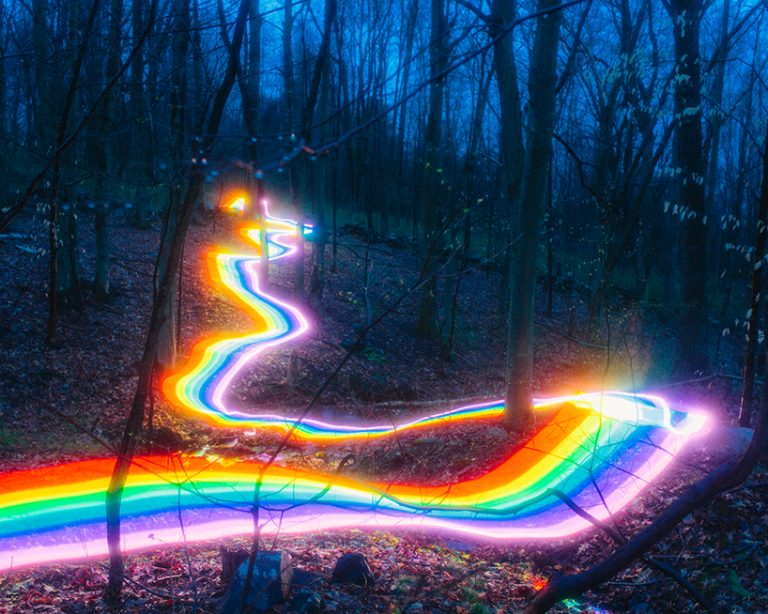
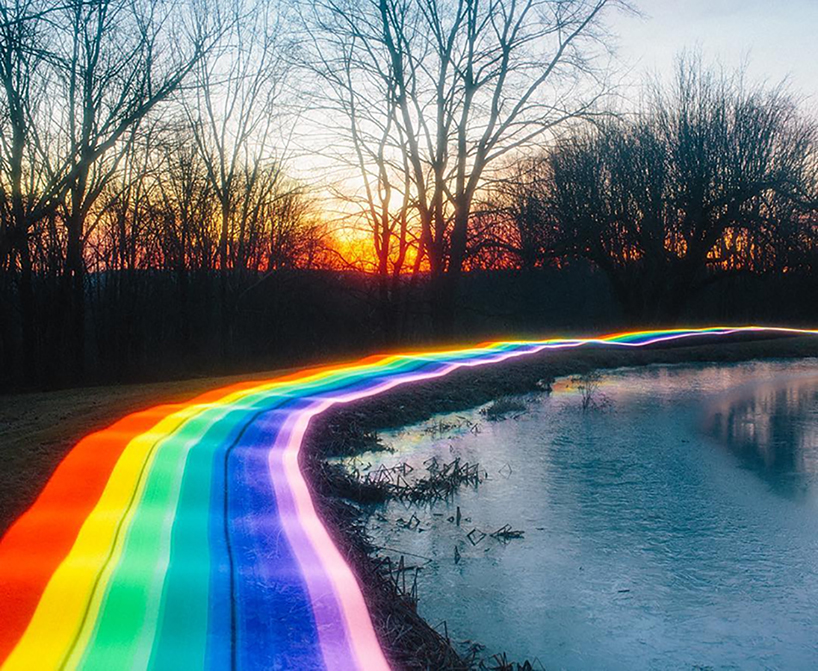
Daniel Mercadante’s light photography is just magical.


I had the pleasure to have so many of my friends and family come to Toronto this week for a work-related event. It was an incredible experience where we all came together to push ahead some of the cooler projects we’re respectively working on, and generally catch up and spend time with one another. It was really an opportunity to deepen our relationships while, at the same time, goofing around and just enjoying one another’s time.
Throughout I was struck by the value, and importance, of just connecting with one another in person. We all often communicate with one another using digitally-mediated tools and technologies. But there is something that is always missing with those technologies: a fundamental element of our humanity cannot be communicated over a text, hangout, or phone call. We can’t read one another’s expressions the same way. We can’t perceive one another’s feelings the same way. Nor can we just hug one another to greet one another or to provide a sense of support to one another.
Our ability to remain ‘connected’ with one another is an incredible element of the contemporary digitally-mediated world. But connection is also something that is far too often regarded as a substitute for physical presence and sharing of time with one another. Digital connections are incredible supplements but surely cannot replace actually being with one another, and I’m deeply appreciative that I had the opportunity to spend time with my favourite people this week, and can’t wait until we pull everyone back together against next year.
On a slight administrative note, I’ve started providing some context around the various links, podcasts, and other materials that I’m trying to roundup on a regular basis. Hopefully it’ll help clarify why those items struck me as worth including in any given week.
Play is often talked about as if it were a relief from serious learning. But for children play is serious learning. Play is really the work of childhood.”
― Fred Rogers
Takashi Nakazawa’s images of Mount Fuji are absolutely breathtaking.


A friend of mine and I travelled into Toronto’s Canary district over the weekend to make some photos. Normally I take photos on solo walks, and it was a nice experience to be in the presence of someone else who was also focused on making images. Some of my highlights are below.
All images were shot using an Olympus E-M10ii and and Olympus M.Zuiko ED 40-150mm f4.0-5.6 R and Olympus M.Zuiko Digital 14-42mm f/3.5-5.6 II R Lens. They were edited using a combination of Apple Photos and Polar.


And one shot from the walk home!

It’s a profoundly strange experience knowing that my work was cited in the development of a US Presidential Executive Order (in this case, on the relative merits of cyber security transparency reporting).

It’s one day after the 2018 Ontario provincial election. The winning party ran on a semi-platform that is designed to actively undermine the province’s climate change reforms, dismisses the importance of raising the minimum wage, and is actively hostile to efforts to improve sexual education. In the stead of these values, the party asserted they would reduce the cost of beer, reduce taxes, reduce energy costs, and otherwise work to promote ‘business friendly’ policies. The ways in which these values and objectives would be reached were never explained in a rigorous and methodical way: people voted for values and out of anger at the former governing party.
On days like today, it’s easy for progressives to get upset, angry, and/or depressed. But such emotions are reflections of our own dark and often unproductive states of mind. While a government can significantly affect the policy landscape, damage can be undone and most harms repaired or remediated. Instead of falling into dark states of mind, we are in a time when it is essential to evaluate where we can contribute to our societies and advance the values that we think with enhance our lives, and the lives of those around and affected by us. To promote a more progressive society we might actively promote, support, and elevate the roles of persons of colour, indigenous persons, and women in our communities so that they are better situated to accomplish their personal and professional goals. We might volunteer for causes that are important for progressive politics. We might even actively work to support a political candidate or party that didn’t accomplish the results we wanted.
In effect, it’s during times of change that it makes the most sense to get actively involved in our world, to influence the persons and organizations we’re involved with, and seek to effect change that extends and supports civil rights protections and equality amongst all people. Now is not the time for getting angry, per se, nor the time to lay down and wait for the next four years. No, if anything, today is just like yesterday, and is just like tomorrow should be: it’s a day to actively work towards improving the communities we find ourselves within so as to ensure that all persons enjoy equal rights and are able to thrive in their personal and professional lives.
I absolutely am floored by the reality that Anthony Bourdain killed himself in a hotel room. I’ve watched him from afar for many years, as so many have, and I’ve always appreciated the vigour and honesty that he projected in his public life. His frank discussions about troubled pasts and the difficulties people face everywhere around the world, and how North American and European activities endanger the lives and wellbeing of persons everywhere else in the world, were and remain important assertions and lessons. But rather than remembering him most for his travels I think I’ll remember him for the positions he unwaveringly took in the face of bad actions. His essay on #metoo struck me as particularly powerful, and specifically the paragraph where he wrote:
In these current circumstances, one must pick a side. I stand unhesitatingly and unwaveringly with the women. Not out of virtue, or integrity, or high moral outrage — as much as I’d like to say so — but because late in life, I met one extraordinary woman with a particularly awful story to tell, who introduced me to other extraordinary women with equally awful stories. I am grateful to them for their courage, and inspired by them. That doesn’t make me any more enlightened than any other man who has begun listening and paying attention. It does makes me, I hope, slightly less stupid.
This was the kind of language and public assertion that needs to be made. Bourdain himself was a deeply flawed individual, and he at least presented the image of someone who was trying to work through those flaws and present them as things that can overcome in the course of life. However, while those facets might be worn down over time they were unlikely to ever be entirely eliminated. Rather than showcasing himself as having overcome his past he, instead, presented himself as a man involved in an ongoing narrative, without a clear conclusion, but with an intent to rectify and avoid the sins of his past. There are far worse narratives to carry us through our lives.
My friends, love is better than anger. Hope is better than fear. Optimism is better than despair. So let us be loving, hopeful and optimistic. And we’ll change the world.
- Jack Layton
These aerial shots of Buddhist temples in Myanmar by Dimitar Karanikolov are stunning.


Much has been made of Tim Cook’s advocacy on issues of privacy and gay rights. The most recent iteration of Safari that was unveiled at WWDC will incorporate techniques that hinder, though won’t entirely stop, advertisers and websites from tracking users across the Internet. And Apple continues to support and promote gay rights; the most evident manifestations of this is Apple selling pride-inspired Apple Watch bands and a matching pride-based watch facealong with company’s CEO being an openly gay man.
It’s great that Apple is supporting these issues. But it’s equally important to reflect on Apple’s less rights-promoting activities. The company operates around the world and chooses to pursue profits to the detriment of the privacy of its China-based users. It clearly has challenges — along with all other smartphone companies — in acquiring natural mineral resources that are conflict-free; the purchase of conflict minerals raises fundamental human rights issues. And the company’s ongoing efforts to minimize its taxation obligations have direct impacts on the abilities of governments to provide essential services to those who are often the worst off in society.
Each of the above examples are easily, and quickly, reduced to assertions that Apple is a public company in a capitalist society. It has obligations to shareholders and, thus, can only do so much to advance basic rights while simultaneously pursuing profits. Apple is, on some accounts, actively attempting to enhance certain rights and promote certain causes and mitigate certain harms while simultaneously acting in the interests of its shareholders.
Those are all entirely fair, and reasonable, arguments. I understand them all. But I think that we’d likely all be well advised to consider Apple’s broader activities before declaring that Apple has ‘our’ backs, on the basis that ‘our’ backs are often privileged, wealthy, and able to externalize a range of harms associated with Apple’s international activities.
Millennials are known as entitled, but as a group, I don’t think we could have lower expectations.
I’ll go: I don’t expect to own a home. I don’t expect to retire well, or at all. I don’t expect anyone to give me anything I haven’t explicitly asked for, and even then. I don’t expect it will ever be affordable to continue my education in any formal way. If a package gets lost in the mail, I don’t expect to see it again. I don’t expect the government or the banks or the universities to do anything that benefits regular people. I don’t expect them to hold each other accountable on our behalf. I don’t expect them to expel abusers from their ranks, or to put my safety over their legacy. I don’t expect to feel safe in large crowds or alone late at night. And I don’t expect that my privacy will be respected, online or in general.
Stephanie Georgopulos, “My So-Called (Millennial) Entitlement“