
Categories
Slender Giant

I think I’m going to actively crosspost all the photos I post on Instagram here, on my personal website, as well. I find more value posting photos on Instagram because that’s where my community is but, at the same time, I’m loath to leave my content existing exclusively on a third-party’s infrastructure. Especially when that infrastructure is owned by Facebook.


I’ve been putting off getting a book printed that contains my best photos of 2017. Today I decided to just pull the trigger and get it printed and I’m super excited to have it in my hands in a few weeks!


I think that I really fell in love with photography after purchasing, and shooting with, a used Fuji x100. It was a terrifically flawed little camera: autofocus was terrible, it was generally slow, and battery life was subpar. Furthermore, I didn’t really know what I was doing: I had shot on an iPhone for years and I didn’t really understand how to configure the x100 for semi-automatic shooting (e.g. setting aperture priority, the importance of difference ISO settings, etc.). Frankly, the x100 was probably too much camera for me at the time…but I loved it, nevertheless.
But as I’ve written about previously, I’m not entirely certain that I really enjoy shooting in the 35mm format. Some of that, I suspect, is associated with how I fell (back) in love with photography. I originally bought my Olympus OMD-EM10ii to travel to Cuba, and purchased a Panasonic 25mm 1.7 lens for the trip. While it’s inadvisable to take a new camera and lens with you when you travel, that’s what I did, and I walked out of Cuba with a lot of images that I really, really loved. I shot exclusively on the 25mm (50mm equivalent) and it lead me to understand how the lens worked in ways that I don’t think I’d have ever appreciated had also brought and use a zoom lens. However, I bought the lens because it was what reviewers said was a good ‘first’ lens insofar as it’s pretty versatile for anything and everything: you can do some portraiture (not really my cup of tea), can do landscape (as I did for that week in Cuba), and some architecture shots (also, as I did in Cuba).1 But without learning other focal lengths I was just going on what other people said the 50mm equivalent lens was good for without understanding from practice what I thought of it.
Fast forward to last week, when I travelled into the United States of America for a wedding and some quiet time in Savannah. Before I left I had to answer a hard question: what lenses should I bring with me? I decided to bring the Olympus 17mm 1.8 and the Panasonic 25mm 1.8, with the goal of trying to learn which I might prefer for general walkabout photography, and why I prefer one over the other.
To be honest, for general walking I think that I really enjoy the Olympus 17mm lens. I truly began to appreciate the ability to capture a broad scene, in excess of what the 25mm lens could capture. And I truly, absolutely, with all of my heart love the manual/automatic focus clutch; I tend to shoot exclusively in manual with the 17mm and it just feels right.2 I also started to come to terms with the differences in how the lens present colour; I don’t know that I prefer one or the other and, instead, just appreciate the differences that come from either one of them.3
However: I also learned that I really, really, really dislike how the 17mm presents humans — and in particular my own body — when not carefully used. I saw one picture in particular and was shocked: was that how I appeared? Was my entire sense of my body inaccurate?
I mean, I’m sure that my perception and the world’s perception of my body varies. But the 17mm could be incredibly unflattering if not used with a degree of deliberateness that I’ve never required with the 25mm. (It can also produce some pretty nice portraits, too, based on some shots a friend took of me.) For anyone who’s shot these two focal lengths for any period of time this won’t come as any kind of a shock. And I’ve seen enough online tutorials to know that what I saw was to be expected. However, I’d never actually lived the reality of having shots of myself, from 35mm equivalent and 50mm equivalent lenses, put beside one another. It’s meant that I have a pretty visceral and lived reality with either focal lens which is, in and of itself, a photography experience that I’m delighted to have had. Even if it made me question my body for a little bit until I figured out why some shots appeared one way, and others another!
I do a fair bit of personal reading that is like eating candy — i.e. fiction that caters to my guilty pleasures — and some that is like eating fibre — i.e. non-fiction and fiction alike that impress upon me the lived realities of other cultures, groups, and persons.
I just finished Adam Hochshild’s King Leopold’s Ghost: A Story of Greed, Terror, and Heroism in Colonial Africa and, at various points in the book, I felt like I’d been hit by a baseball bat. The kinds of actions which were taken against persons living in the Congo were, at their best, barbaric. What was most striking was how those historical facts were so carefully hidden away, destroyed, and removed from the minds of Western and African persons alike. I’ve read anti-colonial literature in the past but this was the first book that helped me genuinely appreciate the horrors inflicted by Western nations on persons around the world; the stories from the victims, quoted in their entirety, were particularly painful and sickening to read. I think that it’s also the book that has opened my eyes to some of the challenges around excavating history of colonialism, and how such excavation and hardship is the necessary pre-condition to coming to terms with the past: Western governments and elites buried the past and, before the past can be reconciled, it must first be made present in our daily lives.
“People matter. Meaning matters. A good life is not a place at which you arrive, it’s a lens through which you see and create your world.”
— Jonathan Fields
One of the things that I’m trying to get better with is presenting images according to how I imagined them. This is distinct from how things may have looked: I often want to transform the scene in some way to present something that was in excess or slightly aside from the scene itself. It’s for this reason that I really like Gilmar Silva’s shots that juxtapose the ‘before’ and ‘after’ portraits he takes. In taking us behind the scenes of a final shot it’s easier to think through the logistics and editing that may enter into making an image, as opposed to snapping a photo.


Over the past few weeks I’ve been visiting art galleries and spending a lot of time — sometimes 20 minutes or more — in front of certain paintings to try and understand why the artist made their composition decisions.1 This has involved both trying to understand the positionality of different subjects, the roles that light played in directing attention across the canvass, and more broadly trying to understand the emotional or intellectual responses that I experience when spending time with the work. To be frank, it’s a strange kind of experience just because standing, silently and quietly, in front of something in public contemplation feels abnormal. However, it’s a feeling that I’m slowly becoming more comfortable with: for a long time, it didn’t make sense to me that someone would spend tens of minutes, or even hours, or longer over the course of years, to view particular works. But I’m very slowly starting to really appreciate why people do that; in my case, probing a piece of art seems to involve letting go of myself to explore, consider, evaluate, reject, and refine thoughts that I have when taking in the artist’s works.
I’ve read, repeatedly, that photographers can benefit from spending time looking at paintings and other canvass-based pieces of artwork. Photography, in many respects, aims to accomplish many of the same things as paintings: good photos affect the viewer’s mind and emotions, while telling a story that is more or less simple. Even the starkest abstract or architectural photographs can ‘say’ something to the viewer. This is contrasted against snapshots that may capture a moment in time, but which aren’t necessarily meant to affect how the view experiences their lives. There are, of course, difficulties because what are sometimes regarded as snapshots may, in fact, be photographs: good street photography, as an example, may resemble snapshots but is actually meant to convey a more-or-less subtle story to the viewer.
None of this is to say that snapshots are bad kinds of images. They can hold incredible value: snapshots I’ve taken over the years of family gatherings, as an example, hold immense value to me. This value is heightened when they’re the only ‘real’ reminder I have of certain family members who have since died. But they’re not ‘artistic’ in isolation.2
It’s in the process of sitting or standing, silently, with our own photographs that I think we can come to imminently realize whether whatever was shot genuinely crosses the line between a snapshot and a photograph that is seeking to convey something beyond what was captured. And, over time, I think that it’s this practice that leads to photographers capturing more of a scene that is self-evidently visible in the pigments and paper used to print on: it’s by careful study of our own work, and that of other photographers, that we can train our minds to almost automatically see what is a photo, why, and how to capture it in its entirely instead of simply snapping a quick shot. Unless, of course, a snapshot is all that you want to capture at the time!
It’s baffling to me that Apple Music lets users create profiles, so that we can share what we’re listening to with other users, but there doesn’t seem to be a way to link into our profiles from the public web. It seems like another of Apple’s failures to understand that social discoverability shouldn’t be exclusively be constrained to very limited sharing within their closed environment.
- Stop caring with other people think.
- Choose your bosses carefully. Bad habits are difficult to unlearn.
- Turn the fucking Internet off. Do the work.
- Choose must.
- Know where you are going. 100% of people who go to a train station know where they want to end up.
- Chase the work. Not the money.
- Raise your standard.
- Tell yourself better stories.
- It takes courage to stand out.
- Be a beautiful outside.
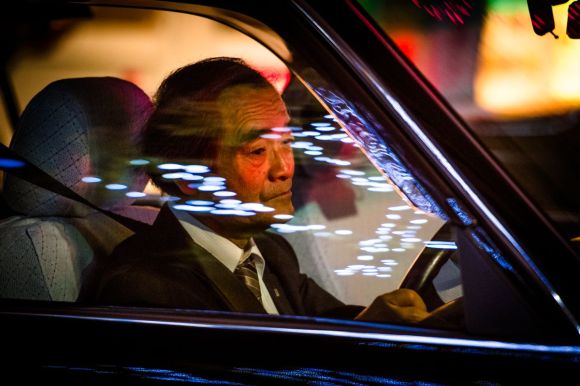
I was really stuck by Oleg Tolstoy’s photographs of Japanese taxi drivers, both because of her artist’s statement — she wanted to explore persons who were almost from another era, given their dress and professional silence while transporting passengers — as well as because the images themselves possess an almost cyberpunk-cinematic quality. I also found that the photos were evocative insofar as how the drivers were staring into the distance were incredibly effective in directing my on attention through the photographs. It’s obvious as soon as you look for it but, prior to then, it’s a subtle forcing of the eye through the frame which brings out a lot. In pulling myself away from how I’m ‘meant’ to look at the photo I quickly shift to a series of (to my mind) interesting questions: what is, and isn’t drawn clearly into our visual frame as we follow the subjects’ eyes? What can we learn from what our eyes are ‘told’ to ignore or to pay attention to? What would be the difference in how the pictures were viewed, based on whether you were trained to read left to right, right to left, or top to bottom?




I’m finally back in the swing of regularly getting up, and out, to make more photos. It’s once again an almost meditative activity: the process of carefully looking at my surroundings, thinking through what might be aesthetically appealing, and then trying to push myself to realize what I see in my minds eye is deeply relaxing. It’s leading me to start looking at the world as someone involved in photography: even when I don’t have camera in hand I’m trying to ‘see’ the shots around me, the focal ranges I’d want, apertures I’d prefer, and so forth.
Strapping on my camera has also been good in getting me to walk around areas of the city that I haven’t visited in too many months or, in some cases, years. Huge parts of my city have transformed themselves in short periods of time, with new art installations scattered throughout the core, old places I liked to photograph having been torn down, and new places being built right now.
In case you’re interested in seeing more of my photos, I post them more regularly at Instagram, despite my annoyance with certain elements of that social media platform.
“When you take responsibility for your life, you can choose peace instead of drama, growth instead of complacency and love instead of abuse.”
– Kyle D. Jones
I’m continually impressed with just how much can be done with smartphone cameras; a recent set from Mobiography on the topic of ‘stunningly beautiful world inspired’ photos led to some great shots.


For several months it’s been hard for me to get out and take photos. Not because I didn’t have the time but I wasn’t in the right state of mind to work through the challenges in my life through shutter therapy. In the past few weeks I’ve pushed myself out to take a few photowalks and they’ve been immensely helpful in just helping me to slow down, to get into a different-than-normal creative flow, and to create things that I find captivating and beautiful. And, in the process, it’s been helpful to reflect on the past, the present, and contemplate my future.
For the past several months I wanted to avoid excessively taking photos to avoid capturing that time in amber; instead, I wanted to have memories develop that would fade and twist and turn over the coming years. I wanted to avoid capturing too many images that might, in time, come to feel painful upon reflection and consideration. I don’t know if this was the ‘correct’ decision or whether I’ll regret not spending more time to capture more images. Regardless, that die is cast.
At least for now, I’m motivated to get back out and shoot, often with particular aims and ends and shots in mind. One of the things that I’m finding most curious is that in returning to certain locations that I trend towards in the city, I’m not necessarily seeing them in different ways but, instead, seeing the breadth of scenes slightly differently. That is, I’m not just seeing the ‘kind’ of image that I’d like to make in a given location; I’m also seeing how to try and get that image, and a series of different techniques that might let me accomplish that goal. I’d be lying if I said that I’ve been successful in achieving many of those shots but I’m getting a lot more of them, now, than I ever would have a year or so ago.
I had a small moment of digital indigestion over at my professional site this week – a maintenance update didn’t take, leaving my site in a permanent state of ‘This site is temporary unavailable for maintenance’ – and fortunately the Internet had me covered to quickly fix the problem.
“Stay away from negative people. They have a problem for every solution.”
– Albert Einstein
The shots that won in the iPhone Photography Awards this year are, as always, stunning. It’s really amazing to see how much can be done with the relative small sensors in contemporary mobile phones.


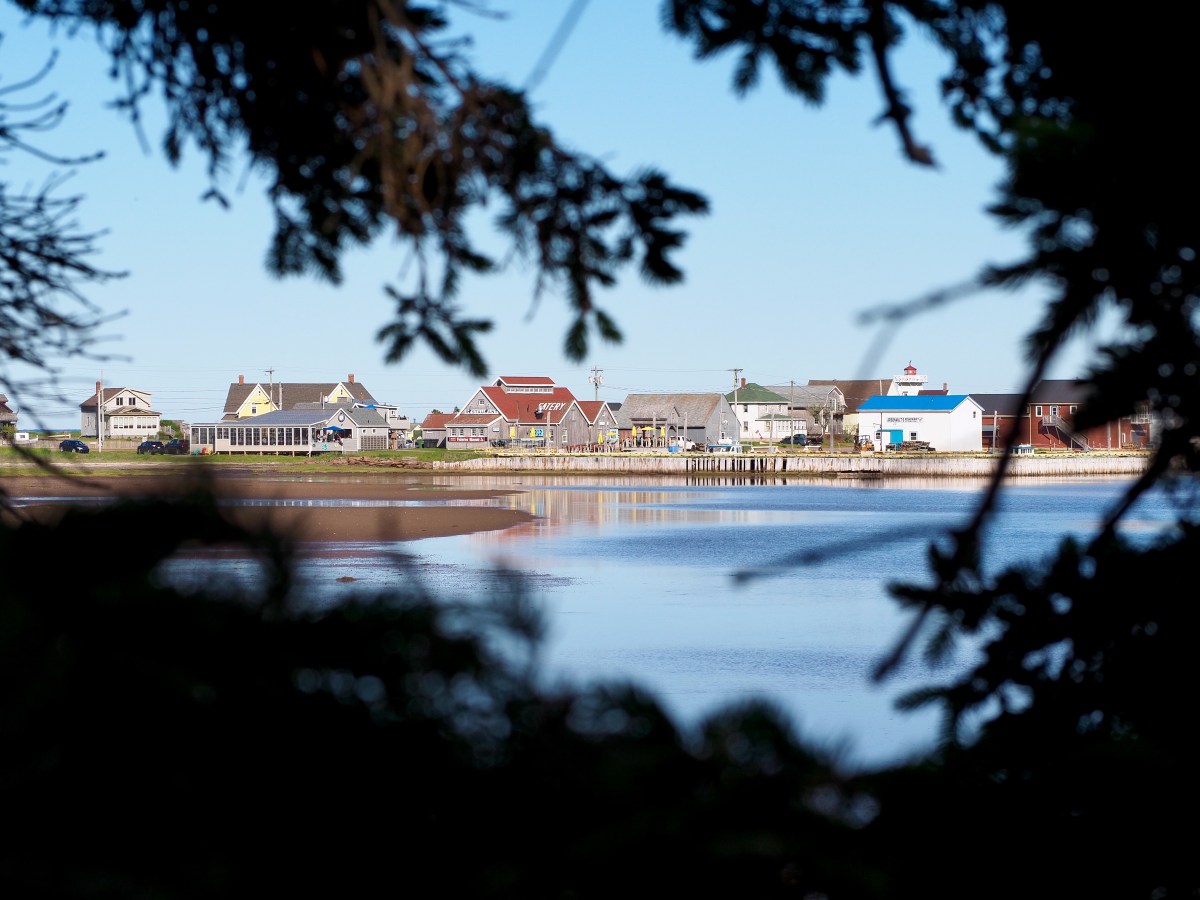

When I first bought my Olympus EM-10ii I immediately purchased Panasonic’s 1.7 25mm lens. My rationale was flawed: I assumed that the kit zoom lens was garbage and that a cheap prime lens would get me photos that would be substantively better than anything that the kit lens provided.1 Even after I figured out that I could take shots I enjoyed with both zoom lenses and the prime I tended to stick with the primes on the basis that I kept reading about the importance of shooting with primes.
Fast forward a year, and I started using my zoom lenses a lot, especially when I was travelling somewhere that would include nature shots. It’s been pretty normal for me to have a long zoom lens combined with an iPhone 7 for wide angle and panoramic shots. And over the past few months that I’ve been shooting at home I’ve tended to pick up and use the kit lens that came with my camera: there’s no way that what I’m trying to do with my lenses are outside of scope of what that lens can do.
The result has been that I’ve been using zooms a lot over the past 6 or 7 months. To the point that I hadn’t picked up a prime lens for months.
Yesterday I decided to just head out and shoot with my trusty Panasonic 1.7 25mm. It was a surreal experience, largely because I’ve gotten so used to the qualities of my zoom lenses that I had to spent at least an hour just getting used to the 25mm’s characteristics. Specifically, getting used to the different coloration, the ability to play with wider apertures, and my need to fully zoom with my legs. In the coming days I’m hoping to post some of the photos from the walk as well as the importance and value that I took from just taking the walk.
When our intentions toward others are good, we find that any feelings of anxiety or insecurity we may have are greatly reduced. We experience a liberation from our habitual preoccupation with self and paradoxically, this gives rise to strong feelings of confidence.
- Dalai Lama
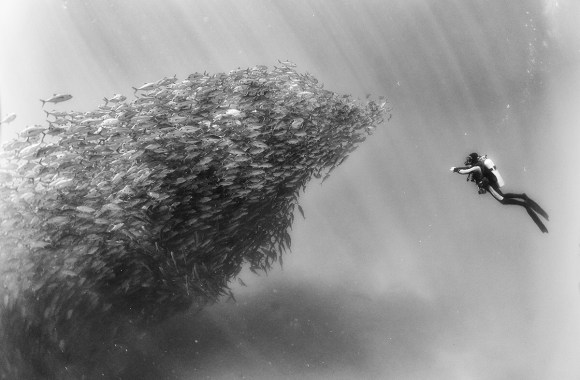
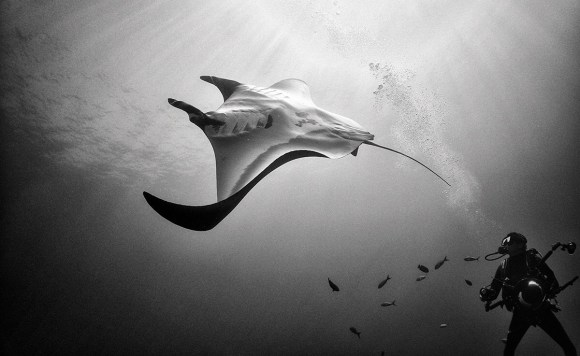
I’ve never actually looked at a series of black and white photographs of undersea life; Anuar Patjane Floriuk’s photos look like they emerge from some kind of a science fiction movie as opposed to the worlds under our seas and oceans.



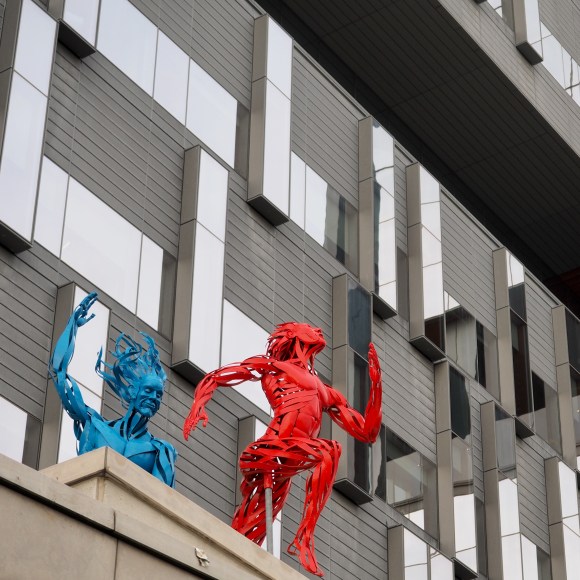
A friend of mine and I travelled into Toronto’s Canary district over the weekend to make some photos. Normally I take photos on solo walks, and it was a nice experience to be in the presence of someone else who was also focused on making images. Some of my highlights are below.
All images were shot using an Olympus E-M10ii and and Olympus M.Zuiko ED 40-150mm f4.0-5.6 R and Olympus M.Zuiko Digital 14-42mm f/3.5-5.6 II R Lens. They were edited using a combination of Apple Photos and Polar.


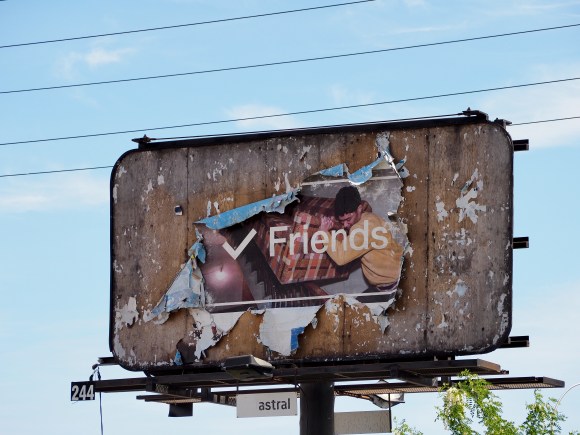


And one shot from the walk home!

 Excited Pixels