Categories
Links Writing

Trusted Content Calls for Trusted Identities

Adam Mosseri recently posted about how Instagram is evolving to arbitrate what is, or is not, truthful in a generative AI era. Om Malik’s analysis of said post is well worth the time to read and, in particular, his framing of Instagram’s movement into what he calls a ‘trust graph’ era:

[Instagram] has moved from the social graph era, when you saw posts from people you knew, to the interest graph era, when you saw what algorithms though [sic] you will like. It is now entering a trust graph era, in which platforms arbitrate authenticity. And it is being dragged into this new era. [^ Emphasis added.]

AI is flooding the system, and feeds are filling with fakes. Visual cues are no longer reliable. Platforms will verify identities, trace media provenance, and rank by credibility and originality, not just engagement.

Malik’s framing is useful not simply because it captures a product evolution, but because it gestures toward a deeper shift, and one whose implications extend well beyond Instagram as a platform. Namely, platforms are positioning themselves as arbiters of authenticity and credibility in an environment where traditional signals of truth are increasingly unstable.

There are some efforts to try and assert that certain content has not been made using generative systems. Notwithstanding the visibility that Meta possesses to try to address problems at scale, what is becoming more salient is not merely a technical response to synthetic media, but a broader epistemic and ontological shift that increasingly resembles Jean Baudrillard’s account account of simulacra and life lived in a state of simulation:

Simulacra are copies that depict things that either had no original, or that no longer have an original. Simulation is the imitation of the operation of a real-world process or system over time.

This framing matters because efforts to ground authenticity and truth are predicated on the existence of an original, authentic referent that can be recovered, verified, or attested to.

Generative AI content can, arguably, be said to largely be divorced from the ‘original’ following the vectorization and statistical weighting of content; at most, the ‘original’ may persist only as a normalized residue within a lossy generative process derived from the world. Critically, generative systems do not simply remix content; they dissolve the very reference points on which provenance and authenticity regimes depend. And as generative LLMs (and Large World Models) are increasingly taken up, and used to operate the world in semi-autonomous ways, rather than to simply represent it, will they not constitute an imitation of the operation of real-world processes or systems themselves?

This level of heightened abstraction will, to some extent, be resisted. People will seek out more conservative, more grounded, and perceptibly more ‘truthful’ representations of the world. Some companies, in turn, may conclude that it is in their financial interest to meet this market need by establishing what is, and is not, a ‘truthful’ constitutive aspect of reality for their users.

How will companies, at least initially, try to exhibit the real? To some extent, they will almost certainly turn to identity monitoring and verification. In practice, this means shifting trust away from content itself and toward the identities, credentials, and attestations attached to published content. In this turn, they will likely be joined by some jurisdictions’ politicians and regulators; already, we see calls for identity and age verification regimes as tools to ameliorate online harms. In effect, epistemic uncertainty about content may be displaced onto confidence in identities attached to content.

This convergence between platform governance and regulatory activity may produce efforts to stabilize conservative notions of truth in response to emergent media creation and manipulation capabilities. Yet such stabilization may demand heightened digital surveillance systems to govern and police identity, age, and the generation and propagation of content. The mechanics of trust, in other words, risk becoming the mechanics of oversight and inviting heightened intrusions into private life along with continued erosion of privacy in digital settings.

Regardless of whether there is a popping of the AI bubble, the generative AI systems that are further throwing considerations of truth into relief are here to stay. What remains unsettled is not whether platforms will respond, but how different jurisdictions, companies, and regulators will choose to define authenticity, credibility, and trust in a world increasingly composed of simulacra and simulations. Whether the so-called trust-graph era ultimately serves users—or primarily reasserts institutional authority under conditions of ontological and epistemic uncertainty—will remain one of the more intriguing technology policy issues as we move into 2026 and beyond.
Categories
Links Writing

TikTok and the “Problem” of Foreign Influence

This is one of the clearer assessments of the efficacy (and lack thereof) of influencing social groups and populations using propaganda communicated over social media. While a short article can’t address every dimension of propaganda and influence operations, and their potential effects, this does a good job discussing some of the weaknesses of these operations and some of the less robust arguments about why we should be concerned about them.1

Key points in the article include:

  1. Individuals are actually pretty resistant to changing their minds when exposed to new or contradictory information which can have the effect of impeding the utility of propaganda/influence operations.
  2. While policy options tend to focus on the supply side of things (how do we stop propaganda/influence?) it is the demand side (I want to read about an issue) that is a core source of the challenge.
  3. Large scale one-time pushes to shift existing attitudes are likely to be detected and, subsequently, de-legitimize any social media source that exhibits obvious propaganda/influence operations.

This said, the article operates with a presumption that people’s pre-existing views are being challenged by propaganda/influence operations and that they will naturally resist such challenges. By way of contrast, where there are new or emerging issues, where past positions have been upset, or where information is sought in response to a significant social or political change, there remains an opportunity to affect change in individuals’ perceptions of issues.2 Nevertheless, those most likely to be affected will be those who are seeking out particular kinds of information on the basis that they believe something has epistemically or ontologically changed in their belief structures and, thus, they have shifted from a closed to open position to receive new positions/update their beliefs.


  1. In the past I have raised questions about the appropriateness of focusing so heavily on TikTok as a national security threat. ↩︎
  2. This phenomenon is well documented in the agenda-setting literatures. ↩︎
Categories
Links Writing

Russian State Media Disinformation Campaign Exposed

Today, a series of Western allies — including Canada, the United States, and the Netherlands — disclosed the existence of a sophisticated Russian social media influence operation that was being operated by RT. The details of the campaign are exquisite, and include some of code used to drive the operation.

Of note, the campaign used a covert artificial intelligence (AI) enhanced software package to create fictitious online personas, representing a number of nationalities, to post content on X (formerly Twitter). Using this tool, RT affiliates disseminated disinformation to and about a number of countries, including the United States, Poland, Germany, the Netherlands, Spain, Ukraine, and Israel.

Although the tool was only identified on X, the authoring organizations’ analysis of the software used for the campaign indicated the developers intended to expand its functionality to other social media platforms. The authoring organizations’ analysis also indicated the tool is capable of the following:

  1. Creating authentic appearing social media personas en masse;
  2. Deploying content similar to typical social media users;
  3. Mirroring disinformation of other bot personas;
  4. Perpetuating the use of pre-existing false narratives to amplify malign foreign influence; and
  5. Formulating messages, to include the topic and framing, based on the specific archetype of the bot.

Mitigations to address this influence campaign include:

  1. Consider implementing processes to validate that accounts are created and operated by a human person who abides by the platform’s respective terms of use. Such processes could be similar to well-established Know Your Customer guidelines.
  2. Consider reviewing and making upgrades to authentication and verification processes based on the information provided in this advisory;
  3. Consider protocols for identifying and subsequently reviewing users with known-suspicious user agent strings;
  4. Consider making user accounts Secure by Default by using default settings such as MFA, default settings that support privacy, removing personally identifiable information shared without consent, and clear documentation of acceptable behavior.

This is a continuation of how AI tools are being (and will be) used to expand the ability of actors to undertake next-generation digital influence campaigns. And while adversaries are found using these techniques, today, we should anticipate that private companies (and others) will offer similar capabilities in the near future in democratic and non-democratic countries alike.

Categories
Photography Writing

Structured Thoughts on Social Media

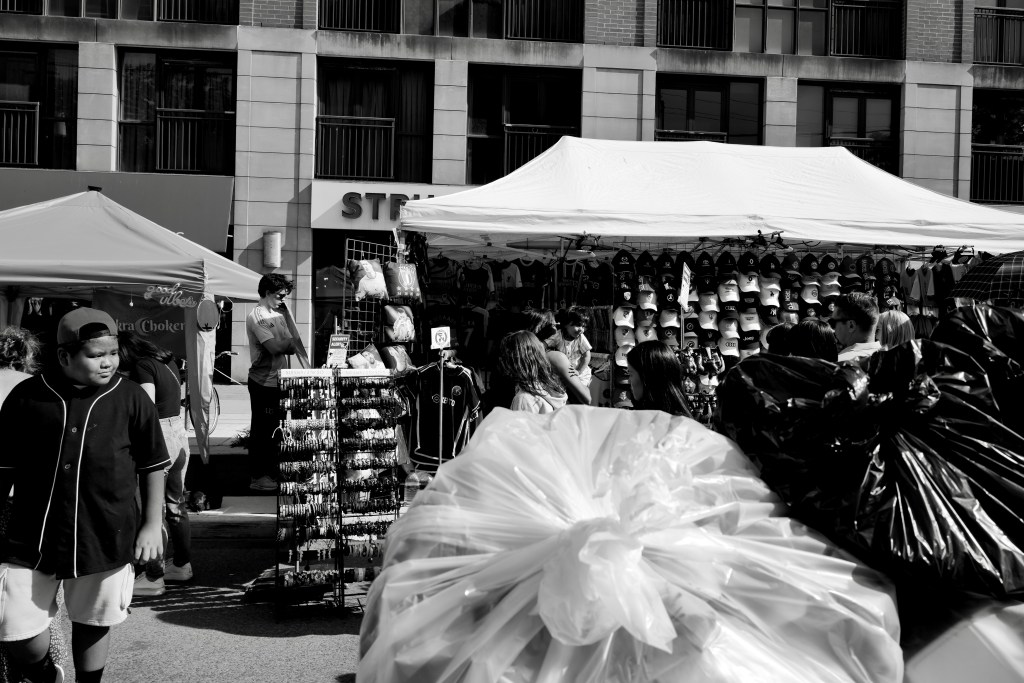
College & Manning, Toronto, 2024

Neale James, host of the Photowalk, put out a call last month where he asked listeners to the podcast to offer some thoughts about social media. The episode that arose from listeners’ considerations is live and I’ve provided my (slightly edited) full response to Neale below.

By way of background, I’ve spent a lot of time thinking about social media professionally in a number of ways, used it professionally to affect political change, and have also used it personally now for over 20 years at this point.

How do you use it?

One of my many positive early memories of social media is how, over 10 years ago, I and a series of cybersecurity researchers used Twitter to coordinate an incident response that led us to realise that the government of Iran was intercepting Google traffic being delivered to residents of Iran. That led to the resolution of the issue and stopped that government from conducting surveillance of its residents using the technique in question. So a good thing! Overall, up until about a year ago I used Twitter constantly for professional purposes.

However, the implosion of Twitter under Elon Musk, combined with moving into a privacy regulator’s office, has meant that I’ve stepped back from the same professional presence. I’ve trained the LinkedIn algorithm so it surfaces valuable professional content in my current role, but I don’t really use other social media professionally at this point.

Personally, the only truly valuable social media service that I use, and participate on, is Glass. It’s a small and paid photo sharing site. The community is positive and active, and it features interesting photography from around the world. I’ve also been blogging, now, since the 2002, and continue to keep that up as another outlet.1

Do you engage more, or less, with social media than you once did?

Less than in the past. Some of this is time. Some of it is, as mentioned, due to changes in the networks (e.g., Twitter) or the scattering of the communities (see again: Twitter) and the changing of my job.

I continue to use Glass, however, with a high degree of frequency and visit once or twice a day to see new images and I post one image per day.

What is your favourite platform and why?

For photographic purposes, Glass. It’s not as interactive as some other services which is fine, really, because I can go in and see things/comments, and then leave. There isn’t an algorithm that’s trying to keep me interested in perpetuity. It’s a healthier way for me to interact with other people online.

Explain your feelings about the currency of likes…

They’re…not good? I mean, they give quite the dopamine hit! But it also interferes with why you might create work, or explore producing new kinds of work. We know that certain kinds of images will get more likes due to smaller screens and shorter attention spans as we skim images; removing likes — or at least deprioritizing them in the user interface — can have the effect of encouraging people to explore different kinds of practice and without a sense that the new isn’t less liked.

What has it done for photography?

It’s easy to say that likes have done bad things to photography. But I really don’t know that that’s fair or even necessarily correct.

There are a lot more people making photographs than ever before. And part of the process tends to be learning how other people tried to make images: how many of us spent time to figure out how to make silhouettes? And with the ‘like’ metric you can get a rough guesstimate of whether you’re getting better and better at this kind of classic image. The same is true for lots of other ‘standard’ kinds of images. I think that’s great! People are better photographers on average, today, than ever before. We should celebrate that more often than we tend to.

Where I think that likes can be harmful is that they can stunt photographic growth or exploration. Also, due to how algorithms work, ‘low like’ content might be hidden and thus prevent the artist from receiving feedback on positive areas to improve towards. And, of course, there can be mental health issues when individuals ‘bully’ one another by providing or depriving individuals of likes. All of those aren’t great outcomes.

What would the perfect platform look like?

Utopia and dystopia: both places that don’t exist in reality, and neither of which is a place that you likely ever want to end up in.

All of which is to say, I think there are different characteristics of social media sites and you can dial those characteristics up or down and you create different kinds of sites and experiences. A few ‘dials’:

  • How ‘chatty’ or conversational is the environment? Does ‘community’ involve direct messages?
  • How compressed are the images? Is it build for phone screens, tablet screens, monitors, or…?
  • How effectively are you introduced to/able to discover new photographers?
  • What is the information density — how much is on the screen at once?
  • What is/isn’t made public? And how? Do you list numbers of followers, likes, etc?
  • How much are you appealing to the masses vs dedicated photography enthusiasts?
  • Monetized by users paying money, or monetizing the users?
  • Is it a ‘hot’ medium (e.g., sound and video) or a bit ‘colder’ of a medium (e.g., photographs and text)?
  • How personalized is the experience (i.e., lots of algorithmic engagement vs just find it on your own)?
  • Is there an assertive and active safety team that blocks certain content from appearing on the site?

When you adjust just some of those dials you affect the nature of the site, the number of users that you need to be revenue neutral, and affect how people will interact with one another. What I think is better will be worse for others, and vice versa.

I actually think that there should, ideally, be a diversity of experiences. And that it’s fine if different little groups form across the Internet that enjoy their parts of the Internet differently. There’s no reason why a half-dozen different photographic social media sites cannot exist, as an example, nor is it really a problem if you aren’t engaging with all of them. Find a site that has the ‘dials’ adjusted to your tastes and you’ll have hopefully found an environment — and user base — that you can enjoy and thrive with.

Tell me about the good bits, the bad bits, and all the bits in between…

I’m sure that I could go on in more depth but won’t drag on. Suffice to say that I think — hell, I know based on my professional experiences — that social media can be powerful and important and enable lots of good things in the world. But, at the same time, it can foster anti-social behaviours, be used to fuel genocide, and just be a depressive hellscape.

This isn’t to say that technology is neutral, however: all technologies as they are designed have particular affordances. Those affordances are linked to how those dials are turned. And there are certainly some ways of turning the dials that are not particularly good for humans, even if we enjoy those sites like sugary food, and other ways that are better, which are more like a banana or apple or something that has a modicum of healthiness.

We shouldn’t demand that everything is digitally healthy — we should be able to enjoy cheeseburgers and poutine now and again!! — but the totality of our dining establishments shouldn’t be fast food and deep fried food. Because we know that it’s really not good for us.


  1. Though all those earlier blogs have long since been scrubbed from the Internet and archived in a place no-one can find in storage. Which is a relief as no-one needs to be reminded of what I was like online in the early 2000s! ↩︎
Categories
Writing

The Changing Utility of Social Media

Several years ago I was speaking with a special advisor to President Bush Jr. He was, also, an academic and in the summer he had returned to his university to teach some of international relations courses. This was during the time when the US had a force stationed in Iraq, and his students regularly had more up to date information on what was happening on the ground than he did, notwithstanding having a broad security clearance and access to top US intelligence. How was this possible?

His students were on Twitter.

Another story: when I was doing my PhD there was an instance where it was clear that the Iranian government had managed to access information that should have been encrypted while in transit between using Google products from Iran. After figuring this out I shared information on Twitter and the infosec community subsequently went to work to rectify the situation.

There are lots of similar stories of how social media has been good for individuals in their personal and professional lives. But, equally (or more so ), there are stories where social media services have fed serious and life threatening problems. The Myanmar genocide. Undermining young women’s sense of self-confidence and leading to thoughts of self-harm. Enabling a former President to accelerate an irregular political and policy environment, often with harmful effects to members of government, residents of the United States, and the world more broadly.

The Future of Social Media

But the social media services that enable the positive and negative network effects of the past are significantly different, today, than just 5 years ago. What does this mean for the future of social media services?

First, we need to assess the extents to which the services remain well situated for their purposes. For the sharing of popular news, as an example, some companies to moving away from doing so partially or entirely in response to economics or emerging law or regulations. What does it mean when a core driver of some hardcore users — journalists, academics, some in government — no longer see the same utility in engaging online? What does this mean for the affordances of new services?

Second, to what extent are the emerging services really able to address the harms and problems of the old services? How can these services be made ‘safe to use’ and promote equity and avoid generating harms to some individuals and communities? I think there is a valid open question around whether you can ever create a real-time communications platform that enables mass broadcast, and which does not amplify historical harms and dangerous social effects.

Third, to what extent have these services outlived some of their utility? While individuals used to share information broadly on social media networks they can now retreat to large chat groups or online chat services (i.e., the next generation of AOL chat is here!). These more private experience still enable the formation of community without the exposure to some of the harmful or disquieting content or messages that existed on the more public social media sites.1

There has, also, been an explosion of new-Twitter competitors (along with those competing with other networks, including Instagram and popular/corporate chat services). While this has the benefit of reducing some of the aggregated harms that can arise, just in the sense that individuals are spread out between services and cannot mass against one another as they could previously, it also means that content which is published may lack the same kind of reach as in the past. Whereas once you may have had thousands of Twitter or Instagram or Facebook followers who you could alert to pressing issues of social injustice, now this same population is scattered across a bevy of different services and platforms. The dispersion effect makes it hard to have the same kind of thought leader status as may have been possible, even in the relatively recent past.

One of the solutions to these problems, writ large, is to facilitate a ‘Post Once (on your own) Site, Syndicate Everywhere’ (POSSE) situation, where you can post on one service and then syndicate it to all the other services. Promoters of this maintain that you can then have a single ‘identity’ or location, put all your content there, and then share it around the world.

Obviously this approach has some initial appeal. And for many individuals or groups they may prefer this approach. But a POSSE ‘solution’ to the disintermediation of social media fails to take into account the value of having discrete online identities.

As just one example, I have a website for professional materials, use a service to share and circulate my photographs, blog less formally here, circulate interesting news articles using an RSS feed, share short thoughts about professional topics on LinkedIn, and then have a sequence of chat applications for yet other conversations. Bringing all these together into a single space would be problematic by merit of diluting the deliberateness that each space is imbued with. Put differently, I don’t want the materials that might get me a job linked to my street photography or ruminations, on the basis that it could impede my ability to find the right kind(s) of gainful employment.

As I contemplate the state of social media and identity, today, I guess I’m left with the ongoing recognition that classic media organizations played a key role in identifying what was more or less important to pay attention to, especially when the information sources I cultivated over the past decade have quickly and suddenly changed. The social media that was so useful in aggregating information even intelligence services lacked, as well as that was used to respond to information security issues, is now long past.

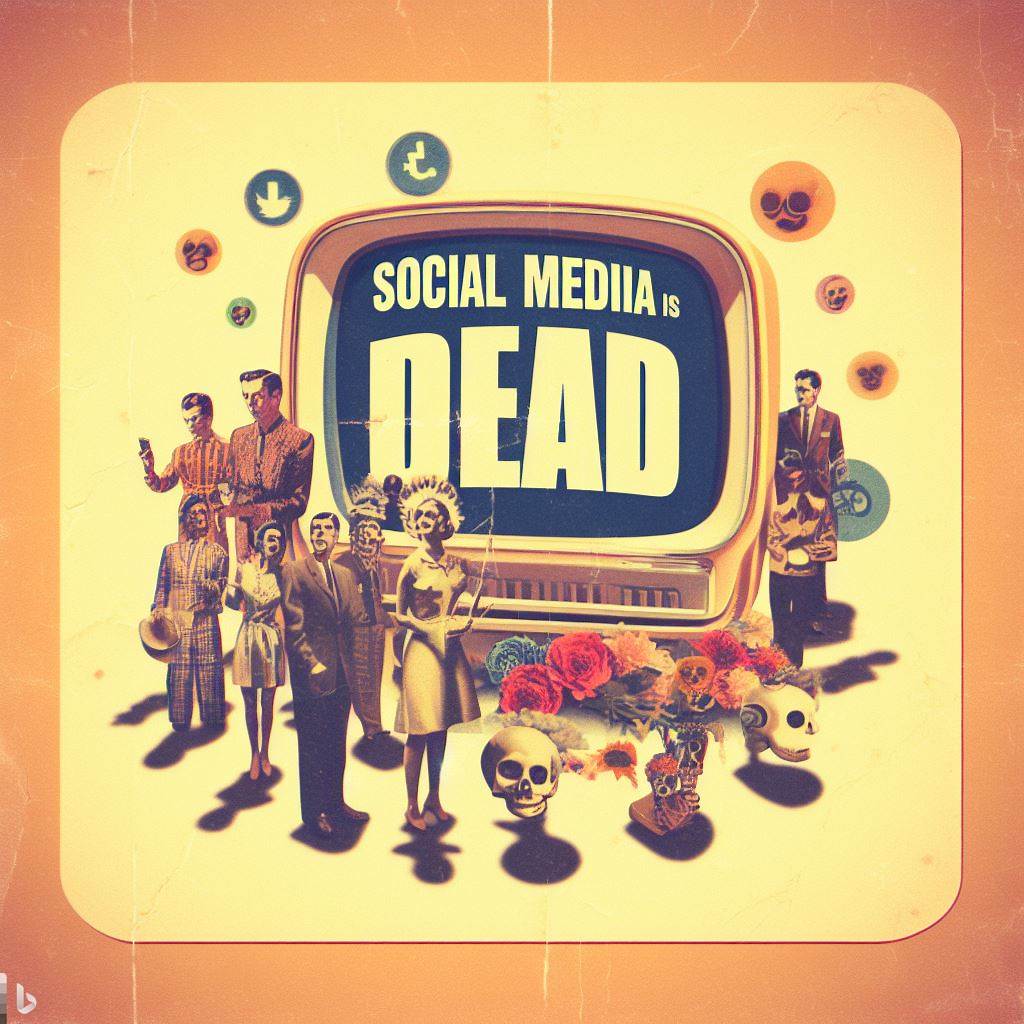
Social media as it was is dead. Long live socialized media.


  1. With the caveat that some groups retreat to these more private spaces to share harmful or disturbing content without worry their actions are likely to be detected and stopped. ↩︎
Categories
Links Writing

Social Networks, Social Media, and Design Affordances

Ian Bogost has a good piece in The Atlantic that recalls the trajectory of social networking services and their transformation into social media services. He distinguishes between the two thusly:

The terms social network and social media are used interchangeably now, but they shouldn’t be. A social network is an idle, inactive system—a Rolodex of contacts, a notebook of sales targets, a yearbook of possible soul mates. But social media is active—hyperactive, really—spewing material across those networks instead of leaving them alone until needed.

I’m someone who obtains a vast amount of very valuable information from my social networks. People are always softly pushing information that is relevant to my specific interests, such as by RSS or through private email groups, with just enough extra stuff that I can learn about novel topics or issues. In all of these cases however I make the choice to interact with the content and in a pretty focused way. This approach is perhaps a bit more active than how Bogost frames social networks but is much closer to the earliest days of Web 2.0, prior to the advent of microblogging and image sharing becoming major things in my neck the Internet. Much of this information comes from people I have either strong or intermediate connections with.

Professionally, I have historically found Twitter to be a useful social media platform. I and other experts have used it to surface media and/or opinions that were meant to be helpful in better understandings parts of the world I engage with. This, of course, has changed for the worse in the past 2 months. Broadly, I and other experts have benefitted from the design affordances of the ‘megascale’ of Twitter.

Most social media, however, holds little or no value to me.1 And perhaps most dangerously even Twitter has the effect of sharpening language (gotta keep within those character or thread limits!) while also making it much harder, if not impossible, to find useful contributions at a later date in time. As experts have moved to Twitter and away from long-term content storage repositories (e.g., blogs, opinion articles, etc) their expertise has the effect of appearing briefly and then being lost to themselves as well as future audiences. Broadly, then, one question is what is the role of social media for professionals and experts who have a public communication role to their careers?

There is also some real value in social media platforms that move content quite quickly. I know for a fact that Twitter, as an example, is regularly useful for foreign policy observers who are trying to determine what is happening around the world. These observers are taking advantage of weak ties to obtain otherwise difficult to find information. Twitter is, also, helpful for crowdsourcing in the case of disasters. At the same time these networks can be, and have been, and are being used for harmful purposes. This includes targeted harassment, government abuse, and more. We often hear about these latter ills and, in response, some wish that very different or slower social media platforms existed on the presumption that they would reduce the harm while still enabling the good platforms. This is perhaps best captured by Bogost’s earlier article, “People Aren’t Meant to Talk This Much,” where he writes:

Imagine if access and reach were limited too: mechanically rather than juridically, by default? What if, for example, you could post to Facebook only once a day, or week, or month? Or only to a certain number of people? Or what if, after an hour or a day, the post expired, Snapchat style? Or, after a certain number of views, or when it reached a certain geographic distance from its origins, it self-destructed? That wouldn’t stop bad actors from being bad, but it would reduce their ability to exude that badness into the public sphere.

However, in assessing the properties of networks/media systems designers should consider the respective technologies’ affordances and what they, and their users, really want or need. I don’t subscribe to the position that Twitter is Evil™ or that a ‘new Twitter’ needs to do away with all the affordances of the current platform.

Real good has come from the ability of different parties to exploit or benefit from virality. But that virality is not something that all persons should have to deal with if they don’t want to, and users of viral-enabled platforms should be protected by rigorous trust and safety policies and teams. (Twitter is clearly moving away from their already-insufficient efforts to protect their users and, so, any replacement virality-platform should start with trust and safety as a top priority ahead of almost anything else.)

The ‘solution’ to the ills of social media shouldn’t be to wistfully look back to the earliest era of Web 2.0, or the last breaths of Web 1.0, and say that we should be restricted to tool and service equivalents of those times. Social technologies should not be permanently halted in the time and template of Livejournal, Orkut, Google+, or Blogger.

First, because we enjoy a lot of modern affordances in our technology and likely won’t want to abandon them!

Second, because such call-backs are often to times when the social networks were far less diverse than the social media platforms today. We should be wary of seeking the civility of the past on the basis that much of that same perceived civility was premised on the exclusive and privileged nature of the social networks.

Third, it’s important for any and all who look for different social networks or social media platforms to recognize that the affordances they are seeking may not be the affordances that everyone is seeking. To use Twitter as just one example we regularly hear about how the platform is used by its Western users but comparatively little about how it’s used by Japanese users, who have prolifically adopted the platform. We should not over generalise our own experiences (or issues with) platforms and should instead adopt a more inclusive approach to understanding the benefits and drawbacks of a given platform’s affordances and capabilities.

I think that when imagining the ‘next’ iteration of social networks and social media it’s helpful to recognize that different kinds of networks will serve different functions. Not everything needs to operate at megascale. Also, though, we should learn lessons from the current social media platforms and design affordances that provide individuals and groups with the ability to express control over how their networks and media can be used. Tim Bray offers some of those suggestions in his proposals for updating Mastodon. Key, to my eye, are that content-licensing should be a default thing that is considered with code (and, unstated, law) being used to reinforce how individuals and communities permit their information to be accessed, used, collected, or disclosed.

We’re in the middle of yet another reflection period about what role(s) should social networks and social media play in Western society, as well as more generally around the world. Regulatory efforts are moving along and laws are being passed to rein in perceived issues linked with the companies operating the various networks. But there’s also real appetite to assess what should, and shouldn’t, be possible writ large on the contemporary and future social networks and social media platforms. We should lean into this in inclusive ways to develop the best possible policy. Doing anything else means we’ll just keep having the same debate ad infinitum.


  1. There’s lots of broader value: it can be useful economically for some individuals, enable speech outlets that are otherwise denied to individuals who are historically discriminated against, and serve as a medium for creative expression. ↩︎
Categories
Aside Writing

The Future of How I Share Links

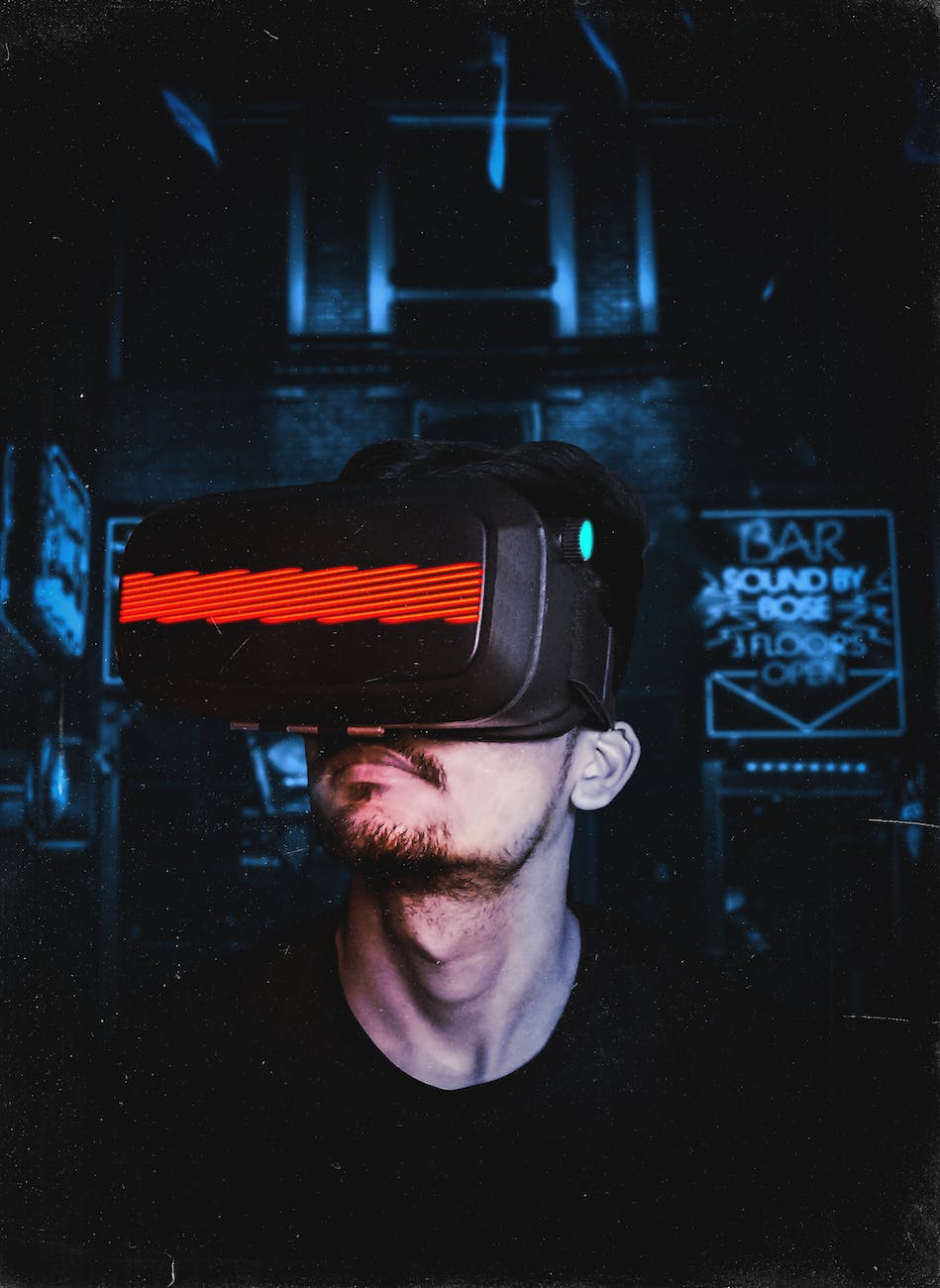
man wearing vr goggles
Photo by Harsch Shivam on Pexels.com

There’s a whole lot happening all over social media and this is giving me a chance to really assess what I use, for what reason, and what I want to publish into the future. I’ve walked away from enough social media services to recognize it might be time for another heavy adjustment in my life.

Twitter has long been key to my work and valuable in developing a professional profile. I don’t know that this kind of engagement will be quite the same moving forward. And, if I’m honest, a lot of my Twitter usage for the past several years has been to surface and circulate interesting (often cyber- or privacy-related) links or public conversations, or to do short-form analysis of important government documents ahead of writing about them on my professional website.

The issue is that the links on Twitter then fade into the digital ether. While I’ve been using Raindrop.io for a while and really love the service, it doesn’t have the same kind of broadcast quality as Twitter.1

So what to do going forward? In theory I’d like to get back into the habit of publishing more link blogs, here, about my personal interests because I really appreciate the ones that bloggers I follow and respect produce. I’m trying to figure out the format, frequency, and topics that makes sense; I suspect I might try to bundle 4-6 thematic links and publish them as a set, but time will tell. This would mean that sometimes there might be slightly busier and slower periods, depending on my ability to ‘see’ a theme.

The challenge is going to be creating a workflow that is fast, easy, and imposes minimal friction. Here, I’m hoping that a shortcut that takes the title and URL of an article, formats it into Markdown using Text Case, and then provides a bit of space to write will do the trick. This is the format I used to rely on to create my Roundup posts, though I don’t really expect I’ll be able to return to such length link blogs.

Update Nov 2023: I have really just leaned into sharing notable links using my through Raindrop.io RSS feed, especially as social media services have fragmented all around us.


  1. I have, nonetheless, created an RSS feed with mostly links to privacy, cyber, and national security articles. ↩︎
Categories
Aside

2022.11.11

A whole generation of journalists and semi-public individuals (myself included) are watching one of the ways we communicated with one another, and developed as professionals, is negligently being burned down. And so a lot of electrons are being tortured into describing our collective experiences.

My question, though, is this: what is the next system or platform that younger generations will use? Will it be YouTube or TikTok or is there another, still very small or yet to be created, platform that will do the same? Will we see a recursion back to things like Tumblr or blogs and RSS more generally? Will newsletters or email become a thing?

I’m genuinely curious while, simultaneously, a bit sad that a service that I’ve very successfully used to propel my career is almost certainly in steep decline.

Categories
Photography Writing

Glass in 2022

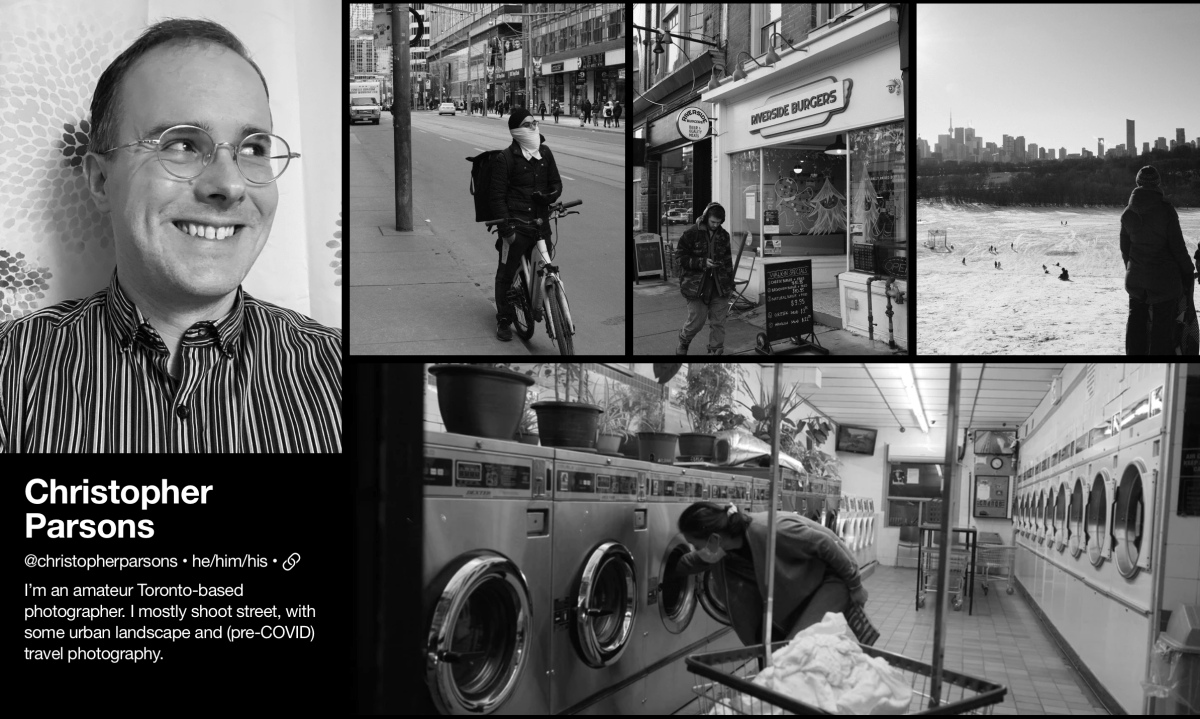
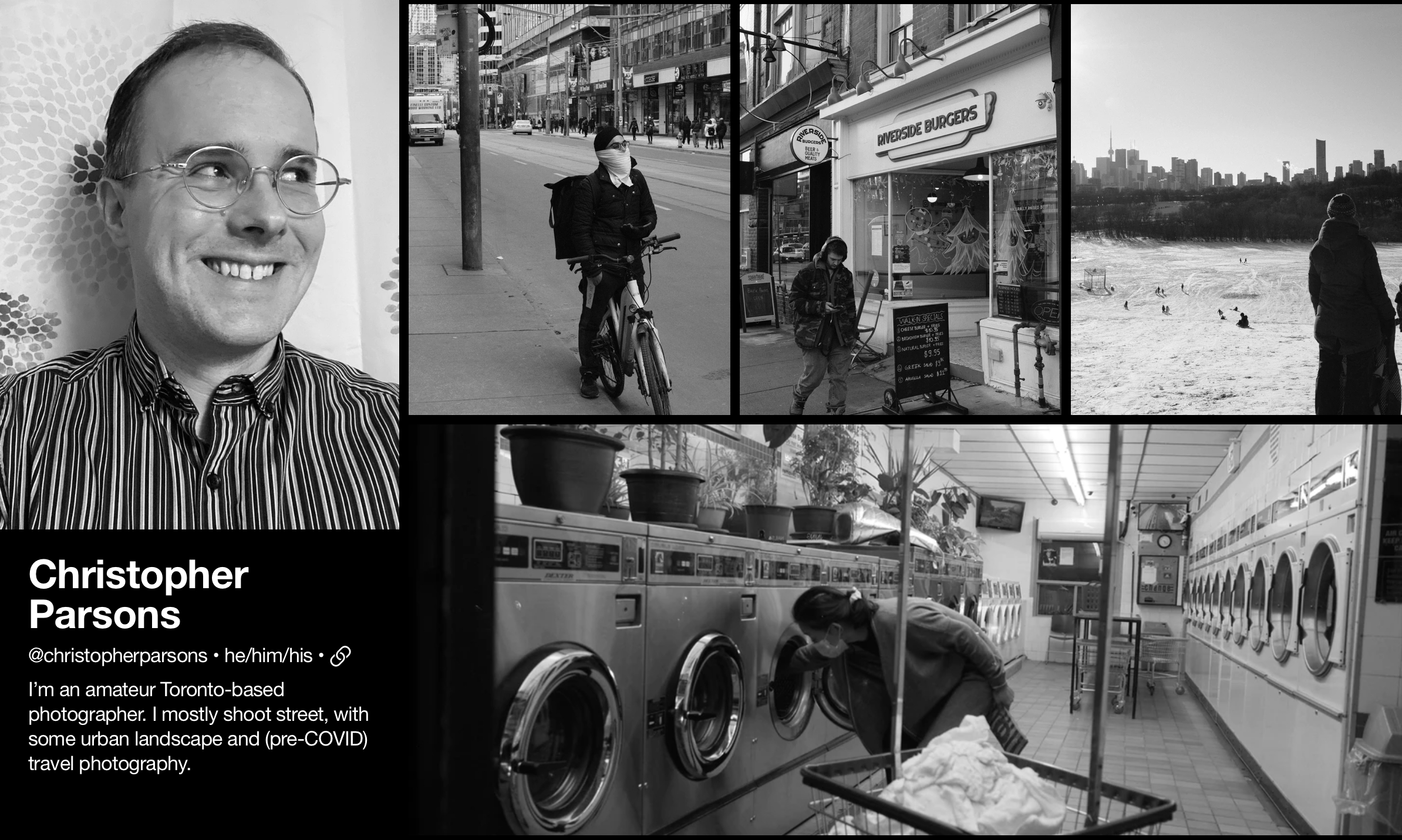
GlassProfile

I’ve been primarily posting my photos to Glass for about three months now. There have been several quality of life improvements1 but, on the whole, the app has been pretty true to its original DNA.

That’s been a bit frustrating for some folks, such as Matt Birchler. He notes that Glass seems to be populated by professional photographers and lacks the life and diversity that you can sometimes find on Instagram or other photography sites. I was particularly struck by his comment that, “I used to enjoy the feed because it was high quality stuff, but now I scroll and everyone is making photos that look like every else’s.”

I don’t discount that Matt’s experience has been seeing a lot of professionals making photos but have to admit that his experiences don’t really parallel my own. To be clear, the photographers that I follow are doing neat work and some are definitely serious amateurs or professionals. But perhaps because I’m more focused on street photography it’s rarely self-apparent to me that I’m following professionals versus amateurs, nor that everyone’s work looks the same.

That being said, I definitely do follow a lot fewer people on Glass. If I have a problem with the app it’s that discovering active photographers on the platform is difficult; a lot of people signed up for the trial period but aren’t regularly posting. The result is that it’s hard to develop an active stream of photos and a photographic community. At the same time, however, I don’t browse the Glass app like I would Instagram: I pop in once or twice a day, and try to set aside some time every day or three (or four…) to leave comments on others photographers’ work. I treat Glass more seriously than free photography applications, if only because I have (thus far) only has positive experiences with the other active photographers posting their work there.

The only other problem I have with Glass—annoyance really!—is that I think that you actually can see/display photographers’ profiles in a much more beautiful way on non-phone devices. The image for this post was a screen capture from my iPad which attractively lays out photos. In contrast, you just get a flat waterfall of images if you visit my profile in the Glass app itself. That’s a shame and hopefully something that is improved upon in 2022.

To date I’m happy with Glass and incredibly pleased to no longer posting my photos to a Facebook platform. I really hope that Glass’s developers are able to maintain the app going forward, which will almost certainly depend in part on building the community and enhancing discoverability.

I’m currently planning to continue posting my work to Glass regularly. Even if the service doesn’t explode (which would be fine for me, though probably not great for its long term survival!) I find that the comments that I receive are far more valuable than anything I tended to receive on Instagram or other social sites, and the actual process of posting is also a comparative breeze and joy. If you’re looking for a neat photography site to try out, I heartily recommend that you give Glass a shot!


  1. Specifically, the developers have added some photography categories and public profiles, as well as the ability to ‘appreciate’ photos and comments ↩︎
Categories
Photography

My Glass Public Profile

I’ve recently written about the concerns that I have about Instagram, and my assessment of whether I wanted to port my online photo sharing to either Flickr or Glass. As of October 27, Glass has enabled public profiles so non-members can view the work that photographers have published on the service. You can check mine out!

I…really like how the profiles look on Glass at the moment. I’ve been posting with some frequency (all black and whites, with a focus on street photography) and the flow model to capture and then post photographs has been simple and seamless.

I also really like the experience of having to comment on other photographs instead of ‘liking’ them. This engagement strategy means that when I interact with other photographers’ pieces I need to leave at least some kind of meaningful comment. As a result, I need to slow down and think a bit more about a photograph and I think that’s a good thing for me–the viewer–and the photographer who hopefully gets more meaningful (if less frequent) engagement.

I like Glass enough that I’ve ponied up for a one year subscription. The developers are pushing out significant quality of life updates to the application and, on the whole, it’s currently pretty fun to use and is clearly intended to be used by photographers, as well as other individuals who are interested in photography and just don’t want to deal with the grossness of Instagram and want something a little fresher than Flickr.

Based on my experiences thus far I’d heartily recommend that you check out the service, as well as my public profile!