Categories
Links Photography Roundup Writing

The Roundup for March 24-30, 2018 Edition

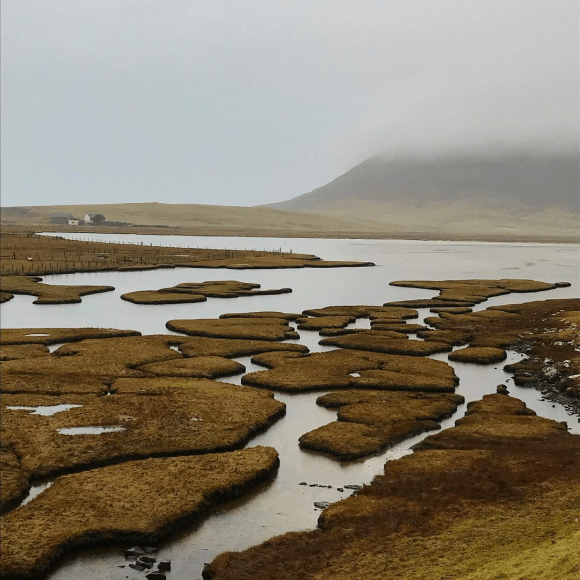
From the Deep by Christopher Parsons

This has been a particularly grey week — the weather has been mostly overcast and slightly rainy — and it’s had all the hallmark effects on my mood and attitude as it did when I lived on the west coast of Canada. With hindsight, I can see that some of the depressive funks I fell into while doing my PhD were the result of the weather, combined with diet and work/life imbalance. And when I was on the west coast, I discovered that getting in some significant amount of walking each day was what it took to fight through those funks.

Cue this week, and the solution has been getting into an exercise room and just doing work I didn’t really want to do, but which I intellectually knew would improve my perspective on life as soon as I was done my circuit. Unsurprisingly, each day that I dragged myself to exercise helped to improve my next day. In the UK, this has been taken a step further, and persons who are experiencing seasonal affective disorder, anti-social behaviour, or other mental health challenges are being prescribed exercise, socialization, and related activities that are meant to naturally modify the chemistry of their bodies and brains. No pills or drugs required.

It strikes me that such prescriptions could have a range of positive outcomes. First and foremost, for those who ‘fill’ the scripts, they might derive relief from the symptoms affecting them. That’s a clear win. But, second, it would have the effect of pushing people who might avoid certain kinds of physical activity to be there, with others, and realize that the portrayals of ‘fit’ or ‘active’ people in the movies and television tend to be drastically out of step with reality. I know that in my own case, I had this idealized idea of what people looked like when they exercised, how hard they worked, and so forth. But by going and exercising I’ve improved upon my own sense of my body by, first, doing some exercise but, second, seeing that the persons who are exercising look an awful lot like me.

In other words, developing a pretty regular exercise routine has had the dual effect of improving my mental health by just pushing my body, as well as improving my sense of bodily self-worth by destigmatizing my (pretty normal) body. I imagine that were more and more people gently pushed to get into workout rooms, running groups, or other socialized exercise spaced they, too, would experience that similarly destigmatizing experience.


New Apps and Great App Updates from this Week

Great Photography Shots

Unsurprisingly, I was crazy impressed by several of the images which were submitted to, and won at, the 2018 Sony World Photography Awards.

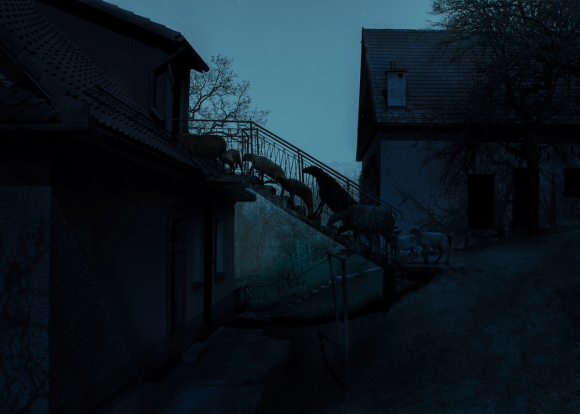
‘An unexpected meeting’ © Justyna Zdunczyk, Poland, Winner, Open Wildlife and Winner, Poland National Award, 2018 Sony World Photography Awards. I was about to leave the Sequoia National Park when from the corner of my eye I saw a beautiful clearing bathed in A fog. Without thinking too much, I ran with the camera to take some pictures. When I reached the clearing, I heard the crack of broken twigs and I can’t say, that I was not afraid since Sequoia National Park is a home for black bears and people are warned about it at every step. When I turned around, fortunately, there was not any bear, instead, I saw a curious mule deer walking towards me who cheerfully chewed his supper. Soon after other deer joined him and we just stood there together for a while and watched each other. It was one of the most beautiful moments during my trip thru California, this autumn.
‘Early autumn’ © Veselin Atanasov, Winner, Open Landscape & Nature and Winner, Bulgaria National Award, 2018 Sony World Photography Awards. The autumn has begun to decorate with its colors the woods of the Balkans. National Park – Central Balkan, Bulgaria.
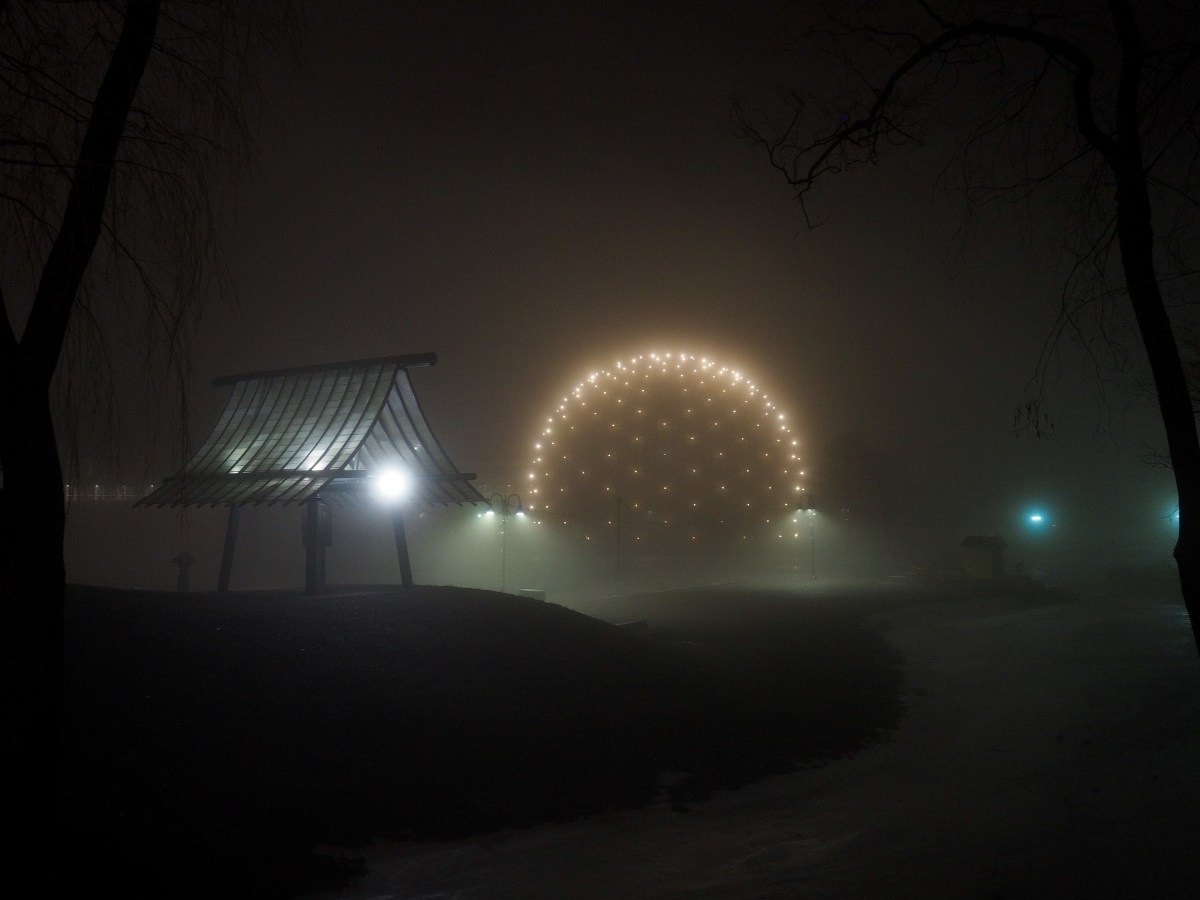
‘The man and the mysterious tower’ © Andreas Pohl, Germany, Winner, Open, Architecture (Open competition), 2018 Sony World Photography Awards. Vertical wind tunnel built in the years 1934 to 1936 for aeronautical studies in Berlin-Adlershof. The photo was taken on 9th January 2017 at 4:26 pm when the dusk already set in. I took the photo because I had it in mind for more than 2 years without a chance…cause there is not much snow in Berlin.
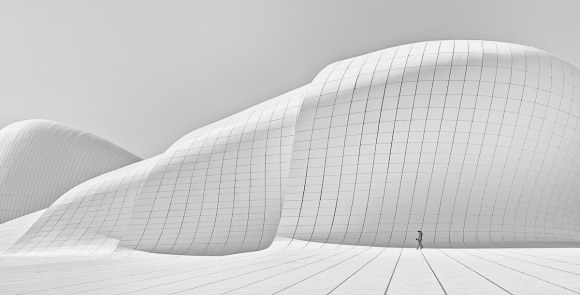
‘Hayder museum’ © Abdulla AL-Mushaifri, Winner, Qatar National Award, 2018 Sony World Photography Awards. Hayder Cultural Center, Baku Azerbaijan
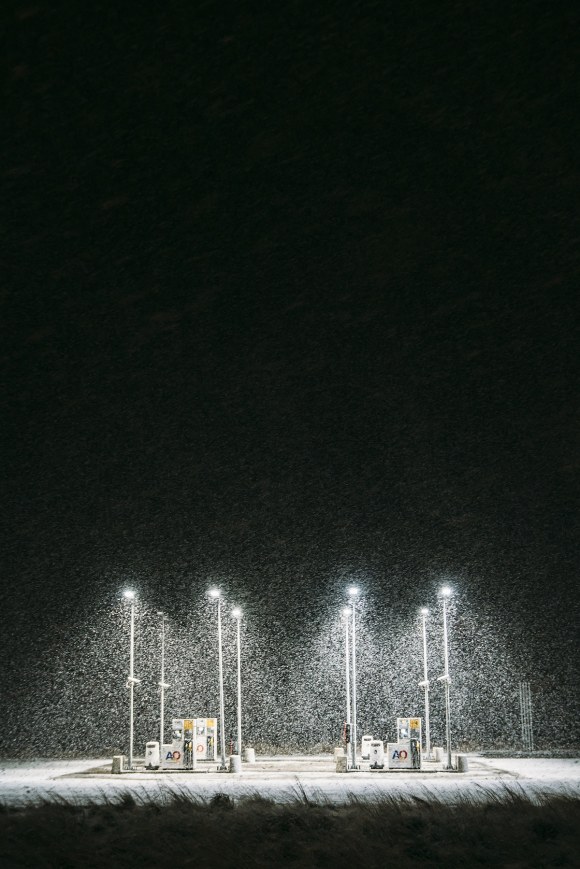
‘Gas Station’ © Chul-Ui Song, Winner, South Korea National Award, 2018 Sony World Photography Awards.

Music I’m Digging

Neat Podcast Episodes

Good Reads for the Week

Cool Things

Categories
Links Photography Roundup Writing

The Roundup for March 10-23, 2018 Edition

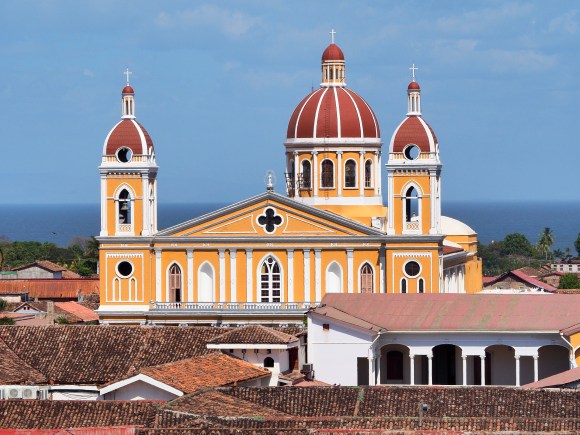
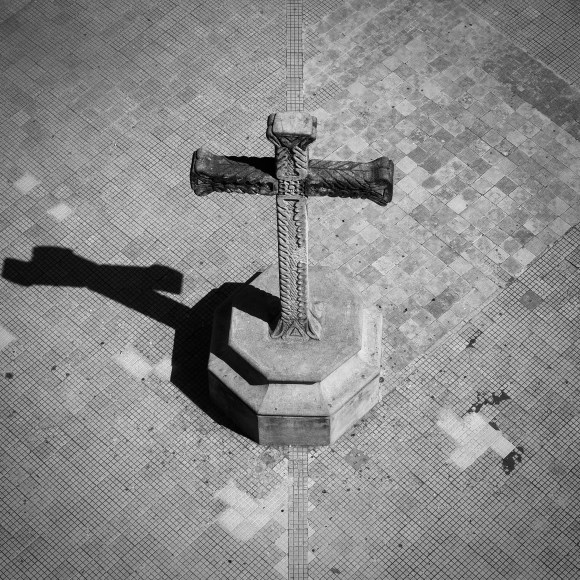
Granada Cathedral by Christopher Parsons

For many years I’ve kept paper records of the things I’ve done in a given week. The rationale for keeping track is that I can be very busy, get a lot of real work done, but quickly forget about it because I routinely task shift between major projects. The result of this shifting is that I often produce thousands of words a week and forget about them once published. Keeping records has helped to ameliorate this forgetfulness problem.

In more recent years, rather than letting my week get filled up with ‘what I’ve done’ I’ve developed lists to try and keep me focused on the most important things. That has worked reasonably well, save that a lot of ‘extras’ get added to my week and then I’d typically just list them down with all of the planned tasks. So it looked like I was getting a lot done but, when I reviewed those lists a few weeks or months later, I couldn’t determine which were intentional versus unintentional tasks. During this period I also started to have a master list of my professional and personal objectives for a given week, and crossed them off as I finished them up. Tasks that didn’t get done tended to be moved to the subsequent week and, at the end of a work week, I’d have a short narrative explanation for what I did, why I did it, and how I felt about my professional and personal life during that period of time. That narrative component was important because it forced me to reflect at the end of the week on how the week had gone: pure lists didn’t compel that kind of introspection and, as such, weren’t as helpful for facilitating my personal development.

This year, things are (again) slightly different. I’ve separated out personal and professional tasks, for one: I continue to maintain a professional notebook but instead of also including a long list of my personal goals for the week, only highlight the top two or three personal items. I also have a section in my professional notebook for ‘extras’, or things which other people place on my schedule and which I accomplish in a given week. This helps me to segregate out how much of my work — and work accomplishments — are ‘mine’ versus belonging to others.

I also now have a pair of ‘personal’ notebooks; one is very tiny and travels everywhere with me. In addition to goal tracking I use it to record highlights from some books I’m reading, record useful quotations, or otherwise collect mental items that I want to retain longer-term. At the end of each week I move the items on the task list into my long-term personal notebook; other items (e.g. quotations, book notes, etc) are moved over when appropriate, such as when I’m done with reading a book for personal development and have concluded taking notes from it. On the Sunday or Monday of each week (i.e. very end of one week or very beginning of the next) I undertake a narrative reflection on how my personal life unfolded.

I’ve found that this system has been helpful for advancing my projects. It means that my work projects are always moving ahead a little each week, or that a single project enjoys a significant advancement if I almost entirely concentrate on it. Because I have a deliberate system planned out I can always find something else ‘productive’ to do if I’m stuck on a task or complete the element of a project I’d assigned myself in a given week. Having a deliberate series of tasks to complete also helps me to say ‘no’ to requests: if it’s important, and will take some time, then it gets moved to next week’s ‘todo’ instead of being taken up right away.1 In tandem with maintaining a deliberate task list I’ve taken to recording monthly highlights: I go through and identify the major victories over a given month (e.g. writing, speaking, planning, etc); this is useful to capture what I’ve been up to in a given month as well as to potentially advocate for pay cheque increases when my contract is renewed.

On the personal side, the system I’ve adopted of establishing weekly goals means I’m genuinely working on my more measurable yearly goals. It also means that I can always identify something ‘productive’ that I can spend time on, rather than just burning away a lot of time playing video games or watching Netflix. That’s not to say that all of my personal time is spent working! Projects I assign myself can range from reading fiction a few times in a given week, working through a backlog of high-quality magazine articles, exercising, or just organizing/cleaning my home. The point is to spend my personal time more deliberately, not to cut myself off from things that bring me joy and pleasure.

So far this system has served me well and keeps me relatively well grounded in my personal and professional life. It’s not as complicated or ornate as some of the task management systems that other people use. It doesn’t entail scheduling each and every second of my day, because I know that such organization systems just won’t work for me. It also means that there remains a lot of ‘gap’ time that’s filled with miscellaneous activities and opportunities, meaning that my life is relatively self-scheduled without being over-scheduled.

What system have you found works best, for you, to advance your professional and personal goals, projects, and objectives?


Quotation of the Week

“I strongly believe that the amount of love and care you put into a project is always apparent. Even if people are not conscious of it, they can sense when you have paid attention to every little detail.”

– Jocelyn K. Glei

Great Photography Shots

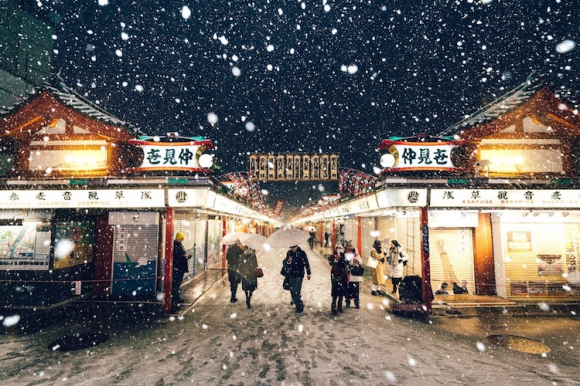
I really love these shots that Yuichi Yokota took of Tokyo during snowfalls.

Music I’m Digging

Neat Podcast Episodes

Good Reads for the Week

Cool Things

Footnotes

  1. I’ve been finding that if you promise you can do something, but only one week later, a lot of the miscellaneous tasks that are really about people just wanting fast work done go away, thus freeing up my schedule. Your mileage may vary.
Categories
Links Roundup Writing

The Roundup for March 3 – 9, 2018 Edition

Bang!
Bang! by Christopher Parsons

I’ve been on a speaking circuit this week, and so living a quasi-nomadic life. It’s a very strange experience to be shuttled between locations and across vast distances, all with only a modicum of awareness of all the places I’m scheduled to attend, persons I’ll be meeting, and expectations I will have to meet. I don’t mean to say that I don’t know why I’m travelling, or what I’ll be speaking about, but that the aspects of travel itself are often almost entire dealt with by other parties. There is no effort to determine where I need to go: someone will take me to the designated address. I don’t need to find a place to eat: I’ll be taken to where I need to eat. I don’t need to figure out where to sleep: someone else will determine that.

I contrast it with trips I take for personal relaxation and it’s a totally different experience. Tomorrow, as an example, I’ll be landing in a new place where I don’t speak the language and have no read guidance once I’m there. There are a few tent pole events — nature hikes! — but otherwise time will be entirely unoccupied with designated tasks or todos other than exploring. I actually find this kind of travel deeply uncomfortable because it feels so uncontrolled, but every time I learn a great deal more about the world, and how I should readjust my perceptions of that world.

While shuttling between places for conferences and events is intellectually stimulating it doesn’t tend to push me into uncomfortable spaces that facilitate growth. The exact opposite is true of personal travel. I half wonder, though: if I didn’t travel so often for work where things are scheduled and I’m attended to, would I prefer personal travel that had those characteristics? Would visiting resorts have some resonance if I wasn’t functionally visiting them for work on a semi-regular basis?


Great Photography Shots

I really like these simple compositions which were made with smartphones.

Pier‘ by Nikhil Kulkarni
Bird on a cold tin roof!‘ by Jaz Oldham

Music I’m Digging

Neat Podcast Episodes

Good Reads for the Week

Cool Things

Categories
Links

AntiSocial

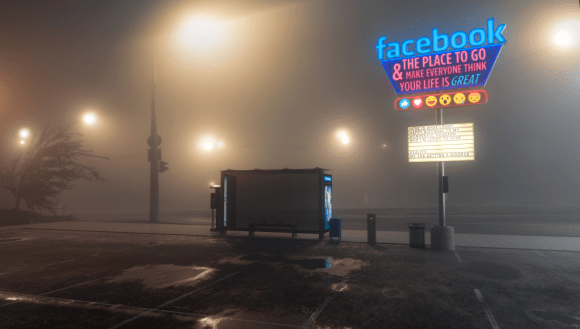
I really love the social media billboards that Mike Campau has created. Just stunning pieces to look at while providing always-needed critical introspection of social media services themselves.

Categories
Links Photography Roundup Writing

The Roundup for February 24-March 2, 2018 Edition

Evening Dream
Evening Dream by Christopher Parsons

For the past few weeks I’ve been deliberately constraining my photography by shooting exclusively by a 35mm equivalent lens. This was the focal length that really convinced me that I enjoyed photography as a way of seeing and experiencing the world. I’m a big fan of zoom lenses, and keep eyeing the Olympus 12-40mm 2.8 Pro lens, but I find that I learn the most about a scene by having to walk around it with a bright prime lens.

Alien Reach
Alien Reach by Christopher Parsons

When I travelled to Cuba, having to march around with a 50mm equivalent lens meant I went into entirely new places and angles that I wouldn’t have if I’d had a zoom lens to otherwise get a shot. And while I’ve previously used my 35mm equivalent, I have to admit that I’ve been far more reliant on some of my zooms and the 50mm; I just haven’t focused on learning to use the 35mm lens because there is so much more walking-by-zooming that I have to do with it compared to even my other prime lenses.

Sound Off!
Sound Off! by Christopher Parsons

But that’s silly: I enjoy the focal length, I just have to work a lot more to get things out of the camera. So I’ve been using it at night, during the day, and exclusively attached it to my camera body for the past month and intend to bring it (along with an 80-300mm equivalent lens) when I travel to South America in a week and change. I like the idea of an unobtrusive lens as my walkabout, and then the zoom for when I’ve trekking through nature. And, perhaps most importantly, I really like the idea of forcing myself to get a lot more comfortable with my current gear as a way to inhibit my desire to buy more gear: I have functionally underused equipment, and I should be playing with it, first and foremost, before even considering the purchase of new kit.


Inspiring Quotation

“We start on the path to genuine adulthood when we stop insisting on our emotional competence and acknowledge the extent to which we are – in many areas of our psyche – likely to be sharply trailing our biological age. Realising we aren’t – as yet, in subtle ways – quite adults may be the start of true maturity.”

Great Photography Shots

Mobiography’s landscape photography shots are really, really amazing and showcase just how much you can do with a contemporary smartphone and good lighting conditions.

Jagged horizon, Monument Valley…
Jagged horizon, Monument Valley… by Joseph Cyr
It’s been a good day… full of weather again..
It’s been a good day… full of weather again.. by Fi Austin
Snow & Fishing Cottages
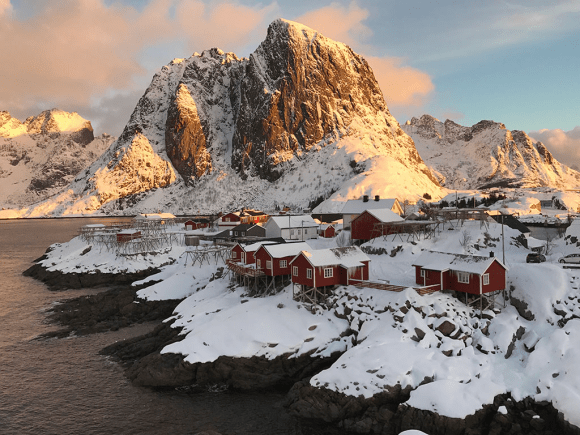
Snow & Fishing Cottages by Jen Pollack Bianco
Windswept
Windswept by lkbside

Music I’m Digging

Neat Podcast Episodes

Good Reads for the Week

Cool Things

Categories
Links Quotations

Cellebrite can unlock any iPhone (for some values of “any”)

An update by Ars Technica on Cellebrite’s ability to access the content on otherwise secured iOS devices:

Cellebrite is not revealing the nature of the Advanced Unlocking Services’ approach. However, it is likely software based, according to Dan Guido, CEO of the security firm Trail of Bits. Guido told Ars that he had heard Cellebrite’s attack method may be blocked by an upcoming iOS update, 11.3.

“That leads me to believe [Cellebrite] have a power/timing attack that lets them bypass arbitrary delays and avoid device lockouts,” Guido wrote in a message to Ars. “That method would rely on specific characteristics of the software, which explains how Apple could patch what appears to be a hardware issue.”

Regardless of the approach, Cellebrite’s method almost certainly is dependent on a brute-force attack to discover the PIN. And the easiest way to protect against that is to use a longer, alphanumeric password—something Apple has been attempting to encourage with TouchID and FaceID, since the biometric security methods reduce the number of times an iPhone owner has to enter a password.

This once again confirms the importance of establishing strong, long, passwords for iOS devices. Sure they’re less convenient but they provide measurably better security.

Categories
Links

Serious Vulnerabilities (Probably) Found in All iOS Devices

From Forbes:

The Israeli firm, a subsidiary of Japan’s Sun Corporation, hasn’t made any major public announcement about its new iOS capabilities. But Forbes was told by sources (who asked to remain anonymous as they weren’t authorized to talk on the matter) that in the last few months the company has developed undisclosed techniques to get into iOS 11 and is advertising them to law enforcement and private forensics folk across the globe. Indeed, the company’s literature for its Advanced Unlocking and Extraction Services offering now notes the company can break the security of “Apple iOS devices and operating systems, including iPhone, iPad, iPad mini, iPad Pro and iPod touch, running iOS 5 to iOS 11.” Separately, a source in the police forensics community told Forbes he’d been told by Cellebrite it could unlock the iPhone 8. He believed the same was most probably true for the iPhone X, as security across both of Apple’s newest devices worked in much the same way.

If Cellebrite has, indeed, found a way of compromising all iOS devices then they’ve accomplished a pretty impressive task. I have to wonder whether the vulnerabilities emerged from studying the iBoot leak or their own software or hardware research. Assuming Cellebrite’s claims are legitimate they serve to underscore the position that government’s shouldn’t introduce backdoors or vulnerabilities into devices given that doing so will only exacerbate the existing problems associated with securing devices. Security is designed to add friction, not totally prevent an unauthorized party’s actions, and deliberately reducing such friction will put all users at greater jeopardy.

Categories
Aside Links

2018.2.26

While it’s a month later than intended, a book chapter entitled “Law Enforcement and Security Agency Surveillance in Canada: The Growth of Digitally-Enabled Surveillance and Atrophy of Accountability” is now finished in draft and in the editors’ inboxes! It feels really good to have another writing project temporarily off my plate; this makes five finished in three months!

Categories
Links Photography Roundup Writing

The Roundup for February 17-23, 2018 Edition

Midnight sunrise by Christopher Parsons

I find it really hard to identify the stories in my photographs, prior to actually pushing the shutter button. When I look through, say, my best photos of 2017 I can see which ones have stories embedded within them but it’s a pretty rare thing that I saw, and decided upon, the story before taking the shot. In part, I think that my challenges are linked to only taking my photography more seriously for a relatively short period of time.

But some of the difficulties I’m encountering are also linked with my still learning to take ‘technically’ good photos, after which I think I’ll be more comfortable with more ‘narrative’ style shots. And I want to get better at the latter because I take Martino Pietropoli‘s statement pretty seriously: “Good photos tell stories. Average photos are just beautiful.”

Pietropoli’s article is excellent, insofar as he spends the time to walk through not just the importance of building a story into a photograph but because he also shows examples. In choosing examples he doesn’t merely say ‘here are narrative photos’ but, instead, he spends the time to spell out some of the narratives which might be bundled up in the shots in question. For me, his article was a particularly clear and poignant way of thinking through what stories might be in any given shot, and also as a way to differentiate between what he identifies as narrative versus ‘merely’ beautiful shots.

If I have one critique of the article — and I think it’s pretty minor — it’s that there’s an assumption that someone understands how to take photographs competently, and using this basic competence they can take shots with story. Put another way: I think that a lot of the efforts to create popular stylistic shots are very helpful in teaching people how to use their cameras and lenses, and to think through the importance of framing. Does that mean the people may end up with a series of ‘generic’ skills that many other photographers can roughly approximate or precisely imitate? Absolutely. But just as it’s important to learn how to write the five paragraph essay before breaking into longer-form writing that breaks all the rules of that high school essay format, learning the high-school format in the first place is an important skill that leads to more advanced writing.

I think that spending time looking at Instagram or Flickr or other places which hold ‘beautiful’ images is entirely appropriate for those who are learning to take photographs, and take them seriously. But I also tend to agree with Pietropoli that a photographer must eventually come to a decision: will their photographic style focus principally on technically beautiful shots or, instead, try to engage with the world by evoking emotions and reactions linked to the stories contained in their photos.


New Apps and Great App Updates from this Week

  • Cypher – a puzzle game about the history of cryptography

Great Photography Shots

I was really impressed with a range of the shots which won in the 2017 International Photographer of the Year contest.

Wave Crashers’ by Emily Kaszton. First Place, Nature: Aerial (Professional).
‘Neon Desert’ by Stefano Gardel. International Fine Art Photographer of the Year
‘Battersea’ by Giulio Zanni. Second place, Open Category: Long Exposure (Amateur)
‘Untitled’ by Pedro Diaz Molins. Second place, Fine Art: Photomanipulation (Amateur)
‘Lighting Clothes’ by Ramon Vaquero. Third place, People:Fashion/Beauty (Professional)
‘Desert Essential’ by Giovanni Canclini. First place, Open Category: Open Theme (Amateur)

Music I’m Digging

Neat Podcast Episodes

Good Reads for the Week

Categories
Links

The Forgotten History of New York’s Bagel Famines

Natasha Frost haswritten a really great piece on the history of bagels in New York:

The men of Bagel Bakers Local 338 were not to be trifled with. Founded in the 1930s, all 300-odd initial members were Yiddish speakers who descended from these hardy early bakers. Joining required a family connection—though this wasn’t sufficient on its own. Only after three to six months of apprenticeship, once a “bench man” had attained a minimum rolling speed of 832 bagels an hour, could members’ sons and nephews be grudgingly brought into the fold and given labor cards.

But Local 338 was different. Bagels were acquiring a special cachet among Jewish Americans, and bakers grew wise to the value of their special skills. Within eight years of formation, the union had contracts with 36 of the largest bakeries in the city and New Jersey. They had a ferocious reputation—non-union bagel makers were few and far between, and the holdouts experienced threats and day-and-night picketing until they toed the line.

I had no idea just how political bagel making was, nor how significantly the union was brought to its knees following the creation of Thompson’s ‘bagel machine’ in the 1950s. If you love your morning bagels — and spend the time to hunt down places that still make them by hand — you’ll love the article that Frost has put together.