Categories
Links Roundup Writing

The Roundup for February 1-15, 2019 Edition

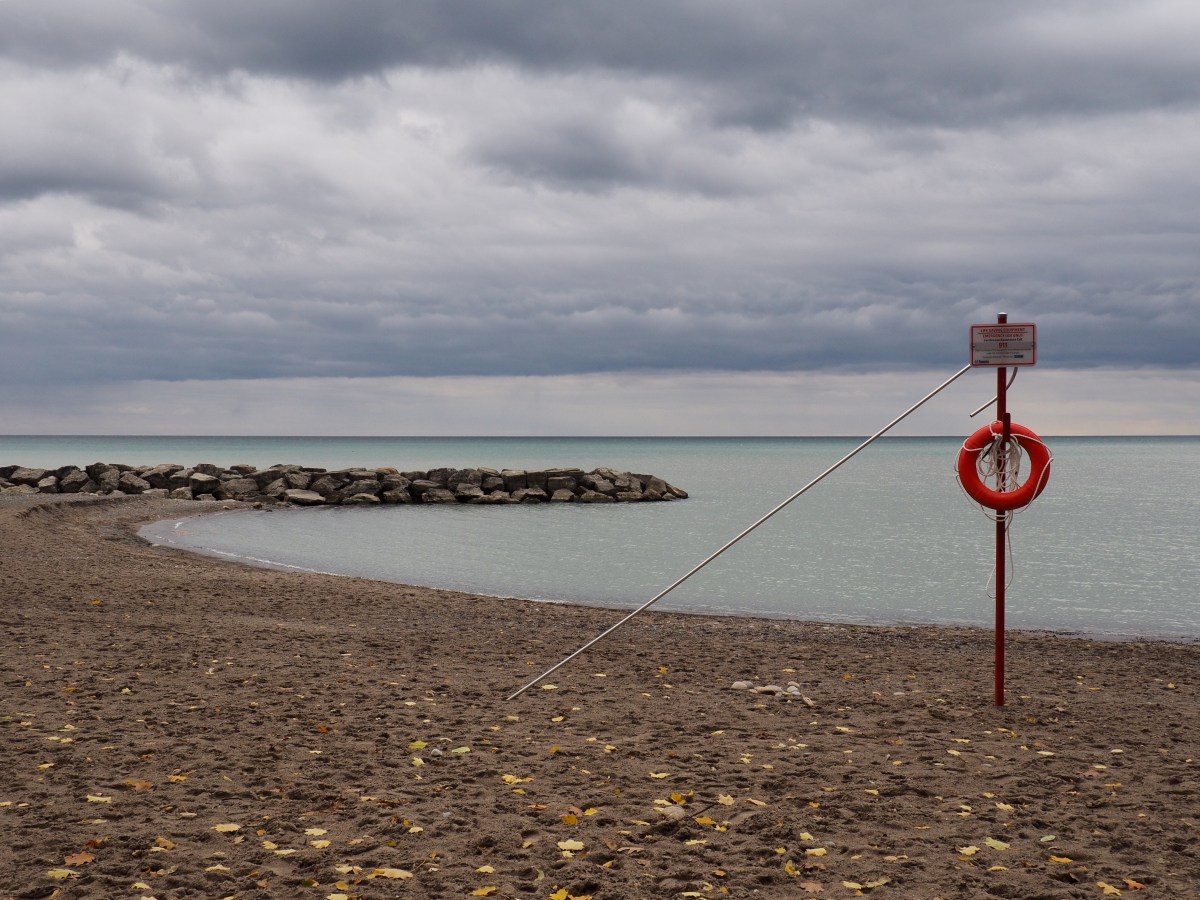
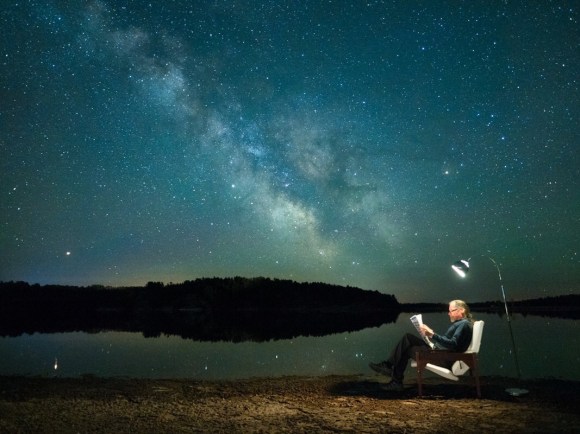
Rest, Deeply by Christopher Parsons

Welcome to this edition of The Roundup! Enjoy the collection of interesting, informative, and entertaining links. Brew a fresh cup of coffee or grab yourself a drink, find a comfortable place, and relax.


A few top of line thoughts concerning the iPad Pro 11” versus the iPad 9.7” (2017).

  • The weight increase on the iPad Pro is really noticeable and makes holding it aloft for long periods of time less pleasant;
  • FaceID is magical. It’s just amazing to have a device with it;
  • iPad Pro’s screen is terrific. Hands down, the best screen I’ve ever used on a device;
  • Apple Pencil is really amazing for taking notes with (side note: GoodNotes seems pretty good?) but it took me forever to figure out wtf was going on when I couldn’t use it on a recent trip. The issue? The nib wasn’t fully secured and there were no indicators to alert me to the problem;
  • iPad Pro’s speakers are so good that I don’t need to bring a separate portable speaker with me (which I’ve done while travelling for years). Massive win for a regular traveller;
  • Battery life is amazing, as is true of all new iOS devices, though I wonder how that will change over time…
  • New ‘SOS’ features — with no explanation when I was setting up the device — meant that it was initially a pain to take the device through a border checkpoint (pro tip: press power + volume up);
  • Once more: the screen is just amazing crazy good.

Do I recommend iPad Pro? Kinda sorta? If you do a lot of professional work on it or require a secure device and can’t live in ChromeOS (i.e. the Venn circles I live in) then it’s a terrific option. Otherwise…consider whether the 9.7″ (2018) iPad is better for your life (and pocketbook).


Inspiring Quotation

“Don’t ask yourself what the world needs, ask yourself what makes you come alive. And then go do that. Because what the world needs are people who have come alive.”

— Harold Whitman

Great Photography Shots

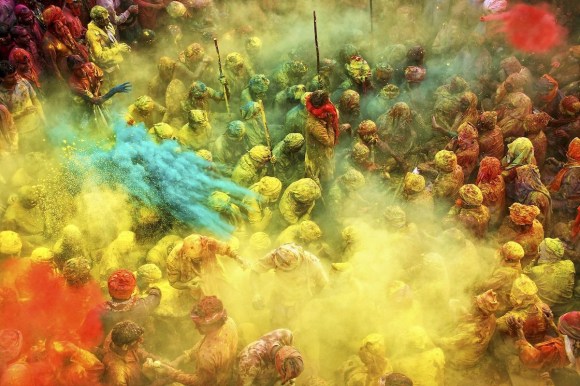
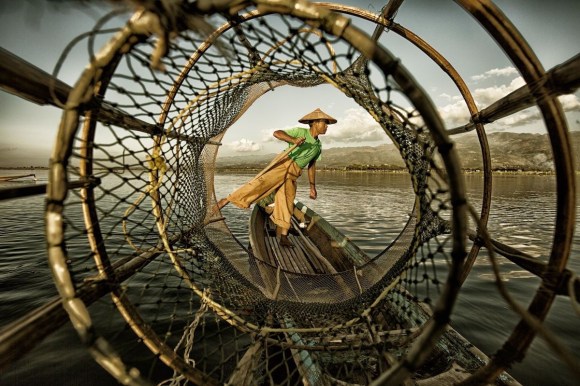
The top 25 photos posted to Flickr in 2018 are just absolutely stunning.

Music I’m Digging

  • DaniLeigh – The Plan // I’ve even listening to this album on repeat for days: the tracks alternate between melodic singing and stronger hip hop vibes. Tracks I’m particularly fond of include ‘The Plan’, Do It to Me’, ‘Blue Chips’, ‘Easy’, and (of course) the breakout track ‘Lil Bebe’.
  • Joy Crookes – Reminiscence (EP) // Crooke’s soft and husky voice powerfully communicates the emotions and experiences she has lived through and contemplated. Her experiences with relationships and social expectations — in particular, that she should change her life to accommodate a man — are both erudite and communicate both a willingness to engage in introspection while expressing self-confidence in who she is at the time of writing the respective songs.
  • Hauschka – A Different Forest // A piece of classical music that communities the experience of passing through nature, this newest album by Hauschka complements their broad and excellent body of work.

Neat Podcast Episodes

  • The Economist: It’s note easy: the Green New Deal // We might be approaching a time where the primary threat to human civilization — catastrophic climate change — is becoming a ‘real’ political issue. This episode of The Economist takes a look at the proposed Green New Deal in the United States of America and, to my listen, does a good job in assessing what’s been proposed thus far as likely more an affirmation of principle than a proposal of actions and activities.
  • The Sporkful: Dan Savage Recommends A Polyeaterous Lifestyle // I’ve always found Dan Savage’s advice to be blunt, direct, and helpful. His discussions on The Sporkful are no different. Though not novel, his suggestions about romantic days (i.e. sex, first, dinner second) just make good sense, and his thoughts on not badgering your partner to do things that you like but they don’t are similarly common sense and likely to enable partners to live independent and fulfilling lives.
  • The Sporkful: Why Roy Wood Jr. Sees Pros To Bad Service And Confederate Flags // Roy Wood Jr. is a comedian. He’s also African American, and tours the entirety of the United States of America. As a result, he’s often in states where his body is perceived as either threatening or as something to be harmed. His discussion of what it’s like to try and determine ‘Is this a white person who’s going to harass or try to kill me?’ served to, again, remind me about the structural racism that is built into society and needs to be remedied. Unrelated, it was interesting to hear him talk about the relationship he had with his father and how, in Wood Jr.’s own case, his own parenting approach is as much to behave contrary to how he was raised as anything else. I particularly liked his rationales for not seeking to bribe his child into forgiving past bad actions; the accountability he recognizes in parenting strikes me as helpful for developing productive and positive longer-term relationships in the child’s unfolding life.

Good Reads

  • How the Slice Joint Made Pizza the Perfect New York City Food // Korsha Wilson has written a beautiful homage to New York pizza, and briefly extols on its history — with great black and white photos included! — and argues that the common love of the food truly binds New Yorkers together. I’d be lying if I said this was the most absolutely breathtaking writing, but it does capture the senses in the course of spinning a narrative.
  • European Genocide of Indigenous Peoples in the Americas Cooled Earth’s Climate // The sheer breadth of the harms incurred by the West’s genocide is staggering in human terms. But it’s also incredible that, as a result of land lying fallow, that nature was better able to absorb carbon dioxide and thus reduce the amount of heat trapped on Earth, to the effect of dropping global temperatures. Humanity’s ability to abuse itself while, also, inadvertently terraforming its environment is stunning.
  • Lagos, City of Hustle, Builds an Art ‘Ecosystem’ // The caliber of the art coming up in the emerging galleries in Lagos are absolutely stunning, though it strikes me as a shame that the revolution in the country’s art world is largely taking place in private instead of public galleries. However, the fact that artists seems to be responsible for the revival itself speaks well of the explosive talent in the community that will hopefully nurture itself as opposed to rely on public or private subsidies to find meanings or existence.
  • The Great Myth of Alberta Conservatism // Alberta is routinely cast as an ‘other’ in Canadian politics, by its own politicians as well as by commentators external to the province. A series of myths abound about the province which, largely, stem from perceptions emergent from populist conservatism. Jen Gerson seeks to recast some of these narratives; she recognizes that populism is largely enabled by a perception that Ottawa and the rest of Canada seeks the wealth of Alberta and, in general, regards Alberta as a sub-colonial aspect of Confederation. Her descriptions are useful for appreciating the contours of Albertan populism while, at the same time, indicative that the boom-and-bust province has clung to age-old grievances to the detriment of better relations with other provinces and the federal government. Moreover, it is challenging to believe the province is an actual ‘other’ as a Liberal federal government invests billions in a pipeline for the province’s exports and Albertan-based politicians led Canada for almost a decade. In this way, we see that the myths of Alberta may compose a political identity which fades somewhat when challenged with facts of the modern political era.
  • Can You Get Too Much Exercise? What the Heart Tells Us // As someone who regularly works out more or less everyday that I’m in my home city, I keep being told that it’s dangerous to work out so often. This article by the New York Times summarizes what we know: those who work out a lot tend to build up more plaque in their arteries than those who exercise less often. However, that plaque seemingly possesses different characteristics: it may tend to be denser and more stable and, as such, less likely to break off and lead to coronary distress.
  • Why Won’t You Love Me? // As someone who constantly grapples with a sense of abandonment by my biological father, this piece resonated deeply and strongly with me. My own father’s absence has taught me the value of simply showing up, though I wish it was through imitation of his behaviours as opposed to in contravention of them.
  • ‘Shoplifters’ Director Pierces Japan’s Darker Side // The review of the movie, itself, is somewhat interesting. But where this article thrives is in examining the rationales and philosophy behind the movie. In particular, I was taken by Hirokazu Kore-eda’s comment that: “If you think of culture as something that transcends the state, then you understand that cultural grants don’t always coincide with the interests of the state.” This perfectly captures the difference of receiving money from a government versus from a state.
  • Doug Ford’s TTC subway upload and Margaret Thatcher’s cautionary tale // With more and more concerns being raised that the Ford government is going to steal away Toronto’s subway, this assessment of the ‘successes’ of doing so in London should be sobering. In short, Thatcher’s similar activities led to under financing, corruption, safety risks, worsened commute experiences, and higher costs. Perhaps this isn’t the model that Ontario and Toronto should be mimicking?
  • The Problem With Compromise // The idea that couples’ problems tend to stick around in 2/3 of cases belies the point that compromise isn’t necessarily what will help people navigate challenges together. I liked the proposal that, instead, persons in relationships need to accept differences and subsequently adapt in the face of them. This approach also seems remarkably healthier because it recognizes — vis-a-vis adaptation — that a deliberate act of change is required, but that change might not entail mutual modifications in action or behaviour in all cases. Finally, the idea that expressions of gratitude are central to successfully managing adaptation and acceptance over time resonates with my past experiences: it’s through acceptance and celebration of one’s partner that relationships can truly bloom in the face of interpersonal differences and challenges.
  • My Body Doesn’t Belong to You // This short personal essay is about the negative experiences the author has at the hands and voices of men, with the harassment purely arising because she is a woman. The narrative — to feeling like her body is hers as a child, and now only hers in seclusion from men and with her girlfriends, speaks loudly to the casual misogyny built into Western society, and also to the absolute need to structurally reform social relations. The lines that stuck, and likely will continue to stick, with me the most were: “I am 24, and my body makes life dangerous for me. My breasts, my hips, the way I walk. Any woman’s breasts, any woman’s hips, the way any woman walks.”

Cool Things

  • “Roll High Or Die” spinning enamel pin // A d20 spinning enamel pin? So nerdy.
  • WANDRD Travel Journal Notebook // This looks like a really cool product for people who use paper to organize and record their travels. I particularly like how it’s divided into long, medium, and short-term adventures, and the miscellaneous travel aids included in the book.
  • One Breath Around The World // This is a stunning short video, where you are taken throughout the oceans over the course of a single breath and experience them in their freedom and wonders. Without a doubt its one of the best artistic pieces I’ve seen so far this year.
Categories
Links Photography Roundup Writing

The Roundup for December 24, 2018 – January 13, 2018 Edition

(Rusty Heights by Christopher Parsons)

Welcome to this edition of The Roundup! It’s taken a bit longer to put this together given the holidays, but I’m hoping to get back to scheduling these every other week or so. Enjoy the collection of interesting, informative, and entertaining links. Brew a fresh cup of coffee or grab yourself a drink, find a comfortable place, and relax.


Over the past few weeks, I’ve had the opportunity to take my coffee-game to a whole new level: I was generously gifted a Hario Cold Brew Coffee Pot by my family in December, and a Vietnamese Coffee Filter by a friend earlier this month. It’s been a lot of fun trying to determine which brew methods I prefer more or less and, also, meant that my coffee intake has probably doubled in the past month or so! Expect some thoughts and discussions about using either tool sometime in the future!


Inspiring Quotation

Be louder about the successes of others than your own.

  • Birthday fortune I received

Great Photography Shots

In a bit of a detour from most Roundups, I’m including some of my own preferred shots that I’ve taken over the past few months.

(Ghosts and Galleries by Christopher Parsons)
(Electric Blue by Christopher Parsons)
(Safe Harbour by Christopher Parsons)
(The Deep by Christopher Parsons)
(Eat! by Christopher Parsons)
(Dive by Christopher Parsons)
(School’s In by Christopher Parsons)
(Aquatic Textures)

Music I’m Digging

  • Bird Box (Abridged) (Original Score) // This is Trent Reznor and Atticus Ross at their best. The score is haunting, dystopia, and persistently just a little creepy.
  • Neisha Neshae – Poppin on the Internet (feat. Rocky Badd) (Single) // The power and energy of Neshae’s voice comes through in this single as clearly as in her EP, Queenin’. She remains as fun to listen to, now, as with her earlier work. I’m hoping that whenever she publishes a full album it manages to retain the strength and consistency of all of her work to date!
  • Jean-Michel Blais – Eviction Sessions (EP) // Blais’ work remains evocative and minimalist. This EP came after he was literally evicted from his Montreal apartment, and the work he played was an effort to memorialize and commemorate the space where so much of his music had been produced.
  • Spider-Man: Into the Spider Verse (Soundtrack) // I was absolutely amazed with how good the movie turned out to be, but before I saw it I was captivated by the soundtrack. Sunflower, Familia, Invincible, Memories, and Home were the stars of the album for me, though the entirety of the album held together remarkably well. I was surprised to hear almost all of the songs when I watched the film: these aren’t just songs intended to touch on the mood of the film but, instead, are key audio-emotional components the film itself. That they stand alone as strongly as they do is a remarkable accomplishment to my ear.
Neat Podcast Episodes

  • The Sporkful – When Celery Was More Special Than Caviar // I learned so much about celery in this episode! There are different kinds! There are different tastes! There is red, as well as striped, as well as ‘blanched’ celery!
  • The Current – ‘Don’t do it’: Trump’s criticism of central bank could backfire, warns former vice-chair // I found it most useful to hear about the difficulties in linking politics and a central bank and how, even if Trump does want to effect change quickly, that central banks and economies move so ponderously that he’s absolutely unlikely to adjust rates or the economy in a rapid manner should the current chair be replaced or the Fed totally shift its approach to the economy. Of course, neither of those things are likely and, instead, Trump will just posture for the purposes of satisfying his base.
  • Relationship Advice – What’s Your Fantasy? // The non-stigmatizing approach to thinking through, and engaging with, sexual fantasy in romantic relationships struck me as outlining a useful way of having conversations on the topic. Equally important was how to engage with a partner when they outline a fantasy that would be challenging or uncomfortable to satisfy, and how to find alternate means of expressing it in a manner that is satisfying and comfortable for all partners involved in it.
  • The Documentary – India’s battle with online porn // I went into this episode assuming, by default, that I would oppose all the proposals to ban or censor access to pornography. And while I mostly retain this position, I admit that I was shocked to learn about how common rape videos are being shared and it left me wondering about what approach makes the most sense to inhibit the spread of such violent videos while preserving basic rights. Especially given that many of the videos are shared between peers over encrypted messaging applications I don’t have an immediate response on how to deal with the sharing but, nonetheless, concur that the transmission of such videos does represent a real social ill that needs to be addressed.

Good Reads

  • Managing Burnout // As someone who’s suffered burnout a few times I think it’s really positive that a prominent member of the security community is openly discussing this challenge. Richard’s suggestions — that you build a fund for just burnout — is pretty solid, though admittedly works better in a community with above-average wages. What is missing, however, is an assessment of how to fix the culture which leads to burnout; that has to come from management since employees will take their cues from above. And to my mind management has to focus on combating burnout or else risk losing high-value employees with little opportunity to get an equivalently talented and priced replacement employee in the contemporary job market.
  • The 12 Stages of Burnout, According to Psychologists // Ever wonder if you or a loved one are suffering through severe burnout? This helpful list will showcase the different things that suggest burnout is being experienced with pretty clear indicators that you can use for self-diagnostic purposes.
  • “They Say We’re White Supremacists”: Inside the Strange World of Conservative College Women // Nancy Jo Sales’ long form piece trying to understand and express why young women support Donald Trump is illuminating, insofar as it showcases how these women hold more complex positions on some issues (e.g. abortion, rape) than might be expected while also conforming to stereotypes in other ways. What is hardest to appreciate is perhaps that they genuinely do regard feminism as ‘over’ and no longer needed, at least as they have lived their experiences as young white women. That they do not have a longer set of life experiences, such as in long term employment, nor experiences of minority populations, combined with Fox and similar news sources filling their political news appetite, makes their positions largely unsurprising. However, what also stands out is the automatic dismissal of their values and thoughts by liberal minded persons on campus: while liberalism must be intolerant of deep intolerance — such as white supremacy — that cannot apply to people who are simply holding divergent political opinions or else liberalism will have internally rebuked it’s own reason for acting as an effective and inclusive political theory.
  • Pilot project demos credit cards with shifting CVV codes to stop fraud // The idea that the CVV will change to combat online fraud seems like an interesting idea, though the actual security is going to be based on how effectively protected and randomized the seed for the randomization algorithm happens to be. Since attackers will have access to the actual cards — at least if distributed widely to the public in the future — then we’ll have to assume that any failures that are readable on the chip will certainly be found and exploited, so the math and tamper resistance properties are going to have to be exceptionally well implemented. Perhaps the most notable element of the proposed cards arrives at the end of Megan Guess’ article: whereas a regular card costs $2-4, those with a lithium battery to update the CVV will run closer to $15. In other words, whomever is producing the cards will need to be assured that they will, in aggregate, reduce fraud costs enough to merit the heightened production costs. It’ll be very interesting to see if the cards are suitably effective to lead to mass production or whether economics, as opposed to security, result in the cards being just a short-term trial or experiment.
  • Kengo Kuma’s Architecture of the Future // Kuma-san’s efforts to make architecture disappear, and work in contravention to the fantastic metal and glass structures of modernism and post-modernism, strike me as a kind of attempt to envision wabi-sabi in structures. In effect, his focus on the natural and celebrating the traditional and honouring its (often imperfect) characteristics seem to align with a need to seek peace and simplicity absent overt efforts to establish egoist-driven artefacts devoted to humanity’s triumphs.
  • This is how Canada’s housing correction begins // Kirby does a good job in collecting data to suggest a serious market correction could be coming as the Bank if Canada increases rates, which has had the effect of squeezing a large portion of homeowners who have grown up — and relied upon — cheap credit to buy homes and other consumer goods. Key is that the assessment doesn’t just indicate a forthcoming housing correction but, also, potentially a serious recession. Moreover, just how widely will this ‘correction’ be felt: will it mostly be younger millennials or include aging boomers who have drawn against their homes to support their children’s education and home purchases?
  • Great Expectations // Reflecting on what are non-negotiable traits in relationships is something that I do with some regularity, and this Medium post does a good job of summarizing many of the basic expectations that should be realized in any loving relationship. I particularly liked how the author ends by asserting that it’s critical for partners to engage in kindness in communicating, or work to avoid brashness and hostility in communications and instead focus on communicating our feelings in an open, transparent, and loving manner.
  • The US Military Is Genetically Modifying Microbes to Detect Enemy Ships // That humanity is modifying bacteria to react in the presence of different types fo fuel exhaust and related exhausts from ships, for the purposes of surveillance of maritime environments, is the thing of science fiction. And it’s going to start happening, soon!
  • GE Powered the American Century—Then It Burned Out // In an exceptional long-form piece, Thomas Gryta and Ted Mann document the slow, though hastening, fall of the General Electric. It’s stunning to read just how hard it has been for the company, and its CEOs, to effectively reposition the company in the face of major economic and political hurdles, and without clear evidence that the company will manage to survive in its conglomerated form over the coming decade.
  • Apple Expands AirPlay 2 Video Streaming To TV Sets // Benjamin Mayo’s Assessment that Apple licensing AirPlay 2 is a good thing, because while it might cannibalize Apple TV sales it will increase the joy of using an iPhone and the overall value of Apple services, is dead on.
  • Why Cider Means Something Completely Different in America and Europe // It makes sense, but I hadn’t thought of how important alcoholic cider was for colonial Americans (and the British, more generally) for ensuring that there was a drinkable liquid available that didn’t include harmful contaminants. Nor had I thought of how the temperance and prohibition eras would have transformed the nature of cider production, and led to the destruction of orchards that contained high-tannin apples that were principally grown to make cider. If you’re interested in cider and the broad strokes of its history in the United States of America, this is a good article to read through!

Cool Things

Categories
Reviews Writing

Review of Happy City: Transforming Our Lives Through Urban Design

Rating: ⭐️⭐️⭐️⭐️⭐️

Mongomery’s book, Happy City: Transforming Our Lives Through Urban Design, explores how decades of urban design are destructive to human happiness, human life, and the life of the planet itself. He tours the world — focused mostly on Vancouver, Portland, Bogotá, Atlanta, and Hong Kong — to understand the different choices that urban designers historically adopted and why communities are railing against those decisions, now.

The book represents a tour de force, insofar as it carefully and clearly explains that urban sprawl — which presumed that we would all have cars and that we all wanted or needed isolated homes — is incredibly harmful. The focus of the book is, really, on how designing for cars leads to designing for things instead of people, and how efforts to facilitate car traffic has been antithetical to human life and flourishing. His call for happy cities really constitutes calls to, first and foremost, invest in urbanization and densification. Common social utilities, like transit and parks and community spaces, are essential for cities to become happy because these utilities both reduce commutes, increase socialization, and the presence of nature relieves the human mind of urban stresses.

While the book is rife with proposals for how to make things better, Montgomery doesn’t go so far as to argue that such changes are easy or that they can be universally applied everywhere. The infrastructure that exists, now, cannot simply be torn up and replaced. As a result he identifies practical ways that even suburban areas can reinvigorate their community spaces: key, in almost all cases, are finding ways to facilitate human contact by way of re-thinking the structures of urban design itself. These changes depend not only on — indeed, they may barely depend at all upon! — city planners and, instead, demand that citizens advocate for their own interests. Such advocacy needn’t entail using the language of architects and urban designers and can, instead, focus on words or themes such as ‘community’ or ‘safe for children to bike’ or ‘closer to community resources’ or ‘slower streets’ or ‘more green space’. After robustly, and regularly, issuing such calls then the landscape may begin to change to facilitate both human happiness and smaller environmental food prints.

If there is a flaw to this book, it is that many of the examples presume that small scale experiments necessarily are scalable to broad communities. I don’t know that these examples do not scale but, because of the relatively small sample-set and regularity at which Montgomery leverages them, it’s not clear how common or effective the interventions he proposes genuinely are. Nevertheless, this is a though-provoking books that challenges the reader to reflect on how cities are, and should be, built to facilitate and enable the citizens who reside within and beyond their boundaries.

Categories
Links Photography Roundup Writing

The Roundup for October 29 – November 4, 2018 Edition

A Day at the Beach by Christopher Parsons

When I moved into my current condo I was excited about the location and soured by the lack of light and the closing of a local business I was excited to live near. And that lack of light really ground on me: since I moved in I’ve thought about what it would be like to move in the next year or so into a place with far more natural light. Where I choose to live was where I lived but not where I identified as being home.
In the past week, however, I’ve made a personal decision to try and make my rental feel more like a home. So instead of putting off purchasing some particular decorations — additional frames, new prints of my photos, small decorative pieces, etc — I’ve committed to picking up pieces that I’ve known I’ve wanted and started putting them where they fit in my space. It’s been helping me to love where I live and not feel like I’m just living in a semi-personalized Airbnb.

Toronto is an incredibly expensive rental market and I’m fortunate to be in the unit that I am, at the price it’s renting out at, and in exactly the location of the city that I love. I’m beside many of the leading theatres, the main symphony hall, all the large sporting stadiums, the water, and some of the best shops in the country. And the process of decorating is shaping and positively affecting my relationship with where I live: that there are bright prints helps to liven up what are otherwise dark walls. My use of candles during the night remind me of how amazing it is that light doesn’t intrude into the space, insofar as I can create a more intimate space than should neon lights or street lamps leak light through my windows. And the relative quietude of my space is also a bit surprising for the part of the city I’m in: being away from the main streets, it’s rare to hear much noise at all from the city.

I don’t think that I’m ever going to be in a situation where the lack of light is a defining good thing in my life, but I do think that it’s one of those facets of life which I can make due with, and especially as I balance that one negative element against all of the positive facets of the rental I’m inhabiting. One of the key things that I want and need to do is be at peace when I’m at home and I think that my most recent mental shift is going to be key to achieving that sense of peace and relaxation.


I was prompted into personal reflection this week by a relatively simple set of questions.

  1. Who has had the greatest impact on your life?
  2. In what place are you most comfortable or safe, with ‘place’ being defined as either a physical location (e.g. bed, cottage, lake) or a kind of situation (e.g. wrapped in someone’s arms, a dog or cat on your lap, etc)?
  3. What thing could you not live without?

I won’t delve into my own answers but the process of reflection, itself, has been personally revealing insafar as the questions prompted some answers which I don’t think I would have intuitively expected.


Inspiring Quotation of the Week

“Either we all live in a decent world, or nobody does.”

  • George Orwell

Great Photography Shots

The winners of the 2018 Siena International Photo Awards are just breathtaking in both composition and, in many of the shots, the feelings and emotions they express.

”Migration” by Khalid Alsabt. Desert of Dahana, Saudi Arabia. 2° Classified, The Beauty of Nature.
“Game of Colors” by Anurag Kumar. Nandgaon, Uttar Pradesh, India. 2° Classified, Fragile Ice.
“Hanging in the Primary Forest” by Marco Gaiotti. Gunung Leuser National Park, Indonesia. Honorable Mention, Animals in Their Environment.
“Fisherman at Inle Lake” by Yinzhi Pan. Inle Lake, Myanmar. 1° Classified, Student.
“Runner” by Marcel van Balken. Arnhem, The Netherlands. 1° Classified, General Monochrome.

Music I’m Digging

  • Mikel & Gamechops – Zelda & Chill // There’ve been a few mornings when I’ve felt somewhat melancholy, during which I’ve found this album to be good company. It’s sufficiently chill that it prompts reflection and a sense of quietude is occasionally punctuated by smiles when you can hear the familiar Zelda music themes come through in a given track.
  • Daniel Hope – A Baroque Journey // I had the distinct privilege to hear Daniel Hope (and accompaniment) play this week. It was a truly exceptional experience. While the album doesn’t do the live performance justice — the album is extremely well done but is far less playful than a live performance — it’s excellent. What I find perhaps most striking is the role of the harpsichord and the lute, which are instruments for which I’d never really had a great deal of appreciation.
  • The Prodigy – No Tourists // This has been a terrific album to dig into; I’ve listened to it at least a half-dozen times since it’s come out and enjoy it as much (if not more) with each playing. The tracks are tight and are pretty well ‘classic’ Prodigy; some, like, ‘Need Some1’ are probably going to end up as classic as ‘Firestarter’ insofar as it just expresses who and what the band is at a fundamental level.

Neat Podcast Episodes

  • Song Exploder – Halloween (Theme) // It was interesting to hear the Carpenters talks about how, and why, they created the original Halloween theme song the way they did. In effect, a limited budget, time, and capability drove them to create the original Halloween theme song in a manner that was better because of it’s imperfections. And, when they recreated a version of the song for the latest Halloween movie they, once again, sought to capture those imperfections to convey an eerie atmosphere to the song. I definitely think they were successful in their endeavour!
  • Putting Racism on the Table: Implicit Bias/White Privilege/Structural Racism // This series of podcasts from 2016 was sponsored by the Washington Regional Association of Grantmakers (WAG) and broadly sought to have open, and transparent, discussions about key problems with the social and power structures of white Western states. In addition to unpacking the various topics covered in each of the episodes (and denoted in their titles), the speakers in each identified strategic interventions that can take place and why acting at the structural level is so important. To begin, as humans we are capable of consciously engaging with a small fraction of our world; our subconscious deals with the majority of the information coming into our brains and prompts our subsequent reactions without deliberate thought. In effect, we’re predisposed to respond to the world based on learned behaviours and stereotypes. Consequently, we need to modify the environments from which those behaviours are developed and stereotypes learned. Some of that, in a hiring environment, means deliberately mitigating the subconscious biases that might intrude into the process: we should perhaps remove names, or have different parties review education and experience, and must absolutely have checklists to ensure that each and every candidate has a fair opportunity in comparison to other candidates. In the discussion of white privilege one of the new ideas I heard was to deliberately engage with the idea of white identity. This approach was meant to prompt a reconsideration of how ‘whiteness’ is developed, perceived, and realized: it’s not sufficient to address ‘whiteness’ solely through the lens of reacting to the harms associated with it (and caused to others) but, instead, demands a proactive engagement with a sense of what it means to inhabit white skin. Such an engagement might focus on inclusively, on shared community and learning, and on facilitating equity versus equality. But, critically, it’s about reconceiving the conception of ‘whiteness’ itself in order to re-order the subconscious and, subsequently, enable more equitable relations in the social, political, and economic spheres of life.
  • Word Bomb – ‘Partner’: The best name for your better half // The hosts of this TVO podcast reflect on the terms which are used to refer to romantic partners and discuss how there are significant differences of opinions concerning whether ‘partner’ reflects a romantic relationships (versus a business relationship) and, also, whether straight couples adopting the term ‘partner’ entails stealing a term away from the gay community. I’d never considered ‘partner’ as a straight/gay term but, instead, one that just indicated a level of intimacy and seriousness while simultaneously lacking the religious or secular commitments of marriage.1 Towards the end of the podcast I was taken aback that the idea of people like myself using ‘partner’ was appropriating it; while the podcast hosts ended up coming to a conclusion that it’s likely acceptable for all relationship-types to use the term I was left less certain than they were and am left questioning the appropriateness (ahem) of using the term.
  • Hurry Slowly – Adam Grant: Don’t Underestimate the Power of Appreciation // Grant’s assessment of the effects of demonstrating appreciation to others — and receiving recognition of how we have affected other people’s lives — clarifies the specific and positive results of affirming how other persons impact our lives. Perhaps most interestingly, Grant find that delaying the communication of appreciation — such that we inform someone months or years later — has the effect of enhancing the positive experience of receiving such feedback. Moreover, he finds that by preparing a large number of such messages in a short period of time, as opposed to doing a little bit each day, has a correspondingly more powerful impact on the person who is expressing their appreciation to other persons.

Good Reads for the Week

  • What’s All This About Journaling? // The author’s evaluation and assessment of journaling is not necessarily novel: keeping a journal can be helpful for thinking through what matters, a way of dumping debris from the brain so you can focus on other things, or encourage the writer to prompt changes in their lives if the same difficult topics keep arising. What is missing from the assessment, to my eye, is that the power of keeping a journal is also tightly linked to reviewing the past and determining whether, and if so what, has changed in one’s life. From my own practice I’ve found that writing alone isn’t sufficient: reflection, after the fact, of what was written is as (if not more) important as the practice of writing itself.
  • How Not to Return to the Spotlight // Emily K. Smith’s analysis of Ansari returning to the spotlight is helpful in understanding what could have been done by Ansari, and the significance of him not undertaking the labour to genuinely reflect and engage with what he is accused of having done. One of the things that I noted in Smith’s analysis was that for Ansari, and many others, the ground shifted quickly underneath them and what might have previously been regarded as ‘bad behaviour’ transformed radically into ‘absolutely unacceptable and socially condemnable behaviour’. The act of nagging someone into consent hasn’t ever been acceptable but it’s now especially unacceptable and can come with mass condemnation from hundreds of thousands if not millions of people. Unfortunately, instead of trying to come to grips with those changes and continuing to work towards being an ally towards women Ansari has, for now, chosen to retreat from the very group whom he had previously seemed to have supported.
  • How An Entire Nation Became Russia’s Test Lab for Cyberwar // There have been so many times where people have said that a power grid has been hacked that it’s hard to take seriously. The boy has cried “wolf” too many times. However, Greenberg’s article on how the Ukrainian grid has been repeatedly attacked and the degrees of detail contained make clear that operators have successfully and deliberately interfered with power distribution in the Ukraine. What’s more, the operators could have engaged in more disruptive activities had they so chosen. In aggregate, the article both reveals the ability of the operators — and their supporters — to engage in significant kinetic activities in some situations and, perhaps more worrying, a lack of strong and clear normative redlines to establish that such behaviours as absolutely out of bounds. Such redlines are essential in international relations to clarify the boundaries of acceptable behaviour and the terms of contravening such boundaries; their absence emboldens adversaries while enabling Western operators more freedom of action to the potential detriment of other nations’ citizens’ and residents’ basic rights. The latter cannot be seen as a rationale for avoiding norms meant to inhibit the former.
  • How Writers Map Their Imaginary Worlds // While I don’t have experience writing any genuine works of fiction, I’ve always found that maps are essential both for collaborative storytelling as well as for helping me imagine what a roleplaying game world functionally is in an important sense: without a map, I have a hard time thinking about the relationships between different groups, natures of economies, sacred places, and so forth. At the same time, I often find that the mapping process itself takes far longer than the act of writing, with the former existing in the challenging world of art, whereas the latter fits within what is, for me, a comparatively accessible and ‘easy’ creative domain.
  • Japan’s Unusual Way to View the World // Wabi-sabi is a philosophy underlying some creative Japanese works, and embraces the imperfections of the world and celebrates the beauty latent within the world that we exist within. It’s the very lack of perfection — the lack of symmetry in pottery, as an example — that inspires a moment of reflection and contemplation, that centres the persons engaging with the pottery with the fact that human hands touching natural materials created the items in question. As someone who was recently gifted with pottery which was crafted per this philosophy, the article gave me that much more to think about whenever I drink from the bowls that now live in my home, and has led me to appreciate the depths of the gift.
  • Big In Japan // This article about Japanese Kit Kats is spectacular. The writing, in and of itself, is a kind of linguistic art form, with sentences like, “All I knew was that the wafer was huge, golden, marked with square cups and totally weightless. That if it hadn’t been still warm from the oven, I wouldn’t have known it was there. That if this was the soul of a Kit Kat, then holding the soul of a Kit Kat was like holding nothing at all” and “…it was, in fact, completely impossible to remove a taste from its origin without changing it in the process.” The little details — such as the chocolate being different around the world but wafers the same everywhere, or the nature of how stores feel when tourists are buying product was inspiring. This is food journalist at its absolute best insofar as it leaves you with both a cultural appreciation of the foodstuff as well as a mouth that is watering after reading about the culinary experience.
  • Writing well ≠ dumbing down // I appreciated how this article considered how writing for the general public is often harder than writing for specialist audiences, significantly because “…you usually have to know your stuff better to write well for a general audience. If you’re writing for your scholarly peers, there are certain critical buzzwords, voguish phrases, and terms of art that you can use to gesture in the direction of a concept, trusting that people who have used those terms themselves will pick up on what you’re saying. But you don’t even have to have a very clear understanding of the concepts in order to deploy the terms — you just have to have a sense of the kind of sentence in which they belong. By contrast, when you’re writing for a general audience who does not know the language of your guild, you have to understand those concepts well enough to translate them into a more accessible idiom.” I could not agree more though, by way of juxtaposition, I sometimes find that when I’ve spent a great deal of time working on certain projects with public groups and/or professionals that it has deeply challenging to translate what is relatively obvious and coherent facts and ideas into the often tortured venue of academic analysis and writing. Perhaps the greatest sin of much academic writing is analysis and critique for no evident purpose or relationship to the object of study, to the point that a practitioner looks at academic writing and (at best) amusedly tries to figure out how their subject area has become entirely obscure and opaque to them.
  • ‘God Is Going to Have to Forgive Me’: Young Evangelicals Speak Out // As the American mid-terms come closer and closer, it’s intriguing to read what persons aged 18-38, and who identify as Evangelicals, are saying about their faith and politics. It’s clear why Trump resonates in some forums and equally clear why he acts as a repugnant force in others. What is most striking as I read these is that for many the idea of voting for a party supportive of safe and lawful abortions is a red line. It’s the most common area where there remains a deep desire by evangelicals to impose the tenets of their faith on an ostensibly secular state, but if other faiths asserted the same kinds of demand I suspect evangelicals (young and old) would be up in arms to prevent the spread of ‘non-Christian’ values.
  • New data shows China has “taken the gloves off” in hacking attacks on US // What’s perhaps most interesting in this article is that the present deterrence systems adopted by the USA and its allies are not mitigating or restraining attacks. While it’s possible that the inditements being issued by the USA’s government will have some effect, I think that this element of lawfare depends on the USA being seen as a high rule of law country. Should its judicial system fall into disrepute — such as by overly politicizing the judiciary — then other countries with low rule of law (e.g. Russia or China) might be able to issue similar kinds of inditements towards the USA’s operators, and those charges be as respected as the American charges. In effect: the one tool that might be a quasi-effective manner of inhibiting at least some operations may be threatened by the growing politicization of the American judiciary, risking the removal of one of a few (potentially) useful modes of responding to adversarial attacks on USA companies and government infrastructure.

Cool Things

  • All Over The Map // National Geographic has a maps blog!
  • Paper Airplane Designs // Super impressed by the different kinds of paper airplanes that can be created and their respective flight profiles.

Footnotes

  1. On a personal note, I’d used this term for many years in British Columbia and it was only when I returned to Toronto that it was apparent to me that the term was associated with gay couples.
Categories
Links Photography Roundup Writing

The Roundup for October 8-28, 2018 Edition

Glass, Rising by Christopher Parsons

Content moderation is something that is fraught with challenges; is too much speech being blocked as a result? Too little bad speech that harms others being permitted? Does moderation enable political actors to distort the public sphere? Enable corporations to advance their interests at the expense of competitors and innovators?

These are all important elements of the ‘content moderation’ debate. But it’s not what has me thinking about moderation at the moment. Instead, it was a more localized environment — a conference setting — that left me with a bad taste in my mouth because of how things were not moderated. Specifically, in a situation where there were only men on a panel addressing threats to electoral processes, another older white man asked how society should deal with cases where women accuse politicians of sexual impropriety, abuse, or other misdeeds: how do we deal with such threats to the political process that run the risk of undermining white men’s abilities to run for office?

The panelists muddled through the question/statement and noted how these disruptions could be challenging for electoral processes. None asserted, as panelists, that women do not tend to allege such activities unless they genuinely happened; women know the costs of making even the most absolutely best-founded allegation, insofar as society will demonize the accuser and tend to shield or defend whomever is accused. Moreover, while an accuser may suffer for the rest of their life for raising the allegations — they may be less likely to be employed, as an example — the accused tends to be fine: they can re-enter society after a minimal ‘cooling off’ period and shrug off the allegation or accusation.

So I was annoyed by the panelists and their decision(s) to not engage with the question head on. But I was most upset that the moderator for the panel didn’t just slap down the ‘question’ and move on: the very fact that the question was upheld as legitimate by the moderator showcased the structural problem that continues to face women who merely want to declare that given persons are, or have been, dangerous. Moderation at the global scale carries with it a unique set of challenges — noted in the opening paragraph — whereas in more localized settings those challenges are remarkably less problematic. It was deeply disappointing that in such a localized setting male white privilege was permitted to reign supreme, with no moderation, though it did affirm to me — and made much clearer — that panel moderators and panelists themselves need to be more affirmative in not accepting the premise of the question in the first place.

And, failing a willingness to stand up and push back against questions that raise doubt about women’s experiences, how people react to such questions at least indicate which men are not committed to equity in a meaningful sense and, as such, are not persons who strike me as suitable to collaborate with on current projects. I just don’t think that I could, or would want to, work with someone who carries a latent suspicion of women either consciously or unconsciously.1 That’s a value-set that I cannot appreciate or understand, and think is fundamentally the latent set of values that had led to the passive approval of individuals and political parties which are substantially committed to the supremacy of (white) men over all other persons in the political commons. And that’s a kind of value-set that needs to be stamped out and have a stake driven through its ideological heart.


Inspiring Quotation of the Week

“Power concedes nothing without a demand. It never did and it never will.”

– Fredrick Douglass

Piece of Poetry

Love after love

The time will come
when, with elation,
you will greet yourself arriving
at your own door, in your own mirror,
and each will smile at the other’s welcome,
and say, sit here. Eat.

You will love again the stranger who was your self.

Give wine. Give bread. Give back your heart
to itself, to the stranger who has loved you
all your life, whom you ignored
for another, who knows you by heart.

Take down the love letters from the bookshelf,
the photographs, the desperate notes,
peel your own image from the mirror.
Sit. Feast on your life.

– Derek Walcott

Great Photography Shots

Grey Chow’s astrophotgraphy is absolutely stunning; looking at it, it makes clear that the universe is so much larger than we imagine and surrounds us, though often in ways in which our sense of time prevents us from immediately perceiving.

Music I’m Digging

  • Tom Misch – Reverie (EP) // Misch has a kind of jazzy album which I’m enjoying listening to when I’m cooking or reading, or just generally want to generate a downtempo mood in my home. It’s not the most magical of sounds but it is pleasant to have playing in my backgrounds.
  • Logic’s Bobby Tarantino, Bobby Tarantino II, and YSIV // Logic is a rapper who came from Maryland and, for his first few years, thrived principally on mixtapes. The character/play of the Bobby Tarantino series showcases both a kind of nihilism in the lyrics as well as solid rhythms and poetic inflections, and strong homages to the classic eras of west coast wrap. YSIV has a series of tracks that I’m absolutely captured by: Wu Tang Forever is one of the best Wu Tang songs from the past decade or so, 100 Miles and Running speaks to the challenges and triumphs that come with success, and the final track on the album — Last Call — is a really beautiful story of his life and what he went through to become where he is now. I’ve been listening to logic on near-constant replay for a week and I’m still just picking out more depth and appreciation for the work he’s doing.
  • Abir – Mint (EP) // I’ve been listening to Abir’s 2017 album over a series of playlists for over a year, but it just never struck me that it was part of the same album. That’s not because it lacks cohesion — it does! — and more that I just hadn’t paid sufficient attention to link everything together. The album significantly speaks to being alone, or single, and surviving in the world. Survival, I think, is probably the right word: Tango, Young & Rude, and Finest Hour all speak to the challenges that can arise especially following challenging relationships, or even preceding new ones. The album, on the whole, feels cohesive and as though it could also be merged with a larger series of works to create a narrative arc of relationships through a full album.

Neat Podcast Episodes

  • Modern Love – I Was Hardly the Perfect Fit // This podcast, about a distant father trying to connect with his son who lived with his ex-wife, resonated with me; though the relationship that I had with my own father was notably different, elements of the story sounded similar to the relationship that I had with my own dad. The ending — where the strength of their present relationship was revealed — was painful: it was exactly the kind of relationship I’d have dreamed to one day built with my own father.
  • Lawfare – Jim Baker on AI and Counterintelligence // Jim has a good, broad, assessment of the counterintelligence challenges associated with AI technologies. He isn’t a technologist so the assessment of AI is pretty high level/superficial at the technical level, but the analysis of ways that foreign state actors might interfere with or compromise the development of domestic (USA in this case) AI systems, algorithms, and technologies is relatively comprehensive. It’s a useful listen if you want a good and fast intro to some of the challenges in this space.

Good Reads for the Week

  • Four Hundred And Eighty Two (On Vulnerability // I found this transcription of David Whyte to be beautiful and powerful; the thrust is to unpack what is vulnerability and why it’s not something to run from but to embrace. Fundamentally our relationships, at their core, are best when they involve committing to vulnerability to one another. The pursuit of vulnerable relationships is the pursuit of relationships that matter the most, and resonate the most, throughout the course of our lives.
  • How to get that great “hoppy” beer taste without the exploding bottles // Jennifer Ouellette has a cool story of how Brewer-scientists figured out how dry hopping beer leads to refermentation and, by extension, increases to pressure in cans and bottles. Specifically, brewers can add hops after the heated fermentation process to impart flavours but without significantly contributing to the bitterness that is often associated with hops when they are heated. The culprit to the refermentation was found and that may mean there are fewer exploding dry hopped beers on shelves and homes as brewers take the results to heart.
  • Why Public Transportation Works Better Outside the U.S. // While I may disagree with some of the cheery assessment of Toronto’s transit infrastructure, English’s article nicely summarized the core differences between transit systems in the United States and other jurisdictions around the world. Key is that investment never has stopped in other jurisdictions and urban planners have built transit with the idea of people and businesses then coming to encircle the transit hubs, as opposed to trying to build hubs into existing urban infrastructure.
  • Senate Truce Collapses as G.O.P. Rush to Confirm More Judges Begins Anew // The norms of governance continue to be challenged by the GOP while they seek to transform the quality and types of justice that will likely be meted out in the coming decades. The systematic stacking of the judiciary with Republicans will mean that even should Democrats manage to disrupt and undue the GOP’s gerrymandering and voter suppression efforts, that any legislation they pass will likely undergo undue scrutiny and hostility from an increasingly politicized judicial branch of government.
  • Eight Stories of Men’s Regret // This set of eight stories demonstrate different levels of sexual aggressiveness or assault or inappropriate behaviour. They’re not the sole worst kinds of stories that exist but, in a way, that’s what makes them most significant: they are public revelations of the misdeeds of men that reflect their failures and, in some cases, the social pressures that led to their misdeeds. Those pressures do not excuse the behaviours, nor do they justify them. They do, however, provide a mirror upon which men can see themselves, through these other men, in questioning their own pasts and considering how to engage with other persons in the future.
  • Collapse of ancient city’s water system may have led to its demise // The failure of Angkor’s irrigation and water delivery system is a warning that societies are typically ill-suited to deal with massive changes in weather, let alone climate. It can and should be read as a herald of what may come six centuries later as our politicians and publics steadfastly fail to address the real, serious, and imminent threats posed by climate change.
  • The Goal in Love // I like this essay because it asserts we should be seeking ourselves, first, in our relationships as opposed to trying to find ourselves in the persons we enter into relationships with. Indeed, if I can think of single major lesson I’ve learned in the past few years it is the importance of accepting yourself and not depending on others to enable such acceptance; it’s by being comfortable with ourselves as whole persons that we are able to engage in wholesome relationships with one another.
  • When to Open a Bottle: Aging Wine Without the Anxiety // While I move too often to even contemplate what it would be like to cellar a wine for a decade or more — let along have the space to do so! — this article from the New York Times is helpful in guiding a novice through the process of properly investing, aging, and testing wines that have been cellared.
  • The Ultimate What To Bring Guide // I understand the rationales provided for making sure that you always have all the camera lenses you might need when on vacation, with a focus on covering off a fast prime, as well as having a short-, and long-range zoom. But I actually think that most travel is better done with a pair of lenses, maximum. My preference is a 35mm or 50mm equivalent, and a long-range (e.g. 80mm-300mm) zoom if I’m going to be travelling into the wilderness. I personally find that by having a fixed focal distance I’m inspired to be more creative and mindful of what I’m shooting, and spend more time just shooting as compared to thinking about what lens I need and when I need it.

Cool Things

Footnotes

  1. Yes, people can awaken and change. And so in the future it’s always possible that people holding these values might turn into someone I’d feel comfortable working with. But in the here and now I don’t think it would be appropriate to work with, or support, persons who hold (or at least don’t oppose) such views.
Categories
Links Photography Roundup Writing

The Roundup for Sept 24-October 7, 2018 Edition

(Pillar by Christopher Parsons)

Over the past two weeks I’ve taken more pictures with my iPhone than has been the case in months. A lot of that has been due to travel to neat places where, often, it would either be inconvenient to carry my mirrorless camera or where I’d be disallowed to carry that camera with me. I won’t pretend that the 28mm equivalent lens on the iPhone is my favourite but, at the same time, I’ve taken many photos on my iPhone that I genuinely like and appreciate. To some extent, my ability to get certain shots is linked to having used the camera in the iPhone 7 for about two years.

I bring up my (limited) abilities with the iPhone’s camera because of the discussion of how much better the cameras in the iPhone Xs and Xr are in comparison to previous iPhones. In a certain sense the reviews are correct: the computational capabilities of the newest phones can produce even more ‘true to life’ images than earlier iPhones. But, at the same time, I think that reviewers that make this point are failing to account for the practice of learning any given camera system.

My (now quite old) Moto X tended to have prominent lens flare, and the colours were very much not true to life. And yet many of the photos I took with that ‘inferior’ camera remain amongst my favourite photos that I’ve ever taken. I learned how to work with the capabilities, and limits, and uniqueness, of the Moto X camera to take some shots I found aesthetically pleasing. I can’t take the same shots with my current or past iPhones, and certainly not with the newest line of iPhones.

I have no doubt that the new cameras in the newest iPhones have significant positive capabilities. And I’d love to play with a new iPhone and it’s camera! But I feel that just stating that the camera is ‘better’ ignores that it’s only after holding and using a camera and lens for an extended period of time that they’re combined full properties and potentialities really emerge, and that those variations will be preferable to some persons’ photographic interests and less so for others. In short, while I believe and trust that there are technical elements of the newest iPhones that constitute technological advances in what iPhone cameras can do, such technical elements do not necessarily or inherently make for a better camera or imaging system or aesthetic output.


I’ve been mildly obsessed with the opportunity to have donuts in California ever since learning about their history in this region of the United States of America on the Sporkful. I can now say I’ve had a donut from a Cambodian donut shop and it was transformative. I’ve never had such a moist, chewy, and flavourful apple fritter. Each donut I had in San Francisco was genuinely a palate changing experience.


Inspiring Quotation of the Week

“Talk less, smile more, never let them know what you’re against or what you’re for.”

  • Aaron Burr, from “Hamilton: The Musical”

Great Photography Shots

(‘Untitled‘ by @applewhite67)
(‘Memories‘ by Dina Alfasi)

Music I’m Digging

  • Ciara – Level Up (Single) // Ciara’s newest single is just terrific; the beats combined with her voice are electrifying and just compel you to start dancing.
  • Lou Phelps & KAYTRANADA (feat. Jazz Cartier) – Come Inside (Single) // As a huge fan of KAYTRANADA and Jazz Cartier, it was almost guaranteed that this song would resonate with me. The beats are solid, the rhymes are good, and together create a good ‘set the mood’ song.
  • Kidswaste – Free (Single) // I’d never heard of Kidswaste before, but I’ve been really enjoying the lyrical and acoustic contents of this single. The sense of freedom expressed in the lyrics resonate with me, at the moment, especially as I’m travelling with someone who is working to genuinely express the meaning of freedom is when juxtaposed against the lack thereof in past communist regimes.

Neat Podcast Episodes

  • Planet Money – Modern Monetary Theory // Why can’t governments just print money? While the obvious answer is ‘inflation stupid!’, modern monetary theory challenges this by suggesting inflation only takes place when government printing or purchasing artificially inflates prices, and that this is a common but not necessary consequence of government involvement in the economy.

Good Reads for the Week

  • Instagram’s Co-Founders to Step Down From Company // First the WhatsApp founders parted with Facebook, now the Instagram founders. This bodes poorly for the already-not-terrific Instagram experience.
  • Exclusive: WhatsApp Cofounder Brian Acton Gives The Inside Story On #DeleteFacebook And Why He Left $850 Million Behind // This is the most detailed behind the scenes analysis of how Facebook wanted to change WhatsApp, how monetization drive Facebook to mislead (or lie to) European regulators, and how Acton’s ongoing activities may ultimately compel Facebook to abandon advertising as the means to derive revenues for WhatsApp. I have doubts on that final possibility but nevertheless appreciate the hopefulness that Acton may end up having his way in the end.
  • Gene drive used to turn all female mosquitos sterile // This is really amazing, and exciting, and terrifying research. That we, as a species, are getting to the point where we might able able to remove species from ecosystems based on genetic manipulation was once the thing of science fiction but, now, is increasingly looking like practices which will be publicly performed in the near future. The far future is almost here. The question will be whether we are so arrogant as to invite it, or instead defer such genetic manipulations and acknowledge our fallibilities.
  • Safari Content Blocker Evaluations – 9/26/18 Edition // If you’re an iOS user, this is a helpful and frank evaluation of which content blockers are the best for different people. I was surprised that TunnelBear’s product was so effective; it speaks well of their team to produce software that is designed with end-users truly in mind.
  • Popular Weed Killer May Be Responsible for Global Bee Deaths // The deaths of the world’s pollinators coming as a result of Roundup will, almost surely, be seen as an indicator of our arrogance in thinking we can distribute chemicals without negative consequence for the world writ-large. And given that Monsanto is involved I expect that protestations will follow for years to try and keep the product on the market. All while pollinators become increasingly vulnerable to disease, to the detriment of life on earth.
  • The Tiger Population in Nepal Has Nearly Doubled Since 2009 Because Conservation Efforts Work // While the survey only shows 235 wild tigers in Nepal, it is significantly more than the 121 found in 2009. Hopefully observation efforts continue to reverse the near-extinction of the species…
  • Google Executive Declines to Say If China Censors Its Citizens // It is breathtaking and revolting that a Google privacy lawyer is unable to positively assert that China engages in censorious behaviour. If the lawyer truly did not know then he has no business being in his position, at Google, at a time when the company is considering re-launching it’s business operations in China. If he does know — as we all know he does — then he should be punished for lying to the Senate Commerce committee.
  • Scientist Published Papers Based on ‘Rick and Morty’ to Expose Predatory Academic Journals // This is an amazing case of trolling the trolls, with the results being that predatory nonsense journals are revealed for exactly what they are. Perhaps most amusing was the confusion around some of the words used — ‘dinglebop’, ‘schleem’, ‘schwitinization’ — rather than realizing the silliness.

Cool Things

Categories
Links Photography Roundup Writing

The Roundup for September 17-23, 2018 Edition

Remember by Christopher Parsons

One of the things that I’ve struggled to accomplish over the past several years is to aggressively avoid buying things for the purpose of just satisfying other people. I want the things that inhabit my life to bring me joy, first and foremost, with others’ considerations a distant second or third (or ninth!) priority. For a trip that I’m embarking on there were some purchases that I had to make: some new pants and shirts that I’d put off buying for a few months. So after a suitable amount of research (and discovery of appropriate sales) some new menswear came into my life.

But at the same time, I’ve wanted a new messenger/briefcase/camera bag for some time. The one that I’ve been using remains functional but it’s starting to show it’s age. There are a few places where the canvass is wearing. Ideally whatever I replace it with would be ever-so-slightly larger and maybe even be better suited to carrying a camera and a lens. Oh! And it’d be great to be able to carry a couple small books, or a lunch, plus a mobile computing device. And something that looked a little ‘nicer’ would probably be great to take on this upcoming trip.

With these requirements in mind I’ve been casually looking for a different messenger for about a month or so. I’ve visited numerous shops and held, and lifted, and filled different bags. None have quite hit the mark. Now, maybe it’s the case that there simply isn’t a bag that meets my preferred criteria! And that’d be annoying but fine. But what I kept almost doing is just buying a new messenger/briefcase so that I’d have something that would look a bit different — present me a bit differently — to others, even if I wasn’t happy with the purchase.

Ultimately, I avoided the temptation, despite there being numerous messengers that looked pretty nice. And so while I’m a bit disappointed that I haven’t found what I’m looking for, yet, I’m also pretty happy with myself that I’ve managed to resist spending money just to satisfy others. Ultimately, whatever I come home with needs to satisfy me, first and foremost, with all others a distant second, third, or ninth.


I have an iPad as well as an iPhone 7. The fact that Apple has different gestures between the devices is driving me nuts; I keep gesturing in the wrong place to pull up the control centre on my phone. Also, I’m not so certain that the long press of the space bar to enable the cursor is all that great. I keep getting into situations where I run out of scrolling space or, worse, where the cursor doesn’t activate and instead iOS detects a lot of keyboard presses.


Inspiring Quotation of the Week

The hardware is and has been for a long time, meat-limited. What makes the difference is the operational experience, the haptic-tactile experience, and just how much the damn camera makes you want to go out and take pictures with it.

Great Photography Shots

I’ve been looking at all the neat ways that Apple has improved their computational photography capabilities in the newest versions of the iPhones. While I don’t expect that I’ll be upgrading this round Apple’s specialized imaging circuitry, again, reminds me that mobile photography can lead to pretty amazing images. So for this week I wanted to recognize some pretty great smartphone shots of skies that were featured at Mobiography.

Stormy backdrop‘ by @KallyKlick
Slightly broken, but nevertheless full of hope‘ by Seamus Smyth
Reach for the sky‘ by Laurence Bouchard

Music I’m Digging

  • The Prodigy – No Tourists (Need Some1) // The new Prodigy album doesn’t drop until November 2, but their track ‘Need Some1’ is classic: it immediately has me wanting to jump up and dance, like all of the band’s best works. I cannot wait for the rest of the album.
  • Coins – Daft Science // This is an album of Beastie Boy remixes, using Daft Punk samples. Released in 2014, it remains one of my favourite remix albums, and is right up there with the Grey Album as far as I’m concerned.

Neat Podcast Episodes

  • The Current – Laws to suppress black vote in U.S. are being drafted with ‘horrific efficiency,’ says author // Anna Maria’s interview with Carol Anderson is both a chilling history lesson of how American states have historically sought to prevent African-Americans from voting while, also, demonstrating how the effects of repealing the Voter Rights Act had significant impacts on the ability for minorities to vote in the 2016 American elections. It’s a great overview of just how much is wrong with the contemporary ‘free and equal’ elections in the United States.
  • The Current – Minimalism: Upper-class luxury or liberating lifestyle? // While the title suggests that there would be some kind of a knock-out debate in the episode, all the panelists agree that living a minimalist lifestyle is better considered as a mindset that is crafted for each given person/couple/family. Core to this mindset is that we should only purchase or acquire things that we need, will use, and bring us happiness in our lives. Maintaining this mindset doesn’t mean not buying things but, instead, just being very deliberate in the consumer goods that we do actually spend out money on.

Good Reads for the Week

  • The Untold Story of NotPetya, the Most Devastating Cyberattack in History // Andy Greensburg has provided the most accessible, and comprehensive, account of how devastating the NotPetya attack was. The key thing I took away from the article was this: we now live in a world where accounting software in the Ukraine can unintentionally shut down global businesses and cost billions of dollars. National borders are decreasingly relevant to the consequences of cyber activities and that, save for a small handful of transnational intelligence-based operations to mitigate such activities, the world is largely vulnerable to the next likely equally devastating attack.
  • Quantum Computing and Cryptography // Bruce raises an interesting set of questions: what if it turns out that number theory, upon which we have developed our public key algorithms, is just a temporary and erroneous area of math that in fact does not hold the promise we thought that it does? What if, instead, all cryptography fundamentally has to return to information theory — such as what underlies the security properties of one-time passwords — given the factoring potentials of quantum cryptography? While we may never attain quantum devices capable of decrypting all public key systems the very potential that an entire line of mathematics may be consigned to the dustbin of history is a provocative thesis.
  • I Came of Age During the 2008 Financial Crisis. I’m Still Angry About It // This opinion piece in the Sunday Review does a good job of capturing the frustration and anger that the millennial and post-millennial generation has about the aftereffects of the financial collapse: by merit of when we happened to be born and emerge into adulthood, we were condemned to managing higher debt loads than those before us, with little access to capital, and little expectation that we would access capital needed to purchase homes or otherwise follow the ‘normal’ timelines of our parents and grandparents. Worse, because social welfare systems were pillaged before us, we’re in a situation where we are more responsible for those around us while simultaneously having fewer resources to support our aging family members and communities. Regardless of how ‘effective’ the recovery has been, or even how ‘sheltered’ Canada was from the financial collapse, it’s left a permanent scar on many workers’ lives that will continue to breed resentment and distrust in core institutions, likely to the continued detriment of social cohesion.
  • What Paulson, Bernanke, Geithner and Neil Irwin Don’t Get // This piece by Ed Walker nicely summarized what the New York Times has just totally failed to account for in their coverage of ten years after the financial crisis. In short, the “crimes, fraud, cheating, or corporate wrong-doing” been not been substantively taken up in the Time’s articles and, as a result, the broader rationales for public fury were largely elided. The story that elites tell themselves about the recovery, versus that which is shared at dinner tables and living rooms and bars by those most affected by the crisis, misses the point entirely. Never forget: money and economics is emotional, first, political, second, and rational when lucky.
  • iOS 12: The MacStories Review // Continuing the tradition, Federico Viticci has done a masterful and comprehensive job accounting for the changes in iOS 12, and summarizes what matters to end users and why. I appreciated his very significant deep dive into Siri shortcuts but remain curious and confused by the addition to the operating system. There are some things I want to automate but still have challenges wrapping my head around how to do so, despite deep dive explorations of the feature by people like Federico.
  • A History of Badgelife, Def Con’s Unlikely Obsession with Artistic Circuit Boards // It’s amazing just how a relatively self-organizing community can make such cool, beautiful things.
  • The Effectiveness of Publicly Shaming Bad Security // Troy’s analysis of why public shaming of companies’ bad practices correlates with discussions I’ve had with senior executives working at social media companies and internet service providers. Quite often there are people who want to fix bad practices but need advocates on the outside to be given the resources to actually make shame happen.
  • It’s Not Technology That’s Disrupting Our Jobs // There’s a whole body of literature called technological determinism that critically interrogates the extent to which technology itself drives history. Perhaps unsurprisingly, much of what is regarded as such determinism is, in fact, a normative shifting of the economy by key decision makers; technology isn’t doing anything but facilitating or being used to implement a particular groups’ decisions. It’s nice to see an opinion piece in the New York Times recognize that what we often see ascribed to ‘technology’ is, in fact, the product of decisions made by elite decision makers.
  • Josh Ginter – Toronto Travel Log // I have this dream of making travel logs that are as succinct as what Josh has put together. While I had the bones of such a log for a past trip to Central America it just never came together. Hopefully I can find the time to do something like this the next time I’m travelling somewhere for vacation.
  • Inside the eight desperate weeks that saved SpaceX from ruin // A lot of the information covered in this story has been told before in Musk’s biography, but never with such specific and personal detail. Musk, himself, is a mixed bag — just like Steve Jobs, with whom he’s often compared — but what he drives smart people around him to accomplish is genuinely spectacular.

Cool Things

  • Skeleton Cutlery // Oki Sato has done a tremendous job in making a cutlery set as absolutely simple as possible, restricting what is present to clean lines and leaving empty those parts of the cutlery that are less immediately necessary. I admit to thinking that the design of the knife is too stark – I think that the form may be upsetting the function – but the other items in the set look divine.
Categories
Links Photography Roundup Writing

The Roundup for September 3-9, 2018 Edition

(Respects by Christopher Parsons)

Over the years that I’ve been engaging in photography, it’s largely been either a solo activity or undertaken with one or two close friends. I think it’s probably fair to say that, in the time I’m been shooting, I’ve typically been the most enthusiastic photographer when I’ve been out. Most of my learning has been in my own, whether through watching YouTube videos, reading books, being inspired in Instagram, or visiting museums and art galleries.

I recognize just how amateur my shots are and, also, that I’ve barely scratched the surface of what I even can, let alone alone should or need to, learn, if I’m to improve the quality, kinds, and nature of my images. The past few years have been as much about learning basic camera functionalities, a set of tricks that I find enjoyable, some styling, basic editing methods, and muddling through composition. I have a lot of bad images but, increasingly, more and more that I’m satisfied with (and some I’m even happy with!). I can also see progress in what I’m shooting, year over year, so I’m confident that the images I’m producing are at least becoming more pleasurable for me to look at and enjoy, and that’s great given that I shoot for myself first and foremost.

However, this weekend I did something that was a bit scary for me: I joined a Toronto photography group and wandered around part of Toronto with them. There were a total of five of us, and I was by far the youngest and most amateur person there; some had been shooting for thirteen years longer than I’d been alive! But it was a really positive experience, insofar as I could see how people engaged with the environment according to what they found interesting. It was also an opportunity to see how people go about getting consent to take other persons’ photos: the thing that’s always kind of scared me about street photography is taking other people’s images, but how it’s (responsibly) done is a little bit clearer after the walk. The other reason the walk was great? All of the people who I was on the walk with were super nice and friendly and inviting to me, the newcomer.

I also appreciated the opportunity wander with good company and for the express purpose of taking photos: there was a nice sense of camaraderie that I hadn’t experienced in this way before. That other people planned their recreation around photography — going to different locales, near and far, for the purpose of photographing the world while also enjoying where they were visiting — was inspiring because while I’ve read about, and listened to, people who are so committed to photography I’d never actually met such people in the flesh. In some respects it almost feels like I’ve found my ‘tribe’ of folks, and I’m looking forward to the next walk I’ll have with them to explore my photography (and city!) with the group.


Example of Journalling Style

I’ve been trying another journaling technique over the past week that’s inspired from an application I was referred to. Rather than producing elongated entries (the kind I’ve pretty well always written) I have the date along the left hand side of the paper, and then sentences with a major thing or thought that I had in the day beside it, with each sentence separated by a slash symbol (i.e. ‘/‘). I’ve been finding it pretty useful for speeding up reflections, to the point that it takes about 3-5 minutes, whereas a longer entry has historically taken me 20+ minutes. These shorter journals won’t replace the more occasional longer journals — which tend to be more focused and in-depth on a given subject or issue — but I could see them as becoming a very regular part of my routine.


Inspiring Quotation of the Week

“How well you take criticism depends less on the message and more on your relationship with the messenger. It’s surprisingly easy to hear a hard truth when it comes from someone who believes in your potential and cares about your success.”

  • Adam Grant

Great Photography Shots

On the one hand, I think that Wire Hon’s shots with superheroes in everyday situations are just funny. But from a technical level I find what he’s doing pretty amazing: using forced perspective, he makes the toys appear as life-sized and involved with him, his family, and each other. Hon’s work is a reminder that you can do a lot of impressive work without photoshop if you just prep your scene effectively.

Music I’m Digging

  • ZHU – Ringos Desert // I’m really enjoying this for generally walking about but, in particular, when I’m heading to the gym.
  • Tash Sultana – Flow State // I really can’t get over how amazing the vocals and instrumentals are throughout his this record. While I enjoyed Sulana’s earlier EP, Notion, this record is far more sophisticated.

Neat Podcast Episodes

  • Dissect (Season One) // I’m only partway through the first season of Dissect but I’m already blown away. The thesis of the show is that it will spend one season doing a deep dive analysis on a particular album. The first season kicks things off with a focus on Kendrick Lamar’s ‘To Pimp a Butterfly’. The depth of analysis that takes place on this show is exceptional: it shows how Kendrick’s lyrics build between albums and the relationships between tracks’ lyrics and his life growing up, as well as the playful multiple interpretations that come up routinely across the album. If you like Song Exploder then you’re probably going to love this show.
  • Clear and Vivid – Cheryl Strayed Shares Her Advice on How to Give Advice // I’m continuously impressed with Alan Alda’s work on developing better communication. His episode with Strayed, of Modern Love fame, emphasizes how having compassion and wanting the best for the person whom you’re giving advice to helps to develop empathetic bonds that facilitate communication. She also notes that in presenting oneself as vulnerable, advice that is provided tends to resonate more with the receptive to because both parties are reducing the barriers between themselves.
  • CBC’s Ideas – It’s Alive (Frankenstein at 200) // Like most people, I was first exposed to Frankenstein through visual mediums and it was only much later in life that I read (and…forgot…) the actual novel. In this long-form piece, Ideas unpacks the significance and meanings within Shelley’s masterpiece. I came away from the episode with a deeper appreciation for the work and recognition of just how critical the book was of the scientific activities being undertaken at the time and, arguably, today as well.
  • CBC’s Ideas – The 2017 CBC Massey Lectures: In Search of a Better World, Lecture 5 // This was a beautiful, if hard, episode to listen to. The lecture is given by Payman Akhavan and explores the state of basic human dignity, the challenges faced by persons living in our time, the importance and value of human rights, and the hopefulness that humanity can strive to overcome its darkest impulses.
  • CBC Ideas – The Politics of the Professoriat: Political diversity on campuses // This was a maddening episode, where Ideas largely interviewed conservatives who assert that campuses are overly political biased, and that there are things that students have identified as threats and harms that conservatives themselves scoff at. I include it because it’s important to listen to — and disambiguate — the kinds of issues that some conservatives raise about the problems of campuses; specifically, that social progress, integration, advancement of basic rights, and support for more multicultural and integrated systems are somehow problematic, as opposed to emphasizing the need for social order predicated on police forces and so forth. It was deeply disappointing that instead of opening some of the conservative thinkers’ positions to debate they were, instead, left to make assertions about the state of the academy without challenge.

Good Reads for the Week

  • Lonely City // Xu’s photoessay of longing and loneliness in Taipei felt like it hit all the right notes: the text was minimal and interspersed through a series of photos that were well-curated for the mood he was seeking to convey.
  • How the Dutch Do Sex Ed // In a comparison of Dutch and American policies towards sexual education, Rough finds that effective and comprehensive sexual education both reduces unwanted pregnancies (and decreases abortion rates), the spread of sexually transmitted diseases, and the rates of sexual violence. Given these benefits, it’s particularly heartbreaking that the current government in Ontario is adopting a regressive policy concerning sexual education in public classrooms, largely in a mirror of American politics linked to sex ed.
  • All of Toronto is getting older, but it’s tougher to age in the suburbs // May Warren’s opinion column focuses on the challenges of the elderly living in the suburbs, with a core problem being that those parts of the city were designed in the ‘50s, ‘60s, and ’70s with the assumption that residents will have cars. In effect, urban planning errors — which include not only not building sidewalks, but also failures to invest in transit and separation of living space from social and commercial space — continue to have serious impacts on the persons who try to live in the city. Despite the awareness of the problems in planning, however, Toronto as a city continues to prioritize cars by investing in road systems at the expense of improves cycling and walking spaces: lessons, seemingly, have yet to be learned about what is needed to keep the city itself safe and functional for all users, not just those who ride around in automobiles.
  • Teaching in the Age of School Shootings // Throughout this piece I felt like I was on the verge of tears, as teachers explained what they had done in the immediate aftermath of school shootings and the trauma that they tried to cope with following the event. It never ceases to amaze me that, despite the relative regularity of school shootings in the United States of America as compared to other countries, authors still are obligated to include language such as “[l]ess than 1 percent of all fatal shootings that involve children age 5 to 18 occur in school, and a significant majority of those do not involve indiscriminate rampages or mass casualties.” Despite the empathy of the piece, that the author had to include this language speaks to the fundamental bizarreness of American gun culture as juxtaposed with gun cultures elsewhere in the Westernized world.
  • Do You See Camera As A Photographer’s Tool Or A Gadget? // Robin Wong’s assessment of talking about photography equipment isn’t novel, per se, insofar as the idea that photos are more important than the gear used in making the photos. But he makes this argument with an honesty and enthusiasm that’s infectious and delightful.
  • Ming Thein’s Artist’s Statement, 2018 edition // While I can’t really imagine myself ever engaging in photography at the level that MT does, I find myself routinely inspired by his images and the thoughtfulness that permeates his work.
  • He Asked Permission to Touch, but Not to Ghost // In this Modern Love essay, Sanders recognizes that how ‘consent culture’ in the #metoo era has entered the bedroom can be stiff and challenging: the regular verbal requests for affirmation seem legalistic, as opposed to trying to read the situation and move ahead. And, more broadly, that the consent culture doesn’t extent to caring culture: it’s a caring of not violating physical boundaries, but doesn’t carry with it a caring of another’s emotional wellbeing when someone ghosts following a romantic encounter. With regards to the regular questions concerning consent, I think that some of that is linked with men just starting to figure out/learn what is or isn’t required or appropriate; it’s a social norm and set of behaviours that will evolve as men, who may not have previously sought clear consent, integrate consent into the ways in which they interact with their romantic partners. But the author’s broader issue — that consent culture isn’t caring culture — is an excellent point…depending on what the relationship is intended for; if it’s designated as a particular kind of physical relationship, expecting it to extend to something else is perhaps unfair for the other party involved. But where the relationship is predicated, first and foremost, on the potential or expectation of mutual care then the failure to act in a caring way is a violation of social norms…though not necessary one that is, or should be, satisfied by consent culture.

Cool Things

  • Gluten Free Restaurant Cards: Eat Safely As a Celiac, Anywhere in the World // I know a bunch of people who have severe gluten sensitivities; these cards would be awesome for when they’re travelling the world.
  • Conserve The Sound // As our old technologies fade to the mists of time, this German website is collecting the sounds of classic electronics (mostly from the analogue and early-digital ages) so that we don’t forget their auditory characteristics.
  • Shed of the year 2018 finalists // Some of these sheds are absolutely amazing. But what’s more amazing is that there even is an 11th annual best sheds competition; stumbling across this kind of randomness reminds me of how the Web was once packed full of wackiness.
  • Warren Buffett’s 5/25 Rule Will Help You Focus On The Things That Matter // I appreciate how quickly this video outlines a method of setting goals (make 25, prioritize 5, exclusively work on those top 5 and only add another goal when one of the five is completed) but was left wondering about what constitutes a goal that can be ‘completed’: for open ended projects, aspirations, or goals, do they just get closed at some point? Or is it, instead, key that all goals have definable conclusions/points of ultimate success?
Categories
Links Photography Roundup Writing

The Roundup for August 20 – September 2, 2018 Edition

Above the Surface by Christopher Parsons

I think that I really fell in love with photography after purchasing, and shooting with, a used Fuji x100. It was a terrifically flawed little camera: autofocus was terrible, it was generally slow, and battery life was subpar. Furthermore, I didn’t really know what I was doing: I had shot on an iPhone for years and I didn’t really understand how to configure the x100 for semi-automatic shooting (e.g. setting aperture priority, the importance of difference ISO settings, etc.). Frankly, the x100 was probably too much camera for me at the time…but I loved it, nevertheless.

But as I’ve written about previously, I’m not entirely certain that I really enjoy shooting in the 35mm format. Some of that, I suspect, is associated with how I fell (back) in love with photography. I originally bought my Olympus OMD-EM10ii to travel to Cuba, and purchased a Panasonic 25mm 1.7 lens for the trip. While it’s inadvisable to take a new camera and lens with you when you travel, that’s what I did, and I walked out of Cuba with a lot of images that I really, really loved. I shot exclusively on the 25mm (50mm equivalent) and it lead me to understand how the lens worked in ways that I don’t think I’d have ever appreciated had also brought and use a zoom lens. However, I bought the lens because it was what reviewers said was a good ‘first’ lens insofar as it’s pretty versatile for anything and everything: you can do some portraiture (not really my cup of tea), can do landscape (as I did for that week in Cuba), and some architecture shots (also, as I did in Cuba).1 But without learning other focal lengths I was just going on what other people said the 50mm equivalent lens was good for without understanding from practice what I thought of it.

Fast forward to last week, when I travelled into the United States of America for a wedding and some quiet time in Savannah. Before I left I had to answer a hard question: what lenses should I bring with me? I decided to bring the Olympus 17mm 1.8 and the Panasonic 25mm 1.8, with the goal of trying to learn which I might prefer for general walkabout photography, and why I prefer one over the other.

To be honest, for general walking I think that I really enjoy the Olympus 17mm lens. I truly began to appreciate the ability to capture a broad scene, in excess of what the 25mm lens could capture. And I truly, absolutely, with all of my heart love the manual/automatic focus clutch; I tend to shoot exclusively in manual with the 17mm and it just feels right.2 I also started to come to terms with the differences in how the lens present colour; I don’t know that I prefer one or the other and, instead, just appreciate the differences that come from either one of them.3

However: I also learned that I really, really, really dislike how the 17mm presents humans — and in particular my own body — when not carefully used. I saw one picture in particular and was shocked: was that how I appeared? Was my entire sense of my body inaccurate?

I mean, I’m sure that my perception and the world’s perception of my body varies. But the 17mm could be incredibly unflattering if not used with a degree of deliberateness that I’ve never required with the 25mm. (It can also produce some pretty nice portraits, too, based on some shots a friend took of me.) For anyone who’s shot these two focal lengths for any period of time this won’t come as any kind of a shock. And I’ve seen enough online tutorials to know that what I saw was to be expected. However, I’d never actually lived the reality of having shots of myself, from 35mm equivalent and 50mm equivalent lenses, put beside one another. It’s meant that I have a pretty visceral and lived reality with either focal lens which is, in and of itself, a photography experience that I’m delighted to have had. Even if it made me question my body for a little bit until I figured out why some shots appeared one way, and others another!


I do a fair bit of personal reading that is like eating candy — i.e. fiction that caters to my guilty pleasures — and some that is like eating fibre — i.e. non-fiction and fiction alike that impress upon me the lived realities of other cultures, groups, and persons.

I just finished Adam Hochshild’s King Leopold’s Ghost: A Story of Greed, Terror, and Heroism in Colonial Africa and, at various points in the book, I felt like I’d been hit by a baseball bat. The kinds of actions which were taken against persons living in the Congo were, at their best, barbaric. What was most striking was how those historical facts were so carefully hidden away, destroyed, and removed from the minds of Western and African persons alike. I’ve read anti-colonial literature in the past but this was the first book that helped me genuinely appreciate the horrors inflicted by Western nations on persons around the world; the stories from the victims, quoted in their entirety, were particularly painful and sickening to read. I think that it’s also the book that has opened my eyes to some of the challenges around excavating history of colonialism, and how such excavation and hardship is the necessary pre-condition to coming to terms with the past: Western governments and elites buried the past and, before the past can be reconciled, it must first be made present in our daily lives.


Inspiring Quotation of the Week

“People matter. Meaning matters. A good life is not a place at which you arrive, it’s a lens through which you see and create your world.”

— Jonathan Fields

Great Photography Shots

One of the things that I’m trying to get better with is presenting images according to how I imagined them. This is distinct from how things may have looked: I often want to transform the scene in some way to present something that was in excess or slightly aside from the scene itself. It’s for this reason that I really like Gilmar Silva’s shots that juxtapose the ‘before’ and ‘after’ portraits he takes. In taking us behind the scenes of a final shot it’s easier to think through the logistics and editing that may enter into making an image, as opposed to snapping a photo.

Music I’m Digging

  • Gang Starr – Daily Operation // I’ve had this 1992 album on repeat for the past week or so; the tracks are incredibly solid mind melds of DJ Premier and The Guru. What’s striking — and depressing — is that so many of the tracks on racism and segregation in America (and North America more broadly) are as poignant and accurate, today, as they were when written over twenty years ago. Whither progress?
  • Seafret – Tell Me It’s Real // Seafret reminds me of Banners in terms of their sound and topics that they sing about. And, to my ear and taste, that’s a good thing! The album spends time focusing on the themes of love, loss, and despair, all themes that have resonated deeply with me over the past few months.
  • Leonard Cohen – Popular Problems // Cohen is a staple in my daily listening, and has been ever since I visited an exhibit/memorial to him in Montreal last December. His dry, cutting, lyrics combined with his lyrical whimsy were what caught me, and it’s the pain of love and life that keeps me coming back listen after listen.

Neat Podcast Episodes

  • On the Margins – Jason Kottke and Twenty Years of kottke.org // I have to admit that I’m having a hard time with On the Margins. On the one hand, I find the idea of having discussions with authors about the bookmaking process to be pretty neat. On the other, I find that Craig Mod (the interviewer) is too heavy handed in some of his engagements; he has a tendency to push the conversation in unnatural or forced ways. All that having been said, this episode on kottke.org, one of the older websites in existence, is pretty interesting insofar as it digs into the rationales for why the site exists in the first place, projects that have been considered and set aside, and reflections on what comes next.
  • The Daily – When We Almost Stopped Climate Change // Warning: this is a deeply enraging podcast, because it walks through how there were active efforts that almost led to real action to affect climate change in the 1980s…and which was stopped by conservative politicians on the basis of their economic interests. The episode does a good job in walking through efforts to raise awareness and combat climate change while, at the same time, making it very clear how naked capitalist interests are responsible for selling out the next generations.
  • The Daily – The War Inside the Catholic Church // I don’t follow religious politics particularly closely, but am aware that the current Pope is in routine conflict with more conservative elements of the Catholic church. As a non-Catholic I personally believe that Pope Francis is the best thing that could have happened to the Church, at the time it’s in now, and so it’s particularly distressing to learn how American conservative Catholics are actively engaging in warfare meant to diminish the current Pope. (As an aside, Francis’ book, The Name of God is Mercy, is a beautiful book that clearly both sets him as a progressive while simultaneously acting as a curious introduction into what the Church could and should be through his understanding of Catholicism.)
  • The Art of Photography – Your Camera Is Better Than Ansel’s // It’s easy to get caught up in gear that is used to make images but focusing on equipment mistakes the importance of technology versus vision. This episode emphasizes the need to develop our vision first and foremost, with equipment being of tertiary importance.

Good Reads for the Week

  • We’re in a new age of obesity. How did it happen? You’d be surprised // In another analysis of the obesity epidemic, Monbiot asserts that it’s less about people exercising less, less about the quantity of foods people are eating, and more about the manner in which foods are chemically designed. He writes, “we ate more in 1976, but differently. Today, we buy half as much fresh milk per person, but five times more yoghurt, three times more ice cream and – wait for it – 39 times as many dairy desserts. We buy half as many eggs as in 1976, but a third more breakfast cereals and twice the cereal snacks; half the total potatoes, but three times the crisps. While our direct purchases of sugar have sharply declined, the sugar we consume in drinks and confectionery is likely to have rocketed (there are purchase numbers only from 1992, at which point they were rising rapidly. Perhaps, as we consumed just 9kcal a day in the form of drinks in 1976, no one thought the numbers were worth collecting.) In other words, the opportunities to load our food with sugar have boomed.” This kind of assessment is important because it pushes back on the concept that people become obese because of a lack of motivation or other self-drive rationale: weight gain is a community problem, driven by chemists and marketers, and obese individuals are their victims.
  • Facebook Fueled Anti-Refugee Attacks in Germany, New Research Suggests // This study again speaks to the ills of the filter bubble economy: to drive engagement, persons are shown more and more polarizing material which often includes anti-immigration materials. This polarization isn’t ‘just online’: it leads to increases in physical violence towards immigrants, and when Internet outages take place the rates of violence decline in statistically significant ways. At some point the mountain of research has to showcase that services like Facebook are prone to increase misinformation and threaten certain communities in serious and lasting ways.
  • ‘We Cannot Afford This’: Malaysia Pushes Back Against China’s Vision // While the prospect of China assuming greater and greater regional power isn’t necessarily surprising, the pushback against Chinese efforts is curious. The article, generally, provides a good overview of Chinese-Malaysian relations but what got me laughing was how obviously corrupt some of the business dealings have been. As an example, a company who’s past work included building a zoo and bird park was hired to build a series of artificial islands as well as establish a deepwater port capable of hosting an aircraft carrier. I guess building cages for animals made them well suited to build housing for military vessels?
  • Woman: My iPhone was seized at border, then imaged—feds must now delete data // The suit against the government for having seized and imaged the woman’s iPhone is novel. But it was the 90-day period for which devices can be retained that struck me: what is the time delta for updates to be developed to successfully crack iOS devices these days? Is the period of time for which devices are retained functionally the period of time required before attacker’s can successfully overcome Apple’s protections?
  • Prosecutor: Suspect must give up his phone’s passcode in fatal hazing case // Case law in the USA remains disturbingly unsettled concerning whether compelling a person to disclose their decryption password constitutes a Fifth Amendment violation. This Louisiana case adds further confusion as to how to interpret that law; it’s only a matter of time until the Supreme Court is compelled to determine the scope of Fifth Amendment protections as they pertain to securing contemporary electronic devices. God help us all if they find that decryption doesn’t infringe up existing rights, as such a ruling would likely have a cascading global impact, to the detriment of citizens’ rights around the world.
  • How the Trump Administration Is Remaking the Courts // Zengerle has done a masterful job analyzing and assessing how the Trump presidency has been quickly and significantly affecting the political leanings of courts throughout the United States, and how his actions rely on the Senate having changed its own rules concerning judicial appointments. The impacts of these appointment will likely be felt over decades, not days or months, and could ultimately lead to significant changes in the nature of American jurisprudence as old norms are overturned based on novel legal philosophies taking hold in courts across the United States.
  • What about those mandate letters, Premier Ford? // An apt column by John Loric summarizes the significance — and historical precedent — of the Ontario government refusing to publish the letters to the Cabinet. Those letters indicate the objectives Ministers are expected to meet; absent them, and absent a real campaign platform, the public has no real way of understanding what the government is specifically directed to do or whether everything is just being made up on the fly. The Ontario government’s decision is bad for democratic accountability which is, ostensibly, one of the issues voters had identified as an issue in the previous government.
  • Researchers Edited Mice Genes to Stop Them from Dreaming // Though the researcher’s ultimate goal of the research — to better understand the role(s) of REM sleep to human well-being — is a serious goal, the article itself almost reads like a finding one would stumble across in a dystopia hellscape. “Researchers liberate workers from non-productive sleep elements, ensuring the regime’s productivity.” On second thought, I could imagine an ever-so-slightly modified headline of that type in at least a half-dozen western newspapers in as many different countries…

Cool Things

Footnotes

  1. I know: 35mm is often regarded as better for landscape and architecture alike, but I personally enjoy how you can isolate particular characteristics of a scene using the Panasonic 25mm.
  2. Although for the love of all things even marginally holy I wish that Olympus would push a firmware, so that when I set the clutch to manual the camera would activate focus peaking. It drives me nuts that this is only included in the Pro line of lenses.
  3. I’ve found a particular editing aesthetic with the 17mm that I like; it seems to start to approximate Fuji’s Classic Chrome look (the sole reason I wish I owned a Fuji is for that look!). In terms of the 25mm, I like the vibrancy of its images, as compared to the more neutral colours of the 17mm. For both lenses I tend to shoot jpg and in the ‘Natural’ colour filter on the camera.
Categories
Links Roundup Writing

The Roundup for August 13-19, 2018 Edition

The Wall by Christopher Parsons

I have a long history of ‘dating’ furniture and other adornments for my home before buying them. Before buying my coffee table, as an example, I spent about 4-5 months looking at coffee tables all across the city I live in. I wanted to get a sense of different styles, sizes, materials, and prices before deciding on the piece that I ended up purchasing. The same is true of almost all other major pieces of furniture and electronics that I own. In effect, I spent a lot of time searching for beautifully designed and highly functional items.

For the past three or four weeks, I’m been looking to get a single statement piece for a chair in my living room. I’m in a small space and, as a result, I’m going to see the given accent piece multiple times a day: I want each viewing to be enjoyable. Several weeks ago, I’d found the pillow that I knew was perfect for the chair but held off purchasing it to evaluate other options and explore more possibilities. Before choosing something that was going to reside with me for years I wanted to be certain there wasn’t anything else that was superior or competitive.

When I went to get that perfect pillow this weekend…it was sold out. Limited run, so unless I can find it second hand I’m going to have to just continue the search. Which is fine; there will be another accent piece that will fit that chair. But I’m going to regret not moving more quickly on it for a while.

I think that, when done by ‘normal’ people, the pickiness I personify is probably what drives a lot of minimalist homes. I think of people like Steve Jobs, who famously refused to purchase furniture that didn’t appeal to his design aesthetics. And in watching, and listening to, people who live ‘minimalist’ lives a key element of their very being focuses on neither wanting a lot of things nor wanting ugly things; that which they own should bring joy to their lives, and that which wouldn’t bring joy should be eschewed so they can concentrate on that which is joyful.

There are lots of reasons why people abstain from minimalism. But at least one is likely linked to being taught that it’s not ‘right’ to live in semi-furnished environments: you should be filling your home with all the pieces that society designates as ‘normal’ as soon as you move in. The actual ability to furnish homes so quickly, and frankly so cheaply, is made possible both because of low credit rates and ‘fast’ furniture: think budget IKEA pieces and other stores’ furniture that looks beautiful…until scratched to reveal the particle board (or other cheap materials) underneath. Forty or fifty years ago it wasn’t strange for people to sometimes wait years before they acquired all of the furniture for their home, much of which was well built and could be passed along to another generation.

Minimalism, contra to that past era, is arguably less about passing things along to the next generation.1 But it is about waiting, patiently, until the right pieces are available at the right time. And to find a piece of furniture you need to spend time looking: it’s not as simple as walking into any store’s showroom and picking up the pieces that you want. Minimalism involves caring about what is coming into a home and proactively being involved in genuinely looking for furniture, accents, or other things you will be living with for years to come. And that very act of slowing down and acting deliberately is what makes the hunt for pieces that come into my home both meditative and frustrating. Meditative because it forces me to slow down and move more deliberately and carefully. Frustrating because I’ve become so used to getting whatever I want, as soon as I want it. Minimalism is, in some ways, a call back to a past that isn’t that long ago, and certainly isn’t lost forever.


While I’m still keeping my stuff in Apple Notes — a problem I had with the app functionally being unresponsive was addressed a few point updates ago — I remain tempted to switch things over to Bear so I can work in Markdown. Michael Tsui has a nice summary of how to transfer notes out of Apple’s product. The caveat is that there’s no way to export attachments, which makes this export method a non-starter for me, personally.


Inspiring Quotation of the Week

Your art comes from your community. You must attend to your community.

  • Ann Patchett

Great Photography Shots

Unlike every other week, I only have a single photo this week, from Peter Baumgarten. His photo is amazing. But what was even more inspiring to me was his discussion of what went into making the photo: shots like this are the result of a bunch of work and a dash of luck!

Music I’m Digging

  • Glen Hansard and Marketa Irglova – Once (Music from the Motion Picture) // It’s been years since I listened to the tracks on this album and, to this date, there are several that strike right at my heart. The movie itself was excellent and largely made so because of the music; if you’re looking for a series of songs about the rise, lingering, and collapse of love, then this is an album for you.

Neat Podcast Episodes

  • The Documentary – Neighborhood: We Might As Well Be Finnish // An overview of both the political situation that Finland finds itself in, today, as aggression from Russia increases as well as a history lesson of the challenges Finland has undergone over the past two centuries. This podcast helped me learn a bit more about the political history of a country that I was otherwise pretty ignorant about.
  • The Documentary: Norway’s Silent Scandal // What happens when a BBC journalist intrudes into the relatively sleepy country of Norway? On the one hand, you learn a lot about the issue of child protective services taking children away from their parents with disturbing regularity. On the other, you learn just how unwanted foreign journalists are when they apply their journalistic interests to situations that might receive less, or different, attention from domestic journalists.
  • The Documentary – Not Making Babies in South Korea // In this episode, the BBC examines the social and gender reasons for the startlingly low birth rates in South Korea — women are currently expected to have 1.05 children in their lives. In an unsurprising spoiler, the higher costs of child rearing, the challenges women face at work when wanting to become mothers, and failure to shift domestic norms around distributions of domestic and professional labour are all linked to the country’s low birth rate.
  • Dear Sugars – Talking About Privilege // Two different kinds of privilege are discussed in this episode: male privilege associated with expectations that women take a man’s last name upon marriage, and male white privilege, where the man refuses to meaningfully engage with his African American partner’s racial identity. In both cases it felt like the men had fundamentally failed to engage with their partners as full partners in their life journey; in neither case, it seems, did the men recognize that the difficulties and questions their partners had identified needed to be genuinely worked through together. The problems, in effect, weren’t recognized as ‘group’ problems — save that they affected both parties — and were instead problems that the women needed to fix. This style of contemplating difference and challenges in interpersonal relations strikes me as a poor way of building strong and robust relationships which, to my mind, are predicated principally on open communication.
  • Clerks! (Part I) and Clerks! (Part II) // I had no idea what, in precise detail, law clerks for the Supreme Court of Canada did on a regular basis. I knew the basics — they helped with writing legal memos/briefs, argued with their Justices’, etc — but not the history of clerking in Canada, the rationale to increase the numbers of clerks assigned to each Justice, nor the breadth of activities that clerks are sometimes tasked to accomplish. I found it interesting that, in the assessment of past clerks, those who would benefit from the experience are likely those who move into academia or the non-profit sections, whereas those who shift into corporate practices are less likely to benefit from their year in Ottawa.

Good Reads for the Week

  • When Self-Care Turns into Self-Sabotage // Wilding provides a good assessment of the kinds of self-care exercises we undertake, and which are counterproductive, as opposed to those which tend to be more challenging and active, and which also satisfy our existential needs. Central to the ‘good self-care’ activities is a mindfulness that accompanies an activity: they aren’t retreats from the world, per se, but are designed towards developing ways to build emotional, social, and physical resiliency in the face of stressors.
  • AP Exclusive: Google tracks your movements, like it or not // Another damning indictment of Google’s anti-privacy activities.
  • Bribes, Backdoor Deals, and Pay to Play: How Bad Rosé Took Over // A good take on the bad practice of companies trying to buy their way onto prestige wine lists. I’d never considered this as part of how wine lists were chosen but it makes me that much more curious about how, and why, restaurants’ lists are produced.
  • The Unlikely Activists Who Took On Silicon Valley — and Won // Confessore’s article outlines, in depth, just how California’s newest privacy legislation was crafted and passed. Perhaps more importantly, it showcases how dedicated small sets of individuals can come together to press for political change when they are opposed by incredibly well-resourced companies.
  • In Pakistan’s Financial Crisis, an Opening for Chinese Lawfare // China is aggressively expanding its foreign influence. From building space bases in Argentina to creating and arming new islands in the South China Sea to engaging in hostile loan practices, they are behaving exactly like a rising power ‘should’. They are also trying to push, pull, or drag other countries to shift off the US dollar as their trading currency; if they can woo key US allies, such as Pakistan, it will merely continue to speak of the rising global dominance of China, and especially in their close region of influence.

Cool Things

  • Anthropocene looks to be an incredible movie about the sheer impact that humanity has on the Earth, and the broader implications it has for understanding ourselves and where we live.

Footnotes

  1. Indeed, there is a fundamental issues of being unable to find people who will inherit actual possessions; when we all have our own homes filled with furniture, why would we want out parents’? And even if we did, where would we put it?