
Categories
Slightly Cloudy

It really hurts being in a place that is spectacular to engage in photography but being unable to do so because it’s so cold that even weather sealed lenses and camera bodies would break down. Though the challenges of this trip have got me thinking of ways to spend my vacation days over the coming year to take short duration dedicated photo trips, when I know that the weather will be hospitable to my gear.
Ming Thein:
We’ve touched on the cliches, we’ve touched on the physiology (much more detail in this and this article) but we haven’t touched on some things that generally make sense; I use the term ‘generally’ because as always there are exceptions dependent on the subject, scene and communicative intent of the photographer. Whilst for instance hard shadows usually make for interesting architectural images, they aren’t always so good for senior portraits or product photography. But this can be simplified into a logical statement like “shadows can assist with spatial orientation of a composition, and enhancing texture” – which I think is legitimate. But ultimately, the photographer has to decide if they actually want an obvious spatial orientation or not – they may not, for instance, if the intention is to make an extremely abstract composition. The example images given deliberately violate at least one, sometimes more, of the commonly bandied photographic rules – yet to my eyes at least, they still work.
I hadn’t really considered how the human body helps to dictate or guide the ‘rules’ of photography. While Ming Thein’s discussion is brief it’s perhaps useful for opening up new ways of thinking about the photos that we choose to take, and how deliberate shots vary from snapshots.

It’s the time of year when people reflect on past annual resolutions while beginning to think about what resolutions they’ll ‘commit’ to in the coming year. I enjoy the idea of establishing annual targets and goals. Not just because it’s fun to imagine how great life would be if you hit them all, but because it provides an ongoing sense of direction in what is often a rote world. More than that, resolutions, goal setting, or whatever else you call it are helpful for providing a lens through which to reflect on a year gone by.
I had one standard resolution, which I absolutely failed to make possible, and a host of them that were far more successful. I fully exited consumer debt hell, increased monthly student loan payments, photographically documented many of the major events in my life, dealt with the last administrative aspects of my last relationship, and mostly righted my financial ship. All of those were major life accomplishments and have done things like change how I visually see the world every day, how I experience my relationships with money, and how I approach my relationships today. It’s not just that I finished something but that in the course of undertaking a series of activities I’ve opened up entirely new (and, arguably, healthier) ways of seeing the world.
But there were other things that I accomplished that I think are as important as those goals that were set last year. I think I’m most proud of the fact that I can see ways in which I’ve grown emotionally. In specific, in my desire to avoid some of the mistakes of my last relationship I’ve had honest and oftentimes painful conversations that were based on what I believe to be right for me; rather than subsuming myself to make life easier I’ve just been me, even when doing so might cause challenges in my relationships. Such challenges, however, are healthy insofar as strong areas of disagreement aren’t indications of a lack of love but, instead, of a healthy set of egos that simply must come to a consensual agreement on how to proceed. Learning how to love in a healthy way has been scary while also amplifying my ability to be present and with others in ways I never understood as possible.
I’ve also managed to overcome some long held fears that were the result of bullying I experienced while growing up. The result is that I can make healthy choices for my body without having a voice in the back of my head that sabotages my efforts to be fitter, eat better, and be happier in my own body. Getting over those particular demons is especially important, in my situation, given that I’m creeping up on the age when coronary diseases start to take the lives of the men in my family.
In the coming days I’ll be thinking through the kinds of resolutions and thematics that I want to carry forward into the coming year. Centrally, I think I’m going to have ‘testable’ objectives, insofar as I’ll be able to actually measure whether or not I’ve advanced in some of the hobbies that I’m involved in, while also trying to find ways of deprioritizing activities that are pleasurable but don’t really do much to advance my physical, intellectual, artistic, professional, or emotional wellbeing.
I spent a significant amount of time thinking about the implications of path dependency in socio-technical systems over the course of my doctoral degree. For my work, I hypothesized that similar kinds of technologies in a path-dependent system would unfold in similar ways cross-jurisdictionally. This common unfolding would take place because once technological development began down a particular path, other paths would be foreclosed and a common end would be reached regardless of regulation, policy, or law.
In the work I did, this dependency wasn’t actually evidenced with much regularity. But some of that was because the technologies I was looking at were heavily socialized: they were used for a range of different tasks and, as such, their development impetuses were often decidedly non-technical. In contrast, the development of Transport Level Security (TLS) has a kind of path dependency that is notably challenging to deviate from, not just because clients and servers must implement new versions of the protocol but because developers of middle boxes simply assume technology will unfold in a given way and have developed their own technologies based on those assumptions. In reaction, the Internet community has spent a considerable amount of time trying to ameliorate the difficulties that arise when implementing new versions of the protocol, difficulties linked to assumptions as to how the protocol would, and will, develop.
Cryptographers are increasingly talking about the problems associated with adopting new versions of TLS as ‘joints’ ‘rusting shut.’ As discussed by Cloudflare, in the context of middleboxes:
Some features of TLS that were changed in TLS 1.3 were merely cosmetic. Things like the ChangeCipherSpec, session_id, and compression fields that were part of the protocol since SSLv3 were removed. These fields turned out to be considered essential features of TLS to some of these middleboxes, and removing them caused connection failures to skyrocket.
If a protocol is in use for a long enough time with a similar enough format, people building tools around that protocol will make assumptions around that format being constant. This is often not an intentional choice by developers, but an unintended consequence of how a protocol is used in practice. Developers of network devices may not understand every protocol used on the internet, so they often test against what they see on the network. If a part of a protocol that is supposed to be flexible never changes in practice, someone will assume it is a constant. This is more likely the more implementations are created.
It would be disingenuous to put all of the blame for this on the specific implementers of these middleboxes. Yes, they created faulty implementations of TLS, but another way to think about it is that the original design of TLS lent itself to this type of failure. Implementers implement to the reality of the protocol, not the intention of the protocol’s designer or the text of the specification. In complex ecosystems with multiple implementers, unused joints rust shut.
To some extent, the lesson to be taken from the efforts to update to TLS 1.3 is to have protocols which are simpler in nature and with fewer moving parts.1 Another lesson is that it takes years to actually shift the global population of Internet devices en masse to more secure ways of communicating. But perhaps the most fundamental lesson — to my mind — is that the security of the Internet is still trying to mediate and resolve problems which were initially seeded many, many years ago and which may mean it takes up to a decade to fix the specific problems to TLS 1.2.
Built infrastructure such as middleboxes isn’t updated on a regular basis because the infrastructure represents a capital cost. And so even as new protocols struggle to come to terms with the past, they do so by comforming to the paths sets down by previously deployed protocols. Even as TLS 1.3 is deployed and made usable, it will be done so based on how earlier versions of the protocol were designed and then implemented. So the questions that linger include: how will implementers of TLS 1.3 make decisions, and how will their decisions direct the development and implementation of future versions of TLS? In effect: how much will the paths of the past continue to affect how future versions of TLS can be practically — as opposed to hypothetically — developed??
“Generosity is the most natural outward expression of an inner attitude of compassion and loving-kindness.”
– Dalai Lama
I’ve really fallen in love with some of the shots which were submitted to this year’s Sony Wold Photography Awards.




My less-busy times this week were spent writing out notes, cards, emails, and other correspondence to some of the most important people in my life. It’s been a challenging year; the world seems to be falling apart due to changes in American politics, deaths and illnesses by family and friends have been hard to take, and the tempo for high-quality professional work never really slows down. And so I took some time writing to the people I’ve most closely worked with, supported, or been supported by to thank them for just being present and active in my life.
I find writing these sorts of messages of thanks, encouragement, and praise challenging. They’re not the kind of thing that I have ever really received much of throughout my personal or professional life; it’s just not normal in my family to communicate our deep feelings for one another, and in academe the point is to move to the next project (and subject it to critique) instead of dwelling on past projects and receiving accolades for them. But as challenging as I find writing these messages they have a profound personal impact: by pulling together my thoughts and writing them down and sending them, I’m humbled by realizing just how blessed I am to be surrounded by the kind, funny, supporting, and amazing people in my life.
There used to be a time when a lot more holiday cards, notes, and messages were sent back and forth between people this time of year. And many people still send cards, but don’t take the time — five, ten, or even twenty minutes — to handwrite a real thought to whomever the recipient happens to be. But those are the cards and notes and emails that people carry with them for years, packing them carefully away as they move from one physical or digital home to another. They don’t cost a lot of money to produce, and in the case of email are almost entirely free, but they show that you’ve spent time thinking about a specific person. And that time, in and of itself, is indicative of someone’s importance in your life.
So before you go out and spend money on another present consider taking that time and, instead, writing a letter or note to whomever the recipient is. Chances are good that they’ll remember and treasure the message you left with them for longer than any material possession your might give them.
Some of the bigger news in the Apple world, this week, has focused on changes to how Apple treats older iPhones which are suffering battery degradation. While the majority of the reporting is focused on how iPhone 6 and 6s devices are experiencing slowdowns — which is the change Apple has imposed as of iOS version 11.2.0 — iPhone 7 devices are also exhibiting the slowdowns as they suffer battery degradation.
I’m of mixed minds on this. I see this as an effort by Apple to avoid having to replace batteries on older (but not THAT old) devices but in a sneaky way: the company’s lack of transparency means that it appears that Apple is trying to pull a fast one on consumers. This is especially the case for those consumers who’ve purchased Apple Care; if their devices are suffering known problems, then Apple should at the minimum be notifying owners to bring the devices in for servicing on a very proactive basis, and that doesn’t seem to have been the case.
So, on the one hand, this is Apple being sneaky.
But on the other it’s a semi-elegant engineering problem to resolve a hard-to-fix problem. We use our smartphones with such regularity and subject them (and, in particular, their batteries) to such exceptional abuse that degradation has to happen. And so I think that Apple stuffing processors into devices (at least in the current and last generation) that are excessive for daily use means the slowdowns are less problematic for most users. They might think that their devices are a bit slower but, generally, still be able to use them for about as long as they used to use them. And that length of use is what most people measure ‘battery life’ by so…maybe Apple is dealing with the problem the way users would actually prefer.
That Apple doesn’t change out batteries when they’re worn down, however, emphasizes that it’s a pretty good idea to resell your devices every year or so in order to get the best return for them as well as in order to enjoy the best performance from your iPhone. And I guess, as a byproduct, if you’re buying a second-hand iPhone you should definitely do a battery test before handing over your cash.
“Giving is about more than donating money. It’s about sharing your capabilities, content, and connections—and above all, giving others the chance to be heard, respected, and valued.”
I’m absolutely blown away by the award winning photos for the 2017 Siena International Photo Awards.




I have a whole host of things that I need to do in order to keep a chronic (very non-life threatening!) health condition at bay. Part of that is maintaining a pretty strict work-life balance. When I was doing my doctorate I absolutely failed to conceptualize of, let alone maintain, a real balance and as a result I suffered from a pretty problematic health condition for years and years. And because I didn’t have work-life balance (and ignored advice from those who maintained such a balance) a lot of unpleasant things happened in my life that didn’t necessarily have to and I prioritized the wrong things as being of importance.
I mismanaged relationships. I failed to take advantage of living in one of the most beautiful cities in Canada, if not the world. I didn’t develop, let alone maintain, many friendships at a time where I probably most needed them.
And in reaction to how my life didn’t work during that time, and with the privilege of having a full-time job where I’m not expected to be constantly on the clock, I’ve worked to maintain a balance in my professional and personal activities. The medical result has been that the condition I deal with has become an occasional inconvenience instead of a serious issue in daily life.
This week my carefully maintained work-life balance entirely fell apart. It’s still apart, right now, and that condition is on top of me once again. I cannot wait until the holiday break and the chance to hit the reset button and return to balance. I can only hope that things haven’t gotten bad enough to need to return to visiting my doctors…
A few weeks ago, Ming Thien wrote about the relative importance of the shooting experience that you have with your camera of choice. One of the key things he mentioned was:
… if a camera does not enable us to either translate an idea, preserve a moment or present something otherwise unseen: it isn’t very useful as a tool, no matter how pretty or expensive or high-resolving it might be.
This point really resonated with me. It brought me back to when I was trying to decide which mirrorless camera to purchase. I’d been using (and still do use!) a Sony RX100ii and, temporarily, a Fuji X100. I loved the Fuji but I couldn’t really explain why until after I’d relied almost entirely on the RX100ii for a full year.
While in part I missed the viewfinder, what I was really missing was the ability to rapidly change settings to get the shot that I wanted and, also, to learn what I had to do, to get the shot I wanted. Let me explain.
The Sony is a great little camera. I’ve taken photos with it that I’ve gotten blown up to be pretty large (36 inches by 24 inches) and which now hang on my walls. I have a series of photos I took while in Iceland, Hong Kong, Australia, and other places that I absolutely love. But the shooting experience has always been subpar. The inability to just turn this knob or that one to get exactly what I want, in a second or two, means that shooting with the Sony is often really frustrating. If I can plan a shot it’s great. If it’s in the moment? The shot is missed more than caught.
So when I was looking at different mirrorless cameras to purchase and supplement the RX100ii I was drawn to the Sony a6100, which had amazing specifications. But when I actually held and touched and shot with it I just wasn’t taken by it. It’s an amazing camera but just felt cold. The Fuji line was pretty great – I really wanted to get an X-T10! – but I found the glass to be expensive, especially when I started thinking about buying image stabilized lenses.
So I ended up getting an Olympus EM10ii, instead, and was initially sorta scared of it. There were a lot of knobs to turn and, while I wanted that, it was also intimidating. But as I’ve used the Olympus I’ve come to realize that it is definitely the right camera for me, now. It’s light enough and small enough that I almost always have it with me. It performs pretty well with prime lenses in mixed settings. And while I can lust over other mirrorless systems when they come out I don’t see anything that they do which I absolutely need given my abilities, shooting preferences, and devotion to the hobby right now.
Most importantly, the Olympus feels right in my hands. I’ve used it enough that I’m comfortable with most of the settings that I use1 while it still provides me with a lot of room to learn and grow. I’m pretty comfortable with my 50mm equivalent lens after exclusively shooting with it for several months straight, and reasonably comfortable with the 35mm equivalent that I use.2 In terms of the shooting experience the EM10ii is pretty great for someone who is interested in photography but certainly never expects to do much more than travel the world, shoot, and then make prints for personal or family use. I know it’s not the ‘best’ camera out there but, for me, the shooting experience is pretty close to perfect.
I’m absolutely entranced by the photos that South-African photographer and visual artist, Elsa Bleda, has taken which emphasize the dream-like fluorescent glow from neon signs and lights. Breathtaking.


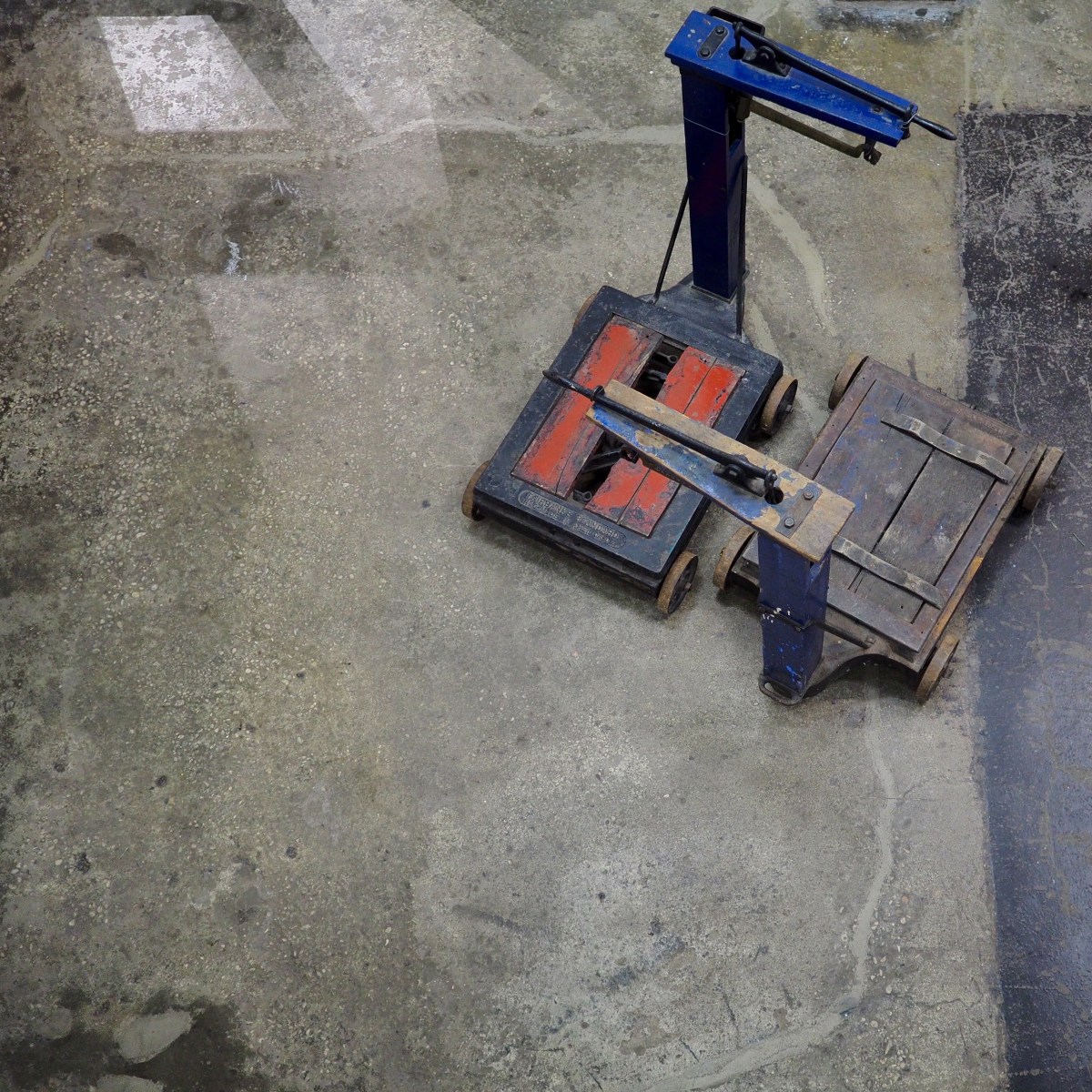



Photo made with Olympus E-M10ii and Olympus M.Zuiko Digital 17mm F1.8 in Kensington Market on September 17, 2017 in Toronto, Ontario. Edited in Apple Photos.
Calder Wilson at Petapixels:
Instagram’s Terms of Use make it clear that botting is a no-no. Over the past couple of years the platform has implemented anti-spam/anti-bot restriction, which does things like prevent accounts from liking too many photos in a short amount of time or commenting the same thing again and again. It’s obvious they oppose using bots ideologically, and it’s very easy to determine who’s using them or not, so why don’t they do something about it?
For one thing, Instagram is killing it right now. Every time Facebook reports their financial earnings, they need to show robust growth in their flagship products; almost just as importantly, they need to show healthy engagement. Growth and engagement are the life forces of Facebook’s stock, and any decrease in either can send shares south.
Now, consider that my @canonbw account was liking over 30,000 photos every month along with thousands and thousands of comments. That doesn’t even include the activity generated from people responding and liking my images/following me in return. If I took every Instagram user I know in my life who doesn’t use a bot, it’s more than likely that my single account generated more “activity” than everyone else over the last year combined.
If we take into account the massive number of people botting everyday all around the world, the number of likes and comments are astronomical. It’s very unlikely that this huge engagement engine will ever be shut down by Facebook Inc. The relationship between Instagram and botters is seemingly symbiotic, but I argue that in the long run, Instagram suffers.
The problems linked with false engagements fuels the life of Facebook as a public company, while turning the actual product space into one that is as demoralizing as Facebook itself. A growing number of academic articles are finding correlations between Facebook use and depression, in part linked to how much content is liked. While Instagram use remains relatively strongly correlated with happiness, will this persist with the growing rise of bots?

 Excited Pixels