This has been a particularly grey week — the weather has been mostly overcast and slightly rainy — and it’s had all the hallmark effects on my mood and attitude as it did when I lived on the west coast of Canada. With hindsight, I can see that some of the depressive funks I fell into while doing my PhD were the result of the weather, combined with diet and work/life imbalance. And when I was on the west coast, I discovered that getting in some significant amount of walking each day was what it took to fight through those funks.
Cue this week, and the solution has been getting into an exercise room and just doing work I didn’t really want to do, but which I intellectually knew would improve my perspective on life as soon as I was done my circuit. Unsurprisingly, each day that I dragged myself to exercise helped to improve my next day. In the UK, this has been taken a step further, and persons who are experiencing seasonal affective disorder, anti-social behaviour, or other mental health challenges are being prescribed exercise, socialization, and related activities that are meant to naturally modify the chemistry of their bodies and brains. No pills or drugs required.
It strikes me that such prescriptions could have a range of positive outcomes. First and foremost, for those who ‘fill’ the scripts, they might derive relief from the symptoms affecting them. That’s a clear win. But, second, it would have the effect of pushing people who might avoid certain kinds of physical activity to be there, with others, and realize that the portrayals of ‘fit’ or ‘active’ people in the movies and television tend to be drastically out of step with reality. I know that in my own case, I had this idealized idea of what people looked like when they exercised, how hard they worked, and so forth. But by going and exercising I’ve improved upon my own sense of my body by, first, doing some exercise but, second, seeing that the persons who are exercising look an awful lot like me.
In other words, developing a pretty regular exercise routine has had the dual effect of improving my mental health by just pushing my body, as well as improving my sense of bodily self-worth by destigmatizing my (pretty normal) body. I imagine that were more and more people gently pushed to get into workout rooms, running groups, or other socialized exercise spaced they, too, would experience that similarly destigmatizing experience.
For many years I’ve kept paper records of the things I’ve done in a given week. The rationale for keeping track is that I can be very busy, get a lot of real work done, but quickly forget about it because I routinely task shift between major projects. The result of this shifting is that I often produce thousands of words a week and forget about them once published. Keeping records has helped to ameliorate this forgetfulness problem.
In more recent years, rather than letting my week get filled up with ‘what I’ve done’ I’ve developed lists to try and keep me focused on the most important things. That has worked reasonably well, save that a lot of ‘extras’ get added to my week and then I’d typically just list them down with all of the planned tasks. So it looked like I was getting a lot done but, when I reviewed those lists a few weeks or months later, I couldn’t determine which were intentional versus unintentional tasks. During this period I also started to have a master list of my professional and personal objectives for a given week, and crossed them off as I finished them up. Tasks that didn’t get done tended to be moved to the subsequent week and, at the end of a work week, I’d have a short narrative explanation for what I did, why I did it, and how I felt about my professional and personal life during that period of time. That narrative component was important because it forced me to reflect at the end of the week on how the week had gone: pure lists didn’t compel that kind of introspection and, as such, weren’t as helpful for facilitating my personal development.
This year, things are (again) slightly different. I’ve separated out personal and professional tasks, for one: I continue to maintain a professional notebook but instead of also including a long list of my personal goals for the week, only highlight the top two or three personal items. I also have a section in my professional notebook for ‘extras’, or things which other people place on my schedule and which I accomplish in a given week. This helps me to segregate out how much of my work — and work accomplishments — are ‘mine’ versus belonging to others.
I also now have a pair of ‘personal’ notebooks; one is very tiny and travels everywhere with me. In addition to goal tracking I use it to record highlights from some books I’m reading, record useful quotations, or otherwise collect mental items that I want to retain longer-term. At the end of each week I move the items on the task list into my long-term personal notebook; other items (e.g. quotations, book notes, etc) are moved over when appropriate, such as when I’m done with reading a book for personal development and have concluded taking notes from it. On the Sunday or Monday of each week (i.e. very end of one week or very beginning of the next) I undertake a narrative reflection on how my personal life unfolded.
I’ve found that this system has been helpful for advancing my projects. It means that my work projects are always moving ahead a little each week, or that a single project enjoys a significant advancement if I almost entirely concentrate on it. Because I have a deliberate system planned out I can always find something else ‘productive’ to do if I’m stuck on a task or complete the element of a project I’d assigned myself in a given week. Having a deliberate series of tasks to complete also helps me to say ‘no’ to requests: if it’s important, and will take some time, then it gets moved to next week’s ‘todo’ instead of being taken up right away.1 In tandem with maintaining a deliberate task list I’ve taken to recording monthly highlights: I go through and identify the major victories over a given month (e.g. writing, speaking, planning, etc); this is useful to capture what I’ve been up to in a given month as well as to potentially advocate for pay cheque increases when my contract is renewed.
On the personal side, the system I’ve adopted of establishing weekly goals means I’m genuinely working on my more measurable yearly goals. It also means that I can always identify something ‘productive’ that I can spend time on, rather than just burning away a lot of time playing video games or watching Netflix. That’s not to say that all of my personal time is spent working! Projects I assign myself can range from reading fiction a few times in a given week, working through a backlog of high-quality magazine articles, exercising, or just organizing/cleaning my home. The point is to spend my personal time more deliberately, not to cut myself off from things that bring me joy and pleasure.
So far this system has served me well and keeps me relatively well grounded in my personal and professional life. It’s not as complicated or ornate as some of the task management systems that other people use. It doesn’t entail scheduling each and every second of my day, because I know that such organization systems just won’t work for me. It also means that there remains a lot of ‘gap’ time that’s filled with miscellaneous activities and opportunities, meaning that my life is relatively self-scheduled without being over-scheduled.
What system have you found works best, for you, to advance your professional and personal goals, projects, and objectives?
Quotation of the Week
“I strongly believe that the amount of love and care you put into a project is always apparent. Even if people are not conscious of it, they can sense when you have paid attention to every little detail.”
– Jocelyn K. Glei
Great Photography Shots
I really love these shots that Yuichi Yokota took of Tokyo during snowfalls.
I’ve been finding that if you promise you can do something, but only one week later, a lot of the miscellaneous tasks that are really about people just wanting fast work done go away, thus freeing up my schedule. Your mileage may vary. ↩
I’ve been on a speaking circuit this week, and so living a quasi-nomadic life. It’s a very strange experience to be shuttled between locations and across vast distances, all with only a modicum of awareness of all the places I’m scheduled to attend, persons I’ll be meeting, and expectations I will have to meet. I don’t mean to say that I don’t know why I’m travelling, or what I’ll be speaking about, but that the aspects of travel itself are often almost entire dealt with by other parties. There is no effort to determine where I need to go: someone will take me to the designated address. I don’t need to find a place to eat: I’ll be taken to where I need to eat. I don’t need to figure out where to sleep: someone else will determine that.
I contrast it with trips I take for personal relaxation and it’s a totally different experience. Tomorrow, as an example, I’ll be landing in a new place where I don’t speak the language and have no read guidance once I’m there. There are a few tent pole events — nature hikes! — but otherwise time will be entirely unoccupied with designated tasks or todos other than exploring. I actually find this kind of travel deeply uncomfortable because it feels so uncontrolled, but every time I learn a great deal more about the world, and how I should readjust my perceptions of that world.
While shuttling between places for conferences and events is intellectually stimulating it doesn’t tend to push me into uncomfortable spaces that facilitate growth. The exact opposite is true of personal travel. I half wonder, though: if I didn’t travel so often for work where things are scheduled and I’m attended to, would I prefer personal travel that had those characteristics? Would visiting resorts have some resonance if I wasn’t functionally visiting them for work on a semi-regular basis?
For the past few weeks I’ve been deliberately constraining my photography by shooting exclusively by a 35mm equivalent lens. This was the focal length that really convinced me that I enjoyed photography as a way of seeing and experiencing the world. I’m a big fan of zoom lenses, and keep eyeing the Olympus 12-40mm 2.8 Pro lens, but I find that I learn the most about a scene by having to walk around it with a bright prime lens.
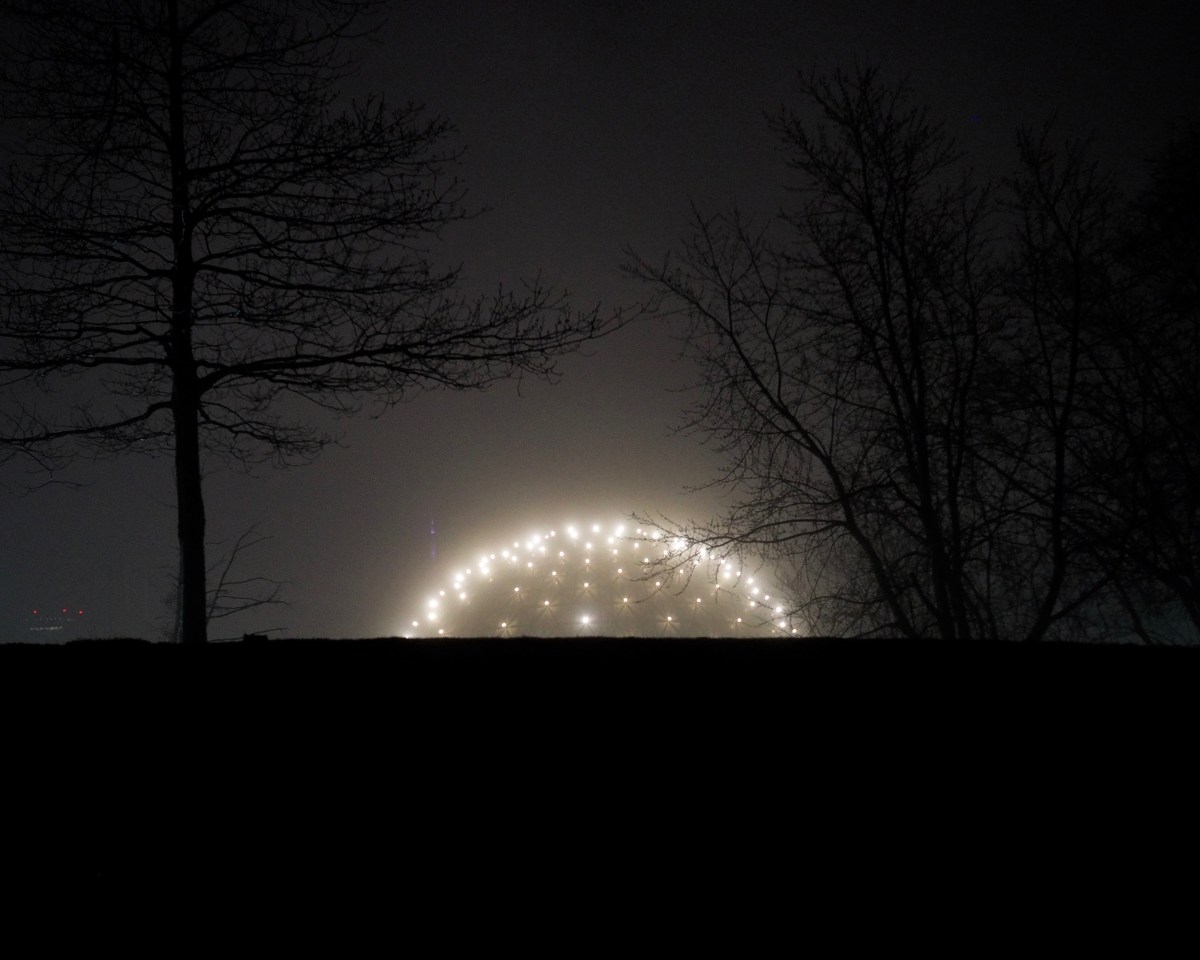
Alien Reach by Christopher Parsons
When I travelled to Cuba, having to march around with a 50mm equivalent lens meant I went into entirely new places and angles that I wouldn’t have if I’d had a zoom lens to otherwise get a shot. And while I’ve previously used my 35mm equivalent, I have to admit that I’ve been far more reliant on some of my zooms and the 50mm; I just haven’t focused on learning to use the 35mm lens because there is so much more walking-by-zooming that I have to do with it compared to even my other prime lenses.
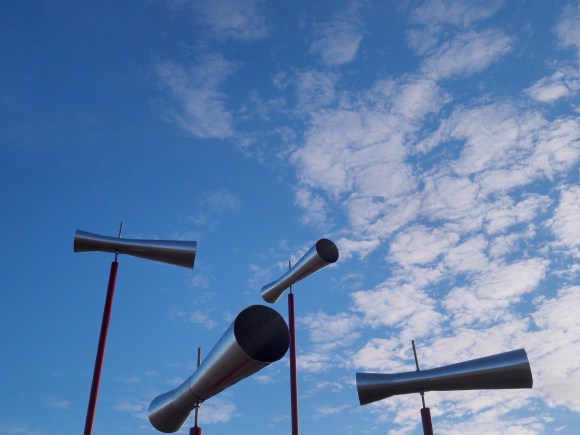
Sound Off! by Christopher Parsons
But that’s silly: I enjoy the focal length, I just have to work a lot more to get things out of the camera. So I’ve been using it at night, during the day, and exclusively attached it to my camera body for the past month and intend to bring it (along with an 80-300mm equivalent lens) when I travel to South America in a week and change. I like the idea of an unobtrusive lens as my walkabout, and then the zoom for when I’ve trekking through nature. And, perhaps most importantly, I really like the idea of forcing myself to get a lot more comfortable with my current gear as a way to inhibit my desire to buy more gear: I have functionally underused equipment, and I should be playing with it, first and foremost, before even considering the purchase of new kit.
Inspiring Quotation
“We start on the path to genuine adulthood when we stop insisting on our emotional competence and acknowledge the extent to which we are – in many areas of our psyche – likely to be sharply trailing our biological age. Realising we aren’t – as yet, in subtle ways – quite adults may be the start of true maturity.”
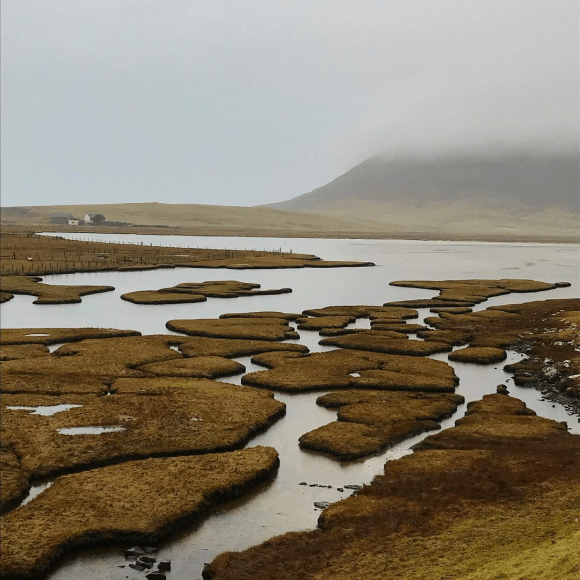
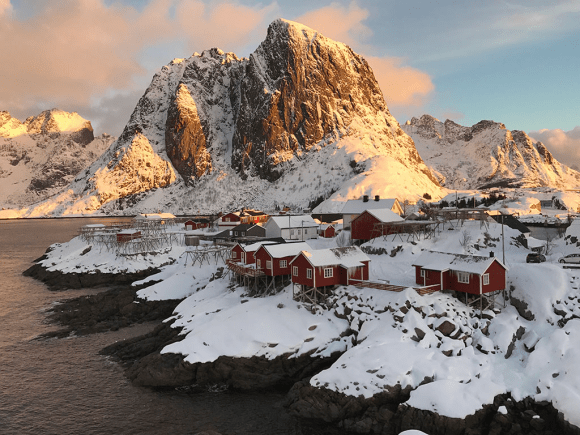
Mobiography’s landscape photography shots are really, really amazing and showcase just how much you can do with a contemporary smartphone and good lighting conditions.
Jagged horizon, Monument Valley… by Joseph CyrIt’s been a good day… full of weather again.. by Fi AustinSnow & Fishing Cottages by Jen Pollack BiancoWindswept by lkbside
I find it really hard to identify the stories in my photographs, prior to actually pushing the shutter button. When I look through, say, my best photos of 2017 I can see which ones have stories embedded within them but it’s a pretty rare thing that I saw, and decided upon, the story before taking the shot. In part, I think that my challenges are linked to only taking my photography more seriously for a relatively short period of time.
But some of the difficulties I’m encountering are also linked with my still learning to take ‘technically’ good photos, after which I think I’ll be more comfortable with more ‘narrative’ style shots. And I want to get better at the latter because I take Martino Pietropoli‘s statement pretty seriously: “Good photos tell stories. Average photos are just beautiful.”
Pietropoli’s article is excellent, insofar as he spends the time to walk through not just the importance of building a story into a photograph but because he also shows examples. In choosing examples he doesn’t merely say ‘here are narrative photos’ but, instead, he spends the time to spell out some of the narratives which might be bundled up in the shots in question. For me, his article was a particularly clear and poignant way of thinking through what stories might be in any given shot, and also as a way to differentiate between what he identifies as narrative versus ‘merely’ beautiful shots.
If I have one critique of the article — and I think it’s pretty minor — it’s that there’s an assumption that someone understands how to take photographs competently, and using this basic competence they can take shots with story. Put another way: I think that a lot of the efforts to create popular stylistic shots are very helpful in teaching people how to use their cameras and lenses, and to think through the importance of framing. Does that mean the people may end up with a series of ‘generic’ skills that many other photographers can roughly approximate or precisely imitate? Absolutely. But just as it’s important to learn how to write the five paragraph essay before breaking into longer-form writing that breaks all the rules of that high school essay format, learning the high-school format in the first place is an important skill that leads to more advanced writing.
I think that spending time looking at Instagram or Flickr or other places which hold ‘beautiful’ images is entirely appropriate for those who are learning to take photographs, and take them seriously. But I also tend to agree with Pietropoli that a photographer must eventually come to a decision: will their photographic style focus principally on technically beautiful shots or, instead, try to engage with the world by evoking emotions and reactions linked to the stories contained in their photos.
New Apps and Great App Updates from this Week
Cypher – a puzzle game about the history of cryptography
Great Photography Shots
I was really impressed with a range of the shots which won in the 2017 International Photographer of the Year contest.
Wave Crashers’ by Emily Kaszton. First Place, Nature: Aerial (Professional).‘Neon Desert’ by Stefano Gardel. International Fine Art Photographer of the Year‘Battersea’ by Giulio Zanni. Second place, Open Category: Long Exposure (Amateur)‘Untitled’ by Pedro Diaz Molins. Second place, Fine Art: Photomanipulation (Amateur)‘Lighting Clothes’ by Ramon Vaquero. Third place, People:Fashion/Beauty (Professional)‘Desert Essential’ by Giovanni Canclini. First place, Open Category: Open Theme (Amateur)
One of the most important things that we can do is surround our lives with things, events, and people which bring joy to our lives. I think that it really matters that when you get up that you’re immersed in whatever it is that excites you: it makes hard days easier, and easy days that must more enjoyable.
Part of the reason that I’m interested in photography is to capture, and bring home, such moments of joy. That doesn’t mean that all photos have to be about babies and weddings but, instead, that whatever is captured resonates with my soul in a way that moves me. It also means that I’m delighted to support other artists who generate art that brings a sense of joy to my life. That doesn’t mean spending thousands of dollars on pieces1 but, instead, being slow and careful and meticulous in amassing a collection of pieces that I fall in love with each time I see them.
But I was bad last year: I didn’t print enough of my own photos and while I was buying art I didn’t immediately have ways to display it that brought the works to life.
So over the past few weeks I’ve invested in new frames to bring those pieces to life. I’m super excited to see what they’re like up on my walls and, in the process of getting everything ready, I’m also that much more interested in acquiring some additional frames — both small and large — so that I can print and view more of the photos that I’ve taken over the past few years.2
I really love the experience of waking up and having everything on the walls bring a smile to my face (or a tear to my eye, in the case of some family photos): there is a sense of life that occurs when our domiciles are filled with our memories. I’m looking forward to putting more of them on my walls.
Inspiring Quotations
“What you do makes a difference and you have to decide what kind of difference you want to make.”
Jane Goodall
Great Photography Shots
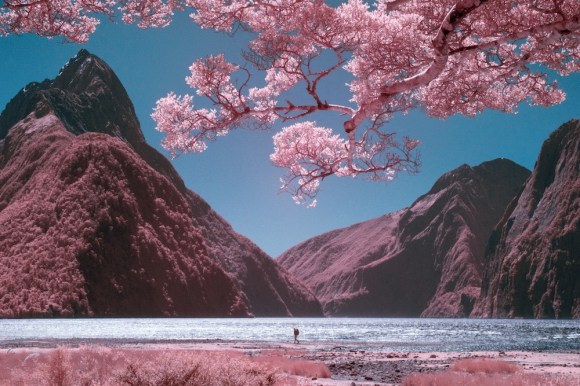
I’m just blown away by some of the shots taken by Paul Hoi in New Zealand, where he used an infrared camera to transform the green landscapes into a gorgeous, if alien, pink-toned wonderland.
I’ve been putting a lot of thought into how to structure my life, not just on a day to day basis, but with the intent of accomplishing something meaningful this year. Some of that relates to personal projects I want to pull off.1 But perhaps the most important thing I want to do this year is develop a really boring habit.
Mike Vardy wrote about his intent improve his personal fitness this year. His description of past attempts to become fit and how that differs from his current behaviours resonated with me. He wrote:
When I was trying to achieve a “body for life” before, I was single and doing it mainly to improve my physique for any potential ladies that I may wind up dating. I wasn’t really doing it for myself.
In contrast, this time he’s doing:
it for myself — and my family. My wife deserves to have a husband who’s in decent shape, and my kids deserve to have a father who can keep up with them. When my youngest turns thirteen, I’ll be fifty. I want to be able to roughhouse with him at that age and not feel it for weeks afterward. I’d also like to give myself the best shot at seeing my kids’ grandkids. Without exercise and proper diet, that just ain’t going to happen
In the past I tried to become more fit by taking it to the extreme. I also felt I had to hide what I was doing to avoid recriminations from family and people I lived with. I exercised when no one was around, or up, and hid the fact I was going on long challenging walks to avoid all kinds of hurtful commentary: getting fit was something that people were bemused about, at best, and openly mocked, at worst. I don’t have that kind of negative energy around me now and, instead, I have the support of people I love.2
I don’t know that my motives are quite the same as Mike: I’m not a father, and don’t intend to become one, nor am I doing this because I think someone else deserves my body in one format or another. No, I’m doing this purely because I would like to be in a situation where I can just say ‘sure, let’s climb that mountain’ and get going. I want to be able to hop on a bike and cycle across one of Canada’s smaller provinces because it would be neat to take that ride. And, more importantly, I want to get in the habit that regular active exercise is just so routine that it’s a normal, established, and boring part of my life.
Tim Cook was asked in the Apple earning call that took place in February about the company had considered whether, and if so how, their battery replacement program might affect replacement rates. The implied comment was the replacements might reduce the likelihood that consumers would upgrade to the new versions of devices, on grounds that some upgrades had historically taken place because people bought new phones as a result of their old ones slowing down or their batteries not providing adequate charge to get through a day. Cook responded that Apple:
did not consider in any way, shape, or form what it would do to upgrade rates. We did it because we thought it was the right thing to do for our customers. I don’t know what effect it will have for our customers. It was not in our thought process of deciding to do what we’ve done.
This is a great answer. Though I do suspect that the battery replacement program will delay some upgrades, I don’t know that such a delay would be inherently bad for the company. Jason Snell wrote that the iPhone 8 — not the X — was a really amazing phone for most people because they tended to be coming from devices that were release two or more years ago. As a result, people that were coming from iPhone 6, 6s, and 5s devices didn’t just get the updates of the iPhone 8 but also all the updates that came to the iPhone 7 and, in some cases, iPhone 6s.
In effect, people who waited three or more years to update ended up being wowed by all of the features in the new iPhone. These are everyday users who really do use words like ‘magic’ and literally utter ‘wow’ when things happen. They laugh with joy when Siri just does something right, or they have calendar items automatically added from their mail. These are the everyday consumers that Apple is making its money from.
These normal users are the ones that are going to be blown away whenever they do an upgrade, and are going to be especially appreciative of all the incremental updates that take place in the extra year they might delay an upgrade. They’re going to talk to their friends and family and co-workers. They might also talk about how the battery situation sucked while, simultaneously, mentioning how no other company offers a similar replacement program. Probably the only equivalent they’ll be able to think of was Samsung’s global recall of devices that were literally exploding in people’s hands.
Quotation of the Week
“By retreating into ourselves, it looks as if we are the enemies of others, but our solitary moments are in reality a homage to the richness of social existence. Unless we’ve had time alone, we can’t be who we would like to be around our fellow humans. We won’t have original opinions. We won’t have lively and authentic perspectives. We’ll be – in the wrong way – a bit like everyone else.”
I’ll update as I’m successful on those projects, instead of indicating what they are then failing to deliver. ↩
It also helps that my father died of a heart attack last year; getting fit isn’t just aimless or directionless, but it’s to reduce the likelihood of a similar event befalling me. ↩
I’ve been thinking about how high technology is continuing to develop at a pace that outruns the least well off in our Western societies. I think that this was best crystallized in Amazon’s opening of its first Amazon Go store, which does away with cashiers and replaces them with cameras and sensors that automatically identify what you acquire for purchase and charge you as you leave the space. There are at least three (immediate) concerns that strike me with regard to these kinds of technologies:
As noted by Hanna Brooks Olsen, these are inherently cashless technologies. Consumers will enter the store with their smartphones, cameras and sensors will track them, and be billed automatically to their debit or credit card(s) associated with the Amazon account. For persons who have a hard time acquiring a smartphone, or having it repaired when damaged, or opening a bank account or obtaining a credit card, or possessing a language barrier, or without access to a convenient and reliable place to charge their devices, or those who rely on the cash economy, these kinds of ‘convenient’ stores are nearly impenetrable fortresses. Those who cannot enter and purchase goods in the stores will be those who are often the least privileged and, rather than being confronted by the diversity of the human population, shoppers in Amazon Go-type stores will have some portion of society’s diversity simply deleted from their shopping experience. As stated by Olsen, “cashless life … is necessarily one of privilege.”
These are anti-labour technologies. In promoting ‘convenience’ Amazon Go and equivalent technologies remove a certain portion of low skill jobs that many people depend on for their livelihoods. While the popular conception is that it’s just students who have these kinds of jobs, simply looking at service jobs belies this point: the age groups which have sales or sales service jobs are rising, and this is exacerbated by an older population who has to work longer into their retirement years simply to survive, let alone thrive. By removing, or at least significantly reducing, the number of low-skill jobs the numbers of persons who are struggling and unable to find work will increase and their social hardships be exacerbated.1
Cashless systems and those which remove labourers are inherently political technologies. They are technologies designed for a particular set of people, to solve what one group in society regards as ‘problems’, and which could significantly reshape how elements of society operate. Should these technologies cease to be ‘technology’ per se and be normalized as ‘infrastructure’ then it will be challenging to ‘reformat and replace’ the technology and ameliorate its long-term social impacts.2 Transforming cashless into infrastructure threatens to deepen the the aforementioned difficulties.
Aren’t there solutions to the aforementioned problems? Of course there are. But any solutions will likely impose costs on those who are developing, advocating for, and using convenience technologies that detrimentally affect the least well off or privileged. Solutions might entail:
establishing a guaranteed way for all persons to obtain banking accounts with diminished identification or language requirements;3
providing either a basic living wage or reducing the barriers to accessing social welfare benefits, to offset the reduction of low-skill employment opportunities; or
reducing educational costs or fully subsidizing such costs so that we as a society can improve the educational status of many of those affected by shrinking low-skill labour. However, education is often seen as the silver bullet when it should be regarded as a tarnished and dented brass shield instead: educational requirements for mid-skilled labour may be too onerous for some persons who have mental, psychological, or physical challenges. Similarly, if there is a major gap between initial education and when it is (re)required, such as when a middle income person loses their job after 25+ years of performing the same tasks, then a short 6- or 12-month course may be insufficient. Education may help to address some job loss linked to convenient technologies but education, alone, is insufficient to ‘solve’ the social challenges linked with such technologies and infrastructures.
It’s pretty rare that major news reports about novel and emerging technologies are accompanied with real-work implications of the technologies, should they transform to infrastructure. It’s even rarer for minor news reports to consider the social, ethical, or political implications of new technologies. Instead, the focuses tend to be on whether a new user interface is ‘fun’ or ‘convenient enough’ or ‘fast enough’. Those are the concerns of the majority. We need to far more seriously consider how our developing technologies will affect those least well off, or else risk further stratifying social and economic divides and widening the rift between the most and least privileged members of society.
Quotation of the Week
“We cannot retreat to the convenience of being overwhelmed.”
– Ruth Messinger
Great Photography Shots
I really appreciated the humour in these urban camouflage shots!
The current Amazon Go location does have employees working there, just not as cashiers, and the company hasn’t taken the population of would-be-cashiers and moved them to other locations. The very point is to remove cashiers as an occupation and number of employees from the experience. ↩
One of the challenges to obtaining a bank account is that customers may require a fixed address, telephone number, or other identifiers. While such identifiers are often stable and available to the majority of the population they are fluid for those who lack secure housing, employment, and other ‘normal’ components of daily living. ↩
I’ve been trying to clean up aspects of my digital past for the past six or eight months. To date, that’s mostly meant migrating content between a range of different platforms to consolidate it. The ultimate goal is to move all personal stuff to either a private journal or public blog (this one), all business and work-related stuff migrated to my professional website, permanently delete tens of thousands of old emails (and empty old email accounts),1 and re-evaluate the different social media accounts that I possess and close/delete at least some of them.
In the course of this digital cleanup I’ve stumbled across lots of old writings, communications, and thoughts. Most are pretty banal but others remind me of significant moments in my life. Small things, like the first time I signed a lease or received notice that I was accepted into graduate schools. Notifications of family health emergencies. And too many messages from friends to which I didn’t respond.
Why am I cleaning things up? In part, for privacy and security reasons. I’ve tried to keep a relatively ‘clean’ online profile but know that my more youthful self was less mindful of what was put online that I am today. There are regular stories about accounts being penetrated and documents either being directly leaked to the public or, worse, being selectively modified and then subsequently published. The best way of addressing such threats starts by getting rid of materials that might be used in such doxing operations and old accounts that might offer insight into my private life.
I think that the process of going through and deleting items, however, also stems from my distaste for how near-permanent retention affects human relationships. In his book, Delete: The Virtue of Forgetting in the Digital Age, Victor Mayer Schonberger argues that humans have evolved to forget many of our interactions with one another in order to facilitate long-term relationships with one another. He impresses on the reader that it is important to add ‘forgetfulness’ to digital data collection processes and, as I wrote previously,
draws what are arguably correct theoretical conclusions (we need to get a lot better at deleting data to avoid significant normative, political, and social harms) while drawing absolutely devastatingly incorrect technological solutions (key: legislating ‘forgetting’ into all data formats and OSes).
We don’t remember all of the slights in a relationship, or all the harsh words spoken between one another, or even the abnormally positive comments or actions. As a result, we can have interactions with people who might have really upset us in the past because the reasons of that upset fade over time: we say that ‘time heals all wounds’ for a reason. It turns out that it’s because of human evolution!
So by retaining our memories permanently in a digital format there is the perpetual chance that we’re reminded of things that our minds have forgotten on our behalves. Perfect and permanent recollection isn’t the norm, and in our race to digitize and remember everything forever our technical aspirations are stepping beyond the nature of our bodies. Now we exceed our own bodily capabilities in lots of ways — humans are functionally cyborgs — but affecting our psychological interactions with one another strikes me, personally, as having potentially dangerous social implications. As a result, I tend to regard my current process of deleting parts of my past, forever, as a mental health practice as well as a practice linked to privacy or security.
The last few months of 2017 were hard for me. One of the ways that I know this is I took up hobbies that didn’t contribute to my development as a person and were, instead, simply pleasurable ways of wasting away time and trying to relax in the absence of doing anything of import. But it never really felt right: I had nothing to show at the end of the activities and typically wasn’t any happier with myself by the end of the recreation period.
Some of that is scar tissue from past relationships and past work-life imbalances.2 And some of it is linked to historical coping methods in periods of high stress. But this year I want to ensure that I find more productive outputs to relax so as to to find enjoyment in personal creation and to ensure that I can develop and grow as a person instead of just wasting away precious time. That doesn’t mean I’m never going to waste away time but, instead, that I want to be more deliberate and measured when I do decide to indulge in pointless recreation that doesn’t contribute to my personal enrichment.
Inspiring Quotation
“To make real change, you have to be well anchored – not only in the belief that it can be done, but also in some pretty real ways about who you are and what you can do.”
Vincent Laforet strapped an iPhone 7 to the bottom of a Lear jet and then flew in a straight direction while activating the iPhone’s panorama mode. He’s sharing photos over at Instagram. They’re absolutely spectacular and show just what you can do with smartphone cameras.
I don’t delete the actual email accounts because I’m mindful of a company re-using my old usernames and them potentially transforming into a vector for phishing. Yahoo! did this to their users. ↩
It’s really hard for me to just take time to myself when that time isn’t productive in some sense. I can identify the reasons why but knowledge on its own isn’t sufficient to overcome the feeling of being ‘bad’. ↩
I was listening to ‘Tips from the Top Floor’ this week and, in response to the question of where a listener should consider posting their photos online, Chris Marquardt launched into a good series of questions about why people share news, photos, and other media online. Is it to draw attention to things? Is it to generate likes? Is it to elicit feedback? Or is it for some other reason?
It’s not the first time that I’ve thought about why I, personally, produce and share materials. And there are very different reasons for how and why I write and share in different mediums. Some venues, like Twitter, are where I and my professional colleagues tend to share information with one another while also engaging in (limited) conversations. My professional website, today, is a space where I publish mostly- or totally-complete work to make it accessible to colleagues who are interested in my longer-form materials. My personal website, Excited Pixels, is largely for me: I write, and collect information, because doing so helps me think about the issues and products that I find interesting or noteworthy. I’d be lying if I said I always shared or linked material here that I thought was interesting but my goal is to at least have some material to go back through.
Other places, like Flickr when I used it, was where I stored my photos in the case of a serious data disaster like a hard drive crash or house fire. Earlier social networks were really used to share information with my friends (as opposed to colleagues), though I’ve largely stopped publicly writing about deeply personal or day-to-day content at this point.
There was one major new social network service that I regularly used last year: Instagram. It was very, very helpful in forcing me to take more photos and get a lot more comfortable with my cameras and some basic editing software. I can see a difference in the photos I take a year later but, equally as important, I can get the kinds of photos I want faster because I understand my gear a lot better today. I did enjoy looking at really amazing photos on a regular basis but found that the site both takes a lot of time, in part because the almost daily curation of content was a pain in the bum. Furthermore, the time that I spent there meant I wasn’t spending time elsewhere, such as here, or engaging in any number of other pursuits.
This year my ‘new’ social network to try out is micro.blog. And to be honest I don’t know exactly what I think about it. As a plus, the people who are currently using it produce a lot of signal and not a lot of noise, and the blogging tends to be more personal than is common today. It feels like a community of people who have, and are, coming together. It’s a new network and so there are UI things that are still being developed, and the actual way that it works remains a borderline mystery to me,1 but it’s interesting to watch. And why do I post there? I…don’t entirely know. In part because I’m curious to see how the network develops: it’s sort of like watching Twitter, back when I joined, but where most of the users are more mature and self-aware and mindful of what is being posted.
I’ve always tended to delete almost as much content as I post, not so much because I self-censor2 as because I want to be careful and mindful in what I permanently add to the Internet. One of the benefits of blogging in different venues since the early aughts is that I lived through the blowback that can arise when the stakes were relatively low and consequences minimal. That’s less the case today as a result of the memory of the ‘net combined with the speed at which errors can spin out of control. What once could be forgotten, even online, is now likely semi-permanent at best, and the speed at which an error can go viral, today, is unlike almost any other time in history. Still, the questions raised by Chris apply as much to text-based social media and content production and sharing as they do to photography. It’s helpful to be reminded periodically that the best content is that with which we deliberately engage.
Related to photography, one of my personal goals for this year is to print more of my stuff! The last time I did a lot of printing of my own material was in 2016 and I really want to refresh my frames!
There are a few different ways I’m planning on making my photos a little more physical. First, I’m going to be printing a ‘best of’ album for 2017. I imposed a 50 photo limit to make me cull, cull, and then cull a lot more. In my initial analysis what’s most striking is that while I might not think that the photos are necessarily the best technical shots I took, they all possess similar kinds of tension and drama. So over the next few months I think that I’m going to consider what went into getting the ‘best of’ shots and then seeing if there are interesting or novel ways to better fill my shots with more drama.
Second, I’m going to be printing a bunch of photos on canvass for the first time! At the moment I’m thinking I’ll try printing a bunch of 8×8” black and white photos and, above them, 2-3 much larger colour prints (likely in gold frames) to draw some contrast on the empty wall that I have available to me.
Third, I’m going to probably print a bunch of 4×6 shots for the purpose of sending them to family members. I’d like to include a short message on each of the photos; it gives a nice thing to put up on a fridge or wall3 and also a physical artifact with my thoughts about the recipient or whatever is on my mind at the time. I’d actually intended to print and send these to my dad and stepmother last year, in an effort to start repairing our relationship, but sadly wasn’t able to. But I don’t see why a good idea can’t be recycled and used to maintain the relatively good relationships I have with my surviving family members!
Quotation That Resonated With Me
“Belief, as I use the word here, is the insistence that the truth is what one would ‘lief’ or wish it to be. The believer will open his mind to the truth on condition that it fits in with his preconceived ideas and wishes. Faith, on the other hand, is an unreserved opening of the mind to the truth, whatever it may turn out to be. Faith has no preconceptions; it is a plunge into the unknown. Belief clings, but faith let’s go.”
Little things like…I have no idea what I’m paying a monthly fee for, exactly. I think I need to pay to be a member of the network, or to post to the network, or something? But I really have no idea and the support documentation when you sign up is utterly unclear just how things work, or why, which makes sense given its relative youth and the technical sophistication of a lot of its early members. I have faith this will improve as its user numbers grow. ↩
Or, at least I don’t self-censor too often. Except when I need to do so to avoid legal jeopardy. ↩
Some of my family have almost entirely bare walls…so I can imagine these photos migrating onto at least one person’s walls. ↩
































 Excited Pixels