Categories
Photography Writing

Photography and Social Media

5CC1F7AF-32C8-44BD-9E44-C061F92CC924
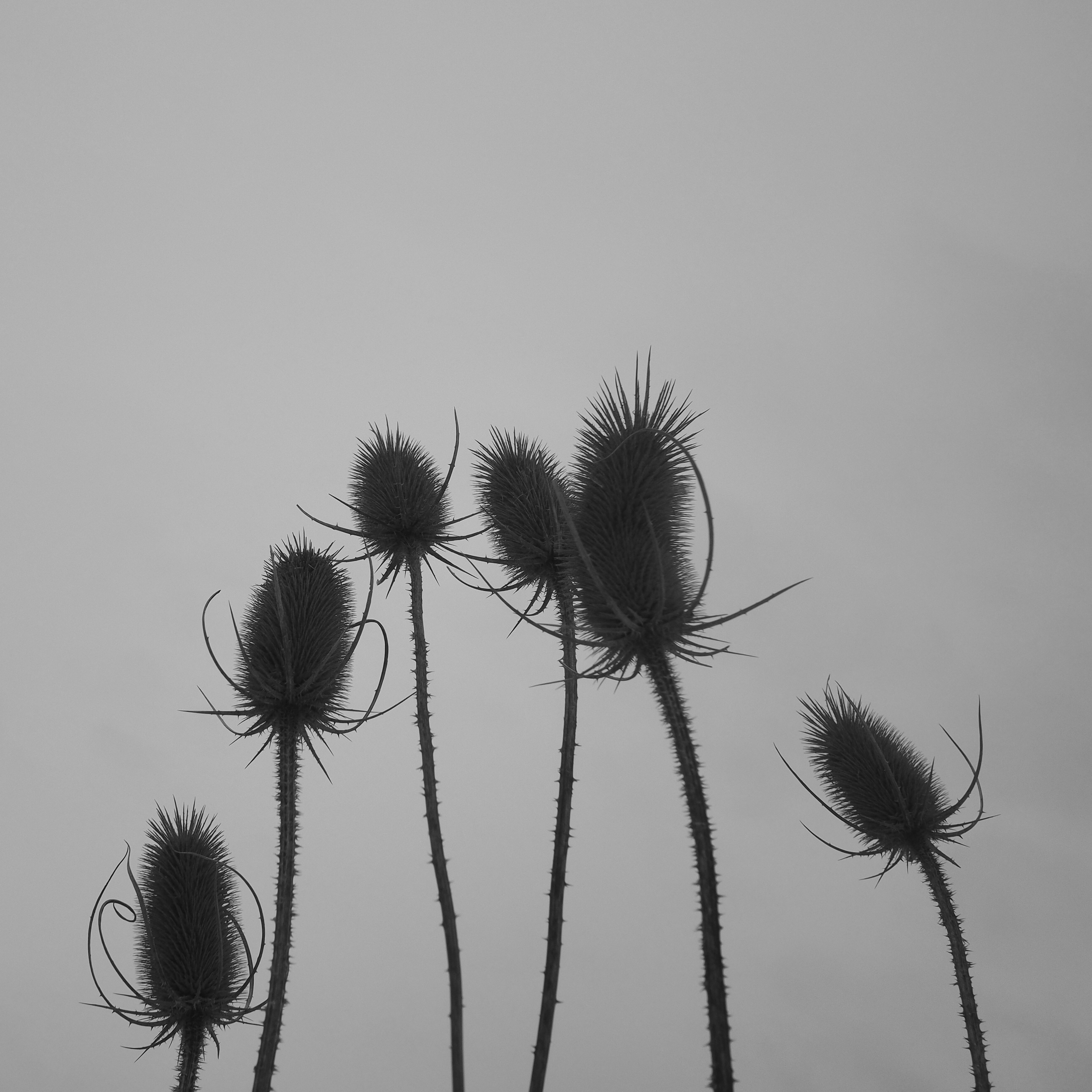
(Passer By by Christopher Parsons)

Why do we want to share our photos online? What platforms are better or worse to use in sharing images? These are some of the questions I’ve been pondering for the past few weeks.

Backstory

About a month ago a colleague stated that she would be leaving Instagram given the nature of Facebook’s activities and the company’s seeming lack of remorse. Her decision has stuck with me and left me wondering whether I want to follow her lead.

I deleted my Facebook accounts some time ago, and have almost entirely migrated my community away from WhatsApp. But as an amateur photographer I’ve hesitated to leave an app that was, at least initially, designed with photographers in mind. I’ve used the application over the years to develop and improve my photographic abilities and so there’s an element of ‘sunk cost’ that has historically factored into my decision to stay or leave.

But Instagram isn’t really for photographers anymore. The app is increasingly stuffed with either videos or ads, and is meant to create a soft landing point for when/if Facebook truly pivots away from its main Facebook app.1 The company’s pivot makes it a lot easier to justify leaving the application though, at the same time, leaves me wondering what application or platform, if any, I want to move my photos over to.

The Competition(?)

Over the past week or two I’ve tried Flickr.2 While it’s the OG of photo sharing sites its mobile apps are just broken. I can’t create albums unless I use the web app. The sharing straight from the Apple Photos app is janky. I worry (for no good reason, really) about the cost for the professional version (do I even need that as an amateur?) as well as the annoyance of tagging photos in order to ‘find my tribe.’

It’s also not apparent to me how much community truly exists on Flickr: the whole platform seems a bit like a graveyard with only a small handful of active photographers still inhabiting the space.

I’m also trying Glass at the moment. It’s not perfect: search is non-existent, you can’t share your gallery of photos with non-Glass users at the moment, discovery is a bit rough, there’s no Web version, and it’s currently iPhone only. However, I do like that the app (and its creators) is focused on sharing images and that it has a clear monetization schema in the form of a yearly subscription. The company’s formal roadmap also indicates that some of these rough edges may be filed away in the coming months.

I also like that Glass doesn’t require me to develop a tagging system (that’s all done in the app using presets), let’s me share quickly and easily from the Photos app, looks modern, and has a relatively low yearly subscription cost. And, at least so far, most of the comments are better than on the other platforms, which I think is important to developing my own photography.

Finally, there’s my blog here! And while I like to host photo series here this site isn’t really designed as a photo blog first and foremost. Part of the problem is that WordPress continues to suck for posting media in my experience but, more substantively, this blog hosts a lot more text than images. I don’t foresee changing this focus anytime in the near or even distant future.

The Necessity of Photo Sharing?

It’s an entirely fair question to ask why even bother sharing photos with strangers. Why not just keep my images on my devices and engage in my own self-critique?

I do engage in such critique but I’ve personally learned more from putting my images into the public eye than I would just by keeping them on my own devices.3 Some of that is from comments but, also, it’s been based on what people have ‘liked’ or left emoji comments on. These kinds of signals have helped me better understand what is a better or less good photograph.

However, at this point I don’t think that likes and emojis are the source of my future photography development: I want actual feedback, even if it’s limited to just a sentence or so. I’m hoping that Glass might provide that kind of feedback though I guess only time will tell.


  1. For a good take on Facebook and why its functionally ‘over’ as a positive brand check out M.G. Siegler’s article, “Facebook is Too Big, Fail.” ↩︎
  2. This is my second time with Flickr, as I closed a very old account several years ago given that I just wasn’t using it. ↩︎
  3. If I’m entirely honest, I bet I’ve learned as much or more from reading photography teaching/course books, but that’s a different kind of learning entirely. ↩︎
Categories
Links

The Answer to Why Twitter Influences Canadian Politics

Elizabeth Dubois has a great episode of Wonks and War Rooms where she interviews Etienne Rainville of The Boys in Short Pants podcast, former Hill staffer, and government relations expert. They unpack how government staffers collect information, process it, and identify experts.

Broadly, the episode focuses on how the absence of significant policy expertise in government and political parties means that social media—and Twitter in particular—can play an outsized role in influencing government, and why that’s the case.

While the discussion isn’t necessarily revelatory to anyone who has dealt with some elements of government of Canada, and especially MPs and their younger staffers, it’s a good and tight conversation that could be useful for students of Canadian politics, and also helpfully distinguishes of of the differences between Canadian and American political cultures. I found the forthrightness of the conversation and the honesty of how government operates was particularly useful in clarifying why Twitter is, indeed, a place for experts in Canada to spend time if they want to be policy relevant.

Categories
Links Writing

A Clubhouse for Whom?

(Photo by Stephen Crowley on Unsplash)

Mark Stenberg has a good assessment of the challenges facing Clubhouse, the newest ‘hot’ social media app that involves individuals having audio discussions in real-time with one another in rooms that are created on the platform. He suspects that Clubhouse may work best in quarantine:

A glimpse of Instagram brings a fleeting burst of serotonin, but a second’s worth of Clubhouse is meaningless. Will you then, at night, leave your family in the other room so you can pop your headphones in and listen to strangers swapping their valuable thoughts on the news of the day?

When commutes and daily life return, people will once again have a few parceled-off periods of the day in which they can listen to audio entertainment. If there are no good Clubhouse conversations at those exact times, the app is far less valuable than a podcast platform or music-streaming service. The very characteristic that makes it so appealing — its real-time nature — will make it challenging for listeners to fold it into their lives when reality returns.

Whether a real-time app that depends on relative quiet and available time, and which is unsuitable for multitasking, survives in its current form as people emerge from their relative isolation will be interesting to measure in real-time once vaccines are widely spread throughout society. But, equally interesting (to my mind) are the assumptions baked into that very question: why not just ask people (e.g., essential workers) who continue to commute en mass and inquire about whether they are, or will be, using Clubhouse? Why not ask those who do not have particularly fungible or quiet lives at the moment (e.g., parents who are homeschooling younger children while working their day jobs) whether the app is compelling during quarantine periods?

To put it another way, the very framing of Clubhouse presupposes a number of affordances that really mostly pertain to a subset of relatively privileged members of society. It’s lovely that some tech workers, who work from home, and journalists who have similar lifestyles are interested in the app. But that doesn’t mean that it’ll broadly interest people, just as most people are dismissive of text-based social media applications (e.g., Twitter) and even visual-based apps (e.g., Instagram).

But, at the same time, this may not matter. If the founders are aiming for growing and sustaining the existing platform and not for the typical Silicon Valley viral growth, then their presently suggested modes of deriving profits might work. Specifically, current proposals include, “tipping, subscriptions, and ticketing” which, if adopted, could mean this is a social networking platform that doesn’t rely on the normal advertising or data brokerage models which have been adopted by most social media platforms and companies.

Will any of this work? Who knows. Most social media companies are here today, gone tomorrow, and I bet that Clubhouse is probably in that category. But, at the same time, it’s worth thinking through who these kinds of apps are designed for so that we can appreciate the politics, privilege, and power which are imbued into the technologies which surround us and the ways that we talk about those technologies.

Categories
Photography

The State of Instagram

(Rise Up! by Christopher Parsons)

I owe a lot to Instagram. Starting in January 1, 2017 until October 2017 I began a project of uploading a photo a day (or thereabouts) and, in the process, I learned an awful lot about how to use my cameras, shots that I tend to prefer taking, and the cool stuff you could do by looking at other photographers’ shots.

It was pretty great.

But for reasons I’ve previously written about I’ve drifted away from regular postings to Instagram or even taking photographs with the regularity of the last year. Specifically, I wrote:

… something is changing in how I approach photography itself, at least right now: I don’t want as many amber memories, and instead want to enjoy the development and unfolding of certain memories, and feel more comfortable in the knowledge that the ‘final’ memories I’ll have will be even more subjective than those associated with photographs. Some will even vanish in their entirety.

In fact, from November 2017 – April 2018 I didn’t post a single photo to Instagram and only logged in once or twice.1 But my not uploading photos has been nagging me because I know that part of why I was taking shots — and getting good ones! — was because I had been actively trying to upload stuff on a regular basis. Instagram was a method for pushing me to practice my own skills and, occasionally, receiving feedback on the shots I was getting.

So I dipped my toe back in, with a fresh upload, and then started to browse my feed. As usual, there were great photographs from the photographers that I follow.2 But there were also a lot of ads. I mean, every 5-7 images was another ad. That really, really, really sucked because it made the platform a lot less enjoyable to browse and look at; it was less a network of people, and more an ad network that was interspersed with real people’s photographs.

So what I’m going to do is upload a photo a week, or so, to Instagram because I’d like to keep my profile alive. But I’m not going to invest the time in the platform that I did in the past. And, instead, I’m going to reflect on where I want to put my content, why I want it there, and with what regularity I want to upload photos to the public Internet. That’s part of an activity I’ve been undertaking over the past year but I’d honestly thought that Instagram might remain a fun place to interact with people. Sadly, it looks like that might not be the case after all.

  1. I was, however, taking photos during that period though not with daily-regularity.
  2. I don’t tend to follow people, including friends and family, unless they take shots I find aesthetically pleasing. So there aren’t a lot of family photos, breakfast shots, or other site such material that make their way onto my feed very often.
Categories
Writing

Facebook Isn’t Going Anywhere

In the wake of the Cambridge Analytica scandal, there are calls for people to delete their Facebook accounts. Similar calls have gone out in the past following Facebook-related scandals. As the years have unfolded following each scandal, Facebook has become more and more integrated into people’s lives while, at the same time, more and more people claim to dislike the service. I’m confident that some thousands of people will delete (or at least deactivate) their accounts. But I don’t think that the Cambridge Analytica scandal is going to be what causes people to flee Facebook en mass for the following reasons:

  1. Few people vote. And so they aren’t going to care that some shady company was trying to affect voting patterns.
  2. Lots of people rely on Facebook to keep passive track of the people in their lives. Unless communities, not individuals, quit there will be immense pressure to remain part of the network.
  3. Facebook is required to log into a lot of third party services. I’m thinking of services from my barber to Tinder. Deleting Facebook means it’s a lot harder to get a haircut and impossible to use something like Tinder.

Now, does this mean Cambridge Analytica will have no effect? No. In fact, Facebook’s second-worst nightmare is probably an acceleration of decreased use of the social network. So if people use Facebook hesitantly and significantly decrease how often they’re on the service this could open the potential for other networks to capitalize on the new minutes or hours of attention which are available. But regardless, Facebook isn’t going anywhere barring far more serious political difficulties.

Categories
Links

AntiSocial

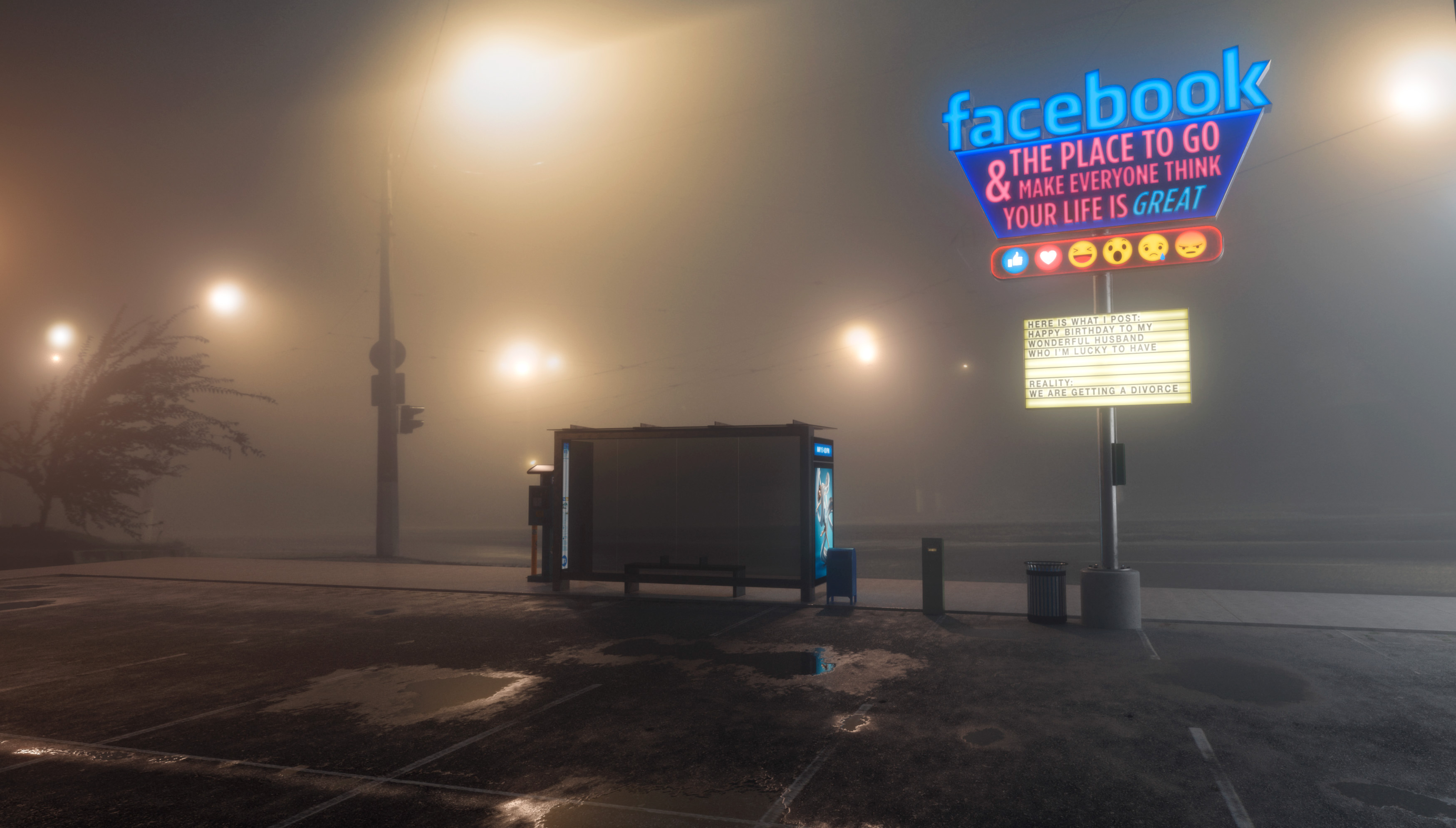
I really love the social media billboards that Mike Campau has created. Just stunning pieces to look at while providing always-needed critical introspection of social media services themselves.

Categories
Roundup Writing

The Roundup for February 3-9, 2018 Edition

Layers, 2018, Toronto by Christopher Parsons

We generate a vast amount of digital exhaust which imperceptibly lingers around us. The metadata and content that’s left behind us is typically regarded as harmless until it’s used or abused, or until it’s misappropriated by someone.

Part of this exhaust follows from our regular shifting between services as our tastes, interests, attitudes, ambitions, and desires change. Social media platforms are adopted and abandoned. Fitness tracking systems that were exciting one year are dull the next and then forgotten, with the tracker consigned to a trash bin or electronics drawer and data residing in perpetuity with whatever service was collecting it. The data we’ve contributed to all those services lingers: it can come back to haunt us in ways we don’t understand or appreciate when signing up for the service, and it can be challenging to undo the associated harms when they befall us.

As part of my ongoing effort to clean up some of the exhaust I’ve left behind, I deleted an old Fitbit account a few weeks ago. It was a bit annoying — you need to contact support, click yes to some emails, and then support will delete the information — but after ten minutes or so the account and its data was consigned to the dustbin of the Internet. Similarly, I blew away over 32,000 tweets this week. I left the last six months data behind or so, but it means that there’s a long trace of exhaust that’s gone.1 And I’ll be undertaking similar operations for the rest of the year, or at least so I’ve planned.

In the case of the Fitbit data, it now rests securely in Apple Health, giving me a broader understanding of changes to my fitness activities than I previously enjoyed. I downloaded a copy of my tweets before wiping them away. And for personal blogs, I’m either consolidating them here or into a semi-local digital journal so I don’t lose what I’ve previously written. But if I’m serious it’s unlikely that I’m going to re-read (that many) of my old blogs. And I’m not looking at daily variations between today’s fitness regime and that of 2008. The data could do a lot more in other persons’ hands to harm me than in my own hands to benefit me, especially as I’ve moved away from where those blogs were active and the fitness communities where members engaged with one another.

The only thing that bothers me is that, in removing things from the Internet, I’m breaking the links that were inbound to those respective pieces of content. But…did anyone really link back to old tweets and, if they did, do I have a responsibility for their linking to what I tend to perceive as off-hand comments? Do I have to maintain and support now long-abandoned accounts on the presumption that someone might someday want to follow a link?

For a long time I would have said ‘yes’ to either of those statements. But I just don’t think that that’s a healthy attitude: humanity forgets. And then we rebuild the old it is in slightly different formats and in the (perceived) image of the past. I can’t imagine those old tweets, blogs, or fitness tracking data being so important that anyone will want to rebuild or remake what they once were and, if that is the case, then they’re welcome to follow in humanity’s ancient footsteps of imaging the past and superimposing their own aspirations, dreams, desires, and fears upon it.


Inspiring Quotations

Writing for friends and yourself can clear your thoughts, help you plan and invite the discovery of new ideas. Writing with the intention to put your thoughts out there leads to real writing. Writing gets real when it is read. Before that, it is a dream in letters. Writing to get read makes you careful, responsible, and considerate. It forces you to think as simply, clearly and understandably as possible. It forces you to think about how what you say may look and feel from the outside. Writing to be read may not be desirable for everybody. But if you feel that you have something to say, write to be read. Don’t search for something to write because you want to be famous or rich. If you want fame jump from a cliff into a butter bucket on YouTube. If you want to be rich, get into finance.

New Apps and Great App Updates from this Week

Great Photography Shots

I love these shots of Ice Caves in Iceland.

Photography by Matěj Kříž

Photography by Matěj Kříž

Photography by Matěj Kříž

Music I’m Digging

Neat Podcast Episodes

Good Reads for the Week

Cool Things

Footnotes

  1. Of course if a company or organization has previously scraped that data, which does happen, then those records will persist beyond my public deletion of the tweets.
  2. I’m really finding this great background music for just getting work done. Great moody music.
Categories
Quotations

Deliberate Sharing

Every time you share a link, or a piece of news, you are actually telling people to look at it. You are asking them to spend their biggest resource — attention (and time) — on what you are sharing.

Om Malik, “(Social) share, but with care
Categories
Quotations

On Facebook’s Woes

There’s another theory floating around as to why Facebook cares so much about the way it’s impacting the world, and it’s one that I happen to agree with. When Zuckerberg looks into his big-data crystal ball, he can see a troublesome trend occurring. A few years ago, for example, there wasn’t a single person I knew who didn’t have Facebook on their smartphone. These days, it’s the opposite. This is largely anecdotal, but almost everyone I know has deleted at least one social app from their devices. And Facebook is almost always the first to go. Facebook, Twitter, Instagram, Snapchat, and other sneaky privacy-piercing applications are being removed by people who simply feel icky about what these platforms are doing to them, and to society.

Some people are terrified that these services are listening in to their private conversations. (The company’s anti-privacy tentacles go so far as to track the dust on your phone to see who you might be spending time with.) Others are sick of getting into an argument with a long-lost cousin, or that guy from high school who still works in the same coffee shop, over something that Trump said, or a “news” article that is full of more bias and false facts. And then there’s the main reason I think people are abandoning these platforms: Facebook knows us better than we know ourselves, with its algorithms that can predict if we’re going to cheat on our spouse, start looking for a new job, or buy a new water bottle on Amazon in a few weeks. It knows how to send us the exact right number of pop-ups to get our endorphins going, or not show us how many Likes we really have to set off our insecurities. As a society, we feel like we’re at war with a computer algorithm, and the only winning move is not to play.

There was a time when Facebook made us feel good about using the service—I used to love it. It was fun to connect with old friends, share pictures of your vacation with everyone, or show off a video of your nephew being extra-specially cute. But, over time, Facebook has had to make Wall Street happy, and the only way to feed that beast is to accumulate more, more, more: more clicks, more time spent on the site, more Likes, more people, more connections, more hyper-personalized ads. All of which adds up to more money. But as one recent mea culpa by an early Internet guru aptly noted, “What if we were never meant to be a global species?”

Nick Bilton, ““This Is Serious”: Facebook Begins It’s Downward Spiral

As much as I’d like to believe that users will flee Facebook, I still think the network effect will keep them inside the company’s heavily walled garden. It’ll take a new generation using new applications and interested in different kinds of content creation — and Facebook not buying up whatever is popular to that generation — for the company’s grasp to be loosened.

Categories
Links

Promoting Instagram Addiction

From The Globe and Mail:

Matt Mayberry, who works at a California startup called Dopamine Labs, says it’s common knowledge in the industry that Instagram exploits this craving by strategically withholding “likes” from certain users. If the photo-sharing app decides you need to use the service more often, it’ll show only a fraction of the likes you’ve received on a given post at first, hoping you’ll be disappointed with your haul and check back again in a minute or two. “They’re tying in to your greatest insecurities,” Mr. Mayberry said.

I didn’t know that how ‘likes’ were doled out were designed to get you to keep coming back into social media applications. If Instagram is toying with its users this way then I’m going to seriously evaluate whether I ever want to use the application again. Activities like those described are just slimy and I don’t feel the need to provide such companies with either my content or my attention.