Categories
Links Writing

Social Networks, Social Media, and Design Affordances

Ian Bogost has a good piece in The Atlantic that recalls the trajectory of social networking services and their transformation into social media services. He distinguishes between the two thusly:

The terms social network and social media are used interchangeably now, but they shouldn’t be. A social network is an idle, inactive system—a Rolodex of contacts, a notebook of sales targets, a yearbook of possible soul mates. But social media is active—hyperactive, really—spewing material across those networks instead of leaving them alone until needed.

I’m someone who obtains a vast amount of very valuable information from my social networks. People are always softly pushing information that is relevant to my specific interests, such as by RSS or through private email groups, with just enough extra stuff that I can learn about novel topics or issues. In all of these cases however I make the choice to interact with the content and in a pretty focused way. This approach is perhaps a bit more active than how Bogost frames social networks but is much closer to the earliest days of Web 2.0, prior to the advent of microblogging and image sharing becoming major things in my neck the Internet. Much of this information comes from people I have either strong or intermediate connections with.

Professionally, I have historically found Twitter to be a useful social media platform. I and other experts have used it to surface media and/or opinions that were meant to be helpful in better understandings parts of the world I engage with. This, of course, has changed for the worse in the past 2 months. Broadly, I and other experts have benefitted from the design affordances of the ‘megascale’ of Twitter.

Most social media, however, holds little or no value to me.1 And perhaps most dangerously even Twitter has the effect of sharpening language (gotta keep within those character or thread limits!) while also making it much harder, if not impossible, to find useful contributions at a later date in time. As experts have moved to Twitter and away from long-term content storage repositories (e.g., blogs, opinion articles, etc) their expertise has the effect of appearing briefly and then being lost to themselves as well as future audiences. Broadly, then, one question is what is the role of social media for professionals and experts who have a public communication role to their careers?

There is also some real value in social media platforms that move content quite quickly. I know for a fact that Twitter, as an example, is regularly useful for foreign policy observers who are trying to determine what is happening around the world. These observers are taking advantage of weak ties to obtain otherwise difficult to find information. Twitter is, also, helpful for crowdsourcing in the case of disasters. At the same time these networks can be, and have been, and are being used for harmful purposes. This includes targeted harassment, government abuse, and more. We often hear about these latter ills and, in response, some wish that very different or slower social media platforms existed on the presumption that they would reduce the harm while still enabling the good platforms. This is perhaps best captured by Bogost’s earlier article, “People Aren’t Meant to Talk This Much,” where he writes:

Imagine if access and reach were limited too: mechanically rather than juridically, by default? What if, for example, you could post to Facebook only once a day, or week, or month? Or only to a certain number of people? Or what if, after an hour or a day, the post expired, Snapchat style? Or, after a certain number of views, or when it reached a certain geographic distance from its origins, it self-destructed? That wouldn’t stop bad actors from being bad, but it would reduce their ability to exude that badness into the public sphere.

However, in assessing the properties of networks/media systems designers should consider the respective technologies’ affordances and what they, and their users, really want or need. I don’t subscribe to the position that Twitter is Evil™ or that a ‘new Twitter’ needs to do away with all the affordances of the current platform.

Real good has come from the ability of different parties to exploit or benefit from virality. But that virality is not something that all persons should have to deal with if they don’t want to, and users of viral-enabled platforms should be protected by rigorous trust and safety policies and teams. (Twitter is clearly moving away from their already-insufficient efforts to protect their users and, so, any replacement virality-platform should start with trust and safety as a top priority ahead of almost anything else.)

The ‘solution’ to the ills of social media shouldn’t be to wistfully look back to the earliest era of Web 2.0, or the last breaths of Web 1.0, and say that we should be restricted to tool and service equivalents of those times. Social technologies should not be permanently halted in the time and template of Livejournal, Orkut, Google+, or Blogger.

First, because we enjoy a lot of modern affordances in our technology and likely won’t want to abandon them!

Second, because such call-backs are often to times when the social networks were far less diverse than the social media platforms today. We should be wary of seeking the civility of the past on the basis that much of that same perceived civility was premised on the exclusive and privileged nature of the social networks.

Third, it’s important for any and all who look for different social networks or social media platforms to recognize that the affordances they are seeking may not be the affordances that everyone is seeking. To use Twitter as just one example we regularly hear about how the platform is used by its Western users but comparatively little about how it’s used by Japanese users, who have prolifically adopted the platform. We should not over generalise our own experiences (or issues with) platforms and should instead adopt a more inclusive approach to understanding the benefits and drawbacks of a given platform’s affordances and capabilities.

I think that when imagining the ‘next’ iteration of social networks and social media it’s helpful to recognize that different kinds of networks will serve different functions. Not everything needs to operate at megascale. Also, though, we should learn lessons from the current social media platforms and design affordances that provide individuals and groups with the ability to express control over how their networks and media can be used. Tim Bray offers some of those suggestions in his proposals for updating Mastodon. Key, to my eye, are that content-licensing should be a default thing that is considered with code (and, unstated, law) being used to reinforce how individuals and communities permit their information to be accessed, used, collected, or disclosed.

We’re in the middle of yet another reflection period about what role(s) should social networks and social media play in Western society, as well as more generally around the world. Regulatory efforts are moving along and laws are being passed to rein in perceived issues linked with the companies operating the various networks. But there’s also real appetite to assess what should, and shouldn’t, be possible writ large on the contemporary and future social networks and social media platforms. We should lean into this in inclusive ways to develop the best possible policy. Doing anything else means we’ll just keep having the same debate ad infinitum.


  1. There’s lots of broader value: it can be useful economically for some individuals, enable speech outlets that are otherwise denied to individuals who are historically discriminated against, and serve as a medium for creative expression. ↩︎

Categories
Aside Writing

The Future of How I Share Links

man wearing vr goggles
Photo by Harsch Shivam on Pexels.com

There’s a whole lot happening all over social media and this is giving me a chance to really assess what I use, for what reason, and what I want to publish into the future. I’ve walked away from enough social media services to recognize it might be time for another heavy adjustment in my life.

Twitter has long been key to my work and valuable in developing a professional profile. I don’t know that this kind of engagement will be quite the same moving forward. And, if I’m honest, a lot of my Twitter usage for the past several years has been to surface and circulate interesting (often cyber- or privacy-related) links or public conversations, or to do short-form analysis of important government documents ahead of writing about them on my professional website.

The issue is that the links on Twitter then fade into the digital ether. While I’ve been using Raindrop.io for a while and really love the service, it doesn’t have the same kind of broadcast quality as Twitter.1

So what to do going forward? In theory I’d like to get back into the habit of publishing more link blogs, here, about my personal interests because I really appreciate the ones that bloggers I follow and respect produce. I’m trying to figure out the format, frequency, and topics that makes sense; I suspect I might try to bundle 4-6 thematic links and publish them as a set, but time will tell. This would mean that sometimes there might be slightly busier and slower periods, depending on my ability to ‘see’ a theme.

The challenge is going to be creating a workflow that is fast, easy, and imposes minimal friction. Here, I’m hoping that a shortcut that takes the title and URL of an article, formats it into Markdown using Text Case, and then provides a bit of space to write will do the trick. This is the format I used to rely on to create my Roundup posts, though I don’t really expect I’ll be able to return to such length link blogs.

Update Nov 2023: I have really just leaned into sharing notable links using my through Raindrop.io RSS feed, especially as social media services have fragmented all around us.


  1. I have, nonetheless, created an RSS feed with mostly links to privacy, cyber, and national security articles. ↩︎
Categories
Aside

2022.11.11

A whole generation of journalists and semi-public individuals (myself included) are watching one of the ways we communicated with one another, and developed as professionals, is negligently being burned down. And so a lot of electrons are being tortured into describing our collective experiences.

My question, though, is this: what is the next system or platform that younger generations will use? Will it be YouTube or TikTok or is there another, still very small or yet to be created, platform that will do the same? Will we see a recursion back to things like Tumblr or blogs and RSS more generally? Will newsletters or email become a thing?

I’m genuinely curious while, simultaneously, a bit sad that a service that I’ve very successfully used to propel my career is almost certainly in steep decline.

Categories
Links Writing

National Security Means What, Again?

There have been any number of concerns about Elon Musk’s behaviour, and especially in the recent weeks and months. This has led some commentators to warn that his purchase of Twitter may raise national security risks. Gill and Lehrich try to make this argument in their article, “Elon Musk Owning Twitter is A National Security Threat.” They give three reasons:

First, Musk is allegedly in communication with foreign actors – including senior officials in the Kremlin and Chinese Communist Party – who could use his acquisition of Twitter to undermine American national security.

Will Musk’s foreign investors have influence over Twitter’s content moderation policies? Will the Chinese exploit their significant leverage over Musk to demand he censor criticism of the CCP, or turn the dials up for posts that sow distrust in democracy?

Finally, it’s not just America’s information ecosystem that’s at stake, it’s also the private data of American citizens.

It’s worth noting that at no point do the authors provide a definition for ‘national security’, which causes the reader to have to guess what they likely mean. More broadly, in journalistic and opinion circle communities there is a curious–and increasingly common–conjoining of national security and information security. The authors themselves make this link in the kicker paragraph of their article, when they write

It is imperative that American leaders fully understand Musk’s motives, financing, and loyalties amidst his bid to acquire Twitter – especially given the high-stakes geopolitical reality we are living in now. The fate of American national security and our information ecosystem hang in the balance.1

Information security, generally, is focused on dangers which are associated with true or false information being disseminated across a population. It is distinguished from cyber security, and which is typically focused on the digital security protocols and practices that are designed to reduce technical computer vulnerabilities. Whereas the former focuses on a public’s mind the latter attends to how their digital and physical systems are hardened from being technically exploited.

Western governments have historically resisted authoritarian governments attempts to link the concepts of information security and cyber security. The reason is that authoritarian governments want to establish international principles and norms, whereby it becomes appropriate for governments to control the information which is made available to their publics under the guise of promoting ‘cyber security’. Democratic countries that emphasise the importance of intellectual freedom, freedom of religion, freedom of assembly, and other core rights have historically been opposed to promoting information security norms.

At the same time, misinformation and disinformation have become increasingly popular areas of study and commentary, especially following Donald Trump’s election as POTUS. And, in countries like the United States, Trump’s adoption of lies and misinformation was often cast as a national security issue: correct information should be communicated, and efforts to intentionally communicate false information should be blocked, prohibited, or prevented from massively circulating.

Obviously Trump’s language, actions, and behaviours were incredibly destabilising and abominable for an American president. And his presence on the world stage arguably emboldened many authoritarians around the world. But there is a real risk in using terms like ‘national security’ without definition, especially when the application of ‘national security’ starts to stray into the domain of what could be considered information security. Specifically, as everything becomes ‘national security’ it is possible for authoritarian governments to adopt the language of Western governments and intellectuals, and assert that they too are focused on ‘national security’ whereas, in fact, these authoritarian governments are using the term to justify their own censorious activities.

Now, does this mean that if we are more careful in the West about our use of language that authoritarian governments will become less censorious? No. But being more careful and thoughtful in our language, public argumentation, and positioning of our policy statements we may at least prevent those authoritarian governments from using our discourse as a justification for their own activities. We should, then, be careful and precise in what we say to avoid giving a fig leaf of cover to authoritarian activities.

And that will start by parties who use terms like ‘national security’ clearly defining what they mean, such that it is clear how national security is different from informational security. Unless, of course, authors and thinkers are in fact leaning into the conceptual apparatus of repressive governments in an effort to save democratic governance. For any author who thinks such a move is wise, however, I must admit that I harbour strong doubts of the efficacy or utility of such attempts.


  1. Emphasis not in original. ↩︎
Categories
Links

The Answer to Why Twitter Influences Canadian Politics

Elizabeth Dubois has a great episode of Wonks and War Rooms where she interviews Etienne Rainville of The Boys in Short Pants podcast, former Hill staffer, and government relations expert. They unpack how government staffers collect information, process it, and identify experts.

Broadly, the episode focuses on how the absence of significant policy expertise in government and political parties means that social media—and Twitter in particular—can play an outsized role in influencing government, and why that’s the case.

While the discussion isn’t necessarily revelatory to anyone who has dealt with some elements of government of Canada, and especially MPs and their younger staffers, it’s a good and tight conversation that could be useful for students of Canadian politics, and also helpfully distinguishes of of the differences between Canadian and American political cultures. I found the forthrightness of the conversation and the honesty of how government operates was particularly useful in clarifying why Twitter is, indeed, a place for experts in Canada to spend time if they want to be policy relevant.

Categories
Links Writing

Can @Jack Save Twitter?

A long read by the author of Hatching Twitter: A True Story of Money, Power, Friendship, and Betrayal, which unpacks the return of one of Twitter’s co-founders. It’s an instructive read into the poisonous culture of Twitter and the backbiting that characterizes the company…and seemingly has meant that it’s been unable to really determine what it’s about, for whom, and how it will be profitable to investors. The end is particularly telling, insofar as Twitter is seen as having one last chance — to succeed in ‘live’ events — or else have to potentially sell to a Microsoft or equivalent staid technology company.

Categories
Links

Twitter closes off ability to track and repost politicians’ deleted tweets | Toronto Star

Twitter closes off ability to track and repost politicians’ deleted tweets:

Twitter has shut off the ability of more than two dozen accounts to track and repost tweets deleted by politicians and other officials in 30 countries around the world, including Canada.

Christopher Parsons, a fellow at the Citizen Lab at the University of Toronto’s Munk School of Global Affairs, said Twitter’s decision shows that the company “is unwilling to have its API routinely used to monitor what people have tried to delete.

“It appears as though Twitter is saying, ‘Look we know it’s possible, but we don’t want it being done.’ ”

According to Parsons, the weekend Twitter closures may force groups to analyze the different reasons tweets are deleted, rather than posting all deletions automatically, which could change the data’s impact.

“The way in which (the information is) published can be very different, the context can be much broader, and depending on the intent of the group in question, it could be more damning,” he said.

The debate, he added, shows the impact corporations such as Twitter can have on how public figures communicate with people.

“With the American election right now and the Canadian election going on, that’s where these sorts of deletions are often most interesting to the general public,” he said.


Categories
Aside Links

Twitter Now Has a Two-Step Solution

So, I use two factor authentication for a variety of services. It’s great for security.

It’s also a royal pain in the ass to be (re)inputting secondary authentication information all the time. That basic ‘pain point’ is sufficient to dissuade most people from setting it up. I support Twitter adopting this, and for some people it’ll be awesome. For most people it’ll just be a pain in the ass.

Categories
Aside

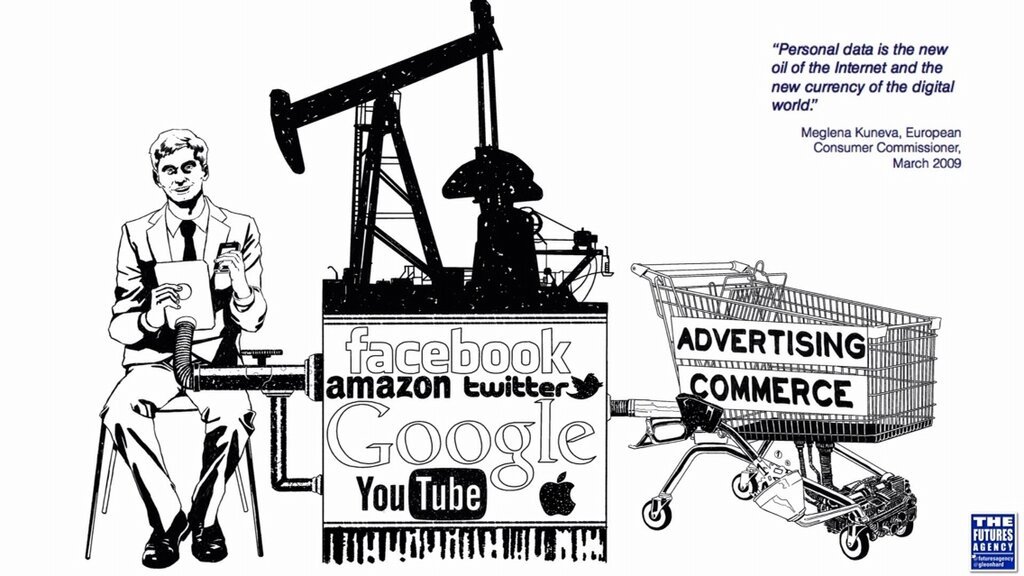
Big data: the new oil?

Categories
Quotations

2013.1.24

Social utopians like Haque, Tapscott and Jarvis are, of course, wrong. The age of networked intelligence isn’t very intelligent. The tragic truth is that getting naked, being yourself in the full public gaze of today’s digital network, doesn’t always result in the breaking down of ancient taboos. There is little evidence that networks like Facebook, Skype and Twitter are making us any more forgiving or tolerant. Indeed, if anything, these viral tools of mass exposure seem to be making society not only more prurient and voyeuristic, but also fuelling a mob culture of intolerance, schadenfreude and revengefulness.

Andrew Keen, #digitalvertigo: how today’s online social revolution is dividing, diminishing, and disorienting us