Categories
Aside Links

Standards as the Contemporary Highway System

Jonathan Zittrain, in remarks prepared a few weeks ago, framed Internet protocol standards in a novel way. Specifically, he stated:

Second, it’s entirely fitting for a government to actively subsidize public goods like a common defense, a highway system, and, throughout the Internet’s evolution, the public interest development of standards and protocols to interlink otherwise-disparate systems. These subsidies for the development of Internet protocols, often expressed as grants to individual networking researchers at universities by such organizations as the National Science Foundation, were absolutely instrumental in the coalescence of Internet standards and the leasing of wholesale commercial networks on which to test them. (They also inspired some legislators to advertise their own foresight in having facilitated such strategic funding.) Alongside other basic science research support, this was perhaps some of the best bang for the buck that the American taxpayer has received in the history of the country. Government support in the tens of millions over a course of decades resulted in a flourishing of a networked economy measured in trillions.

Zittrain’s framing of this issue builds on some writing I’ve published around standards. In the executive summary of a report I wrote a few months ago, I stated that,

… the Government of Canada could more prominently engage with standards bodies to, at least in part, guarantee that such standards have security principles baked in and enabled by default; such efforts could include allocating tax relief to corporations, as well as funding to non-governmental organizations or charities, so that Canadians and Canadian interests are more deeply embedded in standards development processes.

To date I haven’t heard of this position being adopted by the Government of Canada, or even debated in public. However, framing this as a new kind of roadway could be the kind of rhetorical framing that would help it gain traction.

Categories
Links Writing

Repurposing Apple Time Capsule as a Network Drive

(Photo by MockupEditor.com on Pexels.com)

For the past several years I’ve happily used an Apple Time Capsule as my router and one of many backup drives, but it’s been getting a big long in the tooth as the number of items on my network has grown. I recently upgraded to a new router but wanted to continue using my Time Capsule, and it’s very large drive, for LAN backups.

A post in Apple’s discussion forums helpfully kicked off how to reset the wireless settings for the Time Capsule and prepare it to just live on the network as a drive. After following those instructions, all I needed to do was:

  1. Open Time Machine Preferences on my device;
  2. Select ‘Add or Remove Backup Disk…’;
  3. Select the freshly networked disk;
  4. Choose to use the pre-existing backup image, and input the encryption password for the backup.

Voila! And now my disk–with all its data–is available on the network and capable of continuing my Time Machine backups!

Categories
Writing

The Kaseya Ransomware Attack Is a Really Big Deal

Screen Shot 2021-07-19 at 2.26.52 PM
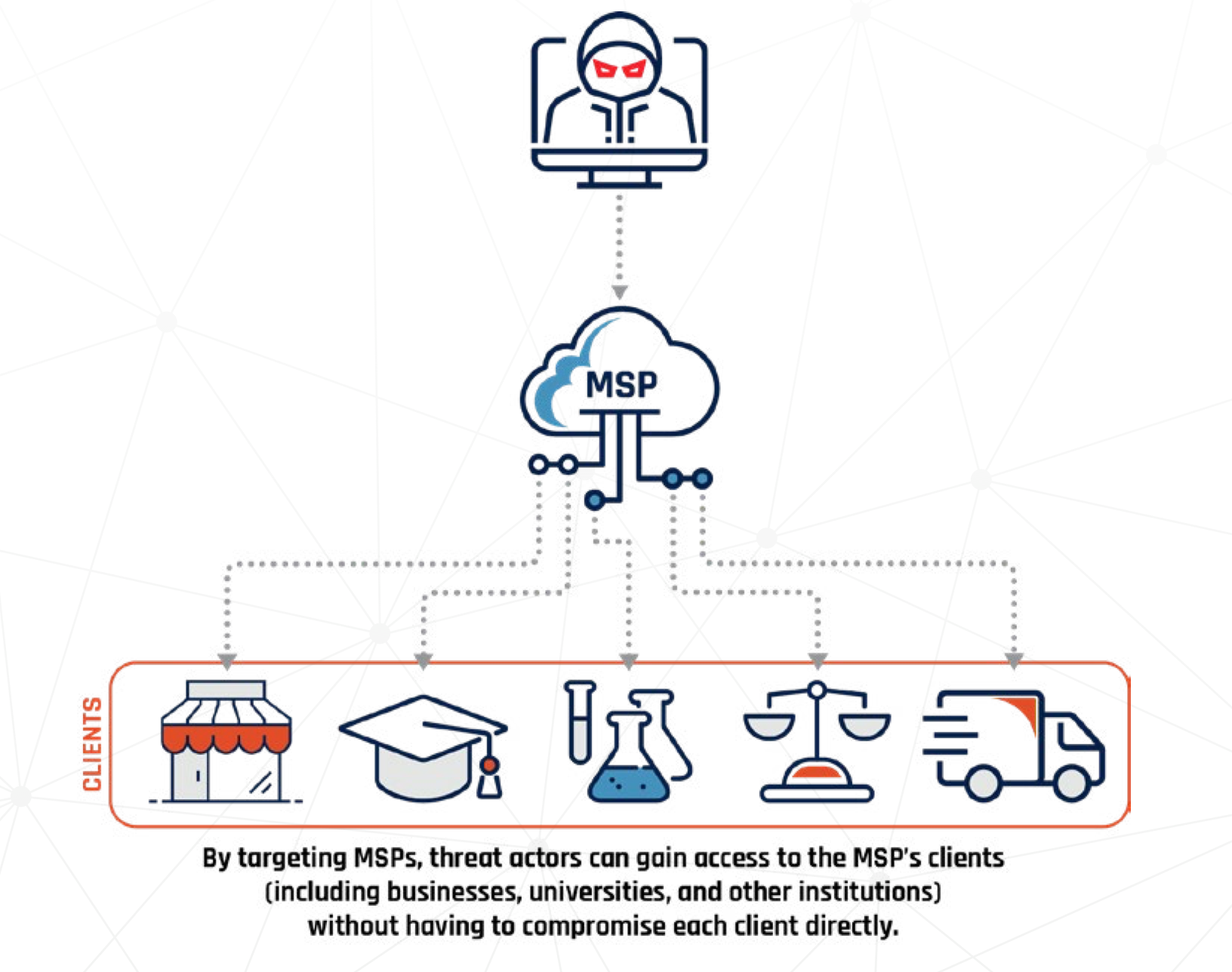
(Managed Service Provider image by the Canadian Centre for Cybersecurity)

Matt Tait, as normal, has good insights into just why the Kaseya ransomware attack1 was such a big deal:

In short, software supply chain security breaches don’t look like other categories of breaches. A lot of this comes down to the central conundrum of system security: it’s not possible to defend the edges of a system without centralization so that we can pool defensive resources. But this same centralization concentrates offensive action against a few single points of failure that, if breached, cause all of the edges to fall at once. And the more edges that central failure point controls, the more likely the collateral real-world consequences of any breach, but especially a ransomware breach will be catastrophic, and cause overwhelm the defensive cybersecurity industry’s ability to respond.

Managed Service Providers (MSPs) are becoming increasingly common targets. It’s worth noting that the Canadian Centre for Cybersecurity‘s National Cyber Threat Assessment 2020 listed ransomware as well as the exploitation of MSPs as two of the seven key threats to Canadian financial and economic health. The Centre went so far as to state that it expected,

… that over the next two years ransomware campaigns will very likely increasingly target MSPs for the purpose of targeting their clients as a means of scaling targeted ransomware campaigns.

Sadly, if not surprisingly, this assessment has been entirely correct. It remains to be seen what impact the 2020 threats assessment has, or will have, on Canadian organizations and their security postures. Based on conversations I’ve had over the past few months the results are not inspiring and the threat assessment has generally been less effective than hoped in driving change in Canada.

As discussed by Steven Bellovin, part of the broader challenge for the security community in preparing for MSP operations has been that defenders are routinely behind the times; operators modify what and who their campaigns will target and defenders are forced to scramble to catch up. He specifically, and depressingly, recognizes that, “…when it comes to target selection, the attackers have outmaneuvered defenders for almost 30 years.”

These failures are that much more noteworthy given that the United States has trumpeted for years that the NSA will ‘defend forward‘ to identify and hunt threats, and respond to them before they reach ‘American cybershores’.2 The seemingly now routine targeting of both system update mechanisms as well as vendors which provide security or operational controls for wide swathes of organizations demonstrates that things are going to get a lot worse before they’re likely to improve.

A course correction could follow from Western nations developing effective and meaningful cyber-deterrence processes that encourage nations such as Russia, China, Iran, and North Korea to punish computer operators who are behind some of the worst kinds of operations that have emerged in public view. However, this would in part require the American government (and its allies) to actually figure out how they can deter adversaries. It’s been 12 years or so, and counting, and it’s not apparent that any American administration has figured out how to implement a deterrence regime that exceeds issuing toothless threats. The same goes for most of their allies.

Absent an actual deterrence response, such as one which takes action in sovereign states that host malicious operators, Western nations have slowly joined together to issue group attributions of foreign operations. They’ve also come together to recognize certain classes of cyber operations as particularly problematic, including ransomware. Must nations build this shared capacity, first, before they can actually undertake deterrence activities? Should that be the case then it would strongly underscore the need to develop shared norms in advance of sovereign states exercising their latent capacities in cyber and other domains and lend credence to the importance of the Tallinn manual process . If, however, this capacity is built and nothing is still undertaken to deter, then what will the capacity actually be worth? While this is a fascinating scholarly exercise–it’s basically an opportunity to test competing scholarly hypotheses–it’s one that has significant real-world consequences and the danger is that once we recognize which hypothesis is correct, years of time and effort could have been wasted for little apparent gain.

What’s worse is that this even is a scholarly exercise. Given that more than a decade has passed, and that ‘cyber’ is not truly new anymore, why must hypotheses be spun instead of states having developed sufficient capacity to deter? Where are Western states’ muscles after so much time working this problem?


  1. As a point of order, when is an act of ransomware an attack versus an operation? ↩︎
  2. I just made that one up. No, I’m not proud of it. ↩︎
Categories
Writing

Vaccination, Discrimination, and Canadian Civil Liberties

Photo by Karolina Grabowska on Pexels.com

Civil liberties debates about whether individuals should have to get vaccinated against Covid-19 are on the rise. Civil liberties groups broadly worry that individuals will suffer intrusions into their privacy, or that rights of association or other rights will be unduly abridged, as businesses and employers require individuals to demonstrate proof of vaccination.

As discussed in a recent article published by the CBC, some individuals are specifically unable to, or concerned about, receiving Covid-19 vaccines on the basis that, “they’re taking immunosuppressant drugs, for example, while others have legitimate concerns about the safety and efficacy of the COVID-19 vaccines or justifiable fears borne from previous negative interactions with the health-care system.” The same expert, Arthur Schafer of the Centre for Professional and Applied Ethics at the University of Manitoba, said, “[w]e should try to accommodate people who have objections, conscientious or scientific or even religious, where we can do so without compromising public safety and without incurring a disproportionate cost to society.”

Other experts, such as Ann Cavoukian, worry that being compelled to disclose vaccination status could jeopardize individuals’ medical information should it be shared with parties who are not equipped to protect it, or who may combine it with other information to discriminate against individuals. For the Canadian Civil Liberties Association, they have taken the stance that individuals should have the freedom to choose to be vaccinated or not, that no compulsions should be applied to encourage vaccination (e.g., requiring vaccination to attend events), and broadly that, “COVID is just another risk now that we have to incorporate into our daily lives.”

In situations where individuals are unable to be vaccinated, either due to potential allergic responses or lack of availability of vaccine (e.g., those under the age of 12), then it is imperative to ensure that individuals do not face discrimination. In these situations, those affected cannot receive a vaccine and it is important to not create castes of the vaccinated and unable-to-be-vaccinated. For individuals who are hesitant due to historical negative experiences with vaccination efforts, or medical experimentation, some accommodations may also be required.

However, in the cases where vaccines are available and there are opportunities to receive said vaccine, then not getting vaccinated does constitute a choice. As it stands, today, in many Canadian schools children are required to received a set of vaccinations in order to attend school and if their parents refuse, then the children are required to use alternate educational systems (e.g., home schooling). When parents make a specific choice they are compelled to deal with the consequences of said decision. (Of course, there is not a vaccine for individuals under 12 years of age at the moment and so we shouldn’t be barring unvaccinated children from schools, but adopting such a requirement in the future might align with how schools regularly require proof of vaccination status to attend public schools.)

The ability to attend a concert, as an example, can and should be predicated on vaccination status where vaccination is an option for attendees. Similarly, if an individual refuses to be vaccinated their decision may have consequences in cases where they are required to be in-person in their workplace. There may be good reasons for why some workers decline to be vaccinated, such as a lack of paid days off and fear that losing a few days of work due to vaccination symptoms may prevent them from paying the rent or getting food; in such cases, accommodations to enable them to get vaccinated are needed. However, once such accommodations are made decisions to continue to not get vaccinated may have consequences.

In assessing whether policies are discriminatory individuals’ liberties as well as those of the broader population must be taken into account, with deliberate efforts made to ensure that group rights do not trample on the rights of minority or disenfranchised members of society. Accommodations must be made so that everyone can get vaccinated; rules cannot be established that apply equally but affect members of society in discriminatory ways. But, at the same time, the protection of rights is conditional and mitigating the spread of a particularly virulent disease that has serious health and economic effects is arguably one of those cases where protecting the community (and, by extension, those individuals who are unable to receive a vaccine for medical reasons) is of heightened importance.

Is this to say that there are no civil liberties concerns that might arise when vaccinating a population? No, obviously not.

In situations where individuals are unhoused or otherwise challenged in keeping or retaining a certification that they have been vaccinated, then it is important to build policies that do not discriminate against these classes of individuals. Similarly, if there is a concern that vaccination passes might present novel security risks that have correlate rights concerns (e.g., a digital system that links presentations of a vaccination credential with locational information) then it is important to carefully assess, critique, and re-develop systems so that they provide the minimum data required to reduce the risk of Covid-19’s spread. Also, as the population of vaccinated persons reaches certain percentages there may simply be less of a need to assess or check that someone is vaccinated. While this means that some ‘free riders’ will succeed, insofar as they will decline to be vaccinated and not suffer any direct consequences, the goal is not to punish people who refuse vaccination and instead to very strongly encourage enough people to get vaccinated so that the population as a whole is well-protected.

However, taking a position that Covid-19 is part of society and that society just has to get used to people refusing to be vaccinated while participating in ‘regular’ social life, and that this is just a cost of enjoying civil liberties, seems like a bad argument and a poor framing of the issue. Making this kind of broader argument risks pushing the majority of Canadians towards discounting all reasons that individuals may present to justify or explain not getting vaccinated, with the effect of inhibiting civil society from getting the public on board to protect the rights of those who would be harmfully affected by mandatory vaccination policies or demands that individuals always carry vaccine passport documents.

Those who have made a choice to opt-out of vaccination may experience resulting social costs, but those who cannot opt to get a vaccine in the first place or who have proven good reasons for avoiding vaccination shouldn’t be unduly disadvantaged. That’s the line in the sand to hold and defend, not that protecting civil liberties means that there should be no cost for voluntarily opting out of life saving vaccination programs.

Categories
Links Writing

Does Canada, Really, Need A Foreign Intelligence Service?

A group of former senior Canadian government officials who have been heavily involved in the intelligence community recently penned an op-ed that raised the question of “does Canada need a foreign intelligence service?” It’s a curious piece, insofar as it argues that Canada does need such a service while simultaneously discounting some of the past debates about whether this kind of a service should be established, as well as giving short shrift to Canada’s existing collection capacities that are little spoken about. They also fundamentally fail to take up what is probably the most serious issue currently plaguing Canada’s intelligence community, which is the inability to identify, hire, and retain qualified staff in existing agencies that have intelligence collection and analysis responsibilities.

The Argument

The authors’ argument proceeds in a few pieces. First, it argues that Canadian decision makers don’t really possess an intelligence mindset insofar as they’re not primed to want or feel the need to use foreign intelligence collected from human sources. Second, they argue that the Canadian Security Intelligence Service (CSIS) really does already possess a limited foreign intelligence mandate (and, thus, that the Government of Canada would only be enhancing pre-existing powers instead of create new powers from nothing). Third, and the meat of the article, they suggest that Canada probably does want an agency that collects foreign intelligence using human sources to support other members of the intelligence community (e.g., the Communications Security Establishment) and likely that such powers could just be injected into CSIS itself. The article concludes with the position that Canada’s allies “have quietly grumbled from time to time that Canada is not pulling its weight” and that we can’t prioritize our own collection needs when we’re being given intelligence from our close allies per agreements we’ve established with them. This last part of the argument has a nationalistic bent to it: implicitly they’re asking whether we can really trust even our allies and closest friends? Don’t we need to create a capacity and determine where such an agency and its tasking should focus on, perhaps starting small but with the intent of it getting larger?

Past Debates and Existing Authorities

The argument as positioned fails to clearly make the case for why these expanded authorities are required and simultaneously does not account for the existing powers associated with the CSE, the Canadian military, and Global Affairs Canada.

With regards to the former, the authors state, “the arguments for and against the establishment of a new agency have never really been examined; they have only been cursorily debated from time to time within the government by different agencies, usually arguing on the basis of their own interests.” In making this argument they depend on people not remembering their history. The creation of CSIS saw a significant debate about whether to include foreign human intelligence elements and the decision by Parliamentarians–not just the executive–was to not include these elements. The question of whether to enable CSIS or another agency to collect foreign human intelligence cropped up, again, in the late 1990s and early 2000, and again around 2006-2008 or so when the Harper government proposed setting up this kind of an agency and then declined to do so. To some extent, the authors’ op-ed is keeping with the tradition of this question arising every decade or so before being quietly set to the side.

In terms of agencies’ existing authorities and capacities, the CSE is responsible for conducting signals intelligence for the Canadian government and is tasked to focus on particular kinds of information per priorities that are established by the government. Per its authorizing legislation, the CSE can also undertake certain kinds of covert operations, the details of which have been kept firmly under wraps. The Canadian military has been aggressively building up its intelligence capacities with few details leaking out, and its ability to undertake foreign intelligence using human sources as unclear as the breadth of its mandate more generally.1 Finally, GAC has long collected information abroad. While their activities are divergent from the CIA or MI6–officials at GAC aren’t planning assassinations, as an example–they do collect foreign intelligence and share it back with the rest of the Government of Canada. Further, in their increasingly distant past they stepped in for the CIA in environments the Agency was prevented from operating within, such as in Cuba.

All of this is to say that Canada periodically goes through these debates of whether it should stand up a foreign intelligence service akin to the CIA or MI6. But the benefits of such a service are often unclear, the costs prohibitive, and the actual debates about what Canada already does left by the wayside. Before anyone seriously thinks about establishing a new service, they’d be well advised to read through Carvin’s, Juneau’s, and Forcese’s book Top Secret Canada. After doing so, readers will appreciate that staffing is already a core problem facing the Canadian intelligence community and recognize that creating yet another agency will only worsen this problem. Indeed, before focusing on creating new agencies the authors of the Globe and Mail op-ed might turn their minds to how to overcome the existing staffing problems. Solving that problem might enable agencies to best use their existing authorizing legislation and mandates to get much of the human foreign intelligence that the authors are so concerned about collecting. Maybe that op-ed could be titled, “Does Canada’s Intelligence Community Really Have a Staffing Problem?”


  1. As an example of the questionable breadth of the Canadian military’s intelligence function, when the military was tasked with assisting long-term care home during the height of the Covid-19 pandemic in Canada, they undertook surveillance of domestic activism organizations for unclear reasons and subsequently shared the end-products with the Ontario government. ↩︎
Categories
Aside Links Photography

2021.6.7

Not going to lie: the most useful feature for me, personally, that has been announced at WWDC this year (thus far…) is that the Photos app will now display full EXIF data. I really want Apple to enable advanced search in Photos so I can then sort based on EXIF information, to filter by camera/device and by lens.

Categories
Links Writing

Which States Most Require ‘Democratic Support’?

Roland Paris and Jennifer Walsh have an excellent, and thought-provoking, column in the Globe and Mail where they argue that Western democracies need to adopt a ‘democratic support’ agenda. Such an agenda has multiple points comprising:

  1. States getting their own democratic houses in order;
  2. States defending themselves and other democracies against authoritarian states’ attempts to disrupt democracies or coerce residents of democracies;
  3. States assisting other democracies which are at risk of slipping toward authoritarianism.

In principle, each of these points make sense and can interoperate with one another. The vision is not to inject democracy into states but, instead, to protect existing systems and demonstrate their utility as a way of weaning nations towards adopting and establishing democratic institutions. The authors also assert that countries like Canada should learn from non-Western democracies, such as Korea or Taiwan, to appreciate how they have maintained their institutions in the face of the pandemic as a way to showcase how ‘peer nations’ also implement democratic norms and principles.

While I agree with the positions the authors suggest, far towards the end of the article they delicately slip in what is the biggest challenge to any such agenda. Namely, they write:

Time is short for Canada to articulate its vision for democracy support. The countdown to the 2024 U.S. presidential election is already under way, and no one can predict its outcome. Meanwhile, two of Canada’s closest democratic partners in Europe, Germany and France, may soon turn inward, preoccupied by pivotal national elections that will feature their own brands of populist politics.1

In warning that the United States may be an unreliable promoter of democracy (and, by extension, human rights and international rules and order which have backstopped Western-dominated world governance for the past 50 years) the authors reveal the real threat. What does it mean when the United States is regarded as likely to become more deeply mired in internecine ideological conflicts that absorbs its own attention, limits its productive global engagements, and is used by competitor and authoritarian nations to warn of the consequences of “American-style” democracy?

I raise these questions because if the authors’ concerns are fair (and I think they are) then any democracy support agenda may need to proceed with the presumption that the USA may be a wavering or episodic partner in associated activities. To some extent, assuming this position would speak more broadly to a recognition that the great power has significantly fallen. To even take this as possible–to the extent that contingency planning is needed to address potential episodic American commitment to the agenda of buttressing democracies–should make clear that the American wavering is the key issue: in a world where the USA is regarded as unreliable, what does this mean for other democracies and how they support fellow democratic states? Do countries, such as Canada and others with high rule-of-law democratic governments, focus first and foremost on ‘supporting’ US democracy? And, if so, what does this entail? How do you support a flailing and (arguably) failing global hegemon?

I don’t pretend to have the answers. But it seems that when we talk about supporting democracies, and can’t rely on the USA to show up in five years, then the metaphorical fire isn’t approaching our house but a chunk of the house is on fire. And that has to absolutely be our first concern: can we put out the fire and save the house, or do we need to retreat with our children and most precious objects and relocate? And, if we must retreat…to where do we retreat?


  1. Emphasis not in original. ↩︎
Categories
Links Writing

Building a Strategic Vision to Combat Cybercrime

The Financial Times has a good piece examining the how insurance companies are beginning to recalculate how they assess insurance premiums that are used to cover ransomware payments. In addition to raising fees (and, in some cases, deciding whether to drop insuring against ransomware) some insurers like AIG are adopting stronger underwriting, including:

… an additional 25 detailed questions on clients’ security measures. “If [clients] have very, very low controls, then we may not write coverage at all,” Tracie Grella, AIG’s global head of cyber insurance, told the Financial Times.

To be sure, there is an ongoing, and chronic, challenge of getting companies to adopt baseline security postures, inclusive of running moderately up-to-date software, adopting multi-factor authorization, employing encryption at rest, and more. In the Canadian context this is made that much harder because the majority of Canadian businesses are small and mid-sized; they don’t have an IT team that can necessarily maintain or improve on their organization’s increasingly complicated security posture.

In the case of larger mid-sized, or just large, companies the activities of insurers like AIG could force them to modify their security practices for the better. Insurance is generally regarded as cheaper than security and so seeing the insurance companies demand better security to receive insurance is a way of incentivizing organizational change. Further change can be incentivized by government adopting policies such as requiring a particular security posture in order to bid on, or receive, government contracts. This governmental incentivization doesn’t necessarily encourage change for small organizations that already find it challenging to contract with government due to the level of bureaucracy involved. For other organizations, however, it will mean that to obtain/maintain government contracts they’ll need to focus on getting the basics right. Again, this is about aligning incentives such that organizations see value in changing their operational policies and postures to close off at least some security vulnerabilities. There may be trickle down effects to these measures, as well, insofar as even small-sized companies may adopt better security postures based on actionable guidance that is made available to the smaller companies responsible for supplying those middle and larger-sized organizations, which do have to abide by insurers’ or governments’ requirements.1

While the aforementioned incentives might improve the cybersecurity stance of some organizations the key driver of ransomware and other criminal activities online is its sheer profitability. The economics of cybercrime have been explored in some depth over the past 20 years or so, and there are a number of conclusions that have been reached that include focusing efforts on actually convicting cybercriminals (this is admittedly hard where countries like Russia and former-Soviet Republic states indemnify criminals that do not target CIS-region organizations or governments) to selectively targeting payment processors or other intermediaries that make it possible to derive revenues from the criminal activities.

Clearly it’s not possible to prevent all cybercrime, nor is it possible to do all things at once: we can’t simultaneously incentivize organizations to adopt better security practices, encourage changes to insurance schemas, and find and address weak links in cybercrime monetization systems with the snap of a finger. However, each of the aforementioned pieces can be done with a strategic vision of enhancing defenders’ postures while impeding the economic incentives that drive online criminal activities. Such a vision is ostensibly shared by a very large number of countries around the world. Consequently, in theory, this kind of strategic vision is one that states can cooperate on across borders and, in the process, build up or strengthen alliances focused on addressing challenging international issues pertaining to finance, crime, and cybersecurity. Surely that’s a vision worth supporting and actively working towards.


  1. To encourage small suppliers to adopt better security practices when they are working with larger organizations that have security requirements placed on them, governments might set aside funds to assist the mid-sized and large-sized vendors to secure down the supply chain and thus relieve small businesses of these costs. ↩︎
Categories
Photo Essay Photography Writing

A Place That Grew

Toronto is home to Ontario Place, which was once a park that had splash pads, rides, a Legoland, and more. It was opened in 1971 and hugs Lake Ontario. It was closed in 2012 for redevelopment and, since then, has largely languished as successive governments have suggested ideas but none have come to fruition. Ontario’s official motto is “A Place to Grow”, and by extension Ontario Place itself is a place that has since grown up and is now slowly wasting away due to government neglect.

It’s also one of my favourite places in the city to visit and photograph, and especially during the pandemic when it has been relatively quiet and free of people. It’s both a very calming location and one that has very interesting buildings and urban ruins to photograph.

(Highway Views by Christopher Parsons)
(Modes of Locomotion by Christopher Parsons)

It’s getting warmer in Toronto which means that people are inclined to be outdoors; there are more cyclists and skateboarders in Toronto than I think ever before, and they’re all using the paths that are typically used predominantly by people who are walking or jogging.

(Unity Run by Christopher Parsons)
(Light Rails BW by Christopher Parsons)

Each year, I’ve managed to find or access or photograph a new part of the park that’s succumbed to lack of upkeep, and this year is no exception. An enterprising soul laid down some boards to cross over into part of the flume ride which meant I could see it for the first time! I suspect that it’ll only be a matter of time until a provincial government finally gets its way and tears down these ruins.

(Towards the Apex by Christopher Parsons)
(Down We Go by Christopher Parsons)
(Flume(ing) Graffiti by Christopher Parsons)
(Landlocked by Christopher Parsons)

I’m sure that more and more people will be using the park this year it’s limited attractions, and especially as more Torontonians get vaccinated. While I’ll miss feeling like the park is my own, it’ll be terrific to have another part of the city return to normality.

(Goodbye! by Christopher Parsons)

(All photos shot using an iPhone 12 Pro and Fuji x100f, and edited using my presets in Darkroom.)

Categories
Aside Links

2021.5.20

After many months of hope and anticipation, I’m looking forward to finally ditching the (cruddy and privacy intrusive) OS that is built into my TV and enjoying my new Apple TV 4K (Gen 2)! I admit to being disappointed Apple hasn’t transformed the Apple TV into a ‘true’ gaming device, but c’est la vie.

Now the wait begins for the a new Apple Watch