It’s incredibly dispiriting to know that despite my financial responsibility there is almost no chance that I’ll ever own property in the city I live in, and a possibility that at some point rent alone will force me out. I cannot imagine what life is like for those who have less privilege than I enjoy.
Author: Christopher Parsons
Policy wonk. Torontonian. Photographer. Not necessarily in that order.
This is a really cool deep dive into tracking down the target of a spy satellite photo https://luxexumbra.blogspot.ca/2018/04/the-hunt-for-ghosthunter.html
Categories
The Cure For Pessimism? Action
GQ has a good interview with Yvon Chouinard, the founder of Patagonia. It’s far-ranging, covering the company’s attitude to making clothing, to climate change, to politics. But what really struck me was this:
Gradually, the conversation went even darker. About Trump, Chouinard added, “It’s like a kid who’s so frustrated he wants to break everything. That’s what we’ve got.” I asked sarcastically if any part of him was an optimist. Marcario, sitting next to him, laughed loudly. “Did you just ask Yvon if he’s an optimist?” Chouinard smiled and cocked his head. “I’m totally a pessimist. But you know, I’m a happy person. Because the cure for depression is action.”
I would note that I think action is the cure for pessimism, as opposed to depression; one is a state of mindset whereas the other is often a serious mental condition that can require professional assistance. But that nitpick aside, I think he’s correct that you press through pessimism by acting to make the world a little bit better every day than how you started it.
This is an exceptionally direct and poignant talk about what’s at stake with regards to algorithmic discrimination and how big data can fuel it, as well as what needs to be done to remediate such discrimination and unfairness.

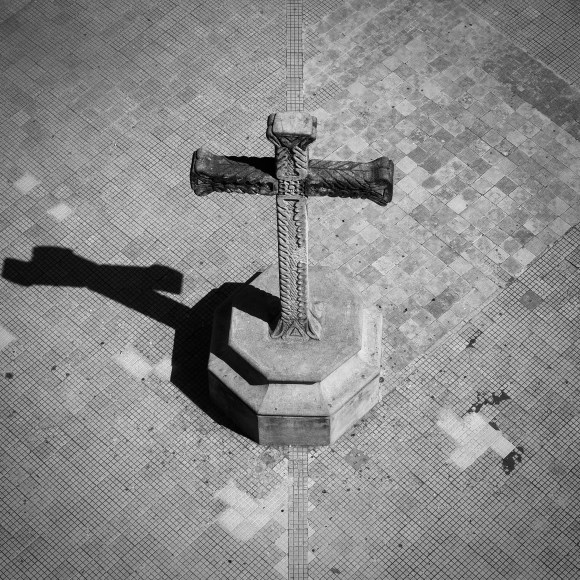
Photographing something that captures the situation you’re in emotionally and in life, while reflecting something about wherever you are in space, can be a deeply revelatory experience. When I try to take such shots I’m often alone with just some music or podcast and a camera, and exploring areas that are sometimes brand new and other times are well tread shooting grounds. Sometimes I want to get a particular ‘feeling’ — one that, only afterwards, I tend to realize reflects where I was emotionally at the time — and other times I want to deliberately try to shoot for a certain kind of colour, shadow, or pattern. Quite often, it’s only after looking at photos taken during the session that I realize that a certain kind of emotion was really behind my shooting choices.
If I’m being honest, the experiential nature of photography really only hits me as I look through my photos, after taking them, after processing them, and after I set them to display through my TV (my ‘best of’ photos are my Apple TV’s screensaver). I need to see them, repeatedly, in order to appreciate what is in them. Sometimes it’s months before I really realize what was really going on in a given photo. Sometimes, even years later, I may know that particular shots are important to how I was at the time but still can’t quite describe why I know this to be the case. I can (at least somewhat) deconstruct the technical elements of the photos but can’t necessarily also identify the meaning of the photo I took.
At the same time, there are times when society asserts that I “should” want to hunt for photos, but I’m disinterested in doing so because I don’t want to try and capture the emotional or physical space I’m in, in the amber that is a photograph. Sometimes I want to ride out experiences; rather than hold onto them in perfect perpetuity, I want to leave them in the malleable space of human memory with the knowledge that how I remember the past will inevitably change over time as the temporal distance between my current existence and that memory grows and extends. Sometimes I want to experience to grow and contract, through and with me, instead of act as a defined anchor to a given time or place.
It’s that difference — between choosing to hold times in the amber of a photo versus storing it purely in the mind — that I’ve been mulling in my mind for the past little while. Some of the photos I have manage to capture times that are joyous, others melancholy, others full of light and joy, and yet others alienation and loneliness. And I tend to tightly hold onto the meaning of the photographs I’ve taken: I don’t go out of my way to explain my photography to anyone else, nor do I think it’s something that I need to do. Shutter therapy is just that: a kind of physical and intellectual therapy. But there are specific moments that I deliberately keep separate from my camera, and they’re often times wherein people are most likely to entrap time in amber, such as vacation or celebration. But I’ve found myself less and less excited to engage in such photography over the past several months.
I’m not entirely certain why: perhaps the weather has just been so miserable that it’s had an impact on my motivations to shoot. But equally possible it’s because something is changing in how I approach photography itself, at least right now: I don’t want as many amber memories, and instead want to enjoy the development and unfolding of certain memories, and feel more comfortable in the knowledge that the ‘final’ memories I’ll have will be even more subjective than those associated with photographs. Some will even vanish in their entirety. I don’t know why this is my current state of mind but, regardless, it’s an interesting intellectual moment that is prompting reflection on my photography, what drives it, and the relationship between amber memory and living memory.
Notable Quotation
“If you can change one thing about yourself then please be kinder and change how you end things because it matters way more than how you begin them.”
– Sartaj Anand
New Apps and Great App Updates from this Week
- iOS 11.3 dropped last week and for the entire time I’ve been testing the Notes application pretty regularly to see if it’s stopped freezing, crashing, and otherwise not working properly. It seems to be working once more, which is a huge relief as huge portions of my life are locked up in the application. Not sure what was broken, or how it got fixed, but I’m pretty happy to discover that things are working once more!
Great Photography Shots
Many of the winning shots for the Smithsonian’s 15th Annual photo contest are just spectacular.

© Tran Tuan Viet. All rights reserved

© Adam Żądło. All rights reserved.

© Oreon Strusinski. All rights reserved.
Music I’m Digging
Neat Podcast Episodes
Good Reads for the Week
- What smartphone photography is doing to our memories
- How Do You Unlearn Your Parents’ Fucked Up Money Habits?
- Why Does Dating Men Make Me Feel Like Shit?
- Like-Minded Versus Like-Hearted
- Why the crypto-backdoor side is morally corrupt
- Silent Majority: Is the Hill just paying lip service to the idea of sexual accountability?
- This is what Alexa looks like – according to some people on the internet
Cool Things
John Gruber is ripping into the Wall Street Journal for their reporting on Apple Pay. Specifically, he complains that the Journal didn’t explain how to remove an alert that is meant to encourage people to set up Apple Pay, agrees that Apple has done a bad job explaining how Apple Pay is more secure than using an actual credit card, and mocks an analyst’s comparison to Apple Pay to Microsoft’s antitrust cases in the 1990s and early 2000s.
I agree with a lot of what John wrote but, at the same time, think that it’s all too easy to dismiss complaints about Apple Pay. I work amongst an incredibly technical group of colleagues. Many of us have iPhones. But I’m the only person who uses Apple Pay with any regularity…and I’ve run into issues time after time. Let me list some of the problems I’ve experienced:
- I tried to return an item I bought using Apple Pay (linked to my credit card). But when I returned it the credit card number displayed on the receipt was different from that on my credit card…so the retailer refused to take the return.1 It was only after I undertook some independent research that I figured out how to pull up the temporarily assigned number in Apple Pay and, then, additional time to educate the frontline staff, the manager, and then wait for the manager to call central office to confirm they could process the return. Time to return a product to a store that was down the street from me? About 3-4 hours split over 2 days. I wouldn’t have the same issue if I’d just bought the item with my physical credit card.2
- Apple Pay doesn’t work as reliably with tap-enabled Point of Sale machines. I’d say that I have about an 85-90% ’hit’ rate with Apple Pay versus using the tap feature of my credit card. That makes Apple Pay less convenient than a tap-enabled credit card or debit card.
- Various Point of Sale machines have disabled tap and force me to use one of my chip/PIN cards. This is typically done in restaurants or retail locations where either they can’t afford to fix their Point of Sale machine or refuse to pay to enable the feature (or simply haven’t upgraded their machines to accept tap payments). So I have to carry my regular credit card and debit card with me, wherever I go, on the basis that I can’t trust that I can use Apple Pay at any given location.
- Sometimes Apple Pay just doesn’t work. I have no idea what the problem is but there are times where I just have to remove the cards and re-add them to Apple Pay. I don’t know why this takes place but it happens at least once a year. And I find out about it when I’m trying to pay for something. I don’t have this problem with my credit card.3
Do I like Apple Pay? I do, actually, and I use it a lot. But I’m willing to deal with the above teething issues as an early adopter. Security is fine and good, but for the majority of people usability is the most important component of using a product. And Apple Pay remains, in my eyes, only mostly-usable. It needs to be a lot more reliable before it is adopted by the mainstream.
- I know: this is a security feature (one I love!) but it’s a feature that’s been introduced without an equally clear explanation of how to find the temporarily used number. This education needs to happen at both the end-user and retailer level. ↩
- And I have no clue what you’d do if you lost your phone or it was stolen between the time of purchasing an item with Apple Pay and wanting to return it. ↩
- To be fair, I have to replace my debit card (rarely used either as the card or in Apple Pay) approximately every six months because it just stops working. But this hasn’t ever happened with my credit card, which is my primary way of paying for everything. ↩
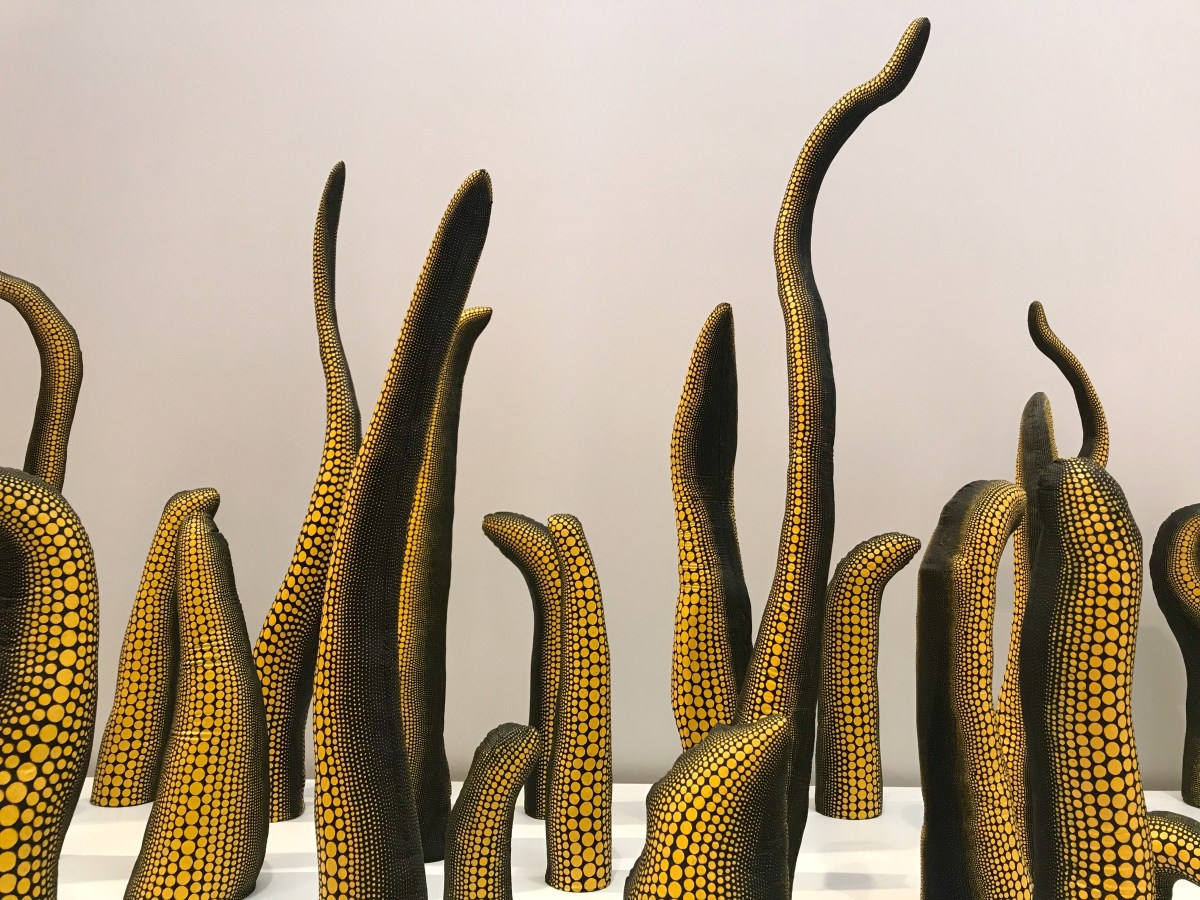

This has been a particularly grey week — the weather has been mostly overcast and slightly rainy — and it’s had all the hallmark effects on my mood and attitude as it did when I lived on the west coast of Canada. With hindsight, I can see that some of the depressive funks I fell into while doing my PhD were the result of the weather, combined with diet and work/life imbalance. And when I was on the west coast, I discovered that getting in some significant amount of walking each day was what it took to fight through those funks.
Cue this week, and the solution has been getting into an exercise room and just doing work I didn’t really want to do, but which I intellectually knew would improve my perspective on life as soon as I was done my circuit. Unsurprisingly, each day that I dragged myself to exercise helped to improve my next day. In the UK, this has been taken a step further, and persons who are experiencing seasonal affective disorder, anti-social behaviour, or other mental health challenges are being prescribed exercise, socialization, and related activities that are meant to naturally modify the chemistry of their bodies and brains. No pills or drugs required.
It strikes me that such prescriptions could have a range of positive outcomes. First and foremost, for those who ‘fill’ the scripts, they might derive relief from the symptoms affecting them. That’s a clear win. But, second, it would have the effect of pushing people who might avoid certain kinds of physical activity to be there, with others, and realize that the portrayals of ‘fit’ or ‘active’ people in the movies and television tend to be drastically out of step with reality. I know that in my own case, I had this idealized idea of what people looked like when they exercised, how hard they worked, and so forth. But by going and exercising I’ve improved upon my own sense of my body by, first, doing some exercise but, second, seeing that the persons who are exercising look an awful lot like me.
In other words, developing a pretty regular exercise routine has had the dual effect of improving my mental health by just pushing my body, as well as improving my sense of bodily self-worth by destigmatizing my (pretty normal) body. I imagine that were more and more people gently pushed to get into workout rooms, running groups, or other socialized exercise spaced they, too, would experience that similarly destigmatizing experience.
New Apps and Great App Updates from this Week
- iOS 11.3 was released! Here’s hoping it fixes lots of the lingering issues in iOS 11, such as problems with Apple Notes freezing and crashing!
Great Photography Shots
Unsurprisingly, I was crazy impressed by several of the images which were submitted to, and won at, the 2018 Sony World Photography Awards.



Music I’m Digging
Neat Podcast Episodes
Good Reads for the Week
- A Game of Tag That’s Been Going On for 20+ Years
- Your Slow, Fat Marathon
- The Shut-In Economy
- Photographing These Abandoned Space Shuttles Made Me a Russian Target
- After Decades in Prison, Women Pose for Portraits in their Bedrooms
- With Musical Cryptography, Composers Can Hide Messages in Their Melodies
Cool Things
- I love the Fields Notes Coastal Editions!
The only thing I want in today’s iOS release is for Apple Notes to not hang and freeze constantly. It was only with iOS 11.2 that I started running into issues so I’m hopeful they’ll have fixed whatever went wrong last update.
I really wish that I could justify buying the new 9.7” iPad that supports the Apple Pencil. I’m entirely fine with needing a bluetooth keyboard — I’ve found Logitech’s Keys-To-Go Ultra-Portable Bluetooth Keyboard is pretty great — but really wish that I could benefit from the pencil input. But there’s no way that buying an iPad one year later makes any real sense. Maybe in a few years!
Categories
Our Innocence Has Been Taken
My friend was shot four times. Our prom dates became pallbearers. Our friends were murdered in front of us and our innocence has been take.
Student from Marjory Stoneman Douglas high school
 Excited Pixels