Categories
Links Writing

VW Leaks Geolocation Data

Contemporary devices collect vast sums of personal and sensitive information, and usually for legitimate purposes. However this means that there are an ever growing number of market participants that need to carefully safeguard the data they are collecting, using, retaining, or disclosing.

One of Volkswagen’s software development subsidiaries, Cariad, reportedly failed to adequately secure software installed in VW, Audi, Seat, and Skoda vehicles:

The sensitive information was left exposed on an unprotected and misconfigured Amazon cloud storage system for months – the problem has now been patched.

In some 466,000 of the 800,000 vehicles involved, location data was extremely precise so that anyone could track the driver’s daily routine. Spiegel reported that the list of owners includes German politicians, entrepreneurs, the entire EV fleet driven by Hamburg police, and even suspected intelligence service employees – so while nothing happened, it seriously could have been a lot worse.

This is a case where no clear harm has been detected. But it speaks more broadly of the continuing need for organizations to know what sensitive information they are collecting, the purposes of the collection, and need to establish adequate controls to protect collected and retained data.

Categories
Links Photography

Best Photography-Related Stuff of 2024

It’s the time of year for people’s best-of roundups. Like last year I wanted to recognize stuff that meant a lot to my photography through 2024. And, this year, I’ve also added a short list of hopes for stuff in 2025!


Photography Stuff I Used

Yonge & Dundas, Toronto, 2024

Best Technology of 2024

The big change this year? I pretty well completely pivoted to my Leica Q2 and with only rare exceptions did I use the Ricoh GR IIIx or my iPhone 14 Pro. When I bought the Q2 it was, in part, to be able to capture images at night where there was little light. I’ve made images under these conditions that I’m happy with and I’ve come to learn how to better use the 28mm focal range. At this point I’ve created well over ten thousand frames over the year.1

I upgraded to the 11” iPad Pro (2024) and definitely appreciate how light the device is, and how vibrant the screen is. I continue to use an iPad Mini for most of my actual reading but write a lot of blog posts on the iPad Pro and do all my photo editing on it.

When I take my photowalks I’m always listening to a podcast or music on my AirPod Pros. However I’ve long had an issue with finding tips that best fit my ears; the ones in the box always slip out. I recently learned about, and bought, the SpinFit CP1025 (S/SS) and they’ve been game changing. I get a perfect fit and the AirPods stay in my ears. Highly recommend them!

Best Services I Paid For

I continue to post images to Glass each day. I’m still disappointed with their AI search, and especially disappointed that landscape viewing on the iPad has now been broken for about a year.2 Still, it’s a terrific community and a good place to post images regularly.

Apple One is key to my data management strategy. I’m still under the 2TB that is provided as part of the subscription though, with my current data use, I suspect that in 3-5 years I’ll need to expand that 2TB storage limit.

Lastly, while I’ve watched less photography YouTube I continue to appreciate YouTube Premium. It’s still about the most regularly used subscription service that I use on a regular basis.

Best Apps

Have I changed the apps that I rely on regularly since 2023?

Nope.

And so my best apps of 2024 include:

  • Glass: I use to share my images on a daily basis.
  • Geotags Photos Pro and Geotags Photo Tagger: I use to add geotags to my images.
  • Reeder Classic: To follow various photography blogs.
  • Apple Podcasts app: I use this to listen to photography podcasts while on my weekly photowalks.
  • Apple News: To read photography magazines and websites that otherwise would be paywalled.
  • Apple Photos: Used to edit and store all my images. I don’t love the iOS version of the application but it is what it is.

Stuff I Made

College & Clinton, Toronto, 2024

Writing

  • Sharing Photographs, and Photography, with Others and Growing as a Photographer: Despite being pretty used to being in the public eye as a result of my day job it’s different to expose myself when sharing the images that I make. Those images, if read carefully, reveal some elements of myself that I showcase less often, and this is made even revelatory when producing and sharing physical items to people I respect or submitting digital images to competitions. Just talking about that experience was liberating and reaffirmed that I am, slowly, growing as a photographer.
  • Accidentally Discovered Street Photos: Imagine my surprise when, after opening my used copy of Conversations: With Contemporary Photographers a strip of exposed Kodak 100TX film fell out! I used a free app to enlarge some of the images and while my efforts weren’t spectacular it did result in seeing — and sharing — some images from an earlier time.
  • 10 Tips for Starting to Photograph on the Street: I regularly read and view content that is meant to help new photographers get comfortable on the streets. Much of that content is good but is directed towards a certain kind of concern, and way of behaving, on the streets (e.g., Zone focus! Shoot from the hip! Be invisible!). I think that my 10 tips are for people like me who are interested in making street photos but are shy about even being seeing with a camera. Really, this is a blog written for myself which, if I’d read it 10 years ago, would have given me a clearer sense of what I could do to develop my confidence and skills.
  • Nuit Blanche, 2024: I’ve been attending Nuit Blanche in Toronto, an annual art festival that runs for a single day from sundown to sunup, for many years. I always make photographs during it but, at the same time, have been challenged by using a smaller APS-C sensor camera. I was both pleased in the art that I experienced this year as well as the ability of the Leica Q2 to capture images more like how I wanted them due to its lens and sensor size.

Stuff I Read

Oxford & Augusta, Toronto, 2024

Best Photography Books and Magazines

  • Metropolis: I’ve followed Alan’s work for years and appreciate how stark his imagery is and his absolute attention to form. His images carefully consider what is absolutely needed to communicate his vision and no more.
  • Conversations: With Contemporary Photographers: This was probably the most important book about photography that I read this year. I’m, personally, interested in thinking more deeply about the ontology of photography and what it is and is not. The photographers interviewed in the book provided a range of interpretations of what photography is, and means, for each of them, and I benefitted tremendously from their thoughts on the medium as one which controls time and, also, the role of time in their own creative activities.
  • Framelines: The team behind Framelines improve the magazine with every issue. From enhancements to the printing, imagery, interviews and just shipping, this is an instant purchase each time they come out with new issues. I particularly appreciate how they celebrate new and emerging photographers from around the world and platform those who, otherwise, I’d be entirely unaware of.
  • André Kertész: Sixty Years of Photography: This book is a gift to photographers and the image-viewing public more broadly. Published back in 1978 it catalogues Kertéz’s photographic history. It is when we look at images like this that it is apparent how much you can do with black and white images that are focused on the forms across a frame, and also how having decades of images enable a playfulness between pages so that works from different decades can speak to one another and create a perception of continuity across time and space. If you are committed to street images, black and white images, or just seeing how history unfolded over sixty years, then this book is a must see.
  • The Pleasure of Seeing: Conversations with Joel Meyerowitz on sixty years in the life of photography: Joel is, of course, a (still living) legend and has a number of different monographs under his name. This book is a little different because it explores his thought process across the different phases or eras of his photography. Now, if you’ve actively listened to his talks, interviews, podcasts, and so forth over the past decades many of the messages he communicates will be familiar. But to have them all in one place, along with his images that underscore his creative vision, is a real gift to photographers.

Stuff I Watched

Great Lakes Waterfront Trail, Toronto, 2024

Best Movies

  • Lee: This was an engrossing and highly cinematic movie. I liked how it conveyed the experiences that female photographers and journalists experienced during the time period and, also, communicated the toughness of Lee Miller and the harmful effects of being a war photographer more generally.
  • Harry Benson: Shoot First: I thought this was a terrific documentary of Benson who has made a living capturing images of celebrities. The images are profound but, also, you walk away with a sense that he lacks much empathy for his subjects. The inclusion of those who love his work, and those who hate it, helps to communicate what a controversial figure Benson has been throughout his life and career.

Best YouTube Channels

  • Paulie B: Almost certainly one of the most important American street photography channels, Paulie B has done a masterful job interviewing a range of photographers across the United States to understand what drives and inspires them. His episodes showcase photographers who may not be widely known, unpacks the creative processes of those he interviews, and also lets other street photographers really see how others work the streets. We’ve all heard about how the greats of the 1960s and 1970s worked; Paulie B is showing us how our American contemporaries move, think, and behave.
  • James Popsys: James is a quiet and almost introspective photographer, which are not necessarily the traits that lend themselves well to YouTube. However, his thoughtful meditations on how and why he makes images, combined with the sheer beauty of his work, results in each video containing a gem that is worth treasuring.
  • Photographic Eye: Some channels on YouTube focus on gear or technical methods of getting certain kinds of images. The Photographic Eye is not that. Instead, Alex Kilbee explains the intellectual processes of photography and speaks as a kind mentor or peer who is, also, working through his photography. I particularly like how he shares some of his own images so that viewers can appreciate the variety and intentionality behind image making.
  • The Art of Photography: Ted Forbes has been running his channel for over sixteen years at this point and made videos on just about everything that you’d ever want to know about. I find his historical episodes that break down, and showcase, the great photographers as essential to my own photographic education. And his episodes that showcase viewers’ own projects have led me to finding a range of photographers and purchasing work from them.3

Stuff I Subscribed To

Richmond & Spadina, Toronto, 2024

Best Podcasts

  • The Photowalk: I’ve been a supporter of the Photowalk for several years and it’s a regular joy and pleasure to hear Neale and his guests talk about the broader experiences of making images. The discussions rarely touch on gear and, instead, are centred around the ‘why’ of image making. Whenever I’m out on a weekly photo walk, I’m listening to Neale and recommend that you do the same.
  • Frames Photography Podcast: Frames features photographers from across the different photographic genres. Many of the discussions are insightful for understanding what is behind different photographers’ creative processes, what motivates their projects, and how they work to express themselves to the broader world.
  • Street Photography Magazine: Featuring street photographers from around the world, this podcast exposes how and why different people got into the genre, what they aim to present through their work, and the rationales underlying how they make their images. Many of the photographers who are interviewed talk about their recent, or ongoing, projects which serves to underscore the different ways in which projects are conceptualized and brought into the world.
  • The Candid Frame: Conversations on Photography: Operating since 2006, The Candid Frame features photographers from all walks of life discussing the how and why of their image making. This is particularly useful, for me, in learning about photographers working in genres entirely different from street photography and learning how their thought processes can apply to my own photographic life.
  • Street Life Podcast: This is one of the most recent additions to my list of podcasts and I’ve been enjoying every episode this year. It typically features photographers working in and around Australia and, aside from Houman Katoozi, I’m largely unfamiliar with folks working on that continent. The podcast often has a sense of friends talking amongst themselves about street photography and you’re just overhearing them as they joke with one another, talk about the Australian street photography community, and the challenges they’re facing in their own photographic activities.

Best Blogs/RSS Feeds

  • GR Official: As an owner of a few Ricoh GRs I’m always curious about how others handle and experience the camera. This blog features a range of authors, with a diversity of photographic backgrounds and personal experiences, which means that each blog is a bit of a surprise: is this going to be a more reflective piece, a showcase of just a few images, thoughts on a piece of equipment, or…?
  • Little Big Traveling Camera: I am always envious of how focused this photoblog is, how thoughtful the author is, and how well put together the images are. LBTC is, to my eye, the definition of what an excellent personal photoblog can be.
  • Mobiography: I don’t take a large number of mobile phone photographs but I appreciate learning how such images can be made. If nothing else, it showcases just how can be done with phones of today (as well as those of a decade or more ago) in the hands of competent photographers.
  • The Phoblographer: A regular publication that both showcases contemporary work while also engaging in some opinion and discussion about trends or issues in the photographic world.
  • Ming Thein: I owe a lot of what I (think I) understand about photography to Ming’s blog. He shuttered it several years ago but has kept it alive / in archival mode. I hope that it never goes away given how helpful and insightful his writing is for new and more experienced photographers alike.
  • Skinny Latte’s Creative Brain: I loved the photoessays that were published that exhibited gorgeous photography along with explanations and narratives to surround the images themselves. Sadly the photoblog has been left behind but the images and stories remain worth revisiting periodically.

Hopes for the future

Front & Bay, Toronto, 2024
  • Apple Photos: I just want it to reach parity with its Mac counterpart. We know that Apple has purchased Pixelmator and I’m hopeful that some of that DNA makes its way over to Photos.
  • iPhone Camera app: I’ll be honest, the new iPhones’ ability to better control and develop custom JPG settings along with the adoption of JPG XL are very exciting and make me look forward to whenever I upgrade from my iPhone 14 Pro. However, I really wish that Apple would bring additional exposure metering to the iPhone and, in particular, highlight metering for my black and white images. While there are ways to get around this on the iPhone it’d be nice if it was something they could do by default.
  • WordPress: I’ve been using WordPress for over 18 years at this point and it just seems to get more and more bloated. There are basic things that just don’t seem to be well developed, such as media management or the presentation of images, while a huge amount of effort has been put into turning WordPress into an enterprise CMS. I get that the company’s business is derived from its enterprise work but it’d be nice if basic features were also included in the priority product lists.
  • Leica Q2 Thumb Grip: In a late end-of-year purchase, I’ve ordered the ‘official’ Q2 thumb grip to further improve on the ergonomics of the Q2. Here’s hoping that I end up happy with it!

  1. Though, admittedly, I’ve kept far fewer after doing my regular culling. ↩︎
  2. Yes, I’ve contacted support. No, I never heard anything back. ↩︎
  3. In the interests of disclosure I was featured in one of the mailbag episodes for my Postcards project. ↩︎
Categories
Writing

The Data Broker Economy Continues to Endanger Individuals’ Privacy

Mobile advertisers and data brokers routinely collect vast amounts of sensitive information without individuals’ meaningful consent. Sometimes this collection is explicitly mentioned in the terms of service that advertisers provide. However, in many other cases, this collection is linked to “free” functionality services that developers integrate into their applications at the cost of losing control of their users’ data.

These kinds of data brokers fuel a large and mostly invisible data market. But there are times where aspects of it (accidentally) emerge from the shadows.

Recent reporting, first covered by 404 Media, reveals how Fog Reveal sells geolocation services to government agencies. Geofences can be placed around targeted persons’ friends’ and families’ homes, places of worship, doctors’ offices, and offices of a person’s lawyer. Fences can be established retroactively as well as proactively.

These same capacities, it must be noted, can and are also exploited by non-law enforcement agencies. Recent reporting has showcased how the activities of these kinds of data brokers can endanger national security, and they can also put the safety of political and business leaders, to say nothing of regular people, at risk of harm.

Fog Reveal and similar companies are offering an expansive for-sale surveillance capacity. And the capacity, which was once the thing of science fiction, has somehow become banally available for those who can convince private vendors to provide access to the data they have collected.

There remains an open question of how to remedy the current situation: should the focus be on regulating bad actors after they appear or, instead, invest the political capital required to stop the processes enabling the data collection in the first place?

Categories
Photography

Adding Geolocation Information Into Apple Photos

Ted Rogers & Charles, Toronto, 2024

One of the best things about the iPhone is that each photo that you take automatically can be geolocated. I really appreciate this because I can quickly ‘zoom into’ different parts of the world and see the images I took in that place.

However, I take very few iPhone photos these days. For the past several years almost all of my images were made on either a Fuji X100F, Leica Q2, or a Ricoh GR or GRIIIx. None of these cameras have GPS modules. The result is that they do not natively add geolocation, or GPS, information into images metadata.

Fuji and Leica do have apps that you can use to add GPS information to photos taken with their respective cameras. However, actually setting them up takes a number of steps. Moreover, it requires you to have — and open — applications associated with the camera I’m using at any given time.

Instead of using manufacturer-specific applications I have purchased lifetime licences for Geotags Photos Pro 2 and Geotag Photos Tagger.1 In Canada, the Geotags Photos Pro 2 was just $15 and Geotags Photo Tagger is $12. While not free, the I use the applications each week and I’m well below $1/use at this point, and all of my photos for over the past year are accurately tagged.

Using the applications, and adding the metadata, is very easy. Once you ensure that you’ve set the timezones up correctly between your camera and the application….you’re finished. All you need to do is activate Geotags Photos Pro 2 ahead of going out for a photowalk (I tend to have it collect the GPS information every 5 minutes) and, after the photowalk, I put all my images into Apple Photos and then open Geotags Photos Tagger to apply the GPS information to all the images I’ve taken.

That’s it: once you’ve done this you’re done.

As a street photographer I’m most interested in posting photos with names that include the cross-streets of where an image was taken. So having GPS information is helpful for this purpose. But when I’ve been out for hikes it also does a good job locating different photographs that I’ve made — so long as my phone can get geolocation information I can then add the data to my mirror less camera images.

In conclusion: If you’re looking for a pretty easy, and affordable, way of adding GPS data to your images I can’t recommend these two applications enough!


  1. These applications are available for both iOS and Android. ↩︎
Categories
Links

New Details About Russia’s Surveillance Infrastructure

Writing for the New York Times, Krolik, Mozur, and Satariano have published new details about the state of Russia’s telecommunications surveillance capacity. They include documentary evidence in some cases of what these technologies can do, including the ability to:

  • identify if mobile phones are proximate to one another to detect meetups
  • identify whether a person’s phone is proximate to a burner phone, to de-anonymize the latter
  • use deep packet inspection systems to target particular kinds of communications metadata associated with secure communications applications

These types of systems are appearing in various repressive states and are being used by their governments.

Similar systems have long been developed in advanced Western democratic countries which leads me to wonder whether what we’re seeing from authoritarian countries will ultimately usher in the use of similar technologies in higher rule-of-law states or if, instead, Western companies will merely export the tools without them being adopted in the countries developing them.

In effect, will the long-term result of revealing authoritarian capabilities lead to the gradual legitimization of their use in democratic countries so long as using them is tied to judicial oversight?

Categories
Writing

Policing the Location Industry

Photo by Ingo Joseph on Pexels.com

The Markup has a comprehensive and disturbing article on how location information is acquired by third-parties despite efforts by Apple and Google to restrict the availability of this information. In the past, it was common for third-parties to provide SDKs to application developers. The SDKs would inconspicuously transfer location information to those third-parties while also enabling functionality for application developers. With restrictions being put in place by platforms such as Apple and Google, however, it’s now becoming common for application developers to initiate requests for location information themselves and then share it directly with third-party data collectors.

While such activities often violate the terms of service and policy agreements between platforms and application developers, it can be challenging for the platforms to actually detect these violations and subsequently enforce their rules.

Broadly, the issues at play represent significant governmental regulatory failures. The fact that government agencies often benefit from the secretive collection of individuals’ location information makes it that much harder for the governments to muster the will to discipline the secretive collection of personal data by third-parties: if the government cuts off the flow of location information, it will impede the ability of governments themselves obtain this information.

In some cases intelligence and security services obtain location information from third-parties. This sometimes occurs in situations where the services themselves are legally barred from directly collecting this information. Companies selling mobility information can let government agencies do an end-run around the law.

One of the results is that efforts to limit data collectors’ ability to capture personal information often sees parts of government push for carve outs to collecting, selling, and using location information. In Canada, as an example, the government has adopted a legal position that it can collect locational information so long as it is de-identified or anonymized,1 and for the security and intelligence services there are laws on the books that permit the collection of commercially available open source information. This open source information does not need to be anonymized prior to acquisition.2 Lest you think that it sounds paranoid that intelligence services might be interested in location information, consider that American agencies collected bulk location information pertaining to Muslims from third-party location information data brokers and that the Five Eyes historically targeted popular applications such as Google Maps and Angry Birds to obtain location information as well as other metadata and content. As the former head of the NSA announced several years ago, “We kill people based on metadata.”

Any arguments made by either private or public organizations that anonymization or de-identification of location information makes it acceptable to collect, use, or disclose generally relies tricking customers and citizens. Why is this? Because even when location information is aggregated and ‘anonymized’ it might subsequently be re-identified. And in situations where that reversal doesn’t occur, policy decisions can still be made based on the aggregated information. The process of deriving these insights and applying them showcases that while privacy is an important right to protect, it is not the only right that is implicated in the collection and use of locational information. Indeed, it is important to assess the proportionality and necessity of the collection and use, as well as how the associated activities affect individuals’ and communities’ equity and autonomy in society. Doing anything less is merely privacy-washing.

Throughout discussions about data collection, including as it pertains to location information, public agencies and companies alike tend to provide a pair of argument against changing the status quo. First, they assert that consent isn’t really possible anymore given the volumes of data which are collected on a daily basis from individuals; individuals would be overwhelmed with consent requests! Thus we can’t make the requests in the first place! Second, that we can’t regulate the collection of this data because doing so risks impeding innovation in the data economy.

If those arguments sound familiar, they should. They’re very similar to the plays made by industry groups who’s activities have historically had negative environmental consequences. These groups regularly assert that after decades of poor or middling environmental regulation that any new, stronger, regulations would unduly impede the existing dirty economy for power, services, goods, and so forth. Moreover, the dirty way of creating power, services, and goods is just how things are and thus should remain the same.

In both the privacy and environmental worlds, corporate actors (and those whom they sell data/goods to) have benefitted from not having to pay the full cost of acquiring data without meaningful consent or accounting for the environmental cost of their activities. But, just as we demand enhanced environmental regulations to regulate and address the harms industry causes to the environment, we should demand and expect the same when it comes to the personal data economy.

If a business is predicated on sneaking away personal information from individuals then it is clearly not particularly interested or invested in being ethical towards consumers. It’s imperative to continue pushing legislators to not just recognize that such practices are unethical, but to make them illegal as well. Doing so will require being heard over the cries of government’s agencies that have vested interests in obtaining location information in ways that skirt the law that might normally discipline such collection, as well as companies that have grown as a result of their unethical data collection practices. While this will not be an easy task, it’s increasingly important given the limits of platforms to regulate the sneaky collection of this information and increasingly problematic ways our personal data can be weaponized against us.


  1. “PHAC advised that since the information had been de-identified and aggregated, it believed the activity did not engage the Privacy Act as it was not collecting or using “personal information”. ↩︎
  2. See, as example, Section 23 of the CSE Act ↩︎
Categories
Solved

Solved: Apple Home Automation Not Firing After Buying New iPhone

(Photo by Dan Smedley on Unsplash)

One of the best pandemic purchases I’ve made has been a HomePod Mini. One of the many reasons that I’ve liked it is I can use a Home automation to set a playlist or album to wake up to. This corrects an annoyance with the iPhone’s Alarms app, where you need to download a song to your device to reliably use it as an alarm.

However, I recently got a new iPhone which broke my alarm automation. I couldn’t figure out what was going on: I deleted and re-created the automation a few times and totally restarted the HomePod Mini. Neither of these actions helped. Not only did the automation not work at the designated times but the automation wouldn’t even work while using the test feature.

The settings for the automation were:

  • Enable This Automation (Only when I am home): On
  • When: Weekdays at a given time (Only when I am home)
  • Scenes: Weekday morning
  • Accessories: HomePod Mini
  • Media: Play Audio (Designated playlist, Shuffle, Set Custom Volume)

No matter what I did, the automation never fired. However, I figured out that as soon as I disabled the location-specific triggers the automation worked. This helped me to start narrowing down the problem and how to correct it.

You see, when I moved all of my data to my new iPhone it failed to transfer a setting that told the Home app to use my iPhone as the location to from which to trigger events. As a result, setting an automation to only fire when I was home couldn’t work because the device which had been triggering the Home automation (i.e., my old iPhone) wasn’t never geolocated to my network. You can fix this, however, by opening: Settings >> Privacy >> Location Services (On) >> Share My Location >> My Location (Set to “This Device).

You can fix this by opening: Settings >> Privacy >> Location Services (On) >> Share My Location >> My Location (Set to “This Device”)

Now that the Home app knows to use my iPhone’s location as the way of determining whether I’m at home, the trigger fires reliably.

Categories
Links Roundup

The Roundup for December 1-31, 2019 Edition

Alone Amongst Ghosts by Christopher Parsons

Welcome to this edition of The Roundup! Enjoy the collection of interesting, informative, and entertaining links. Brew a fresh cup of coffee or grab yourself a drink, find a comfortable place, and relax.


This month’s update is late, accounting for holidays and my generally re-thinking how to move forward (or not) with these kinds of posts. I find them really valuable, but the actual interface of using my current client (Ulysses) to draft elements of them is less than optimal. So expect some sort of changes as I muddle through how to improve workflow and/or consider the kinds of content that make the most sense to post.


Inspiring Quotation

Be intensely yourself. Don’t try to be outstanding; don’t try to be a success; don’t try to do pictures for others to look at—just please yourself.

  • Ralph Steiner

Great Photography Shots

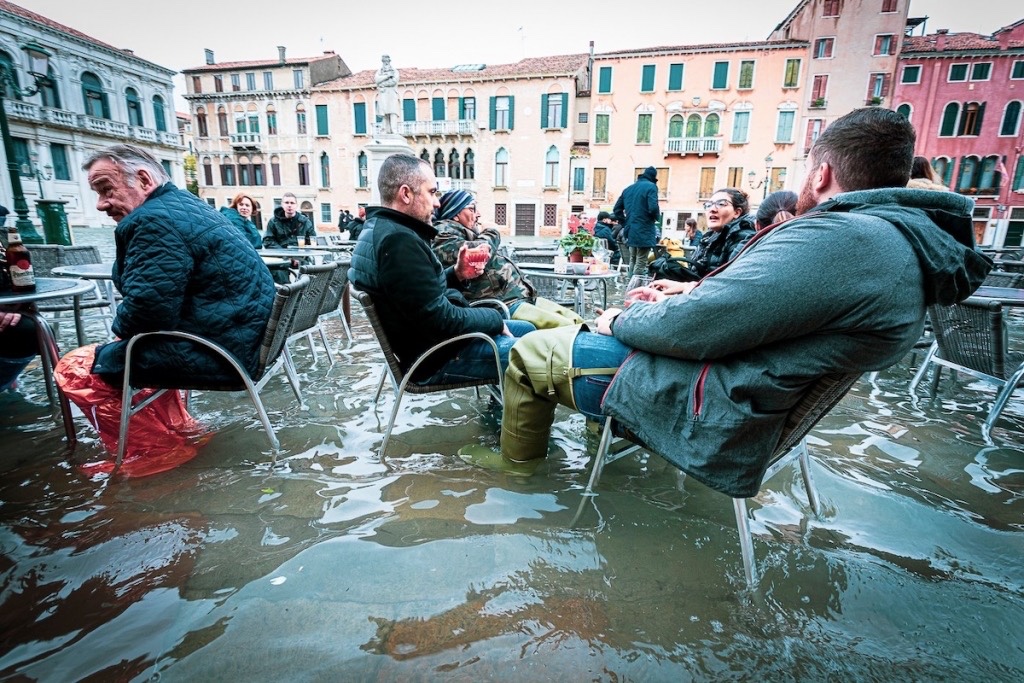
Natalia Elena Massi’s photographs of Venice, flooded, are exquisite insofar as they are objectively well shot while, simultaneously, reminding us of the consequences of climate change. I dream of going to Venice to shoot photos at some point and her work only further inspires those dreams.

Music I’m Digging

I spent a lot of the month listening to my ‘Best of 2019’ playlist, and so my Songs I Liked in December playlist is a tad threadbare. That said, it’s more diverse in genre and styles than most monthly lists, though not a lot of the tracks made the grade to get onto my best of 2019 list.

  • Beck-Guero // I spent a lot of time re-listening to Beck’s corpus throughout December. I discovered that I really like his music: it’s moody, excitable,and catchy, and always evolving from album to album.
  • Little V.-Spoiler (Cyberpunk 2077) (Single) // Cyberpunk 2077 is one of the most hyped video games for 2020, and if all of the music is as solid and genre-fitting as this track, then the ambiance for the game is going to be absolutely stellar.

Neat Podcast Episodes

  • 99% Invisible-Racoon Resistance // As a Torontonian I’m legally obligated to share this. Racoons are a big part of the city’s identity, and in recent years new organic garbage containers were (literally) rolled out that were designed such that racoons couldn’t get into them. Except that some racoons could! The good news is that racoons are not ‘social learners’ and, thus, those who can open the bins are unlikely to teach all the others. But with the sheer number of trash pandas in the city it’s almost a certainty that a number of them will naturally be smart enough and, thus, garbage will continue to litter our sidewalks and laneways.

Good Reads

  • America’s Dark History of Killing Its Own Troops With Cluster Munitions // Ismay’s longform piece on cluster munitions is not a happy article, nor does the reader leave with a sense that this deadly weapon is likely to be less used. His writing–and especially the tragedies associated with the use of these weapons–is poignant and painful. And yet it’s also critically important to read given the barbarity of cluster munitions and their deadly consequences to friends, foes, and civilians alike. No civilized nation should use these weapons and all which do use them cannot claim to respect the lives of civilians stuck in conflict situations.
  • Project DREAD: White House Veterans Helped Gulf Monarchy Build Secret Surveillance Unit // The failure or unwillingness of the principals, their deputies, or staff to acknowledge they created a surveillance system that has systematically been used to hunt down illegitimate targets—human rights defenders, civil society advocates, and the like—is disgusting. What’s worse is that democratizing these surveillance capabilities and justifying the means by which the program was orchestrated almost guarantees that American signals intelligence employees will continue to spread American surveillance know-how to the detriment of the world for a pay check, the consequences be damned (if even ever considered in the first place).
  • The War That Continues to Shape Russia, 25 Years Later // The combination of the (re)telling of the first Russia-Chechen War and photographs from the conflict serve as reminders of what it looks like when well-armed nation-states engage in fullscale destruction, the human costs, and the lingering political consequences of wars-now-past.
  • A New Kind of Spy: How China obtains American technological secrets // Bhattacharjee’s 2014 article on Chinese spying continues to strike me as memorable, and helpful in understanding how the Chinese government recruits agents to facilitate its technological objectives. Reading the piece helps to humanize why Chinese-Americans may spy for the Chinese government and, also, the breadth and significance of such activities for advancing China’s interests to the detriment of America’s own.
  • Below the Asphalt Lies the Beach: There is still much to learn from the radical legacy of critical theory // Benhabib’s essay showcasing how the history of European political philosophy over the past 60 years or so are in the common service of critique, and the role(s) of Habermasian political theory in both taking account of such critique whilst offering thoughts on how to proceed in a world of imperfect praxis, is an exciting consideration of political philosophy today. She mounts a considered defense of Habermas and, in particular, the claims that his work is overly Eurocentric. Her drawing a line between the need to seek emancipation while standing to confront and overcome the xenophobia, authoritarianism, and racism that is sweeping the world writ large is deeply grounded on the need for subjects like human rights to orient and ground critique. While some may oppose such universalism on the same grounds as they would reject the Habermasian project there is a danger: in doing so, not only might we do a disservice to the intellectual depth that undergirds the concept of human rights but, also, we run the risk of losing the core means by which we can (re)orient the world towards enabling the conditions of freedom itself.
  • Ghost ships, crop circles, and soft gold: A GPS mystery in Shanghai // This very curious article explores the recent problem of ships’ GPS transponders being significantly affected while transiting the Yangtze in China. Specifically, transponders are routinely misplacing the location of ships, sometimes with dangerous and serious implications. The cause, however, remains unknown: it could be a major step up in the (effective) electronic warfare capabilities of sand thieves who illegally dredge the river, and who seek to escape undetected, or could be the Chinese government itself testing electronic warfare capabilities on the shipping lane in preparation of potentially deploying it elsewhere in the region. Either way, threats such as this to critical infrastructure pose serious risks to safe navigation and, also, to the potential for largely civilian infrastructures to be potentially targeted by nation-state adversaries.
  • A Date I Still Think About // These beautiful stories of memorable and special dates speak to just how much joy exists in the world, and how it unexpectedly erupts into our lives. In an increasingly dark time, stories like this are a kind of nourishment for the soul.

Cool Things

  • The Deep Sea // This interactive website that showcases the sea life we know exists, and the depths at which it lives, is simple and spectacular.
  • 100 Great Works Of Dystopian Fiction // A pretty terrific listing of books that have defined the genre.
Categories
Links Writing

Facebook: Yes, it can get more invasive

Grace Nasri has a good – if worrying – story that walks through how Facebook could soon use geolocational information to advance its digital platform. One item that she focuses on is Facebook’s existing terms of service, which are vague enough to permit the harvesting of such information already. As much as it’s non-scientific I think that the company’s focus on knowing where its users are is really, really creepy.

I left Facebook after seeing they’d added phone numbers to my Facebook contacts for people who’d never been on Facebook, who didn’t own computers, and for who I didn’t even have the phone numbers. Seeing that Facebook had the landline numbers for my 80+ year old grandparents was the straw that broke my back several years ago; I wonder if this degree of tracking will encourage other Facebook users to flee.

Categories
Aside Links

Bit9 on Android

Bit9 has released a report that outlines a host of fairly serious concerns around Android devices and app permissions. To be upfront: Android isn’t special in this regard, as if you have a Blackberry, iPhone, or Windows Phone Device you’ll also find a pile of apps that have very, very strange permission requests (e.g. can a wallpaper application access your GPS and contact book?). The video (above) is a quick overview of some findings; the executive summary can be found here and the full report here (.pdf).