For the past few weeks I’ve been deliberately constraining my photography by shooting exclusively by a 35mm equivalent lens. This was the focal length that really convinced me that I enjoyed photography as a way of seeing and experiencing the world. I’m a big fan of zoom lenses, and keep eyeing the Olympus 12-40mm 2.8 Pro lens, but I find that I learn the most about a scene by having to walk around it with a bright prime lens.
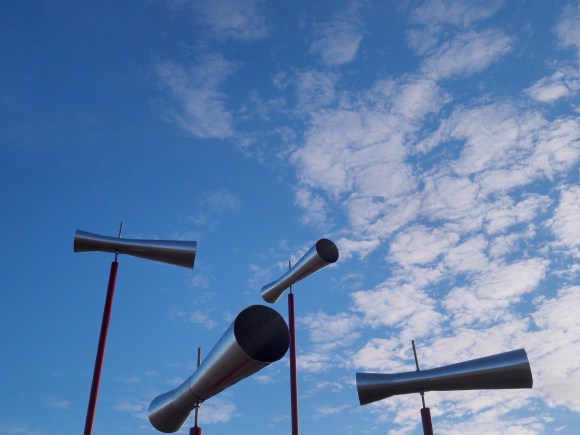
Alien Reach by Christopher Parsons
When I travelled to Cuba, having to march around with a 50mm equivalent lens meant I went into entirely new places and angles that I wouldn’t have if I’d had a zoom lens to otherwise get a shot. And while I’ve previously used my 35mm equivalent, I have to admit that I’ve been far more reliant on some of my zooms and the 50mm; I just haven’t focused on learning to use the 35mm lens because there is so much more walking-by-zooming that I have to do with it compared to even my other prime lenses.
Sound Off! by Christopher Parsons
But that’s silly: I enjoy the focal length, I just have to work a lot more to get things out of the camera. So I’ve been using it at night, during the day, and exclusively attached it to my camera body for the past month and intend to bring it (along with an 80-300mm equivalent lens) when I travel to South America in a week and change. I like the idea of an unobtrusive lens as my walkabout, and then the zoom for when I’ve trekking through nature. And, perhaps most importantly, I really like the idea of forcing myself to get a lot more comfortable with my current gear as a way to inhibit my desire to buy more gear: I have functionally underused equipment, and I should be playing with it, first and foremost, before even considering the purchase of new kit.
Inspiring Quotation
“We start on the path to genuine adulthood when we stop insisting on our emotional competence and acknowledge the extent to which we are – in many areas of our psyche – likely to be sharply trailing our biological age. Realising we aren’t – as yet, in subtle ways – quite adults may be the start of true maturity.”
Mobiography’s landscape photography shots are really, really amazing and showcase just how much you can do with a contemporary smartphone and good lighting conditions.
Jagged horizon, Monument Valley… by Joseph CyrIt’s been a good day… full of weather again.. by Fi AustinSnow & Fishing Cottages by Jen Pollack BiancoWindswept by lkbside
It’s the time of year when people reflect on past annual resolutions while beginning to think about what resolutions they’ll ‘commit’ to in the coming year. I enjoy the idea of establishing annual targets and goals. Not just because it’s fun to imagine how great life would be if you hit them all, but because it provides an ongoing sense of direction in what is often a rote world. More than that, resolutions, goal setting, or whatever else you call it are helpful for providing a lens through which to reflect on a year gone by.
I had one standard resolution, which I absolutely failed to make possible, and a host of them that were far more successful. I fully exited consumer debt hell, increased monthly student loan payments, photographically documented many of the major events in my life, dealt with the last administrative aspects of my last relationship, and mostly righted my financial ship. All of those were major life accomplishments and have done things like change how I visually see the world every day, how I experience my relationships with money, and how I approach my relationships today. It’s not just that I finished something but that in the course of undertaking a series of activities I’ve opened up entirely new (and, arguably, healthier) ways of seeing the world.
But there were other things that I accomplished that I think are as important as those goals that were set last year. I think I’m most proud of the fact that I can see ways in which I’ve grown emotionally. In specific, in my desire to avoid some of the mistakes of my last relationship I’ve had honest and oftentimes painful conversations that were based on what I believe to be right for me; rather than subsuming myself to make life easier I’ve just been me, even when doing so might cause challenges in my relationships. Such challenges, however, are healthy insofar as strong areas of disagreement aren’t indications of a lack of love but, instead, of a healthy set of egos that simply must come to a consensual agreement on how to proceed. Learning how to love in a healthy way has been scary while also amplifying my ability to be present and with others in ways I never understood as possible.
I’ve also managed to overcome some long held fears that were the result of bullying I experienced while growing up. The result is that I can make healthy choices for my body without having a voice in the back of my head that sabotages my efforts to be fitter, eat better, and be happier in my own body. Getting over those particular demons is especially important, in my situation, given that I’m creeping up on the age when coronary diseases start to take the lives of the men in my family.
In the coming days I’ll be thinking through the kinds of resolutions and thematics that I want to carry forward into the coming year. Centrally, I think I’m going to have ‘testable’ objectives, insofar as I’ll be able to actually measure whether or not I’ve advanced in some of the hobbies that I’m involved in, while also trying to find ways of deprioritizing activities that are pleasurable but don’t really do much to advance my physical, intellectual, artistic, professional, or emotional wellbeing.
I spent a significant amount of time thinking about the implications of path dependency in socio-technical systems over the course of my doctoral degree. For my work, I hypothesized that similar kinds of technologies in a path-dependent system would unfold in similar ways cross-jurisdictionally. This common unfolding would take place because once technological development began down a particular path, other paths would be foreclosed and a common end would be reached regardless of regulation, policy, or law.
In the work I did, this dependency wasn’t actually evidenced with much regularity. But some of that was because the technologies I was looking at were heavily socialized: they were used for a range of different tasks and, as such, their development impetuses were often decidedly non-technical. In contrast, the development of Transport Level Security (TLS) has a kind of path dependency that is notably challenging to deviate from, not just because clients and servers must implement new versions of the protocol but because developers of middle boxes simply assume technology will unfold in a given way and have developed their own technologies based on those assumptions. In reaction, the Internet community has spent a considerable amount of time trying to ameliorate the difficulties that arise when implementing new versions of the protocol, difficulties linked to assumptions as to how the protocol would, and will, develop.
Cryptographers are increasingly talking about the problems associated with adopting new versions of TLS as ‘joints’ ‘rusting shut.’ As discussed by Cloudflare, in the context of middleboxes:
Some features of TLS that were changed in TLS 1.3 were merely cosmetic. Things like the ChangeCipherSpec, session_id, and compression fields that were part of the protocol since SSLv3 were removed. These fields turned out to be considered essential features of TLS to some of these middleboxes, and removing them caused connection failures to skyrocket.
If a protocol is in use for a long enough time with a similar enough format, people building tools around that protocol will make assumptions around that format being constant. This is often not an intentional choice by developers, but an unintended consequence of how a protocol is used in practice. Developers of network devices may not understand every protocol used on the internet, so they often test against what they see on the network. If a part of a protocol that is supposed to be flexible never changes in practice, someone will assume it is a constant. This is more likely the more implementations are created.
It would be disingenuous to put all of the blame for this on the specific implementers of these middleboxes. Yes, they created faulty implementations of TLS, but another way to think about it is that the original design of TLS lent itself to this type of failure. Implementers implement to the reality of the protocol, not the intention of the protocol’s designer or the text of the specification. In complex ecosystems with multiple implementers, unused joints rust shut.
To some extent, the lesson to be taken from the efforts to update to TLS 1.3 is to have protocols which are simpler in nature and with fewer moving parts.1 Another lesson is that it takes years to actually shift the global population of Internet devices en masse to more secure ways of communicating. But perhaps the most fundamental lesson — to my mind — is that the security of the Internet is still trying to mediate and resolve problems which were initially seeded many, many years ago and which may mean it takes up to a decade to fix the specific problems to TLS 1.2.
Built infrastructure such as middleboxes isn’t updated on a regular basis because the infrastructure represents a capital cost. And so even as new protocols struggle to come to terms with the past, they do so by comforming to the paths sets down by previously deployed protocols. Even as TLS 1.3 is deployed and made usable, it will be done so based on how earlier versions of the protocol were designed and then implemented. So the questions that linger include: how will implementers of TLS 1.3 make decisions, and how will their decisions direct the development and implementation of future versions of TLS? In effect: how much will the paths of the past continue to affect how future versions of TLS can be practically — as opposed to hypothetically — developed??
Inspirational Quotation
“Generosity is the most natural outward expression of an inner attitude of compassion and loving-kindness.”
– Dalai Lama
Great Photography Shots
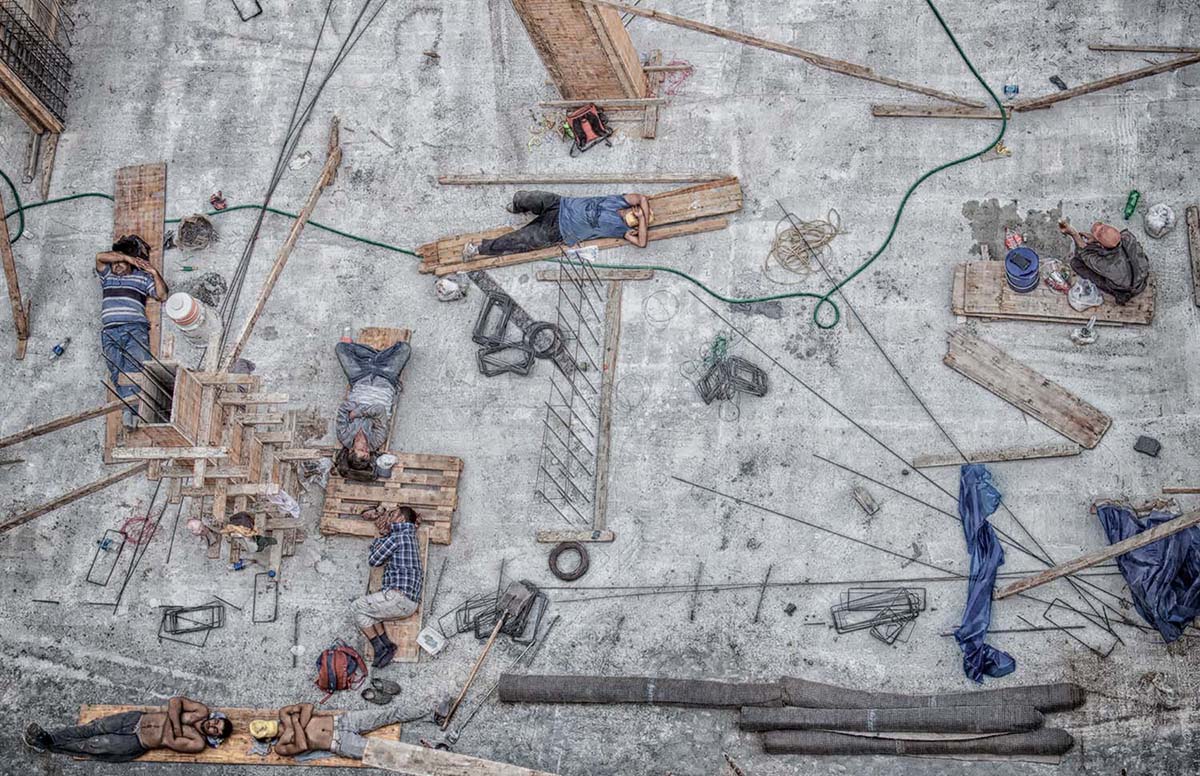
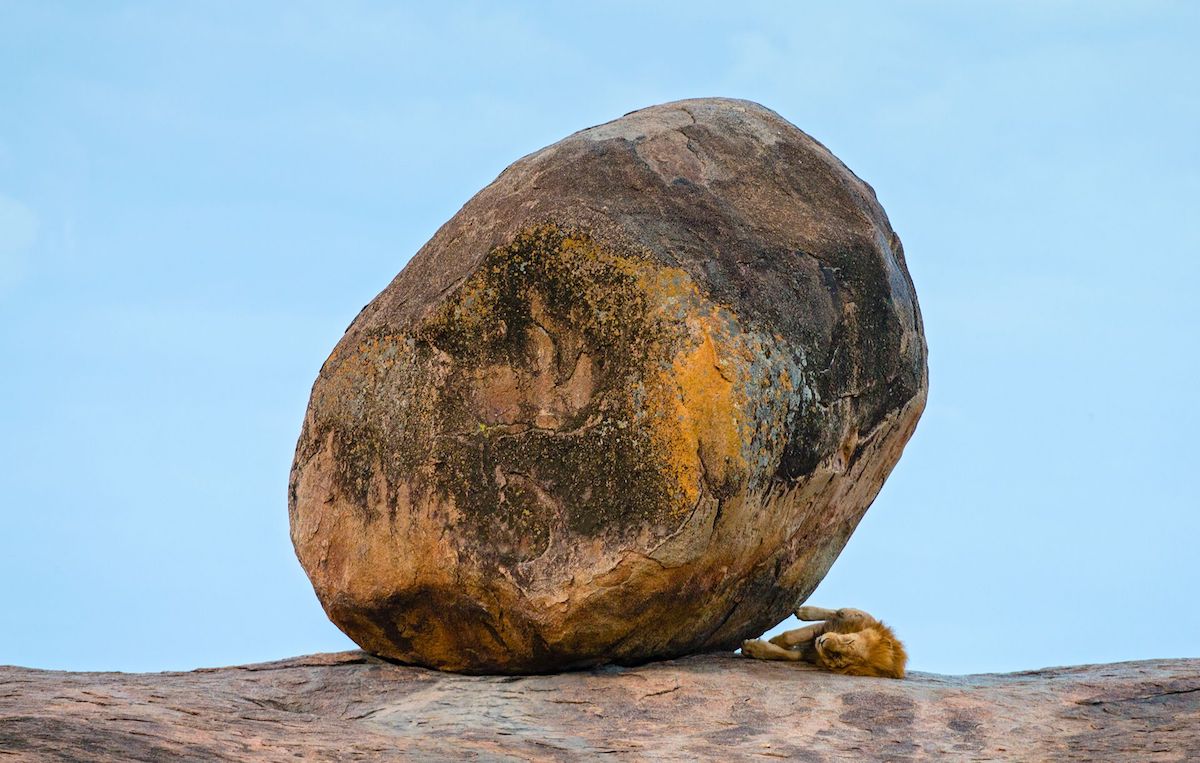
I’ve really fallen in love with some of the shots which were submitted to this year’s Sony Wold Photography Awards.
Per Cloudflare: David Benjamin proposed a way to keep the most important joints in TLS oiled. His GREASE proposal for TLS is designed to throw in random values where a protocol should be tolerant of new values. If popular implementations intersperse unknown ciphers, extensions and versions in real-world deployments, then implementers will be forced to handle them correctly. GREASE is like WD-40 for the Internet. ↩
My less-busy times this week were spent writing out notes, cards, emails, and other correspondence to some of the most important people in my life. It’s been a challenging year; the world seems to be falling apart due to changes in American politics, deaths and illnesses by family and friends have been hard to take, and the tempo for high-quality professional work never really slows down. And so I took some time writing to the people I’ve most closely worked with, supported, or been supported by to thank them for just being present and active in my life.
I find writing these sorts of messages of thanks, encouragement, and praise challenging. They’re not the kind of thing that I have ever really received much of throughout my personal or professional life; it’s just not normal in my family to communicate our deep feelings for one another, and in academe the point is to move to the next project (and subject it to critique) instead of dwelling on past projects and receiving accolades for them. But as challenging as I find writing these messages they have a profound personal impact: by pulling together my thoughts and writing them down and sending them, I’m humbled by realizing just how blessed I am to be surrounded by the kind, funny, supporting, and amazing people in my life.
There used to be a time when a lot more holiday cards, notes, and messages were sent back and forth between people this time of year. And many people still send cards, but don’t take the time — five, ten, or even twenty minutes — to handwrite a real thought to whomever the recipient happens to be. But those are the cards and notes and emails that people carry with them for years, packing them carefully away as they move from one physical or digital home to another. They don’t cost a lot of money to produce, and in the case of email are almost entirely free, but they show that you’ve spent time thinking about a specific person. And that time, in and of itself, is indicative of someone’s importance in your life.
So before you go out and spend money on another present consider taking that time and, instead, writing a letter or note to whomever the recipient is. Chances are good that they’ll remember and treasure the message you left with them for longer than any material possession your might give them.
Some of the bigger news in the Apple world, this week, has focused on changes to how Apple treats older iPhones which are suffering battery degradation. While the majority of the reporting is focused on how iPhone 6 and 6s devices are experiencing slowdowns — which is the change Apple has imposed as of iOS version 11.2.0 — iPhone 7 devices are also exhibiting the slowdowns as they suffer battery degradation.
I’m of mixed minds on this. I see this as an effort by Apple to avoid having to replace batteries on older (but not THAT old) devices but in a sneaky way: the company’s lack of transparency means that it appears that Apple is trying to pull a fast one on consumers. This is especially the case for those consumers who’ve purchased Apple Care; if their devices are suffering known problems, then Apple should at the minimum be notifying owners to bring the devices in for servicing on a very proactive basis, and that doesn’t seem to have been the case.
So, on the one hand, this is Apple being sneaky.
But on the other it’s a semi-elegant engineering problem to resolve a hard-to-fix problem. We use our smartphones with such regularity and subject them (and, in particular, their batteries) to such exceptional abuse that degradation has to happen. And so I think that Apple stuffing processors into devices (at least in the current and last generation) that are excessive for daily use means the slowdowns are less problematic for most users. They might think that their devices are a bit slower but, generally, still be able to use them for about as long as they used to use them. And that length of use is what most people measure ‘battery life’ by so…maybe Apple is dealing with the problem the way users would actually prefer.
That Apple doesn’t change out batteries when they’re worn down, however, emphasizes that it’s a pretty good idea to resell your devices every year or so in order to get the best return for them as well as in order to enjoy the best performance from your iPhone. And I guess, as a byproduct, if you’re buying a second-hand iPhone you should definitely do a battery test before handing over your cash.
Inspiring Quotation
“Giving is about more than donating money. It’s about sharing your capabilities, content, and connections—and above all, giving others the chance to be heard, respected, and valued.”
I have a whole host of things that I need to do in order to keep a chronic (very non-life threatening!) health condition at bay. Part of that is maintaining a pretty strict work-life balance. When I was doing my doctorate I absolutely failed to conceptualize of, let alone maintain, a real balance and as a result I suffered from a pretty problematic health condition for years and years. And because I didn’t have work-life balance (and ignored advice from those who maintained such a balance) a lot of unpleasant things happened in my life that didn’t necessarily have to and I prioritized the wrong things as being of importance.
I mismanaged relationships. I failed to take advantage of living in one of the most beautiful cities in Canada, if not the world. I didn’t develop, let alone maintain, many friendships at a time where I probably most needed them.
And in reaction to how my life didn’t work during that time, and with the privilege of having a full-time job where I’m not expected to be constantly on the clock, I’ve worked to maintain a balance in my professional and personal activities. The medical result has been that the condition I deal with has become an occasional inconvenience instead of a serious issue in daily life.
This week my carefully maintained work-life balance entirely fell apart. It’s still apart, right now, and that condition is on top of me once again. I cannot wait until the holiday break and the chance to hit the reset button and return to balance. I can only hope that things haven’t gotten bad enough to need to return to visiting my doctors…
A few weeks ago, Ming Thien wrote about the relative importance of the shooting experience that you have with your camera of choice. One of the key things he mentioned was:
… if a camera does not enable us to either translate an idea, preserve a moment or present something otherwise unseen: it isn’t very useful as a tool, no matter how pretty or expensive or high-resolving it might be.
This point really resonated with me. It brought me back to when I was trying to decide which mirrorless camera to purchase. I’d been using (and still do use!) a Sony RX100ii and, temporarily, a Fuji X100. I loved the Fuji but I couldn’t really explain why until after I’d relied almost entirely on the RX100ii for a full year.
While in part I missed the viewfinder, what I was really missing was the ability to rapidly change settings to get the shot that I wanted and, also, to learn what I had to do, to get the shot I wanted. Let me explain.
The Sony is a great little camera. I’ve taken photos with it that I’ve gotten blown up to be pretty large (36 inches by 24 inches) and which now hang on my walls. I have a series of photos I took while in Iceland, Hong Kong, Australia, and other places that I absolutely love. But the shooting experience has always been subpar. The inability to just turn this knob or that one to get exactly what I want, in a second or two, means that shooting with the Sony is often really frustrating. If I can plan a shot it’s great. If it’s in the moment? The shot is missed more than caught.
So when I was looking at different mirrorless cameras to purchase and supplement the RX100ii I was drawn to the Sony a6100, which had amazing specifications. But when I actually held and touched and shot with it I just wasn’t taken by it. It’s an amazing camera but just felt cold. The Fuji line was pretty great – I really wanted to get an X-T10! – but I found the glass to be expensive, especially when I started thinking about buying image stabilized lenses.
So I ended up getting an Olympus EM10ii, instead, and was initially sorta scared of it. There were a lot of knobs to turn and, while I wanted that, it was also intimidating. But as I’ve used the Olympus I’ve come to realize that it is definitely the right camera for me, now. It’s light enough and small enough that I almost always have it with me. It performs pretty well with prime lenses in mixed settings. And while I can lust over other mirrorless systems when they come out I don’t see anything that they do which I absolutely need given my abilities, shooting preferences, and devotion to the hobby right now.
Most importantly, the Olympus feels right in my hands. I’ve used it enough that I’m comfortable with most of the settings that I use1 while it still provides me with a lot of room to learn and grow. I’m pretty comfortable with my 50mm equivalent lens after exclusively shooting with it for several months straight, and reasonably comfortable with the 35mm equivalent that I use.2 In terms of the shooting experience the EM10ii is pretty great for someone who is interested in photography but certainly never expects to do much more than travel the world, shoot, and then make prints for personal or family use. I know it’s not the ‘best’ camera out there but, for me, the shooting experience is pretty close to perfect.
Of course, the camera is super capable at doing lots of things I’m not interested in doing. And as someone who doesn’t ever shoot video the relative limitations of the Olympus camera system over that of either Sony or Panasonic doesn’t bother me. ↩
Perhaps curiously I’m the least comfortable using the kit zoom lens that came with the camera! ↩
It feels like everyone I know has led a more stressful life this year. Beyond the chaos wrought on the global psyche by the American president, there have also been more deaths, serious illnesses, job losses, and emotional meltdowns than normal. In my own case, the death of two parents and ongoing revelations of sexual assaults and abuses near to my life have been incredibly challenging issues to deal with.
So it was with great interest that I read a piece by Ankita Rao on how she has turned dealing with her personal stress into a kind of science experiment. The tests and activities she points to reveal the number of factors in our lives that amplify underlying stress levels as well as the means we can use to reduce stress in our personal lives. I’ve made a commitment since mid-2017 to actively, and assertively, maintain a particular work-life balance. That involves taking on consulting clients only when the monetary outcome is necessary to address particular fiscal stresses (see: student loans) and ensuring that I actually spend time working out, taking photowalks, and letting myself engage in non-productive play.
I haven’t always been successful. But on the whole I’m exercising a lot more, have taken photos I’m incredibly happy with, and am overcoming a longstanding guilt that playing games is somehow undermining my productivity. I have a long ways to go to ensure the balance I’m trying to achieve is a permanent feature of my life but I feel like habits are starting to settle in, and my overall stress levels declining as a result.
Just prior to Netflix’s release of The Punishersome criticsargued thatthe show had an opportunity to — and failed to — respond to the tragedy of gun violence in the United States. I haven’t quite finished the series but I tend to agree that the show is definitely not directly addressing that issue.
But the show isn’t about gun violence. It’s about what losing family means and drives a someone (read: white males) to do. It’s about the problems linked to how soldiers of all stripes are asked to endure physical and mental hardships and then return home without society acknowledging their sacrifices or providing support for their wounds. Or about how even when support is provided that there is no guarantee that those broken humans will ever be whole again. The show is about how fraught relationships become when we are separated from those we relate to, either by distance, by death, or by betrayal. Throughout the episodes I’ve watched a repeated motif, which does pertain to gun violence, is how firearms can prompt the aforementioned hardships, either by killing in the name of one’s country or in the name of one’s personal ideology or simply by accident when weapons are nearby.
I entered the workforce ‘late’ in terms of my ability to save for retirement. Since I went to school until my early 30s, and lived paycheque to paycheque to try and stay afloat, and have loan obligations, it’s not going to be until my late 30s or early 40s when I can ‘really’ save for my retirement. And that assumes that I save for retirement instead of for a home or condo that I own.1
So it was with interest, and trepidation, that I listened to a podcast put out by TVO entitled “Creating Retirement Security.” The conversation they had about people in their 30s was strange to my ears, with guests relying on different baseline facts for their assessments and recommendations. And significantly, not one of the guests recognized that loan payments for student debt are higher than with past generations, nor that repayment periods are longer now than in the past. Several of the guests held an assumption that persons would be saving in their early 20s. While this practice might be true for Canadian Pension Plan (CPP) contributions it’s presumably less the case for Register Retirement Savings Plans (RRSPs) that can grow significantly over the course of 40 years.
Each guest called frequently for ‘financial literacy’. While educational approaches matter and have merit, at the same time such calls assume that retirement decisions should be individualized. Does it fall to specific individuals to ensure that they are earning enough, saving enough, and investing wisely enough to be secure in their retirement? Or is retirement and aging a collective action problem that is best solved as a society as a whole?2
As with many areas of expert knowledge only the barest of basics of financial literacy are likely going to catch on with the general public. Were we, as a society, to take some of the lessons from behaviour economics we’d realize that experts are needed to develop appropriate ‘nudges’ to compel savings,3 while also updating savings models to recognize the precariousness of the labour market for those under 35. That constant threat of un(der)employment, need to service student debt, and potentially provide assistance to parents who have insufficiently saved for their retirement are all pressures on the largest generation now moving through the Canadian workforce. And that’s to say nothing of the need for people to decide if they want to save for their retirement or save for a home that they own. Until all those variables and conditions are appreciated any advice from experts seems to just fall flat.
Great Photography Shots
Flickr released the best 25 shots of 2017 and they’re pretty amazing. The ‘best’ in this case is derived from social and engagement metrics, combined with curation by Flickr’s own staff.
“Say Goodby…” by Iwona Podlasinka, at https://flic.kr/p/ZYM6Hd“Mi Fuego” by Albert Dros at https://flic.kr/p/Tbcpio
I actually do save every month to the tune of about 10-15% of my paycheque, part for retirement and part for an emergency fund. ↩
Guests did spend some time talking about whether retirement savings should should be an individualized/collective problem. But the constant refrain that individuals need to be smarter means that individuals, first and foremost, are seen as the parties that have to assume responsibility for their futures and any collective action work is an idealized maybe-solution to aging in Canada. ↩
To be fair, nudges were discussed, but the hard lessons came down on individuals having to gain literacy to make their own decisions. ↩
Photo made with iPhone 7 at the edge of Kensington Market in Toronto, Ontario. Edited in Apple Photos and Snapseed.
I’m a kind of obsessive consumer. Before I buy something I tend to get excited about it, and do a lot of research, and get super into whatever it is that has struck my fancy. When the iPhone X came out, even knowing that I wasn’t on a buying cycle this year, I still wanted it and so did dozens of hours of research. A few weeks prior I was looking at a particular Olympus lens. And before then it was a new Sony rx100 or Fuji x100.
But I’ve gotten to know myself well enough that I let myself wallow in the obsession…and then just let go. It’s a self-reflective defensive mechanism that kept my wallet pretty safe throughout the sales of Black Friday and Cyber Monday, and one that more generally has helped to lift me out of consumer debt hell over the course of the past year. Consumerism is exciting, so long as you only enjoy the dreams and avoid crushing them by actually purchasing the item(s) in question.
During the Cold War humanity did terrible things to the natural ecosystems of the world by testing nuclear weapons. Bikini Atoll is one of the areas that most felt humanity’s ugly destructive impulses. So it was pretty exciting to learn that after abandoning that part of the world for about fifty years things seem to be recovering:
The research, López says, provides at least preliminary evidence that even if you destroy an ecosystem, it can heal with time — and with freedom from human interference. Ironically, Bikini reefs look better than those in many places she’s dived.
Despite the fact that the ecosystem is healing what’s there now remains dangerous to human life. The coconuts (and coconut trees more generally) hold huge doses of radiation, and the platter-sized crabs are presumably similarly radioactive because their primary food source is coconut meat. Despite the outward appearances of healing the atoll will likely remain hostile to human life: for the foreseeable future this paradise will only be accessible to animal life and off limits to human habitation.
In some exciting personal news, I got back a review from a journal to which I’d sent an article. While some revisions are required, work that I’ve been hacking on for the past few years is more than likely going to be public in one of Canada’s law journal’s next year! Unlike some other publishing experiences this time it was a fast turn around: submit in September, hear back by end of November, revisions by January, and publication in Spring 2018. W00T!
Photo made with iPhone 7 on November 2, 2017 in Toronto, Ontario. Edited in Apple Photos.
It’s another week closer to the end of the year, and another where high profile men have been identified as having engaged in absolutely horrible and inappropriate behaviours towards women. And rather than the most powerful man in the world — himself having self-confessed to engaging in these kinds of behaviour — exhibiting an ounce of shame, he’s instead supporting an accused man and failing to account for his past activities.
I keep going back and forth as to whether I want to buy a new Apple Watch; I have zero need for one with cellular functionality and, really, just want an upgrade to take advantage of some more advanced heart monitoring features. The initial reviews of the Apple Watch Series 3 were…not inspiring. But Dan Seifert’s review of the Apple Watch Series 3 (non-LTE) is more heartening: on the whole, it’s fast and if you already have a very old Apple Watch and like it, it’s an obviously good purchase. I just keep struggling, though, to spend $600 for a device that I know would be useful but isn’t self-evidently necessary. Maybe I’ll just wait until Apple Canada starts selling some of the refurbished Series 3 models…
While photographers deal with Gear Acquisition Syndrome (GAS), which is usually fuelled by the prayer that better stuff will mean better photos, I think that writers deal with the related Software Acquisition Syndrome (SAS). SAS entails buying new authoring programs, finding new places to write, or new apps that will make writing easier, faster, and more enjoyable. But the truth is that the time spent learning the new software, getting a voice in the new writing space, or new apps tend to just take away from time that would otherwise be spent writing. But if you’re feeling a SAS-driven urge to purchase either Ulysses or iA Writer, you should check out Marius Masalar’s comprehensive review of the two writing tools. (As a small disclosure, I paid for Ulysses and use it personally to update this website.)
For the past weeks I’ve had outrageously bad battery life on my iPhone 7, running iOS 11. A lot of the battery drain was from the Podcasts app (approx. 24-33%) but I couldn’t figure out why the drain rate was so high: even when I only streamed over Bluetooth or Airplay I’d had the same power drain percentages, so it didn’t seem to be linked to powering the speaker on the phone (which can impact battery life significantly).
Then I realized that the application was searching for new podcasts every hour and downloading any that were available. My battery life has drastically improved after changing the setting so that the app only looks for new podcasts every 6 hours: I can now use the phone normally for a day and end up at about 20-30% battery remaining when it gets set down to charge for the night. Victory is mine!
Monuments and plaques do not necessarily represent ‘history’ so much as a particular interpretation of certain events or aspects of a person’s life. A recent episode of 99% Invisible, originally produced for The Memory Palace, explores what should be on the plaque for Nathan Bedford Forrest. Forrest was a lieutenant general in the Confederate Army who built a fortune off the labour of slaves and who was, allegedly, the first Grand Wizard of the Ku Klux Klan. The episode is noteworthy for outlining the rationale for creating Forrest’s monument in the first place, the significance of reinterring Forrest’s remains, and for what should go into a plaque that is dedicated to his place in the world, today.
In listening to the episode it’s shocking just how the monument’s creation and erection were laden with racist overtones, and the episode is instructive in explaining what these monuments were (and are) meant to do: act as assertions of white supremacy in increasingly multicultural and diverse societies. The history of such monument is not linked to the events or persons for which they were erected, but in the rationales for which they were created and erected. Their history is inexorably linked the history of white supremacy, and this is a history that we can safely stop lionizing. Rather that destroying such monuments, however, they should be relegated to open museums and parks, which can be used to remind us of the horrors and inequalities associated with past ideological positions that we now acknowledge as being harmful and dangerous to the members of our societies.














 For the past weeks I’ve had outrageously bad battery life on my iPhone 7, running iOS 11. A lot of the battery drain was from the Podcasts app (approx. 24-33%) but I couldn’t figure out why the drain rate was so high: even when I only streamed over Bluetooth or Airplay I’d had the same power drain percentages, so it didn’t seem to be linked to powering the speaker on the phone (which can impact battery life significantly).
 Excited Pixels