Everything’s fucked now. Newspapers have been destroyed by raiding private equity firms, alt-weeklies and blogs are financially unsustainable relics, and Google and Facebook have spent the last decade or so hollowing out the digital ad market. What survives among all this wreckage are websites and publications that are mostly bad. There’s plenty to read, the trouble is that so much of it is undergirded by a growing disregard (and in some cases even disdain) for the people doing the actual reading.
What readers are being served when a sports blog leverages its technological innovations in order to create a legion of untrained and unpaid writers? Who benefits when a media company cripples its own user experience and launches a campaign to drive away some of its best writers and editors? Whose interests are being served when a magazine masthead is gutted and replaced by a loose collection of amateurish contractors? Who ultimately wins when publications start acting less like purpose-driven institutions and more like profit drivers, primarily tasked with achieving exponential scale at any cost? What material good is produced when private equity goons go on cashing their checks while simultaneously slashing payroll throughout their newsrooms? Things have gotten so bad that even publications that get away with defining themselves as anti-establishment are in fact servile to authority in all forms, and exist for the sole purpose of turning their readers into a captive source of profit extraction.
The truth is that nobody who matters—the readers—ever asked for any of this shit. Every bad decision that has diminished media—every pivot to video, every injection of venture capital funds, every round of layoffs, every outright destruction of a publication—was only deemed necessary by the constraints of capitalism and dull minds. This is an industry being run by people who, having been betrayed by the promise of exponential scale and IPOs, now see cheapening and eventually destroying their own products as the only way to escape with whatever money there is left to grab.
Without a doubt, this is one of the most direct and forceful assessments of how the news media has become what it is, today. Rather than having reporters and editors working to produce high-quality products which are designed to serve the interests of their readers they are, increasingly, forced to capitulate to managerial actions that are designed to temporarily gin up sales numbers at the expense of the very readers who should be being served. It’s no wonder that the state of political discourse, and public discourse write large, has become so degraded when that degradation is actually chased after if it means a few more ads or advertorials can be placed for a short-term increase in numbers.
Sabat Ismail, writing at Spacing Toronto, interrogates who safe streets are meant to be safe for. North American calls for adopting Nordic models of urban cityscapes are often focused on redesigning streets for cycling whilst ignoring that Nordic safety models are borne out of broader conceptions of social equity. Given the broader (white) recognition of the violent threat that police can represent to Black Canadians, cycling organizations which are principally advocating for safe streets must carefully think through how to make them safe, and appreciate why calls for greater law enforcement to protect non-automobile users may run counter to an equitable sense of safety. To this point, Ismail writes:
I recognize the ways that the safety of marginalized communities and particularly Black and Indigenous people is disregarded at every turn and that, in turn, we are often provided policing and enforcement as the only option to keep us safe. The options for “safety” presented provide a false choice – because we do not have the power to determine safety or to be imagined within its folds.
Redesigning streets without considering how the design of urban environments are rife with broader sets of values runs the very real risk of further systematizing racism while espousing values of freedom and equality. The values undergirding the concept of safe streets must be assessed by a diverse set of residents to understand what might equitably provide safety for all people; doing anything less will likely re-embed existing systems of power in urban design and law, to the ongoing detriment and harm of non-white inhabitants of North American cities.
For the past many months it’s been hard to write here; the very idea of sitting to write was just too hard given the world as it is today. To try and publish here, and get past some of the difficulty writing here, I’m going to experiment with fewer roundups and more independent posts.
I don’t make videos for a living, nor do I engage in audio engineering. I’m a professional policy wonk and amateur photographer, which means that I do a lot of national video and audio interviews, a lot of writing and text-based communication, some image editing, and depressing amounts of media consumption. I also read a crazy numbers of PDFs and have to annotate them. And for the past two weeks I was consigned to work off my iPad Pro (2018) and iPhone Pro because my MacBook Air was getting its keyboard repaired.
So how successfully did I continue to work just from my non-laptop devices? Spoiler: it was pretty great and mostly convinced me I can lead a (mostly) iPad Pro work life.
The Tools
As mentioned, the hardware that I principally relied on included my iPad Pro 11” (2018) and iPhone Pro.
For the iPad I also had a Logitech Bluetooth keyboard and a Magic Trackpad, as well as a cheap stand. For importing my photos, I have an old USB-C hub that has a SD card reader. For the iPhone, I routinely used a knock-off Gorilla Pod tripod, Manfroto head, and AirPods.
On the software side of things, I used Mail, Pages, Wire, GoodNotes, Mendeley, Reeder, Photos and Darkroom, Safari, Google Drive and Docs, Tweetbot, and Apple Notes to get my daily work done on the iPad Pro.
For interviews I was at the mercy of whatever the interviewers wanted me to use on my iPhone Pro, which was usually either FaceTime, Skype, Signal, WhatsApp, or Zoom, and I used Google Meet for non-broadcast communications.
Successes
The Setup by Christopher Parsons
On the whole I was able to do everything using my iPad Pro and iPhone Pro that I was doing when I was relying on my MacBook Air and iPhone Pro. My reading and writing were largely unimpaired, and my communications with colleagues were not noticeably affected.
Specifically, I was able to continue importing and editing photos, and worked in Google Docs and Drive to leave comments and contribute to documents that were in progress. Email continued to be dealt with using the native client, and I kept on working on Word documents using Pages. Apple’s cloud storage meant I had access to all my files on my iPad, just as on my MacBook Air.
Working with PDFs was simple and easy: I imported them to GoodNotes and shared them into Mendeley after I’d annotated them. I then deleted them from GoodNotes to avoid having multiple iterations of a document in different apps.
All of my communications were easy to maintain, though it was admittedly annoying to have to pick up my phone whenever I received or needed to send a message in WhatsApp. It’d be great if Facebook committed to the service, and made it available on all iOS devices like Signal has already done.
Minor Annoyances
There were one or two things that were annoying. I had to take a photo with government identification, and then strip away some of the more sensitive information. It took me a bit of time to figure out that I could move the photo into Notes, scratch out the offending information, and then output the edited photo to Files to then be uploaded. But it was annoying, not impossible.
I also continue to struggle with a good blogging process on iOS devices. I used Ulysses for years but the lack of new updates for non-subscription users was grating. Other non-subscription-based apps, however, don’t really support images as well nor upload as nicely to this blog. So I’ve actually started using the (mediocre) WordPress client. It’s not impressive, but neither are any of the other clients.
Major Pain Points
First, Google Docs is a terrible application that doesn’t work well. Period. In documents where there are a lot of tracked changes and comments it becomes basically non-functional. It got so bad that I’d write text in Apple Notes and then just copy it into Google Docs, or else I’d be stuck waiting for minutes for a sentence to finally be input. Google Docs is generally a dumpster fire, though, and it’s a shame that Google hasn’t properly developed their app or service in all the years that Google has operated it. (In my MacBook Air, editing in Safari is only a marginally better experience. Google really needs to get its act together.)
Second, Slide Over is incredibly confusing to get working. I’ve owned an iPad for years and it was only in the last two weeks that I finally figured out how to control it, and doing so required watching an instructional video. It is bonkers that this feature is so unintuitive to use and yet so easy to trigger. That said, once I figured it out, it was a very positive and transformative productivity enhancement.
Third, I absolutely needed my iPhone for actual video conferencing. The iPad can do conferencing, but it’s form factor sucks for this kind of activity. That’s fine, and I’d be doing the same if I was doing interviews or video chats with a working MacBook Air in my possession. Still, you’re going to want another camera (and a headset with microphones) if you need to so high(ish) quality calls when you’re working purely from an iPad Pro.
And that’s really it. Beyond the Google Docs app being a trash fire (and, I would point out, it is also just a less-bad trashfire when accessed using Safari on a MacBook Air), the inane complexity of Slideover, and need for a separate device for video calls, the iPad Pro pretty nicely replaced my workflow on the Air. I missed the slightly larger screen, but not so much that it was a real issue.
Concluding Thoughts
I really appreciated and liked using my iPad Pro and iPhone Pro full time. It was easy to set up and tear down. It let me get my work done with fewer distractions than on my MacBook Air. And the screen is noticeably higher quality than the Air.
So if you have a relatively writing- and speaking-focused job, and are doing neither a lot of video or audio editing (or, I suspect, spreadsheet work) then the iPad Pro could be a good fit for your workflow. Does that mean that it’s better than working off a laptop? Nope! But also that what a lot of reviewers consider to be ‘normal’ and what authors and policy folks think are ‘normal’ are very different, with the latter category being pretty well supported on iPad Pros.
Welcome to this edition of The Roundup! Enjoy the collection of interesting, informative, and entertaining links. Brew a fresh cup of coffee or grab yourself a drink, find a comfortable place, and relax.
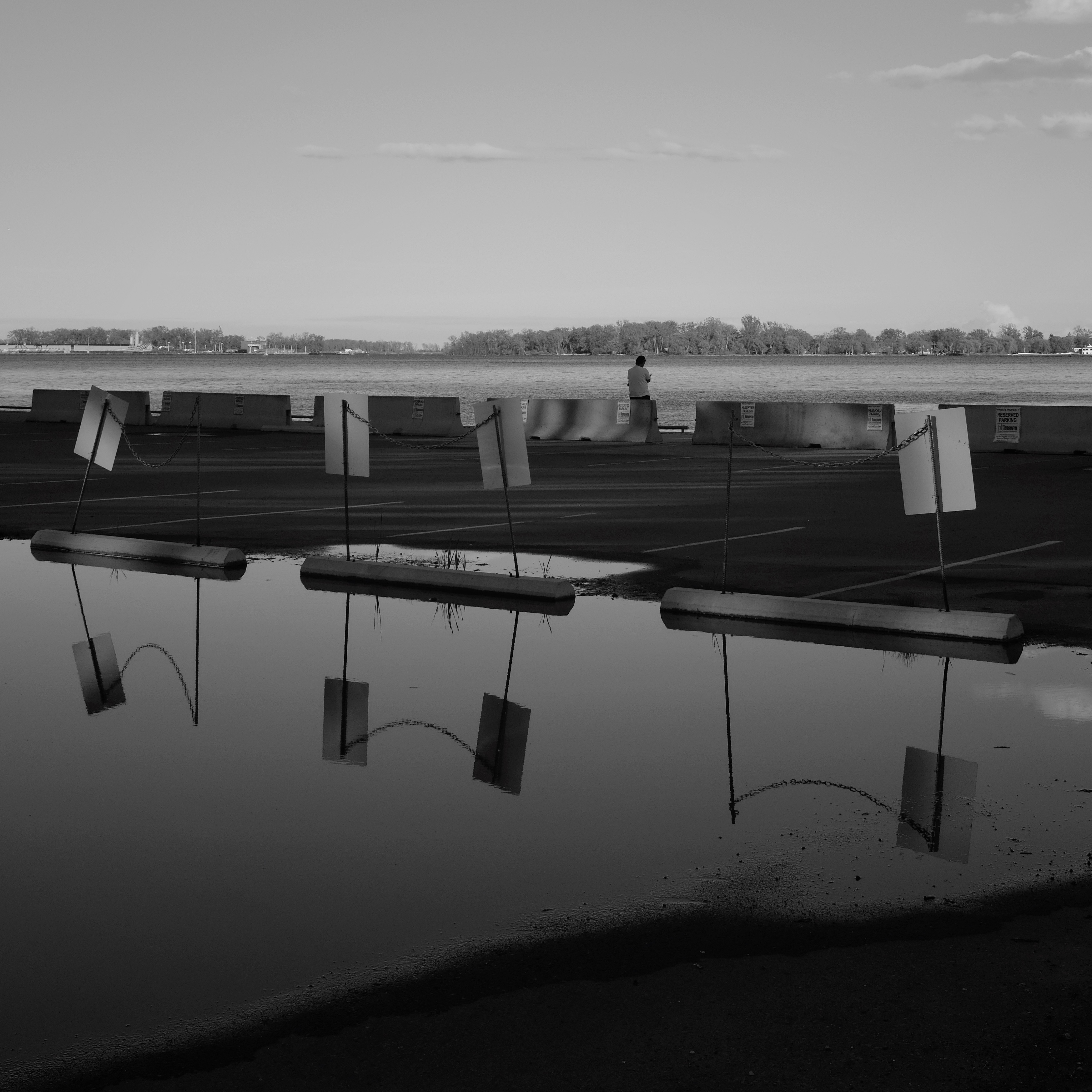
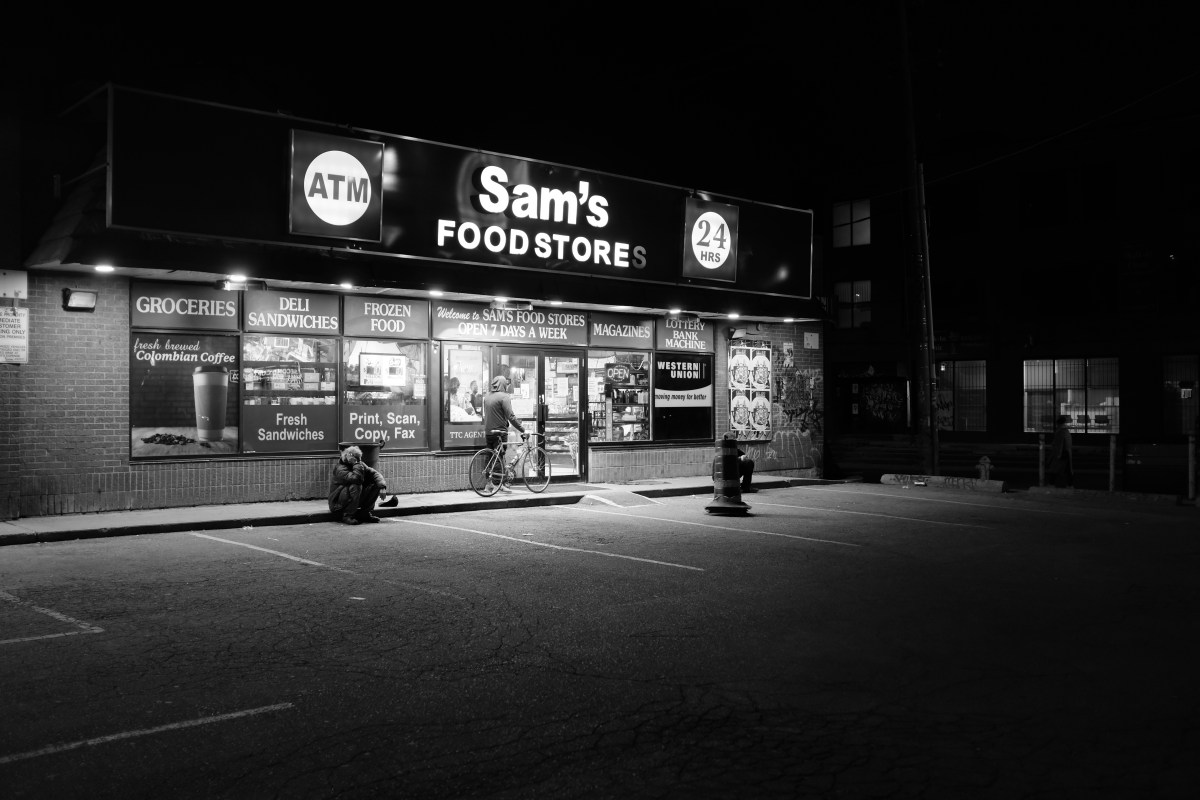
I put together, and self-published, another photobook that is entitled “Pandemic Chronicles: Book I”. Each week that my city has been in (functional) lockdown, I’ve gone out once or twice and made images while just stretching my legs outside.
Over the past four months it’s often been hard to figure out how, exactly, I’ve been processing the life changes that have been imposed as a result of the pandemic. My life has, in many respects, reverted to that of my life during my PhD. So, lots of time inside and rarely leaving leaving my home, and having considerably less social contact than normal.
I think that it’s through my photos that I can best appreciate how I’ve felt, in retrospect, and understand how those images reflect how I see the world. The book that I made isn’t particularly dark: it’s just…lonely. It showcases the city that I live in, without the people that make it the city that I love. It shows people living their lives, often alone or separate from others, or while engaging in ‘safe’ behaviours. And, towards the end, it shows the light returning to Toronto, though in a format that differs from prior summers.
Photography has, and remains, a way for me to engage a creative part of my brain that otherwise would lie fallow. And, also, it’s operated as a meditative process that uncovers how I have been in the world, and how the world has been presented to me. As someone who has struggled with the idea of a ‘narrative’ in image making, I think that this book is a breakthrough because it ‘says’ something in aggregate that is more than just a presentation of visually pleasant images: it speaks to where I live, and how it has endured in the wake of the city’s closure. Is it the height of art? No. But it’s the closest I’ve come in this medium so far!
Inspiring Quotation
“Good” can be a stifling word, a word that makes you hesitate and stare at a blank page and second-guess yourself and throw stuff in the trash. What’s important is to get your hands moving and let the images come. Whether it’s good or bad is beside the point. Just make something.
(Photos included in ‘Pandemic Chronicles: Book I’ by Christopher Parsons)
Music I’m Digging
This month has been packed with a lot of listening, with some alternative and R&B pretty tightly mixed in with hip hop. The best of what I listened to in June includes tracks from Yung Tory’s Rastar (including Mizu, Water Pt 2, and Netflix & Chill), Kali Uchis’s TO FEEL ALIVE (EP), HONNE’s no song without you (Single), and 6LACK’s 6pc Hot(EP).
Neat Podcast Episodes
I’ve been listening to a pair of new podcast shows over the past month that I’d recommend. From the CBC, there’s This Is Not A Drake Podcast, which uses Drake as a way to talk more about the history of rap and hip hop. So far I’ve really appreciated the episode on mixtapes, as well as the connotations of Nice Guy rappers.
Very differently, I’ve also been listening to the Globe and Mail’s series, Stress Test, which is about money issues facing millennials in the time of Covid. The episodes haven’t been staggering brilliant (a lot of the advice is pretty time tested) but the caution and suggestions are all helpful reminders.
Good Reads
Reflections from an “Accidental” Mentor// Prof. McNamara’s discussion of what it means to be a mentor— first and foremost modelling who we are, as individuals, rather than fitting within a particular narrow category of who we are normatively expected to be—is good advice, and important if we are to expand what is ‘normal’ within academia. She also focuses on celebrating the commonality across scholars; we’re all nerds, at heart, and so should focus on those attributes to create community. I agree, but for myself it’s more than that: it’s also about ensuring that the structures of professional environments are re-articulated to enable more junior persons to experience their jobs and professions in ways that weren’t possible, previously. It’s not just about focusing on commonality but, also, assessing baseline principles and values and ensuring that they conform in theory and practice with welcoming, creative, equitable, and inclusive environments. And, finally, it’s about accepting and making clear that as mentors we are fallible and human, and creating workspaces where others can also betray these inherently human (and humanizing) characteristics.
Jon Stewart Is Back to Weigh In// Jon Stewart’s comments throughout this interview are worth the read; his assessment of the problems of contemporary political media—centred around the ‘need’ for content to fuel a 24/7 media environment—as well as for the media to engage in structural assessment of practices, are on point. Similarly, his discussion of the nature of racism in American society (but, also, Canada) strikes to the heart of things: even if someone isn’t deliberately malicious in deed or thought, they are conditioned by the structures of society and power in which they live their lives. And those very structures are, themselves, racist in their origin and contemporary design.
Hacking Security// Goerzen and Coleman do a terrific job in unpacking the history of what is secured by computer security experts, and why certain things are within or outside of bounds for securing. Critically, while experts may be involved in protecting ‘assets’ or combatting ‘abuse’, where threats to assets or abuse arise from the underlying profit mechanisms associated with large technology companies, those mechanisms are seen as outside of bounds for security teams to engage with. Similarly, the failure of security teams to consider, or address, ‘political’ issues such as abusive speech, harmful video content, or propagation of racist or white supremacist content all showcase the need to critically interrogate what is, and isn’t, made secure, and to expand security teams by adding social scientists and humanities scholars: technology is political, and we need security teams to have members who are trained and competent to consider those politics.
Once Safer Than Gold, Canadian Real Estate Braces for Reckoning// Canadians have been doubling down on their debt-loads for over a decade to the point, today, that on average Canadians owe north of $1.76 per $1.00 of income, with that number rising in the country’s largest cities. Housing is particularly vulnerable and, if it is destabilized, can be devastating to the Canadian economy more broadly given that it accounts for around %15 of GDP; slowdowns in housing will delay the revival of the Canadian economy, while simultaneously threatening the ability of Canadians to stay in their homes—now—or retain their savings to invest for their retirements—in the future. If anything good comes of this, maybe it will be a reminder that allocating the majority of your savings into a single asset is, indeed, not a good long-term investment solution which could have knock on effects if investors decide they want to move to their next bubble, and let the housing bubble deflate as gracefully as possible.
You Want a Confederate Monument? My Body Is a Confederate Monument// “I have rape-coloured skin.” Not only is this perhaps the most poignant lede I’ve come across in an opinion piece in years, it also sets the stakes for the Williams’ article; the very skin of many Americans (and Canadians) is a testament to violent and racist actions taken against women who were forced from their homes to live as slaves. That testament continues, today, and not just in the monuments that were established in the Jim Crow era to deliberately attempt to continue subjugating Black persons, but in the very skin inhabited by the grandchildren and great-grandchildren of enslaved people.
Vladimir Putin’s war of fog: How the Russian President used deceit, propaganda and violence to reshape global politics// I take issue with some of MacKinnon’s choice of language in the first ¼ of the article—he suggests that truth is substantively confused and that Putin’s tactics are more successful that I think are appropriate to concede—but beyond that he’s done a masterful job in creating an overview of who Putin is, what he’s done, and how he’s come to (and held onto) power. If you’re a long-time Russia watcher you may dispute where MacKinnon puts some of his emphasis, or in his assessment of some events, but I don’t think that you can deny that this is a helpful article that provide the broad contours of Putin’s life and career. And, after having read it, it will hopefully inspire people to learning more of the financial, military, or other scandals that have happened throughout Putin’s leadership of Russia.
Cool Things
iPad OS + Magic Trackpad 2// Lots of people already have figured this out but…the new version of iPad OS + a Magic Trackpad 2 and a keyboard is a really, really compelling combination. I’ve using this as my writing and work system for a little while and it continues to prove to me how robust the iPad actually is, and how many of the pain points have been, or are being, ground away with each version of the operating system. That said, some of the gestures are very, very opaque—in particular those associated with the slide over window—and so you may want to review how, exactly, those gestures really work to get the most out of the process (and not get frustrated when certain windows just won’t go away!)
After 3+ months of using a janky Apple keyboard—keys sticking, not registering presses, adding double characters, etc—I’m finally able to get it to a service centre next week. I cannot wait to have a reliable writing device to work on once more!
Welcome to this edition of The Roundup! Enjoy the collection of interesting, informative, and entertaining links. Brew a fresh cup of coffee or grab yourself a drink, find a comfortable place, and relax.
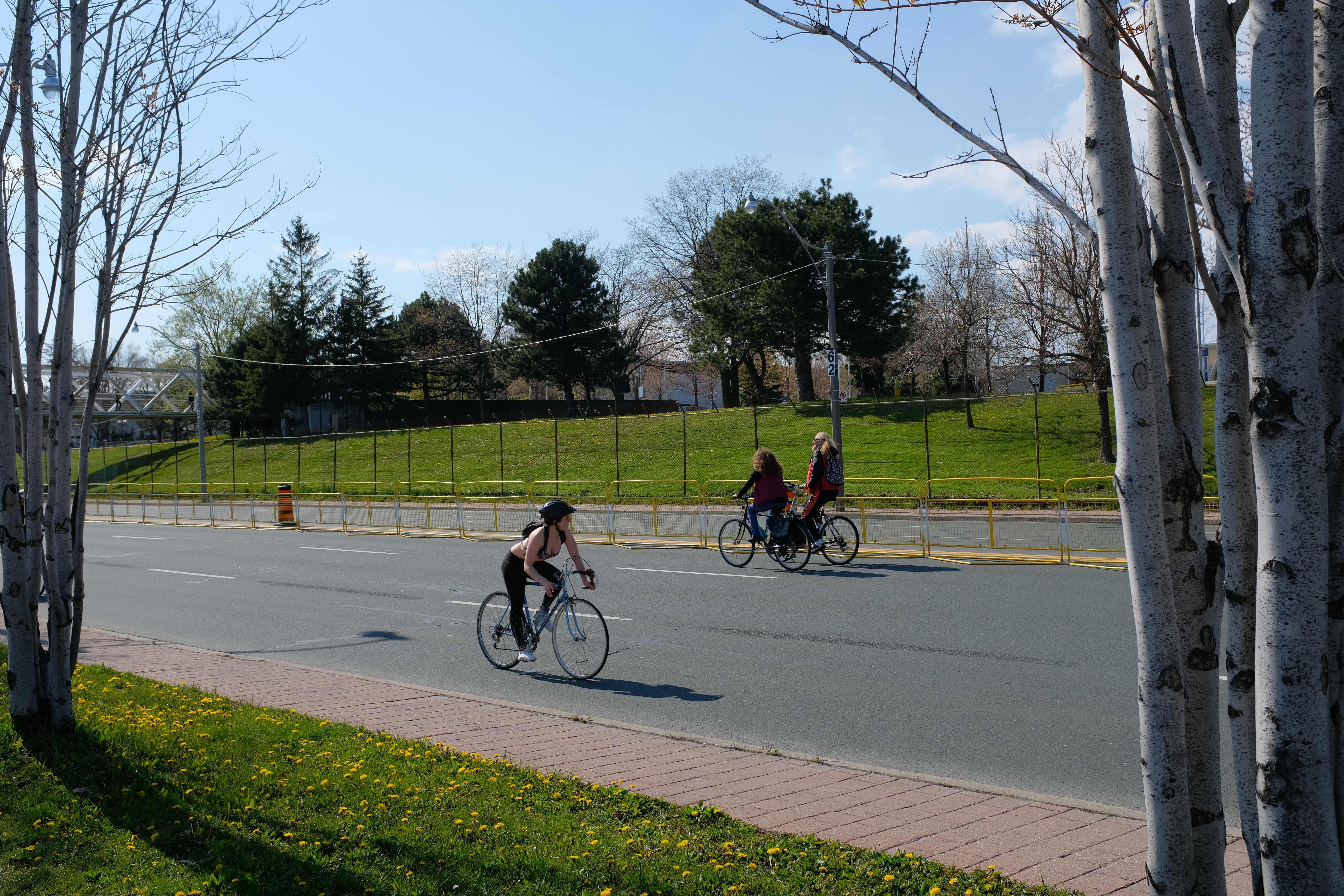
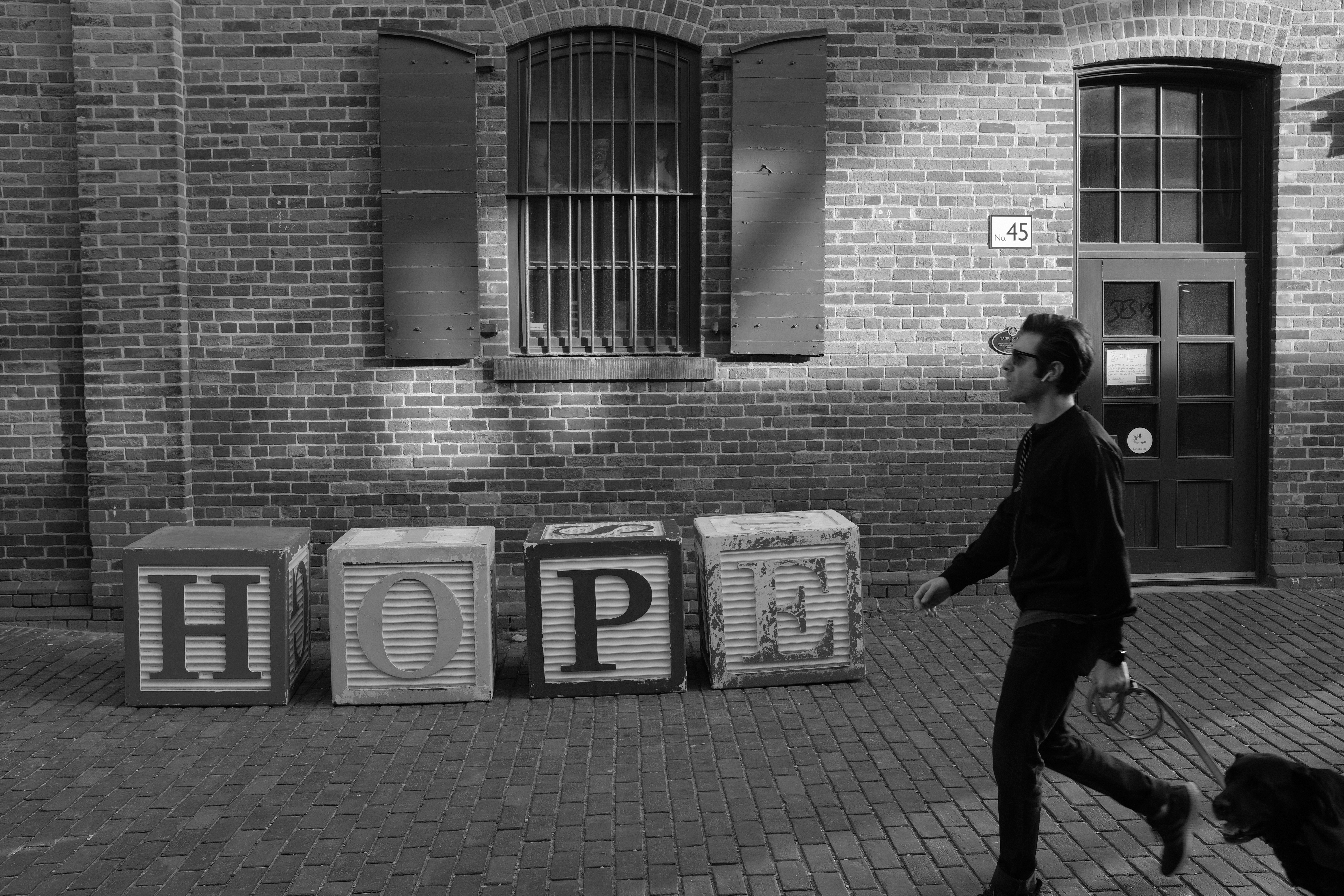
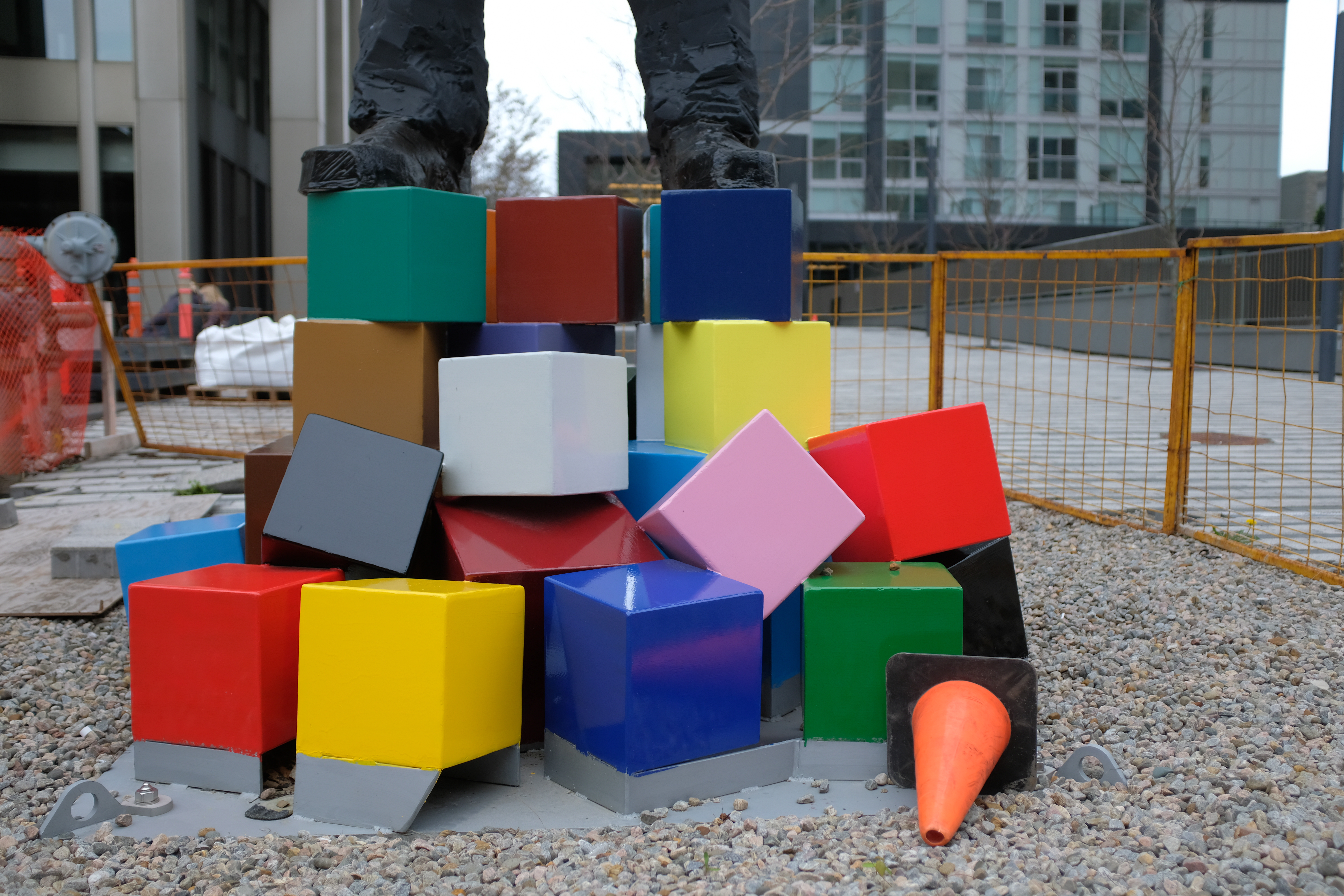
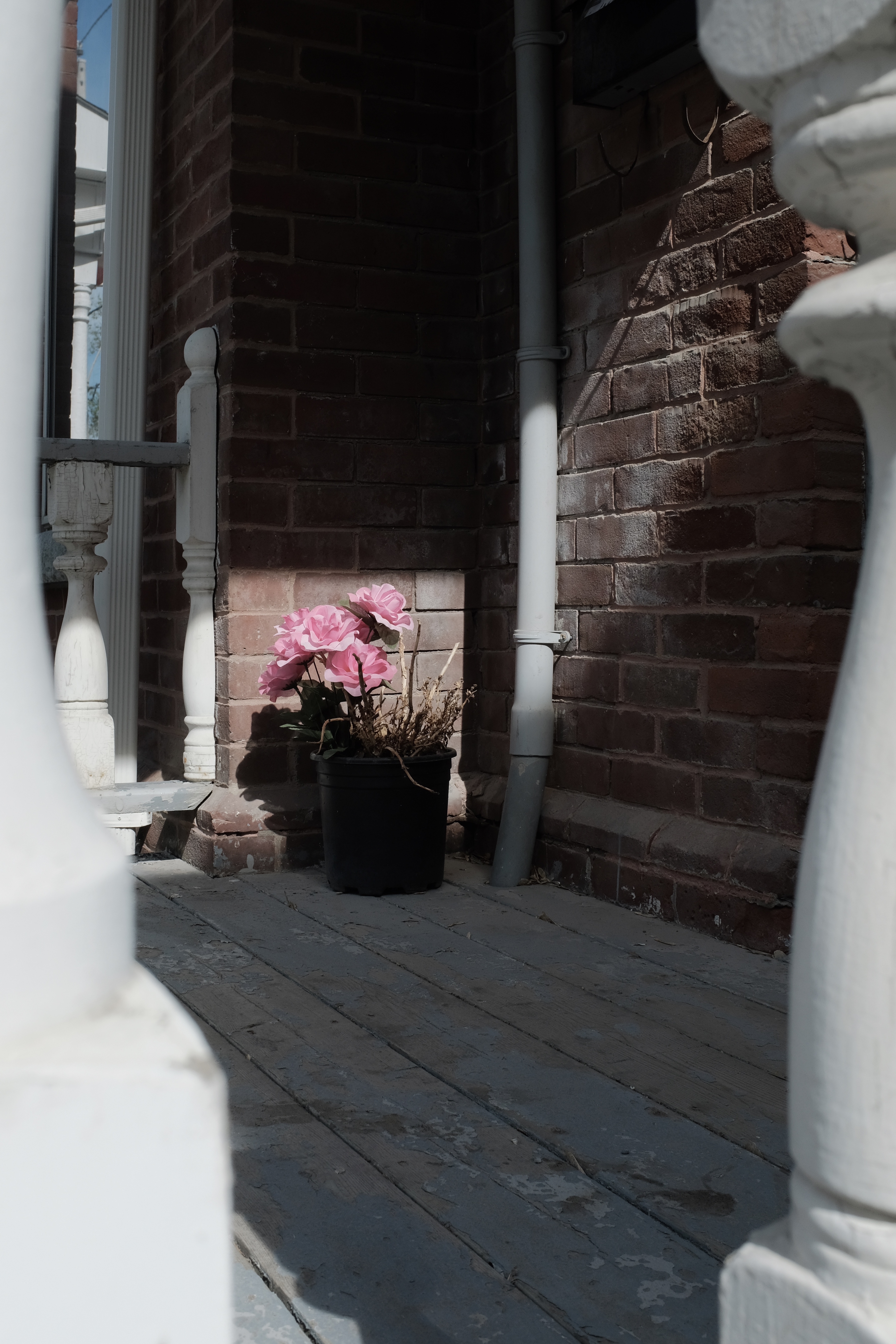
For the past several weeks I’ve been sorting through all of the hundreds of photographs I’ve taken during the current state of pandemic we’re all living within. My photography is often a reflection—often unbeknownst to myself—of my thoughts and attitudes. The earliest weeks of the pandemic saw me making images of the city as though it were empty, grey, or isolated. And while those moods still pervade through later photos, there are increasingly also bursts of colour and joy, though still mixed with an emptiness to the city that calls into question what things will be like in six, twelve, or twenty-four month’s time. Many of the shots I’m taking, now, still feel almost documentary in nature, but at what point does the documentation end, and it simply becomes contemporary street photography?
Inspiring Quotation
More simply, real change only happens when the thing that white supremacists fear becomes true: that the mainstream increasingly becomes rather than simply appropriates the “ethnic.”
-Navneet Alang
Personal Photography Shots
I’ve been going out, once a week or so, to get a walk and make photos while walking around my city. Unlike past months, I’ve contributed a set of these rather than other artists’ images.
ZHU & Tinashe-Only (Single) // Beats by ZHU and vocals by him and Tinashe make for a very danceable track. I’m really hoping that they do more work together or, failing that, that we at least get more work from ZHU for the summer.
Yiruma-Room With A View (EP) // Without a doubt, Yiruma has created some of the most beautiful classical piano work that I’ve heard this year.
Kenlani-It Was Good Until It Wasn’t // The tracks “Can I” and “Everybody Business” are, for me, the real standouts on this album. I admit that I was hopeful that “Grieving”, with James Blake would be really awesome, but their styles just didn’t quite seem to come together. Her work with Tory Lanez, as well as Jhené Aiko, are far more balanced given how their styles compliment Kehlani’s own.
Good Reads
Barton Gellman—Dark Mirror // Gellman was one of three reporters who were directly entrusted with the Snowden archives, and spent years reporting out of the documents. His assessment of what it was like to report on what he learned, the nature of the surveillance apparatus, working with Ed Snowden, and his broader thoughts on the relationship between public government and national security are erudite and fantastically interesting. I’ve just devoured this book and cannot recommend it highly enough.
How Should Biden Handle China? // This piece is less useful, to be honest, in thinking through what policy the United States or its allies should adopt than is assessing engagement strategies that aren’t working. Setting aside the irregularities and chaos associated with the Trump administration’s approach, the assessment of how European efforts have been equally unhelpful are informative for guiding policy makers on what hasn’t worked even when policy activities have been carried out by governments with comparatively competent foreign policy bodies. While an understanding of what doesn’t work isn’t inherently useful in knowing what does work, it at least provides a set of strategies that seem to be unproductive to take up in a new administration.
1989-1996 Canadian Housing Collapse Looks Eerily Similar to Today // Economists around the world have been warning of a Canadian housing bubble for a very long time. But Canadians have ignored the warning and dove into the market on the dual fear that they would otherwise never be able to buy a home, and the notion that renting amounts to throwing money away. The result has been a lot of Canadians owning homes they can’t afford. As the bubble pops, we’re going to see just how much economic havoc is going to follow from these decisions for the housing market as well as the economy more broadly (housing, in Canada, constitutes one of the largest sectors in the economy).
The Jungle Prince of Delhi // I’ve had this article open to read for months and months, but kept not getting to it. That’s a shame, as it is (and remains) a terrific story filled with past dynasties, the histories of British colonialism, the hard task of journalism, and the capability of truth to be creatively imagined into being. I can’t recommend this detective piece highly enough.
Welcome to this edition of The Roundup! Enjoy the collection of interesting, informative, and entertaining links. Brew a fresh cup of coffee or grab yourself a drink, find a comfortable place, and relax.
Inspiring Quotation
When you give something, you’re in much greater control. But when you receive something, you’re so vulnerable.
I think the greatest gift you can ever give is an honest receiving of what a person has to offer.
– Fred Rogers
Great Photography Shots
Some of the photos for the 2020 All About Photos Awards are just terrific.
My April best-of playlist features some classic alternative and a lot of not-so-new rap and R&B. I guess this is the first full playlist I’ve created purely when in self-isolation?
Neat Podcast Episodes
Lawfare-Jim Baker in FISA Errors // Baker previously was responsible for, in part, reviewing the FISA applications put before the FISC. Recently, the DOJ IG found that 29 of 29 applications they reviewed had errors, including a seeming failure to document or prove the facts set out in the applications. Baker assessed the legal implications as well as the normative implications of the deficits, and the need to develop stronger managerial control over all future applications.
CBC Ideas—The Shakespeare Conspiracy // Using Shakespeare as a kind of distancing tool—he’s long dead and so unlikely to enliven contemporary political passions—Paul Budra explores how different scholars and public intellectuals have asserted who Shakespeare ’really was’ and the rationales behind such assertions. In an era where the West is increasingly concerned about the rise of conspiracies this espisode provides a range of productive tools to assess and critique new and emerging conspiracies.
NPR throughline—Buzzkill // Mosquitos are, without a doubt, responsible for more human deaths than anything else on earth. This superb short podcast goes through how mosquitos have been essential to empire, warfare, and changes to humans’ genetic makeup.
Good Reads
The Weirdly Enduring Appeal of Weird Al Yankovic // Anderson has done a spectacular job showcasing the beautiful humanity of Weird Al. In tracing his origin story, and explaining the care and time Al puts into his work, and the love he has for his fans, you really appreciate just how lovely a man he is. If anyone is a Tom Hanks for the geeks, it may end up being Weird Al.
There Is a Racial Divide in Speech-Recognition Systems, Researchers Say // It’s as though having engineers of particular ethnicities, building products that work for them, while also lacking employees of other ethnicities, has implications for developing technology. And the same is true of when developers do not include people with diverse socio-legal or socio-economic backgrounds.
The chemistry of cold-brew coffee is so hot right now // God bless the coffee-obsessed scientists who’ve taken a deep dive into the way that coffee beans respond to different extraction methods, as well as provide their own cold brew recipes. I can’t wait to see what research percolates out of this lab going forward!
What’s the Deal With False Burrs? // Having only recently managed to properly clean my home grinder, I was curious to learn a bit more about the differences in burr grinders. While I’m satisfied with my current grinder I can predict—based in owning a ‘faux’ burr grinder—that a Baratza Encore or Virtuoso is in my near future.
LIDAR: Peek Into The Future With iPad Pro // The recent release of the newest iPad Pro iteration has been met with a lot of yawns by reviewers. That makes a lot of sense, given the combination of the ongoing crisis and relatively minimal changes over the 2018 iPad Pro. The only really major new thing is a LIDAR system that is now part of the camera bump, but no mainstream reviewers have really assessed its capabilities. Fortunately the folks from Halide—a smartphone camera company—have dug into what LIDAR brings (and doesn’t bring) to the floor. Their review is helpful and, also, raises the question of whether professionals who do modelling should be consulted on the utility of these kinds of features, just as photographers—not gadget reviewers—should be asked deep and probing questions about the cameras that are integrated into smart devices these days.
The Mister Rogers No One Saw // Fred Rogers has had a number of films made about him and his life, but this essay by Jeanne Marie Laskas is different because it is so deeply personal about the relationships Fred had with those around him, and with the author. He inhabited a world that was just a little bit different than our own; his creativity was drawn from this place. But it was also a creativity linked with a deep ethic of work, where he focused on ensuring that his art was as perfect as possible. And left unstated in the article is one of the real testaments to his work: he would re- edit episodes, years after they had first been produced, when he found there were elements he was unhappy with or that no longer adequately represented what he had learned was a more right way of thinking about things. Also left unwritten in this piece was Fred’s belief that children we resilient and could be taught about the world; his shows dealt with issues like the Vietnam war and nuclear war in ways that were approachable to children who deserved to be involved in understanding their world, and always knowing they weren’t alone in it, and that it was perfectly ok to have feelings about it.
New York and Boston Pigeons Don’t Mix // The sheer size of pigeon populations–they extent across vast swathes of urbanized (and road connected) land–is pretty amazing. But, equally interesting, is how rural environments seem to, effectively, segregate populations from one another. It’s just another example of how genetically diverse groups can exist all around us, without our ever realizing the distinctiveness.
Cool Things
I Miss the Office // If you want office sounds for your work at home, then this site has you covered. (Also, if this is what you’re missing you’re kinda weird!)
The Slow Fade of City Life // When the last two images are accurate, you know it’s a lot easier to get through the lack of the city.
Campari and Orange Juice // I have to say, this is my new favourite brunch drink. It tastes almost like grapefruit juice, though the real secret—not in this recipe—is to aerate the Campari and OJ in a blender before mixing in a cocktail shaker. The aeration really opens up the Campari and gives the whole drink a level of creaminess it otherwise wouldn’t have.
For the last few weeks I’ve been jarred awake by an overly loud alarm; it didn’t seem to always be so loud, but maybe I’d forgotten?
Nope. Not the case at all. When I updated to iOS 13.4 it set my ringer and alarm volumes to 100%. Now that I’ve reduced the volume I’m hopeful that my wake ups will be a lot more peaceful than they’ve been for the last few weeks.
To change the volume of the built-in Apple alarm: Go to Settings > Sounds & Haptics. Under Ringers And Alerts, drag the slider left or right to set the volume. As you drag, an alert will play, so you can hear how the volume changes. Turn on Change with Buttons to use the volume buttons on your device to change the alarm volume.
I’ve been lusting over a new coffee grinder given the current state of self-isolation and, thus, increasing my coffee consumption at home by about 300%. Part of the reasoning has been that I—seemingly—couldn’t pull apart my current grinder to give it a deep cleaning, which was throwing off some of the taste.
It turns out, however, that I just didn’t have the right angle to grab, twist, and pull the top of the grinder.
20 minutes later and I’ve got a very clean coffee grinder and the first brew already tastes better and more true to the beans. And my lust for a newer grinder has receded (somewhat) for now.