Categories
Links Roundup

The Roundup for July 9-15, 2018 Edition

Eyes to the Home by Christopher Parsons

This has been a week where I’ve been trying to get used to living in a new location. So there’ve been trips to Ikea and other places to get the necessities needed for the new location, getting used to wandering a new building, and learning the new routes to walk to work. And it’s been a quiet time of reflection, thoughts, and considerations of the future, as well as the recent past. It’s been a very busy week and, as things step into a new tempo, I suspect things will feel less comfortable and those reflections properly take hold.


Inspiring Quotation of the Week

To be clear, privacy is no ‘contemporary’ hang-up. This is a diversionary argument floated frequently in the tech / security fields; that privacy concerns have somehow erupted in the past decade, simply on account of social media, smart phones or Edward Snowden. Not only is that premise self-serving if one works in the bureaucracy of intelligence, it’s also demonstrably false.

The Latin root of privacy is ‘privatum’, an enunciated principle of civil law as early as the Roman Republic under Cicero. Privacy was a constraint on government action inscribed into England’s Magna Carta of 1215. And, perhaps most famously, the individual’s right to privacy is there in the Fourth Amendment of the American Constitution.

Great Photography Shots

Brendan Siebel has a nice essay to accompany photographs taken by Eugène Atget, who took photos of Paris around the turn of the 20th century. Atget’s work documents the changes to the city and captures that nature of the city-that-was as it was forcibly transformed by city planner.

Music I’m Digging

  • Leonard Cohen – Popular Problems // I’m slowly going through Cohen’s corpus, and I’m definitely finding that I prefer his more gravelly and poetic work as opposed to that when he was younger and more melodic.

Neat Podcast Episodes

  • Planet Money – Peak Sand // This story about the nature of sand forensics, and how sand is being stolen to provide resort beaches with Instagram-perfect sand, was eye-opening and yet another indication of the issues with tourism.
  • The Daily – One Family’s Reunification Story // There is so much that is wrong in the United States of America right now, and this piece by the daily that recounts the reunification between a migrant family is heart wrenching.

Good Reads for the Week

  • How to Be Alone and Why // A nice meditation on the value of being alone and, also, why being alone is increasingly common given the rise of single-occupancy homes. We are moving to a society where are are separated from other persons more regularly than in the past, but must also recognize that to participate fully in society we must sometimes enjoy periods of solitude so-as-to learn how and why to engage with those around us in a meaningful manner.
  • Unidentified Plane-Bae Woman’s Statement Confirms the Worst // The problems largely associated with the spread of social media, and capability of other persons to deliberately intrude into one another’s personal lives, is a continuation of social problems that pre-date the digital era. However, whereas once gossip and innuendo would have been relatively restricted to a physical space it can now break free of geographical boundaries and, in the process, lead other persons to actively intrude upon persons’ private lives and engage in harassment and abuse. While such social problems cannot ever be truly ‘solved’ they can be ameliorated by teaching the right and wrong ways to behave online which will, fundamentally, explain the problems linked with historical social ills and how they can be aggravated by digital communications mediums.

Cool Things

  • I’m a huge fan of Yamazaki’s design language: simple, clean, and minimalist. I recently picked up their Tower Laundry Basket and love how it just quietly sits in my bed room without drawing any attention to itself.
  • I love these ‘monumental nobodies’ pieces by Mathew Quick.
Categories
Links Roundup

The Roundup for July 2-8, 2018 Edition

Majesty by Christopher Parsons

The past few weeks have been hard. Really hard. I finally said goodbye to my dad, who died unexpectedly a little over a year ago. I said goodbye to the woman that I love. And I moved to a new home, too.

I have lots of reflections on my dad and how important it is to support those we love, even if that support means that a relationship needs to end so that they can achieve their dreams and aspirations. But for now I just need to process those thoughts, emotions, and reflections. If there’s any saving grace, it’s that my adopted family — even those who live abroad — are all living close to me.


Inspiring Quotation of the Week

Real love teaches us. It teaches us what we do and do not want in a partner. We learn how to be better at love from the ones we loved first. If we just got over all of that and truly erased the entire experience from the space in our hearts and minds where that love once occupied, then wouldn’t we just continue making the same mistakes over and over? If loving someone were as fleeting as we often try to make it be and we could “just get over it,” we wouldn’t bother with it anymore. What would be the point?

I think it is because we never fully get over the love we once had for someone that entices us to love again. It is because we remember that love that we want it again. We love a little deeper, a little more completely with each love we find. We want love to last. With every love we lose, we learn just how precious and valuable it is. It is how we ultimately (hopefully) find the one we never have to get over.

Music I’m Digging

Neat Podcast Episodes

Good Reads for the Week

  • When you don’t disclose salary range on a job posting, a unicorn loses its wings//There’s a severe problem in both non-profit and for-profit hiring: a failure to disclose what people will earn in any given position. Without that information it’s challenging for applicants to know whether it’s worth their time to bother applying, and can lead to applicants (and hiring committees!) wasting a lot of time before realizing that the salary range isn’t appropriate for the applicant’s expectations. Appropriate ranges should be included in all positions, and with ranges that are meaningfully bounded as opposed to massive ranges that prevent applicants from really knowing the likely salary.
  • Advertising Play Well//A delightful take on how advertising to children has changed, and why Lego used to be a leader in gender neutral play-based advertising and products.
  • The Electric Flight of Spiders//Fascinating new research shows that spiders use electrostatic repulsion to ‘fly’ using strands of silk emitted from their abdomen’s. While wind current plays a role, it’s the electrostatic repulsion that actually let’s arachnids take flight. Amazing!
  • Beyoncé and Jay-Z’s ‘Apes**t’ Was a Subtle History Lesson in Race and Power//I’m finding the various analyses of this video really interesting, as different authors explore the cultural and political significance of the chosen imagery. This goes a step further by not just interpreting the video but drawing it into a broader landscape of artistic critique, and which blends a range of lyrics from Jay-Z and Beyoncé to come to more sweeping conclusions.

Cool Things and Places

  • A Weekend Guide to Detroit//I’ve wanted to head over to Detroit for a while — I’d love to photograph the art! — and this provides a more fulsome ‘what to do over a weekend’ so I could head over and never get bored!
  • The Lost Caves of Nottingham//A very hidden gin bar, that involves descending a hidden staircase and, then, a second staircase cut into the earth itself. Very cool.
Categories
Links Quotations Roundup

The Roundup for June 16-July 1, 2018 Edition

Monsterous Weather by Christopher Parsons

The past few weeks have been clustered with travel across Canada for work and personal reasons, and a lot of packing as I prepare to move a few kilometres in my city. (I suspect it won’t be until after I move that things settle down and return to a more regular posting schedule.)

I’ve made a small change in this Edition that I’ll be carrying forward in all future roundups: beside each link is a little more information about the item in question to clarify what will be found on the other end of the link. I hope you like it.


Inspiring Quotation of the Week

A person’s dignity does not depend on them being a citizen, a migrant, or a refugee. Saving the life of someone fleeing war and poverty is an act of humanity.

  • Pope Francis

Great Photography Shots

Daniel Mercadante’s light photography is just magical.

Music I’m Digging

  • The Carters – Everything Is Love//This might be the surprise album of the season, with APESHIT looking like it might be the Hotline Bling of 2018.
  • Jay Rock – Redemption//I hadn’t come across his work in the past, and it’s slowly starting to grow on me.
  • NAS – Nasir//I can’t pretend to appreciate many of NAS’ lyrics — the nonsense he writes about vaccines, in particular, are frustrating at best — but in terms of flow NAS’s new album is pretty terrific.

Neat Podcast Episodes

Good Reads for the Week

  • Interview with Ragnar Axelssom//An interesting, if sad, interview with a photographer who’s watched climate change damage and destroy otherwise pristine northern environments.
  • Instagram’s Wannabe-Stars Are Driving Luxury Hotels Crazy//More and more companies are capitulating to ‘influencers’ coming to promote their businesses. But to no one’s surprise, many of those so-called influencers really just want a free trip and a place to take swimsuit shots.
  • 8 Men on What It Was Like When Their Partner Had an Abortion//An honest account of the often complicated, and hard to express, feelings pro-choice men have in cases of unintended pregnancies.
  • Friends and enemies: Reacting to Apple’s privacy stance//”Is Apple your friend? No. Of course not. It’s a company that sells stuff. But, right now at least, it’s an ally. And The Macalope doesn’t know about anyone else, but he’s not clear on the rationale behind the “Always shoot your allies first” policy.”
  • The Death of a Once Great City: The fall of New York and the urban crisis of affluence//This is an ode to the downfall of New York that has been brought about by speculative land development, rising property taxes, and a hollowing out of what made the city itself. But the same thing could be written for any of the cities that are now experiencing hyper-inflated rent increases, declines of social and public services, and a general shift toward transient populations over permanent residents. What will become of these cities in ten or twenty years time?
  • Canadian winemaker Norman Hardie accused of sexual misconduct//The Globe & Mail’s investigation of sexual impropriety in the food and beverage business has revealed that one of Canada’s more notable winemakers has a long history of harassing women. And, once more, the reporting reveals that basic power imbalances led women to just leave bad situations instead of feeling like they could demand accountability and justice. If there is any silver lining, it’s that the story is coming out, now, and that there were at least some persons who refused to have business transactions with Hardie after realizing what he did to women who were around him. Sadly, such refusals were often premised on a personal realization of the truth of the behaviours: the men who stopped doing business with Hardie didn’t choose to believe women from the get-go.
  • A Janitor Preserves the Seized Belongings of Migrants//Looking at these everyday items which were (and are) seized and discarded by American border authorities I’m reminded of a Canada 150 exhibit where the contents of migrants’ bags were presented. Many of the ‘inconsequential’ things like rice, or toilet paper, held incredible value for those making the trip to Canada; while they might have been ‘inconsequential’ to the eyes of Canadian authorities, I’m very happy that we didn’t take away those things that provided a sense of security to the persons migrating to Canada.
  • How Tidal Got So Fucked//A deep dive into the problematic business practices associated with Tidal, Jay-Z’s music stream service. The title of the article is entirely apt.
  • It Can Happen Here //”In their different ways, Mayer, Haffner, and Jarausch show how habituation, confusion, distraction, self-interest, fear, rationalization, and a sense of personal powerlessness make terrible things possible. They call attention to the importance of individual actions of conscience both small and large, by people who never make it into the history books.”
  • Explaining the ‘Mystery’ of Numbers Stations//A great deep dive into how messages are decoded from numbers stations, as well as whom has used them and to what effect.
  • Intel and the Danger of Integration//Intel has been stumbling for years now, as evidenced in the inability of companies like Apple re reliably provide new processors with meaningful changes into their product lines for the past several years. At the same time, other chip designers and foundries are racing ahead of Intel. Thompson’s article does a good job in laying out how Intel got into its current conundrum and the corresponding implications.
Categories
Links Photography Roundup Writing

The Roundup for June 9-15, 2018 Edition

Club Life by Christopher Parsons

I had the pleasure to have so many of my friends and family come to Toronto this week for a work-related event. It was an incredible experience where we all came together to push ahead some of the cooler projects we’re respectively working on, and generally catch up and spend time with one another. It was really an opportunity to deepen our relationships while, at the same time, goofing around and just enjoying one another’s time.

Throughout I was struck by the value, and importance, of just connecting with one another in person. We all often communicate with one another using digitally-mediated tools and technologies. But there is something that is always missing with those technologies: a fundamental element of our humanity cannot be communicated over a text, hangout, or phone call. We can’t read one another’s expressions the same way. We can’t perceive one another’s feelings the same way. Nor can we just hug one another to greet one another or to provide a sense of support to one another.

Our ability to remain ‘connected’ with one another is an incredible element of the contemporary digitally-mediated world. But connection is also something that is far too often regarded as a substitute for physical presence and sharing of time with one another. Digital connections are incredible supplements but surely cannot replace actually being with one another, and I’m deeply appreciative that I had the opportunity to spend time with my favourite people this week, and can’t wait until we pull everyone back together against next year.


On a slight administrative note, I’ve started providing some context around the various links, podcasts, and other materials that I’m trying to roundup on a regular basis. Hopefully it’ll help clarify why those items struck me as worth including in any given week.


Inspiring Quotation of the Week

Play is often talked about as if it were a relief from serious learning. But for children play is serious learning. Play is really the work of childhood.”

― Fred Rogers

Great Photography Shots

Takashi Nakazawa’s images of Mount Fuji are absolutely breathtaking.

Music I’m Digging

Neat Podcast Episodes

  • The Upgrade – How Should a Man Be?//A good discussion about the nature of Western masculinity, the threats that men experience to their egos in contrast to women, and ways of addressing the emotional intelligence deficient held by most men
  • Planet Money – The T-Rex In My Backyard//Yet another amusing podcast from Planet Money, this time about the economics of dinosaur bones. Left unstated is whether these economic ‘rules’ apply globally or principally to the United States.

Good Reads for the Week

Cool Things

Categories
Links Photography Roundup Writing

The Roundup for June 2-8, 2018 Edition

A New Light by Christopher Parsons

It’s one day after the 2018 Ontario provincial election. The winning party ran on a semi-platform that is designed to actively undermine the province’s climate change reforms, dismisses the importance of raising the minimum wage, and is actively hostile to efforts to improve sexual education. In the stead of these values, the party asserted they would reduce the cost of beer, reduce taxes, reduce energy costs, and otherwise work to promote ‘business friendly’ policies. The ways in which these values and objectives would be reached were never explained in a rigorous and methodical way: people voted for values and out of anger at the former governing party.

On days like today, it’s easy for progressives to get upset, angry, and/or depressed. But such emotions are reflections of our own dark and often unproductive states of mind. While a government can significantly affect the policy landscape, damage can be undone and most harms repaired or remediated. Instead of falling into dark states of mind, we are in a time when it is essential to evaluate where we can contribute to our societies and advance the values that we think with enhance our lives, and the lives of those around and affected by us. To promote a more progressive society we might actively promote, support, and elevate the roles of persons of colour, indigenous persons, and women in our communities so that they are better situated to accomplish their personal and professional goals. We might volunteer for causes that are important for progressive politics. We might even actively work to support a political candidate or party that didn’t accomplish the results we wanted.

In effect, it’s during times of change that it makes the most sense to get actively involved in our world, to influence the persons and organizations we’re involved with, and seek to effect change that extends and supports civil rights protections and equality amongst all people. Now is not the time for getting angry, per se, nor the time to lay down and wait for the next four years. No, if anything, today is just like yesterday, and is just like tomorrow should be: it’s a day to actively work towards improving the communities we find ourselves within so as to ensure that all persons enjoy equal rights and are able to thrive in their personal and professional lives.


I absolutely am floored by the reality that Anthony Bourdain killed himself in a hotel room. I’ve watched him from afar for many years, as so many have, and I’ve always appreciated the vigour and honesty that he projected in his public life. His frank discussions about troubled pasts and the difficulties people face everywhere around the world, and how North American and European activities endanger the lives and wellbeing of persons everywhere else in the world, were and remain important assertions and lessons. But rather than remembering him most for his travels I think I’ll remember him for the positions he unwaveringly took in the face of bad actions. His essay on #metoo struck me as particularly powerful, and specifically the paragraph where he wrote:

In these current circumstances, one must pick a side. I stand unhesitatingly and unwaveringly with the women. Not out of virtue, or integrity, or high moral outrage — as much as I’d like to say so — but because late in life, I met one extraordinary woman with a particularly awful story to tell, who introduced me to other extraordinary women with equally awful stories. I am grateful to them for their courage, and inspired by them. That doesn’t make me any more enlightened than any other man who has begun listening and paying attention. It does makes me, I hope, slightly less stupid.

This was the kind of language and public assertion that needs to be made. Bourdain himself was a deeply flawed individual, and he at least presented the image of someone who was trying to work through those flaws and present them as things that can overcome in the course of life. However, while those facets might be worn down over time they were unlikely to ever be entirely eliminated. Rather than showcasing himself as having overcome his past he, instead, presented himself as a man involved in an ongoing narrative, without a clear conclusion, but with an intent to rectify and avoid the sins of his past. There are far worse narratives to carry us through our lives.


Inspiring Quotation of the Week

My friends, love is better than anger. Hope is better than fear. Optimism is better than despair. So let us be loving, hopeful and optimistic. And we’ll change the world.

  • Jack Layton

Great Photography Shots

These aerial shots of Buddhist temples in Myanmar by Dimitar Karanikolov are stunning.

Music I’m Digging

Max Richter-Sleep (Remixes)

Art I Want

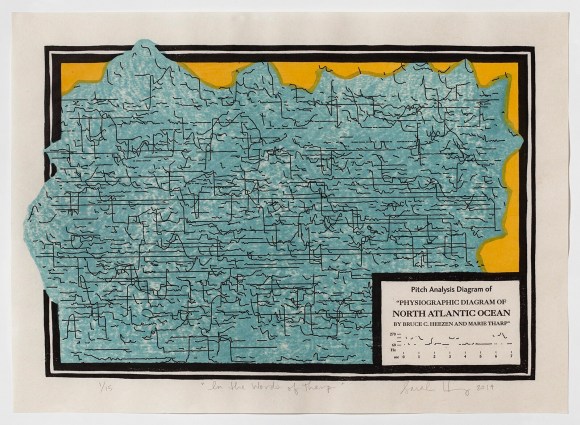
Di•a•graph•i•a by Sarah Hulsey


Neat Podcast Episodes

Good Reads for the Week

Cool Things

Categories
Links Photography Roundup Writing

The Roundup for May 19-June 1, 2018 Edition

(Remnants by Christopher Parsons)

We get to make decisions about how we react to unpleasant or unfortunate news. For some, that means getting angry and holding onto that emotion in order to focus the anger into ‘productive’ work energy. For others, it can lead to deep frustrations and a sense of being incapacitated. And in yet other cases it might involve both of those reactions — anger and frustration — that is quickly followed by letting go and appreciating the positive aspects of often difficult situation.

Letting go is strangely both easier and harder than either of the other emotional reactions, largely because it entails confronting why those emotions are being felt in the first place. Anger and frustration tend to represent outward manifestations of our own fears, concerns, worries, or other personal traumas. Engaging with them internally means dealing with those demons, whereas using them as energy or letting them consume ourselves externalizes such emotions in ways that prevent us from dealing with our own traumas.

At least one challenge is that social norms often inform us that it’s ok to just be angry. Just be frustrated. And that such emotions are normal and needn’t necessarily be ‘moved on’ from. It’s those situations, where those you’re encouraged to return to that trauma zone after it’s been dealt with, that can be the most challenging; those are cases where the puerile desire to experience our worse is often most challenging to rise above. Rising above it, however, is a kind of active work that promotes self-reflection and self-revelation. It’s not easy, but it’s perhaps some of the most important emotional labour that we can undertake.


Inspiring Quotation of the Week

“Concern yourself more with accepting responsibility than with assigning blame. Let the possibilities inspire you more than the obstacles discourage you.”

– Ralph Marston

Great Photography Shots

The idea of routinely capturing the same location, and tracing change, is something that is incredibly attractive to me. I often find myself pulled back to the same locations to see them at different times, with different light, and different natural coloration. And, so, I was incredibly impressed with Jani Ylinampa’s photos of a Finnish island through the seasons.

Music I’m Digging

Neat Podcast Episodes

Good Reads for the Week

Cool Things

Categories
Links Photography Roundup Writing

The Roundup for May 12-18, 2018 Edition

Soar by Christopher Parsons

It’s become incredibly popular to attribute the activities undertaken by the Facebooks and Googles of the work to ‘surveillance capitalism’. This concept generally asserts that the current dominant mode of economics has become reliant on surveillance to drive economic growth. Surveillance, specifically, is defined as the act of watching or monitoring activity with the intent of using captured information to influence behaviour. In the world of the Internet, this information tends to be used to influence purchasing behaviours.

The issue that I have with the term surveillance capitalism is that I’m uncertain whether it comprehensively captures the activities associated with the data-driven economy. Surveillance Studies scholars tend to apply the same theories which are used to understand CCTV to practices such as machine learning; in both cases, the technologies are understood as establishing feedback loops to influence an individual or entire population. But, just as often, neither CCTV nor machine learning actually have a person- or community-related feedback loop. CCTV cameras are often not attended to, not functional, or don’t provide sufficient information to take action against those being recorded. Nor do individuals necessarily modify their own behaviours in the presence of such cameras. Similarly, machine learning algorithms may not be used to influence all persons: in some cases, they may be sufficiently outside the scope of whatever the algorithm is intended to do that they are not affected. Also, like CCTV, individuals may not modify their own behaviours when machine learning algorithms are working on the data those individuals are generating on the basis of being unaware of machine learning operating on their data.

So, where surveillance capitalism depends on a feedback loop that is directly applied towards individuals within a particular economic framework, there may be instances where data is collected and monetized without clear or necessary efforts to influence individuals. Such situations could include those where a machine learning algorithm is designed to improve a facial recognition system, or improve battery life based on the activities undertaken by a user, or to otherwise very quietly make tools more effective without a clear attempt to modify user behaviour. I think that such activities may be very clearly linked to monetization and, more broadly, an ideology backed by capitalism. But I’m not sure it’s surveillance as it’s rigorously defined by scholars.

So one of the things that I keep thinking about is whether we should shift away from the increasingly-broad use of ‘surveillance capitalism’ to, more broadly, talk about ‘data capitalism’. I’m not suggesting doing away with the term surveillance capitalism but, instead, that surveillance capitalism is a sub-genus of data capitalism. Data capitalism would, I believe, better capture the ways in which information is collected, analyzed, and used to effect socio-technical changes. Further, I think such a term might also capture times where those changes are arguably linked to capitalist aims (i.e. enhancing profitability) but may be less obviously linked to the feedback loops towards individuals that are associated with surveillance itself.


After approximately twenty months of work, my colleagues and myself have published an extensive report on encryption policies in Canada. It’s a major accomplishment for all of us to have finally concluded the work, and we’re excited by the positive feedback we’ve received about it.


Inspiring Quotation of the Week

“Ambition is a noble passion which may legitimately take many forms… but the noblest ambition is that of leaving behind something of permanent value.”

– G.H. Hardy

Great Photography Shots

Some of these storm chaser photos are practically otherworldly.

Music I’m Digging

Neat Podcast Episodes

Good Reads for the Week

Cool Things

Categories
Links Photography Roundup Writing

The Roundup for May 5-11, 2018 Edition

The Ride by Christopher Parsons

During my Master’s degree I was given the opportunity to provide feedback on early work being written by Jim Tully and Jurgen Habermas. Reading their work and thinking about it seriously and critically so as to suggest improvements taught me the importance of grace in feedback and, also, that even superstar scholars produce first drafts that leave significant room for improvement. Most importantly, it taught me that the finished material that I was reading in journals and books came from authors who’s draft writing was flawed, just like my first drafts.1

Engaging with drafts is probably one of the hardest things that you can do, because you want to be as helpful as possible and — at least in academia — that often means being incredibly critical of the work in question. The intent shouldn’t ever be to ‘kill’ the work; whatever criticism is provided ought to be nuanced with the view of improving it. A reviewer should indicate why a particular section, or paragraph, or sentence is a problem, provide ideas for resolving the tension if any come to mind, and even suggest alternate ways of thinking about the idea, concept, or text under review. At all points the goal should not be to edit and critique, not for the sake of editing and engaging in critique, but instead in the service of supporting the author so that their work communicates their ideas, descriptions, and conclusions in the most concise and illuminating ways possible.

Because the first authors I provided serious feedback to were paragons in my field at the time I had to be careful, nuanced, and generous in my comments. I had to really engage with the work and not give it a quick read and spit out half-baked analyses and critiques. Unfortunately, not enough reviewers of academic texts provide this kind of thoughtful response, likely because most reviewers are rushing to read and review the piece so they can get to their own commitments. As a result, comments and feedback can be abrupt, not engage with core arguments, and be overly brief to the point of being unhelpful to the author.

Reviewing is one of the most thankless jobs in academia, and more broadly in the literary community. Authors know the importance of strong reviewers. But this reviewing element of the writing process is entirely invisible to people who just read the finished work and, by extension, leads to conclusions that authors somehow produce brilliant prose out of nowhere. Lost is the fact that all manuscripts are really multi-authored; it’s just that the ‘lesser’ secondary authors who engage with the author at the earliest stages to course correct the text, to provide suggestions, and to suggest different phrasings, are left off. And that’s perfectly fine. But I think that it’d be a lot less scary for people to start writing if they realized that the process writing almost always involves a large number of non-authors who help to evolve a work from first to final draft, and how significantly ideas and intentions behind a work’s publication can change from inception to conclusion. In effect, I think it’d be useful to know that the ‘stars’ in any given literary field stand at the forefront of a small army of helpers, assistants, and supporters, as opposed to heroically on their lonesome with their finished manuscripts.


The Paywall Craze

Paul Om wrote,

… I think the paywall craze which is sweeping the media herd will be a big reality check for the news and magazine publishers. So many of them are drinking their own spiked kool -aid. They will soon realize the size of their “real audience” and will soon realize that they don’t pass the “value for money” threshold. There are very few publications that have a feeling of must-reads and must-haves.

This feels pretty dead on; the issue, today, is that there is so much content that the act of choosing is the hard part. I think that the only content that is going to be subscribed to is either that which is regarded as essential to someone’s life or that they spend money on in order to focus their time and attention on it. Sure, there’s some popular media that will survive a shift to paywalls but I suspect a lot of organizations will realize just how little their readers actually value what was being produced. And that’s going to hurt for the media organizations and for the writers working there.


Inspiring Quotation of the Week

In many ways, fame is the industrial disease of creativity. It’s a sludgy byproduct of making things.

—Mike Myers

Great Art

I really love these illustration by Jenn Woodall

May banner by Jenn Woodall
Know Your Enemy by Jenn Woodall
Painting for ‘GIRLS GIRLS GIRLS’ who at Northern Contemporary Gallery by Jenn Woodall

Music I’m Digging

Neat Podcast Episodes

Good Reads for the Week

  1. I mean, their work was more complex and nuanced that my work at the time. But in all our cases the first draft was the first stab at explaining and arguing instead of being the first and final word(s).
Categories
Links Photography Roundup Writing

The Roundup for April 28-May 4, 2018 Edition

OLYMPUS DIGITAL CAMERA
Hoop Dreams by Christopher Parsons

In the wake of the Toronto attack any number of journalists are trying to become experts on the ‘incel’ community, which defines itself as a community of men who are involuntarily celibate and as deserving intercourse with women. It’s led to some suggestions that maybe it’s appropriate to think about policy solutions to the ‘problem’. At issue, of course, is that some persons have failed to recognize the problem itself. Consider Ross Douthat, who links Amia Srinivasan’s ruminations on the links between desire and politics with incels, effectively conjoining a misogynistic subculture with “the overweight and disabled, minority groups treated as unattractive by the majority, trans women unable to find partners and other victims … of a society that still makes us prisoners of patriarchal and also racist-sexist-homophobic rules of sexual desire.” Douthat continues to ultimately argue that a combination of commerce, technology, and efforts to destigmatize sex work will lead to “at a certain point, without anyone formally debating the idea of a right to sex, right-thinking people will simply come to agree that some such right exists, and that it makes sense to look to some combination of changed laws, new technologies and evolved mores to fulfill it.”

Douthat’s entire argumentative structure — that the ‘problem’ to solve in an inability to engage in sexual, if not romantic, relationships — is predicated on the notion that there is such a thing as a legitimate right to intercourse. There is not. There is a legitimate right to safe, respectful, and destigmatized sexual relationships and activities. There is a right to sexual education, to sexual health and wellbeing, but there is no right to intercourse: such a right would imply that the act of penetrating another person is necessary and appropriate. That is clearly not the case.

Instead, the problem with the incel community is linked with misogyny. Specifically, as Jessica Valenti writes, the problem is with misogynist terrorism, a situation where certain men’s disdain towards women drives mass murders. Part of solving this particular problem is linked with addressing the underlying culture in America, and the world more generally. Specifically, she writes:

Part of the problem is that American culture still largely sees men’s sexism as something innate rather than deviant. And in a world where sexism is deemed natural, the misogynist tendencies of mass shooters become afterthoughts rather than predictable and stark warnings.

The truth is that in addition to not protecting women, we are failing boys: failing to raise them to believe they can be men without inflicting pain on others, failing to teach them that they are not entitled to women’s sexual attention and failing to allow them an outlet for understandable human fear and foibles that will not label them “weak” or unworthy.

It’s essential that men, and boys, learn about how to engage with other humans in non-destructive ways. Such a process is borderline revolutionary because it entails reshaping how cultural, social, legal, and economic relationships are structured, and any such restructuring must be motivated by a rebalancing of power relationships across genders and races (and, ultimately, geographies). The outcome will be that the privilege that straight white men have enjoyed for centuries will be diminished and, correspondingly, restrict the social and economic opportunities that some men have enjoyed solely because of their gender and race. But those changes are essential if we’re to actually confront the misogyny and racism that underlies not just incel culture, but that of mainstream society and politics as well.


Inspiring Quotation of the Week

Writing—I can really only speak to writing here—always, always only starts out as shit: an infant of monstrous aspect; bawling, ugly, terrible, and it stays terrible for a long, long time (sometimes forever). Unlike cooking, for example, where largely edible, if raw, ingredients are assembled, cut, heated, and otherwise manipulated into something both digestible and palatable, writing is closer to having to reverse-engineer a meal out of rotten food.

  • David Rokoff

New Apps

Great Photography Shots

I’d never seen x-ray photos of flowers before. It’s an absolutely breathtaking form of image making.

Photo manipulation by Edmanep

Music I’m Digging

Neat Podcast Episodes

Good Reads for the Week

Cool Things

Categories
Aside Links

MPs consider contempt charges for Canadian company linked to Cambridge Analytica after raucous committee meeting

Aggregate IQ executives came to answer questions before a Canadian parliamentary committee. Then they had the misfortune of dealing with a well-connected British Information Commissioner, Elizabeth Denham:

At Tuesday’s committee meeting, MPs pressed Silvester and Massingham on their company’s work during the Brexit referendum, for which they are currently under investigation in the UK over possible violations of campaign spending limits. Under questioning from Liberal MP Nathaniel Erskine-Smith, Silvester and Massingham insisted they had fully cooperated with the UK information commissioner Elizabeth Denham. But as another committee member, Liberal MP Frank Baylis, took over the questioning, Erskine-Smith received a text message on his phone from Denham which contradicted the pair’s testimony.

Erskine-Smith handed his phone to Baylis, who read the text aloud.  “AIQ refused to answer her specific questions relating to data usage during the referendum campaign, to the point that the UK is considering taking further legal action to secure the information she needs,” Denham’s message said.

Silvester replied that he had been truthful in all his answers and said he would be keen to follow up with Denham if she had more questions.

It’s definitely a bold move to inform parliamentarians, operating in a friendly but foreign jurisdiction, that they’re being misled by one of their witnesses. So long as such communications don’t overstep boundaries — such as enabling a government official to engage in a public witchhunt of a given person or group — these sorts of communications seem essential when dealing with groups which have spread themselves across multiple jurisdictions and are demonstrably behaving untruthfully.