Categories
Links Photography Roundup Writing

The Roundup for September 3-9, 2018 Edition

(Respects by Christopher Parsons)

Over the years that I’ve been engaging in photography, it’s largely been either a solo activity or undertaken with one or two close friends. I think it’s probably fair to say that, in the time I’m been shooting, I’ve typically been the most enthusiastic photographer when I’ve been out. Most of my learning has been in my own, whether through watching YouTube videos, reading books, being inspired in Instagram, or visiting museums and art galleries.

I recognize just how amateur my shots are and, also, that I’ve barely scratched the surface of what I even can, let alone alone should or need to, learn, if I’m to improve the quality, kinds, and nature of my images. The past few years have been as much about learning basic camera functionalities, a set of tricks that I find enjoyable, some styling, basic editing methods, and muddling through composition. I have a lot of bad images but, increasingly, more and more that I’m satisfied with (and some I’m even happy with!). I can also see progress in what I’m shooting, year over year, so I’m confident that the images I’m producing are at least becoming more pleasurable for me to look at and enjoy, and that’s great given that I shoot for myself first and foremost.

However, this weekend I did something that was a bit scary for me: I joined a Toronto photography group and wandered around part of Toronto with them. There were a total of five of us, and I was by far the youngest and most amateur person there; some had been shooting for thirteen years longer than I’d been alive! But it was a really positive experience, insofar as I could see how people engaged with the environment according to what they found interesting. It was also an opportunity to see how people go about getting consent to take other persons’ photos: the thing that’s always kind of scared me about street photography is taking other people’s images, but how it’s (responsibly) done is a little bit clearer after the walk. The other reason the walk was great? All of the people who I was on the walk with were super nice and friendly and inviting to me, the newcomer.

I also appreciated the opportunity wander with good company and for the express purpose of taking photos: there was a nice sense of camaraderie that I hadn’t experienced in this way before. That other people planned their recreation around photography — going to different locales, near and far, for the purpose of photographing the world while also enjoying where they were visiting — was inspiring because while I’ve read about, and listened to, people who are so committed to photography I’d never actually met such people in the flesh. In some respects it almost feels like I’ve found my ‘tribe’ of folks, and I’m looking forward to the next walk I’ll have with them to explore my photography (and city!) with the group.
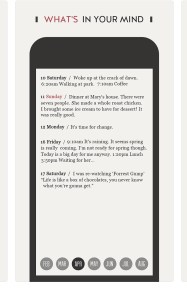

Example of Journalling Style

I’ve been trying another journaling technique over the past week that’s inspired from an application I was referred to. Rather than producing elongated entries (the kind I’ve pretty well always written) I have the date along the left hand side of the paper, and then sentences with a major thing or thought that I had in the day beside it, with each sentence separated by a slash symbol (i.e. ‘/‘). I’ve been finding it pretty useful for speeding up reflections, to the point that it takes about 3-5 minutes, whereas a longer entry has historically taken me 20+ minutes. These shorter journals won’t replace the more occasional longer journals — which tend to be more focused and in-depth on a given subject or issue — but I could see them as becoming a very regular part of my routine.


Inspiring Quotation of the Week

“How well you take criticism depends less on the message and more on your relationship with the messenger. It’s surprisingly easy to hear a hard truth when it comes from someone who believes in your potential and cares about your success.”

  • Adam Grant

Great Photography Shots

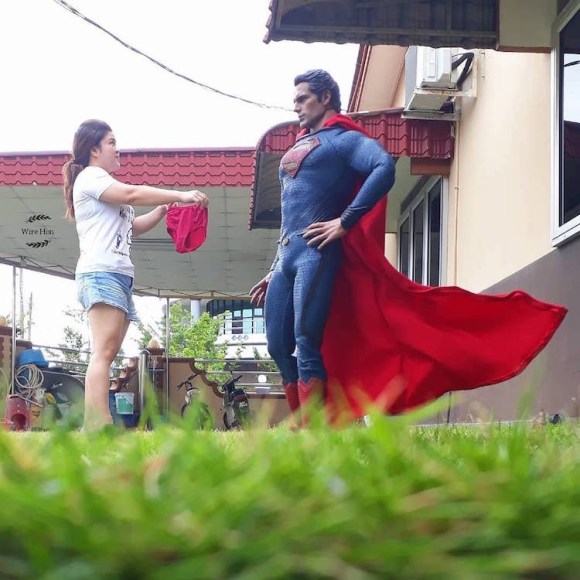
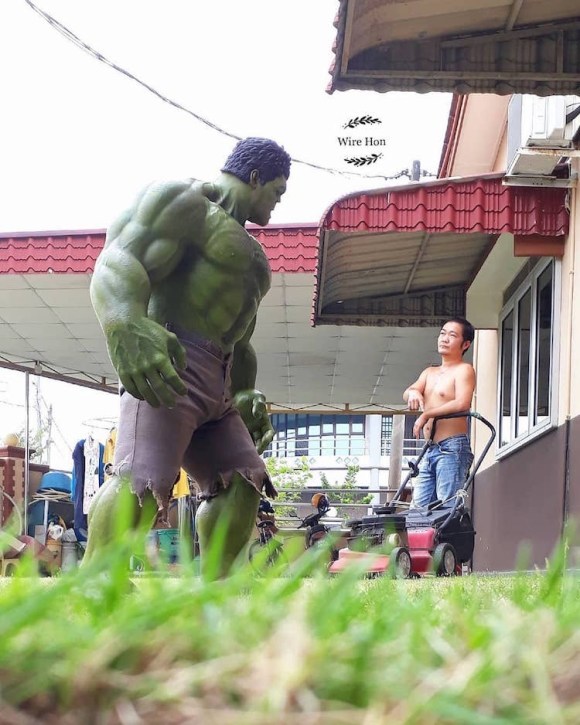
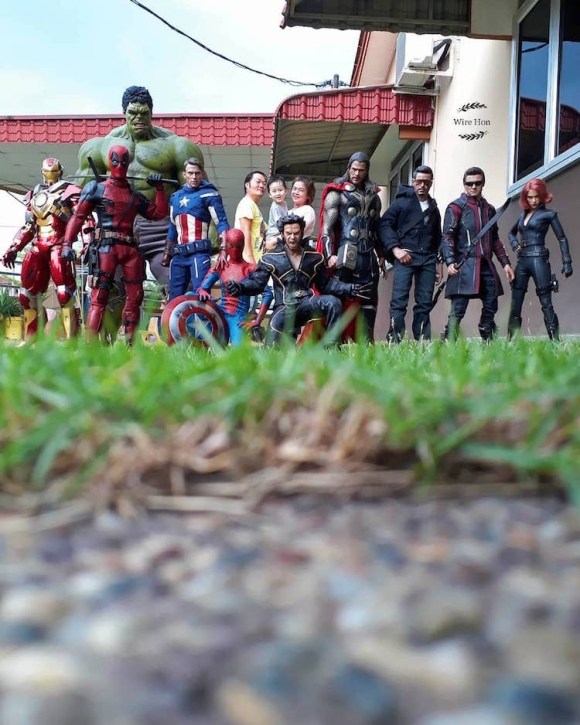
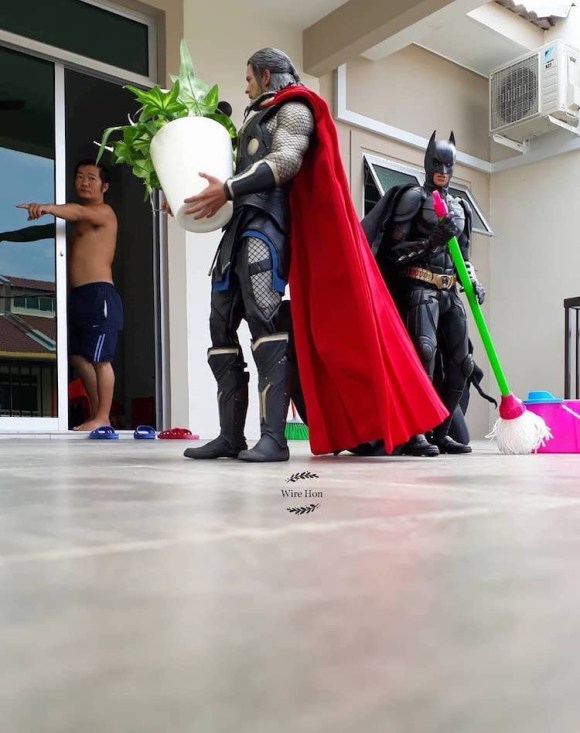
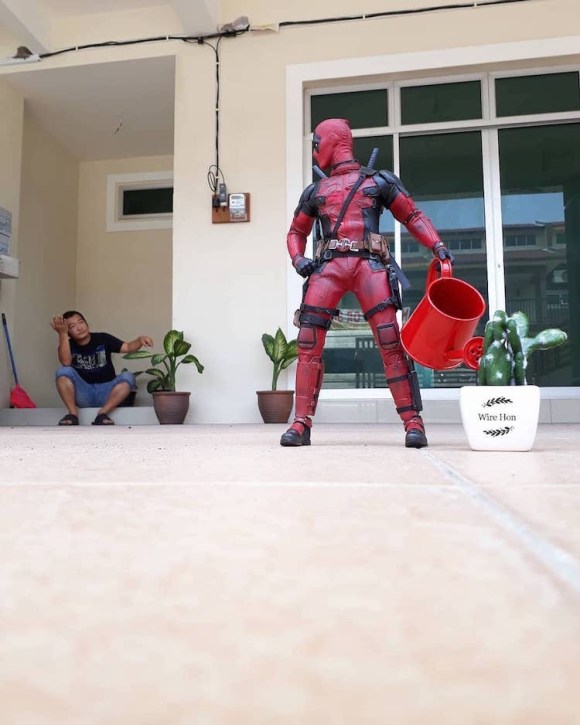
On the one hand, I think that Wire Hon’s shots with superheroes in everyday situations are just funny. But from a technical level I find what he’s doing pretty amazing: using forced perspective, he makes the toys appear as life-sized and involved with him, his family, and each other. Hon’s work is a reminder that you can do a lot of impressive work without photoshop if you just prep your scene effectively.
Music I’m Digging

  • ZHU – Ringos Desert // I’m really enjoying this for generally walking about but, in particular, when I’m heading to the gym.
  • Tash Sultana – Flow State // I really can’t get over how amazing the vocals and instrumentals are throughout his this record. While I enjoyed Sulana’s earlier EP, Notion, this record is far more sophisticated.

Neat Podcast Episodes

  • Dissect (Season One) // I’m only partway through the first season of Dissect but I’m already blown away. The thesis of the show is that it will spend one season doing a deep dive analysis on a particular album. The first season kicks things off with a focus on Kendrick Lamar’s ‘To Pimp a Butterfly’. The depth of analysis that takes place on this show is exceptional: it shows how Kendrick’s lyrics build between albums and the relationships between tracks’ lyrics and his life growing up, as well as the playful multiple interpretations that come up routinely across the album. If you like Song Exploder then you’re probably going to love this show.
  • Clear and Vivid – Cheryl Strayed Shares Her Advice on How to Give Advice // I’m continuously impressed with Alan Alda’s work on developing better communication. His episode with Strayed, of Modern Love fame, emphasizes how having compassion and wanting the best for the person whom you’re giving advice to helps to develop empathetic bonds that facilitate communication. She also notes that in presenting oneself as vulnerable, advice that is provided tends to resonate more with the receptive to because both parties are reducing the barriers between themselves.
  • CBC’s Ideas – It’s Alive (Frankenstein at 200) // Like most people, I was first exposed to Frankenstein through visual mediums and it was only much later in life that I read (and…forgot…) the actual novel. In this long-form piece, Ideas unpacks the significance and meanings within Shelley’s masterpiece. I came away from the episode with a deeper appreciation for the work and recognition of just how critical the book was of the scientific activities being undertaken at the time and, arguably, today as well.
  • CBC’s Ideas – The 2017 CBC Massey Lectures: In Search of a Better World, Lecture 5 // This was a beautiful, if hard, episode to listen to. The lecture is given by Payman Akhavan and explores the state of basic human dignity, the challenges faced by persons living in our time, the importance and value of human rights, and the hopefulness that humanity can strive to overcome its darkest impulses.
  • CBC Ideas – The Politics of the Professoriat: Political diversity on campuses // This was a maddening episode, where Ideas largely interviewed conservatives who assert that campuses are overly political biased, and that there are things that students have identified as threats and harms that conservatives themselves scoff at. I include it because it’s important to listen to — and disambiguate — the kinds of issues that some conservatives raise about the problems of campuses; specifically, that social progress, integration, advancement of basic rights, and support for more multicultural and integrated systems are somehow problematic, as opposed to emphasizing the need for social order predicated on police forces and so forth. It was deeply disappointing that instead of opening some of the conservative thinkers’ positions to debate they were, instead, left to make assertions about the state of the academy without challenge.

Good Reads for the Week

  • Lonely City // Xu’s photoessay of longing and loneliness in Taipei felt like it hit all the right notes: the text was minimal and interspersed through a series of photos that were well-curated for the mood he was seeking to convey.
  • How the Dutch Do Sex Ed // In a comparison of Dutch and American policies towards sexual education, Rough finds that effective and comprehensive sexual education both reduces unwanted pregnancies (and decreases abortion rates), the spread of sexually transmitted diseases, and the rates of sexual violence. Given these benefits, it’s particularly heartbreaking that the current government in Ontario is adopting a regressive policy concerning sexual education in public classrooms, largely in a mirror of American politics linked to sex ed.
  • All of Toronto is getting older, but it’s tougher to age in the suburbs // May Warren’s opinion column focuses on the challenges of the elderly living in the suburbs, with a core problem being that those parts of the city were designed in the ‘50s, ‘60s, and ’70s with the assumption that residents will have cars. In effect, urban planning errors — which include not only not building sidewalks, but also failures to invest in transit and separation of living space from social and commercial space — continue to have serious impacts on the persons who try to live in the city. Despite the awareness of the problems in planning, however, Toronto as a city continues to prioritize cars by investing in road systems at the expense of improves cycling and walking spaces: lessons, seemingly, have yet to be learned about what is needed to keep the city itself safe and functional for all users, not just those who ride around in automobiles.
  • Teaching in the Age of School Shootings // Throughout this piece I felt like I was on the verge of tears, as teachers explained what they had done in the immediate aftermath of school shootings and the trauma that they tried to cope with following the event. It never ceases to amaze me that, despite the relative regularity of school shootings in the United States of America as compared to other countries, authors still are obligated to include language such as “[l]ess than 1 percent of all fatal shootings that involve children age 5 to 18 occur in school, and a significant majority of those do not involve indiscriminate rampages or mass casualties.” Despite the empathy of the piece, that the author had to include this language speaks to the fundamental bizarreness of American gun culture as juxtaposed with gun cultures elsewhere in the Westernized world.
  • Do You See Camera As A Photographer’s Tool Or A Gadget? // Robin Wong’s assessment of talking about photography equipment isn’t novel, per se, insofar as the idea that photos are more important than the gear used in making the photos. But he makes this argument with an honesty and enthusiasm that’s infectious and delightful.
  • Ming Thein’s Artist’s Statement, 2018 edition // While I can’t really imagine myself ever engaging in photography at the level that MT does, I find myself routinely inspired by his images and the thoughtfulness that permeates his work.
  • He Asked Permission to Touch, but Not to Ghost // In this Modern Love essay, Sanders recognizes that how ‘consent culture’ in the #metoo era has entered the bedroom can be stiff and challenging: the regular verbal requests for affirmation seem legalistic, as opposed to trying to read the situation and move ahead. And, more broadly, that the consent culture doesn’t extent to caring culture: it’s a caring of not violating physical boundaries, but doesn’t carry with it a caring of another’s emotional wellbeing when someone ghosts following a romantic encounter. With regards to the regular questions concerning consent, I think that some of that is linked with men just starting to figure out/learn what is or isn’t required or appropriate; it’s a social norm and set of behaviours that will evolve as men, who may not have previously sought clear consent, integrate consent into the ways in which they interact with their romantic partners. But the author’s broader issue — that consent culture isn’t caring culture — is an excellent point…depending on what the relationship is intended for; if it’s designated as a particular kind of physical relationship, expecting it to extend to something else is perhaps unfair for the other party involved. But where the relationship is predicated, first and foremost, on the potential or expectation of mutual care then the failure to act in a caring way is a violation of social norms…though not necessary one that is, or should be, satisfied by consent culture.

Cool Things

  • Gluten Free Restaurant Cards: Eat Safely As a Celiac, Anywhere in the World // I know a bunch of people who have severe gluten sensitivities; these cards would be awesome for when they’re travelling the world.
  • Conserve The Sound // As our old technologies fade to the mists of time, this German website is collecting the sounds of classic electronics (mostly from the analogue and early-digital ages) so that we don’t forget their auditory characteristics.
  • Shed of the year 2018 finalists // Some of these sheds are absolutely amazing. But what’s more amazing is that there even is an 11th annual best sheds competition; stumbling across this kind of randomness reminds me of how the Web was once packed full of wackiness.
  • Warren Buffett’s 5/25 Rule Will Help You Focus On The Things That Matter // I appreciate how quickly this video outlines a method of setting goals (make 25, prioritize 5, exclusively work on those top 5 and only add another goal when one of the five is completed) but was left wondering about what constitutes a goal that can be ‘completed’: for open ended projects, aspirations, or goals, do they just get closed at some point? Or is it, instead, key that all goals have definable conclusions/points of ultimate success?
Categories
Links Photography Roundup Writing

The Roundup for August 20 – September 2, 2018 Edition

Above the Surface by Christopher Parsons

I think that I really fell in love with photography after purchasing, and shooting with, a used Fuji x100. It was a terrifically flawed little camera: autofocus was terrible, it was generally slow, and battery life was subpar. Furthermore, I didn’t really know what I was doing: I had shot on an iPhone for years and I didn’t really understand how to configure the x100 for semi-automatic shooting (e.g. setting aperture priority, the importance of difference ISO settings, etc.). Frankly, the x100 was probably too much camera for me at the time…but I loved it, nevertheless.

But as I’ve written about previously, I’m not entirely certain that I really enjoy shooting in the 35mm format. Some of that, I suspect, is associated with how I fell (back) in love with photography. I originally bought my Olympus OMD-EM10ii to travel to Cuba, and purchased a Panasonic 25mm 1.7 lens for the trip. While it’s inadvisable to take a new camera and lens with you when you travel, that’s what I did, and I walked out of Cuba with a lot of images that I really, really loved. I shot exclusively on the 25mm (50mm equivalent) and it lead me to understand how the lens worked in ways that I don’t think I’d have ever appreciated had also brought and use a zoom lens. However, I bought the lens because it was what reviewers said was a good ‘first’ lens insofar as it’s pretty versatile for anything and everything: you can do some portraiture (not really my cup of tea), can do landscape (as I did for that week in Cuba), and some architecture shots (also, as I did in Cuba).1 But without learning other focal lengths I was just going on what other people said the 50mm equivalent lens was good for without understanding from practice what I thought of it.

Fast forward to last week, when I travelled into the United States of America for a wedding and some quiet time in Savannah. Before I left I had to answer a hard question: what lenses should I bring with me? I decided to bring the Olympus 17mm 1.8 and the Panasonic 25mm 1.8, with the goal of trying to learn which I might prefer for general walkabout photography, and why I prefer one over the other.

To be honest, for general walking I think that I really enjoy the Olympus 17mm lens. I truly began to appreciate the ability to capture a broad scene, in excess of what the 25mm lens could capture. And I truly, absolutely, with all of my heart love the manual/automatic focus clutch; I tend to shoot exclusively in manual with the 17mm and it just feels right.2 I also started to come to terms with the differences in how the lens present colour; I don’t know that I prefer one or the other and, instead, just appreciate the differences that come from either one of them.3

However: I also learned that I really, really, really dislike how the 17mm presents humans — and in particular my own body — when not carefully used. I saw one picture in particular and was shocked: was that how I appeared? Was my entire sense of my body inaccurate?

I mean, I’m sure that my perception and the world’s perception of my body varies. But the 17mm could be incredibly unflattering if not used with a degree of deliberateness that I’ve never required with the 25mm. (It can also produce some pretty nice portraits, too, based on some shots a friend took of me.) For anyone who’s shot these two focal lengths for any period of time this won’t come as any kind of a shock. And I’ve seen enough online tutorials to know that what I saw was to be expected. However, I’d never actually lived the reality of having shots of myself, from 35mm equivalent and 50mm equivalent lenses, put beside one another. It’s meant that I have a pretty visceral and lived reality with either focal lens which is, in and of itself, a photography experience that I’m delighted to have had. Even if it made me question my body for a little bit until I figured out why some shots appeared one way, and others another!


I do a fair bit of personal reading that is like eating candy — i.e. fiction that caters to my guilty pleasures — and some that is like eating fibre — i.e. non-fiction and fiction alike that impress upon me the lived realities of other cultures, groups, and persons.

I just finished Adam Hochshild’s King Leopold’s Ghost: A Story of Greed, Terror, and Heroism in Colonial Africa and, at various points in the book, I felt like I’d been hit by a baseball bat. The kinds of actions which were taken against persons living in the Congo were, at their best, barbaric. What was most striking was how those historical facts were so carefully hidden away, destroyed, and removed from the minds of Western and African persons alike. I’ve read anti-colonial literature in the past but this was the first book that helped me genuinely appreciate the horrors inflicted by Western nations on persons around the world; the stories from the victims, quoted in their entirety, were particularly painful and sickening to read. I think that it’s also the book that has opened my eyes to some of the challenges around excavating history of colonialism, and how such excavation and hardship is the necessary pre-condition to coming to terms with the past: Western governments and elites buried the past and, before the past can be reconciled, it must first be made present in our daily lives.


Inspiring Quotation of the Week

“People matter. Meaning matters. A good life is not a place at which you arrive, it’s a lens through which you see and create your world.”

— Jonathan Fields

Great Photography Shots

One of the things that I’m trying to get better with is presenting images according to how I imagined them. This is distinct from how things may have looked: I often want to transform the scene in some way to present something that was in excess or slightly aside from the scene itself. It’s for this reason that I really like Gilmar Silva’s shots that juxtapose the ‘before’ and ‘after’ portraits he takes. In taking us behind the scenes of a final shot it’s easier to think through the logistics and editing that may enter into making an image, as opposed to snapping a photo.

Music I’m Digging

  • Gang Starr – Daily Operation // I’ve had this 1992 album on repeat for the past week or so; the tracks are incredibly solid mind melds of DJ Premier and The Guru. What’s striking — and depressing — is that so many of the tracks on racism and segregation in America (and North America more broadly) are as poignant and accurate, today, as they were when written over twenty years ago. Whither progress?

  • Seafret – Tell Me It’s Real // Seafret reminds me of Banners in terms of their sound and topics that they sing about. And, to my ear and taste, that’s a good thing! The album spends time focusing on the themes of love, loss, and despair, all themes that have resonated deeply with me over the past few months.
  • Leonard Cohen – Popular Problems // Cohen is a staple in my daily listening, and has been ever since I visited an exhibit/memorial to him in Montreal last December. His dry, cutting, lyrics combined with his lyrical whimsy were what caught me, and it’s the pain of love and life that keeps me coming back listen after listen.

Neat Podcast Episodes

  • On the Margins – Jason Kottke and Twenty Years of kottke.org // I have to admit that I’m having a hard time with On the Margins. On the one hand, I find the idea of having discussions with authors about the bookmaking process to be pretty neat. On the other, I find that Craig Mod (the interviewer) is too heavy handed in some of his engagements; he has a tendency to push the conversation in unnatural or forced ways. All that having been said, this episode on kottke.org, one of the older websites in existence, is pretty interesting insofar as it digs into the rationales for why the site exists in the first place, projects that have been considered and set aside, and reflections on what comes next.
  • The Daily – When We Almost Stopped Climate Change // Warning: this is a deeply enraging podcast, because it walks through how there were active efforts that almost led to real action to affect climate change in the 1980s…and which was stopped by conservative politicians on the basis of their economic interests. The episode does a good job in walking through efforts to raise awareness and combat climate change while, at the same time, making it very clear how naked capitalist interests are responsible for selling out the next generations.
  • The Daily – The War Inside the Catholic Church // I don’t follow religious politics particularly closely, but am aware that the current Pope is in routine conflict with more conservative elements of the Catholic church. As a non-Catholic I personally believe that Pope Francis is the best thing that could have happened to the Church, at the time it’s in now, and so it’s particularly distressing to learn how American conservative Catholics are actively engaging in warfare meant to diminish the current Pope. (As an aside, Francis’ book, The Name of God is Mercy, is a beautiful book that clearly both sets him as a progressive while simultaneously acting as a curious introduction into what the Church could and should be through his understanding of Catholicism.)
  • The Art of Photography – Your Camera Is Better Than Ansel’s // It’s easy to get caught up in gear that is used to make images but focusing on equipment mistakes the importance of technology versus vision. This episode emphasizes the need to develop our vision first and foremost, with equipment being of tertiary importance.

Good Reads for the Week

  • We’re in a new age of obesity. How did it happen? You’d be surprised // In another analysis of the obesity epidemic, Monbiot asserts that it’s less about people exercising less, less about the quantity of foods people are eating, and more about the manner in which foods are chemically designed. He writes, “we ate more in 1976, but differently. Today, we buy half as much fresh milk per person, but five times more yoghurt, three times more ice cream and – wait for it – 39 times as many dairy desserts. We buy half as many eggs as in 1976, but a third more breakfast cereals and twice the cereal snacks; half the total potatoes, but three times the crisps. While our direct purchases of sugar have sharply declined, the sugar we consume in drinks and confectionery is likely to have rocketed (there are purchase numbers only from 1992, at which point they were rising rapidly. Perhaps, as we consumed just 9kcal a day in the form of drinks in 1976, no one thought the numbers were worth collecting.) In other words, the opportunities to load our food with sugar have boomed.” This kind of assessment is important because it pushes back on the concept that people become obese because of a lack of motivation or other self-drive rationale: weight gain is a community problem, driven by chemists and marketers, and obese individuals are their victims.
  • Facebook Fueled Anti-Refugee Attacks in Germany, New Research Suggests // This study again speaks to the ills of the filter bubble economy: to drive engagement, persons are shown more and more polarizing material which often includes anti-immigration materials. This polarization isn’t ‘just online’: it leads to increases in physical violence towards immigrants, and when Internet outages take place the rates of violence decline in statistically significant ways. At some point the mountain of research has to showcase that services like Facebook are prone to increase misinformation and threaten certain communities in serious and lasting ways.
  • ‘We Cannot Afford This’: Malaysia Pushes Back Against China’s Vision // While the prospect of China assuming greater and greater regional power isn’t necessarily surprising, the pushback against Chinese efforts is curious. The article, generally, provides a good overview of Chinese-Malaysian relations but what got me laughing was how obviously corrupt some of the business dealings have been. As an example, a company who’s past work included building a zoo and bird park was hired to build a series of artificial islands as well as establish a deepwater port capable of hosting an aircraft carrier. I guess building cages for animals made them well suited to build housing for military vessels?

  • Woman: My iPhone was seized at border, then imaged—feds must now delete data // The suit against the government for having seized and imaged the woman’s iPhone is novel. But it was the 90-day period for which devices can be retained that struck me: what is the time delta for updates to be developed to successfully crack iOS devices these days? Is the period of time for which devices are retained functionally the period of time required before attacker’s can successfully overcome Apple’s protections?
  • Prosecutor: Suspect must give up his phone’s passcode in fatal hazing case // Case law in the USA remains disturbingly unsettled concerning whether compelling a person to disclose their decryption password constitutes a Fifth Amendment violation. This Louisiana case adds further confusion as to how to interpret that law; it’s only a matter of time until the Supreme Court is compelled to determine the scope of Fifth Amendment protections as they pertain to securing contemporary electronic devices. God help us all if they find that decryption doesn’t infringe up existing rights, as such a ruling would likely have a cascading global impact, to the detriment of citizens’ rights around the world.
  • How the Trump Administration Is Remaking the Courts // Zengerle has done a masterful job analyzing and assessing how the Trump presidency has been quickly and significantly affecting the political leanings of courts throughout the United States, and how his actions rely on the Senate having changed its own rules concerning judicial appointments. The impacts of these appointment will likely be felt over decades, not days or months, and could ultimately lead to significant changes in the nature of American jurisprudence as old norms are overturned based on novel legal philosophies taking hold in courts across the United States.
  • What about those mandate letters, Premier Ford? // An apt column by John Loric summarizes the significance — and historical precedent — of the Ontario government refusing to publish the letters to the Cabinet. Those letters indicate the objectives Ministers are expected to meet; absent them, and absent a real campaign platform, the public has no real way of understanding what the government is specifically directed to do or whether everything is just being made up on the fly. The Ontario government’s decision is bad for democratic accountability which is, ostensibly, one of the issues voters had identified as an issue in the previous government.
  • Researchers Edited Mice Genes to Stop Them from Dreaming // Though the researcher’s ultimate goal of the research — to better understand the role(s) of REM sleep to human well-being — is a serious goal, the article itself almost reads like a finding one would stumble across in a dystopia hellscape. “Researchers liberate workers from non-productive sleep elements, ensuring the regime’s productivity.” On second thought, I could imagine an ever-so-slightly modified headline of that type in at least a half-dozen western newspapers in as many different countries…

Cool Things

Footnotes

  1. I know: 35mm is often regarded as better for landscape and architecture alike, but I personally enjoy how you can isolate particular characteristics of a scene using the Panasonic 25mm.
  2. Although for the love of all things even marginally holy I wish that Olympus would push a firmware, so that when I set the clutch to manual the camera would activate focus peaking. It drives me nuts that this is only included in the Pro line of lenses.
  3. I’ve found a particular editing aesthetic with the 17mm that I like; it seems to start to approximate Fuji’s Classic Chrome look (the sole reason I wish I owned a Fuji is for that look!). In terms of the 25mm, I like the vibrancy of its images, as compared to the more neutral colours of the 17mm. For both lenses I tend to shoot jpg and in the ‘Natural’ colour filter on the camera.
Categories
Links Roundup Writing

The Roundup for August 13-19, 2018 Edition

The Wall by Christopher Parsons

I have a long history of ‘dating’ furniture and other adornments for my home before buying them. Before buying my coffee table, as an example, I spent about 4-5 months looking at coffee tables all across the city I live in. I wanted to get a sense of different styles, sizes, materials, and prices before deciding on the piece that I ended up purchasing. The same is true of almost all other major pieces of furniture and electronics that I own. In effect, I spent a lot of time searching for beautifully designed and highly functional items.

For the past three or four weeks, I’m been looking to get a single statement piece for a chair in my living room. I’m in a small space and, as a result, I’m going to see the given accent piece multiple times a day: I want each viewing to be enjoyable. Several weeks ago, I’d found the pillow that I knew was perfect for the chair but held off purchasing it to evaluate other options and explore more possibilities. Before choosing something that was going to reside with me for years I wanted to be certain there wasn’t anything else that was superior or competitive.

When I went to get that perfect pillow this weekend…it was sold out. Limited run, so unless I can find it second hand I’m going to have to just continue the search. Which is fine; there will be another accent piece that will fit that chair. But I’m going to regret not moving more quickly on it for a while.

I think that, when done by ‘normal’ people, the pickiness I personify is probably what drives a lot of minimalist homes. I think of people like Steve Jobs, who famously refused to purchase furniture that didn’t appeal to his design aesthetics. And in watching, and listening to, people who live ‘minimalist’ lives a key element of their very being focuses on neither wanting a lot of things nor wanting ugly things; that which they own should bring joy to their lives, and that which wouldn’t bring joy should be eschewed so they can concentrate on that which is joyful.

There are lots of reasons why people abstain from minimalism. But at least one is likely linked to being taught that it’s not ‘right’ to live in semi-furnished environments: you should be filling your home with all the pieces that society designates as ‘normal’ as soon as you move in. The actual ability to furnish homes so quickly, and frankly so cheaply, is made possible both because of low credit rates and ‘fast’ furniture: think budget IKEA pieces and other stores’ furniture that looks beautiful…until scratched to reveal the particle board (or other cheap materials) underneath. Forty or fifty years ago it wasn’t strange for people to sometimes wait years before they acquired all of the furniture for their home, much of which was well built and could be passed along to another generation.

Minimalism, contra to that past era, is arguably less about passing things along to the next generation.1 But it is about waiting, patiently, until the right pieces are available at the right time. And to find a piece of furniture you need to spend time looking: it’s not as simple as walking into any store’s showroom and picking up the pieces that you want. Minimalism involves caring about what is coming into a home and proactively being involved in genuinely looking for furniture, accents, or other things you will be living with for years to come. And that very act of slowing down and acting deliberately is what makes the hunt for pieces that come into my home both meditative and frustrating. Meditative because it forces me to slow down and move more deliberately and carefully. Frustrating because I’ve become so used to getting whatever I want, as soon as I want it. Minimalism is, in some ways, a call back to a past that isn’t that long ago, and certainly isn’t lost forever.


While I’m still keeping my stuff in Apple Notes — a problem I had with the app functionally being unresponsive was addressed a few point updates ago — I remain tempted to switch things over to Bear so I can work in Markdown. Michael Tsui has a nice summary of how to transfer notes out of Apple’s product. The caveat is that there’s no way to export attachments, which makes this export method a non-starter for me, personally.


Inspiring Quotation of the Week

Your art comes from your community. You must attend to your community.

  • Ann Patchett

Great Photography Shots

Unlike every other week, I only have a single photo this week, from Peter Baumgarten. His photo is amazing. But what was even more inspiring to me was his discussion of what went into making the photo: shots like this are the result of a bunch of work and a dash of luck!

Music I’m Digging

  • Glen Hansard and Marketa Irglova – Once (Music from the Motion Picture) // It’s been years since I listened to the tracks on this album and, to this date, there are several that strike right at my heart. The movie itself was excellent and largely made so because of the music; if you’re looking for a series of songs about the rise, lingering, and collapse of love, then this is an album for you.

Neat Podcast Episodes

  • The Documentary – Neighborhood: We Might As Well Be Finnish // An overview of both the political situation that Finland finds itself in, today, as aggression from Russia increases as well as a history lesson of the challenges Finland has undergone over the past two centuries. This podcast helped me learn a bit more about the political history of a country that I was otherwise pretty ignorant about.
  • The Documentary: Norway’s Silent Scandal // What happens when a BBC journalist intrudes into the relatively sleepy country of Norway? On the one hand, you learn a lot about the issue of child protective services taking children away from their parents with disturbing regularity. On the other, you learn just how unwanted foreign journalists are when they apply their journalistic interests to situations that might receive less, or different, attention from domestic journalists.
  • The Documentary – Not Making Babies in South Korea // In this episode, the BBC examines the social and gender reasons for the startlingly low birth rates in South Korea — women are currently expected to have 1.05 children in their lives. In an unsurprising spoiler, the higher costs of child rearing, the challenges women face at work when wanting to become mothers, and failure to shift domestic norms around distributions of domestic and professional labour are all linked to the country’s low birth rate.
  • Dear Sugars – Talking About Privilege // Two different kinds of privilege are discussed in this episode: male privilege associated with expectations that women take a man’s last name upon marriage, and male white privilege, where the man refuses to meaningfully engage with his African American partner’s racial identity. In both cases it felt like the men had fundamentally failed to engage with their partners as full partners in their life journey; in neither case, it seems, did the men recognize that the difficulties and questions their partners had identified needed to be genuinely worked through together. The problems, in effect, weren’t recognized as ‘group’ problems — save that they affected both parties — and were instead problems that the women needed to fix. This style of contemplating difference and challenges in interpersonal relations strikes me as a poor way of building strong and robust relationships which, to my mind, are predicated principally on open communication.
  • Clerks! (Part I) and Clerks! (Part II) // I had no idea what, in precise detail, law clerks for the Supreme Court of Canada did on a regular basis. I knew the basics — they helped with writing legal memos/briefs, argued with their Justices’, etc — but not the history of clerking in Canada, the rationale to increase the numbers of clerks assigned to each Justice, nor the breadth of activities that clerks are sometimes tasked to accomplish. I found it interesting that, in the assessment of past clerks, those who would benefit from the experience are likely those who move into academia or the non-profit sections, whereas those who shift into corporate practices are less likely to benefit from their year in Ottawa.

Good Reads for the Week

  • When Self-Care Turns into Self-Sabotage // Wilding provides a good assessment of the kinds of self-care exercises we undertake, and which are counterproductive, as opposed to those which tend to be more challenging and active, and which also satisfy our existential needs. Central to the ‘good self-care’ activities is a mindfulness that accompanies an activity: they aren’t retreats from the world, per se, but are designed towards developing ways to build emotional, social, and physical resiliency in the face of stressors.
  • AP Exclusive: Google tracks your movements, like it or not // Another damning indictment of Google’s anti-privacy activities.
  • Bribes, Backdoor Deals, and Pay to Play: How Bad Rosé Took Over // A good take on the bad practice of companies trying to buy their way onto prestige wine lists. I’d never considered this as part of how wine lists were chosen but it makes me that much more curious about how, and why, restaurants’ lists are produced.
  • The Unlikely Activists Who Took On Silicon Valley — and Won // Confessore’s article outlines, in depth, just how California’s newest privacy legislation was crafted and passed. Perhaps more importantly, it showcases how dedicated small sets of individuals can come together to press for political change when they are opposed by incredibly well-resourced companies.
  • In Pakistan’s Financial Crisis, an Opening for Chinese Lawfare // China is aggressively expanding its foreign influence. From building space bases in Argentina to creating and arming new islands in the South China Sea to engaging in hostile loan practices, they are behaving exactly like a rising power ‘should’. They are also trying to push, pull, or drag other countries to shift off the US dollar as their trading currency; if they can woo key US allies, such as Pakistan, it will merely continue to speak of the rising global dominance of China, and especially in their close region of influence.

Cool Things

  • Anthropocene looks to be an incredible movie about the sheer impact that humanity has on the Earth, and the broader implications it has for understanding ourselves and where we live.

Footnotes

  1. Indeed, there is a fundamental issues of being unable to find people who will inherit actual possessions; when we all have our own homes filled with furniture, why would we want out parents’? And even if we did, where would we put it?
Categories
Links Photography Roundup Writing

The Roundup for August 6-12, 2018 Edition

Screwed by Christopher Parsons

Over the past few weeks I’ve been visiting art galleries and spending a lot of time — sometimes 20 minutes or more — in front of certain paintings to try and understand why the artist made their composition decisions.1 This has involved both trying to understand the positionality of different subjects, the roles that light played in directing attention across the canvass, and more broadly trying to understand the emotional or intellectual responses that I experience when spending time with the work. To be frank, it’s a strange kind of experience just because standing, silently and quietly, in front of something in public contemplation feels abnormal. However, it’s a feeling that I’m slowly becoming more comfortable with: for a long time, it didn’t make sense to me that someone would spend tens of minutes, or even hours, or longer over the course of years, to view particular works. But I’m very slowly starting to really appreciate why people do that; in my case, probing a piece of art seems to involve letting go of myself to explore, consider, evaluate, reject, and refine thoughts that I have when taking in the artist’s works.

I’ve read, repeatedly, that photographers can benefit from spending time looking at paintings and other canvass-based pieces of artwork. Photography, in many respects, aims to accomplish many of the same things as paintings: good photos affect the viewer’s mind and emotions, while telling a story that is more or less simple. Even the starkest abstract or architectural photographs can ‘say’ something to the viewer. This is contrasted against snapshots that may capture a moment in time, but which aren’t necessarily meant to affect how the view experiences their lives. There are, of course, difficulties because what are sometimes regarded as snapshots may, in fact, be photographs: good street photography, as an example, may resemble snapshots but is actually meant to convey a more-or-less subtle story to the viewer.

None of this is to say that snapshots are bad kinds of images. They can hold incredible value: snapshots I’ve taken over the years of family gatherings, as an example, hold immense value to me. This value is heightened when they’re the only ‘real’ reminder I have of certain family members who have since died. But they’re not ‘artistic’ in isolation.2

It’s in the process of sitting or standing, silently, with our own photographs that I think we can come to imminently realize whether whatever was shot genuinely crosses the line between a snapshot and a photograph that is seeking to convey something beyond what was captured. And, over time, I think that it’s this practice that leads to photographers capturing more of a scene that is self-evidently visible in the pigments and paper used to print on: it’s by careful study of our own work, and that of other photographers, that we can train our minds to almost automatically see what is a photo, why, and how to capture it in its entirely instead of simply snapping a quick shot. Unless, of course, a snapshot is all that you want to capture at the time!


It’s baffling to me that Apple Music lets users create profiles, so that we can share what we’re listening to with other users, but there doesn’t seem to be a way to link into our profiles from the public web. It seems like another of Apple’s failures to understand that social discoverability shouldn’t be exclusively be constrained to very limited sharing within their closed environment.


Inspiring Quotation of the Week

  1. Stop caring with other people think.
  2. Choose your bosses carefully. Bad habits are difficult to unlearn.
  3. Turn the fucking Internet off. Do the work.
  4. Choose must.
  5. Know where you are going. 100% of people who go to a train station know where they want to end up.
  6. Chase the work. Not the money.
  7. Raise your standard.
  8. Tell yourself better stories.
  9. It takes courage to stand out.
  10. Be a beautiful outside.

Great Photography Shots

I was really stuck by Oleg Tolstoy’s photographs of Japanese taxi drivers, both because of her artist’s statement — she wanted to explore persons who were almost from another era, given their dress and professional silence while transporting passengers — as well as because the images themselves possess an almost cyberpunk-cinematic quality. I also found that the photos were evocative insofar as how the drivers were staring into the distance were incredibly effective in directing my on attention through the photographs. It’s obvious as soon as you look for it but, prior to then, it’s a subtle forcing of the eye through the frame which brings out a lot. In pulling myself away from how I’m ‘meant’ to look at the photo I quickly shift to a series of (to my mind) interesting questions: what is, and isn’t drawn clearly into our visual frame as we follow the subjects’ eyes? What can we learn from what our eyes are ‘told’ to ignore or to pay attention to? What would be the difference in how the pictures were viewed, based on whether you were trained to read left to right, right to left, or top to bottom?

Music I’m Digging

  • The Prodigy – Need Some1 (Single) // I’ve long been a fan of The Prodigy and this song has all the hallmarks of their better work: it’s almost impossible not to start moving as soon as it starts playing!
  • Nine Inch Nails – Add Violence (EP) // The second of three short EPs published by the Nine Inch Nails, the dull and gritty sounds of the album are really striking. I’m less a fan of Trent Reznor’s ‘louder’ songs, and far prefer ones which are more haunting. The songs ‘The Lovers’ and ‘This Isn’t the Place’ are the standout tracks for me, with the latter song in particular being strikingly haunting and, to my ear, amongst the band’s better work in the past few years.

Neat Podcast Episodes

  • Eat This – Barges and Bread // An in-depth discussion of the historical ways in which wheat was transported in Britain, even prior to the Romans developing fortifications around contemporary-day London. I learned both a lot about how and why wheat was transported in the bulks that it was, as well as the difficulties in using barging systems today to transport grain and other materials across British waterways.
  • The Daily – The Trump Voters We Don’t Talk About // Based on a relatively large-n sample, and measured across time, this episode unpacks the demographic groups that voted for Trump. Moreover, it looks at which groups are steadfastly supporting him, and where Trump’s voting base may have begun to fall away.
  • Lawfare – The Challenge of Digital Evidence // While encryption has sucked up a lot of the air concerning the difficulties that law enforcement agencies have in prosecuting crimes, this podcast focuses on all the other (often more serious) problems authorities have in obtaining digital evidence. The episode is a good introduction to the solvable problems: figuring out ways for authorities to determine who has the relevant data they need, educating authorities so they can actually process contemporary digital evidence, and establishing an central office that can coordinate authorities’ requests for data. It’s a solid overview of the non-encryption problems facing American law enforcement along with generally reasonable solutions.
  • The Sporkful – Michael Ian Black Is A Man Who Eats Salads // Like many episodes of The Sporkful this one uses food as an entry point into a discussion about more serious social issues. In this case, food and eating is used as a way to engage with concepts of often-toxic masculinity, the social constructions men live (and chafe) within, and the challenges associated with food and body image that men often experience. I found my head nodding throughout the episode as Michael carefully works through some of his own issues with how masculinity is constructed and the ways in which he tries to grapple with the associated social norms.

Good Reads for the Week

  • Ontario brewers should think twice before they buck themselves // While the craft beer market remains in an uneasy state in Ontario, any breweries that start producing dollar beers are almost certain to produce swill and irreparably damage their brands. Plus, should craft breweries attain any real market share as a result of producing dollar beers the big breweries will almost certainly just sell their own beers at a loss to run off ‘craft’ brews selling for under a buck.
  • America’s electoral system gives the Republicans advantages over Democrats // The Economist provides a sharp overview of how changing demographics, gerrymandering, and the electoral college combine to disadvantage the Democratic Party in American politics. It’s not new research but it is succinctly outlined and argued.
  • How to Photograph a Vacation // Rose’s suggestions for image making on vacation resonate with me: the different techniques he uses (e.g. anchoring shot, unique shots, isolation shots, etc) are things I’ve done to varying degrees of success, but that I find helpful regardless. I also really like the idea of culling a trip to a small number — he suggest six — of photos that ‘define’ the trip. While my number tends to be higher, I may also spend a lot more time engaging in photography while travelling? (Disclosure: I tend to shoot prolifically when on vacation, to the tune of hundreds or thousands of images. Shooting is a key element to my experiencing a happy vacation.) Regardless, I find that culling down to the best 10-30 images is something that I actually enjoy doing because it’s a good learning moment; it compels me to ask what photos are my best, and why?
  • The disturbing record behind one of B.C.’s top billing doctors // While over billing was a serious issue with this doctor, the more deeply problematic element was his incredibly poor medical care that left women scarred mentally and physically. Persons who haven’t dealt with bad obstetrician-gynecologists really can’t understand how deeply debilitating their actions can be or how long it can take to recover. I can only hope that this case encourages Canadian colleges of physicians to more carefully monitor and police their members, though I’m not confident that’ll be the case.
  • “9/11esque” Tweets and the Saudi Spat // Craig Forcese has a terrific (academic) blog where he reflects on the terrorist promotion and advocacy statutes in Canadian law and asks: would they apply to tweets sent by parties friendly to Saudi Arabia and which showed a plane tunnelling towards the CN Tower?
  • How Big Is the Alt Right? Inside My Futile Quest to Count // While far from scientific, Grey Ellis argues that the alt-right in the United States is once more being pushed underground on the basis that fewer people are likely to turn up to public events. However, this assessment discounts the effectiveness of online recruitment; while those persons may not show up in person to demonstrate they will be woven throughout society and able to exert their views in perhaps more subtle ways as they harass individuals, discriminate on a local level, and spread their hate and prejudice in more private settings. Pushing hate underground doesn’t inherently make it any less of a social evil.
  • Workplace Wellness Programs Don’t Work Well. Why Some Studies Show Otherwise // I’ve been suspicious of wellness programs for a long time; they’ve struck me as ways of externalizing poor health issues onto employees and then blaming them for not being proactive about their health. But where my worries have mostly revolved around the issue of insurance cost hikes, this analysis by the New York Times showcases that wellness programs don’t really lead to significant improvements in quality of health for those in wellness programs when appropriate controls are established. So the idea that wellness necessarily leads to better health for employees generally doesn’t hold. Instead, there are just certain classes of people inside, and outside, of wellness programs who will live healthier lifestyles. It’s a person-thing, not a wellness-member thing.
  • Tree Bark Generates a Weird Force That Defies Gravity // While many people think that the internal fibres of trees are responsible for their upright posture (I definitely did!) it turns out that trees’ bark growth plays a significant role in maintaining vertical stability. This is why some parts of tree bark are thicker than other parts: those thick elements are used to maintain posture, and removing or weakening that element of the epidermis of the tree will cause it to begin to tilt. Fascinating.

Cool Things

  • Fire in Cardboard City // What if fire broke out in a land of cardboard? How would a city respond and with what consequences?
  • Native Land // A mapping of the lands the indigenous people in Canada, the United States, Australia, and New Zealand once claimed as their own.
  • IKEA’s “ENEBY” Bluetooth Speakers // I already have three separate speaker systems for my 1-bedroom condo. But I really, really like the idea of picking up some of these IKEA speakers (assuming they sound good enough) to install in my bedroom and bathroom. I just wish that they were Airplay 2 compatible so that I could stream music throughout my home without having to constantly be re-pairing with different speaker sets.

Footnotes

  1. Generally I’ve been focusing on European art from between the 1600s to 1800s.
  2. There is a case to be made that, assembled in aggregate, what might have been snapshots can become proper photographs with a story and emotive element. But at least with the snapshots I’m thinking of — and seeing scroll on my TV — they definitely don’t rise to the level of a photograph with a particular intent behind them besides documenting a time and moment.
Categories
Links Photography Roundup

The Roundup for July 30-August 5, 2018 Edition

The Seat by Christopher Parsons

I’m finally back in the swing of regularly getting up, and out, to make more photos. It’s once again an almost meditative activity: the process of carefully looking at my surroundings, thinking through what might be aesthetically appealing, and then trying to push myself to realize what I see in my minds eye is deeply relaxing. It’s leading me to start looking at the world as someone involved in photography: even when I don’t have camera in hand I’m trying to ‘see’ the shots around me, the focal ranges I’d want, apertures I’d prefer, and so forth.

Strapping on my camera has also been good in getting me to walk around areas of the city that I haven’t visited in too many months or, in some cases, years. Huge parts of my city have transformed themselves in short periods of time, with new art installations scattered throughout the core, old places I liked to photograph having been torn down, and new places being built right now.

In case you’re interested in seeing more of my photos, I post them more regularly at Instagram, despite my annoyance with certain elements of that social media platform.


Inspiring Quotation of the Week

“When you take responsibility for your life, you can choose peace instead of drama, growth instead of complacency and love instead of abuse.”

– Kyle D. Jones

Great Photography Shots

I’m continually impressed with just how much can be done with smartphone cameras; a recent set from Mobiography on the topic of ‘stunningly beautiful world inspired’ photos led to some great shots.

On this dreary day, memories of Provence sunflowers make me smile‘ by Barbara Frish
Foggy morning‘ by Liz Anderson
Out of the mist they come‘ by @Rawdeb

Music I’m Digging

  • Underworld and Iggy Pop – Teatime Dub Encounters (EP) // The curious combination of electronic dub and Iggy’s mostly spoken word contributions make for a unique listening experience. I keep thinking that it reminds me, here and there, of a very very upbeat Leonard Cohen. And then a few bars later (and Iggy’s own screechy voice) and I recant that position.
  • Sam Hague – Altered Carbon (Playlist) // I loved Altered Carbon when it came out: it was the gritty cyberpunk environment that I love that was accompanied by a decent plot and sufficiently interesting characters. The original series’ soundtrack is good, but I find that Sam’s playlist does a better job at more broadly capturing the ambiance and mood that I associated with cyberpunk settings.
  • Tool – 10,000 Days // Not a new album by any stretch, but I’ve been listening to this regularly all week. I love the instrumentals in Jambi and how in-depth the instrumentals and vocals are for Wings for Marie, Pt. 1 and 10,000 Days (Wings, Pt. 2).

Neat Podcast Episodes

  • Planet Money – Venezuela’s Fugitive Money Trades // A discussion of why the current government of Venezuela is struggling to shut out groups who are providing US dollars to citizens, and the potential for the Venezuela economy to spontaneously shift default currencies to one pegged to the US dollar.
  • The Heart – No: Answers // (Part three of a four part series; trigger warning) In this episode, Kaitlin talks with men about why, and when, they ignored when when women said they wanted a given sexual activity to stop. It’s a raw, hurtful, episode to listen to. And it’s critical than discussions like this are listened to, widely, by men to understand the threats that many women have already faced, and many more fear facing in the future.
  • Lawfare – Should Humans Communicate with Aliens? // Shane Harris hosts a fun discussion about the ethics of communicating with foreign beings, and works through a series of different thought experiments with his guests (e.g. what if we get a message from 50,000 years ago? What if spaceships suddenly appear over our cities?). One thing that stuck with me was that we are likely to be deeply challenged in speaking with any visitors; we can’t current communicate with intelligent life forms on Earth such as dolphins, whales, or octopi; why do we think we’ll be any more successful with beings not of this earth?
  • Wag the Dog – Dark, Dirty, and Disruptive // A new episodic and intermittent CanadaLand podcast, Allison Smith and Jonathan Goldsbie look over what Doug Ford has done since becoming Premier of Ontario, and what those actions means for how Ford will govern and Ontario likely fare under his dictates.

Good Reads for the Week

  • The most relaxing vacation you can take is going nowhere // I’m anticipating a staycation at some point in the coming year or so, and have a list of specific things I want to do (mainly engage in photography around the city, where I’m unlikely to otherwise venture out to). Friends of mine have taken these for years and swear by their relaxing quality; while I don’t want to give up travelling for vacation, I also want to find ways of appreciating where I live that much more.
  • At any given time in their lives, people have two dozen regular haunts // Based on research, scientists have found that humans seem to have an upper limit of places that they regularly visit or spend time at. This research makes me want to think through the different places I regularly frequent and determine just how many frequent haunts I really do have, as well as when they change and perhaps why.
  • Inside the World of Racist Science Fiction // An insightful look at how the tropes of white nationalist literature now pervade the very language used by the White House.
  • Photo of Kissing Gay Couple Sparks Controversy at One of Brazil’s Most Important and Iconic Tourist Sites // Sometimes people ask how they can be an ally of a group they support, but do not belong to; this business owner shows how it can be done.
  • Your IoT security concerns are stupid // Robert Graham has a very contrarian position on IoT security: the issue isn’t patching or DNS, but something we can’t really see yet. Solving for old problems in policy is going to cost more than the benefit and, so, he argues we should let technologists just solve things at market speed instead of waiting for politics to catch up.
  • When Rio Tinto Met China’s Iron Hand // A truly stunningly detailed investigative report that unpacks how Chinese security and intelligence services are weaponized against foreign companies. Particularly noteworthy is the decision by Rio Tinto to maintain dealings with Chinese companies despite knowing they are compromised and targeted: the lure of profits mean that they will continue to negotiate and contract despite being at gross informational disadvantages.
  • Google Plans to Launch Censored Search Engine in China, Leaked Documents Reveal // When Google left the Chinese market it was heralded as a demonstration of how corporations could, and should, behave to advance human rights. Google’s plans to return to China are a serious, and painful, blow to those who have campaigned for internet freedom and human rights across the world.
  • Jeff Bezos’s $150 Billion Fortune Is a Policy Failure // The Atlantic argues that Bezos’ fortunes are the result of economic policies that disenfranchise those least well off in society while, simultaneously, externalizing the costs of wage depression and associated health challenges to the public purse. While the article concludes by arguing Bezos, himself, hasn’t necessarily done anything wrong I don’t think this holds up to the article’s own assessment of Amazon: a history of deliberately busting union-organizing, promoting non-compete agreements to inhibit worker mobility, and efforts to avoid paying taxes are all indications that the company — and Bezos by extension — is more interested in exploiting persons and localities than ?supporting the communities that it’s located within. Communities, like the humans they employ, are merely disposable assets.
  • The World Economy Runs on GPS. It Needs a Backup Plan // GPS is critical to almost all aspects of contemporary life. While Russia and the EU, along with China, have or are deploying their equivalents to reduce their dependence of American system, those very systems are vulnerable to interference that could shut down vast swathes of our lives. This is an issue that all governments need to seriously address, and soon, rather than just waiting until something bad happens.
Categories
Links Photography Roundup

The Roundup for July 23-29, 2018 Edition

Stay Frosty by Christopher Parsons

For several months it’s been hard for me to get out and take photos. Not because I didn’t have the time but I wasn’t in the right state of mind to work through the challenges in my life through shutter therapy. In the past few weeks I’ve pushed myself out to take a few photowalks and they’ve been immensely helpful in just helping me to slow down, to get into a different-than-normal creative flow, and to create things that I find captivating and beautiful. And, in the process, it’s been helpful to reflect on the past, the present, and contemplate my future.

For the past several months I wanted to avoid excessively taking photos to avoid capturing that time in amber; instead, I wanted to have memories develop that would fade and twist and turn over the coming years. I wanted to avoid capturing too many images that might, in time, come to feel painful upon reflection and consideration. I don’t know if this was the ‘correct’ decision or whether I’ll regret not spending more time to capture more images. Regardless, that die is cast.

At least for now, I’m motivated to get back out and shoot, often with particular aims and ends and shots in mind. One of the things that I’m finding most curious is that in returning to certain locations that I trend towards in the city, I’m not necessarily seeing them in different ways but, instead, seeing the breadth of scenes slightly differently. That is, I’m not just seeing the ‘kind’ of image that I’d like to make in a given location; I’m also seeing how to try and get that image, and a series of different techniques that might let me accomplish that goal. I’d be lying if I said that I’ve been successful in achieving many of those shots but I’m getting a lot more of them, now, than I ever would have a year or so ago.


I had a small moment of digital indigestion over at my professional site this week – a maintenance update didn’t take, leaving my site in a permanent state of ‘This site is temporary unavailable for maintenance’ – and fortunately the Internet had me covered to quickly fix the problem.


Inspiring Quotation of the Week

“Stay away from negative people. They have a problem for every solution.”

– Albert Einstein

Great Photography Shots

The shots that won in the iPhone Photography Awards this year are, as always, stunning. It’s really amazing to see how much can be done with the relative small sensors in contemporary mobile phones.

Music I’m Digging

  • blackbear – cybersex // I’m really appreciating the fusion of solid beats and good flow across the majority of the album.
  • Jazz Cartier – Fleurever // I’ve only listened to this a few times through at this point, and while I think that I prefer his earlier album Hotel Paranoia the beats and flow, again, are great in this. The opening — with a reference to Spadina station in Toronto — was really eerie when I first heard it; I’d thought I started listening to something entirely unlike what I thought was coming.

Neat Podcast Episodes

  • Dear Sugars – Trust Your Body // This is a strong episode from Dear Sugars, with solid examinations of the kinds of body issues that people carry with them, the rationales behind them, and ways in which our bodies react to our being in the world. While the emphasis is on destigmatizing our perceptions of the body, I found that it was equally helpful to just think through the ways in which we inhabit our bodies and why.
  • Song Exploder – Action Bronson – The Chairman’s Intent // I’m not going to lie: “The Chairman’s Intent” is far from a good song. The lyrics are…poor. But the beat is pretty impressive and, more generally, I found it interesting to hear the producer and artist talk through how over-the-top they perceived the song as they were getting it ready.
  • The Daily – Which to Believe: Trump’s Words, or His Acts? // In a start admittance, the Secretary of State was led to assert that Trump’s words meant little compared to actions and, upon realizing what he was saying, retreated quickly from that position. However, what was asserted was how members of the administration have been talking about Trump — and how persons surrounding the administration have been reassuring allies since Trump’s election — and that there is considered a problem in admitting to the public what we already know just further indicates the chaos built into the current administrations behaviours and associations with trust.
  • Planet Money – The One-Page Plan to Fix Global Warming Revisited // This is a superb overview of the rationales for a carbon tax and is helpful for showcasing how idiotic is that conservative populist leaders in Canada and the United States alike are abandoning a solution that would economically motivate the world towards a less carbon-intensive future.

Good Reads for the Week

  • Seeing My Body With Fresh Eyes // This is a beautiful personal essay that showcases the challenges of dealing with our bodies and the value of positive affirmations by those near to you. As someone who suffered negative body issues for years, issues which were exacerbated by persons who were close to me and deeply critical of my appearance, I can say that time spent with a loving partner who was supportive of my body made a huge difference in recuperating my own sense of self, and in finding comfort and safety in the body I inhabit.
  • Tony // This is a wonderful telling of who Tony Bourdain was, through the eyes and using the words of one of America’s best storytellers. It captures the heart of who Bourdain was and why his death is a loss for us all.
  • The SIM Hijackers // An long form piece of journalism that examines how easy it is to hijack your phone number, and the consequences of a malicious operator doing just that. In effect, there is the high potential for the operator to subsequently gain access to your online accounts regardless of whether you’ve set up two factor authentication.
  • Kinder Morgan company used private investigators to monitor pipeline protestors. Here’s how it worked // A detailed investigation into how Kinder Morgan — and now, perhaps, the federal government of Canada — uses private investigators to spy on protestors so as to obtain evidence used to strengthen penalties against those who participate in peaceful civil disobedience.
  • Beat Generosity Burnout // ”Generosity means caring about others, but not at the expense of caring for yourself. By protecting yourself from exhaustion, you may feel less altruistic. Yet you will actually end up giving more.”
  • Why I’m Deleting All My Old Tweets // I deleted a lot of old tweets earlier this year, and just went through the process of deleting almost all of them. Twitter is deliberately designed to be a reactive medium and, as such, I tend to regard it as a medium that should be relatively ephemeral. It’s a shame Twitter themselves haven’t set up their service such that tweets over a certain age are automatically deleted/archived/removed from public view.
  • When a Stranger Decides to Destroy Your Life // An investigation by Gizmodo which showcases how much harm random strangers can cause, and how such harm is sometimes linked to a lack of empathy between persons communicating over social media.
  • Behind the Messy, Expensive Split Between Facebook and WhatsApp’s Founders // Facebook: ruining otherwise good applications and services since it began acquiring them. In the absence of the pro-privacy founders of WhatsApp, who had designed the service to be profitable but not as profitable as Facebook desires, WhatsApp will now “be run by Chris Daniels, a longtime Facebook executive who is tasked with finding a business model that brings in revenue at a level to justify the app’s purchase price, without damaging the features that make it so popular.” Expect the app to suck, fast, and for people to hate it as much as they do Facebook Messenger, Facebook’s social media platform and, increasingly, Instagram itself.
  • How Silicon Valley Became a Den of Spies // This is the second piece I’ve read in recent history on the counterintelligence operations that the FBI undertakes in Silicon Valley. The article specifically speaks to some of the methods used by Russian, Chinese, Israeli, French, and South Korean intelligence services, and the rationales driving different kinds of operations. If you’re interested in the significance of intelligence and counterintelligence operations in the United States then this article’s for you.

Cool Things

Categories
Links Photography Roundup

The Roundup for July 16-22, 2018 Edition

Ocean Town by Christopher Parsons

When I first bought my Olympus EM-10ii I immediately purchased Panasonic’s 1.7 25mm lens. My rationale was flawed: I assumed that the kit zoom lens was garbage and that a cheap prime lens would get me photos that would be substantively better than anything that the kit lens provided.1 Even after I figured out that I could take shots I enjoyed with both zoom lenses and the prime I tended to stick with the primes on the basis that I kept reading about the importance of shooting with primes.

Fast forward a year, and I started using my zoom lenses a lot, especially when I was travelling somewhere that would include nature shots. It’s been pretty normal for me to have a long zoom lens combined with an iPhone 7 for wide angle and panoramic shots. And over the past few months that I’ve been shooting at home I’ve tended to pick up and use the kit lens that came with my camera: there’s no way that what I’m trying to do with my lenses are outside of scope of what that lens can do.

The result has been that I’ve been using zooms a lot over the past 6 or 7 months. To the point that I hadn’t picked up a prime lens for months.

Yesterday I decided to just head out and shoot with my trusty Panasonic 1.7 25mm. It was a surreal experience, largely because I’ve gotten so used to the qualities of my zoom lenses that I had to spent at least an hour just getting used to the 25mm’s characteristics. Specifically, getting used to the different coloration, the ability to play with wider apertures, and my need to fully zoom with my legs. In the coming days I’m hoping to post some of the photos from the walk as well as the importance and value that I took from just taking the walk.


Inspiring Quotation of the Week

When our intentions toward others are good, we find that any feelings of anxiety or insecurity we may have are greatly reduced. We experience a liberation from our habitual preoccupation with self and paradoxically, this gives rise to strong feelings of confidence.

  • Dalai Lama

Great Photography Shots

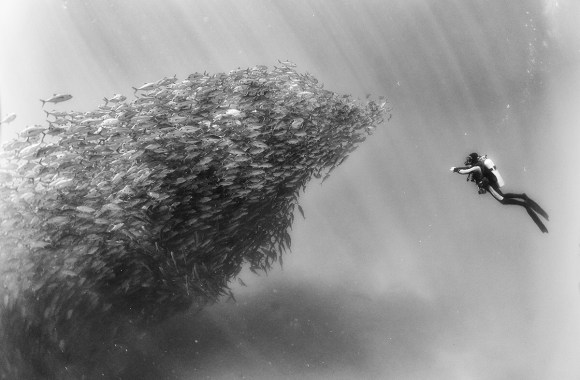
I’ve never actually looked at a series of black and white photographs of undersea life; Anuar Patjane Floriuk’s photos look like they emerge from some kind of a science fiction movie as opposed to the worlds under our seas and oceans.

Music I’m Digging

  • Huaschka – Abandoned City // I find that the album is very haunting, and is exciting to listen to when concentrating on it alone while also functioning as nice background music when I’m reading or writing.
  • Amy Shark – Love Monster // A very pop album. The song ‘Adore’ always bring a smile to my face.
  • Johann Johannsson – Orphee // I haven’t listened to Johannsson’s work previously and found the composition of the orchestras he performs with are both accessible (good for someone like me who likes classical music but hasn’t yet learned enough to know which specific compositions are responding to/playing with one another) and fun to listen to through the lens of the Greek tale of Orpheus.

Neat Podcast Episodes

Good Reads for the Week

Cool Things

  • An entomologist rates ant emojis // Some of these descriptions are terrific. As an example, the review of Mozilla’s emoji is “This is a termite, -10/10.”
  • Radkan Tower // 800 years ago, Iranian astronomer’s built an entire building that was able to identify the different seasons and account for when the solstice and equinox took place, as well as determine leap years and the start of Nowruz, the Iranian New Year. Amazing.
  1. I would note that I immediately took my camera and that prime lens to Cuba; I think that being forced into a single focal lens the whole time did result in me getting more shots that I would like. The constraints, themselves, were helpful when I was first learning the camera.
Categories
Links Roundup

The Roundup for July 9-15, 2018 Edition

Eyes to the Home by Christopher Parsons

This has been a week where I’ve been trying to get used to living in a new location. So there’ve been trips to Ikea and other places to get the necessities needed for the new location, getting used to wandering a new building, and learning the new routes to walk to work. And it’s been a quiet time of reflection, thoughts, and considerations of the future, as well as the recent past. It’s been a very busy week and, as things step into a new tempo, I suspect things will feel less comfortable and those reflections properly take hold.


Inspiring Quotation of the Week

To be clear, privacy is no ‘contemporary’ hang-up. This is a diversionary argument floated frequently in the tech / security fields; that privacy concerns have somehow erupted in the past decade, simply on account of social media, smart phones or Edward Snowden. Not only is that premise self-serving if one works in the bureaucracy of intelligence, it’s also demonstrably false.

The Latin root of privacy is ‘privatum’, an enunciated principle of civil law as early as the Roman Republic under Cicero. Privacy was a constraint on government action inscribed into England’s Magna Carta of 1215. And, perhaps most famously, the individual’s right to privacy is there in the Fourth Amendment of the American Constitution.

Great Photography Shots

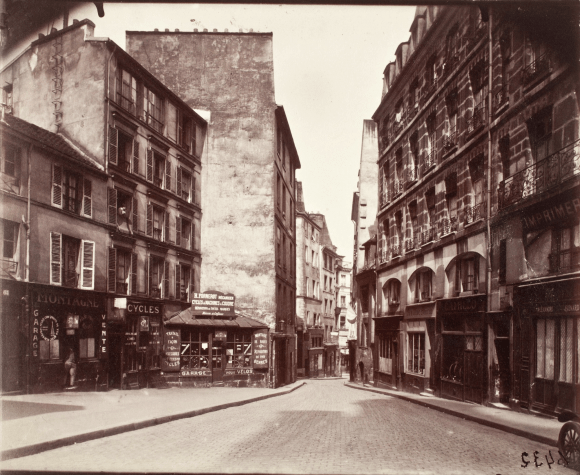
Brendan Siebel has a nice essay to accompany photographs taken by Eugène Atget, who took photos of Paris around the turn of the 20th century. Atget’s work documents the changes to the city and captures that nature of the city-that-was as it was forcibly transformed by city planner.

Music I’m Digging

  • Leonard Cohen – Popular Problems // I’m slowly going through Cohen’s corpus, and I’m definitely finding that I prefer his more gravelly and poetic work as opposed to that when he was younger and more melodic.

Neat Podcast Episodes

  • Planet Money – Peak Sand // This story about the nature of sand forensics, and how sand is being stolen to provide resort beaches with Instagram-perfect sand, was eye-opening and yet another indication of the issues with tourism.
  • The Daily – One Family’s Reunification Story // There is so much that is wrong in the United States of America right now, and this piece by the daily that recounts the reunification between a migrant family is heart wrenching.

Good Reads for the Week

  • How to Be Alone and Why // A nice meditation on the value of being alone and, also, why being alone is increasingly common given the rise of single-occupancy homes. We are moving to a society where are are separated from other persons more regularly than in the past, but must also recognize that to participate fully in society we must sometimes enjoy periods of solitude so-as-to learn how and why to engage with those around us in a meaningful manner.
  • Unidentified Plane-Bae Woman’s Statement Confirms the Worst // The problems largely associated with the spread of social media, and capability of other persons to deliberately intrude into one another’s personal lives, is a continuation of social problems that pre-date the digital era. However, whereas once gossip and innuendo would have been relatively restricted to a physical space it can now break free of geographical boundaries and, in the process, lead other persons to actively intrude upon persons’ private lives and engage in harassment and abuse. While such social problems cannot ever be truly ‘solved’ they can be ameliorated by teaching the right and wrong ways to behave online which will, fundamentally, explain the problems linked with historical social ills and how they can be aggravated by digital communications mediums.

Cool Things

  • I’m a huge fan of Yamazaki’s design language: simple, clean, and minimalist. I recently picked up their Tower Laundry Basket and love how it just quietly sits in my bed room without drawing any attention to itself.
  • I love these ‘monumental nobodies’ pieces by Mathew Quick.
Categories
Links Roundup

The Roundup for July 2-8, 2018 Edition

Majesty by Christopher Parsons

The past few weeks have been hard. Really hard. I finally said goodbye to my dad, who died unexpectedly a little over a year ago. I said goodbye to the woman that I love. And I moved to a new home, too.

I have lots of reflections on my dad and how important it is to support those we love, even if that support means that a relationship needs to end so that they can achieve their dreams and aspirations. But for now I just need to process those thoughts, emotions, and reflections. If there’s any saving grace, it’s that my adopted family — even those who live abroad — are all living close to me.


Inspiring Quotation of the Week

Real love teaches us. It teaches us what we do and do not want in a partner. We learn how to be better at love from the ones we loved first. If we just got over all of that and truly erased the entire experience from the space in our hearts and minds where that love once occupied, then wouldn’t we just continue making the same mistakes over and over? If loving someone were as fleeting as we often try to make it be and we could “just get over it,” we wouldn’t bother with it anymore. What would be the point?

I think it is because we never fully get over the love we once had for someone that entices us to love again. It is because we remember that love that we want it again. We love a little deeper, a little more completely with each love we find. We want love to last. With every love we lose, we learn just how precious and valuable it is. It is how we ultimately (hopefully) find the one we never have to get over.

Music I’m Digging

Neat Podcast Episodes

Good Reads for the Week

  • When you don’t disclose salary range on a job posting, a unicorn loses its wings//There’s a severe problem in both non-profit and for-profit hiring: a failure to disclose what people will earn in any given position. Without that information it’s challenging for applicants to know whether it’s worth their time to bother applying, and can lead to applicants (and hiring committees!) wasting a lot of time before realizing that the salary range isn’t appropriate for the applicant’s expectations. Appropriate ranges should be included in all positions, and with ranges that are meaningfully bounded as opposed to massive ranges that prevent applicants from really knowing the likely salary.
  • Advertising Play Well//A delightful take on how advertising to children has changed, and why Lego used to be a leader in gender neutral play-based advertising and products.
  • The Electric Flight of Spiders//Fascinating new research shows that spiders use electrostatic repulsion to ‘fly’ using strands of silk emitted from their abdomen’s. While wind current plays a role, it’s the electrostatic repulsion that actually let’s arachnids take flight. Amazing!
  • Beyoncé and Jay-Z’s ‘Apes**t’ Was a Subtle History Lesson in Race and Power//I’m finding the various analyses of this video really interesting, as different authors explore the cultural and political significance of the chosen imagery. This goes a step further by not just interpreting the video but drawing it into a broader landscape of artistic critique, and which blends a range of lyrics from Jay-Z and Beyoncé to come to more sweeping conclusions.

Cool Things and Places

  • A Weekend Guide to Detroit//I’ve wanted to head over to Detroit for a while — I’d love to photograph the art! — and this provides a more fulsome ‘what to do over a weekend’ so I could head over and never get bored!
  • The Lost Caves of Nottingham//A very hidden gin bar, that involves descending a hidden staircase and, then, a second staircase cut into the earth itself. Very cool.
Categories
Links Quotations Roundup

The Roundup for June 16-July 1, 2018 Edition

Monsterous Weather by Christopher Parsons

The past few weeks have been clustered with travel across Canada for work and personal reasons, and a lot of packing as I prepare to move a few kilometres in my city. (I suspect it won’t be until after I move that things settle down and return to a more regular posting schedule.)

I’ve made a small change in this Edition that I’ll be carrying forward in all future roundups: beside each link is a little more information about the item in question to clarify what will be found on the other end of the link. I hope you like it.


Inspiring Quotation of the Week

A person’s dignity does not depend on them being a citizen, a migrant, or a refugee. Saving the life of someone fleeing war and poverty is an act of humanity.

  • Pope Francis

Great Photography Shots

Daniel Mercadante’s light photography is just magical.

Music I’m Digging

  • The Carters – Everything Is Love//This might be the surprise album of the season, with APESHIT looking like it might be the Hotline Bling of 2018.
  • Jay Rock – Redemption//I hadn’t come across his work in the past, and it’s slowly starting to grow on me.
  • NAS – Nasir//I can’t pretend to appreciate many of NAS’ lyrics — the nonsense he writes about vaccines, in particular, are frustrating at best — but in terms of flow NAS’s new album is pretty terrific.

Neat Podcast Episodes

Good Reads for the Week

  • Interview with Ragnar Axelssom//An interesting, if sad, interview with a photographer who’s watched climate change damage and destroy otherwise pristine northern environments.
  • Instagram’s Wannabe-Stars Are Driving Luxury Hotels Crazy//More and more companies are capitulating to ‘influencers’ coming to promote their businesses. But to no one’s surprise, many of those so-called influencers really just want a free trip and a place to take swimsuit shots.
  • 8 Men on What It Was Like When Their Partner Had an Abortion//An honest account of the often complicated, and hard to express, feelings pro-choice men have in cases of unintended pregnancies.
  • Friends and enemies: Reacting to Apple’s privacy stance//”Is Apple your friend? No. Of course not. It’s a company that sells stuff. But, right now at least, it’s an ally. And The Macalope doesn’t know about anyone else, but he’s not clear on the rationale behind the “Always shoot your allies first” policy.”
  • The Death of a Once Great City: The fall of New York and the urban crisis of affluence//This is an ode to the downfall of New York that has been brought about by speculative land development, rising property taxes, and a hollowing out of what made the city itself. But the same thing could be written for any of the cities that are now experiencing hyper-inflated rent increases, declines of social and public services, and a general shift toward transient populations over permanent residents. What will become of these cities in ten or twenty years time?
  • Canadian winemaker Norman Hardie accused of sexual misconduct//The Globe & Mail’s investigation of sexual impropriety in the food and beverage business has revealed that one of Canada’s more notable winemakers has a long history of harassing women. And, once more, the reporting reveals that basic power imbalances led women to just leave bad situations instead of feeling like they could demand accountability and justice. If there is any silver lining, it’s that the story is coming out, now, and that there were at least some persons who refused to have business transactions with Hardie after realizing what he did to women who were around him. Sadly, such refusals were often premised on a personal realization of the truth of the behaviours: the men who stopped doing business with Hardie didn’t choose to believe women from the get-go.
  • A Janitor Preserves the Seized Belongings of Migrants//Looking at these everyday items which were (and are) seized and discarded by American border authorities I’m reminded of a Canada 150 exhibit where the contents of migrants’ bags were presented. Many of the ‘inconsequential’ things like rice, or toilet paper, held incredible value for those making the trip to Canada; while they might have been ‘inconsequential’ to the eyes of Canadian authorities, I’m very happy that we didn’t take away those things that provided a sense of security to the persons migrating to Canada.
  • How Tidal Got So Fucked//A deep dive into the problematic business practices associated with Tidal, Jay-Z’s music stream service. The title of the article is entirely apt.
  • It Can Happen Here //”In their different ways, Mayer, Haffner, and Jarausch show how habituation, confusion, distraction, self-interest, fear, rationalization, and a sense of personal powerlessness make terrible things possible. They call attention to the importance of individual actions of conscience both small and large, by people who never make it into the history books.”
  • Explaining the ‘Mystery’ of Numbers Stations//A great deep dive into how messages are decoded from numbers stations, as well as whom has used them and to what effect.
  • Intel and the Danger of Integration//Intel has been stumbling for years now, as evidenced in the inability of companies like Apple re reliably provide new processors with meaningful changes into their product lines for the past several years. At the same time, other chip designers and foundries are racing ahead of Intel. Thompson’s article does a good job in laying out how Intel got into its current conundrum and the corresponding implications.